SINGAPORE--(BUSINESS WIRE)--Apr 24, 2026--
PixVerse, a global AI video generation platform, is partnering with the UN AI for Good Global Summit 2026. Returning for the second consecutive year, PixVerse will be hosting a workshop on the latest developments in AI video generation and supporting the AI for Good Film Festival. Creators worldwide are invited to submit AI video works for a chance to showcase their stories on the UN stage in Geneva, Switzerland this July.
This press release features multimedia. View the full release here: https://www.businesswire.com/news/home/20260423331855/en/
The AI for Good Global Summit is the United Nations' largest and highest-level AI conference, held annually since 2017. Bringing together government representatives, international organizations, and leading technology companies from more than 150 countries and regions, the Summit explores how AI can advance the UN Sustainable Development Goals. The AI for Good Film Festival, held within this framework, has become one of the most influential platforms for AI-driven creative storytelling globally.
This year's participation builds on an established relationship: in 2025, PixVerse was recognized at the AI for Good Global Summit as an Outstanding Case in the Innovate for Impact Use Case collection, and subsequently joined the United Nations University Global AI Network. At this year's Summit, PixVerse will host a workshop on the latest developments in AI video generation and their applications, and will sponsor creator awards through the AI for Good Film Festival, inviting submissions from creators worldwide.
Making Expression Accessible
Professional video production has historically demanded significant resources — technical expertise, equipment, and production budgets that remain out of reach for most individuals and small organizations. PixVerse's platform enables anyone to generate cinematic-quality video from a text prompt or image, with no prior experience required. In doing so, it directly supports SDG 9 (Industry, Innovation and Infrastructure) by rebuilding the video creation pipeline through AI, and SDG 10 (Reduced Inequalities) by ensuring that professional creative tools are accessible regardless of geography, income, or technical background.
"Video is one of the most powerful ways humans tell stories," said Jaden Xie, Co-Founder of PixVerse. "What we are building at PixVerse is a platform that aims to remove those barriers, so that anyone, regardless of background or resources, can bring their story to life."
Creators Who Are Already Telling Those Stories
The impact of that access is visible in PixVerse's global community. In Spain, Daria Grin, a housewife with no formal media training, used PixVerse's character consistency tools to produce animated short films with coherent characters across multiple scenes. Her work has accumulated more than 20 million views, establishing her as an independent creator.
In France, artist Zenith Apex used PixVerse's scene transition and camera movement tools to bring abstract artistic concepts to life as shareable video, reaching more than two million viewers on YouTube without any post-production editing.
For the AI for Good Film Festival, whose mandate centers on using technology to advance human welfare, these stories represent exactly the kind of real-world impact the Summit exists to spotlight.
"Through the AI for Good Film Festival, we showcase how AI can expand the boundaries of creative storytelling while addressing global challenges. Support from innovative partners like PixVerse is key to bringing this vision to life, combining frontier technology with powerful, human-centered narratives that inspire action worldwide," said Guillem Martínez Roura, Head of the AI for Good Film Festival.
PixVerse AI Film Awards: Global Call for Submissions
As part of its participation, PixVerse is establishing creator awards for the AI for Good Film Festival, open to creators worldwide. The competition welcomes entries across all styles and subjects, from personal storytelling to social impact narratives. Entries should be between one and ten minutes in length, completed between May 1, 2025 and May 1, 2026, with at least 50% of the content generated using PixVerse models. The submission deadline is May 15, 2026.
The top 10 finalists, selected by jury, will each receive an invitation to attend the official AI for Good Global Summit awards ceremony in Geneva, July 7-10, 2026, where their works will be publicly screened before an audience of government representatives, international organizations, and industry leaders. The PixVerse Special Prize winner, revealed on-site in Geneva, will additionally receive a 12-month premium membership, 50,000 platform credits, global media coverage, and full travel support including round-trip flights and hotel accommodations for one representative.
More details and submissions are open at this link.
About the AI for Good Global Summit
The AI for Good Global Summit is the leading UN platform for dialogue on the responsible development and deployment of AI. Held annually in Geneva, it convenes governments, UN agencies, civil society, and the private sector to identify practical AI applications in support of the Sustainable Development Goals.
About PixVerse
PixVerse is a global AI video generation platform trusted by over 100 million creators and enterprises across 177 countries and regions. Its latest model, V6, advances camera control, character performance, and multi-shot native audiovisual generation across creative and commercial use cases. In January 2026, PixVerse launched R1, the world's first real-time world model, transforming video into an infinite, continuous, and interactive stream. With teams distributed across Asia and the US, PixVerse was founded in 2023 with a commitment to making video the universal language of human expression. In March 2026, PixVerse closed its Series C funding round, achieving unicorn status. For more information, visit pixverse.ai.

PixVerse is proud to support the UN AI for Good Global Summit 2026 in Geneva by sponsoring the PixVerse Special Prize at the AI for Good Film Festival, open to creators worldwide.
Regional U.S. air traffic control centers communicate using a complex network that's “one of the largest telecommunications systems in the country,” and disruptions like those seen on Friday with an hourslong, nationwide grounding of flights can reverberate widely, according to an aviation expert.
Michael McCormick, a former airspace manager with the Federal Aviation Administration, said it could take days for airlines — many of which had to divert flights — to resume normal operations after officials lifted the grounding order. The order was lifted late Friday.
Here's a look at what happened, how regional air traffic control centers work, how controllers communicate with pilots and why a problem on the ground can affect flights thousands of miles away among other issues:
The nation’s air traffic control system overloaded antiquated equipment and caused “intermittent” communications and radar gaps, leading to the ground stop that lasted more than four hours on Friday, Trump administration officials said Saturday in a press briefing.
A contractor had been working on replacing a section of the system’s old and discontinued copper wire with new fiber wire in a remote location on Friday afternoon, Secretary of Transportation Sean Duffy said Saturday. That kind of work has been happening across the country and across industries for decades, he said.
“Specifically, we had over 1,000 connection attempts every 4 to 5 seconds,” Duffy said. “And what that did was gave us issues with our communication with airplanes, and it also caused some disruption with our radar feeds. And when we see that, your safety is paramount, we shut down the airspace.”
Planes flying at the time of the ground stop were able to land safely using “well-known procedures” in place for such circumstances, Duffy said Friday.
The government has been working to overhaul the outdated technology air traffic controllers rely on since Congress approved $12.5 billion for the effort last year. Miles of old copper wires have been replaced with fiber optic lines, while old radio systems are gradually being replaced at airports. But the work is far from complete, and Duffy used the news conference on Friday and Saturday to urge Congress to provide more funding.
The FAA grounded flights nationwide Friday due to issues at regional air traffic control centers, an FAA notice said.
The U.S. operates 22 regional air traffic control centers, managed by the FAA, and they oversee long-distance aircraft operating between departure and arrival airports, according to McCormick, associate professor and program coordinator in the Department of Applied Aviation Sciences at Embry-Riddle Aeronautical University. McCormick estimates these control centers take over flights at altitudes over 10,000 feet.
These centers, which operate in such places as Anchorage, Alaska, Houston and Indianapolis, are one of the three layers that guide pilots. The airport towers direct pilots during takeoffs at the 500-plus airports that have towers. Then, the so-called Terminal Radar Approach Control centers take over and guide pilots as they get further away from the airport. And then the regional control centers take over. When descending, the reverse happens, experts say.
Experts say that the controllers at the regional centers are sitting at radar displays and are responsible for only that airspace.
“As you fly, your flight is handed off from one controller to another controller,” said Stephen Creamer, president and CEO of the Air Traffic Control Association, a trade group for equipment manufacturers involved with air traffic control. “That handoff process is like taking the screen and the aircraft on one screen and making sure it’s on someone else’s screen before you send the communications over to that next controller and have the pilot start talking to them.”
McCormick said the country's regional, high-altitude air traffic control centers need to be connected to remote radio transmitter or receiver sites. That's to allow for radio frequency coverage to communicate with the aircraft.
Those transmitter sites are connected to the centers via telecommunications systems, the likes of which are in the process of moving from copper wires to fiber optic lines. The two-way communication is important to ensure — among other things — that planes maintain safe spacing, he said.
“What is especially problematic in this case is that it’s what’s known as a rolling outage,” McCormick said. “In other words, it's unpredictable and it may impact one air traffic control center now and then it gets better and then impacts another air traffic control center.”
But he and other aviation experts said that the FAA is now transitioning to what's known as controller pilot data link — a digital, text-based messaging system that allows controllers and pilots to exchange routine clearances, instructions and requests through the data link instead of voice radio.
In September, Newark Liberty International Airport temporarily lost radar communications with aircraft, after a backup fiber optic line was inadvertently cut by railroad construction workers. That forced the FAA to immediately cancel hundreds of flights going in and out of the airport.
But airline experts say that scenario was different from what occurred on Friday. Federal Aviation Administration Administrator Bryan Bedford told reporters Saturday that intermittent frequency instability affected as many as 17 of the 22 U.S. regional air control centers.
“The thing that was unique about this is that it was a type of failure that wasn’t local because it was part of the communication system,” said R. John Hansman, an aeronautics professor at MIT whose research includes information technology in aviation. “It propagated around the country.”
Andrew Charlton, an aviation consultant, said the “knock-on” effect is incredible.
“The aircraft doesn’t just fly from A to B and back to B and then stop,” he said. “It then moves on to C and then over to E and around and around and around. It is, of course, exacerbated if you’re talking about long-haul flights, international flights over the Atlantic or over the Pacific.”
Aviation experts say that pilots can still communicate with aircraft even during intermittent communications disruptions, noting as an example that many planes have satellite phone systems.
Hansman said pilots can still talk directly to other pilots in airplanes around them via radio. There is also equipment on board that tells pilots if airplanes are around them, he added.
If a control tower loses radio capabilities, it can also communicate with pilots with high intensity light beams, which send signals to pilots to alert whether it's safe to descend, Hansman said.
“We have a number of backup systems that allow the airplanes to fly safely to the extent that air traffic control can still communicate directly with the radio,” he said.
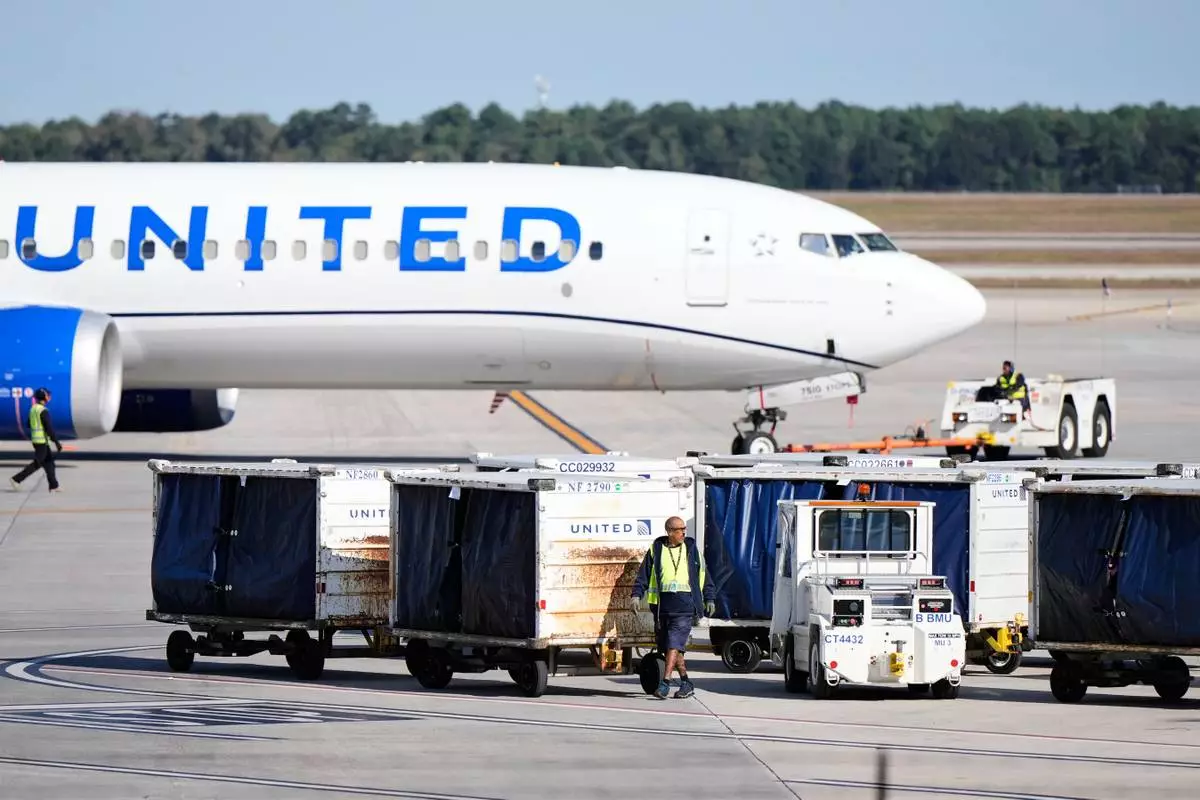
A worker manages baggage carts as a United Airlines flight taxis at George Bush International Airport on Saturday, Nov. 14, 2026, in Houston, after the Federal Aviation Administration lifted nationwide ground stops. (AP Photo/Ashley Landis)
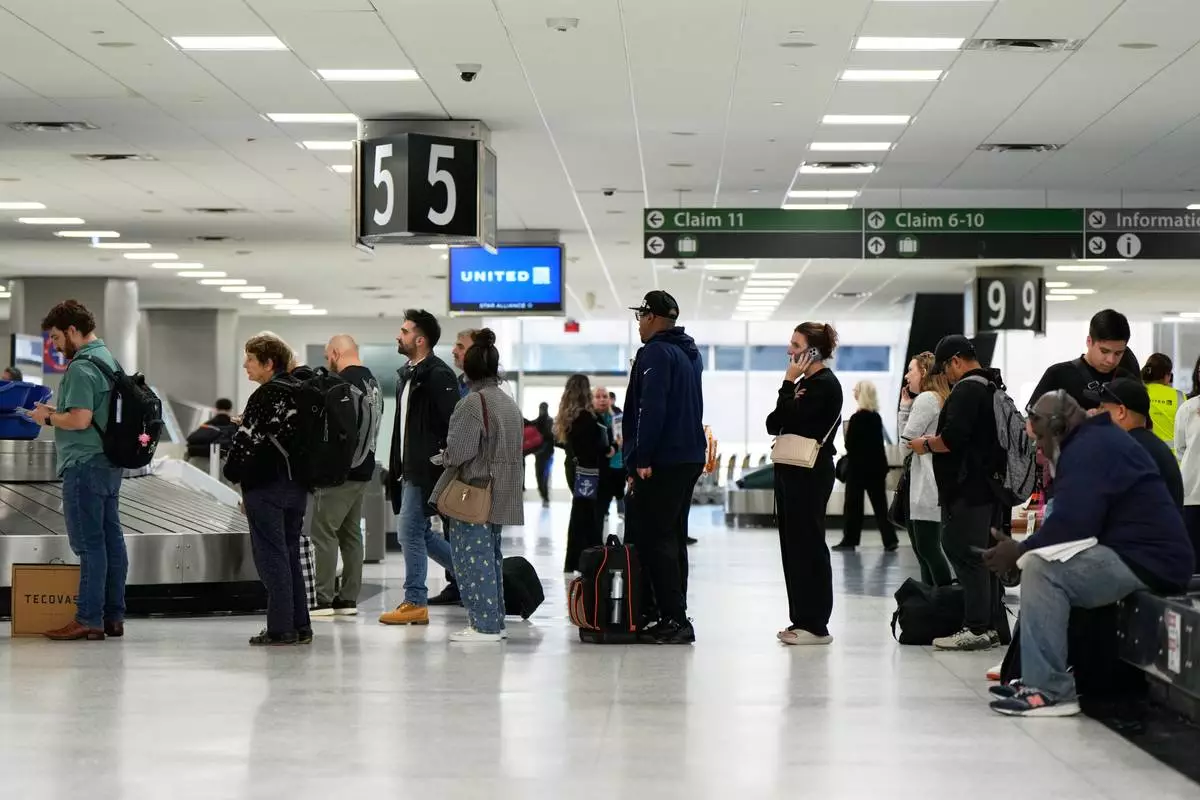
Passengers wait in line at a baggage claim area at George Bush International Airport on Saturday, Nov. 14, 2026, in Houston, after the Federal Aviation Administration lifted nationwide ground stops. (AP Photo/Ashley Landis)
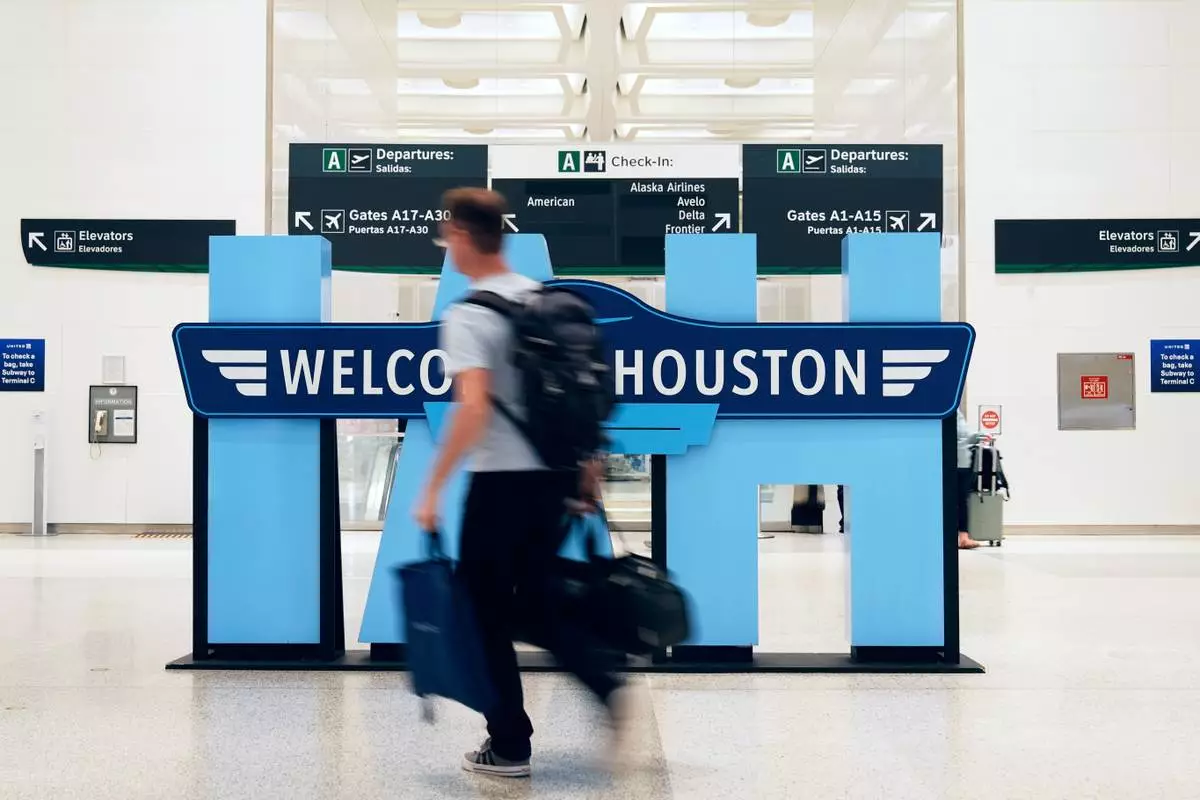
A traveler arrives at George Bush International Airport on Saturday, Nov. 14, 2026, in Houston, after the Federal Aviation Administration lifted nationwide ground stops. (AP Photo/Ashley Landis)
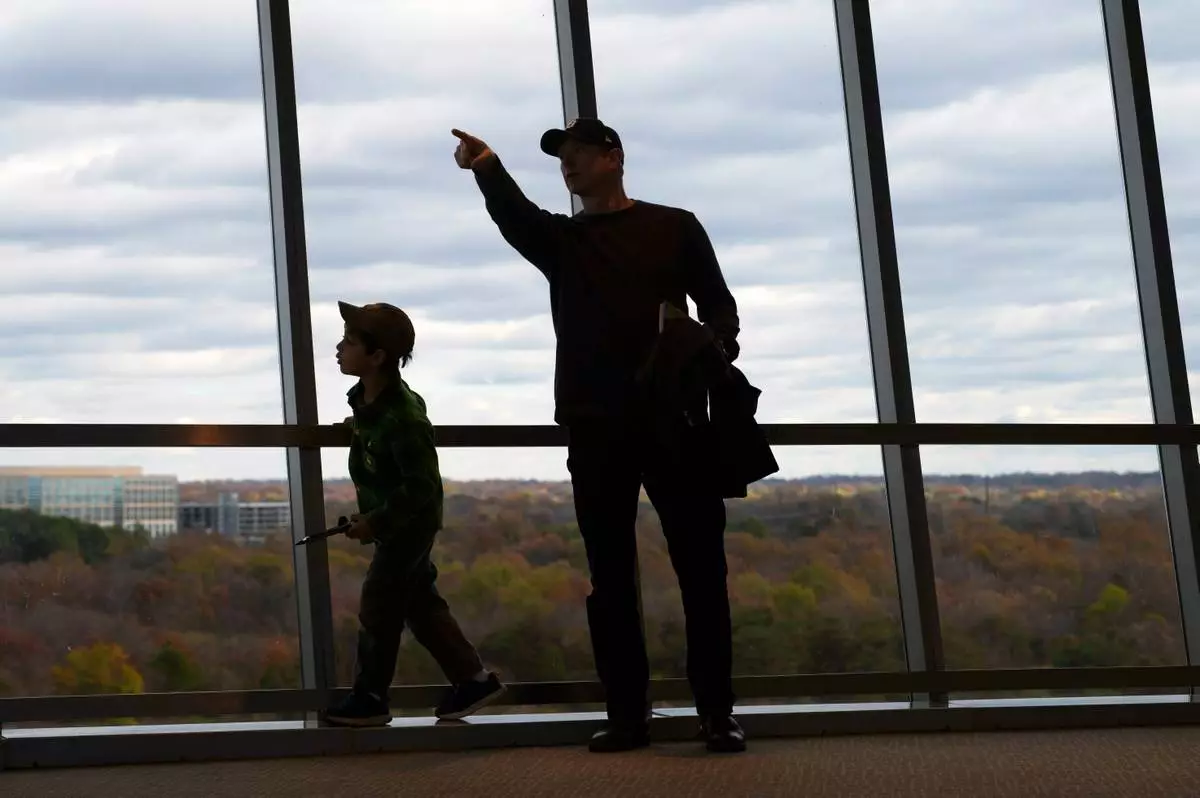
Visitors to the Steven F. Udvar-Hazy Center observation tower watch an airplane prepare to land at Washington Dulles International Airport after the Federal Aviation Administration lifted nationwide ground stops, in Chantilly, Va., Saturday, Nov. 14, 2026. (AP Photo/Cliff Owen)
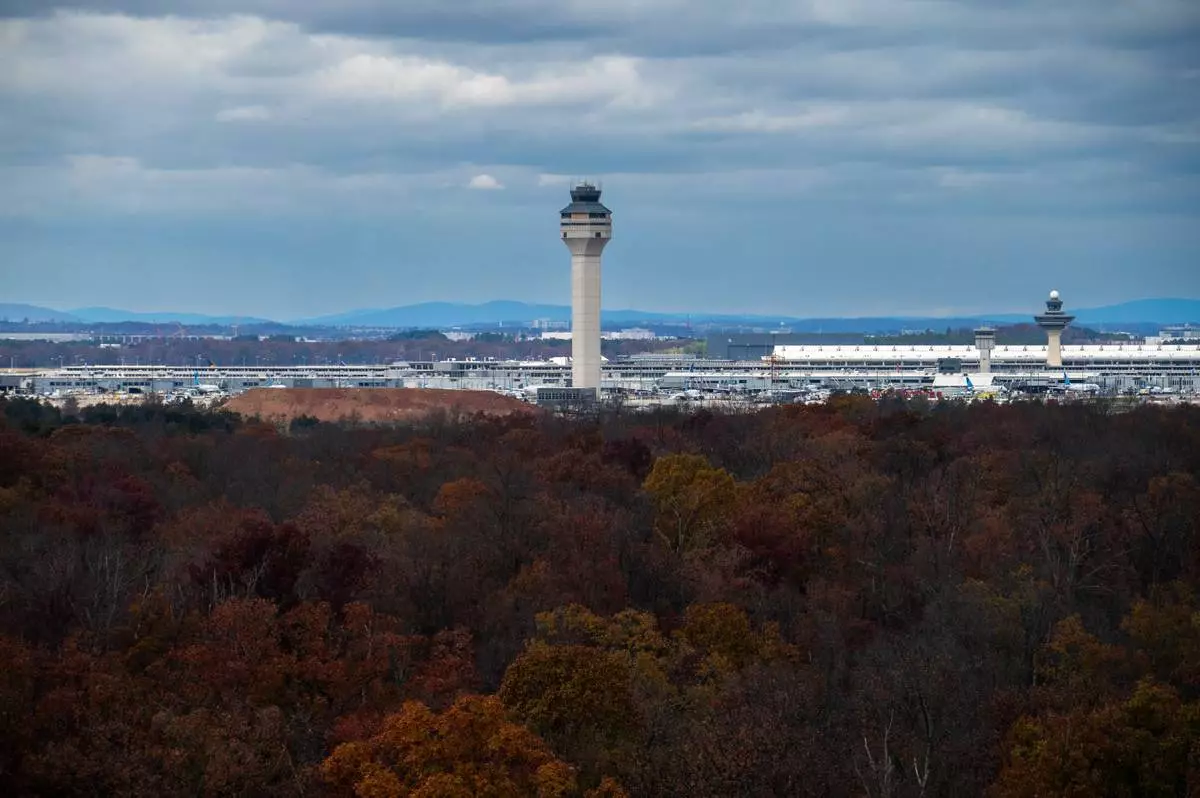
The control tower is seen at Washington Dulles International Airport after the Federal Aviation Administration lifted nationwide ground stops in Chantilly, Va., Saturday, Nov. 14, 2026. (AP Photo/Cliff Owen)