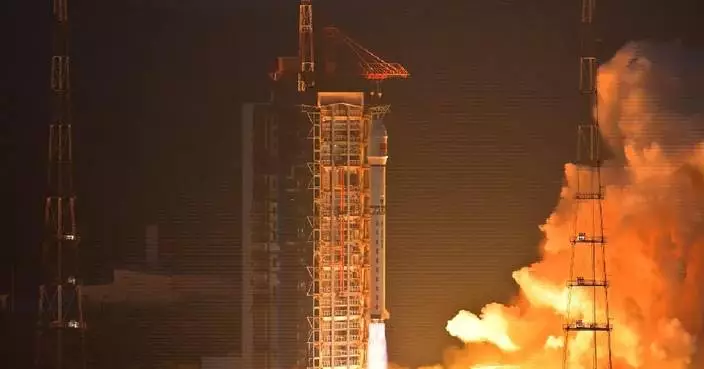
China is set to make new breakthroughs in space exploration in the near future, said leading researchers at the China Aerospace Science and Technology Corporation (CASC).
Among the most critical space missions scheduled this year and next, China will launch its latest lunar probe and its Hubble-class Xuntian Space Telescope, as well as hundreds of satellites to support its Guowang broadband constellation.
"This year, we will send the Chang'e-7 probe to the Moon. There will be another space station mission next year, which might be the most valuable space station project in the history of science, and it will be launched by the Long March-5B rocket," said rocket designer Feng Shaowei from China Academy of Launch Vehicle Technology of the CASC.
Chang'e-7 will explore the Moon's south pole, focusing on locating water ice and other resources in anticipation of a crewed lunar landing in the future.
Meanwhile, China's Tiangong space station will continue to carry out its wide-ranging experimental research, both inside the station's laboratories and outside its walls, with the use of robotic arms. These arms are often used for research in exposing materials to space, but increasingly, they are also used to carry out complex logistical tasks, from collecting space cargo crafts to rearranging the station's solar arrays.
"In the future, our space station may see the addition of more modules to expand our application capabilities. At the same time, we will enhance the capabilities of our robotic arms, enabling them to perform even more complex tasks," said Hou Yongqing, a space station systems expert from China Academy of Space Technology of the CASC.
According to these aerospace scientists, the coming years could even see China become the second country ever to put astronauts on the moon.
"One thing we look forward to is seeing the new generation of crewed spacecraft flying into space, building a brand-new round-trip transportation platform between Earth and space for astronauts. Our manned lunar exploration project has also been making steady progress in recent years. In the near future, we will witness the footprints of the Chinese people left on the lunar surface," said Shao Limin, an expert in crewed spacecraft systems of China Academy of Space Technology.
Beyond advancing our understanding of the solar system, China's space programs are also highly consequential for life on Earth. The country's BeiDou Navigation Satellite System, for instance, is increasingly used in the development of emerging industries.
"The goals for the next generation of BeiDou Navigation Satellite System are very clear. First, we will further improve the accuracy of positioning services to meet the demands of artificial intelligence, autonomous driving and other future technologies. Second, we aim to lower the barrier for users accessing the system, making it more cost-effective and efficient," said Xie Jun, a satellite navigation system expert from the academy.
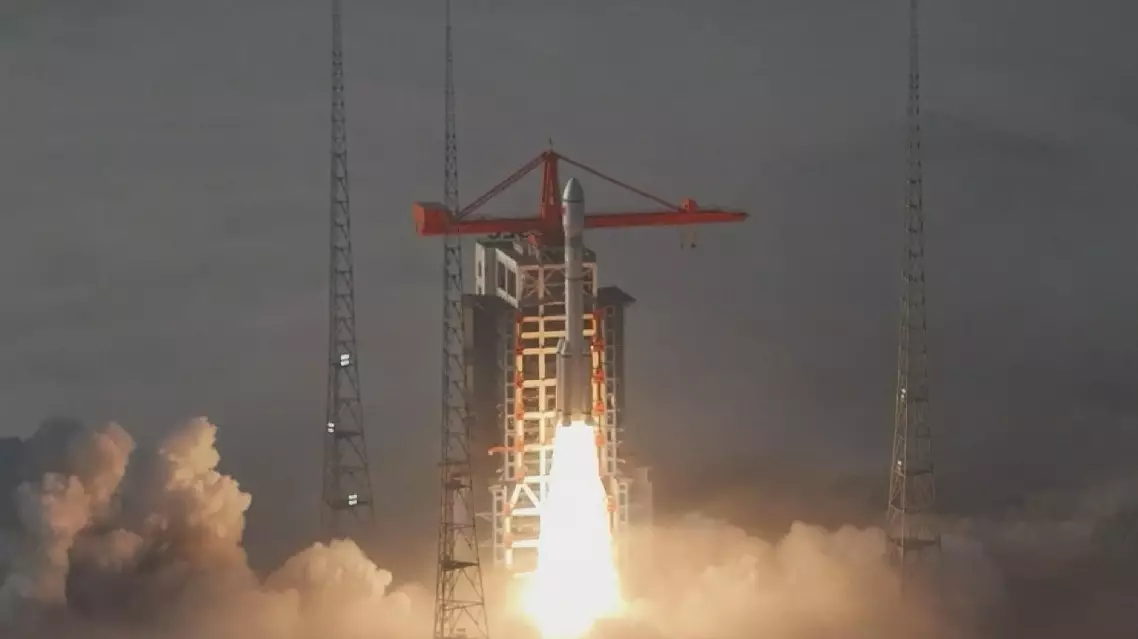
China to make new breakthroughs in space exploration in 2026: aerospace scientists