|
SINGAPORE, April 24, 2026 /PRNewswire/ -- As consumers in Southeast Asia face a "triple-hit" of rising fuel costs, inflation, and economic volatility, leaders from some of the region's major financial and technology companies highlight fintech's and government's role to enable economic resilience in a region navigating global shocks.
Talking about the situation in the Philippines, Martha Sazon, President and CEO of Mynt, the parent company of the country's biggest finance app GCash, shared how the platform has strengthened its role as a primary distribution channel for government relief—taking a page from its playbook on how it helped keep the local economy running and aid flowing when mobility was restricted during the COVID-19 pandemic.
"We have been helping in the distribution of government aid, especially fuel subsidies to public transport drivers and to encourage more mobility," Sazon said.
In partnership with transport officials from the government, GCash facilitates the digital disbursement fuel subsidies to thousands of drivers and operators.
This effort is complemented by direct consumer incentives, such as a 50% fare discount for passengers of Metro Manila main rail lines, who can also pay via the GCash app.
These interventions have kept mobility accessible and domestic consumption steady. She also pointed to the role of GCash in supporting overseas Filipino workers (OFW). Until April 30, 2026, the company is waiving inbound and outbound transaction fees for Filipinos in the Middle East.
Moreover, aside from keeping fair loans accessible, the platform is fostering long-term resilience through livelihood opportunities by promoting digital micro-business tools like GCash Pera Outlet, and gig and employment platform GJobs, which provide alternative income streams for both local residents and repatriated workers. GCash has also ramped up financial literacy efforts to give customers practical knowledge on how to save more—while offering affordable and accessible investment and saving options.
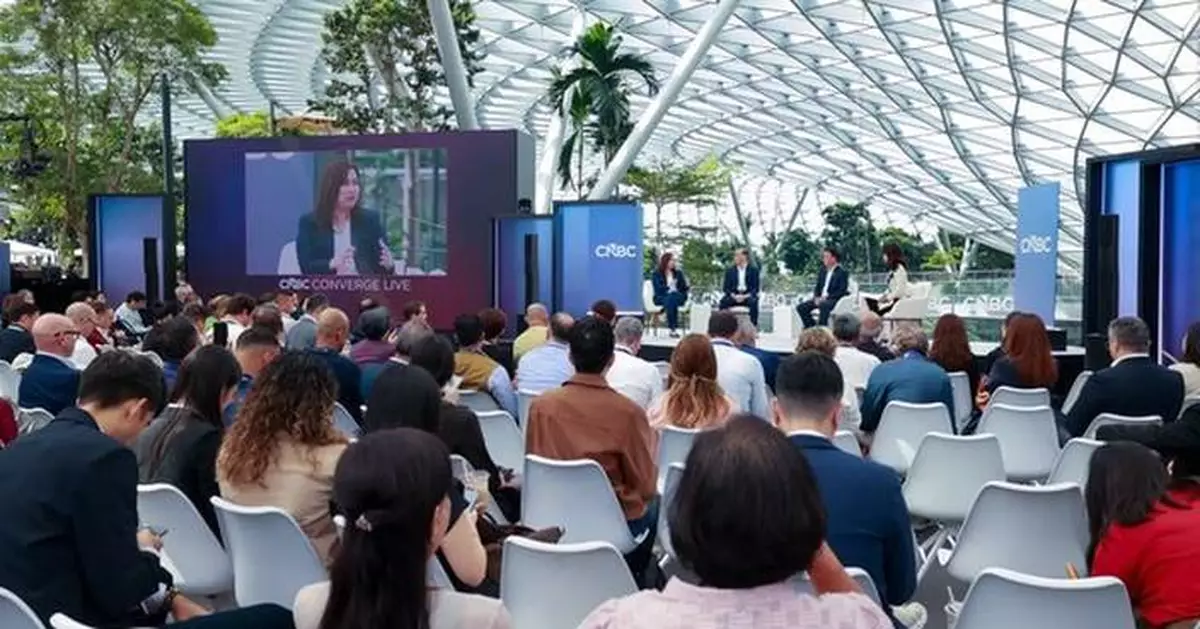
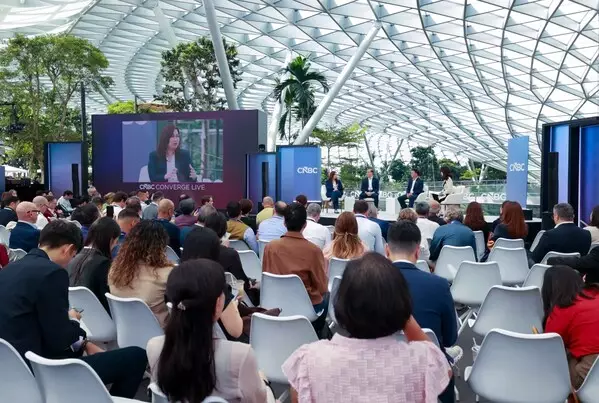
Sazon shared these at the recent CNBC CONVERGE LIVE 2026 event at the Jewel in Singapore, joining other regional leaders: Hans Patuwo of GoTo Group and Huynh Thanh Phong of FWD Group. Patuwo noted Indonesia's resilience but warned that looming subsidy cuts could trigger inflation and strain household consumption. Phong highlighted the importance of trust, stressing that insurers must help customers avoid emotional decisions that could leave them vulnerable during crises.
SINGAPORE, April 24, 2026 /PRNewswire/ -- As consumers in Southeast Asia face a "triple-hit" of rising fuel costs, inflation, and economic volatility, leaders from some of the region's major financial and technology companies highlight fintech's and government's role to enable economic resilience in a region navigating global shocks.
Talking about the situation in the Philippines, Martha Sazon, President and CEO of Mynt, the parent company of the country's biggest finance app GCash, shared how the platform has strengthened its role as a primary distribution channel for government relief—taking a page from its playbook on how it helped keep the local economy running and aid flowing when mobility was restricted during the COVID-19 pandemic.
"We have been helping in the distribution of government aid, especially fuel subsidies to public transport drivers and to encourage more mobility," Sazon said.
In partnership with transport officials from the government, GCash facilitates the digital disbursement fuel subsidies to thousands of drivers and operators.
This effort is complemented by direct consumer incentives, such as a 50% fare discount for passengers of Metro Manila main rail lines, who can also pay via the GCash app.
These interventions have kept mobility accessible and domestic consumption steady. She also pointed to the role of GCash in supporting overseas Filipino workers (OFW). Until April 30, 2026, the company is waiving inbound and outbound transaction fees for Filipinos in the Middle East.
Moreover, aside from keeping fair loans accessible, the platform is fostering long-term resilience through livelihood opportunities by promoting digital micro-business tools like GCash Pera Outlet, and gig and employment platform GJobs, which provide alternative income streams for both local residents and repatriated workers. GCash has also ramped up financial literacy efforts to give customers practical knowledge on how to save more—while offering affordable and accessible investment and saving options.
Sazon shared these at the recent CNBC CONVERGE LIVE 2026 event at the Jewel in Singapore, joining other regional leaders: Hans Patuwo of GoTo Group and Huynh Thanh Phong of FWD Group. Patuwo noted Indonesia's resilience but warned that looming subsidy cuts could trigger inflation and strain household consumption. Phong highlighted the importance of trust, stressing that insurers must help customers avoid emotional decisions that could leave them vulnerable during crises.
** This press release is distributed by PR Newswire through automated distribution system, for which the client assumes full responsibility. **
Fintech solutions, gov't collaboration help cushion impact of oil crisis to consumers, says Mynt CEO
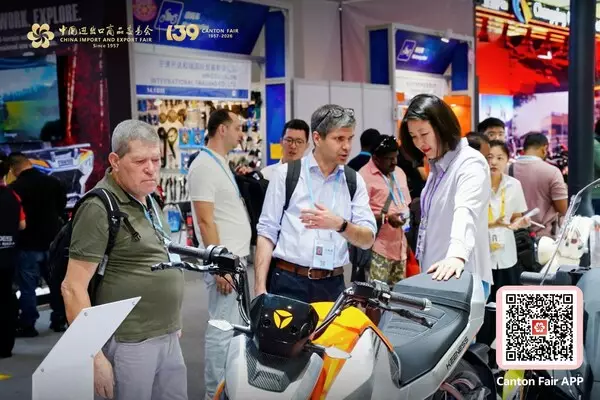
GUANGZHOU, China, April 24, 2026 /PRNewswire/ -- During the 139th Canton Fair, the Vehicles & Two Wheels category showcased some noticeable trends in how light‑mobility products are being conceived. Exhibitors across electric vehicles, two‑wheelers and new mobility formats presented innovations increasingly built around real‑world usage needs, more market-oriented systems and integrated energy ecosystems.
A prominent trend is the move toward scenario‑driven product development. Manufacturers are creating vehicles suited to local environments and real‑world operating conditions. For example, models designed for tropical rainforest environments featured reinforced drivetrains, specialized suspension systems and terrain‑specific tires to handle muddy roads, high humidity and heavy loads. Off‑road electric bikes, performance scooters and water‑based mobility products emphasized structural strength, advanced shock absorption and enhanced waterproofing. Meanwhile, compact electric vehicles for short‑distance family travel and urban commuting reflected precise positioning around daily usability, comfort and efficiency. Together, these developments signal a broader shift toward solving concrete, scenario‑specific mobility challenges.
Intelligence in light‑mobility products is advancing beyond basic connectivity toward active perception and real‑time decision‑making. Some exhibitors introduced vehicles using multi‑sensor fusion and AI‑assisted functions to deliver higher levels of autonomy. One new model, for example, combines multi‑line LiDAR, single‑line radar and depth cameras to support follow, remote‑control and autonomous‑driving modes with end‑to‑end route planning. It can run riderless at over 40 km/h, and complete sub‑90‑degree S‑curve turns. With a paired wristband, it can automatically follow the user. These capabilities, along with obstacle avoidance, self‑balancing and intelligent tracking, signal a new stage of assisted autonomy in two‑wheelers.
The Fair also underscored the ongoing convergence of mobility categories. Rideable carry‑on luggage, robot‑inspired electric scooters, and water‑based bicycles blurred traditional vehicle boundaries. Growing modularity and cross‑category integration indicate that future mobility design will focus more on movement capability than on conventional classifications.
Alongside electric vehicles, exhibitors also highlight fast-charging infrastructure, wireless charging solutions, and portable in-vehicle power supply devices for camping, emergency, and outdoor scenarios. This reflects a rising competitive emphasis on solutions that connect vehicles, energy systems and operating environments.
For pre-registration, please click: https://buyer.cantonfair.org.cn/register/buyer/email?source_type=16
** This press release is distributed by PR Newswire through automated distribution system, for which the client assumes full responsibility. **
Vehicles & Two Wheels Category at 139th Canton Fair, New Light‑Mobility Design Priorities Emerge