LONDON (AP) — Running past Buckingham Palace during training, Tilly Dowler is closing in on a goal she once thought out of reach.
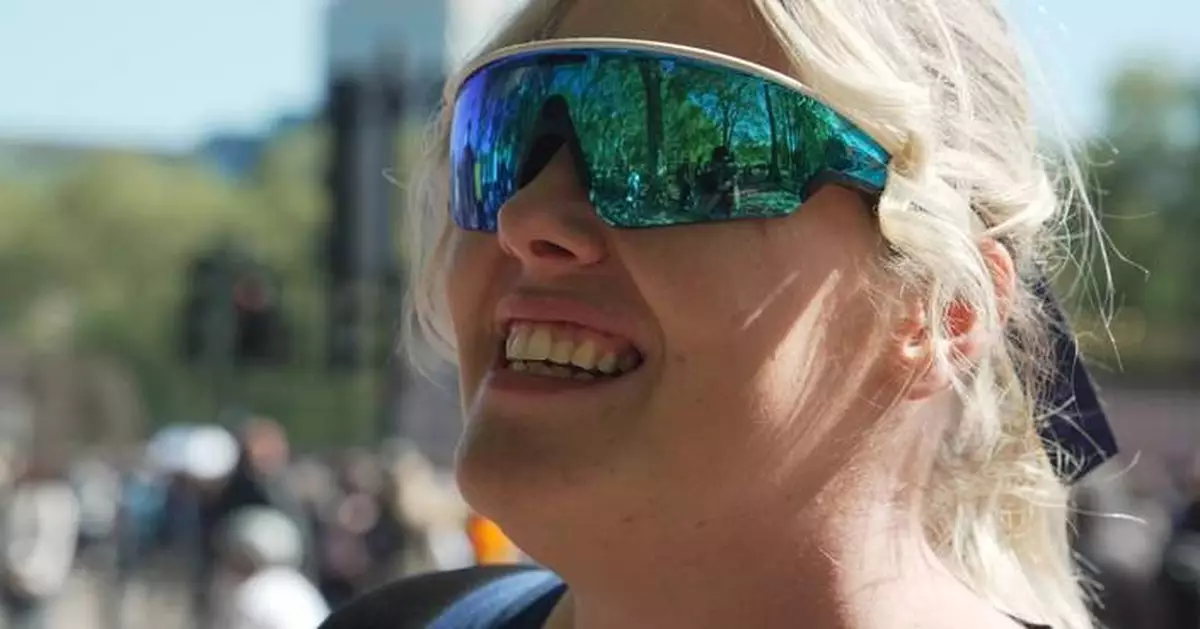
Dowler, who has Stargardt disease and says she has about 10% useful vision, only began running last year, starting with a couch to 5K program before building up to marathon distance. She is now preparing to run the London Marathon with her boyfriend as her guide, using AI powered Oakley Meta Vanguard smart glasses to help her navigate and track her progress.
“They are AI assisted,” she said. “While running, I can ask for live cues, such as what landmarks are around me and how far I have run.”
She said the glasses allow her to combine audio feedback with guidance from her running partner.
“I can put my music on but still be able to listen to my guide runner,” she said.
Her goal is not focused on speed.
“My mission was to inspire other people with sight loss and people going through something really tough and inspire them to believe in themselves,” she said.
Dowler is among a growing number of visually impaired runners using AI enabled smart glasses. These wearable devices combine standard consumer products with cameras, microphones and open ear speakers. They can be controlled with your voice, buttons or some simple gestures and use artificial intelligence to interpret surroundings and provide audio feedback.
The most well known smart glasses are from tech company Meta, which makes them in partnership with Ray-Ban and Oakley. More than 7 million pairs of Meta Ray-Bans were sold last year, underscoring their growing popularity. But they’ve also stirred privacy worries, including being used to film people without their knowledge as well as concerns that Meta was sending the video to human reviewers for AI training.
For Sha Khan, who lost around 90 percent of his vision in 2021 due to retinitis pigmentosa and Stargardt disease, the technology has become part of daily life as well as training.
“It’s like literally a part of me now,” he said. “If I step out the front door, I wouldn’t do that without my glasses on.”
Khan also relies on his guide dog, Moby, in his day to day life, using him for navigation outside of running.
He said the hands free nature of the glasses is especially useful because it allows him to stay focused on working with Moby without needing to handle a phone.
Khan began running in 2022 after a volunteer from Guide Dogs UK, a charity that provides guide dogs and mobility support for people with vision loss, encouraged him to try it after his sudden loss of sight loss and the impact that it had on his mental health.
While training with guide runners, he uses voice commands to interact with the glasses.
“If they say that’s Big Ben ahead of us I can just say ‘hey Meta take a picture,’” he said.
He said the hands free nature of the device is important.
“I don’t need to be worrying about fumbling with a mobile phone,” he said.
Smart glasses use a front facing camera to capture visual input and artificial intelligence to analyze it, converting the information into audio delivered through speakers built into the frame.
Chris Lewis, a technology analyst who is visually impaired and has used smart glasses while skiing, said the system provides an additional layer of awareness.
“The AI is taking the images coming in, analyzing it and giving you the information about what’s in front of you, what might be moving and what might be changing,” he said.
He said this allows users to receive information in real time without losing awareness of their surroundings, which is important for activities such as running.
However, Lewis said events like marathons can pose additional challenges, with large crowds putting pressure on mobile networks and potentially weakening signal, which in turn can affect how reliably the glasses deliver real time information.
Guide Dogs UK, which also provides other services to help people live independently, says the technology should be used alongside existing support systems rather than replacing them.
“These glasses can really support and enhance somebody’s independence but they’re not there to be relied upon or replace core independent skills,” said Tommy Dean, a technology specialist at the charity.
He said guide dogs, mobility training and human support remain essential, particularly in complex environments.
Ben Hatton, an analyst at CCS Insight who studies emerging consumer technologies, said reliability remains a key challenge.
“If you’re going to allow visually impaired people to walk down the street or cross busy roads with the technology then it has to be perfectly reliable every single time,” he said.
He said factors such as accuracy, connectivity and cost will determine how widely the technology can be adopted.
Despite those limitations, experts say advances in artificial intelligence are enabling mainstream devices to play a growing role in accessibility.
“The fact that consumer technology can enhance the experience of someone with a sight problem adds to the potential to be more and more independent,” Lewis said.
More than 59,000 runners are expected to take part in the London Marathon on Sunday, according to organizers, following a 26.2 mile route through the capital that starts in Greenwich and finishes near Buckingham Palace.

Sha Khan, center, poses in front of Buckingham Palace with his guide runners ahead of London Marathon 2026 in London, Thursday, April 23, 2026. (AP Photo/Mustakim Hasnath)
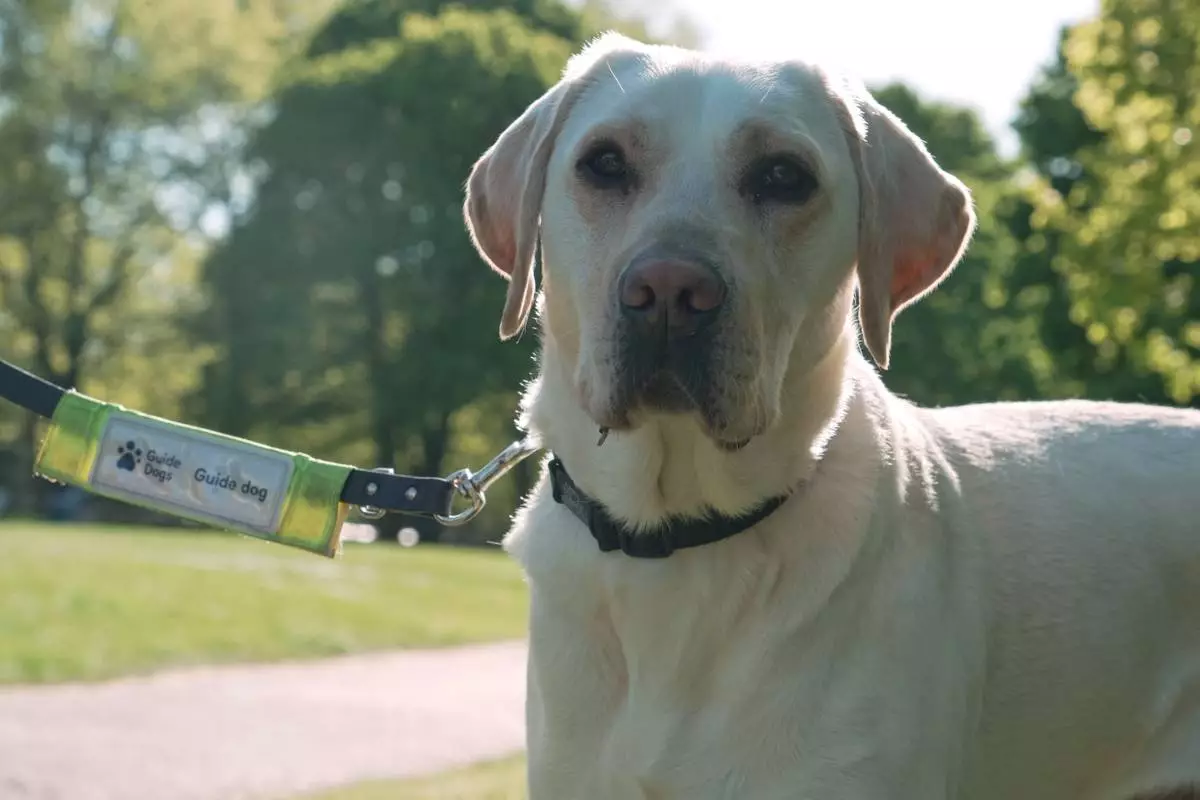
Sha Khan's guide dog, Moby, stands while on a leash in Green Park, London, Thursday, April 23, 2026. (AP Photo/Mustakim Hasnath)
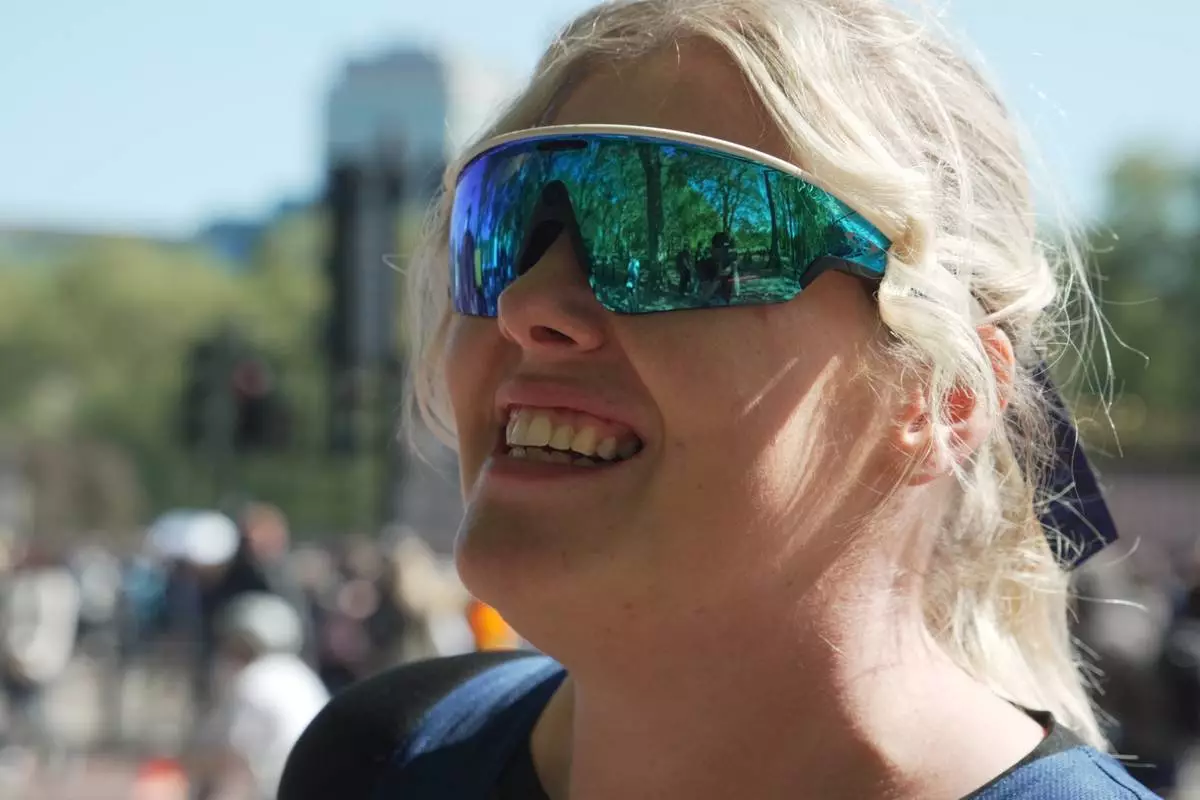
Tilly Dowler poses in front of Buckingham Palace ahead of the London Marathon 2026 in London, Thursday, April 23, 2026. (AP Photo/Mustakim Hasnath)
WASHINGTON (AP) — The Justice Department has ended its investigation into Federal Reserve chair Jerome Powell, clearing a major roadblock to the confirmation of his successor, Kevin Warsh.
U.S. Attorney for the District of Columbia Jeannine Pirro said on X on Friday that her office was ending its probe into the Fed’s extensive building renovations because the Fed’s inspector general would scrutinize them instead.
The move could lead to a swift confirmation vote by the Senate for Warsh, a former top Fed official whom President Donald Trump, a Republican, nominated in January to replace Powell. Powell's term as chair ends May 15. Sen. Thom Tillis, a North Carolina Republican, had said he would oppose Warsh until the investigation was resolved, effectively blocking his confirmation.
Republicans praised Warsh during a Tuesday hearing even as Democrats questioned his independence from Trump, the lack of transparency around some of his financial holdings, and what they said was his flip-flopping on interest rates. Still, Trump's previous appointment to the Fed's board of governors, Stephen Miran, was approved by the full Senate just 13 days after his nomination.
The probe was among several undertaken by the Justice Department into Trump’s perceived adversaries. For months it had failed to gain traction as prosecutors struggled to articulate a basis to suspect criminal conduct. Other efforts by the department to prosecute Trump's adversaries, including New York state Attorney General Letitia James, a Democrat, and former FBI Director James Comey, have also been unsuccessful.
A prosecutor handling the Powell case conceded at a closed-door court hearing in March that the government hadn’t found any evidence of a crime, and a judge subsequently quashed subpoenas issued to the Federal Reserve. The judge, James Boasberg, said prosecutors had produced “essentially zero evidence” to suspect Powell of a crime. Boasberg branded prosecutors’ justification for the subpoenas as “thin and unsubstantiated.”
The investigation was the most brazen attempt yet by the Trump administration to pressure the Fed to cut its short-term interest rate, which indirectly affects other borrowing costs for mortgages, auto loans and business loans. Trump has obsessively attacked Powell for not cutting the rate from its current level of about 3.6% to 1%, a level that no Fed official supports.
Instead, Fed policymakers, including Powell, have said they want to keep rates unchanged while they evaluate the impact of the Iran war, which has sent gas prices soaring, pushing up inflation. The increase could be a one-time shift but could also lead to more sustained inflation. The Fed seeks to restrain rising prices by keeping interest rates high, cooling borrowing and spending.
Powell said in January that the investigation was not really about the renovation or his testimony but “is a consequence of the Federal Reserve setting interest rates based on our best assessment of what will serve the public, rather than following the preferences of the President.”
More recently, prosecutors made an unannounced visit to a construction site at the Fed’s headquarters but were turned away, drawing a rebuke from a defense attorney in the case who called the maneuver “not appropriate.”
Warsh said during a hearing by the Senate Banking Committee on Tuesday that he never promised the White House that he would cut interest rates, even as the president renewed his calls for the central bank to do so.
“The president never once asked me to commit to any particular interest rate decision, period,” Kevin Warsh, a former top Fed official, said under questioning by the Senate Banking Committee. “Nor would I ever agree to do so if he had. ... I will be an independent actor if confirmed as chair of the Federal Reserve.”
Warsh’s comments came just hours after Trump, in an interview on CNBC, was asked if he would be disappointed if Warsh didn’t immediately cut rates and responded, “I would.”
Massachusetts Democratic Sen. Elizabeth Warren said during the hearing that Warsh would be a “sock puppet” for Trump. When she asked if Trump had won the 2020 presidential election — which he lost to Democrat Joe Biden but incorrectly claims was decided by fraud — Warsh said only that the Senate had certified Biden as the winner. When asked for an example of an economic policy on which he disagreed with Trump, Warsh did not name one.
The decision to abandon the Powell investigation represents a rare pullback for a Justice Department that over the last year has moved aggressively, albeit unsuccessfully, to prosecute public figures the president does not like.
Robert Hur, an attorney for the Federal Reserve Board of Governors, didn’t immediately respond Friday to an email seeking comment.
Trump has taken other unprecedented steps to try to pressure the Fed, including an attempt last August to fire Lisa Cook, a member of the Fed's governing board, who was appointed by Biden. Yet courts have temporarily blocked the firing, and, at an oral argument in January, the Supreme Court appeared sympathetic to the argument that Cook should keep her job.
A key question still to be resolved is whether Powell will remain on the Fed's board even after his term as chair expires next month. Powell, who serves a separate term as a governor that lasts until January 2028, has said he wouldn't leave until the investigation was dropped. Yet he did not promise to do so if it was. By remaining on the board, Powell would deprive Trump of the opportunity to fill another seat among its seven members, three of whom are Trump appointees.
Other presidents have pressured the Fed to keep borrowing costs low, notably Presidents Lyndon Johnson and Richard Nixon, though rarely as publicly as Trump. Johnson’s and Nixon’s demands for lower rates, however, are considered key contributors to the 15-year outbreak of high inflation that only ended in the early 1980s after then-chair Paul Volcker ratcheted the Fed's rate to an eye-watering 20%.
Associated Press writers Michael Kunzelman and Alanna Durkin Richer contributed to this report.
Follow the AP's coverage of the Federal Reserve System at https://apnews.com/hub/federal-reserve-system.

FILE - The Federal Reserve Board Building is seen as it undergoes renovations, Jan., 13, 2026, in Washington. (AP Photo/Pablo Martinez Monsivais, File)
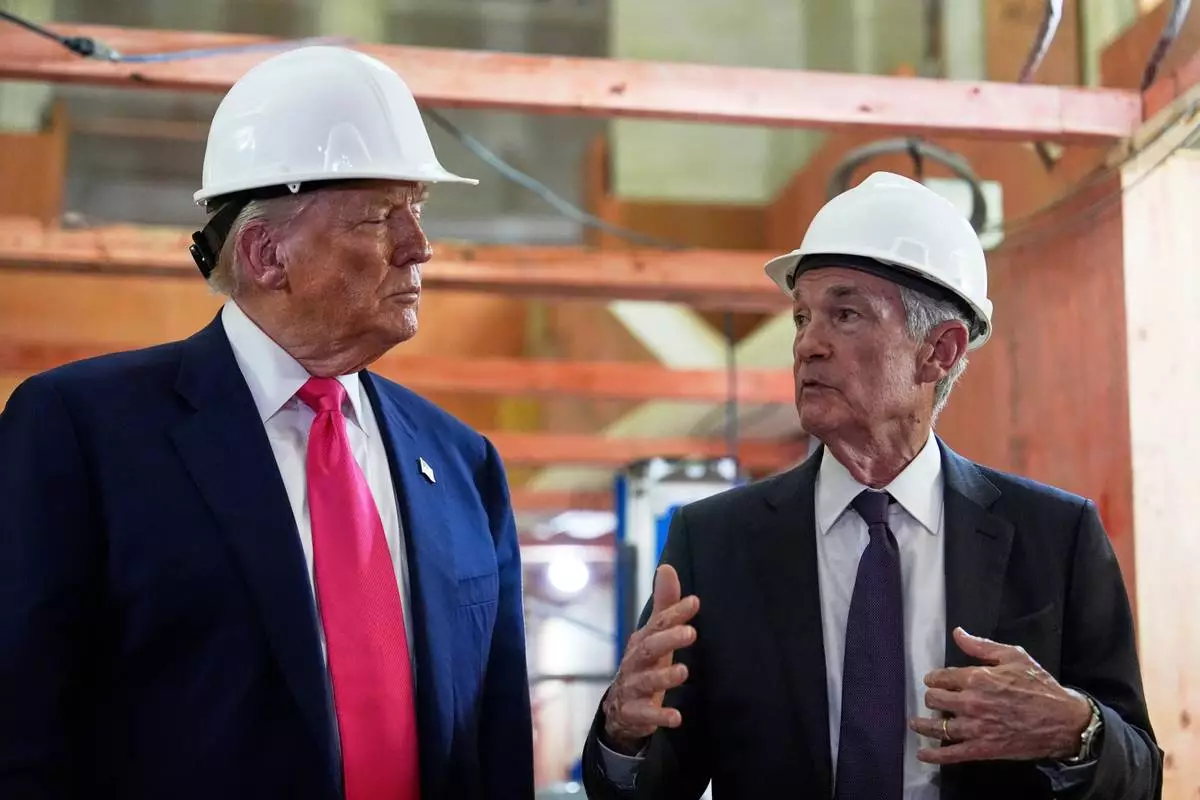
FILE - President Donald Trump listens to Federal Reserve Chairman Jerome Powell speak during a visit to the Federal Reserve, July 24, 2025, in Washington. (AP Photo/Julia Demaree Nikhinson, File)
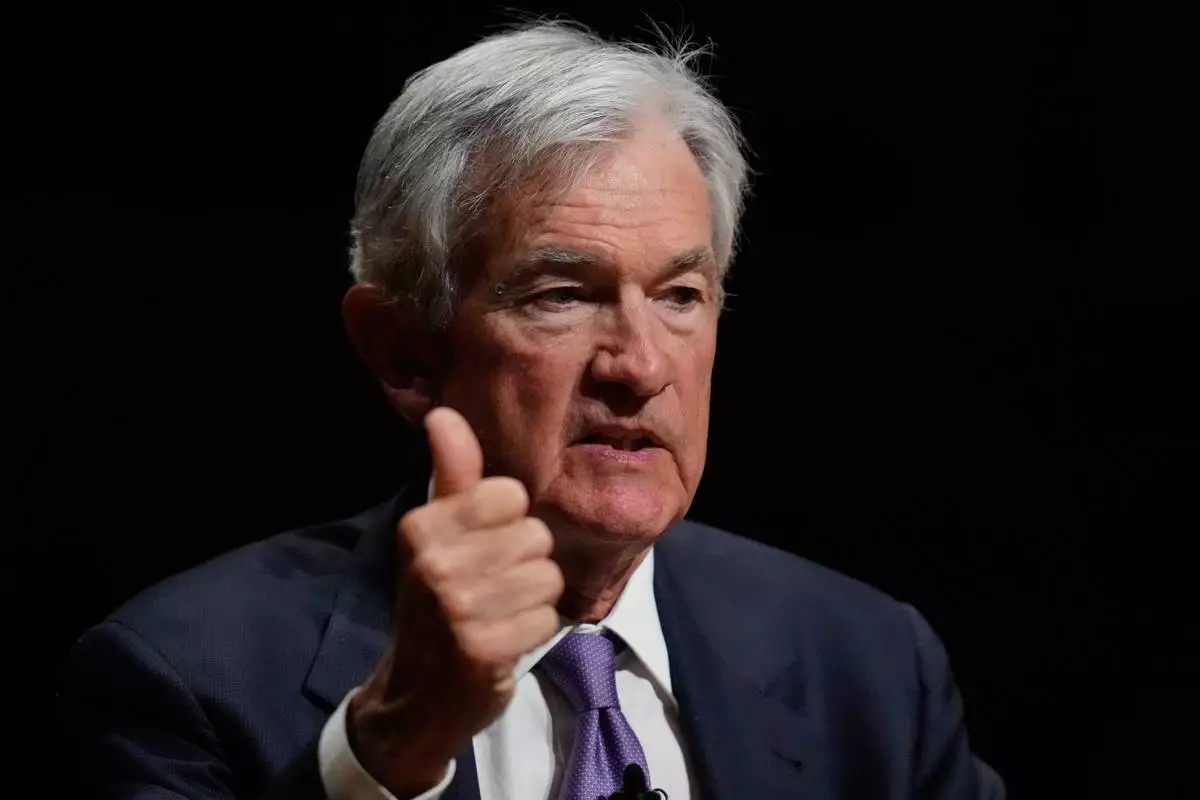
FILE - Federal Reserve Chair Jerome Powell addresses students at Harvard University, March 30, 2026, in Cambridge, Mass. (AP Photo/Charles Krupa, File)
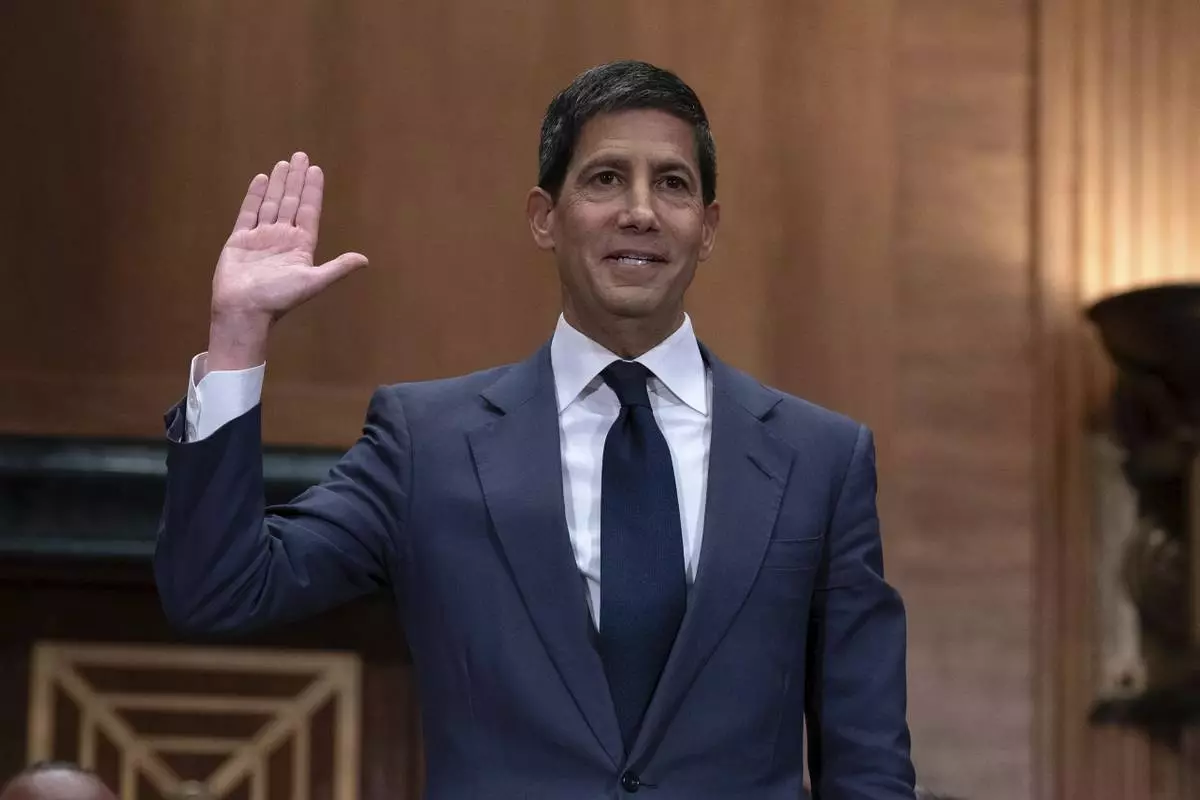
Kevin Warsh is sworn in during his nomination hearing to be a member and chairman of the Federal Reserve Board of Governors before the Senate Banking, Housing and Urban Affairs Committee on Capitol Hill, in Washington Tuesday, April 21, 2026. (AP Photo/Jose Luis Magana)
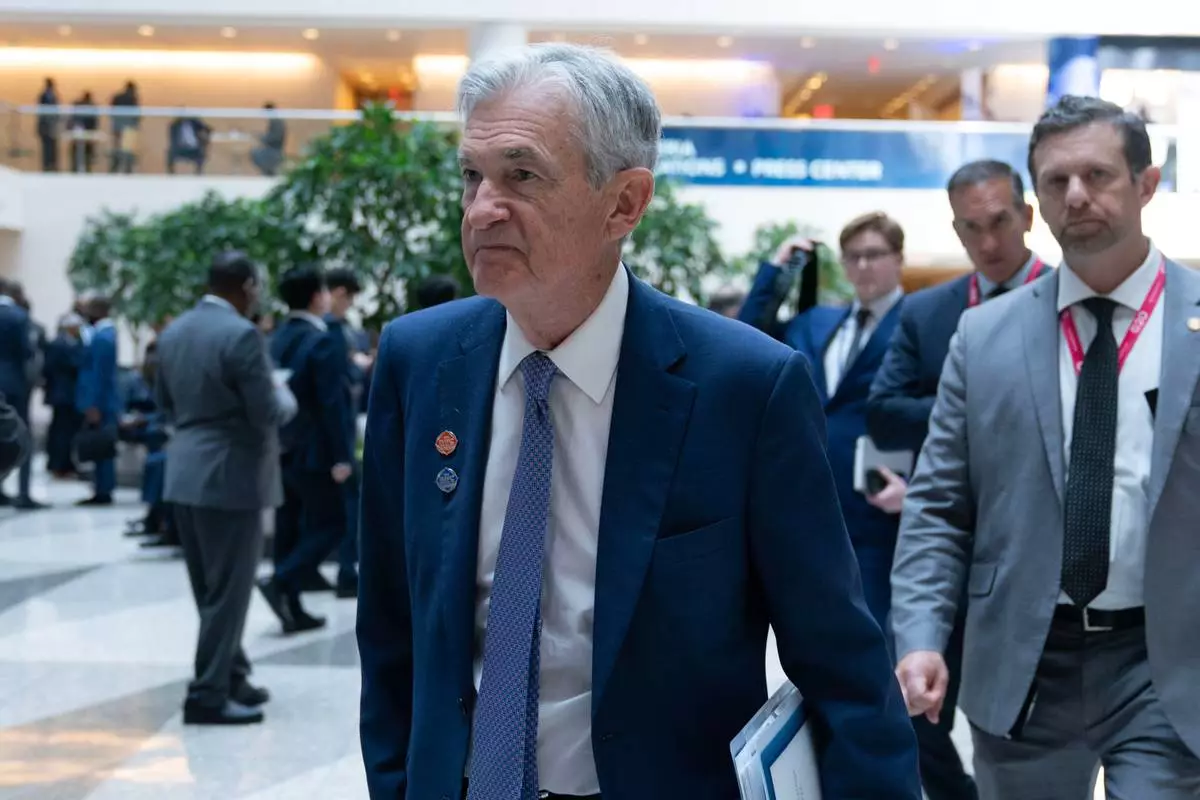
Federal Reserve Board Chairman Jerome Powell leaves after the International Monetary and Financial Committee (IMFC) meeting during the World Bank/IMF spring meetings at the IMF headquarters in Washington, Friday, April 17, 2026. (AP Photo/Jose Luis Magana)