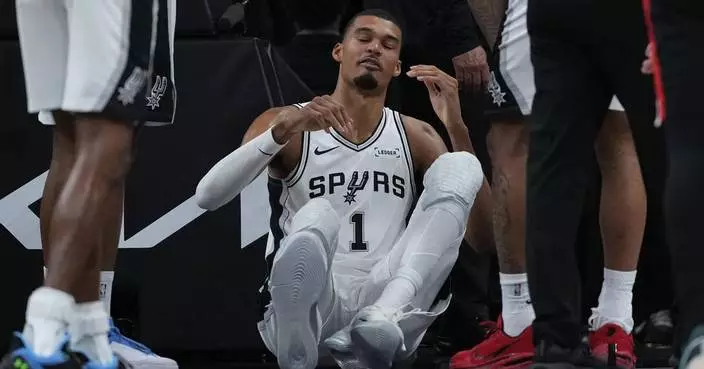
MONTREAL (AP) — Lane Hutson scored on a slap shot at 2:09 of overtime and the Montreal Canadiens beat the Tampa Bay Lightning 3-2 on Friday night to take a 2-1 lead in the first-round series that has opened with three extra-time thrillers.
Hutson fired a shot from the top of right circle that went through traffic and found the top left corner behind goalie Andrei Vasilevskiy on the only shot on goal in overtime.
Kirby Dach tied it for Montreal with 7:17 left in the second period. He fired a snap shot through traffic from the top of the right circle that beat Vasilevskiy on the short side.
Game 4 is Sunday night in Montreal. The Canadiens took the opener 4-3 on Sunday and the Lightning countered 3-2 on Tuesday night.
MAMMOTH 4, GOLDEN KNIGHTS 2
SALT LAKE CITY (AP) — Lawson Crouse scored twice in a 5:42 span in the second period and Utah won the first NHL playoff game in the state, beating Vegas for a 2-1 series lead.
Game 4 of the best-of-seven series is Monday night in Salt Lake City. In Las Vegas in the first two games, Vegas won the opener 4-2 on Sunday and Utah replied with a 3-2 victory Tuesday.
The Mammoth are in their second season in Utah after leaving Arizona.
MacKenzie Weegar and Dylan Guenther scored for Utah in the first period, with Guenther striking on a power play. Crouse had a tip-in at 4:06 of the second and struck on a long shot at 9:48 to make it 4-0.
Karel Vejmelka made 29 saves for the Mammoth, who had only 12 shots on goal against Carter Hart. Clayton Keller had two assists.
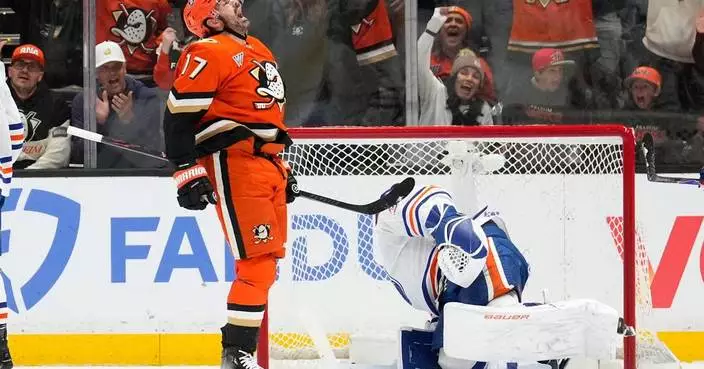
DUCKS 7, OILERS 4
ANAHEIM, Calif. (AP) — Beckett Sennecke and Leo Carlsson scored 42 seconds apart in the third period, Mikael Granlund had a goal and two assists, and Anaheim celebrated their first home playoff game in eight years with a victory over Edmonton and a 2-1 series lead.
Jeffrey Viel and Jackson LaCombe also scored in the third and Lukas Dostal made 20 saves for the upstart Ducks, who have poured in 16 goals in three games to take an early lead in this first-round series against the two-time Western Conference champion Oilers. Mason McTavish and Alex Killorn scored early goals.

Montreal Canadiens' Lane Hutson (48) celebrates after his winning goal against the Tampa Bay Lightning with teammates during overtime of Game 3 in a first-round NHL hockey Stanley Cup playoff series in Montreal, Friday, April 24, 2026. (Christinne Muschi/The Canadian Press via AP)
RAMALLAH, West Bank (AP) — The post-Oct. 7 order in the Middle East — such as it is — is barely pieced together by conditional ceasefires and mutual threats.
Iran has suffered severe blows, yet not enough to shake its posture at the negotiating table. Its allies Hezbollah in Lebanon and Hamas in Gaza are degraded but functioning, with Israel still regularly launching strikes at both. Prime Minister Benjamin Netanyahu is under mounting pressure to translate military achievements into clear dividends ahead of elections later this year.
U.S. President Donald Trump, who boasts of his peacemaking abilities, still appears to be seeking a nuclear deal with Iran and wider peace in the Middle East. But talks so far have produced no results and the two countries are locked in an escalating standoff over the Strait of Hormuz.
Major military operations have halted, but the underlying grievances — which long predate Hamas' Oct. 7, 2023, attack — have not been addressed. Millions of people are still displaced, and many fear the fighting could resume at any time.
Ceasefires “don’t fix anything — they just stop things from getting worse,” said Michael Ratney, a former U.S. ambassador to Saudi Arabia. “It’s part of an answer to an immediate political problem, which is (Trump) needs to get out of war and can’t figure out how do that.”
For weeks, Trump has vacillated between threats to unleash major attacks on Iran's infrastructure — at one point threatening to end “a whole civilization” — and attempts to negotiate an agreement over its nuclear program and other disputes going back decades.
This week he extended a ceasefire but said he would maintain a U.S. naval blockade on Iranian ports. On Wednesday, he vowed to attack Iranian fast boats in the Strait of Hormuz, which Tehran has effectively choked off since the start of the war, sparking a worldwide energy crisis.
Iran has given no public indication it is willing to make concessions on its nuclear program, ballistic missiles or support for regional proxies. It says the strait will remain closed until the U.S. lifts its blockade and Israel halts attacks on Iran-backed groups like Hezbollah.
Neither side seems to want full-scale war and a new round of ceasefire talks was planned Saturday in Pakistan.
Iran's leaders, based on their statements on social media, seem to have concluded that they can withstand the blockade longer than Trump can bear soaring gas prices and an unpopular war, especially with U.S. midterm elections later this year.
Jon Alterman, chair of Global Security and Geostrategy at the Washington-based Center for Strategic and International Studies, said Trump's record shows his instincts lean toward making headlines and announcing quick results.
“The most visible part of the fighting has stopped, but the less visible efforts are roaring ahead,” he said. “Ceasefires can seem comfortable but lock in unsustainable patterns, with one side feeling it has lost the urgency to resolve the underlying conflict.”
A truce in Lebanon agreed to last week has largely held outside of the border area, where fighting continues. Israel has indicated it plans to occupy a swath of southern Lebanon indefinitely. The Iran-backed Hezbollah, which is not an official party to the truce, is demanding that Israel withdraw.
Trump announced a three-week extension of the truce on Thursday after a meeting between Israeli and Lebanese officials at the White House.
The U.S. and Israel have demanded that Lebanon's government assume responsibility for disarming Hezbollah. Beirut tried to enact part of a plan to do so before the outbreak of the latest fighting. But Lebanese leaders acknowledged their limited capacity, and their efforts yielded little as Hezbollah retained the ability to fire thousands of missiles and drones toward northern Israel over the past two months.
With Beirut unwilling to risk civil war by confronting the militants directly — especially while Israel occupies Lebanese territory — the ceasefire offers some reprieve.
As in Gaza, Israeli forces have drawn a “yellow line” in southern Lebanon, demolishing homes that Israel claims were used by Hezbollah, preventing people from returning and announcing strikes on people it says are militants attempting to cross it. Many in Lebanon fear a return to Israel’s 1982-2000 occupation of the south, which ended after years of deadly Hezbollah attacks on Israeli troops.
On Wednesday, a day before the talks in Washington, Israeli strikes killed a well-known Lebanese journalist covering southern Lebanon and wounded another reporter. Health officials said Israeli forces fired on an ambulance crew that was trying to rescue journalist Amal Khalil and forced it to turn back. Israel denied that it targeted journalists or rescue teams.
A U.S.-brokered ceasefire reached in October led to the release of the last remaining hostages held by Hamas and has halted major military operations. But Israel still carries out regular strikes against what it says are militant targets. Health officials in Gaza, seen as generally reliable by U.N. agencies and independent experts, have reported more than 790 Palestinians killed since last year's ceasefire, including about 225 children. There have also been occasional attacks on Israeli forces.
Israel says its withdrawal from the half of Gaza its forces control, the return of hundreds of thousands who were displaced, the establishment of a new political authority and desperately needed reconstruction all hinge on Hamas disarming — something the militant group has shown no sign of doing.
Hamas says it has offered proposals to give up its weapons while seeking further Israeli concessions and accusing Israel of violating the ceasefire.
That has left the vast majority of Gaza's more than 2 million people confined to sprawling tent camps or the ruins of their homes, with no end in sight to their suffering.
Israel says it has the right to respond to any ceasefire violations or movement across another “yellow line” there. Health officials say scores of civilians have been killed in the strikes.
A committee of Palestinian technocrats has been established to govern Gaza temporarily, but Israel has not allowed them to enter from Egypt, and Hamas still rules half of the territory.
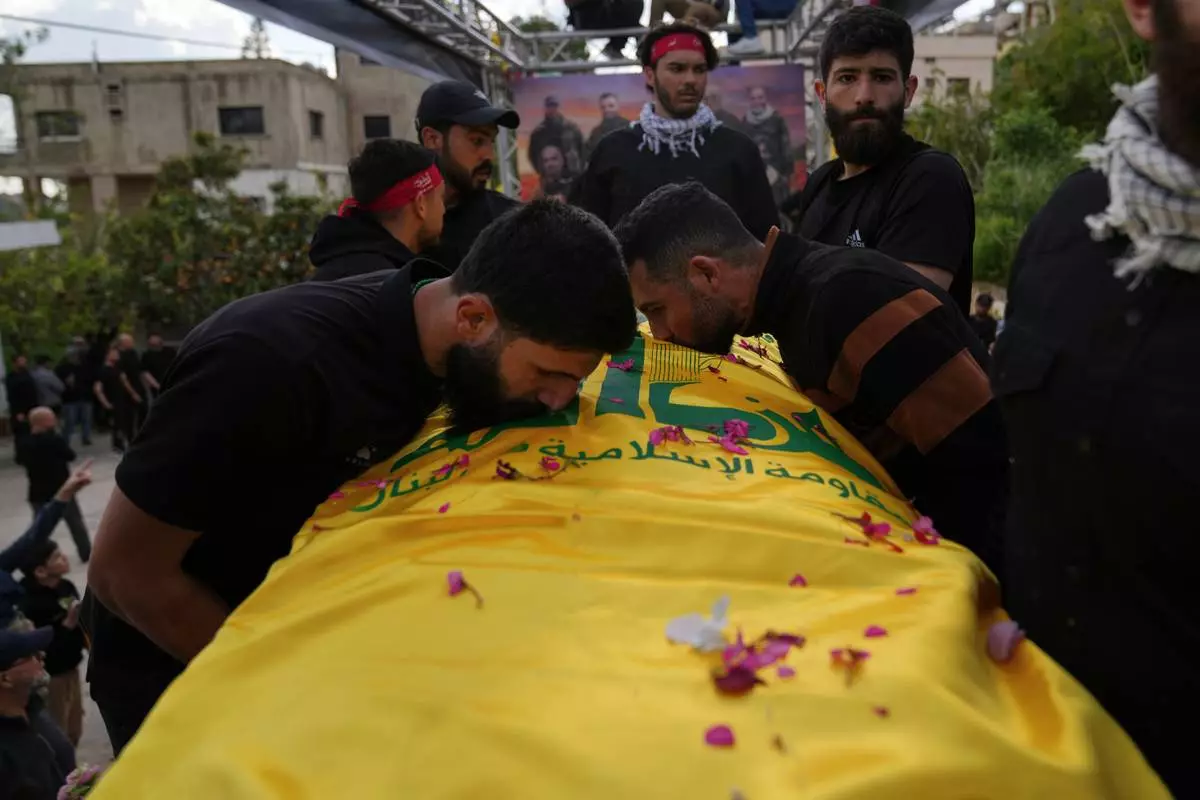
Mourners kiss a coffin of a Hezbollah fighter, who was killed before the ceasefire in the war between Hezbollah and Israel, during a mass funeral procession in the southern village of Kfar Sir, Lebanon, Tuesday, April 21, 2026. (AP Photo/Hassan Ammar)
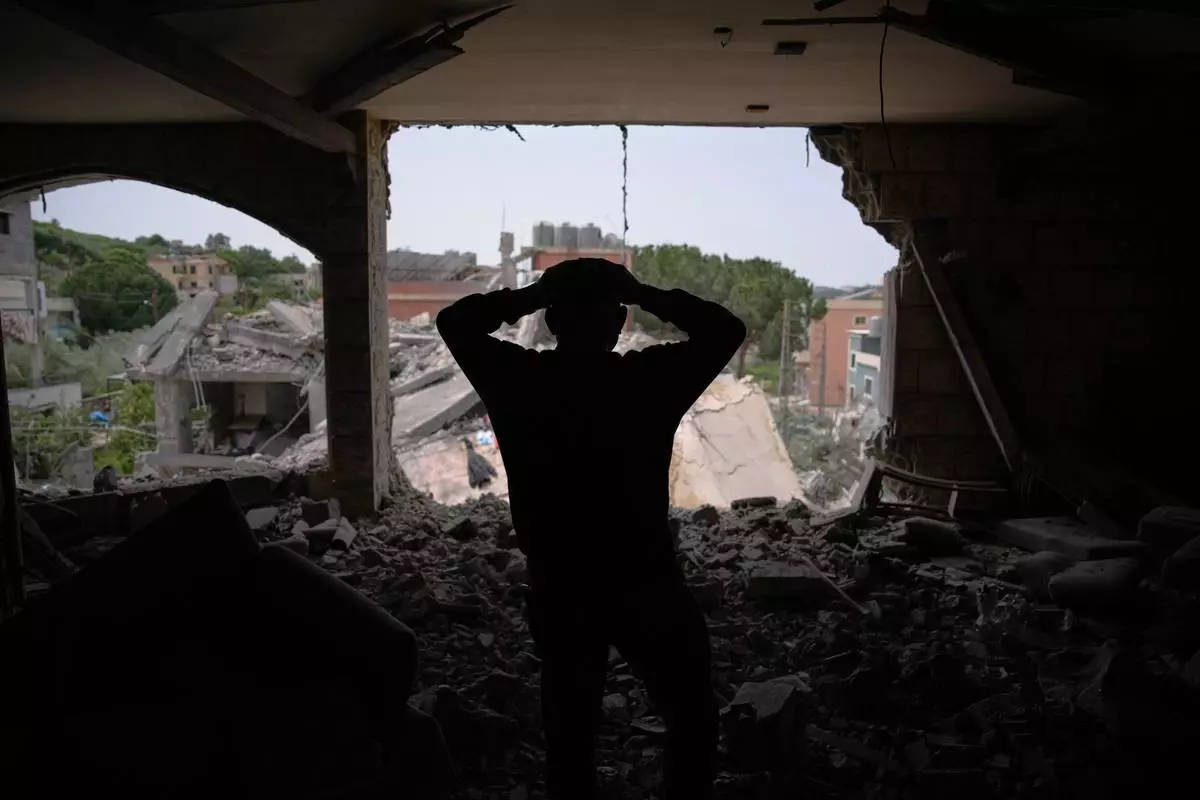
Assem Abdallah reacts as he enters his friend apartment destroyed in a Israeli airstrike in Kfar Roumman, southern Lebanon, Friday, April 17, 2026, following a ceasefire between Israel and Hezbollah. (AP Photo/Hassan Ammar)
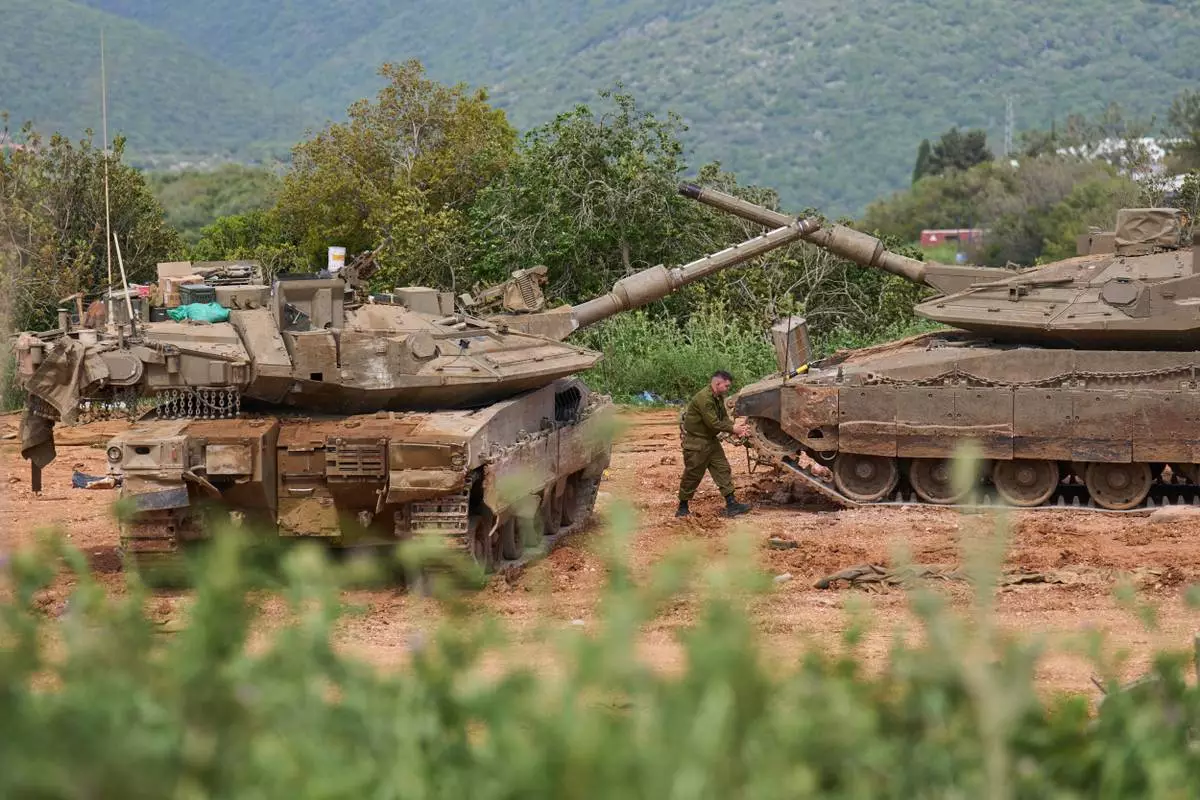
An Israeli soldier works on tanks in northern Israel, on the border with Lebanon following a ceasefire between Israel and Hezbollah, Friday, April 17, 2026. (AP Photo/Ariel Schalit)
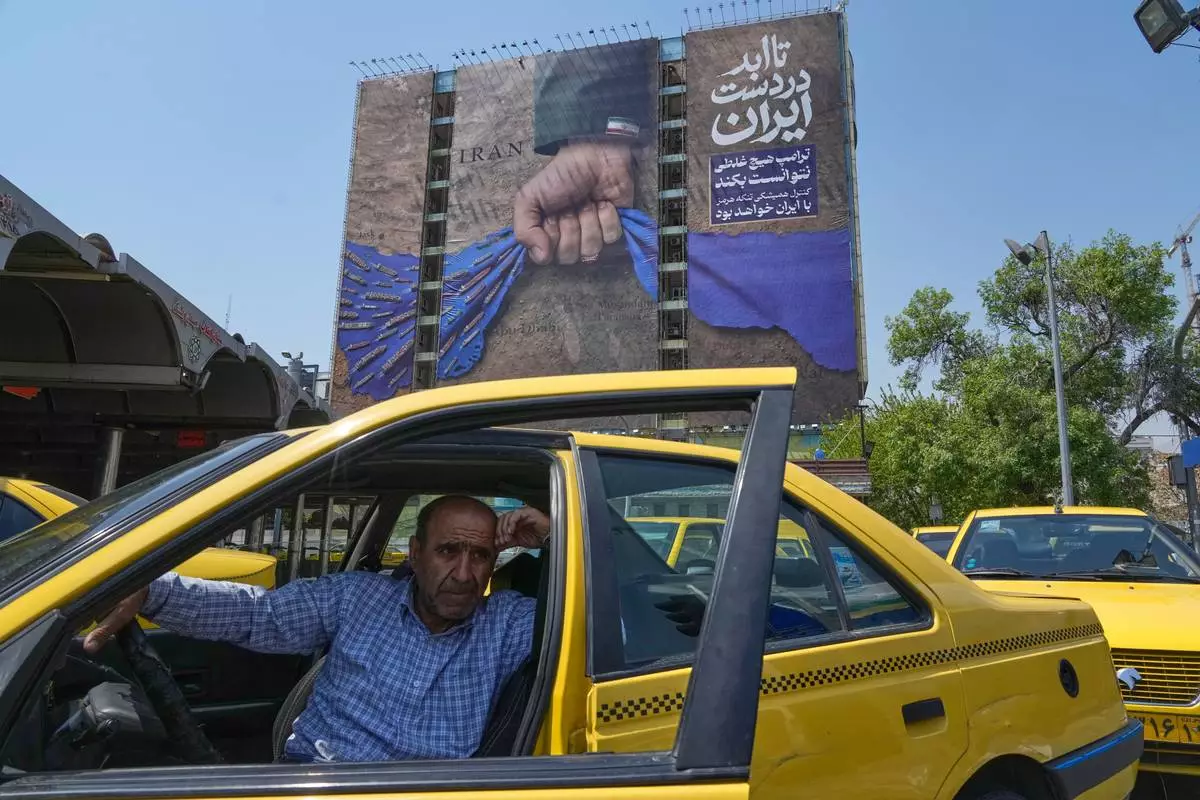
A taxi driver waits for passengers in front of a billboard that shows a graphic depicting a military personnel's hand holding the Strait of Hormuz in his fist with signs which read in Farsi: "In Iran's hands forever," "Trump couldn't do a damn thing," "The control of Strait of Hormuz will be Iran's forever," in Vanak Square in northern Tehran, Iran, Thursday, April 16, 2026. (AP Photo/Vahid Salemi)
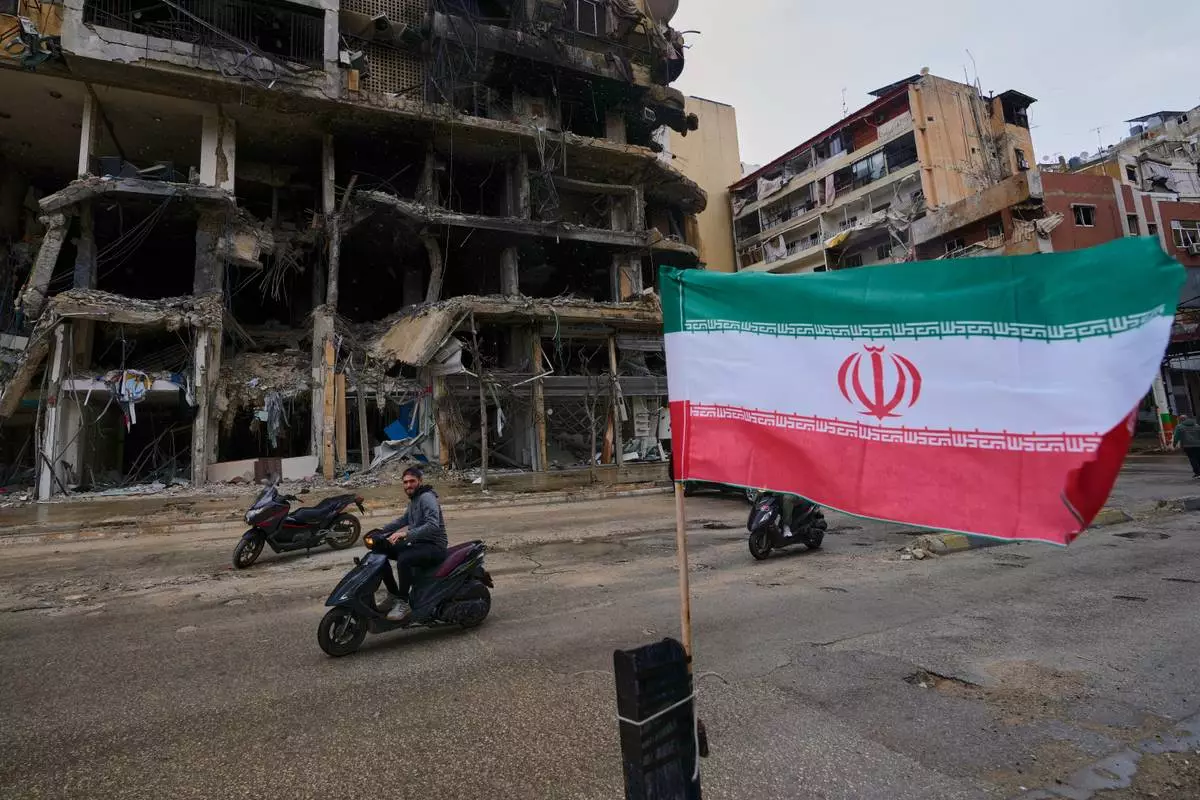
A man on his scooter passes next to an Iranian flag placed in front of a destroyed building, following a ceasefire between Hezbollah and Israel, in Dahiyeh, Beirut's southern suburbs, Lebanon, Monday, April 20, 2026. (AP Photo/Hussein Malla)