GUANGZHOU, China, April 25, 2026 /PRNewswire/ -- As global demand grows for efficient and adaptable solutions, exhibitors from the Hardware category at the 139th Canton Fair are presenting new technologies that reimagine how traditional tools and machinery operate in real‑world environments.
One of the most notable trends is the rapid rise of intelligent outdoor maintenance equipment. Responding to increasing labor costs and safety risks, new remote‑controlled mowing robots are transforming landscape management. Their tracked designs can navigate slopes of up to 30 degrees, allowing operators to remain at a safe distance from hazardous terrain such as embankments and uneven ground. With daily work efficiency exceeding manual labor by more than 500%, these machines offer a safer and significantly faster solution for agricultural and municipal applications.
In the power tools segment, versatility and system integration are becoming defining features. A newly introduced 20V Max brushless wet‑and‑dry vacuum cleaner reflects this direction, offering strong suction performance and an 8‑liter capacity suitable for wood chips, dust, and liquid cleanup on construction sites. Its IPX4 water resistance and wireless remote control improve usability in complex environments, while compatibility with modular stackable tool‑storage systems supports streamlined transport and organization for professionals in woodworking, renovation, and flooring installation.
Manufacturing processes themselves are also under the spotlight. Fully automated coil‑nail production systems on display use AI‑enabled visual inspection and roller‑conveyance mechanisms to reduce jamming and improve consistency. With daily output reaching 100 tons and labor productivity increasing by 50%, these systems demonstrate how smart manufacturing can enhance stability, quality control, and resource efficiency across the supply chain.
Practical hardware innovations are further improving logistics and safety. A new foldable ratchet fastening device features a handle that folds from 0 to 180 degrees, significantly reducing storage space while maintaining high-strength locking performance. Lightweight magnetic drill presses also support flexible, precise drilling across a range of industrial settings.
Taken together, the innovations presented in the Hardware category reflect a continued effort to address real‑world challenges through practical engineering and digital integration. By focusing on safety, efficiency, and smarter workflows, exhibitors at the 139th Canton Fair are contributing to the ongoing evolution of global hardware and tool solutions for modern industrial needs.
For pre‑registration, please click: https://buyer.cantonfair.org.cn/register/buyer/email?source_type=16
** This press release is distributed by PR Newswire through automated distribution system, for which the client assumes full responsibility. **
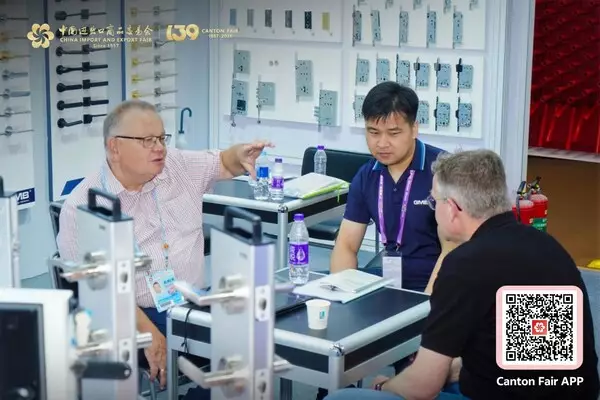
Hardware & Tools Category at 139th Canton Fair Powers a Shift Toward Smarter, Safer and More Efficient Solutions
SINGAPORE, April 25, 2026 /PRNewswire/ -- WisPaper, an AI-powered academic research agent, today introduced a new approach to scientific workflows that supports concurrent research execution. The development addresses a longstanding constraint in research—the reliance on sequential, step-by-step processes—by enabling multiple lines of inquiry to progress in parallel, allowing researchers to expand both the speed and scope of exploration.
Breaking the Limits of Sequential Research
Traditional research follows a linear structure, where literature review, hypothesis formation, experimentation, and validation are carried out sequentially. This model limits researchers to advancing a single direction, as each stage requires manual effort.
WisPaper shifts this structure by reducing dependencies between stages. Tasks that once required sequencing can now proceed more independently, allowing different research threads to move forward without waiting for earlier steps.
Enabling Concurrent Exploration
With this approach, WisPaper supports a more parallel mode of research. Researchers can initiate multiple hypotheses or problem statements simultaneously, while the system advances processes such as literature analysis, experimental setup, and result generation across these directions.
This enables a higher density of exploration within the same time frame. Instead of focusing on a single hypothesis over an extended period, researchers can evaluate multiple possibilities, compare outcomes, and adjust direction more efficiently.
Redefining the Researcher's Role
As execution becomes less constrained by manual coordination, the role of the researcher shifts toward higher-level decision-making. Researchers can focus on defining questions, setting priorities, and interpreting results across multiple ongoing investigations.
This model mirrors how larger research teams operate, where parallel efforts are coordinated toward shared objectives. By enabling similar capabilities at the individual level, WisPaper expands how research can be structured and managed.
Implications for Knowledge Production
Parallel exploration introduces a different rhythm to scientific work. By allowing more research paths to be tested within a given period, it may influence how quickly new findings emerge, particularly in areas where validation is time-intensive.
As research workflows continue to evolve, approaches that balance depth with broader exploration may play an increasing role in shaping how knowledge is produced.
About WisPaper
WisPaper is an AI-powered academic research agent designed as a full-chain research accelerator. It supports literature retrieval, analysis, experiment design, execution, and paper writing within a unified workflow, helping researchers manage complex scientific tasks more efficiently across disciplines. For more information, visit http://wispaper.ai/?utm_source=news.
** This press release is distributed by PR Newswire through automated distribution system, for which the client assumes full responsibility. **
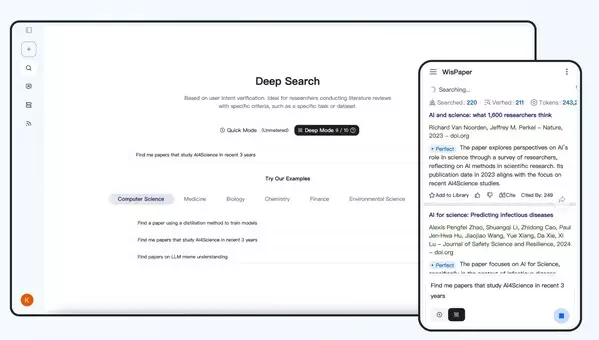
WisPaper Enables Parallel Scientific Exploration, Moving Research Beyond Sequential Workflows