Volkswagen Group CEO Oliver Blume laid out the company's future blueprint in China, highlighting the company's plans to combine local innovation with its software architecture and partner on "physical AI" for both autonomous driving and factories.
In an exclusive interview with China Global Television Network (CGTN) ahead of this year's Beijing Auto Show that runs from Friday to May 3, Blume said Volkswagen is launching its biggest ever product offensive with a focus on new energy vehicles (NEVs).
"This year is crucial for Volkswagen, now implementing our new strategy. And we are entering with a lot of new products in the NEV segment. There's a kickoff for a cadence and a product offensive, the biggest one of Volkswagen Group in history, where we will bring over 30 new models up to the end of 2027 into the market and over 50 models up to the end of 2030. And so that's a starting point and I'm looking very much forward to being able to present some of these new models and show the perspective for our Chinese customers. (There are) very exciting products in the NEV segment," the CEO said.
Volkswagen Group delivered 2.69 million vehicles in the Chinese market last year, accounting for about 30 percent of its total global deliveries during the period, the German automaker said.
Also in 2025, the company sold 2.57 million fuel vehicles in China and rolled out a batch of new-generation electrified and intelligent connected vehicles.
The company is now collaborating with diverse technology partners in China, including car maker XPeng and supply chain company Horizon Robotics.
"We see cooperations with new forces as an opportunity and, at the end, as a win-win in between the partners in developing solutions with a high innovation speed. And we have huge experience in the automotive industry and also to develop the market. And therefore, for us, it was a good approach, for example, to work here in China together with XPeng or with Horizon Robotics. But at the end, (what's) important is our own footprint we do have in our our products and combining this with these strengths," said Blume.
He added that Volkswagen is exploring new uses for artificial intelligence, such as working with companies to develop AI systems that operate in and interact with the physical world, both to use in self-driving vehicles and to boost productivity in factories.
"I think it's very important now to benefit from the opportunities from AI virtually, but also physically. We are using AI for developing software to be quicker to introduce applications for our products, but also for checking software and of course for autonomous driving. Physical AI, I think, is very useful for driving our processes and the factories, and therefore we are in cooperation with companies who are developing this kind of physical AI, and this will be the future in combination with our knowledge of our human beings in the factories to use this physical AI to support our processes," he said.
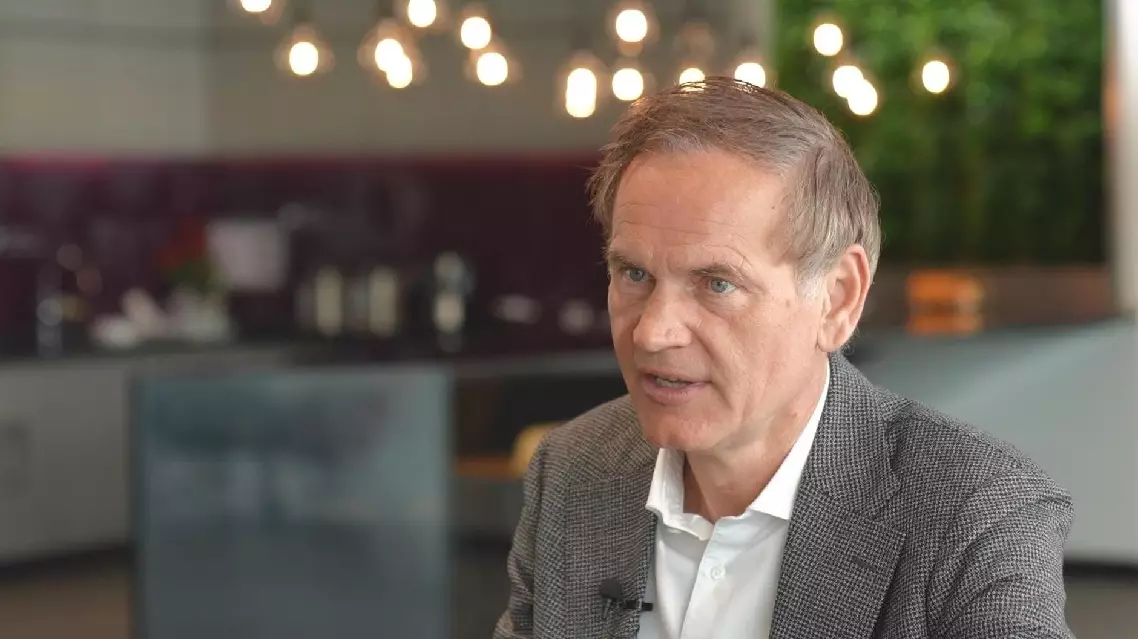
Volkswagen CEO share insights on company's future in China, highlighting cooperation, AI application