Skip to Content Facebook Feature Image

A bank robber's cellphone gave him away. Now the Supreme Court is hearing his case

News

A bank robber's cellphone gave him away. Now the Supreme Court is hearing his case
News

News

A bank robber's cellphone gave him away. Now the Supreme Court is hearing his case

2026-04-25 21:57 Last Updated At:22:01

WASHINGTON (AP) — Okello Chatrie's cellphone gave him away.

Chatrie made off with $195,000 from the bank he robbed in suburban Richmond, Virginia, and eluded the police until they turned to a powerful technological tool that erected a virtual fence and allowed them collect the location history of cellphone users near the crime scene.

The geofence warrant police served on Google found that Chatrie's cellphone was among a handful of devices in the vicinity of the bank around the time it was robbed.

Now the Supreme Court will decide whether geofence warrants violate the Fourth Amendment's ban on unreasonable searches. It's the latest high court case that forces the justices to wrestle with how a constitutional provision ratified in 1791 applies to technology the nation’s founders could not have contemplated in their wildest dreams.

Chatrie's appeal is one of two cases being argued Monday. The other is an effort by Bayer to have the court block thousands of state lawsuits alleging the global agrochemical manufacturer failed to warn people that its popular Roundup weedkiller could cause cancer.

Geofence warrants turn the usual way of pursuing suspects on its head. Typically, police identify a suspect and then obtain a warrant to search a home or a phone.

With geofence warrants, police do not have a suspect, only a location where a crime took place. They work in reverse to identify people who were in the area.

Prosecutors credit the warrants with helping crack cold cases and other crimes where surveillance cameras did not reveal suspects' faces or license plates.

Civil libertarians say that geofences amount to fishing expeditions that subject many innocent people to searches of private records merely because their cellphones happened to be in the vicinity of a crime. A Supreme Court ruling in favor of the technique could “unleash a much broader wave of similar reverse searches,” law professors who study digital surveillance wrote the court.

Investigators used geofence warrants to identify supporters of President Donald Trump who attacked the Capitol in the riot on Jan. 6, 2021, as well as in the search for the person who planted pipe bombs outside the Democratic and Republican party headquarters the night before.

Police also credit these warrants with helping identify suspects in killings in several states, including California, Georgia and North Carolina.

An academic group that works to bridge gaps between the police and communities wrote that the court should avoid an all-or-nothing approach in Chatrie’s case.

The Trump administration's position would allow police to use geofence warrants and similar tools “with no judicial supervision or constitutional safeguards,” according to the Policing Project at the New York University School of Law. Chatrie's lawyers want the court to rule out any use of geofence warrants at all, impeding “legitimate law enforcement activities,” the group wrote.

In Chatrie's case, the geofence warrant invigorated an investigation that had stalled. After determining that Chatrie was near the Call Federal Credit Union in Midlothian around the time it was robbed in May 2019, police obtained a search warrant for his home. They found nearly $100,000 in cash, including bills wrapped in bands signed by the bank teller.

He pleaded guilty and was sentenced to nearly 12 years in prison. Chatrie's lawyers argued on appeal that none of the evidence should have been used against him.

They challenged the warrant as a violation of his privacy because it allowed authorities to gather the location history of people near the bank without having any evidence they had anything to do with the robbery. Prosecutors argued that Chatrie had no expectation of privacy because he voluntarily opted into Google’s location history.

A federal judge agreed that the search violated Chatrie’s rights, but allowed the evidence to be used because the officer who applied for the warrant reasonably believed he was acting properly.

The federal appeals court in Richmond upheld the conviction in a fractured ruling. In a separate case, the federal appeals court in New Orleans ruled that geofence warrants "are general warrants categorically prohibited by the Fourth Amendment.”

In the Supreme Court's last case on digital-age searches, in 2018, the court divided 5-4 in favor of a defendant whose movements were tracked by authorities for nearly four months, without a warrant, through the review of cellphone tower data.

An issue in that case that also appears in Chatrie's is whether the defendant had an expectation of privacy that would trigger Fourth Amendment protections.

The Supreme Court has previously ruled that information shared with third parties cannot be considered private.

But Chief Justice John Roberts wrote in his majority opinion about the extraordinary computing power of cellphones, describing “seismic shifts in digital technology” and "the exhaustive chronicle of location information casually collected by wireless carriers today.”
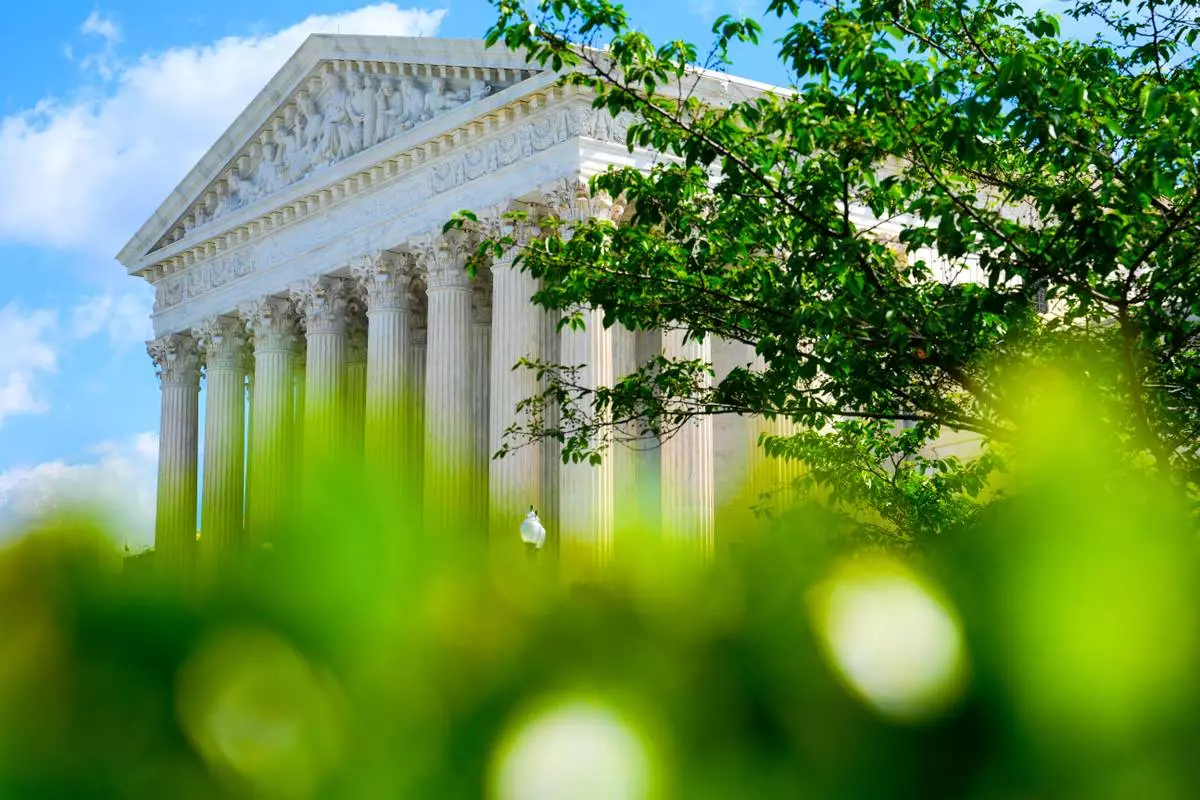
The U.S. Supreme Court is seen Friday, April 17, 2026, in Washington. (AP Photo/Mariam Zuhaib)
The U.S. Supreme Court is seen Friday, April 17, 2026, in Washington. (AP Photo/Mariam Zuhaib)

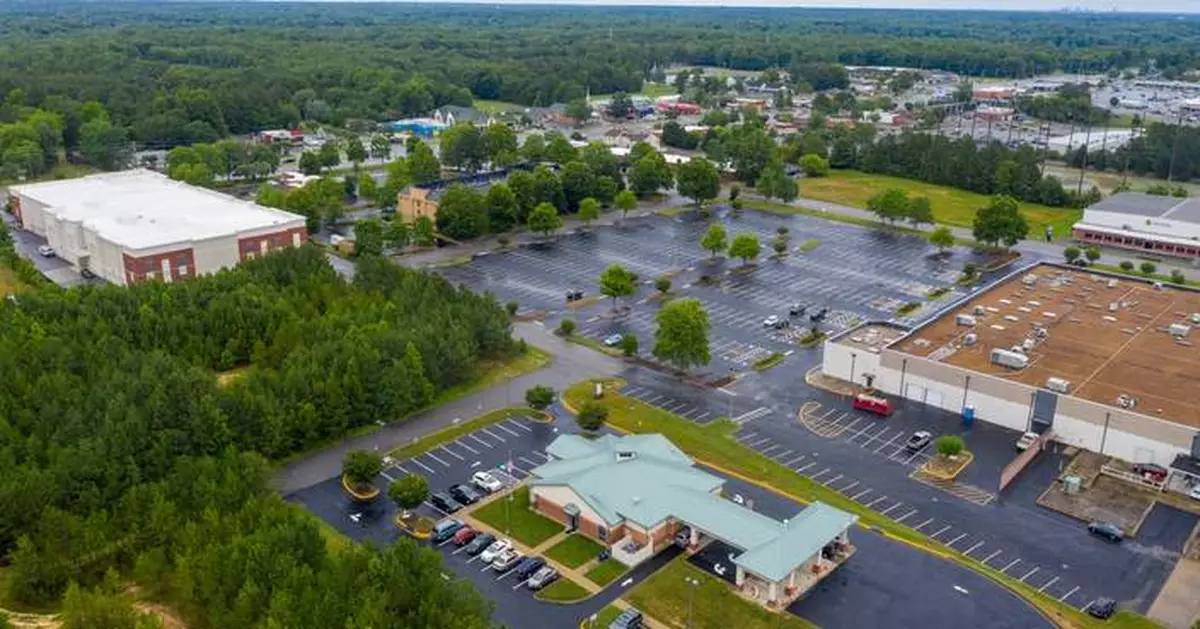
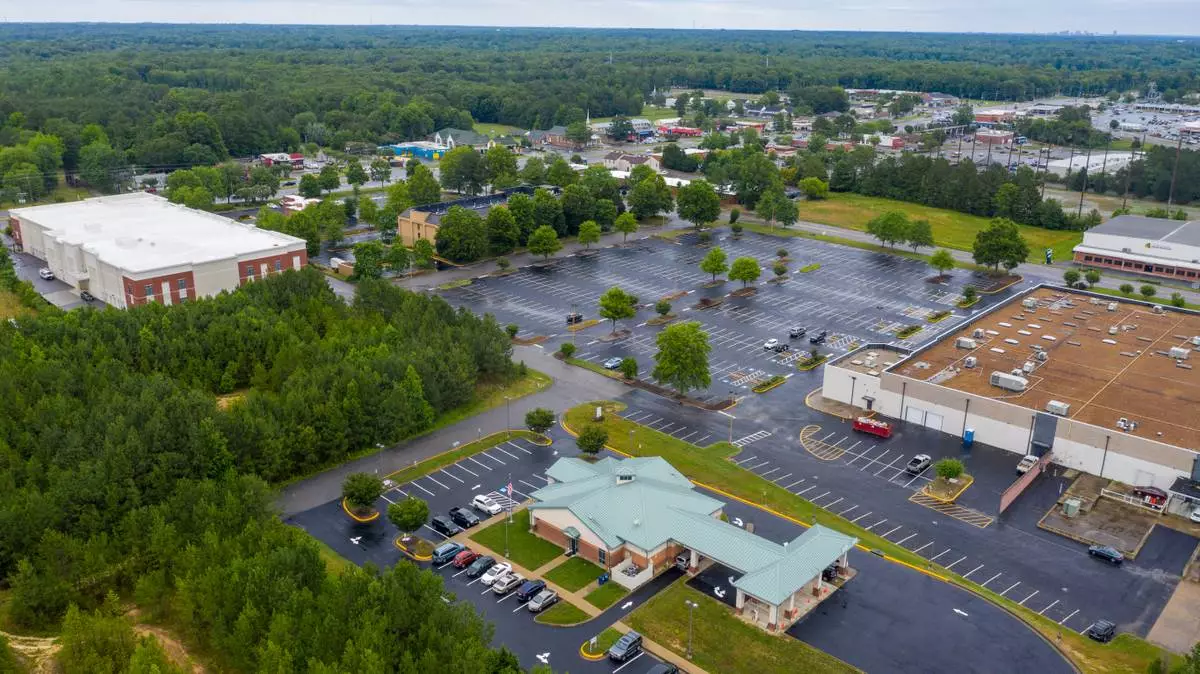
FILE - A drone photo taken on June 16, 2020, shows the Call Federal Credit Union, front, a bank robbed by Okello Chatrie in 2019 in Midlothian, Va. (AP Photo/Steve Helber, File)

FILE - A drone photo taken on June 16, 2020, shows the Call Federal Credit Union, front, a bank robbed by Okello Chatrie in 2019 in Midlothian, Va. (AP Photo/Steve Helber, File)
ATHENS, Greece (AP) — The European Union’s ongoing push to bolster its own defensive capabilities isn’t intended to spawn an alternative to the NATO alliance but to answer a long-standing U.S. call for the continent to take charge of its own security, the French president said Saturday.

Emmanuel Macron said Europe mustn’t act to weaken NATO, which connects the continent with its American ally. Instead, Europeans are now stepping up to meet Washington’s demand made over the past decade “sometimes nicely, sometimes less nicely” to take care of their own security.

“The lesson we must draw is, let us no longer be dependent,” Macron said after talks with Greek Prime Minister Kyriakos Mitsotakis. “We Europeans must strengthen this European pillar of NATO, we must strengthen this Europe of defense — not against anyone, not as an alternative to anything.”

Mitsotakis echoed the French president, saying the U.S. should be pleased that the EU is taking its own self-reliance seriously and investing more in its own defense, calling the American demand to spend more “justified.”

After traveling to Cyprus for an informal European Union leaders’ summit, Macron visited the Greek capital to renew a 2021 defense partnership between France and Greece that includes a mutual assistance clause in case of an armed attack against either.

“This mutual assurance and assistance clause is inviolable, and it is not up for debate between us,” Macron said. “So there are no question marks, no doubts to be entertained — and all our potential, or real, enemies need to be very clear about that.”

The 3-billion-euro agreement included the purchase of 24 Rafale fighter jets and four state-of-the-art frigates including the Kimon, which Macron and Mitsotakis visited Saturday.

Greece, which has long had troubled relations with its eastern neighbor Turkey, has been overhauling its military capabilities, and much of its defense procurement has come from France. Among those is the French MICA anti-air-missile system that can be used by aircraft, land forces and warships.

Both leaders hailed the agreement as an example for other EU partners to follow and boost the 27-member bloc’s competitiveness. Mitsotakis encouraged EU leaders to drop “national egotism” that pulls a protective curtain over their domestic industry and move forward with more mergers to produce economies of scale.

Macron underscored the need for European industry to innovate and win back consumers with better, more desirable products that will finance the EU’s defense goals.

“All of us Europeans — the Franco-Greek relationship is a prime example — need to buy more European products, produce more European goods, and innovate more within Europe," he said.

Both leaders referred to Article 42.7, the EU’s own mutual defense clause, that Macron said wasn’t “just empty words.” The French president pointed to both countries’ rush to assist fellow EU member Cyprus by dispatching warships there in early March after a Shahed drone struck a British base on the island nation during the Iran war.

The French president warned against instigating panic with talk about fuel shortages as a result of the closure of the Strait of Hormuz from which roughly a fifth of the world’s oil and gas passes. He said the fuel supply remains “under control” and that he doesn’t foresee any shortages.

He said Europe remains focused on helping to reopen the Strait of Hormuz, although he acknowledged that it will take some time for the situation to return to normal.

Mitsotakis said Greece, as a global shipping power, wants any diplomatic solution to include a “non-negotiable” clause for the complete and unimpeded freedom of navigation through the strait without exacting tolls from ships, as was the case prior to the start of the Iran war.

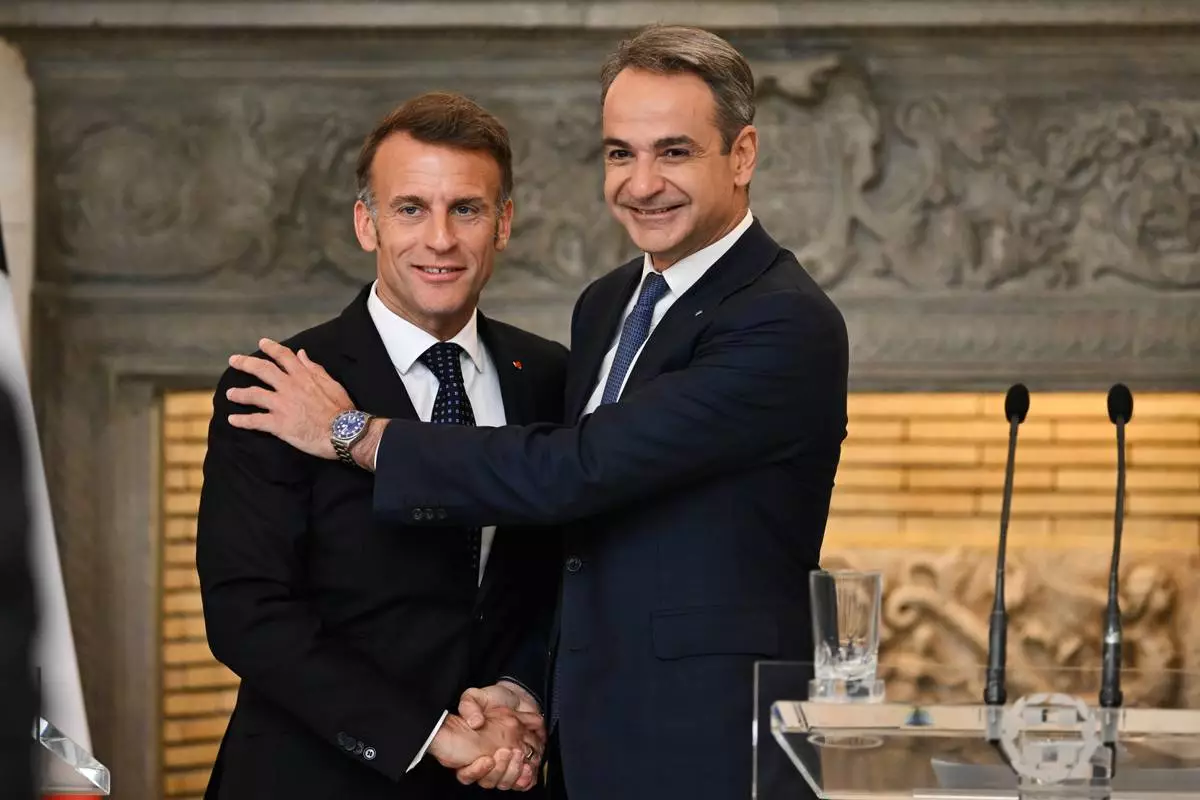
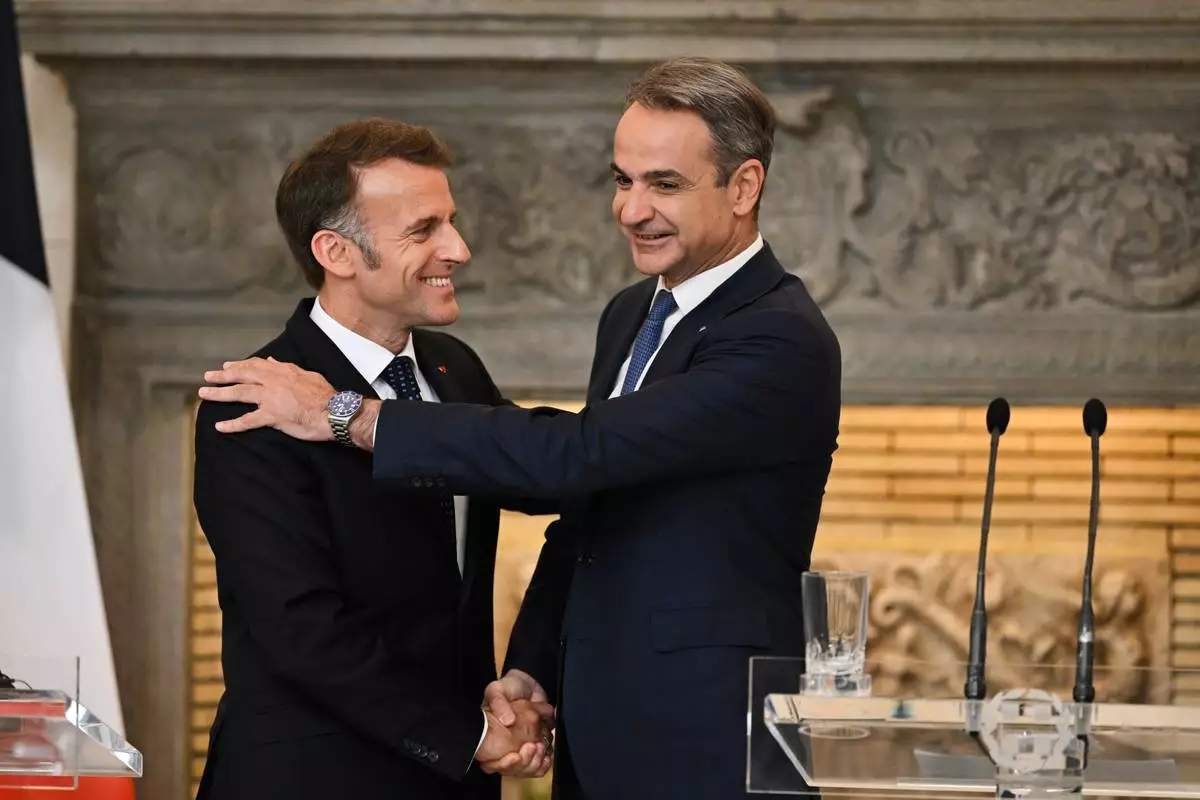
Greece's Prime Minister Kyriakos Mitsotakis, right, shakes hands with France's President Emmanuel Macron after a media conference at Maximos Mansion in Athens, Greece, Saturday, April 25, 2026. (AP Photo/Michael Varaklas)

Greece's Prime Minister Kyriakos Mitsotakis, right, shakes hands with France's President Emmanuel Macron after a media conference at Maximos Mansion in Athens, Greece, Saturday, April 25, 2026. (AP Photo/Michael Varaklas)

Greece's Prime Minister Kyriakos Mitsotakis, right, shakes hands with France's President Emmanuel Macron after a media conference at Maximos Mansion in Athens, Greece, Saturday, April 25, 2026. (AP Photo/Michael Varaklas)

Greece's Prime Minister Kyriakos Mitsotakis, right, shakes hands with France's President Emmanuel Macron after a media conference at Maximos Mansion in Athens, Greece, Saturday, April 25, 2026. (AP Photo/Michael Varaklas)

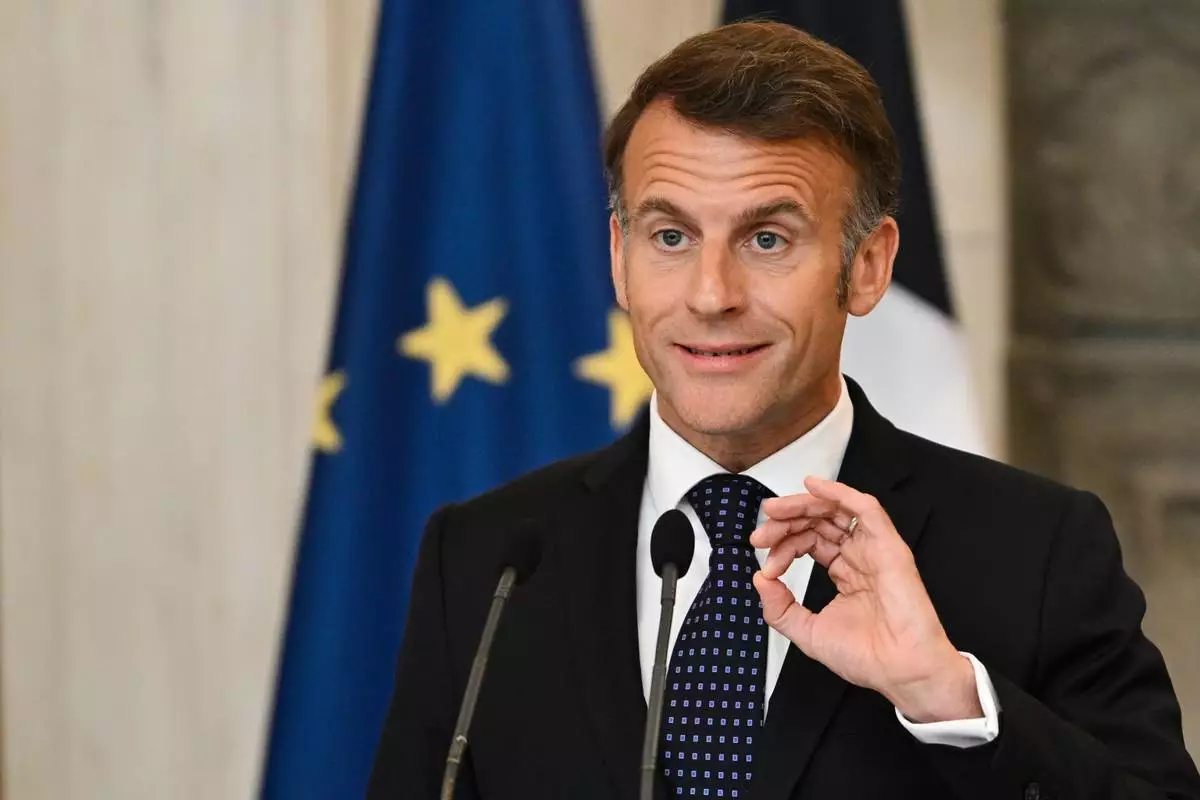
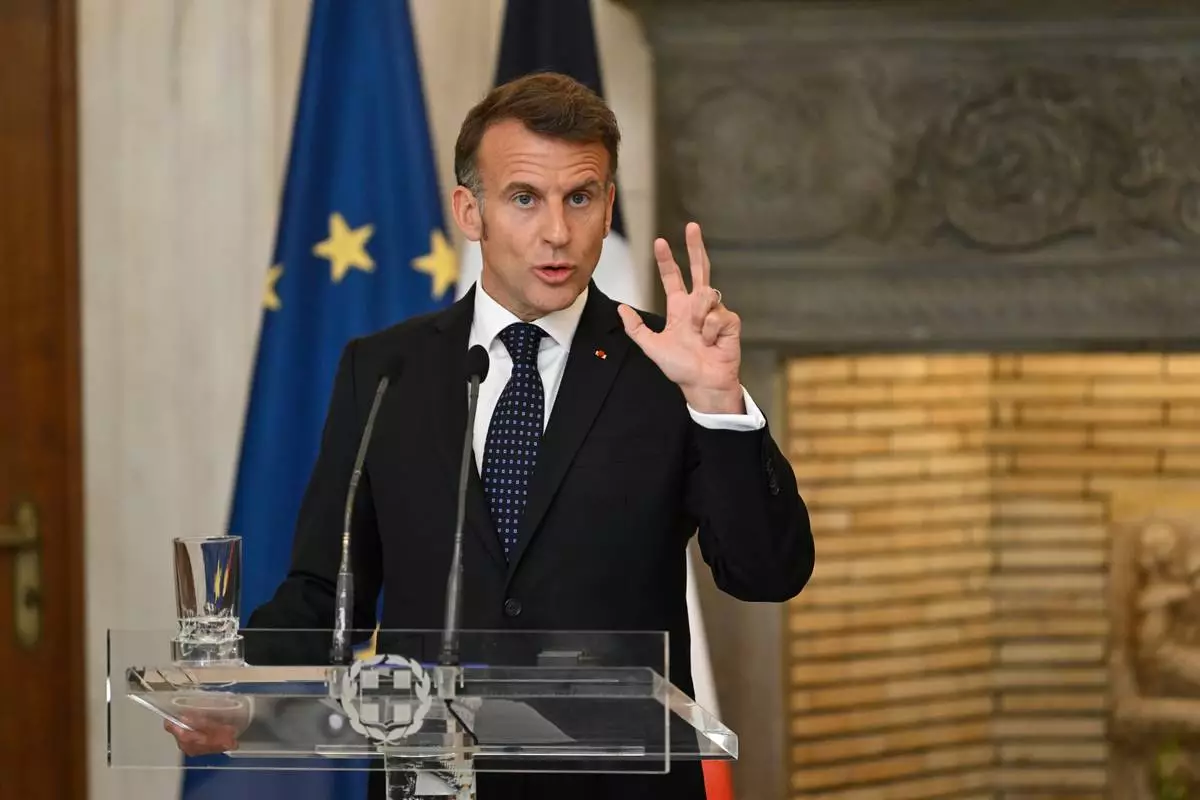
France's President Emmanuel Macron speaks during a media conference with Greece's Prime Minister Kyriakos Mitsotakis at Maximos Mansion in Athens, Greece, Saturday, April 25, 2026. (AP Photo/Michael Varaklas)

France's President Emmanuel Macron speaks during a media conference with Greece's Prime Minister Kyriakos Mitsotakis at Maximos Mansion in Athens, Greece, Saturday, April 25, 2026. (AP Photo/Michael Varaklas)

France's President Emmanuel Macron speaks during a media conference with Greece's Prime Minister Kyriakos Mitsotakis at Maximos Mansion in Athens, Greece, Saturday, April 25, 2026. (AP Photo/Michael Varaklas)

France's President Emmanuel Macron speaks during a media conference with Greece's Prime Minister Kyriakos Mitsotakis at Maximos Mansion in Athens, Greece, Saturday, April 25, 2026. (AP Photo/Michael Varaklas)

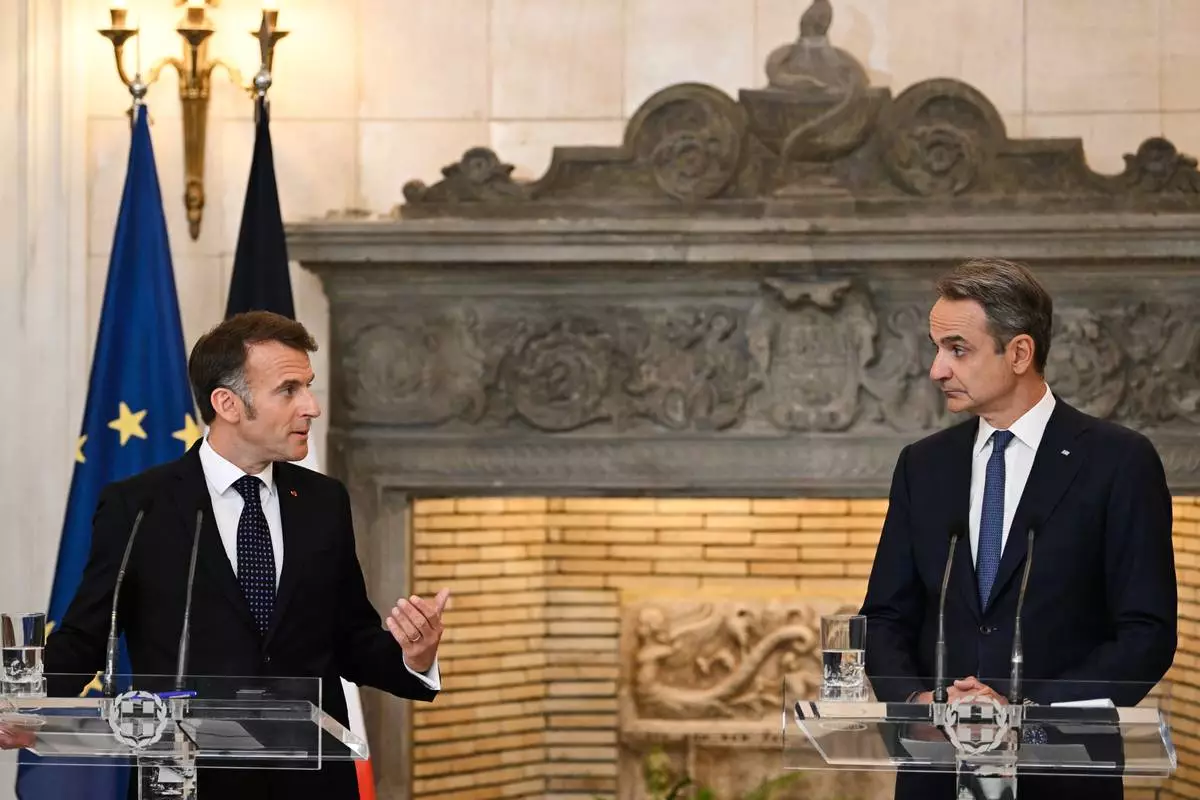
Greece's Prime Minister Kyriakos Mitsotakis, right, and France's President Emmanuel Macron participate in a media conference at Maximos Mansion in Athens, Greece, Saturday, April 25, 2026. (AP Photo/Michael Varaklas)

Greece's Prime Minister Kyriakos Mitsotakis, right, and France's President Emmanuel Macron participate in a media conference at Maximos Mansion in Athens, Greece, Saturday, April 25, 2026. (AP Photo/Michael Varaklas)

Recommended Articles