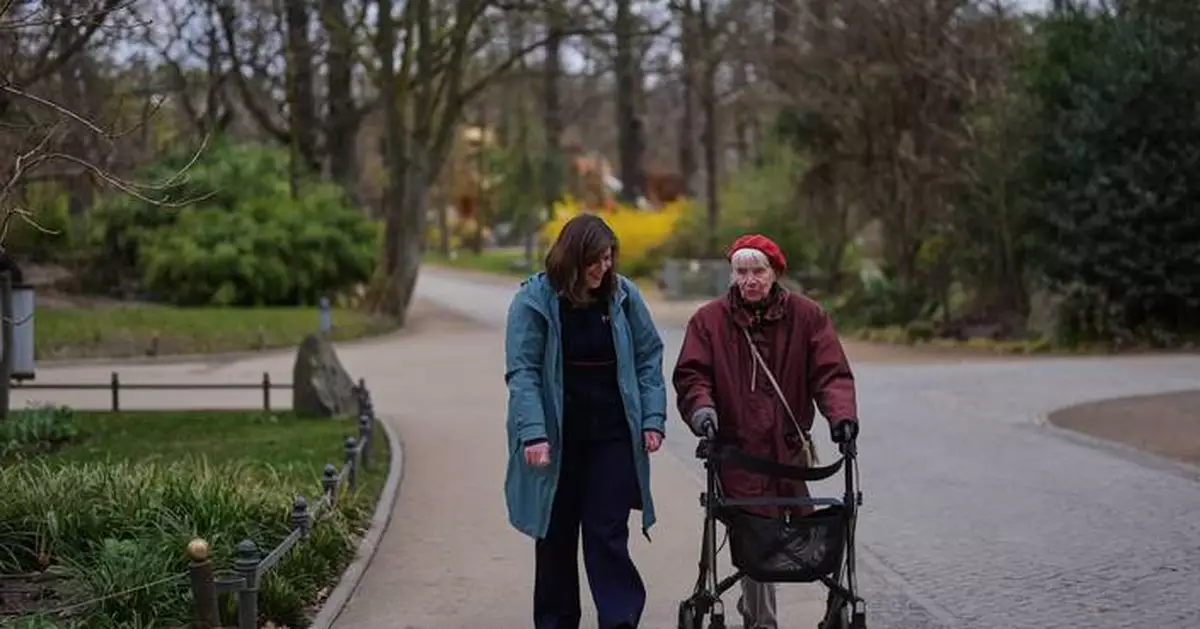
BERLIN (AP) — For people living with disabilities, barriers to tourism can range from the obvious — such as an out-of-service elevator — to the unseen, like an outing that's too long or a setting that's too loud.
As the baby boom generation ages, the travel industry is increasingly catering to older adults with the time and money to sightsee internationally and who sometimes need additional assistance. Truly inclusive accessibility, though, accommodates a much greater range of tourists, from individuals with physical disabilities to people with autism or dementia.
Click to Gallery
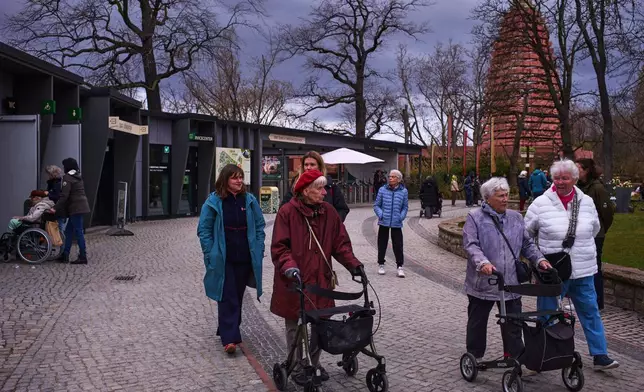
Monika Jansen, front left, and Christel Krueger, background center, take part in a guided tour for people with dementia organized by Malteser Deutschland, part of the international Catholic aid organization Malteser Order of Malta, at the Zoo in Berlin, Germany, Thursday, March 26, 2026. (AP Photo/Markus Schreiber)
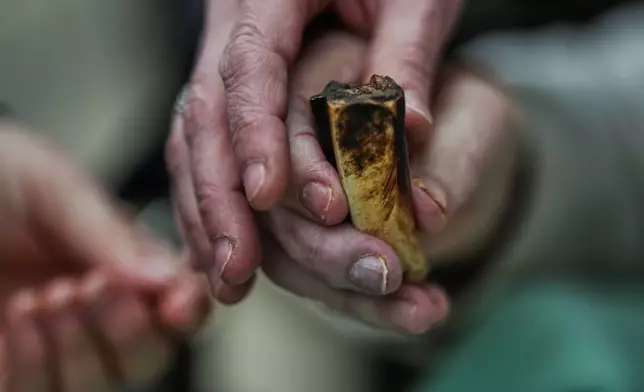
A hippopotamus's tooth is given to participants during a guided tour for people with dementia organized by Malteser Deutschland, part of the international Catholic aid organization Malteser Order of Malta, at the Zoo in Berlin, Germany, Thursday, March 26, 2026. (AP Photo/Markus Schreiber)
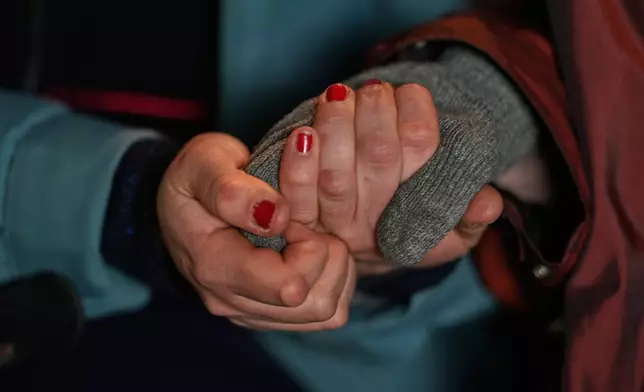
Project coordinator Christine Gruschka holds the hand of Monika Jansen 85, during a guided tour for people with dementia organized by Malteser Deutschland, part of the international Catholic aid organization Malteser Order of Malta, at the Zoo in Berlin, Germany, Thursday, March 26, 2026. (AP Photo/Markus Schreiber)
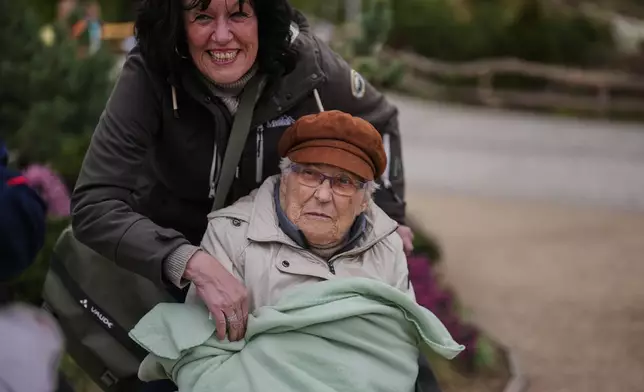
Ingrid Barkow, left, is wrapped in a blanket by her daughter Manuela Grudda, during a guided tour for people with dementia organized by Malteser Deutschland, part of the international Catholic aid organization Malteser Order of Malta, at the Zoo in Berlin, Germany, Thursday, March 26, 2026. (AP Photo/Markus Schreiber)
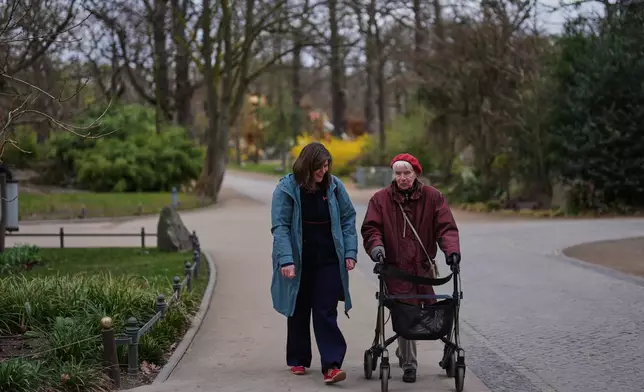
Project coordinator Christine Gruschka, left, talks to Monika Jansen, 85, during a guided tour for people with dementia organized by Malteser Deutschland, part of the international Catholic aid organization Malteser Order of Malta, at the Zoo in Berlin, Germany, Thursday, March 26, 2026. (AP Photo/Markus Schreiber)
To better serve visitors with visible or invisible disabilities, museums and other cultural institutions worldwide have added specialized guides and barrier-free tours, some made possible by advances in technology.
These include sign-language tours for people who are deaf or hard of hearing, touch-based events for guests with blindness or low vision, and programs designed for people on the autism spectrum. Tourism agencies dedicated to serving disabled travelers have sprung up, too.
Offering barrier-free tours shows people with disabilities they are welcome in cultural spaces, said Ashley Grady, an accessibility program specialist at the Office of Visitor Accessibility of Washington's Smithsonian Institution.
The services are a way of saying, “we’ve thought of you,” Grady said. “We want you to come to our museums. We want you to see yourselves reflected in our staff and our collections. And we want to make these programs as accessible as possible for you, your family, your loved ones, your friends.”
Still, gaps remain. Ivor Ambrose, managing director of the nonprofit European Network for Accessible Tourism, said there's a continuing lack of awareness around the different levels of accessibility that travelers need.
"This is actually a really big market and an opportunity, which is still not fulfilled by the operators in all these different areas of tourism," he said.
Here is advice from several experts about how to take advantage of barrier-free options for yourself or someone else.
Josh Grisdale, the founder of Accessible Japan, a website that publishes databases, resources and guides to navigating the country for people with disabilities, has cerebral palsy and uses a power wheelchair. Before traveling to a new place, he peruses Reddit, watches travel videos on YouTube — even if the person filming didn't require accommodations — and browses Google's Street View to look for stairs or other features that aren't suitable for wheelchairs.
Facebook can be helpful, but tips often are buried in private groups that aren't searchable, Grisdale said. If a hotel has a concierge, he recommends working with them and calling ahead to ask if a place you'd like to visit has the proper accessibility. Most museums and cultural institutions have written guides and other resources online detailing their barrier-free options.
Grisdale also created the online platform tabifolk, which crowdsources knowledge about accessible travel from around the world. A lack of such information can make researching and planning a trip even more stressful, so he wanted there to be a place where people could help each other through their lived experiences.
“Even though I’m in a wheelchair and I've had a disability my whole life, there’s things that I don’t know about other disabilities,” he said.
In Africa, proper planning is crucial for people with disabilities to be able to enjoy what the continent has to offer, such as going on a safari or climbing Mount Kilimanjaro, according to Joanne Ndirangu, the founder and director of accessible tourism agency Scout Group Agency.
Ndirangu promotes and advocates for expanding accessible tourism throughout Africa, particularly in Kenya. She urges visitors to work with local travel agents or other trained experts who know the region and what accessible options exist. Those people may have been the ones who worked to get a hotel or restaurant to install ramps or train the staff on helping someone who is neurodivergent.
"Let’s say you want to see giraffes somewhere," Ndirangu said. “I can now advise you, ‘That place is not viable if you’re on a wheelchair or on crutches because of the hills and the valleys.’ So I can give you an alternative — and you get to see the giraffes.”
Tours organized for the general public may not be ideal for people with disabilities in many cases, whether it's because the exhibits are too high for anyone in a wheelchair to see, or too loud for a person with sensory issues.
The offerings at the Smithsonian Institution, the world’s largest museum complex, include the sensory-friendly “Morning at the Museum” program, which is designed so participants who are neurodivergent and their families can visit a Smithsonian museum in Washington once a month before it opens to the public. They can engage in hands-on, multi-sensory activities or just stroll around at their own pace.
“We can control the environment, we can reduce the crowds,” Grady said. “It’s a completely judgment-free environment and one that’s really meant to hopefully be that full bridge to inclusion, where they are able to come to a museum, have a great experience, and then maybe come back when we’re open to the public.”
In Berlin, Catholic aid organization Malteser Deutschland noticed that people with dementia were often overlooked as visitors. The organization designed barrier-free tours specifically for this population at the Berlin Zoo, the Museum of Natural History, Britzer Garden and Charlottenburg Palace, with hopes of expanding to other locations.
The Berlin Zoo tour is limited to a handful of people, and runs about 90 minutes. The program skips the majority of the zoo’s vast collection of species to focus a few habitats so the participants don't get too tired or overwhelmed.
Ndirangu said her team was trained to ask visitors upfront if they or their family members require accommodations for any disabilities so they can suggest the best options. It's not always possible to mitigate what they don't know about ahead of time, she said. Most hotels in Kenya only have one or two accessible rooms, for example, and they might already be booked by the time a guest who needs it arrives.
“Give us that opportunity to give you solutions,” she said. “We’ve had guests who don’t mention anything.”
The European Network for Accessible Tourism encourages travel companies to build the cost of providing barrier-free services into their programming so it's spread among all participants instead of only those who might require them. Many museums, for example, offer discounted rates for people with disabilities or free or reduced tickets for a companion.
Grady at the Smithsonian said the institution adapted its offerings after feedback from participants as well as an advisory group. Their advice has ranged from adjusting the colors on an app for people with low vision, to working with curators to ensure that upcoming exhibits are properly accessible for all.
“They’re not asking for anything out of the ordinary,” she said. “They’re literally just trying to experience a visit just like anyone else.”
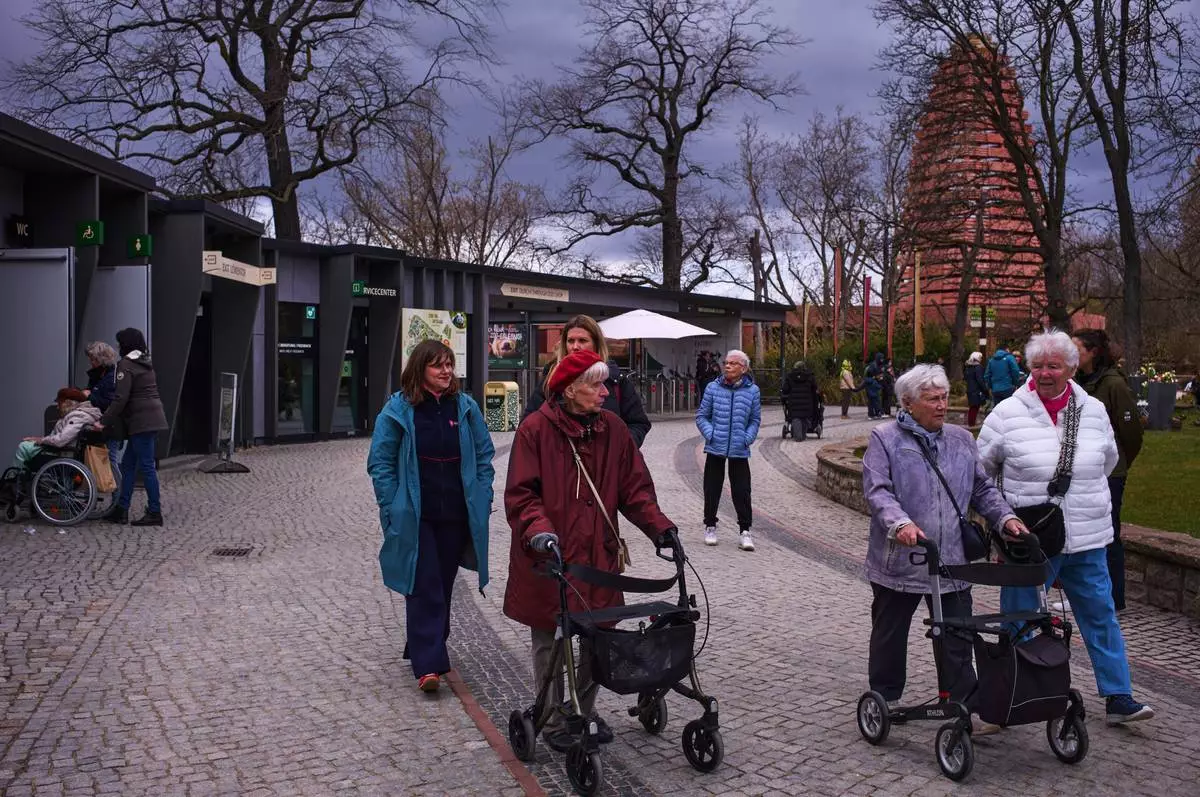
Monika Jansen, front left, and Christel Krueger, background center, take part in a guided tour for people with dementia organized by Malteser Deutschland, part of the international Catholic aid organization Malteser Order of Malta, at the Zoo in Berlin, Germany, Thursday, March 26, 2026. (AP Photo/Markus Schreiber)
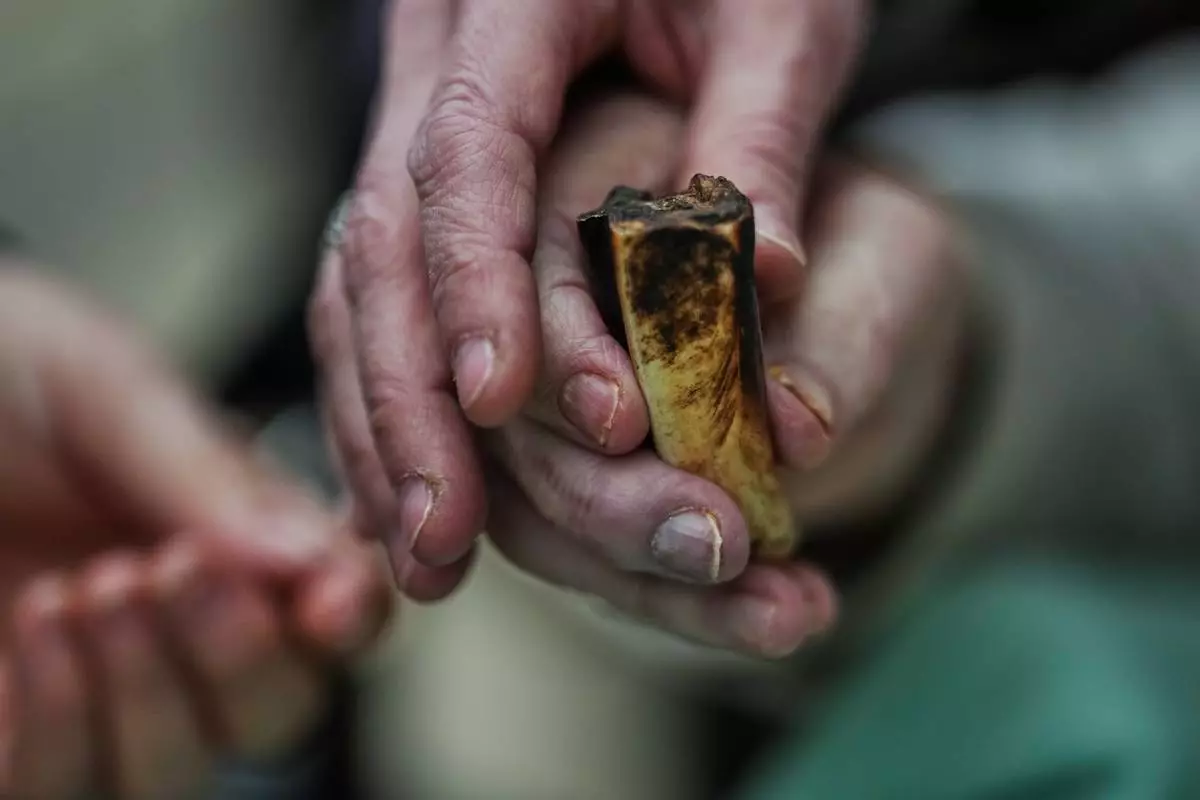
A hippopotamus's tooth is given to participants during a guided tour for people with dementia organized by Malteser Deutschland, part of the international Catholic aid organization Malteser Order of Malta, at the Zoo in Berlin, Germany, Thursday, March 26, 2026. (AP Photo/Markus Schreiber)
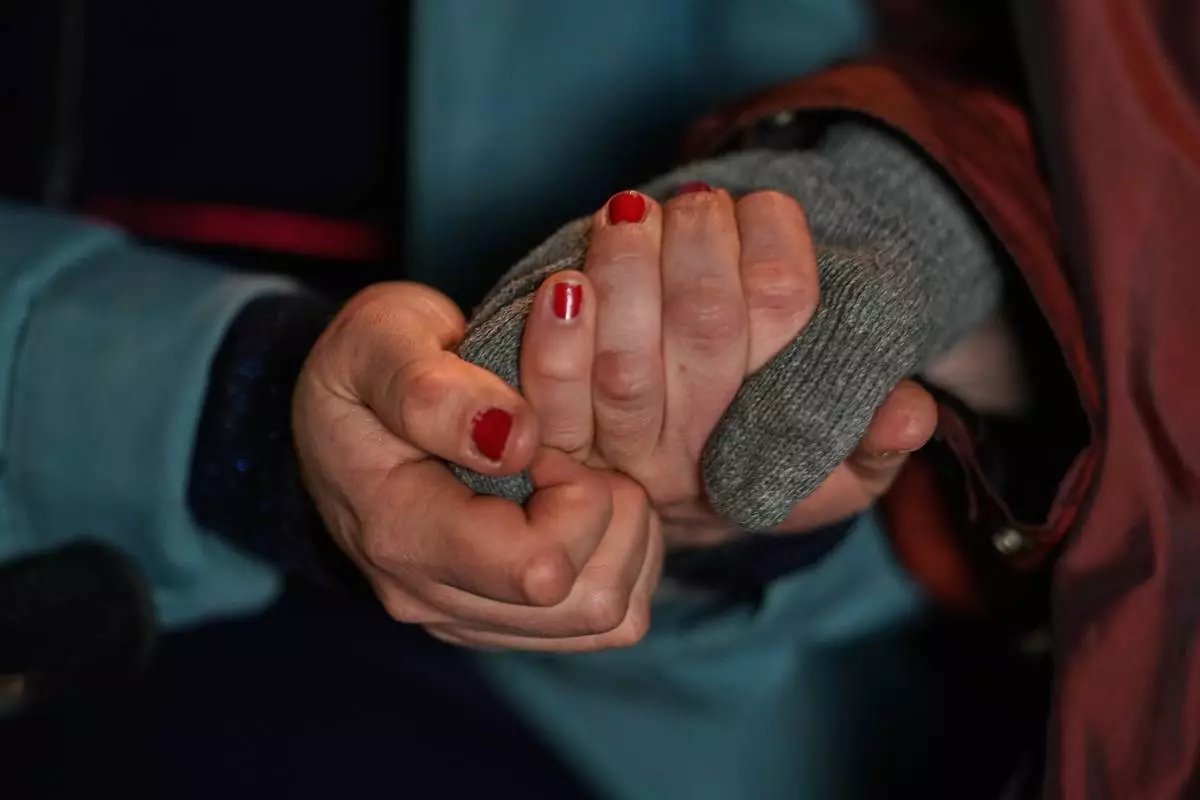
Project coordinator Christine Gruschka holds the hand of Monika Jansen 85, during a guided tour for people with dementia organized by Malteser Deutschland, part of the international Catholic aid organization Malteser Order of Malta, at the Zoo in Berlin, Germany, Thursday, March 26, 2026. (AP Photo/Markus Schreiber)
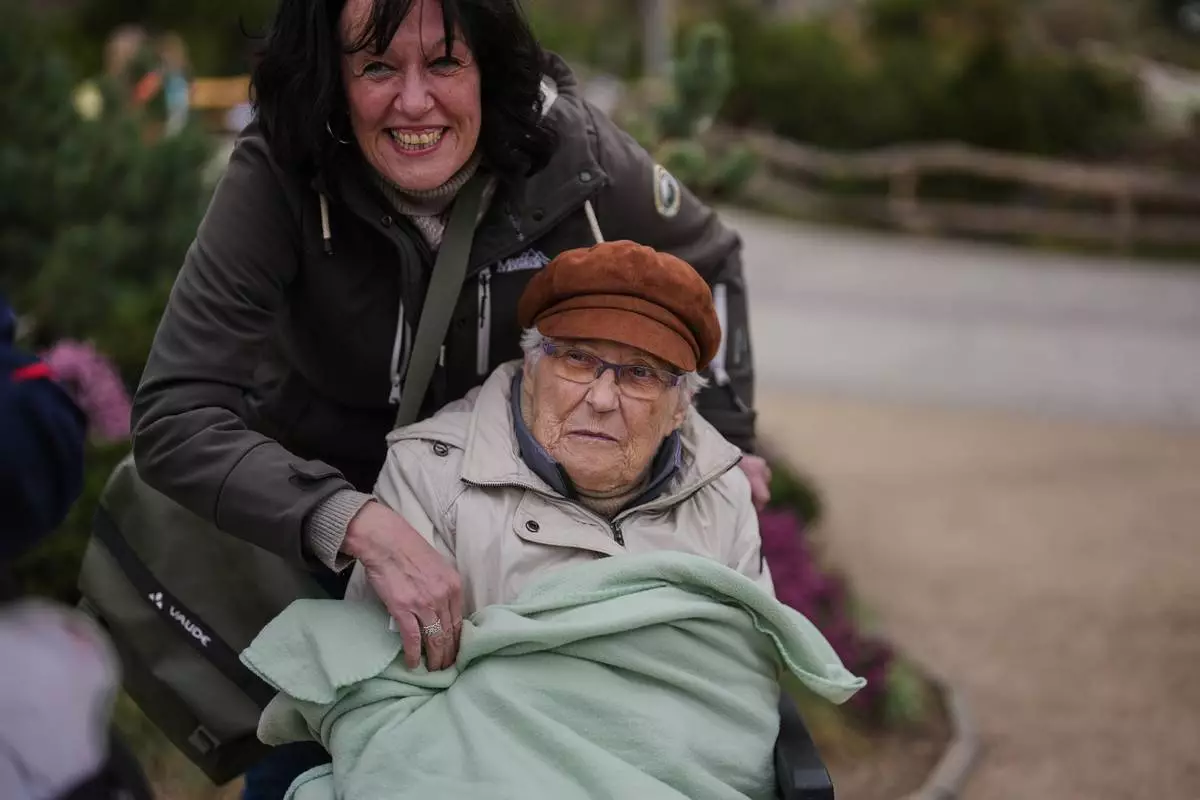
Ingrid Barkow, left, is wrapped in a blanket by her daughter Manuela Grudda, during a guided tour for people with dementia organized by Malteser Deutschland, part of the international Catholic aid organization Malteser Order of Malta, at the Zoo in Berlin, Germany, Thursday, March 26, 2026. (AP Photo/Markus Schreiber)
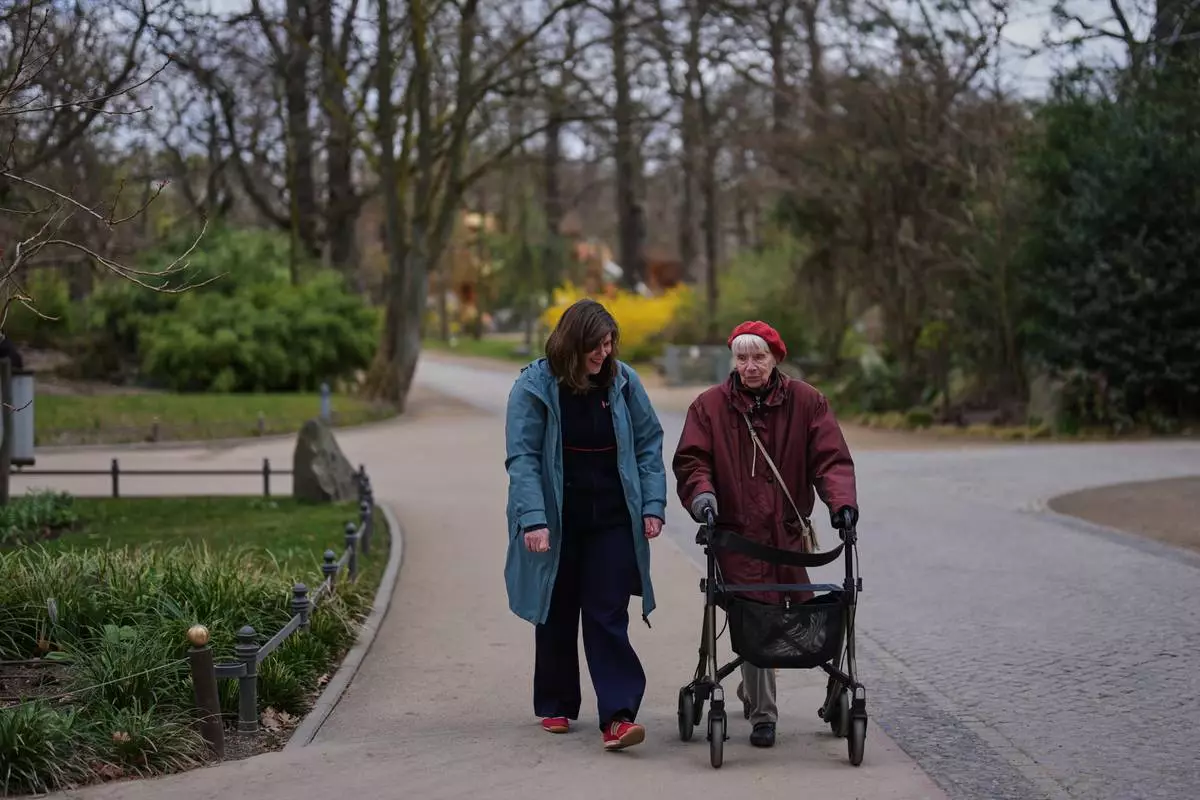
Project coordinator Christine Gruschka, left, talks to Monika Jansen, 85, during a guided tour for people with dementia organized by Malteser Deutschland, part of the international Catholic aid organization Malteser Order of Malta, at the Zoo in Berlin, Germany, Thursday, March 26, 2026. (AP Photo/Markus Schreiber)