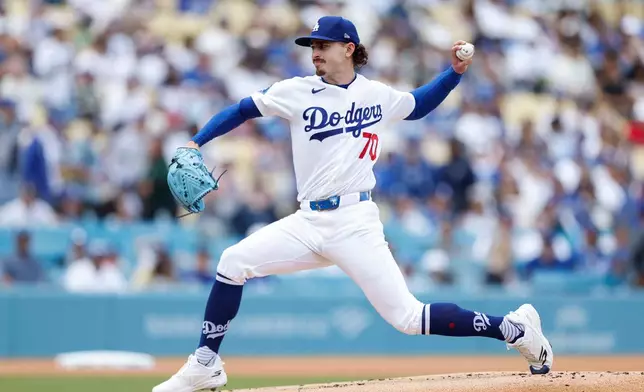
LOS ANGELES (AP) — Justin Wrobleski tossed six scoreless innings to become the first Dodgers pitcher since 2009 to win his first four starts, and Los Angeles defeated the Chicago Cubs 6-0 on Sunday in the series finale.
Wrobleski (4-0) allowed four hits, struck out six and walked a season-high four on a career-high 109 pitches while facing the Cubs for the first time in his career. The left-hander matched Chad Billingsley, who won his first four starts 17 years ago.
Click to Gallery
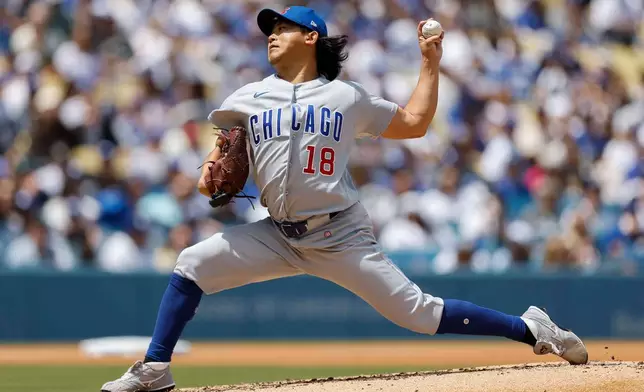
Chicago Cubs starting pitcher Shota Imanaga (18) works during the first inning of a baseball game against the Los Angeles Dodgers, Sunday, April 26, 2026, in Los Angeles. (AP Photo/Caroline Brehman)
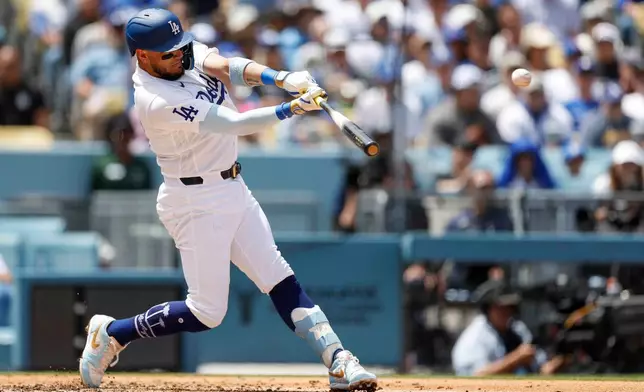
Los Angeles Dodgers' Miguel Rojas hits a two-run double, scoring teammates Kyle Tucker and Teoscar Hernandez, during the first inning of a baseball game against the Chicago Cubs, Sunday, April 26, 2026, in Los Angeles. (AP Photo/Caroline Brehman)
Los Angeles Dodgers starting pitcher Justin Wrobleski (70) throws during the first inning of a baseball game against the Chicago Cubs, Sunday, April 26, 2026, in Los Angeles. (AP Photo/Caroline Brehman)
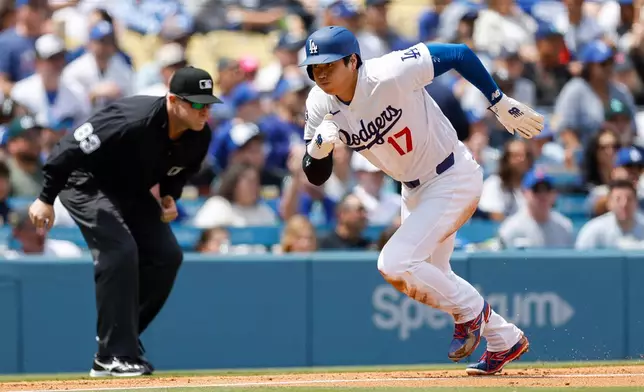
Los Angeles Dodgers designated hitter Shohei Ohtani (17) runs to home plate to score off a sacrifice fly hit by Dodgers' Andy Pages during the first inning of a baseball game against the Chicago Cubs, Sunday, April 26, 2026, in Los Angeles. (AP Photo/Caroline Brehman)
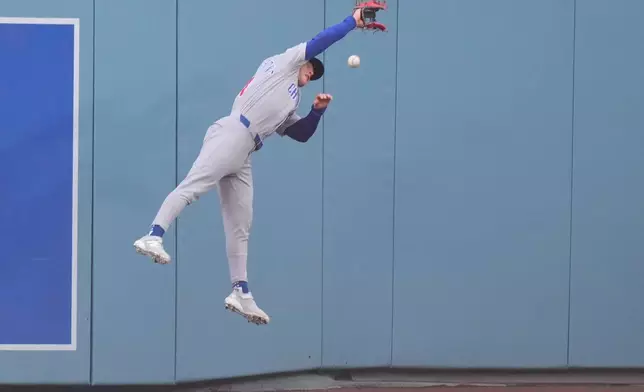
Chicago Cubs center fielder Pete Crow-Armstrong can't get to a ball hit for a double by Los Angeles Dodgers' Alex Freeland during the fifth inning of a baseball game Saturday, April 25, 2026, in Los Angeles. (AP Photo/Mark J. Terrill)
Wrobleski and Cubs starter Shota Imanaga both struggled with command and control early. They threw a combined 100 pitches through the first two innings.
Shohei Ohtani hit an opposite-field home run on Hoby Milner's first pitch in the seventh, extending the Dodgers' lead to 6-0. The 382-foot shot to left-center cut against a gusty wind and snapped Ohtani's 12-game homerless streak. He was 3 for 4 with a walk and scored twice.
The Dodgers led 5-0 in the sixth. Dalton Rushing had an RBI single and Kyle Tucker walked and scored on a pickoff error by catcher Carson Kelly after Santiago Espinal whiffed on a bunt.
The Dodgers pitched around a lot of traffic, with the Cubs getting leadoff runners on in six of nine innings. Chicago was 0-for-20 with runners on base and left 12 stranded, a season-high on the road.
The Dodgers led 3-0 in the first. Ohtani walked, stole second, took third on Kelly's initial throwing error and scored on Andy Pages' sacrifice fly. Miguel Rojas added a two-run double with two outs.
Wrobleski pitched out of a bases-loaded jam in the second. Michael Busch doubled and with one out, Wrobleski issued back-to-back walks to load the bases for Nico Hoerner, who struck out. Alex Bregman grounded out to shortstop to end the threat.
Imanaga (2-2) gave up five runs and six hits in 5 1/3 innings. The left-hander struck out six and walked three. He continued his dominance of Freddie Freeman, who has one hit in 12 at-bats, with five strikeouts.
Cubs: LHP Matthew Boyd (1-1, 5.79 ERA) starts Monday's series opener in San Diego against Padres RHP Randy Vásquez (2-0, 1.88).
Dodgers: RHP Yoshinobu Yamamoto (2-2, 2.48) starts Monday at home against Miami Marlins RHP Chris Paddack (0-4, 6.38) in the series opener.
AP MLB: https://apnews.com/hub/mlb
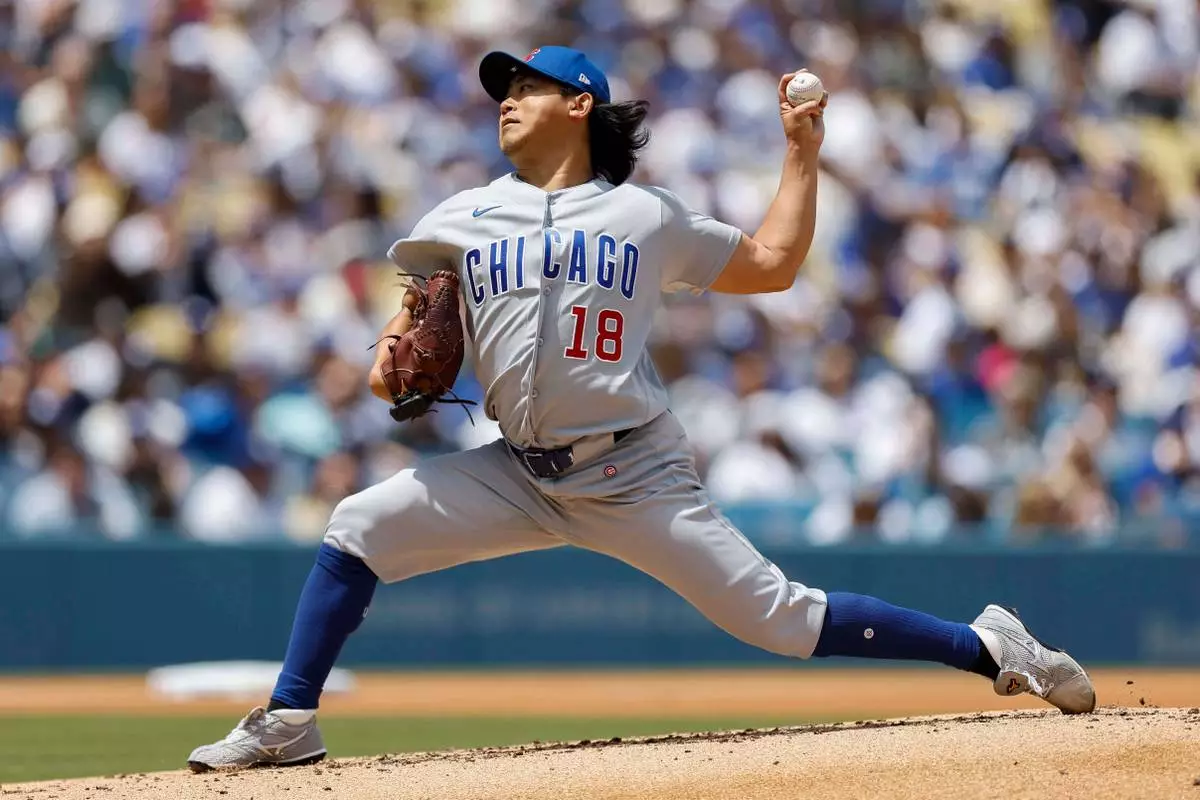
Chicago Cubs starting pitcher Shota Imanaga (18) works during the first inning of a baseball game against the Los Angeles Dodgers, Sunday, April 26, 2026, in Los Angeles. (AP Photo/Caroline Brehman)
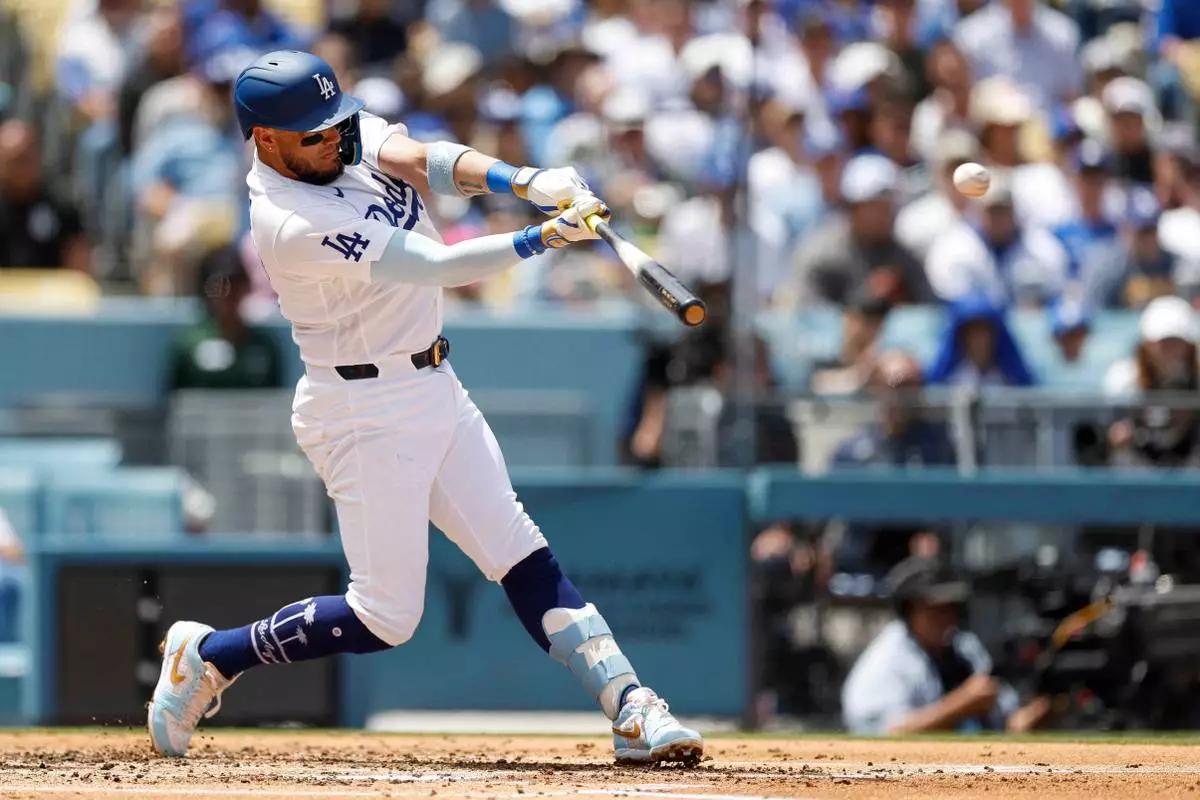
Los Angeles Dodgers' Miguel Rojas hits a two-run double, scoring teammates Kyle Tucker and Teoscar Hernandez, during the first inning of a baseball game against the Chicago Cubs, Sunday, April 26, 2026, in Los Angeles. (AP Photo/Caroline Brehman)
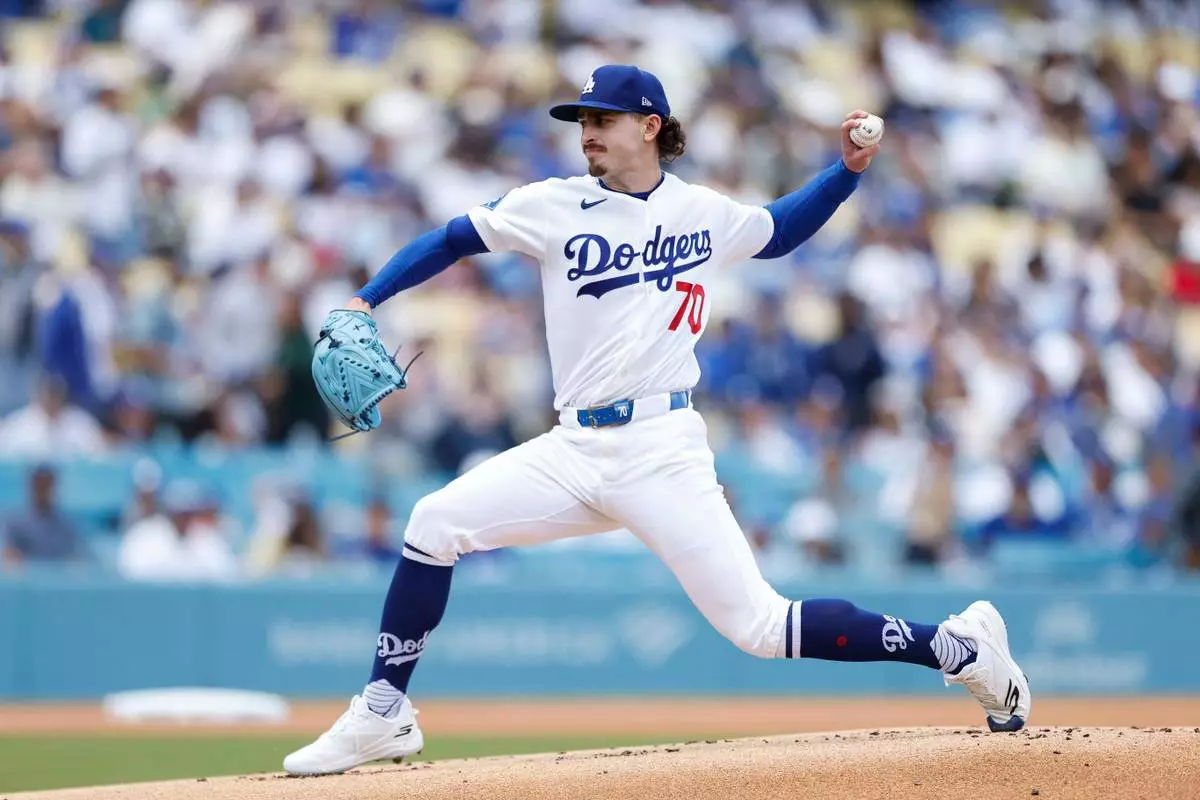
Los Angeles Dodgers starting pitcher Justin Wrobleski (70) throws during the first inning of a baseball game against the Chicago Cubs, Sunday, April 26, 2026, in Los Angeles. (AP Photo/Caroline Brehman)
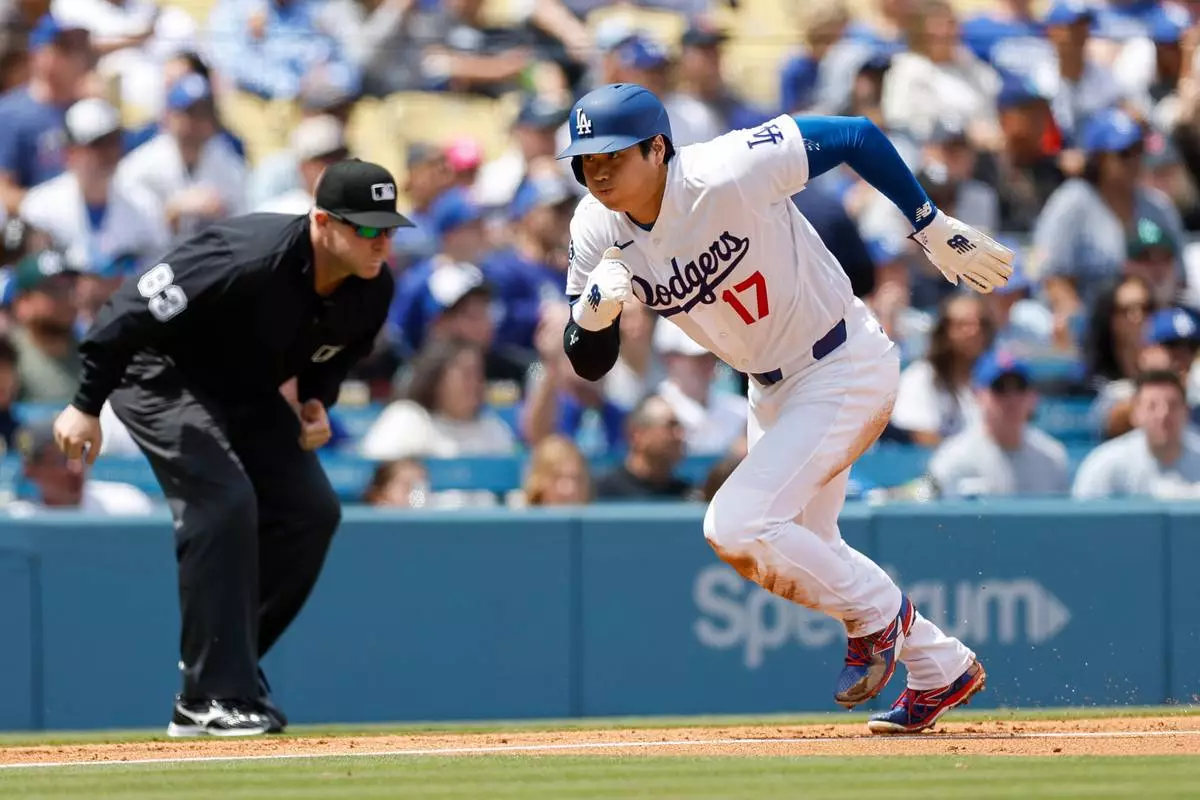
Los Angeles Dodgers designated hitter Shohei Ohtani (17) runs to home plate to score off a sacrifice fly hit by Dodgers' Andy Pages during the first inning of a baseball game against the Chicago Cubs, Sunday, April 26, 2026, in Los Angeles. (AP Photo/Caroline Brehman)
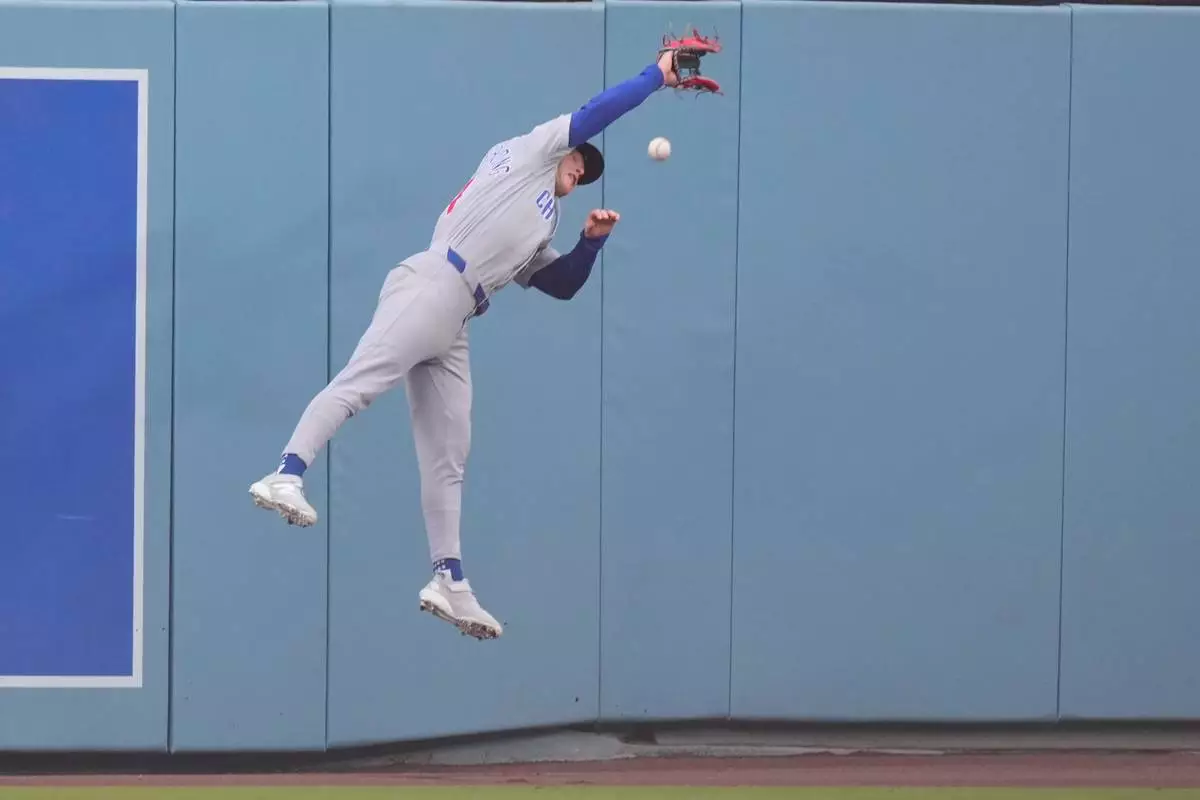
Chicago Cubs center fielder Pete Crow-Armstrong can't get to a ball hit for a double by Los Angeles Dodgers' Alex Freeland during the fifth inning of a baseball game Saturday, April 25, 2026, in Los Angeles. (AP Photo/Mark J. Terrill)
BOSTON (AP) — For decades, the 1990 theft of 13 artworks from the Isabella Stewart Gardner Museum — now valued at more than $500 million — has remained unsolved.
It remains the largest art theft in history — far surpassing more recent museum thefts, including a daylight heist at the Louvre involving far fewer works that was resolved more quickly. In 2013, the FBI said it knew who was responsible for the Boston museum heist but declined to name them, fueling speculation that persists today.
A former FBI agent who led the investigation for more than two decades is now offering the first detailed account of how investigators reached that conclusion — and publicly identifying the men he believes were involved. In a new book, “Thirteen Perfect Fugitives,” Geoffrey Kelly traces how the artworks moved through criminal networks, where violence took the lives of key suspects and witnesses, and challenges long-circulating theories by revisiting key details.
The irony at the center is Gardner’s intention for the museum to remain frozen in time, stipulating in her will that nothing in the Venetian palazzo-inspired building would be changed after her death. Gardner, who lived in the museum and died there in 1924, intended for the paintings, sculptures and architectural fragments to remain exactly as she had arranged.
The empty gilded frames of the missing paintings still hang in the museum today — silent witnesses to what was taken.
Early on March 18, 1990, as Boston wound down from St. Patrick’s Day celebrations, two men dressed as police officers arrived at the museum and persuaded a security guard to let them in, violating protocol.
The men handcuffed the guards in the basement and made their way to the museum’s Dutch Room, where they cut Vermeer’s “The Concert” and Rembrandt’s “Christ in the Storm on the Sea of Galilee" from their frames, also taking works by Degas and Manet.
They also took a Napoleonic eagle finial — a decorative metal piece of comparatively little value that investigators later found puzzling — and the museum’s security videotapes.
The museum offered a $5 million reward that they then doubled a decade later for information leading to the recovery of the works.
Some tips pointed to the Irish Republican Army and to Boston mob figures, including notorious crime boss Whitey Bulger.
Kelly followed one lead to France, where he watched through binoculars as FBI agents, posing as wealthy intermediaries, lounged on a yacht — drinking Champagne and eating strawberries — in an effort to draw out suspected Corsican mob figures.
Closer to home, agents searched houses across New England, relying heavily on informants. A triple murderer known as “Meatball” who was terminally ill secretly recorded conversations with suspected associates in hopes of earning money for his family.
But none of the tips led to the paintings.
In the decades since the robbery, several people believed to have ties to the heist were killed, and another died under suspicious circumstances.
Robert “Bobby” Donati, a Boston mob associate long suspected in the case, was found stabbed to death in 1991, his body left in the trunk of a car after his home had been ransacked.
Years earlier, Donati visited the Gardner with another known art thief, Myles Connor, to scope it out for a robbery and said that if he ever took the museum’s Napoleonic finial, it would be his “calling card.” Years later, a jeweler told investigators Donati tried to sell a finial but the jeweler declined, saying it was “too hot.”
A separate line of evidence centered on George Reissfelder, who investigators believe owned the getaway car.
Kelly tracked down Reissfelder’s brother, a retired military officer who had initially not believed his brother was involved. He broke down after being shown Manet’s “Chez Tortoni,” saying he recognized it as a painting he himself hung above his brother’s bed.
Reissfelder later died under suspicious circumstances. When investigators searched his home, the painting was gone.
Both men had ties to TRC Auto Electric, a Dorchester shop linked to Charles “Chuck” Merlino’s crew.
Though investigators believed they knew who was responsible, they had a difficult time finding definitive proof.
In the investigation's early stages, the FBI assigned a single agent to the case, which Kelly said slowed progress.
“You have to keep in mind when you’re talking about investigations, they come down to dollars and cents,” Kelly said. It was “like pulling teeth” to secure resources. At the time, federal investigators in Boston were heavily focused on violent crime, drug trafficking and organized crime cases.
Kelly said a decision to release surveillance footage despite investigators’ objections became a lasting distraction. With no usable video from the night of the robbery, prosecutors released footage from the night before that showed a museum employee entering the building after his car broke down. Kelly said he objected to the theory that the employee was casing the museum, since that possibility had already been reviewed and dismissed. The footage fueled years of misplaced suspicion; the man was later determined not to have been involved.
Despite those challenges, Kelly credited supervisors who pushed to give the museum’s security director access to the case so investigators could share leads — a rare level of collaboration — and said earlier investigators left extensive notes, first in paper binders and then later transferred to CDs.
In photos from that night, a museum guard is seen handcuffed in the basement, his head wrapped in duct tape.
Investigators noted that shortly before the robbery, the guard opened a door against policy — one that faced the area where the thieves were later seen waiting — a move investigators considered highly unusual and suspicious.
“It’s the immutable laws of time and space,” Kelly said. “I think that there was enough information back then that he could have been charged. Would it be enough to convict him? I don’t know.”
By the time investigators examined those questions more closely, Kelly said, the statute of limitations had expired, leaving them with little leverage to compel cooperation.
The museum guard, Rick Abath, denied any involvement in the theft. He died in 2024.
Kelly personifies the missing artworks and describes them as “perfect fugitives.”
“They don’t go to the doctor. They don’t get stopped for speeding. They don’t leave fingerprints,” he said. “They can just disappear.”
Unlike human fugitives, he said, artworks can also be copied.
Over the years, that has meant chasing down false leads — including paintings spotted in a Reno antique market, hanging in private homes and even one that appeared in an episode of the TV show “Monk.”
Because the works are so recognizable, it's nearly impossible to sell them publicly.
“Stealing the artwork from the museum, that’s the easy part,” Kelly said. “Profiting from it, that’s the difficult part.”
He imagines the paintings will surface one day — outliving those who carried out the heist.
“I have no doubt they still exist,” he said
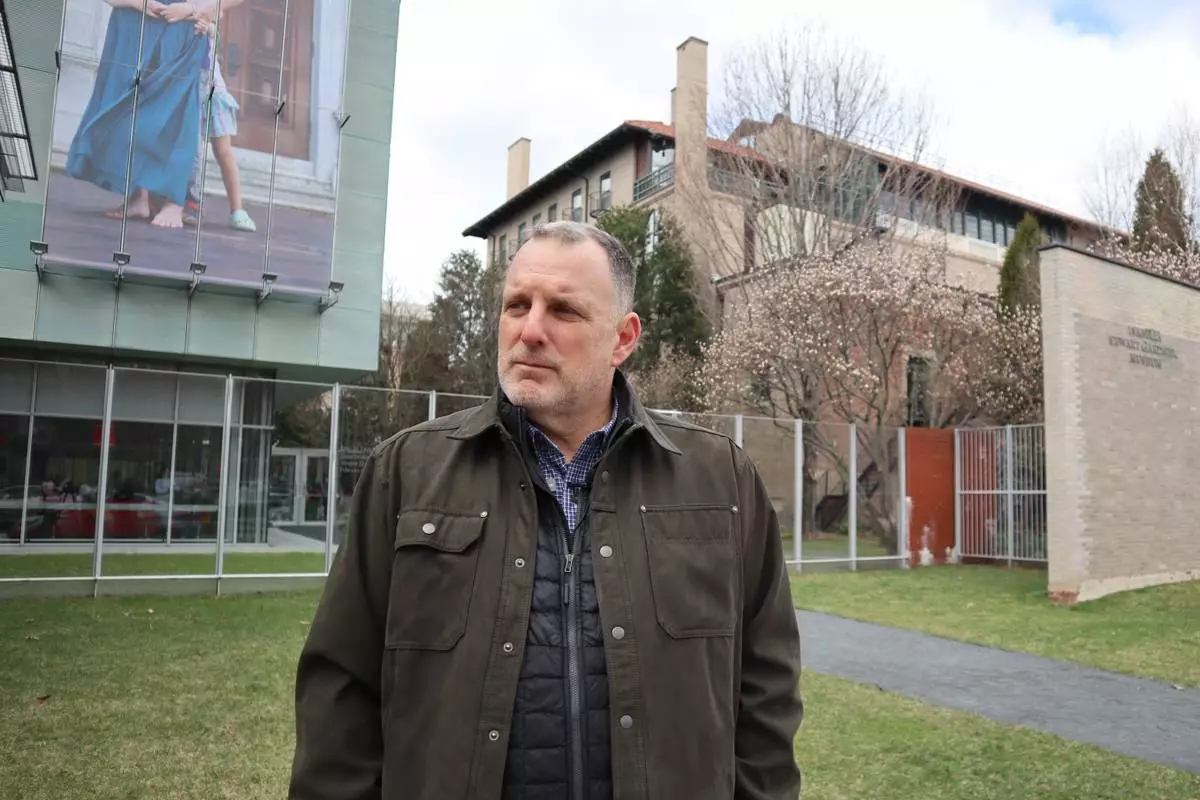
Geoff Kelly, a former FBI agent who spent decades investigating the 1990 art heist at the Isabella Stewart Gardner Museum, stands outside the museum on April 6, 2026, in Boston. (AP Photo/Leah Willingham)
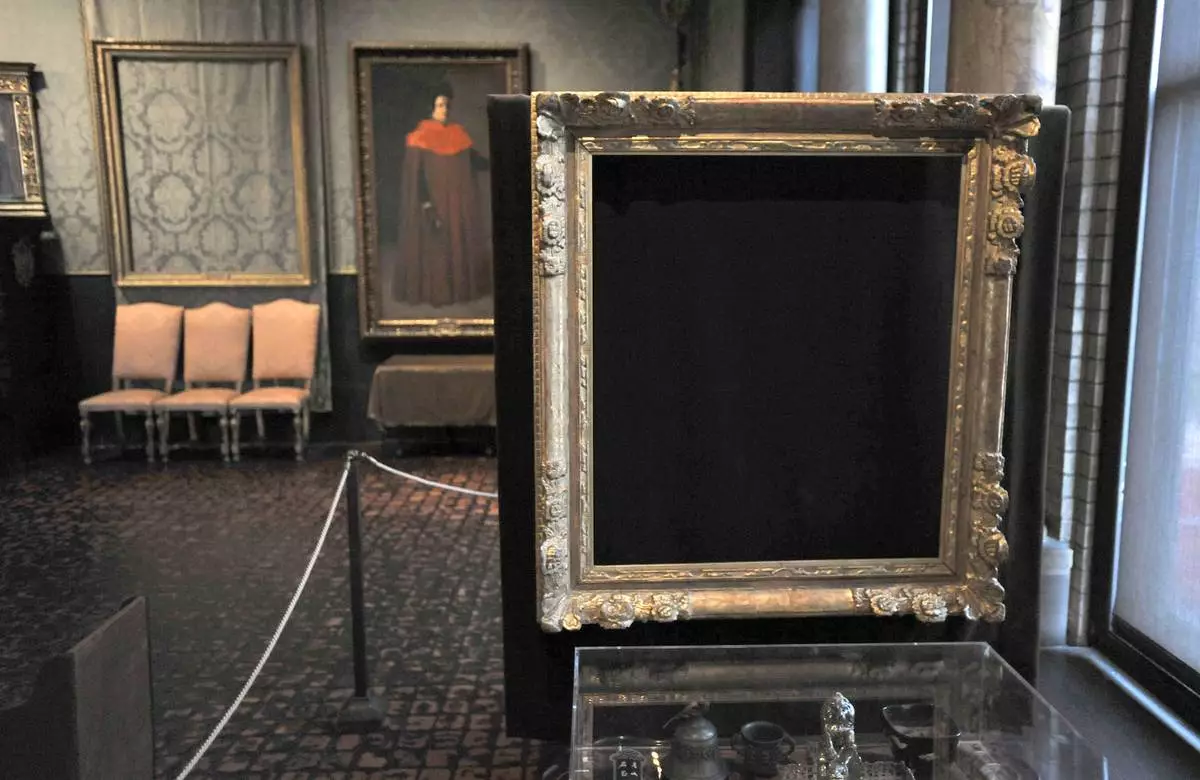
FILE - Empty frames from which thieves took "Storm on the Sea of Galilee," left background, by Rembrandt and "The Concert," right foreground, by Vermeer, remain on display at the Isabella Stewart Gardner Museum in Boston, n this Thursday, March 11, 2010. (AP Photo/Josh Reynolds, File)
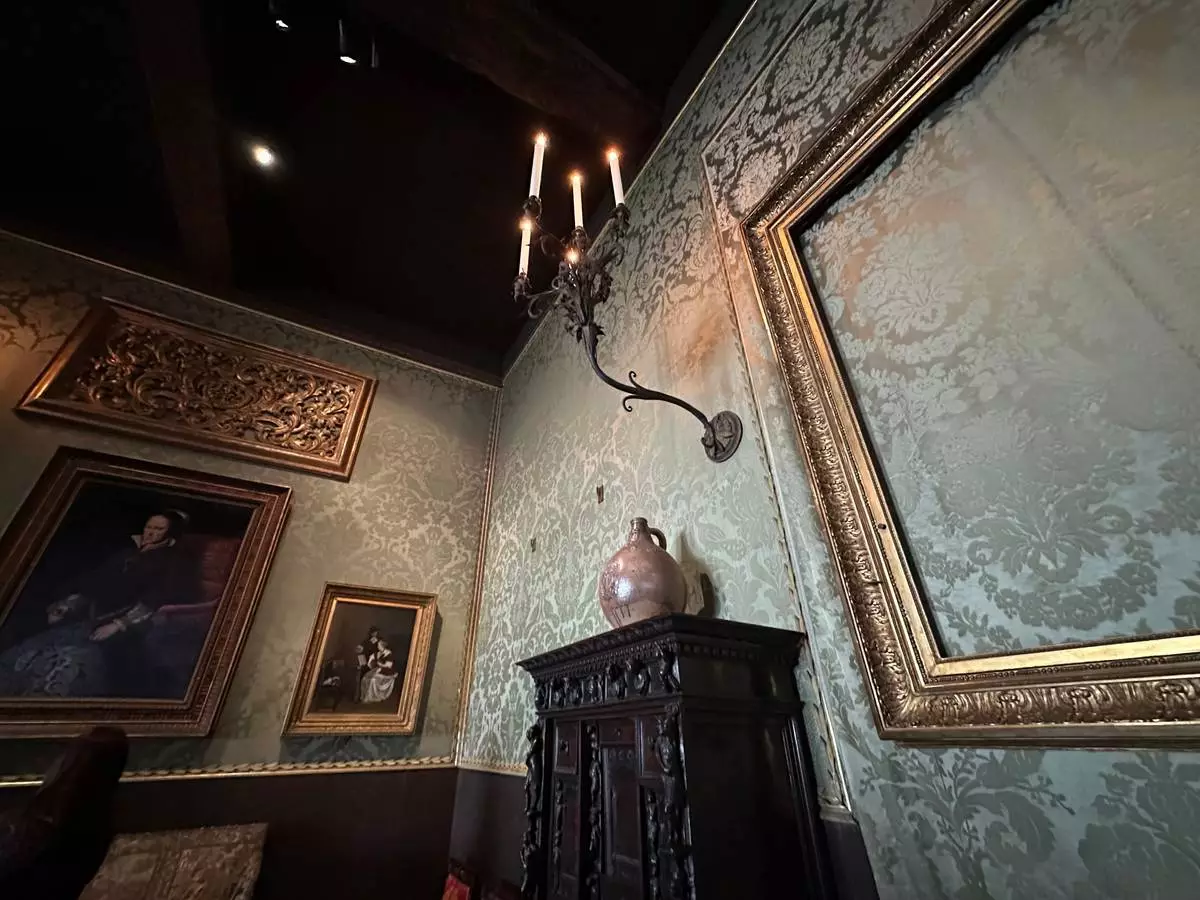
An empty frame hangs on patterned green walls in the Dutch Room at the Isabella Stewart Gardner Museum, where artworks were stolen in a 1990 art heist, April 9, 2026, in Boston. (AP Photo/Leah Willingham)