Footage filmed at the Dujiangyan base of the China Conservation and Research Center for the Giant Panda (CCRCGP) shows giant pandas testing and gnawing on oversized bamboo shoots in a series of lively reactions.
In the first and second clips, female panda Ji Fu, and in the third, female panda You You, are seen eating bamboo shoots while perched in trees, stretched out on the ground, or rolling with them, each posture adding to the lively display.
Ji Fu, born on August 6, 2022, at the Shenshuping base of the Wolong National Nature Reserve in Sichuan to mother Cui Cui, weighed 270.4 grams at birth, the heaviest captive‑born panda cub on record. Her counterpart, You You, was born in September 2021 at the CCRCGP to mother Xiu Qiu.
The CCRCGP has built the world's largest captive panda population and pioneered rewilding research through captive breeding and training. It also runs a global cooperation platform, linking 18 zoos in 16 countries and regions with 39 domestic breeding institutions and more than 10 research institutes.
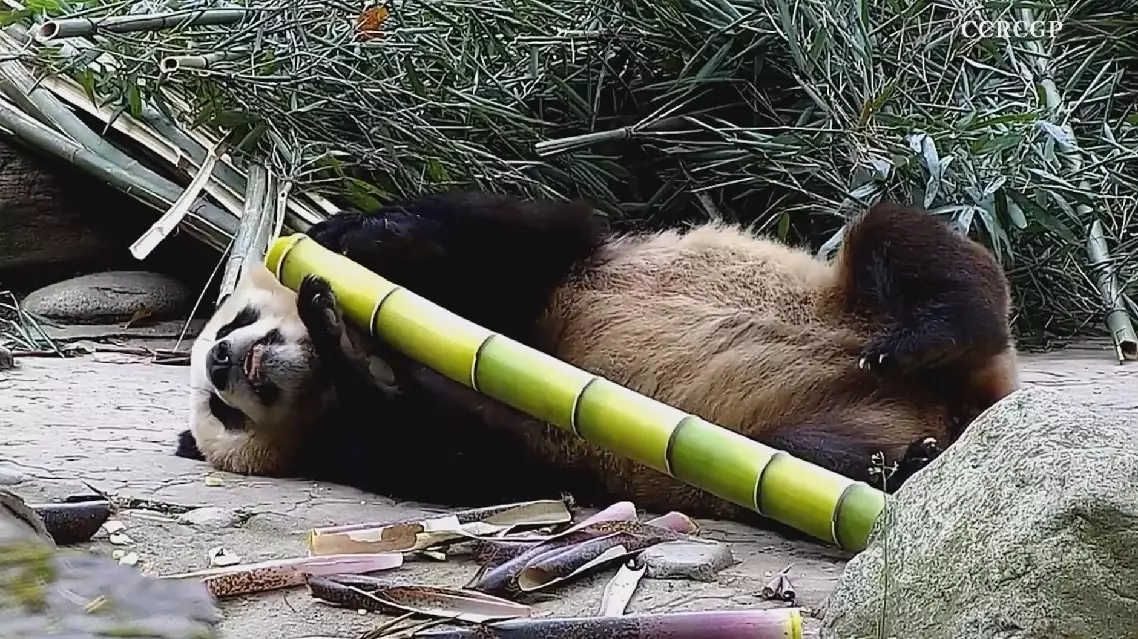
Footage captures pandas’ lively reactions to oversized bamboo shoots in Sichuan
Based on preliminary results released recently, four ancient sites in the Yangtze River Basin have been shortlisted for the final evaluation of China's top 10 archaeological discoveries of 2025.
The four sites span from prehistoric times to the Han Dynasty (202 BC-AD 220) and the Six Dynasties period (222-589). Together, they offer evidence of early human activity as well as remnants of ancient capitals at their peak.
The Chuandong Site is located in Puding County, southwest China's Guizhou Province. Last year, large quantities of artifacts made of stone, bone, and horn were unearthed there, indicating prehistoric human activity dating back more than 55,000 years.
The Shenduntou Site, a typical Zhou Dynasty (1046BC-256BC) copper smelting site in the lower Yangtze River region in east China's Anhui Province, was part of the early Wu Kingdom's official industrial system. It holds great significance for the study of the development of bronze civilization in the Yangtze River basin.
Another shortlisted site, the Jinan City Site, lies in the northern suburbs of Jingzhou City, central China's Hubei Province. Covering an area of approximately 16 square kilometers, it is the largest capital city site from the pre-Qin period (before 221 B.C.) in southern China.
Outside the ancient city, multiple other sites and tombs have been discovered, spanning a total area of over 1,000 square kilometers. The sheer scale of the city ruins and surrounding burial grounds reflect the social landscape of the ancient Chu State at the height of its power.
The final shortlisted site comprises the remains of the capital of the ancient Yue State and the Kuaiji Commandery from the Han to the Six Dynasties period, located in the city of Shaoxing in east China's Zhejiang Province.
This site provides important clues for understanding the layout of the Yue capital and its ritual system. It also offers key evidence for studying the continuity of Chinese civilization and the development of construction techniques in southern China's wetland area.
The unique humid climate and extensive river systems of the Yangtze River Basin have shaped the distinctive cultural character of these sites, reinforcing the view that the Yangtze River Basin is a vital part of the diverse yet unified pattern of Chinese civilization.
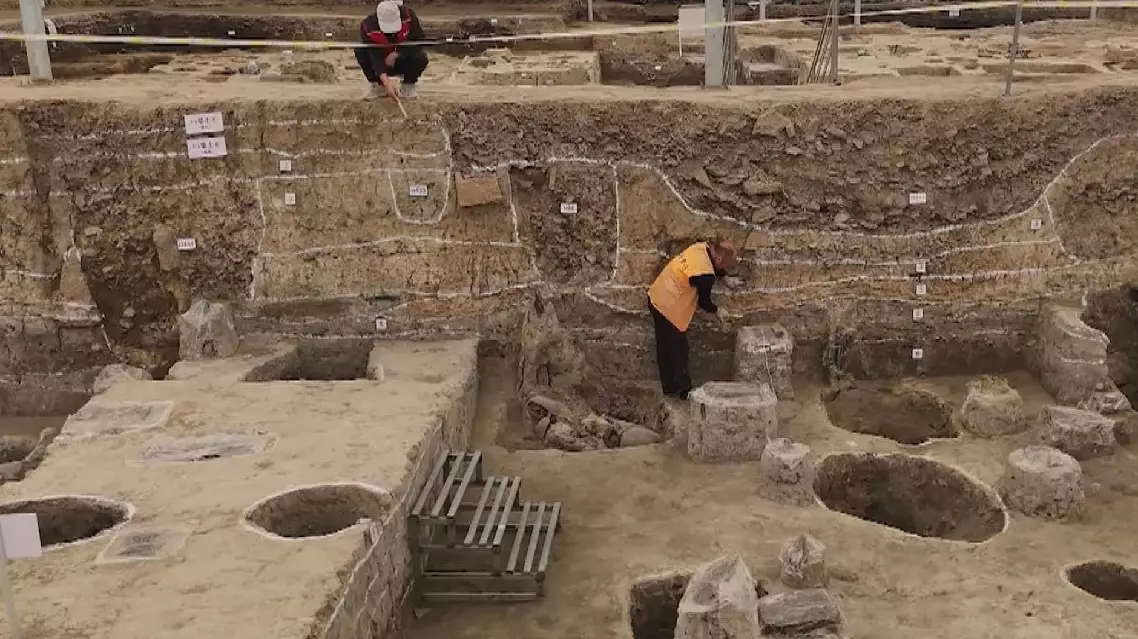
Four sites in Yangtze River Basin shortlisted for final evaluation of China's top 10 archaeological discoveries of 2025