DH announces latest situation regarding Legionnaires' disease case
The Centre for Health Protection (CHP) of the Department of Health (DH) today (April 27) reported the latest number of Legionnaires' disease (LD) cases, and reminded the public of the importance of using and maintaining properly designed man-made water systems, adding that susceptible groups should strictly observe relevant precautions.
From April 19 to 25, the CHP recorded four community-acquired and one imported LD case. The details are as follows:
Community-acquired cases
---------------------------------
- a 54-year-old male with good past health living in Kwai Tsing District;
- a 63-year-old male with underlying illnesses living in Tuen Mun District;
- a 72-year-old male with underlying illnesses living in Central and Western District; and
- a 74-year-old male with good past health living in Sha Tin District.
Imported case
--------------------
- a 72-year-old male with underlying illnesses who travelled to the Chinese Mainland during the incubation period. An initial investigation revealedan epidemiological link between the patient and the case involving a 69-year-old female announced last week. They joined a tour group to Hunan from April 3 to 7 and developed symptoms on April 9 and 11 respectively. Since they had no other common exposure history in Hong Kong, the CHP believed that they were infected during the trip and classified them as imported cases. Upon receiving the notification of the first case on April 15, the CHP proactively contacted individuals who joined the same tour group to offer health assessments and medical surveillance. Apart from the abovementioned two cases, no other tour members have been found to have contracted LD so far. The CHP has reported the case to the health authorities on the Chinese Mainland and informed the Travel Industry Authority in Hong Kong.
The CHP is conducting epidemiological investigations to identify the potential sources of infection and high-risk exposure.
As of April 25, 36 LD cases had been recorded this year. In 2025 and 2024, there were 167 and 135 LD cases respectively.
Men, people aged over 50, smokers, alcoholics and persons with weakened immunity are more susceptible to LD. Some situations may also increase the risk of infection, including poor maintenance of water systems; living in areas with old water systems, cooling towers or fountains; using electric water heaters, whirlpool spas or hot water spring spas; and recent stays in hotels or ships.
Legionellae are found in various environmental settings and grow well in warm water (20 to 45 degrees Celsius). They can be found in aqueous environments such as water tanks, hot and cold water systems, cooling towers, whirlpool spas, water fountains, humidifiers and home respiratory devices that support breathing. People may become infected when they breathe in contaminated droplets (aerosols) and mist generated by artificial water systems, or when handling garden soil, compost and potting mixes.
Immunocompromised persons should:
- Use sterile or boiled water for drinking, tooth brushing and mouth rinsing;
- Avoid using humidifiers, or other mist- or aerosol-generating devices; and
- If using humidifiers, or other mist- or aerosol-generating devices, fill the water tank with only sterile or cooled freshly boiled water, and not water directly from the tap. Also, clean and maintain humidifiers/devices regularly according to manufacturers' instructions. Never leave stagnant water in a humidifier/device. Empty the water tank, wipe all surfaces dry, and change the water daily.
The public should observe the health advice below:
- Observe personal hygiene;
- Do not smoke and avoid alcohol consumption;
- Strainers in water taps and shower heads should be inspected, cleaned, descaled and disinfected regularly or at a frequency recommended by the manufacturer;
- If a fresh-water plumbing system is properly maintained, it is not necessary to install domestic water filters. Use of water filters is not encouraged as clogging occurs easily, which can promote growth of micro-organisms. In case water filters are used, the pore size should be 0.2 micrometres (µm) or less and the filter needs to be changed periodically according to the manufacturer's recommendations;
- Drain and clean water tanks of buildings at least quarterly;
- Drain or purge for at least one minute infrequently used water outlets (e.g. water taps, shower heads and hot water outlets) and stagnant points of the pipework weekly or before use;
- Seek and follow doctors' professional advice regarding the use and maintenance of home respiratory devices and use only sterile water (not distilled or tap water) to clean and fill the reservoir. Clean and maintain the device regularly according to the manufacturer's instructions. After cleaning/disinfection, rinse the device with sterile water, cooled freshly boiled water or water filtered with 0.2 µm filters. Never leave stagnant water in the device. Empty the water tank, keep all surfaces dry, and change the water daily; and
- When handling garden soil, compost and potting mixes:
- Wear gloves and a face mask;
- Water gardens and compost gently using low pressure;
- Open composted potting mixes slowly and make sure the opening is directed away from the face;
- Wet the soil to reduce dust when potting plants; and
- Avoid working in poorly ventilated places such as enclosed greenhouses.
The public may visit the CHP's LD page, the Code of Practice for Prevention of LD and the Housekeeping Guidelines for Cold and Hot Water Systems for Building Management of the Prevention of LD Committee, and the CHP's risk-based strategy for prevention and control of LD.
Additionally, as smokers and alcoholics are more susceptible to LD, the Government urgesmembers of the public to quit smoking and avoid drinking. Members of the public may call the DH Integrated Smoking Cessation Hotline at 1833 183, which is answered by registered nurses who provide professional counselling and referral to a wide range of free smoking cessation services. The public may also visit the smoking cessation thematic website (www.livetobaccofree.hk) for more information on smoking cessation. The DH has also developed and promulgated the Alcohol Screening and Brief Intervention tool to primary healthcare service providers to facilitate the early identification and management of at-risk drinkers. For information on alcohol-related harm, please visit the DH's Change for Health website.
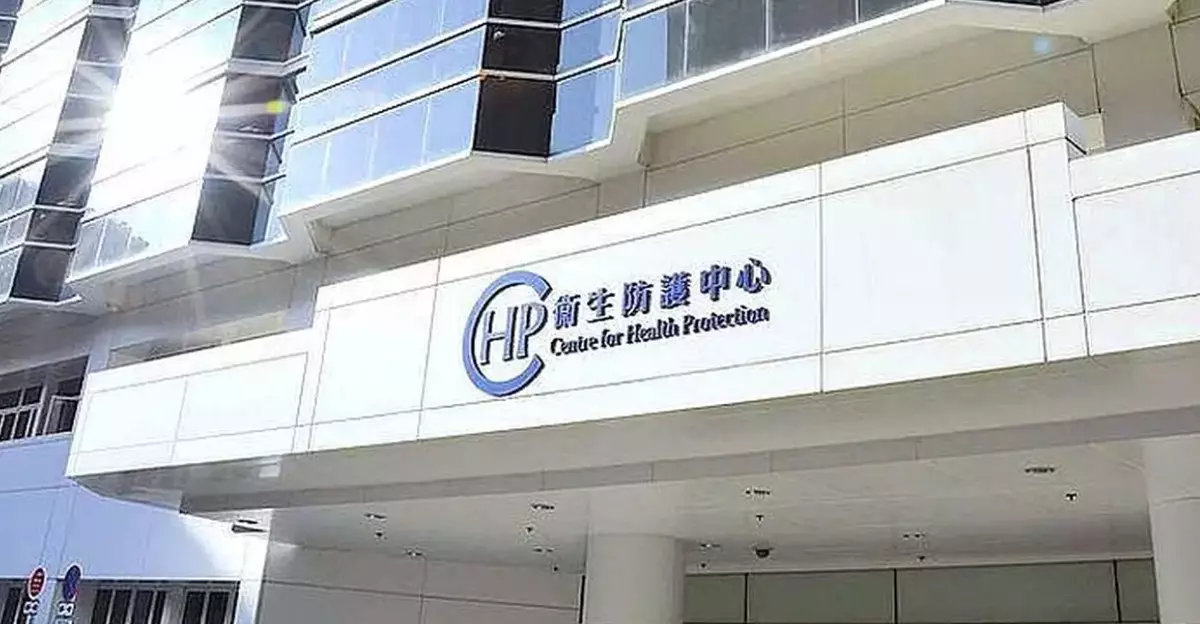
The Centre for Health Protection (CHP), Photo source: reference image
Government announces follow-up arrangements for Wang Chi House to address residents' concerns
In response to the strong consensus initially reflected among Wang Chi House (Block H, Wang Fuk Court, Tai Po) owners regarding joining the long-term housing arrangement plan, the Government today (April 28) announced that if three-quarters (75 per cent) or more of the owners sign the Letter of Acceptance on or before June 30, confirming their intention to sell their titles to the Government, the long-term housing arrangement plan currently applicable to Blocks A to G of Wang Fuk Court will also be available to Wang Chi House.
Since the announcement of the long-term housing arrangement plan on February 21, the latest situation of Wang Chi House is as follows:
1. The Housing Bureau's Engagement Team has successfully contacted 99 per cent of Wang Chi House owners, with around 77 per cent initially indicating their wish to join the Government's long-term housing arrangement plan and sell their titles.
2. Although Wang Chi House was not damaged by the fire, many owners expressed concerns about the complicated issues they will face in the future, citing uncertainties. These include the difficulty of estimating when they can return to live in Wang Chi House, modifying the land lease and deed of mutual covenant, separately engaging contractors and management companies, and bearing high maintenance and potentially sharp rising management costs.
3. Some owners reported psychological distress after the fire and were unwilling to return to their original homes. Some were worried that the value of Wang Chi House would be reduced and that the transaction procedures would encounter numerous difficulties that would be hard to overcome.
4. The repair works for Wang Chi House are more complicated than expected. About two-thirds of the external walls remain unfinished, and additional works are required to form the emergency vehicular access, overhaul the fire services system, and restore central liquefied petroleum gas, water supply, and power facilities. The likelihood of completing all works, legal and procurement procedures, and related insurance arrangements within this year is extremely low.
The Government considers the following principles essential in handling the follow-up arrangements for Wang Chi House:
1. Wang Chi House itself was not damaged by the fire, unlike the other seven blocks;
2. The Government must respect private property rights. However, if Wang Chi House owners reach a strong consensus and would like the long-term housing arrangement plan to be available to their block, the Government will respond to residents' demands and intervene in a reasonable manner;
3. The Government has emphasised that the handling of Wang Fuk Court's long-term housing arrangement must balance empathy, rationality, and legality, with empathy as the priority. This principle also applies to Wang Chi House; other principles mentioned earlier, including providing diverse options so that residents "have a real choice" and providing a long-term housing option in Tai Po, in addition to cross-district options, are equally applicable;
4. If the Government only acquires a small number of flats, it will lack sufficient influence over Wang Chi House's future. Complex issues faced by the Wang Chi House owners, including issues relating to the land leases, deeds of mutual covenant and maintenance of common areas, will not be able to be effectively resolved; and
5. Careful consideration must be given to all factors, including the use of public resources, practical implementation, and feasibility of the plan.
After taking into account these principles and prudently weighing the different factors, the Government now proposes the following arrangements for Wang Chi House:
1. The acquisition plan previously offered to Blocks A to G is based on saleable area. The acquisition price is $8,000 per square foot for flats with premium unpaid, and $10,500 per square foot for flats with premium paid. The Government is prepared to acquire flats of Wang Chi House adopting this uniform price standard. Wang Chi House owners accepting this acquisition plan must sign the Letter of Acceptance to formally confirm their intention to accept the acquisition offer from the Government.
2. If three-quarters (75 per cent) or more of Wang Chi House owners sign the Letter of Acceptance on or before June 30, confirming their intention to sell, the long-term housing arrangement plan will be formally available to Wang Chi House. Otherwise, the plan will not cover Wang Chi House.
3. If the plan is available to Wang Chi House, the arrangements will be broadly consistent with those applicable to Blocks A to G, including:
i. The acquisition prices mentioned above in (1);
ii. Various options for owners, including cash acquisition option, purchasing new subsidised sale flats (SSF) under the Special Sales Exercise for Wang Fuk Court, or opting for "Flat-for-Flat" arrangements;
iii. Owners who do not join the Special Sales Exercise or fail to secure a preferred flat in the Special Sales Exercise may, within two years after selling their titles and receiving cash payment, qualify as Green Form applicants to purchase SSF in the secondary market;
iv. Owners of Wang Chi House signing the Letter of Acceptance on or before June 30 will enjoy first-round priority in flat selection under the Special Sales Exercise;
v. Owners of Wang Chi House who do not sign by June 30 but later decide to sell must sign the Letter of Acceptance on or before August 31; and
vi. To arrange for owners of Wang Chi House accepting the Government's acquisition to sign the Agreement for Sale and Purchase on or before October 15.
4. When signing the Agreement for Sale and Purchase with Wang Chi House owners, the Government will include a clause stipulating that if fewer than three-quarters (75 per cent) of owners ultimately sign the Agreement for Sale and Purchase, the Government reserves the right to discontinue the acquisition since the inclusion of Wang Chi House in the plan is premised on at least three-quarters (75 per cent) of owners wishing to sell.
5. For individual owners unable to sign the Letter of Acceptance by August 31 or the Agreement for Sale and Purchase by October 15 due to special circumstances (such as unresolved ownership or estate matters), the Government may exercise flexibility on a case-by-case basis.
The 2026-27 Budget has earmarked $4 billion for the acquisition of Blocks A to G of Wang Fuk Court. The estimated total acquisition cost for Wang Chi House is about $1 billion. The Government will seek additional funding approval from the Finance Committee of the Legislative Council in due course.
The Housing Bureau's Engagement Team will approach Wang Chi House owners again starting tomorrow (April 29) to clearly explain the details of the long-term housing arrangement plan and address owners' questions.
If owners of Wang Chi House have any questions, they may contact the Engagement Team directly or call the Government's hotline for Wang Fuk Court long-term housing arrangement plan at 2129 8133.
Meanwhile, the Engagement Team will also continue to follow up closely on Blocks A to G. The Engagement Team has already contacted most owners of these blocks, with over 70 per cent initially indicating their wish to sell their titles to the Government. The Government is drafting legal documents for the acquisition and plans to issue acquisition offers in May to owners intending to sell. Once owners sign the Letter of Acceptance to indicate their consent to the acquisition, solicitors appointed by both parties will immediately commence the legal procedures for the Agreement for Sale and Purchase. As for Wang Chi House, legal procedures for sale and purchase can only commence once the long-term housing arrangement plan is available to the block.

Source: AI-found images