MIAMI--(BUSINESS WIRE)--Apr 27, 2026--
IonQ (NYSE: IONQ), the world’s leading quantum platform company, and Florida LambdaRail (FLR), Florida’s existing statewide research and education fiber optic network, announced an agreement to support delivering on FLR's vision for a quantum-safe network spanning Florida. Together with Florida Quantum and local colleges and universities, the groups’ first step will seek to create a nearly 100 mile quantum corridor from Palm Beach County to Miami-Dade connecting three research and education institutions.
This press release features multimedia. View the full release here: https://www.businesswire.com/news/home/20260427590862/en/
“Creating a statewide quantum network in Florida will mark another major milestone in the deployment of IonQ’s global quantum platform,” said Niccolo de Masi, Chairman and CEO of IonQ. “IonQ's quantum-secure communications and advanced networking capabilities strengthen innovation ecosystems, improve resiliency, and lay the foundation for future public and private sector applications.”
The Master Service Agreement (MSA), announced at the 2026 eMerge Americas Conference + Expo, represents one of the most advanced efforts in the United States to transition critical fiber infrastructure toward quantum-secure communications. It builds on a series of collaborations across public and private sectors, aimed at accelerating the state’s quantum infrastructure and investment ecosystem.
The intended first phase will establish a three-node corridor linking select area colleges over the existing Florida LambdaRail fiber network. The system will use IonQ’s quantum key distribution (QKD) technology, enabling detection of any interception attempt and significantly strengthening protection against future cyber threats.
Quantum computing is expected to challenge many of today’s widely used encryption standards. As a result, governments and institutions have begun preparing for scenarios in which encrypted data collected today could be decrypted in the future. Similar efforts, in Switzerland and Romania, to this Florida initiative, are addressing that risk by introducing quantum networking, which shifts part of the security model from mathematical complexity to physics-based protection.
“Florida LambdaRail's collaboration with IonQ in this innovative quantum initiative will enable partner universities, researchers, and students to move quantum from the lab setting to real-world deployment,” said Jason Ball, chair of the Florida LambdaRail Board of Directors and associate provost and chief information officer at Florida Atlantic University. "We're confident that this public and private project will be a catalyst to accelerate scalable quantum-secure connectivity across the state.”
Florida LambdaRail, a nonprofit network connecting universities, research institutions, and public sector entities across the state through dedicated fiber infrastructure, will serve as the backbone for the deployment. Its existing footprint enables the initiative to move directly into real-world implementation rather than remaining in a laboratory setting.
Matt Cimaglia, Managing Partner of Quantum Coast Capital and a founding member of Florida Quantum, which has been advancing initiatives across the state, said:
“This effort reflects a broader shift in how infrastructure is being designed. By aligning networks, institutions, and investment, Florida is laying the groundwork for a quantum ecosystem that has the potential to drive innovation, attract talent, and support new opportunities across the state.”
Following completion of the initial corridor, the initiative is expected to expand across the Florida LambdaRail network, connecting additional institutions statewide, subject to future funding and stakeholder participation.
About Florida LambdaRail
Florida LambdaRail, LLC (FLR) is Florida's independent not-for-profit research and education network. FLR's 1,540-mile dark fiber network is owned and operated on behalf of its 13 university equity partners (10 public and 3 private) and 58 affiliates representing universities, colleges, k-12 schools, health care, research facilities, local governments, social services, and the arts.
FLR is dedicated to producing knowledge and prosperity within the state of Florida through education and research activities that drive our members' 21st century economy initiatives. Utilizing next generation network technologies, protocols and services, FLR facilitates collaboration and academic, scientific, educational, and clinical application development through high-speed communications. FLR brings together people, resources, and information; enables resource aggregation and sharing over large distances; and fosters innovation and discovery.
About IonQ
IonQ, Inc. [NYSE: IONQ] is the world’s leading quantum platform and merchant supplier - delivering integrated quantum solutions across computing, networking, sensing, and security. IonQ’s newest generation of quantum computers, the IonQ Tempo, is the latest in a line of cutting-edge systems that have been helping customers and partners including Amazon Web Services, NVIDIA,andAstraZeneca achieve 20x performance results and accelerate innovation in drug discovery, materials science, financial modeling, logistics, cybersecurity, and defense. In 2025, the company achieved 99.99% two-qubit gate fidelity, setting a world record in quantum computing performance.
Headquartered in College Park, Maryland, IonQ has operations in California, Colorado, Massachusetts, Tennessee, Washington, Italy, South Korea, Sweden, Switzerland, Canada, and the United Kingdom. Our quantum computing services are available through all major cloud providers, while we also meet the needs of networking and sensing customers across land, sea, air, and space. IonQ is making quantum platforms more accessible and impactful than ever before. Learn more at IonQ.com.
IonQ Forward-Looking Statements
This press release contains forward-looking statements. All statements contained in this press release other than statements of historical fact are forward-looking statements, including statements regarding IonQ’s efforts to develop next generation quantum technologies, including without limitation, quantum networking and security technologies, and IonQ’s business efforts to sell quantum technologies. In some cases, you can identify these statements by forward-looking words such as “step,” “deliver,” “build,” “intend,” “will,” “transition,” “toward,” “accelerate,” “expect,” “expand” and other similar expressions. These statements are only predictions based on our expectations and projections about future events as of the date of this press release and are subject to a number of risks, uncertainties and assumptions that may prove incorrect, any of which could cause actual results to differ materially from those expressed or implied by such statements, including, among others, those described under the heading “Risk Factors” in our most recent filings with the Securities and Exchange Commission. New risks emerge from time to time, and it is not possible for our management to predict all risks, nor can management assess the impact of all factors on our business or the extent to which any factor, or combination of factors, may cause actual results to differ materially from those contained in any forward-looking statement we make. Investors are cautioned not to place undue reliance on any such forward-looking statements, which speak only as of the date they are made. Except as otherwise required by law, we undertake no obligation to update any forward-looking statement, whether as a result of new information, future events or otherwise.
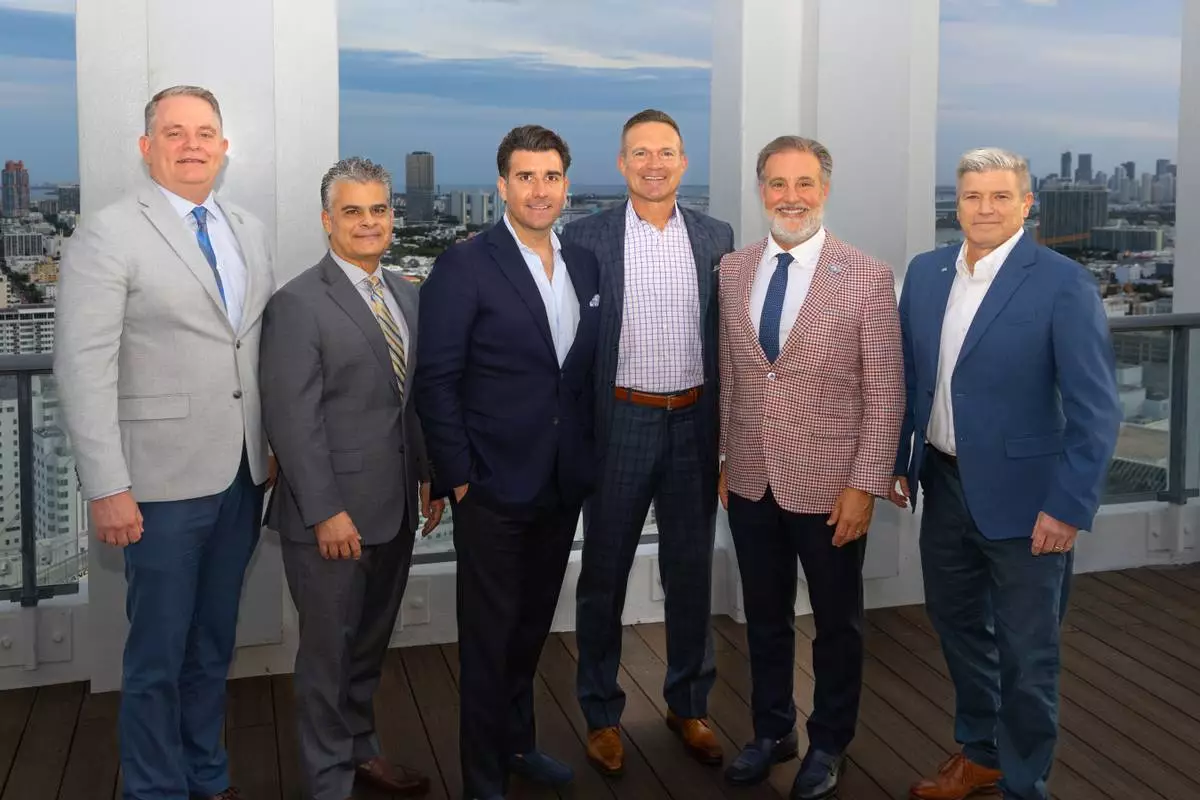
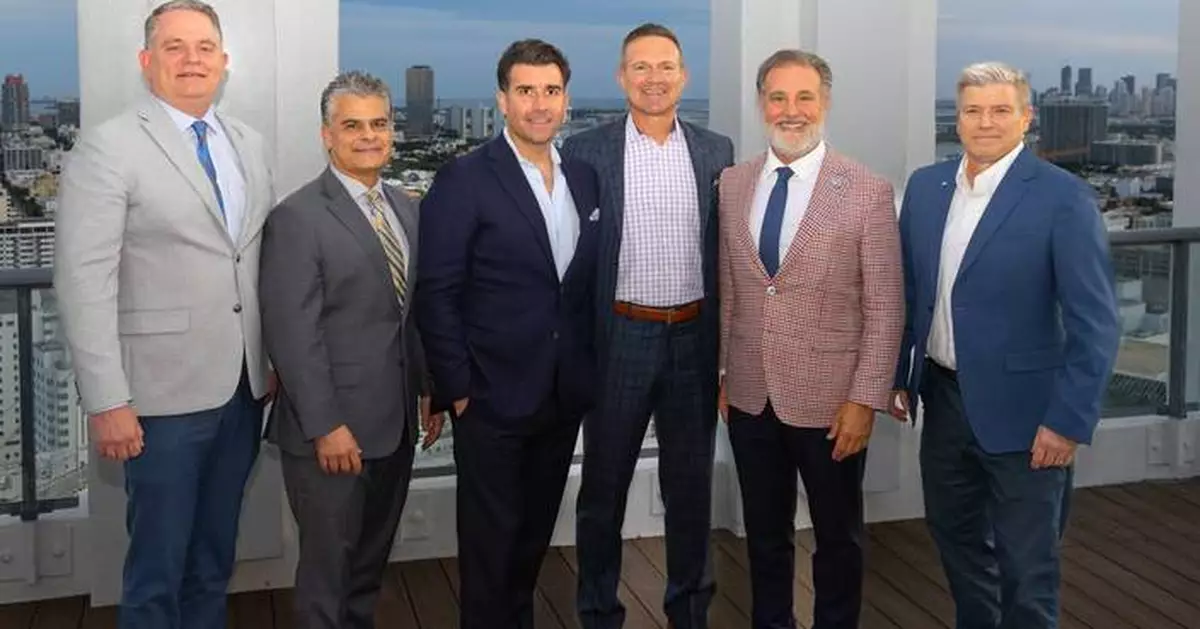
(Left to Right: Jason Ball, Florida LambdaRail; Bobby Grillo, Florida LambdaRail; Matt Cimaglia, Florida Quantum; Scott Millard, IonQ; Adam Hasner, Florida Atlantic University; Jon Ellis, Florida LambdaRail)