Deep in the Ili Valley of the Tianshan Mountains in northwest China's Xinjiang Uygur Autonomous Region, spring has arrived like a spilled painter's palette with a wide expanse of wild apple trees exploding into full bloom.
The rugged landscape across the foothills is draped in delicate pink and white blossoms against a jaw-dropping backdrop of snow-capped peaks and rolling grasslands.
The Ili Valley is home to one of the most biologically precious wild-fruit forests on Earth and is described by botanists as a "living gene bank." Here, more than 60 rare wild fruit species thrive side by side, including wild apples, apricots, walnuts, and hawthorns, across more than 17,000 hectares. Together, they form the most intact wild deciduous broad-leaved forest ecosystem in the western Tianshan Mountains.
In recent years, local authorities have ramped up conservation efforts, using drones to spray pesticides and restore damaged habitats, a high-tech solution for a natural treasure that has faced threats from pests and environmental stress.
The flowering period is expected to last until early May and will attract a steady stream of tourists to the valley to hike among the flowering trees, breathe in the honeyed spring air, and lose themselves in what feels like a waking dream.
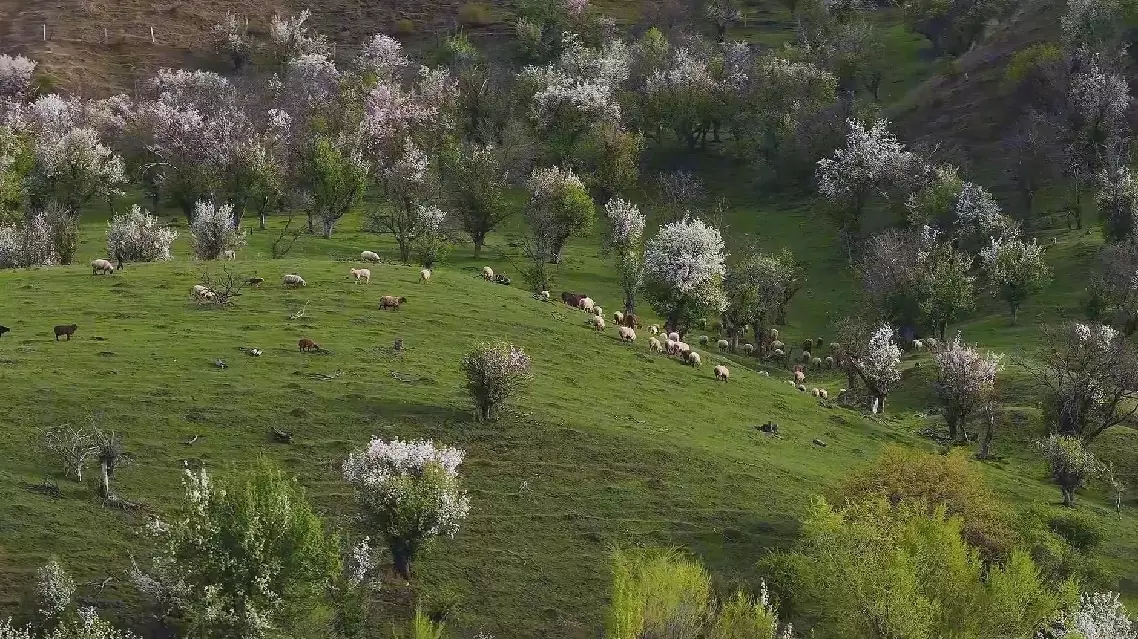
Spring blossoms paint Xinjiang's Ili Valley with stunning colors