N'DJAMENA, Chad (AP) — Clashes between two families over access to water have killed at least 42 people in eastern Chad, the government says, as resources are stretched in a region where hundreds of thousands of refugees from neighboring Sudan have poured in.
Chad's deputy prime minister, Limane Mahamat, said another 10 people were wounded in Saturday's clashes in Igote village in Wadi Fira province near the border.
The situation is under control after the army intervened, Mahamat said Sunday, adding that a mediation process in the village had begun, as well as judicial proceedings to determine criminal responsibility.
Such clashes over resources are common in the Central African country. Last year, clashes between farmers and herders in southwestern Chad left 42 people dead and homes burned.
Mahamat said the government will take “all necessary measures” to prevent a destabilization of the border area.
In February, Chad closed the border with Sudan until further notice, calling it an attempt to limit the spread of that country's war into its territory after multiple crossings by fighters with warring Sudanese factions.

In this photo release by the Chadian Press Agency, Limane Mahamat, deputy prime minister, center left, is greeted upon his arrival at Igote village following a clash between two families over a water point, in the Wadi Fira, Chad, Sunday, April 26, 2026. (Chadian Press Agency via AP)

In this photo release by the Chadian Press Agency, Limane Mahamat, deputy prime minister, center, arrives at Igote village following a clash between two families over a water point, in the Wadi Fira, Chad, Sunday, April 26, 2026. (Chadian Press Agency via AP)
NEW YORK (AP) — The U.S. stock market’s record-breaking rally is flagging on Monday after uncertainty rose over the weekend about what will happen next in the Iran war, while oil prices rose.
The S&P 500 slipped 0.2%, coming off its latest all-time high driven by strong profit reports from U.S. companies and hopes that the global economy can avoid a worst-case scenario because of the war. The Dow Jones Industrial Average was down 155 points, or 0.3%, as of 11:30 a.m. Eastern time, and the Nasdaq was down 0.3% from its own record.
The moves were stronger in the oil market, where prices climbed roughly 3% as tankers still find the Strait of Hormuz effectively closed. That’s keeping crude stuck in the Middle East and away from customers worldwide, including oil produced by Iran that’s being blockaded by the U.S. Navy.
Iran has offered to reopen the strait if the United States ends its blockade, while proposing that discussions on the larger question of its nuclear program would come in a later phase. But U.S. President Donald Trump seems unlikely to accept the offer, which was passed to the Americans by Pakistan.
Over the weekend, Trump told U.S. envoys not to go to Pakistan, which has been playing a crucial mediating role. By saying the Iranians could call Washington with any proposal, Trump appeared to signal he’s content to try to continue to squeeze Iran with the blockade.
The price for a barrel of Brent crude to be delivered in June climbed 3.4% to $108.92. Brent to be delivered in July, which is where more of the trading is happening in the oil market, rose 3% to $102.08 per barrel.
Brent prices were at only about $70 per barrel before the war and have briefly shot to nearly $120 a couple times when fears about the war have hit their heights.
Most big U.S. companies have nevertheless been reporting profits for the start of 2026 that have topped analysts’ expectations. That’s helped the S&P 500 jump nearly 13% since hitting a low in late March.
Verizon Communications joined the list, and its stock climbed 3.3% after the company said it added more postpaid phone customers than it lost during a first quarter for the first time since 2013. It also raised its forecast for profit growth this year, even though its revenue for the first quarter fell short of analysts’ expectations.
Domino’s Pizza helped drag on the market and fell 9.6% after it reported weaker profit and revenue for the latest quarter than analysts expected.
Several of Wall Street’s most influential stocks are scheduled to deliver their own profit reports this week, including Alphabet, Amazon, Meta Platforms and Microsoft all on Wednesday. Apple will report on Thursday.
In the bond market, Treasury yields ticked higher with the rise in oil prices. The yield on the 10-year Treasury note rose to 4.33% from 4.31% late Friday.
The Federal Reserve will announce its latest move on interest rates Wednesday, and the consensus expectation among traders is that it will hold rates steady. Lower rates would give the economy a boost, but they would also threaten to worsen inflation when oil prices are in flux and tariffs are also threatening to raise prices for all kinds of products.
Wednesday will likely be the final meeting where Chair Jerome Powell will lead the Fed. His term as chair is scheduled to expire next month, and Trump has already named a nominee for his replacement, Kevin Warsh.
The European Central Bank, Bank of Japan and Bank of England will also be announcing their own interest-rate decisions this week.
In stock markets abroad, indexes slipped in Europe following a stronger finish in Asia. South Korea’s Kospi jumped 2.2%, and Japan’s Nikkei 225 rose 1.4% for two of the world’s bigger moves.
AP Business Writers Matt Ott and Elaine Kurtenbach contributed to this report.
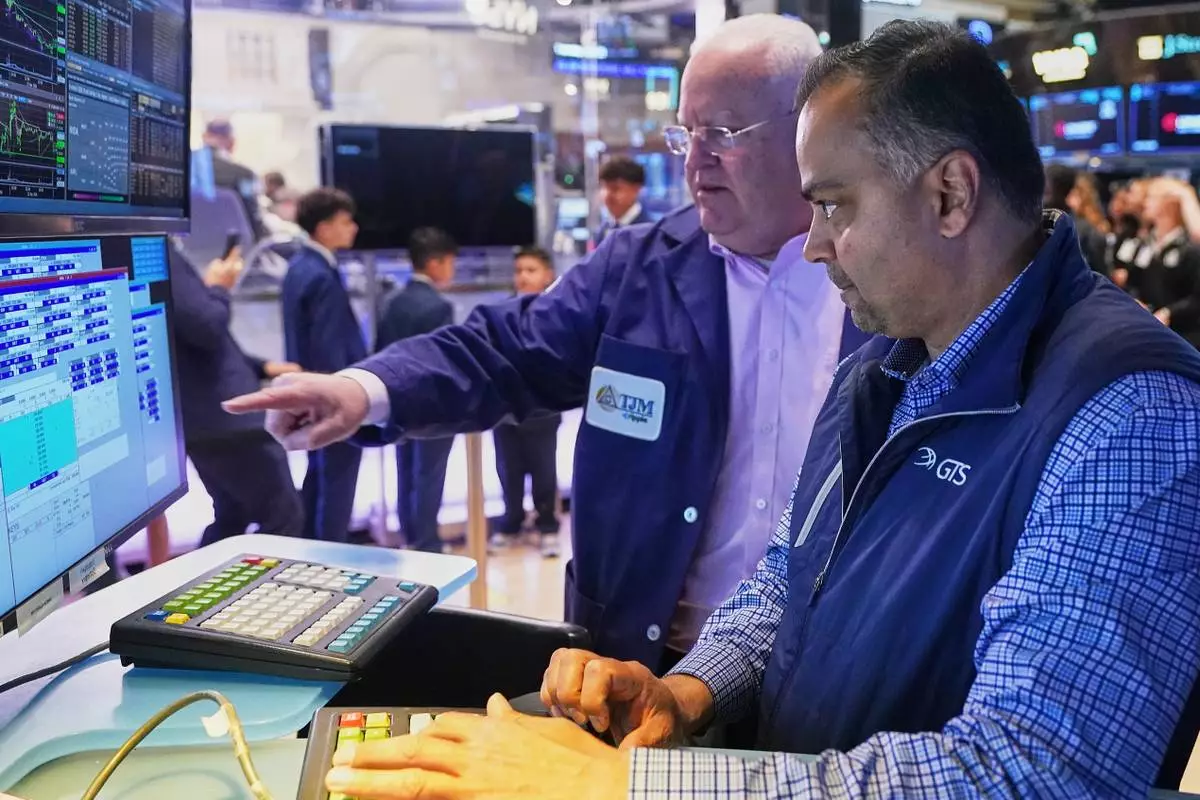
Trader Thomas Ferrigno, left, and specialist Dilip Patel work on the floor of the New York Stock Exchange, Thursday, April 23, 2026. (AP Photo/Richard Drew)
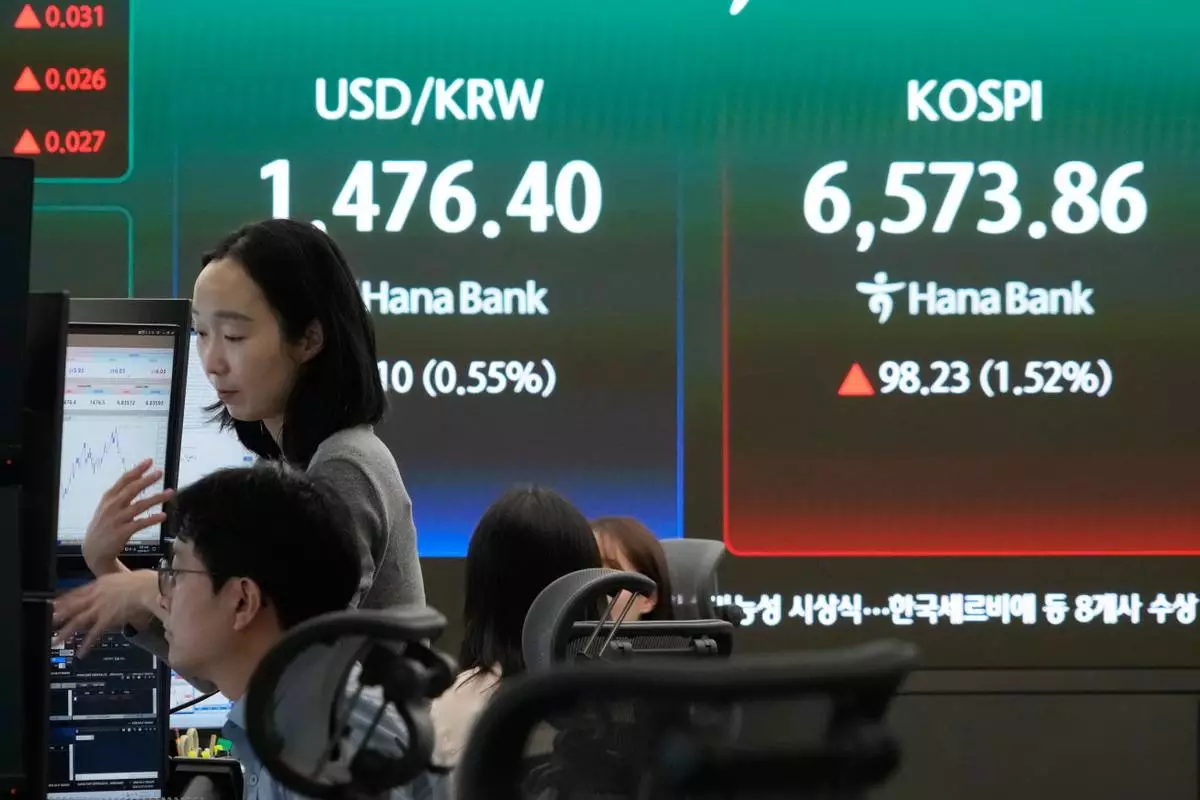
Currency traders work near a screen showing the Korea Composite Stock Price Index (KOSPI), right, and the foreign exchange rate between U.S. dollar and South Korean won at the foreign exchange dealing room of the Hana Bank headquarters in Seoul, South Korea, Monday, April 27, 2026. (AP Photo/Ahn Young-joon)
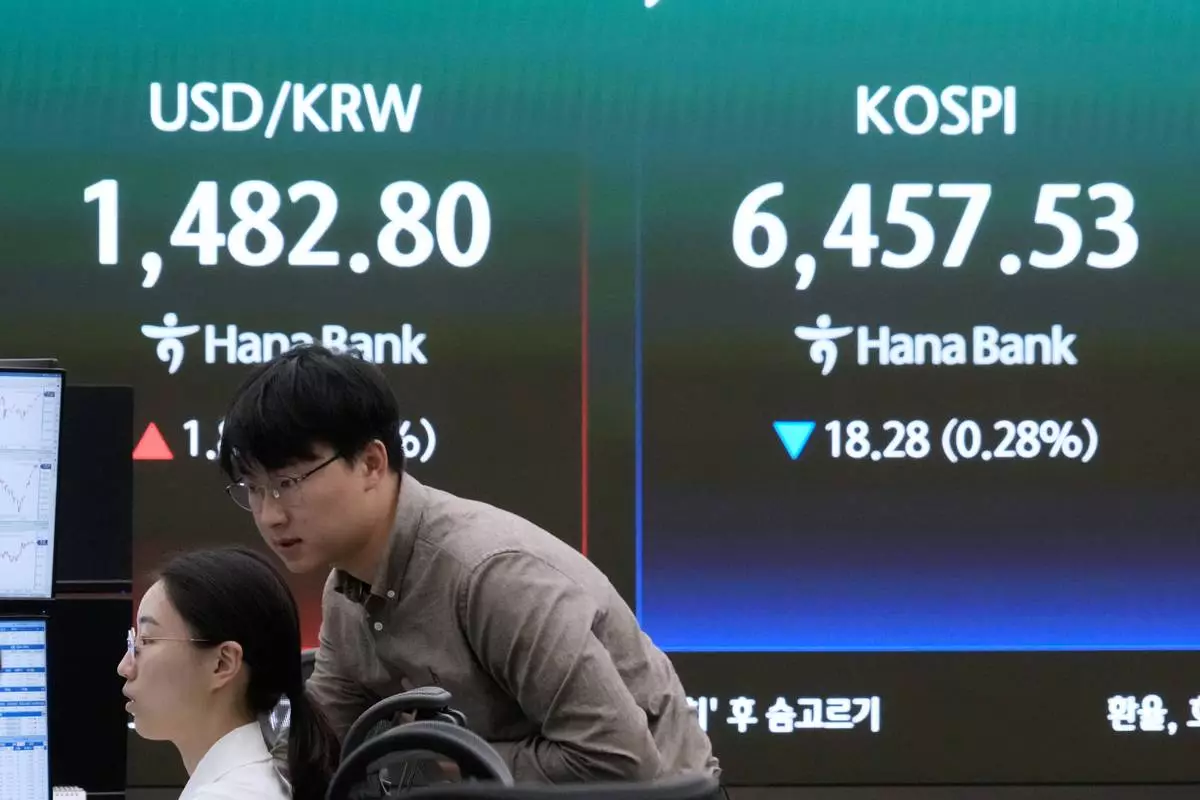
Currency traders work near a screen showing the Korea Composite Stock Price Index (KOSPI), right, and the foreign exchange rate between U.S. dollar and South Korean won at the foreign exchange dealing room of the Hana Bank headquarters in Seoul, South Korea, Friday, April 24, 2026. (AP Photo/Ahn Young-joon)
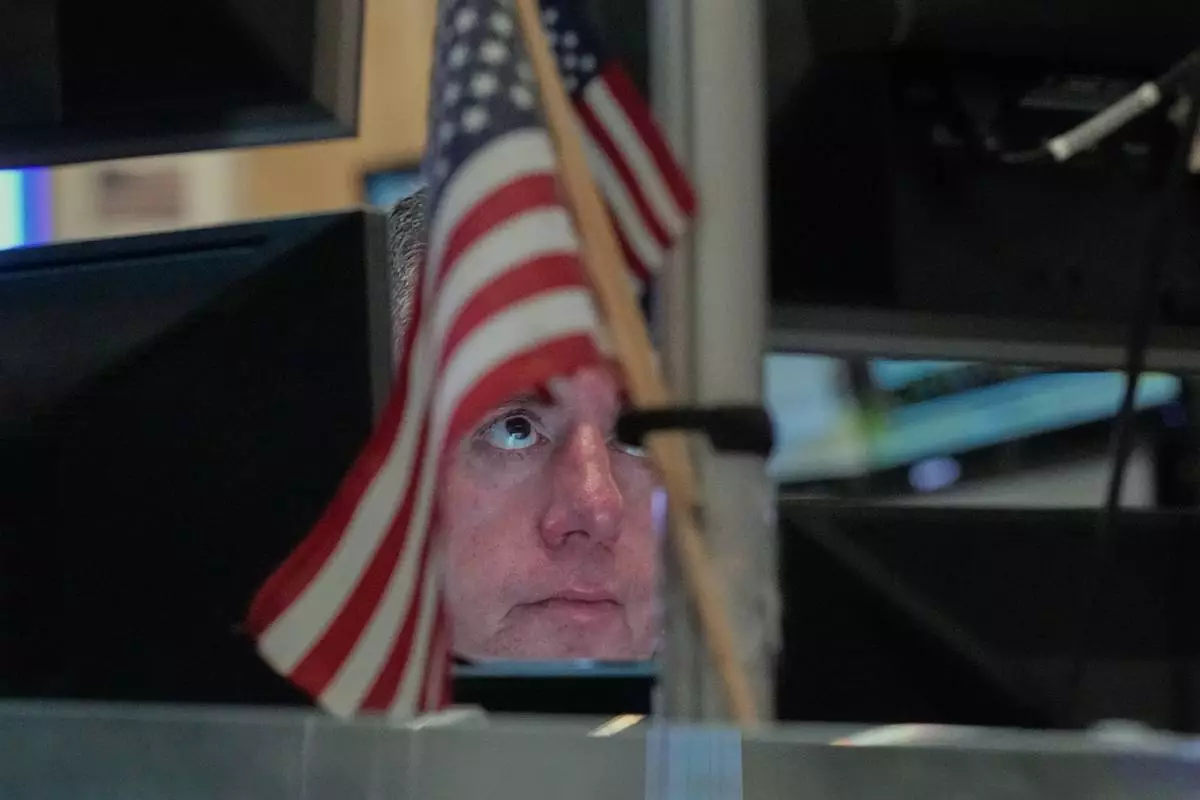
Trader Justin Flinn works on the floor of the New York Stock Exchange, Thursday, April 23, 2026. (AP Photo/Richard Drew)
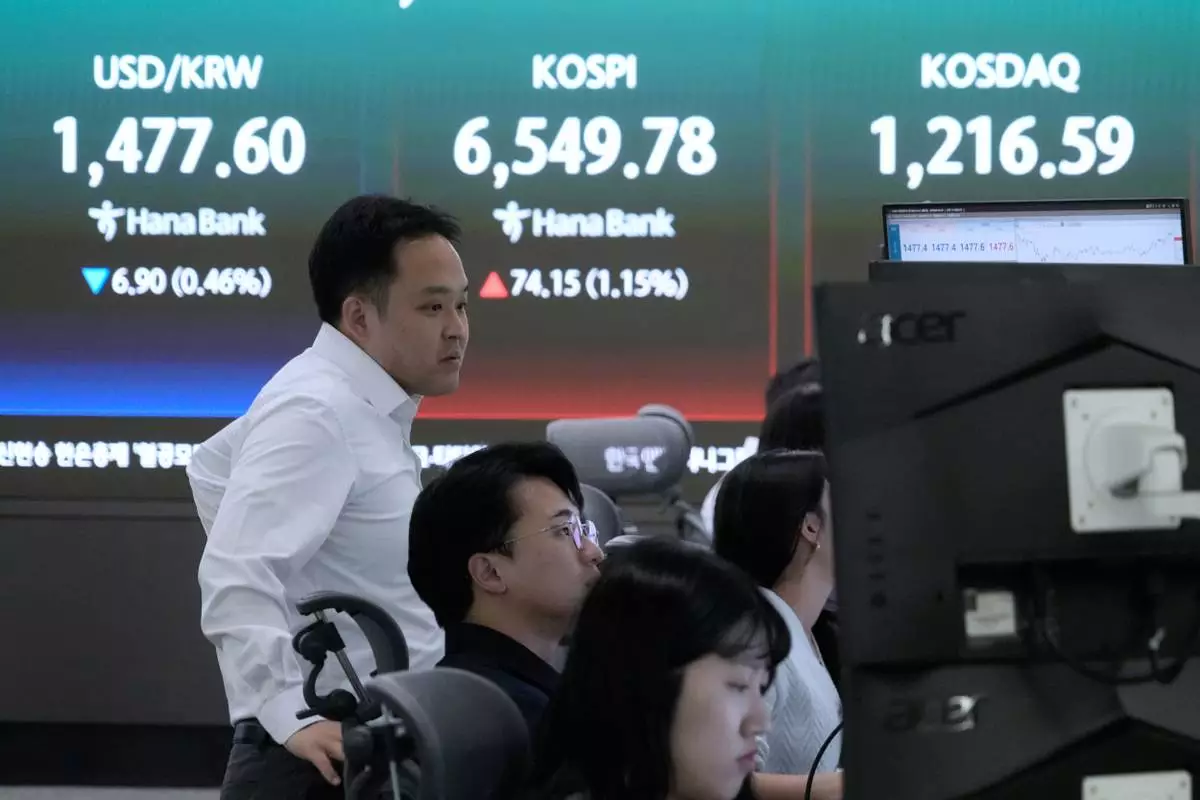
Currency traders watch monitors near a screen showing the Korea Composite Stock Price Index (KOSPI), rear center, and the foreign exchange rate between U.S. dollar and South Korean won, rear left, at the foreign exchange dealing room of the Hana Bank headquarters in Seoul, South Korea, Monday, April 27, 2026. (AP Photo/Ahn Young-joon)
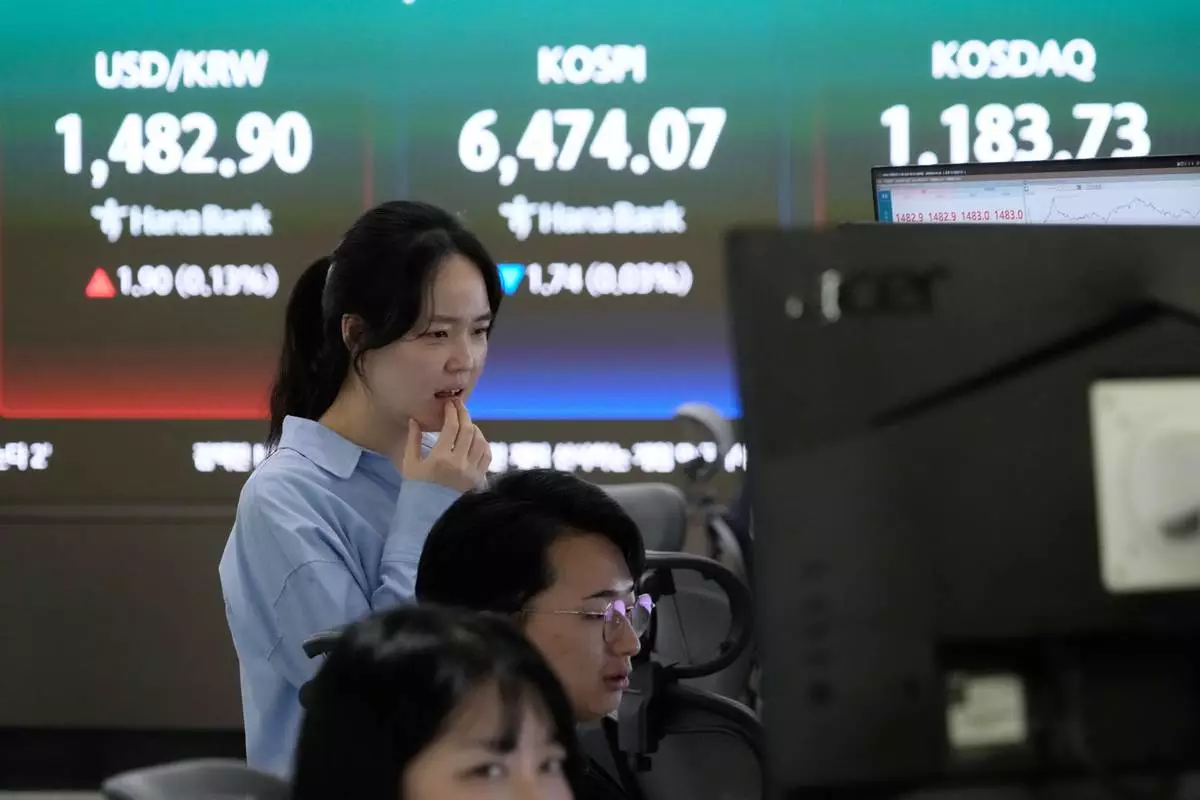
A currency trader watches monitors near a screen showing the Korea Composite Stock Price Index (KOSPI), top center, and the foreign exchange rate between U.S. dollar and South Korean won, top center left, at the foreign exchange dealing room of the Hana Bank headquarters in Seoul, South Korea, Friday, April 24, 2026. (AP Photo/Ahn Young-joon)
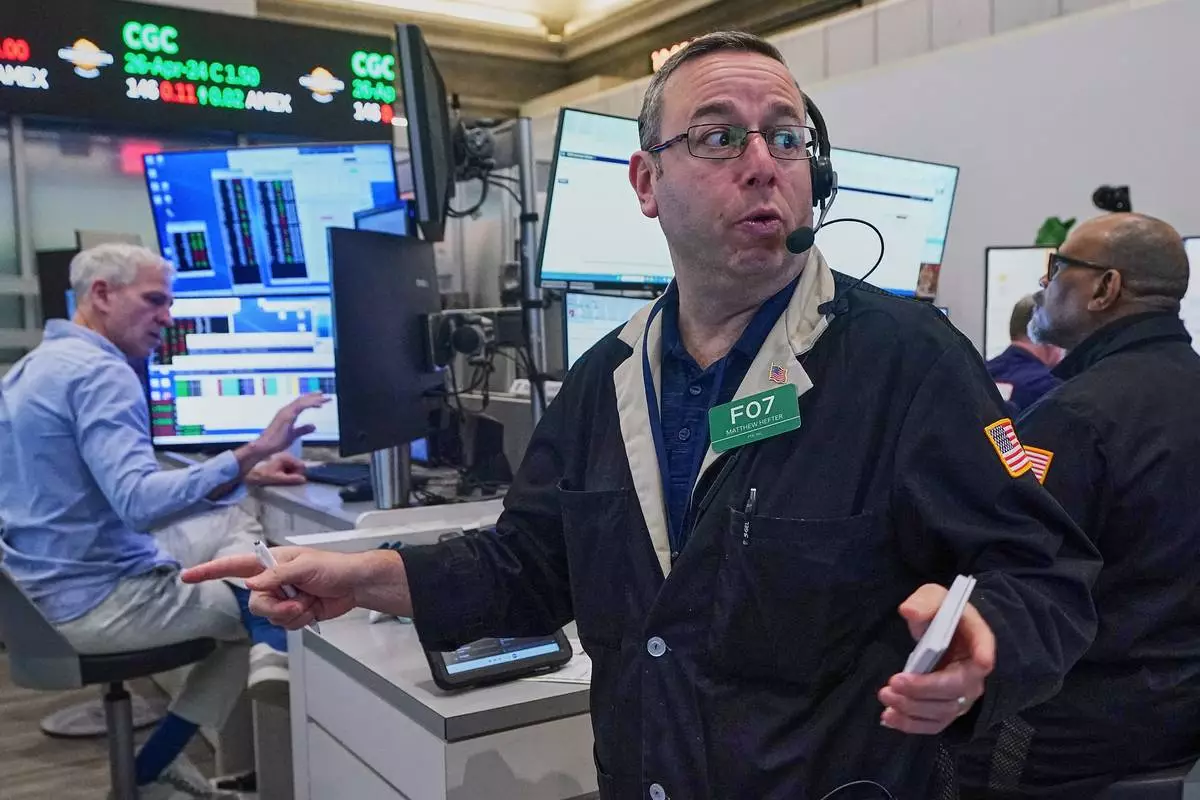
Options trader Matthew Hefter, center, works on the floor of the New York Stock Exchange, Thursday, April 23, 2026. (AP Photo/Richard Drew)