United Airlines CEO Scott Kirby on Monday outlined why he thinks a merger between his airline and rival American would benefit travelers, despite American’s refusal to engage in negotiations.
“I was confident that this combination, which would have been about adding and not subtracting, creating a truly great airline that customers love, could get regulatory approval,” Kirby wrote in a press release. “I was hoping to pitch that story to American, but they declined to engage and instead responded by publicly closing the door.”
The stocks of both airlines soared two weeks ago when reports surfaced that Kirby had floated the idea of combining two of the biggest U.S. airlines to the White House. Kirby said Monday that he had approached American directly about a tie-up, but it's unclear whether that was before or after the White House meeting.
Days after the meeting in Washington, American shot down the idea of a merger.
“American Airlines is not engaged with or interested in any discussions regarding a merger with United Airlines,” the company said in an April 17 press release. Additionally, a combination of the two carriers “would be negative for competition and for consumers” and possibly raise antitrust concerns, the company said.
Fort Worth, Texas-based American Airlines is itself the product of a 2013 merger with US Airways Group.
President Donald Trump also said last week that he was against a merger of the airlines.
In his press release Monday, Kirby argued that a merger between the iconic airlines would expand service, create a globally competitive airline and boost the U.S. economy by creating millions of jobs and strengthening the aircraft manufacturing sector.
Shares of Chicago-based United shares fell 1.4% on Monday, to $91.72. They are down about 20% since the war in Iran began in late February, sending fuel prices soaring. American shares were down 2% in morning trading Monday, to $11.84. American is down about 15% since the war began.
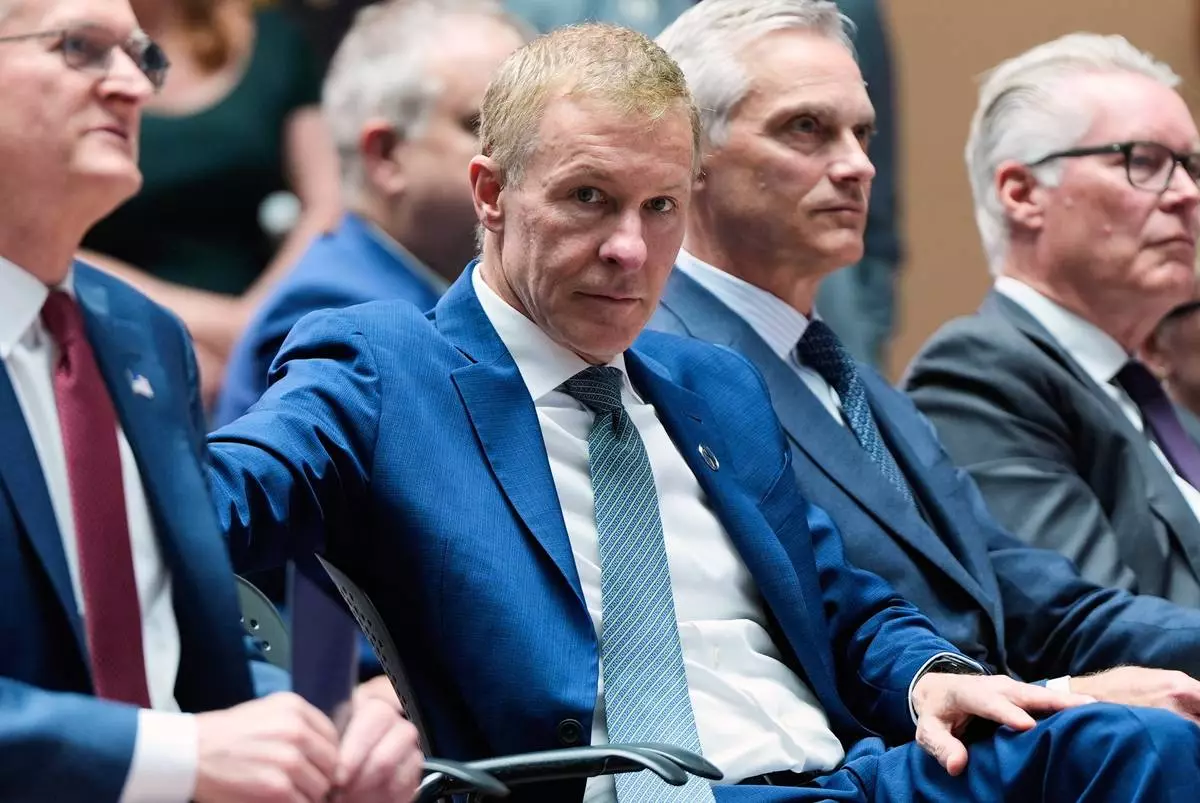
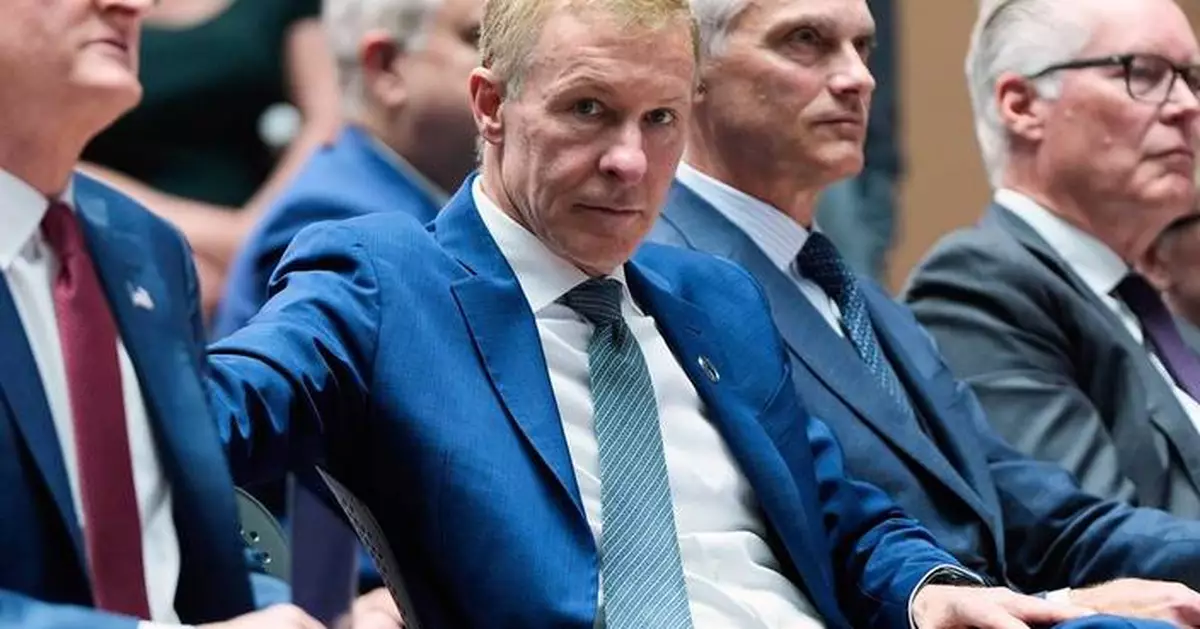
FILE - Scott Kirby, second left, CEO of United Airlines, and Robert Isom, second right, CEO of American Airlines, listen as Transportation Secretary Sean Duffy announces a new air traffic control infrastructure plan, Thursday, May 8, 2025, in Washington. (AP Photo/Julia Demaree Nikhinson, File)
Oil prices were up Monday as a standoff between the U.S. and Iran in the Strait of Hormuz remained despite a ceasefire, while Pakistan leaders were seeking to revive stalled talks between the two countries.
Iran’s Foreign Minister Abbas Araghchi was in Russia Monday for a meeting with President Vladimir Putin as part of a trip that included two stops in Pakistan and a visit to Oman, which shares the strait with the Islamic Republic.
Pakistan-led mediators are working to bridge significant gaps between the U.S. and Iran, according to a regional official involved in the mediation efforts who spoke on the condition of anonymity because they were not authorized to discuss the matter.
U.S. President Donald Trump canceled plans for his top envoys to travel to Islamabad this weekend for negotiations after Iran insisted the U.S. should end its blockade of Iranian ports before new talks can take place.
Early Monday, the U.S. military’s Central Command said it has so far turned around 38 ships during the blockade.
Since the war began, at least 3,375 people have been killed in Iran and at least 2,509 people in Lebanon, where the Israel-Hezbollah fighting resumed two days after the Iran war started.
Also, 23 people have been killed in Israel and more than a dozen in Gulf Arab states. Fifteen Israeli soldiers in Lebanon, 13 U.S. service members in the region and six U.N. peacekeepers in southern Lebanon have been killed.
Here is the latest:
Iranian Foreign Minister Abbas Araghchi said Monday that his trip to Russia offered an opportunity to coordinate with Moscow after the war with Israel and the United States.
Araghchi made the comments in a pretaped interview posted by the state-run IRNA news agency.
“It is a good opportunity for us to consult with our Russian friends about the developments that have occurred in relation to the war during this period and what is happening now,” he said.
Araghchi said it was America’s approach that “caused the negotiations to be delayed” that had been planned in Islamabad.
“The previous one, despite the progress that had been made, could not achieve its goals,” he said, blaming what he called Washington’s “excessive demands.”
Trump has questioned who is in charge in Iran at the moment and said confusion within its theocracy made it difficult to reach a deal.
Iran’s top diplomat arrived Monday in Russia ahead of a meeting with Russian President Vladimir Putin.
The state-run IRNA news agency said Abbas Araghchi landed in St. Petersburg for his meeting with Putin.
Araghchi has visited Islamabad twice and Muscat, Oman, on the foreign trip as negotiations with the U.S. appear stalled over the Iran war.
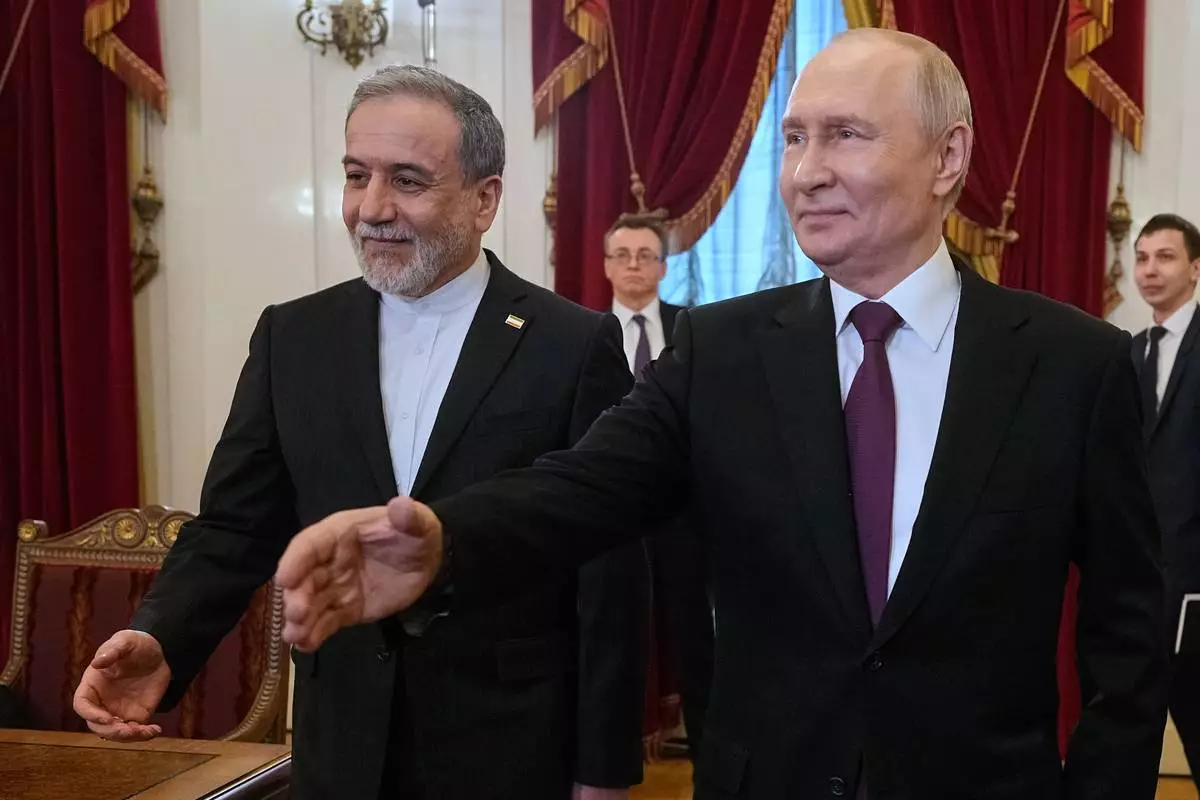
Russian President Vladimir Putin, right, and Iranian Foreign Minister Abbas Araghchi walk to attend the talks at the Boris Yeltsin Presidential Library, in St. Petersburg, Russia, Monday, April 27, 2026. (AP Photo/Dmitri Lovetsky, Pool)
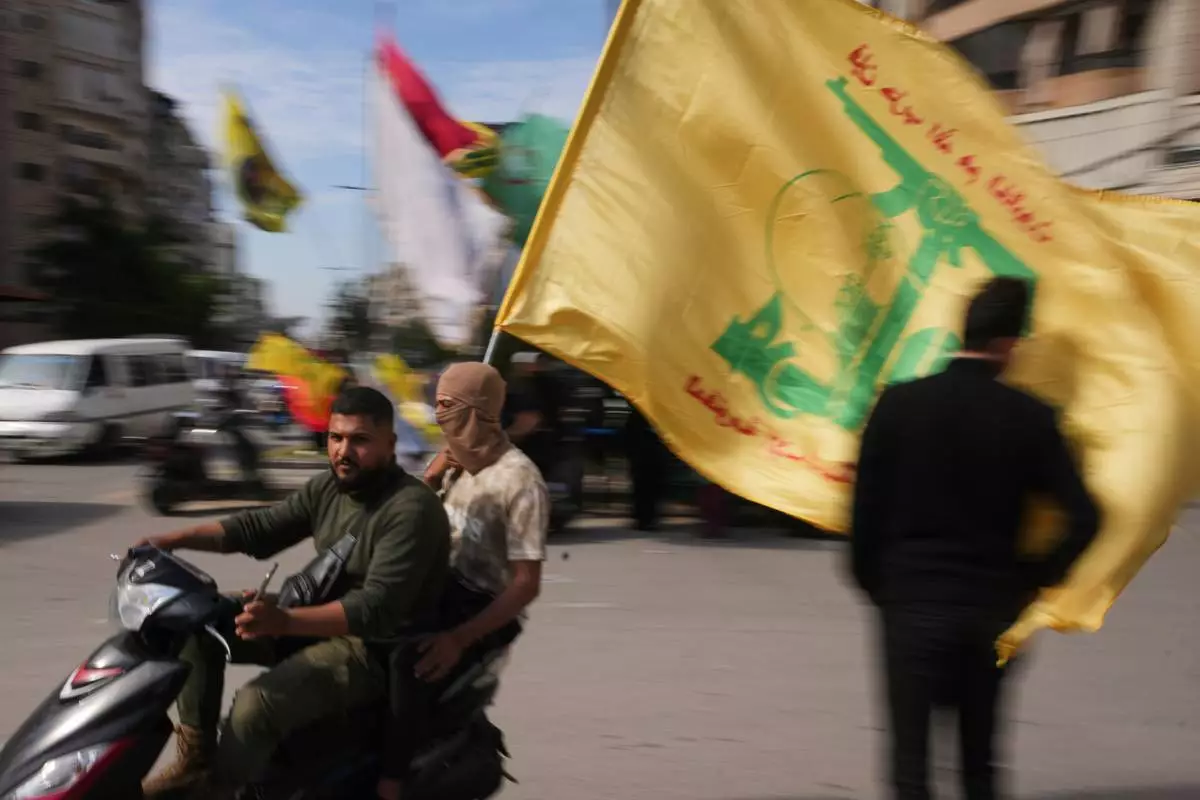
Men ride a scooter while waving a Hezbollah flag during a small gathering in Dahiyeh, Beirut's southern suburbs, Lebanon, Saturday, April 25, 2026. (AP Photo/Hassan Ammar)
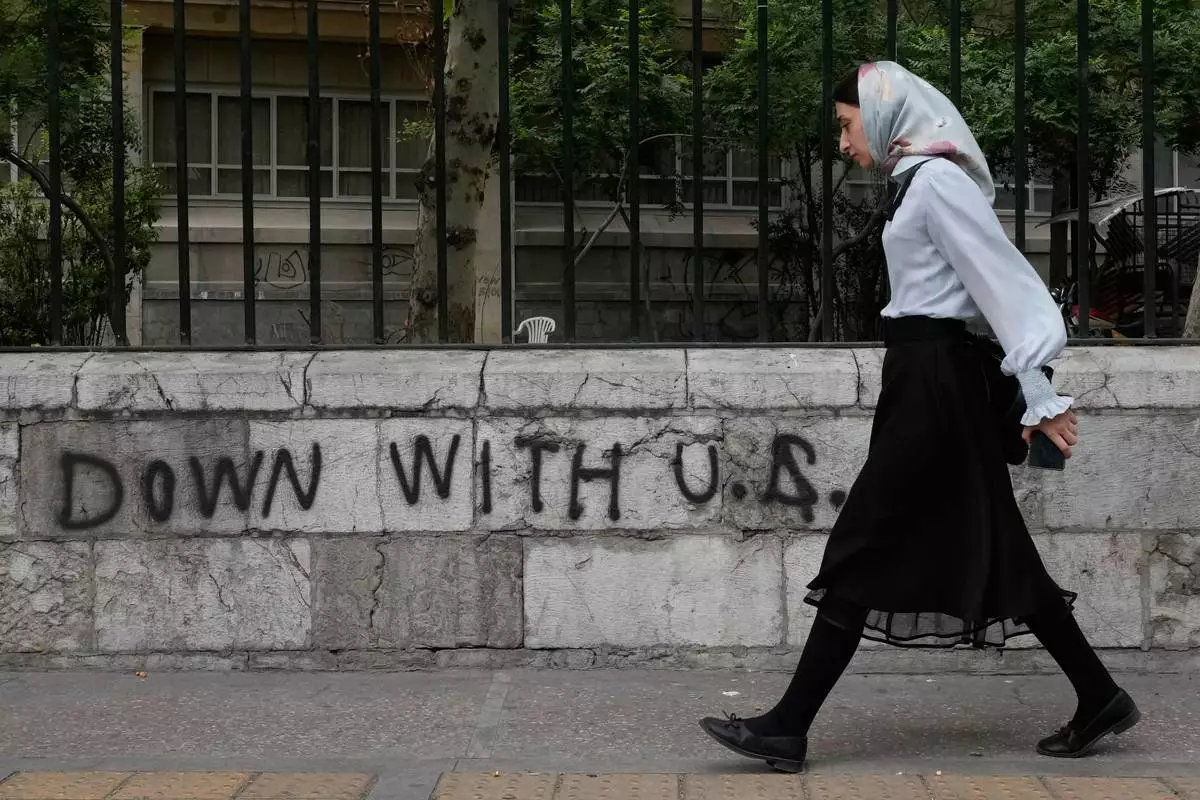
A woman walks past an anti-U.S. graffiti painted on the wall of the Tehran University on Enqelab-e-Eslami (Islamic Revolution) street in downtown Tehran, Iran, Saturday, April 25, 2026. (AP Photo/Vahid Salemi)
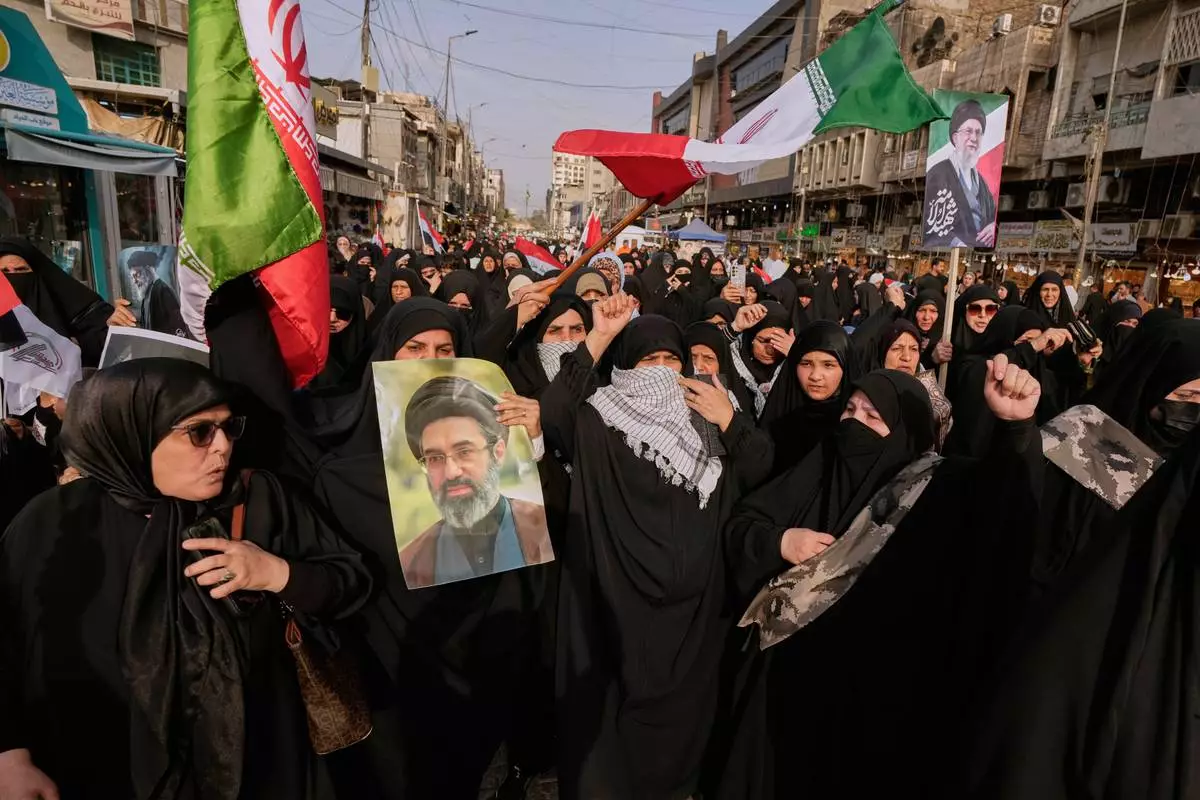
Iraqis Muslim women hold portraits of Iran's late Supreme Leader Ayatollah Ali Khamenei and his son Ayatollah Mojtaba Khamenei, during a protest against U.S. and Israeli attacks on multiple cities across Iran, in Baghdad, Iraq, Saturday, April 25, 2026. (AP Photo/Hadi Mizban)
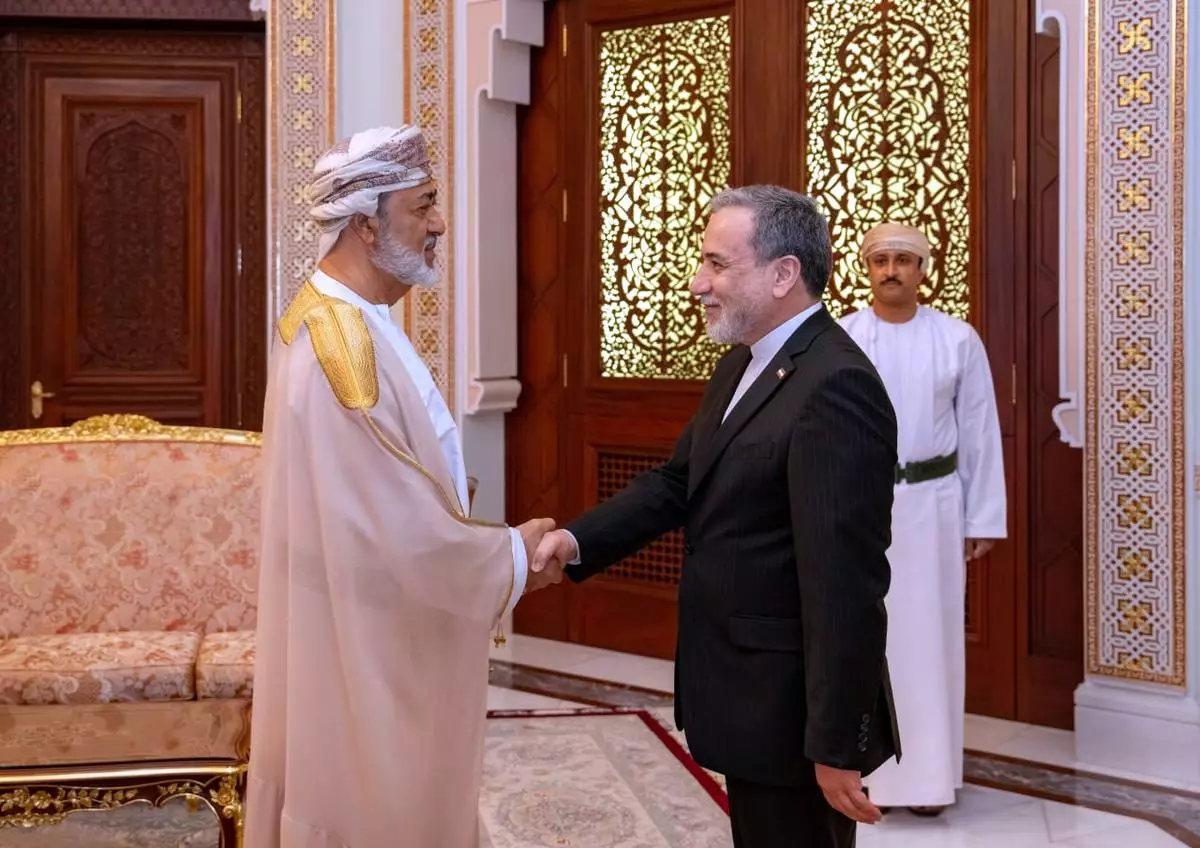
In this photo released by the Iranian Foreign Ministry, Iranian Foreign Minister Abbas Araghchi, right, shakes hands with Oman's Sultan Haitham bin Tariq during their meeting, in Muscat, Oman, Sunday, April 26, 2026. (Iranian Foreign Ministry via AP)
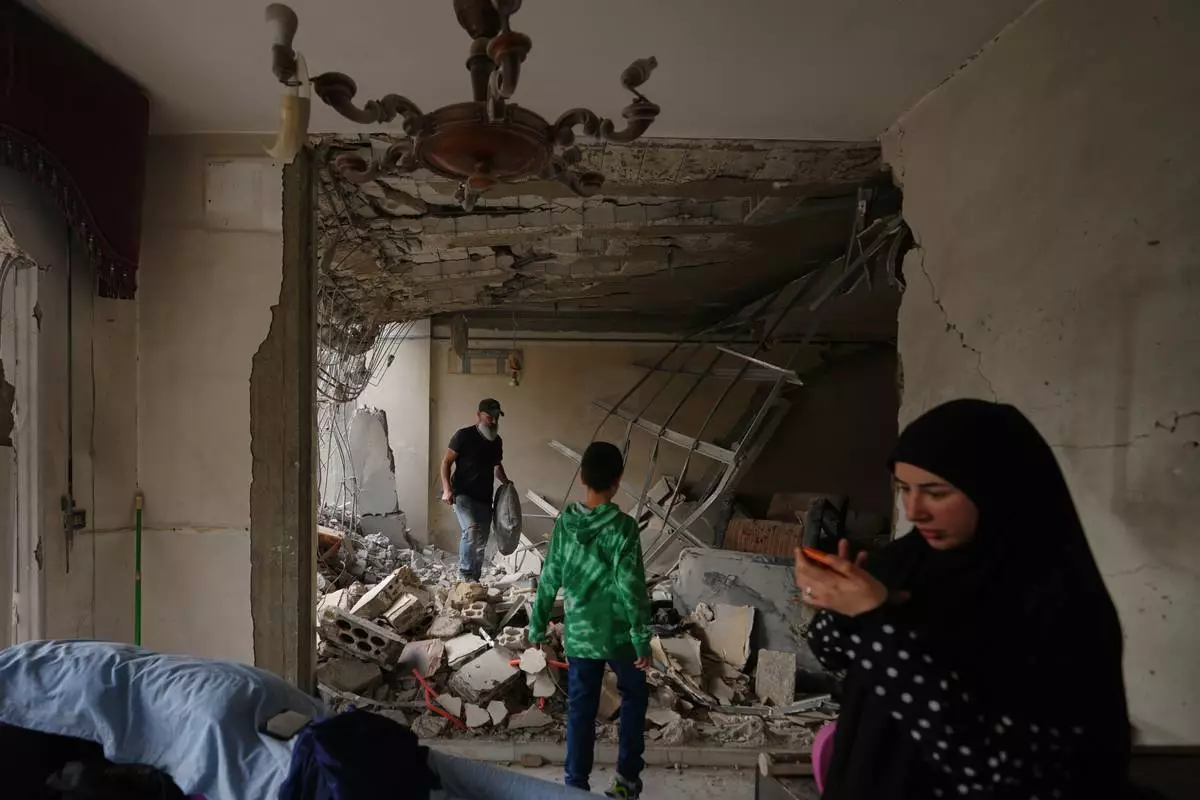
Fadi Al Zein, left, who lost both his homes in Israeli strikes in his village of Khiam and in Dahiyeh, searches through the rubble of his heavily damaged home as a child stands nearby, in Beirut's southern suburbs, Lebanon, Saturday, April 25, 2026. (AP Photo/Hassan Ammar)