SANTA MARTA, Colombia (AP) — Lack of financing is one of the biggest barriers to moving away from fossil fuels, officials and experts said at a global conference Monday in Colombia aimed at speeding up the shift from fossil fuels to cleaner energy.
The gathering in the Caribbean city of Santa Marta comes as governments face mounting pressure to move beyond climate pledges and begin outlining how to phase out oil, gas and coal, the main drivers of global warming. While U.N. climate talks have acknowledged the need for a transition, they have produced few concrete mechanisms, leaving countries and regions to grapple with the economic challenges largely on their own.
Click to Gallery
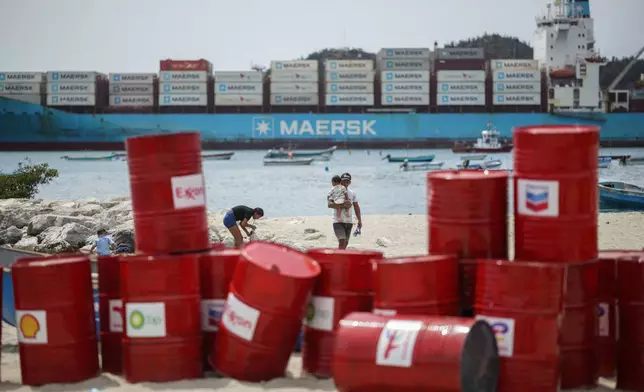
A family walks near a Make Polluters Pay demonstration along the Caribbean Sea demanding oil companies pay for the energy transition during a nearby conference aimed at transitioning away from fossil fuels Monday, April 27, 2026, in Santa Marta, Colombia. (AP Photo/Ivan Valencia)

Attendees line up to enter at the University of Magdalena for a conference aimed at transitioning away from fossil fuels Monday, April 27, 2026, in Santa Marta, Colombia. (AP Photo/Ivan Valencia)
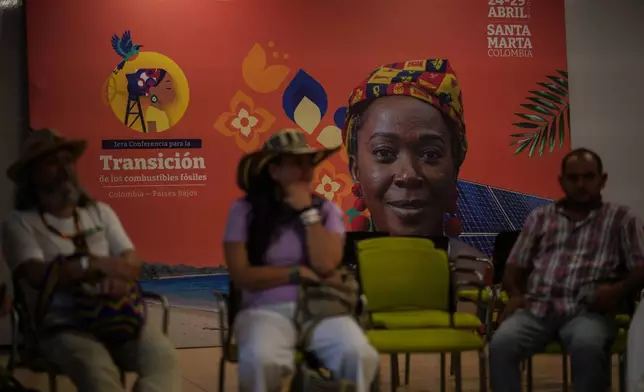
People attend a session during a conference aimed at transitioning away from fossil fuels Monday, April 27, 2026, in Santa Marta, Colombia. (AP Photo/Ivan Valencia)

People arrive at a conference aimed at transitioning away from fossil fuels Monday, April 27, 2026, in Santa Marta, Colombia. (AP Photo/Ivan Valencia)
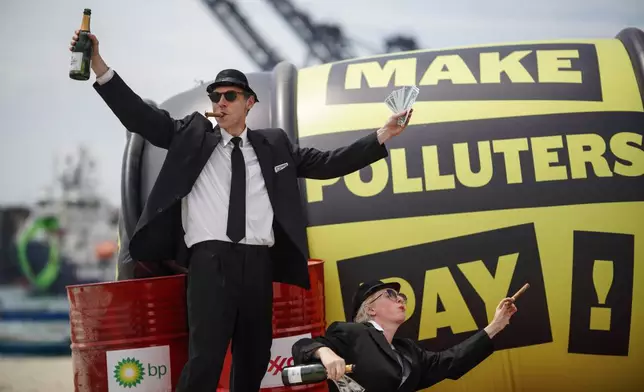
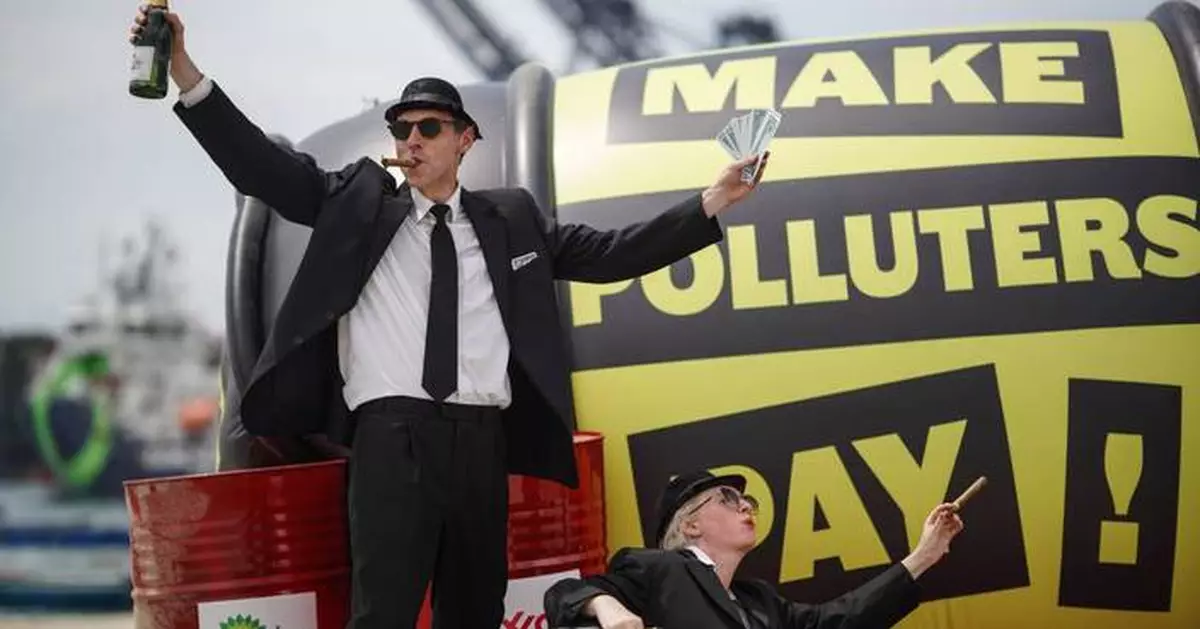
Demonstrators participate in a Make Polluters Pay campaign along the Caribbean Sea demanding oil companies pay for the energy transition during a nearby conference aimed at transitioning away from fossil fuels Monday, April 27, 2026, in Santa Marta, Colombia. (AP Photo/Ivan Valencia)
While renewable energy such as solar and wind is often cheaper to generate than fossil fuels, experts say the cost of transitioning is driven by other factors. Governments must invest heavily in infrastructure, including power grids and storage, while replacing existing oil and gas systems that still underpin many economies. In developing countries, high borrowing costs and limited access to financing can also make clean energy projects significantly more expensive to build, even if they are cheaper to run over time.
Experts say the problem is rooted in how the global financial system is structured.
Many countries and regional governments are not opposed to shifting away from fossil fuels, but are constrained by debt, limited fiscal space and the high cost of financing cleaner energy projects, said Amiera Sawas, head of research and policy at the Fossil Fuel Non-Proliferation Treaty Initiative.
“They aren’t wedded ideologically to fossil fuels,” she said. “They can access financing for fossil fuels more easily.”
In many developing regions, borrowing costs for renewable energy can be several times higher than in wealthier economies — averaging about 15% in parts of Africa compared with roughly 2% in Europe and North America — making it cheaper in the short term to continue investing in oil and gas.
That dynamic can create what researchers describe as a “debt–fossil fuel trap,” where countries rely on oil and gas income to service debt and maintain energy access, leaving them with little room to invest in alternatives.
Against that backdrop, some governments are turning to fossil fuel revenues themselves as a way to help finance the transition.
In Brazil’s Espírito Santo state, officials said money earned from oil and gas production is being used to help pay for the transition to cleaner energy, including funding projects that reduce emissions and attract private investors, including a new fund aimed at attracting private investment into emissions-reduction projects — an example of how some governments are using fossil fuel revenues to help fund the transition away from them.
Officials said such revenues can provide a starting point in regions where alternative financing is limited and, in some cases, can help attract private capital into cleaner energy projects.
But experts cautioned that the approach has clear limits. Fossil fuel revenues can be volatile, tied to global energy prices, and are expected to decline over time as countries reduce production and consumption.
“Climate finance is a challenge all over the world, but at the subnational level, it’s even bigger,” said Nicolas Lippolis, founder and executive director of the Centre for Energy, Finance and Development, who moderated a panel at the conference about the use of royalties for the energy transition.
Officials from wealthier regions said they are trying to fill part of that gap through policy and market mechanisms. In the United States, California, for example, has used carbon markets — systems that require companies to pay for or limit their emissions — and low-carbon fuel standards to generate investment and guide the transition.
“We remain steadfast in our commitment to carbon neutrality by 2045,” said Sarah Izant, deputy secretary for climate policy at the California Environmental Protection Agency, which oversees the state’s environmental and climate policies, adding the shift also brings public health and economic benefits.
She said California remains a “stable and reliable partner” on climate action and pointed to coalitions of U.S. states continuing to pursue emissions cuts, even as federal policy has at times moved away from international climate commitments and regulations on fossil fuels. She acknowledged the transition has brought challenges, including disruptions in fuel supply as refineries close and the need to supplement with imports in the short term.
But not everyone at the conference agrees with that approach.
In a declaration released Monday evening at the conference, Indigenous groups said efforts to phase out oil, gas and coal must not rely on carbon markets or offset schemes — where polluters pay to offset their emissions instead of reducing them — arguing such approaches fail to address the root causes of climate change.
The Trump administration was not among those invited to the Santa Marta conference, which organizers said was focused on governments seeking to accelerate a transition away from fossil fuels.
In Canada, Quebec has taken a more direct approach, passing a law to halt new fossil fuel exploration and production altogether.
“We decided, with a consensus, to say no to fossil fuel in Quebec,” said Jean Lemire, the province’s climate envoy, even as he acknowledged pressure over costs and energy policy.
But Lemire warned that global efforts to coordinate the transition remain slow.
“Right now, at the U.N., we will not make big advancement on anything … because we are under the rule of consensus,” he said, referring to a system where countries must all agree before decisions are adopted.
Efforts to build momentum outside formal U.N. talks are continuing. Tuvalu, a low-lying Pacific island nation highly vulnerable to rising sea levels, announced at a side event during the conference that it will host the next one.
“Tuvalu is not waiting for the rest of the world to act, we are leading the way,” said Dr. Maina Vakafua Talia, the country’s minister of home affairs, environment and climate change. “This is not a negotiating position — it is a matter of survival.”
The discussion in Santa Marta is underscoring a broader shift in the energy transition — from a technological challenge to an economic one, focused on mobilizing investment and reshaping economies long dependent on fossil fuels.
But speakers said the challenge remains unresolved.
“There’s a lot of money for war,” said Lemire. “But there’s one common enemy — climate change — and we don’t find that money.”
The Associated Press’ climate and environmental coverage receives financial support from multiple private foundations. AP is solely responsible for all content. Find AP’s standards for working with philanthropies, a list of supporters and funded coverage areas at AP.org.
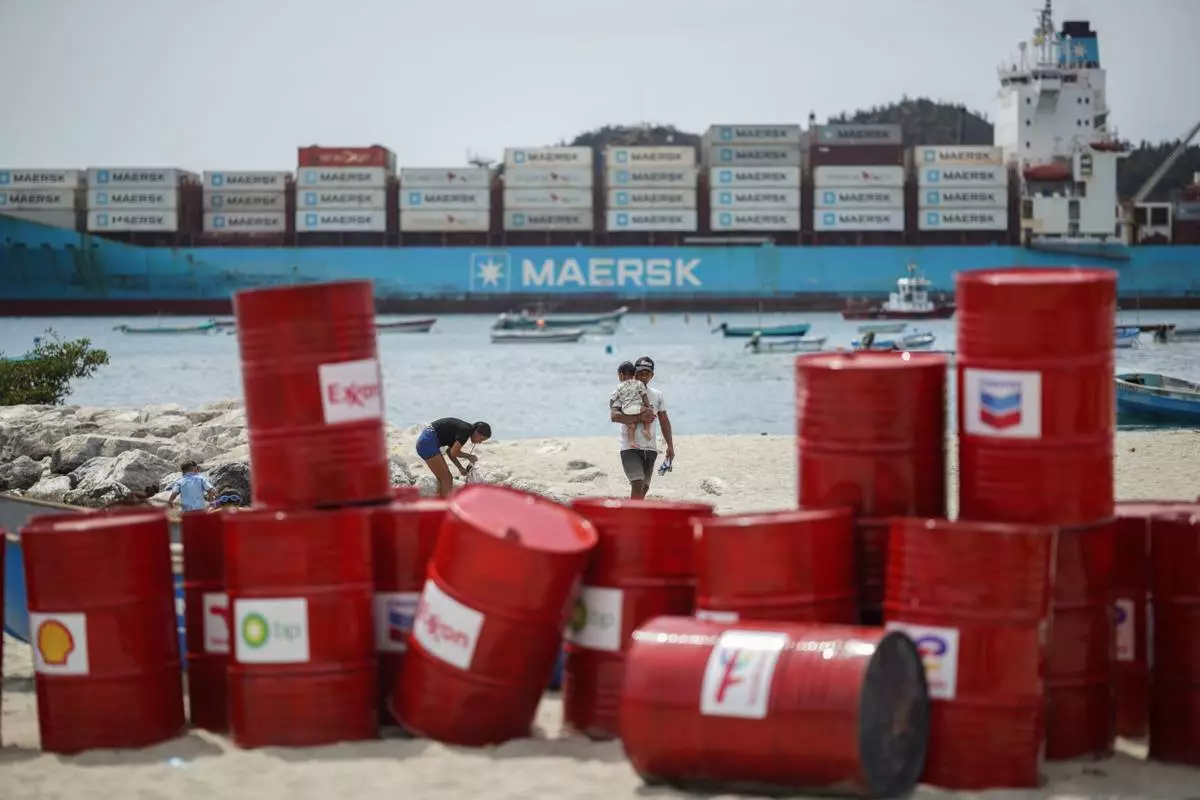
A family walks near a Make Polluters Pay demonstration along the Caribbean Sea demanding oil companies pay for the energy transition during a nearby conference aimed at transitioning away from fossil fuels Monday, April 27, 2026, in Santa Marta, Colombia. (AP Photo/Ivan Valencia)

Attendees line up to enter at the University of Magdalena for a conference aimed at transitioning away from fossil fuels Monday, April 27, 2026, in Santa Marta, Colombia. (AP Photo/Ivan Valencia)
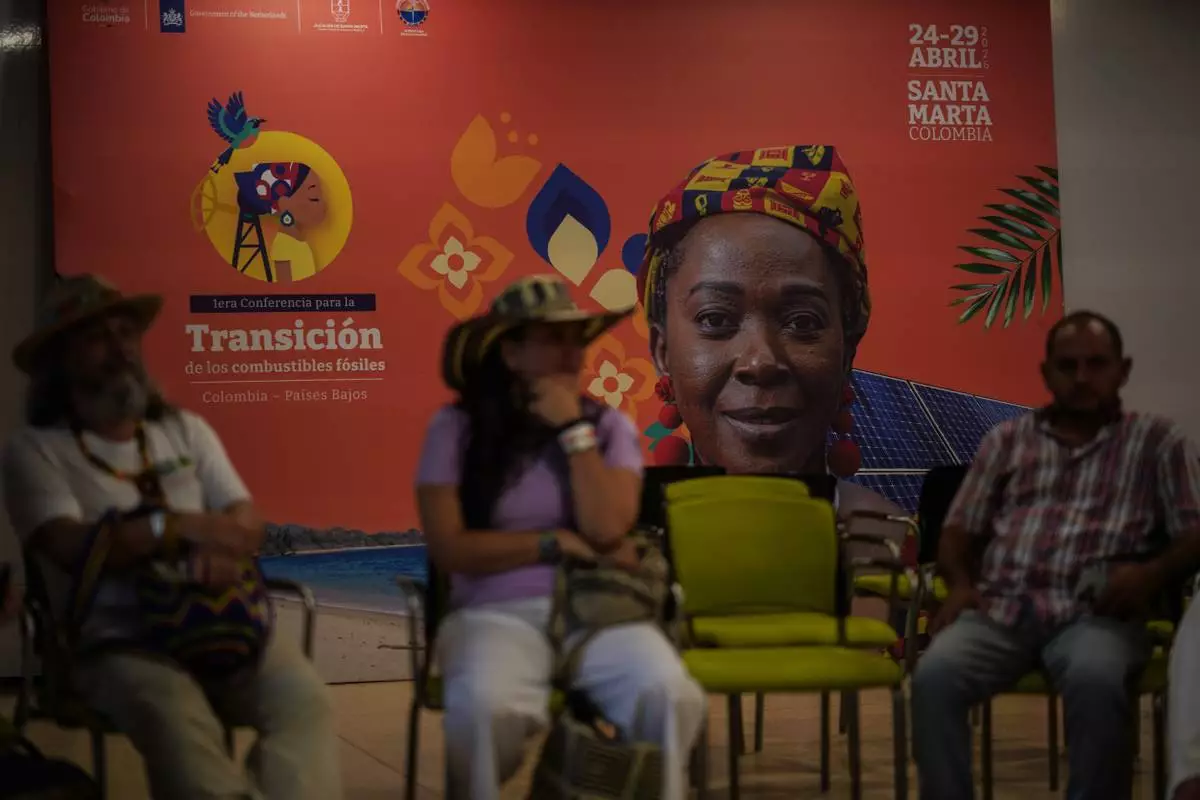
People attend a session during a conference aimed at transitioning away from fossil fuels Monday, April 27, 2026, in Santa Marta, Colombia. (AP Photo/Ivan Valencia)

People arrive at a conference aimed at transitioning away from fossil fuels Monday, April 27, 2026, in Santa Marta, Colombia. (AP Photo/Ivan Valencia)
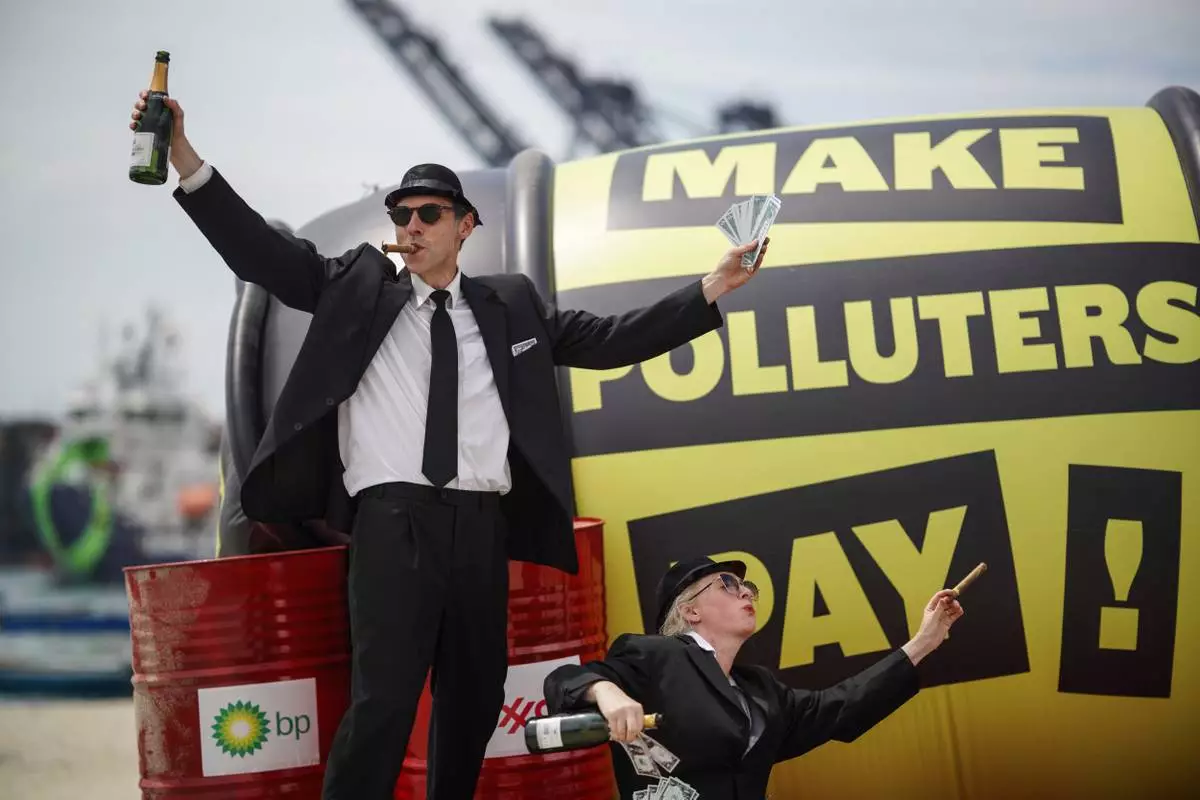
Demonstrators participate in a Make Polluters Pay campaign along the Caribbean Sea demanding oil companies pay for the energy transition during a nearby conference aimed at transitioning away from fossil fuels Monday, April 27, 2026, in Santa Marta, Colombia. (AP Photo/Ivan Valencia)