SAN FRANCISCO--(BUSINESS WIRE)--Apr 27, 2026--
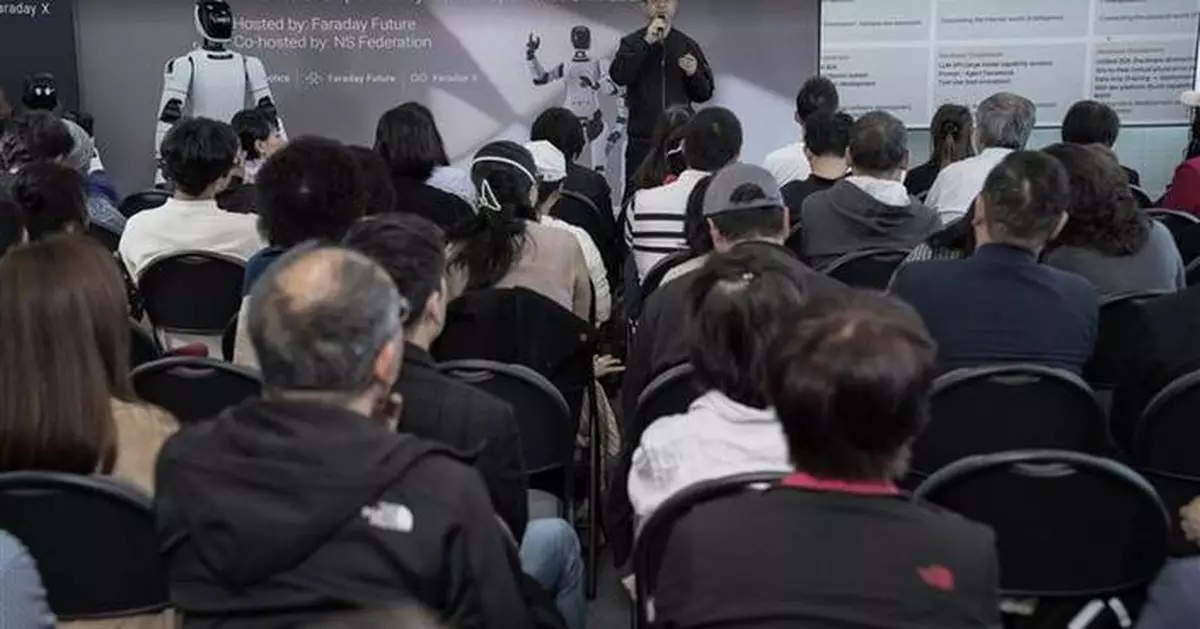
Faraday Future Intelligent Electric Inc. (NASDAQ: FFAI) (“Faraday Future”, “FF” or the “Company”), a California-based global Embodied AI (EAI) ecosystem company, today announced that it hosted the EAI Developer Ecosystem Forum and the strategic launch of the FF EAI Brain & Open Developer Platform in San Francisco on April 25. With this launch, FF unveils the Company’s EAI developer platform purpose-built for AI natives, marking 2026 as the inaugural year of EAI robotics education and officially opens recruitment for co-builders of its global developer ecosystem.
This press release features multimedia. View the full release here: https://www.businesswire.com/news/home/20260427849387/en/
The forum culminated in a live capability showcase featuring FF Futurist, the Company’s full-size professional EAI humanoid robot, demonstrating nine end-to-end Agent Skills across Home Assistant, Commercial Security, Pet Companion, and Hospitality and Reception scenarios. FF also previewed home security integration combining FX Aegis, FF’s professional EAI quadruped robot, with smart home automation. Recruitment for the first batch of 1.0 co-creation partners is now open at: https://www.ff.com/us/developer/apply/
The FF EAI Brain & Open Developer Platform features six developer tools (Brain Blocks, Create Studio, EAI Soul, EAI Scribe, EAI Studio, and an SDK and API) and four core infrastructure layers (a unified developer portal, a Sim-to-Real evolution field, a data closed-loop engine, and an agile development and release toolchain). Together, they make robot development as accessible as software development, lowering the barrier for everyone from K‑12 students to professional engineers to build executable robot capabilities known as Agent Skills.
The platform officially opens recruitment across three categories of developers: Young Futurist for K‑12 students aged 6 to 18, EAI Futurist for scenario experts and creators, and EAI Builder for professional engineers, research teams, and OEM partners. Each category follows a four-tier progression path from Beginner to Leader. A comprehensive developer incentive program covering revenue sharing, grants, hackathons, the Campus Program, a tier-based seniority system, and global community exposure ensures that every contributor truly benefits from the ecosystem they help build.
The forum drew leaders from across the embodied AI ecosystem, including Yong Wang, CEO of StarBot Robotics; Ling Zong, Ph.D., President of the Silicon Valley Artificial Intelligence Research Institute (USA); Christine Chen, Professor at California Science and Technology University (CSTU); Heidi Yu, CEO of SocialBook; Lei Zarboulas, Founder of RedOlive Investors; Teddy Fang, CEO of NS Federation; and Edward Qu, CEO of Vigiles Robotics. The event closed with a panel discussion titled “The Robotics Education Revolution: How Embodied AI Is Raising the Next Generation of Builders.”
“The launch of the FF EAI Brain & Open Developer Platform is more than a product release. It is the opening of a new ecosystem where everyone, from K‑12 students to professional engineers, can build the capabilities that will define the embodied AI era,” said Chris Chen, Co-CEO of FF AI-Robotics. “By marking 2026 as the inaugural year of EAI robotics education, we are not only lowering the barrier to robot development. We are inviting the next generation of AI natives to co-create the future with us and ensuring that every developer who joins us truly benefits from the ecosystem they help build.”
Looking ahead, the FF EAI Brain & Open Developer Platform will serve as the foundational infrastructure for FF’s broader EAI ecosystem, connecting devices, data, and intelligence at scale. By cultivating a global community of AI-native developers and deepening partnerships across education, research, and industry, FF aims to accelerate the real-world deployment of EAI robots and reinforce its long-term positioning as a leader of the global Embodied AI ecosystem.
ABOUT FARADAY FUTURE
Faraday Future is a California-based global intelligent Company founded in 2014 and is dedicated to reshaping the future of mobility through vehicle electrification, intelligent technologies, and AI innovation. Its flagship vehicle, the FF 91, began deliveries in 2023 and reflects the brand's pursuit of ultra-luxury, cutting-edge technology, and high performance. FF's second brand, FX, targets the high-volume mainstream vehicle market. Its first model, Super One, is positioned as a first-class EAI-MPV, with deliveries planned to begin in 2026. FF recently announced its entry into the Embodied AI Robotics business with sales beginning this year, connecting its future strategy of bringing a new era of EAI vehicles and EAI robotics. For more information, please visit https://www.ff.com/.
FORWARD LOOKING STATEMENTS
This press release includes "forward looking statements" within the meaning of the safe harbor provisions of the United States Private Securities Litigation Reform Act of 1995. When used in this press release, the words "plan to," "can," "will," "should," "future," "potential," and variations of these words or similar expressions (or the negative versions of such words or expressions) are intended to identify forward-looking statements. These forward-looking statements, which include statements regarding FF's entry into the embodied AI robotics market and future deliveries, involve a number of known and unknown risks, uncertainties, assumptions and other important factors, many of which are outside the Company's control, which could cause actual results or outcomes to differ materially from those discussed in the forward-looking statements.
Important factors, that may affect actual results or outcomes include, among others: demand for our robotics products; competition in the robotics industry, which includes companies with far superior experience, funding and name recognition; our reliance on a single OEM for most of our robotics products; our ability to get the planned robotics products to comply with all applicable U.S. rules and regulations; the ability of the robotics OEM to timely supply robotics to the Company; the lack of a formal supply agreement with the robotics OEM; the robotics OEM initiating direct sales into the US under its own brand; the ability of the Company to adequately insure its robotics products; the ability of the Company to design its robotics products to meet market needs; tariff uncertainty for imported products, particularly from China; the ability of the U.S. Department of Commerce to review, condition, or prohibit robotics‑related transactions with a China OEM; demand from automobile dealers for robotics products; the Company's ability to maintain its listing on Nasdaq; the Company's ability to timely regain compliance with Nasdaq's minimum bid requirement; the possibility of the Company's common stock being suspended from trading on Nasdaq if it's closing price is $0.10 or less for 10 consecutive trading days; the availability of sufficient share capital to execute on its strategy, which the Company currently lacks; the agreement of stockholders to substantially increase the Company's share capital, which could result in substantial additional dilution; the Company's ability to homologate FX vehicles for sale; the Company's ability to secure the necessary funding to execute on the FX strategy, which will be substantial; the Company's ability to secure an occupancy certificate for its Hanford facility; the Company's ability to continue as a going concern and improve its liquidity and financial position; the Company's ability to pay its outstanding obligations; the Company's ability to remediate its material weaknesses in internal control over financial reporting and the risks related to the restatement of previously issued consolidated financial statements; the Company's limited operating history and the significant barriers to growth it faces; the Company's history of losses and expectation of continued losses; the success of the Company's payroll expense reduction plan; the Company's ability to execute on its plans to develop and market its vehicles and robots and the timing of these development programs; the Company's estimates of the size of the markets for its vehicles and robots and cost to bring those vehicles to market; the rate and degree of market acceptance of the Company's vehicles; the Company's ability to cover future warranty claims; the success of other competing manufacturers; the performance and security of the Company's vehicles; current and potential litigation involving the Company; the Company's ability to receive funds from, satisfy the conditions precedent of and close on the various financings described elsewhere by the Company; the result of future financing efforts, the failure of any of which could result in the Company seeking protection under the Bankruptcy Code; the Company's indebtedness; the Company's ability to use its "at-the-market" program; insurance coverage; general economic and market conditions impacting demand for the Company's products; potential negative impacts of a reverse stock split; potential cost, headcount and salary reduction actions may not be sufficient or may not achieve their expected results; circumstances outside of the Company's control, such as natural disasters, climate change, health epidemics and pandemics, terrorist attacks, and civil unrest; risks related to the Company's operations in China; the success of the Company's remedial measures taken in response to the Special Committee findings; the Company's dependence on its suppliers and contract manufacturer; the Company's ability to develop and protect its technologies; the Company's ability to protect against cybersecurity risks; and the ability of the Company to attract and retain employees, any adverse developments in existing legal proceedings or the initiation of new legal proceedings, and volatility of the Company's stock price. You should carefully consider the foregoing factors and the other risks and uncertainties described in the "Risk Factors" section of the Company's Form 10-K filed with the SEC on March 31, 2025; Form 10-Qs for the quarters ended June 30, 2025 and September 30, 2025 filed with the SEC on May 9, 2025, August 19, 2025 and November 21, 2025, respectively; the Company's Form 10-K filed with the SEC on March 31, 2026; and other documents filed by the Company from time to time with the SEC.
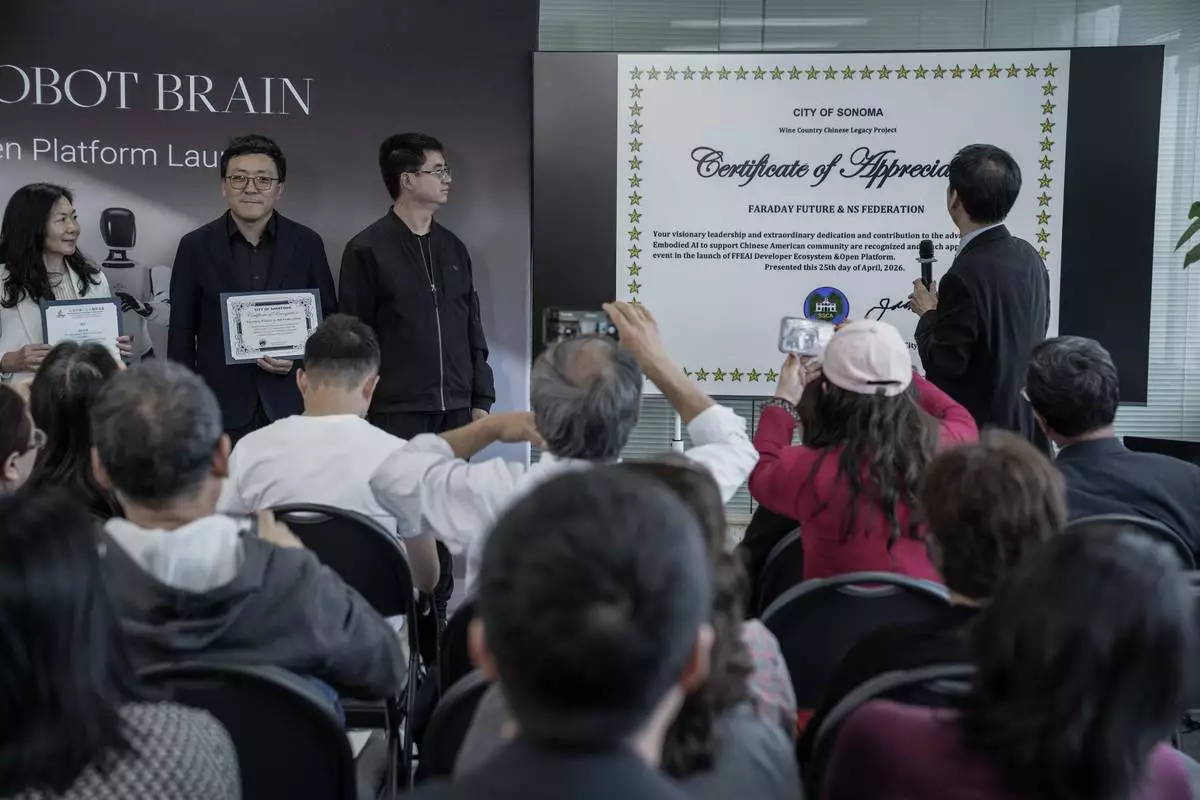
FF hosted the EAI Developer Ecosystem Forum and the strategic launch of the FF EAI Brain & Open Developer Platform in San Francisco on April 25, officially opening recruitment for its global developer ecosystem.
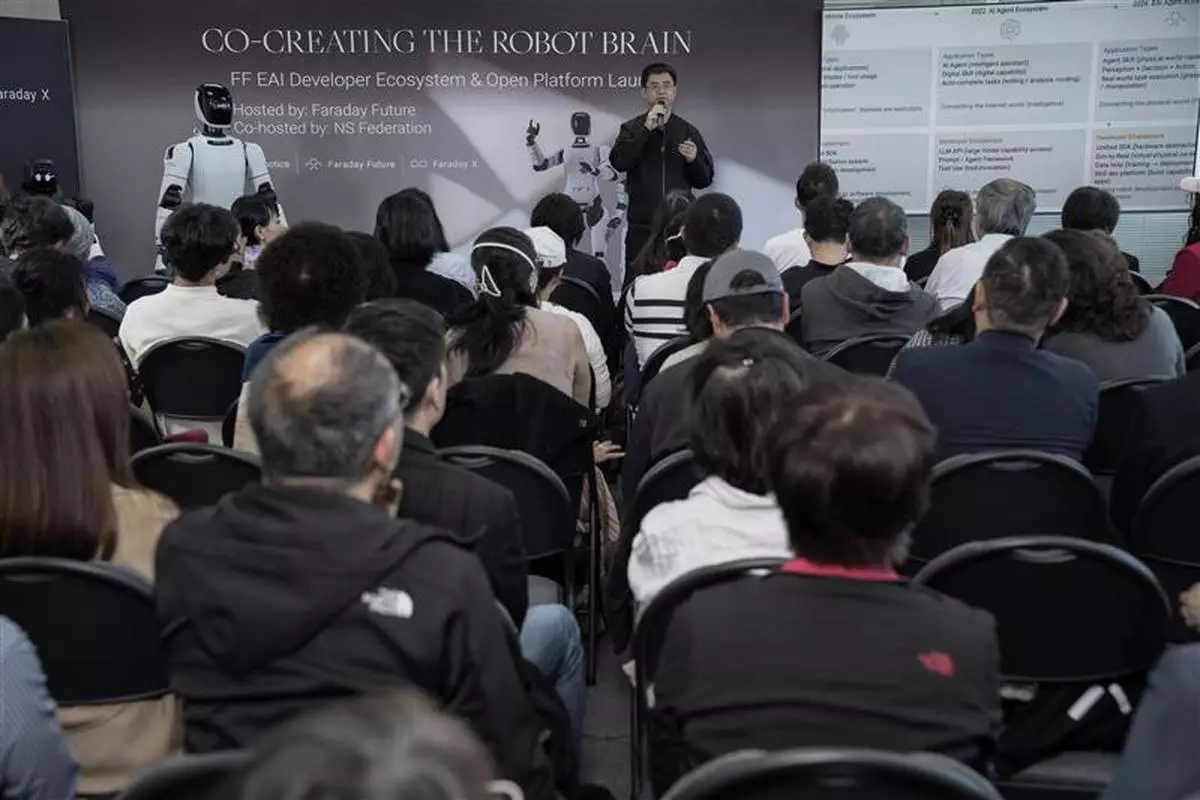
FF hosted the EAI Developer Ecosystem Forum and the strategic launch of the FF EAI Brain & Open Developer Platform in San Francisco on April 25, officially opening recruitment for its global developer ecosystem.