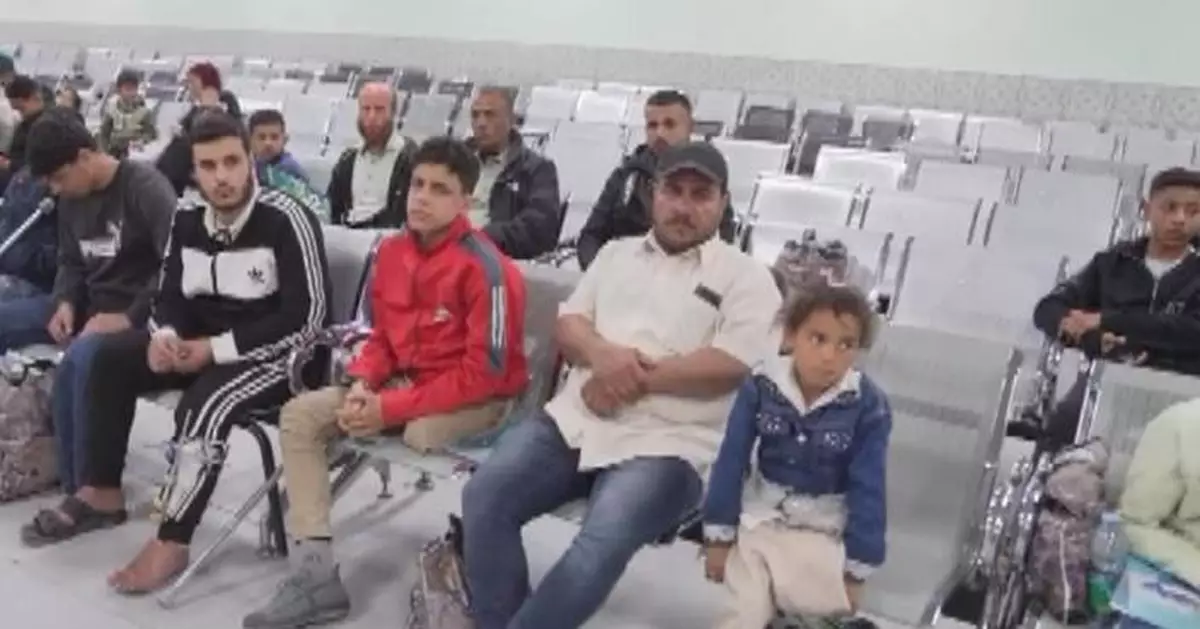
A group of 81 sick children from the Gaza Strip arrived in Jordan on Monday to undergo medical treatment as the "Jordanian Medical Corridor" initiative was relaunched after a two-month suspension over security concerns brought by escalating tensions in the Middle East. It marked the 26th such evacuation under the humanitarian initiative, which was launched by Jordan's King Abdullah II last March to provide healthcare support for Gaza residents, but the first since late February following the flare-up in regional tensions.
The latest batch of children, accompanied by 108 family members, were transported into Jordan via the King Hussein Bridge border crossing which connects the country with the West Bank, under the assistance of the Jordanian Armed Forces.
The children are set to receive medical care in Jordanian hospitals which is not available in the war-torn Gaza Strip.
Many of the young people from Gaza have suffered horrific injuries amid a spate of Israeli bombings, with a number of children having had to undergo amputations. "We are very happy that our child can receive treatment. We hope his legs can be better and not as they are now. He currently has two disabilities and is in poor condition," said Omar Rouh Abu Saada, a family member.
King Abdullah II affirmed the country's readiness to receive up to 2,000 Palestinian children from Gaza when announcing the medical corridor initiative last February.
However, following the eruption of the U.S.-Israeli war against Iran at the end of February, the medical evacuation of children from enclave was halted amid safety fears.
Family members say they are pleased this has now resumed, giving their loved ones the chance to receive the crucial care they need.
"We are very pleased that the initiative has been relaunched, allowing the wounded patients from Gaza to receive treatment once again. Because the number of injured has far exceeded our expectations. We are grateful that the reception of patients has resumed after nearly two months," said Mohammed Al-Tanani, who is accompanying an injured child from Gaza.
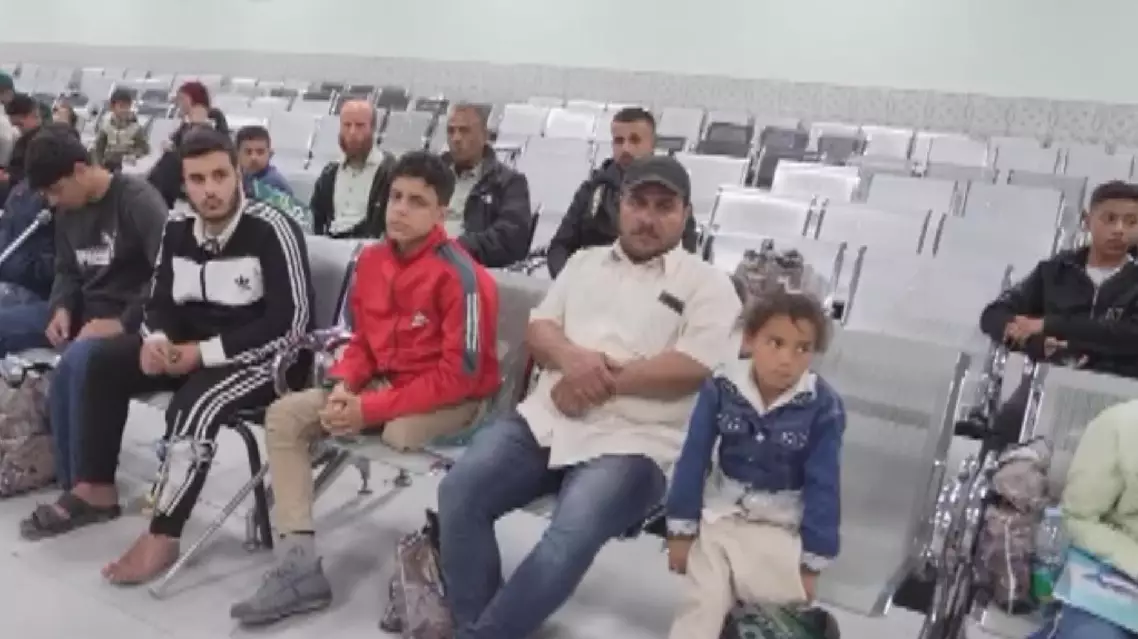
Jordan receives 81 Gaza child patients after medical corridor initiative relaunched
Anger and dismay is rising as a deadly spate of Israeli strikes in Lebanon have expanded beyond border villages and into areas that ordinary residents believed were outside the danger zone, while a ceasefire agreement appears not to be holding.
Despite the two sides agreeing on Thursday to a three-week extension of an original 10-day ceasefire deal which began in mid-April, Lebanon's health ministry reported that 14 people had been killed on Sunday by Israeli strikes on the south of the country.
Controversy has also risen over the Israeli military's efforts to extend the territories it occupies in southern Lebanon as part of what it terms as 'security buffer zone' along the border.
Lebanese residents have been warned against returning to their homes within this area, with Israel announcing that anyone who approaches this so-called "Yellow Line" will be considered a threat.
The buffer zone reaches north of key cities and towns including Bint Jbeil, Aita al-Shaab, and Khiam, and extends to the Litani River in some sectors, encompassing multiple villages and ridge lines.
In Nabatieh, the road north of the Litani is lined with shattered concrete, burned out cars, and building facades which have left exposed after being blasted open. Residents say this was meant to be outside the danger zone -- beyond the so-called "Yellow Line" -- but the strikes have reached there too.
Mohammad Chbib, a local resident, walks through the ruins of what families once called home, a place he says was filled with apartments housing civilians, not Hezbollah fighters.
"Here, there was a building. A six-floor building with 12 apartments. They brought it down on the women, the children, and the people. It was supposed to be safe," he said as he showed the scale of the damage.
Israel has issued warnings and carried out strikes in towns north of the Litani, while also expanding its campaign eastward into the Bekaa Valley and areas close to Lebanon's border with Syria.
Though Israel says it is targeting Hezbollah infrastructure, local officials say civilian areas are being continually hit as the ceasefire has failed to stop the violence.
"The commercial center in the city of Nabatieh is not a center affiliated with the resistance. The municipality of Nabatieh is a municipality affiliated with the Lebanese state," said Abbas Fakher Eldeen, mayor of the city of Nabatieh.
The mayor said the cost can be measured not only in destroyed markets and municipal buildings, but in the lives lost on the streets.
"Inside the city of Nabatieh, three citizens from this area were martyred -- three civilians -- in a drone strike on their car inside Nabatieh," the mayor said.
On Monday, Israel's military said it had begun striking Hezbollah infrastructure in the eastern Bekaa Valley, while security sources reported strikes near Nabi Chit, close to the Syrian border.
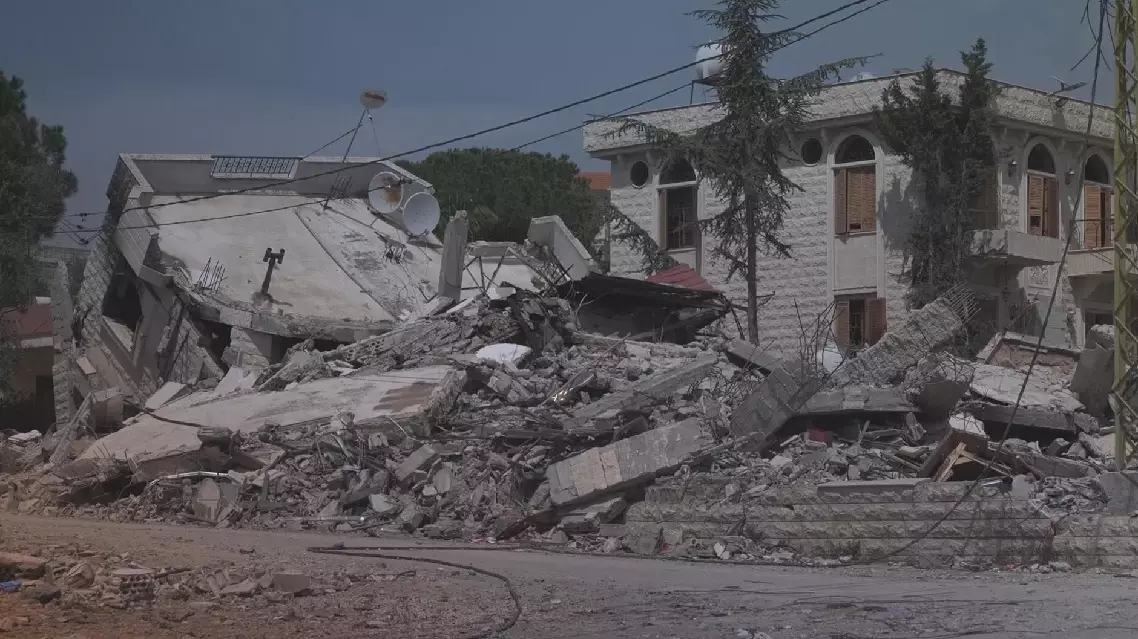
Anger grows after Lebanese civilians killed as Israeli attacks go beyond "Yellow Line"