Skip to Content Facebook Feature Image

China's coal, oil production logs steady growth in Q1

China

China

China

China's coal, oil production logs steady growth in Q1

2026-04-28 18:52 Last Updated At:04-29 00:07

China's coal, oil and other core energy sectors maintained steady and orderly production in the first quarter of 2026, the National Energy Administration (NEA) announced at a press conference on Monday.

In terms of coal production, raw coal output from enterprises above designated size reached 1.2 billion tonnes nationwide in the January to March period, representing a year-on-year increase of 0.1 percent.

The price of thermal coal under medium- and long-term contracts at Qinhuangdao Port (5,500 kcal/kg) averaged 682 yuan (about 99.9 U.S. dollars) per tonne in March, a slight increase of 2 yuan from February, effectively stabilizing the supply of coal for power generation.

Since the start of April, China's average daily dispatched coal output has consistently remained above 12.5 million tonnes, a relatively high level. As of April 23, coal stockpiles at state-regulated power plants across the country reached 190 million tonnes, sufficient to cover 32 days of consumption, also sitting at a historically high level.

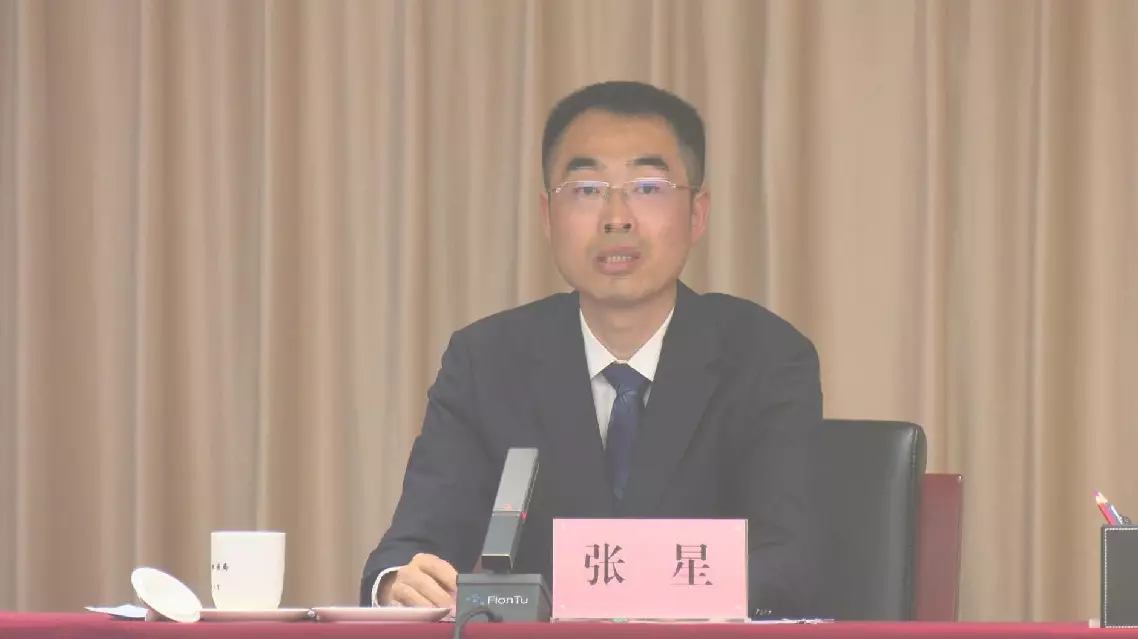
"Overall, the domestic coal market is characterized by mild price gains, ample inventories and balanced supply and demand. Coal has played a prominent role in shoring up the bottom line of the country's energy supply," said Zhang Xing, deputy director of the General Office at the NEA.

Alongside the steady coal market, China's crude oil and natural gas sectors also delivered stable operation in the same period, providing effective support for economic growth and residential energy needs.

In the first three months of the year, China's crude oil output hit 54.8 million tonnes, a 1.3 percent year-on-year increase. Crude oil imports reached 146.838 million tonnes, marking an 8.9 percent year-on-year rise, while estimated crude oil processing volume came in at 181.7 million tonnes, up 3.1 percent from the same period of last year.

Since the launch of the 14th Five-Year Plan (2021-2025), China's annual crude oil output has consistently stayed above 200 million tonnes and repeatedly hit new highs. Meanwhile, the country's natural gas output has registered annual growth of more than 10 billion cubic meters for nine consecutive years.

The steady and orderly supply of oil and gas has effectively guaranteed the stable operation of China's economy and met the energy demands of people's daily lives.
China's coal, oil production logs steady growth in Q1

China's coal, oil production logs steady growth in Q1

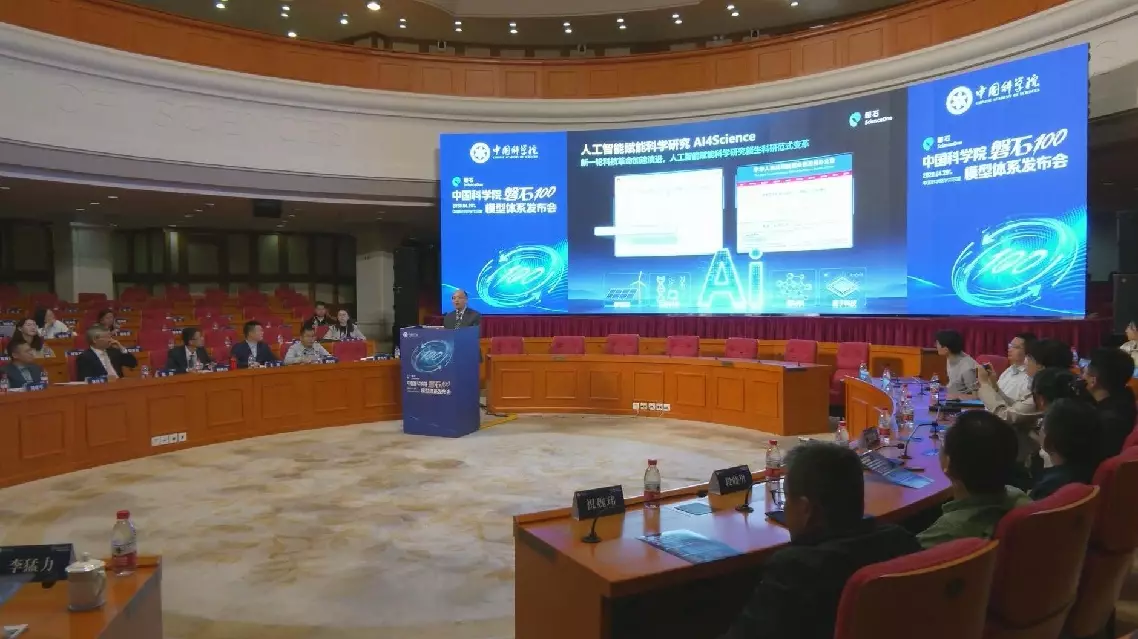
The Chinese Academy of Sciences (CAS) on Tuesday revealed an artificial intelligence (AI) model system supporting scientific research, empowering multiple scientific domains including mathematics, physics and biology.

This marks a transition in AI-driven scientific research from fragmented and isolated exploration toward collaborative, efficient and platform-based innovation.

Named ScienceOne 100, the model system has been built on the basis of the scientific foundation model ScienceOne, with a cluster of multidisciplinary domain-specific large models.

ScienceOne provides three core functions: literature compass, innovation evaluation and agent factory, empowering the entire research and innovation workflow.

ScienceOne was released in 2025 and trained on professional scientific corpus and data. Its latest version has achieved flagship-level performance for scientific knowledge and agentic long-horizon reasoning, and has attained state-of-the-art results in terms of multiple benchmarks related to scientific image understanding and manipulation.

The model system currently comprises eight domain-specific large models, covering mathematics, physics, materials science, astronomy, environmental science, aerospace, geosciences and biology.

Zeng Dajun, deputy director of the Institute of Automation at CAS, cited the system's application in materials design as an example.

"In the design of various materials, catalyst design is a critical step. In the past, developing a new catalyst was highly time-consuming, requiring extensive literature review and numerous experiments. Now, with the ScienceOne 100 model system, research efficiency can be boosted by dozens of times," said Zeng.

The system has already been deployed and applied across over 50 CAS institutes, covering more than 100 research scenarios.

It has demonstrated tremendous potential in typical applications such as high-speed rail flow field reconstruction, spectral identification, materials discovery, adjuvant design, astronomical observation, Qinghai-Tibet Plateau scientific expedition, marine forecasting and ecological research.

Chinese Academy of Sciences unveils AI model system for scientific research

Chinese Academy of Sciences unveils AI model system for scientific research

Recommended Articles