Skip to Content Facebook Feature Image

Union Pacific’s Big Boy to Tour the Northeast for First Time in Honor of America’s 250th Anniversary

Business

Union Pacific’s Big Boy to Tour the Northeast for First Time in Honor of America’s 250th Anniversary
Business

Business

Union Pacific’s Big Boy to Tour the Northeast for First Time in Honor of America’s 250th Anniversary

2026-04-29 02:31 Last Updated At:02:51

OMAHA, Neb.--(BUSINESS WIRE)--Apr 28, 2026--

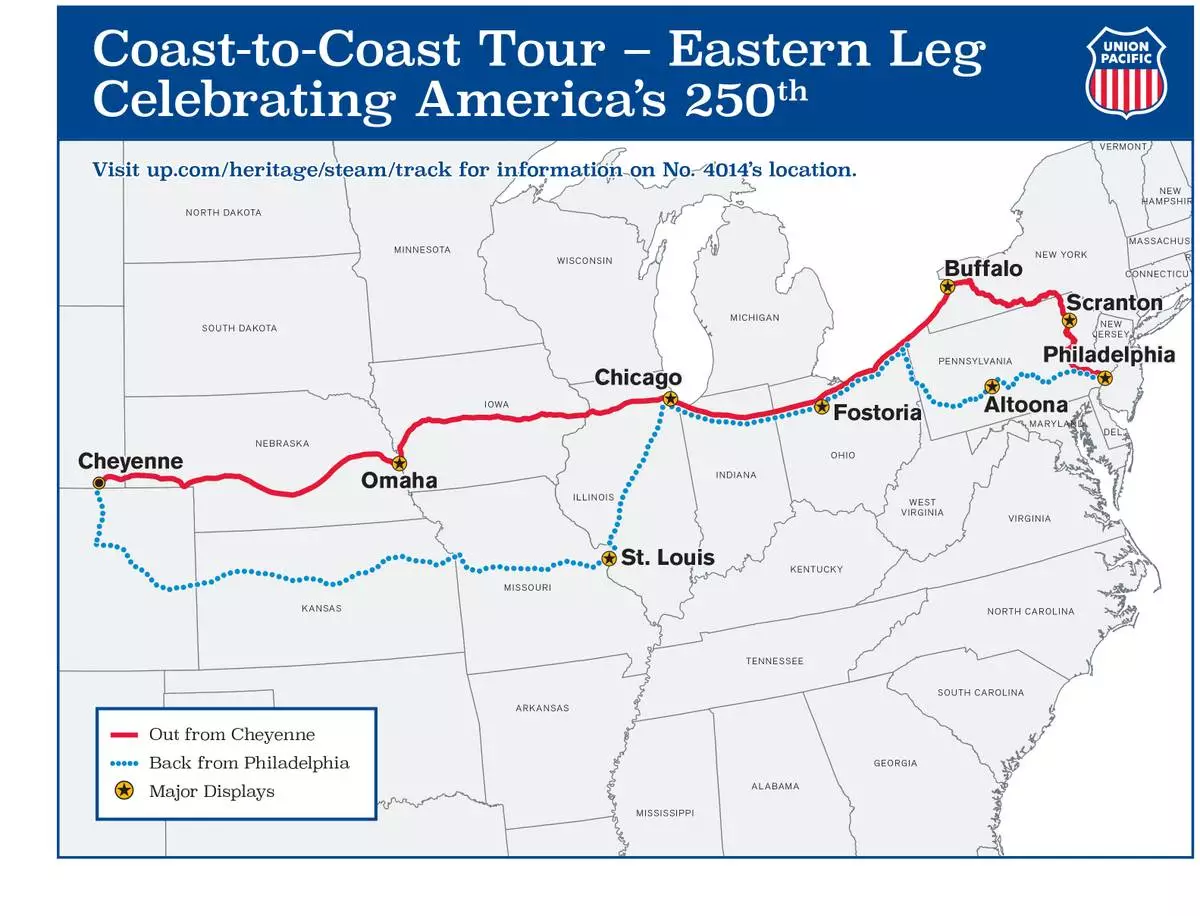
Union Pacific’s famed Big Boy No. 4014, the world’s largest operating steam locomotive, will journey to the East Coast for the first time in collaboration with Norfolk Southern, as part of a historic coast-to-coast tour as both railroads celebrate America’s 250th anniversary. The tour includes a Fourth of July celebration in Philadelphia, major display events in eight cities and more than 50 whistle-stops in 10 states, including stops for the first time in Indiana, Ohio, New York and Pennsylvania.

This press release features multimedia. View the full release here: https://www.businesswire.com/news/home/20260428506229/en/

This is the first time Big Boy has steamed across the Mississippi River and into the Ohio Valley since it was built in Schenectady, New York, and delivered to Union Pacific Railroad in 1941. As Big Boy makes this highly‑anticipated journey, the eastern portion of the tour will operate across the Norfolk Southern network, marking a historic collaboration between two of the nation’s storied railroads and bringing the legendary locomotive back to communities that helped power America’s industrial rise.

“Union Pacific couldn’t be prouder to share this powerful piece of history with the nation and to be a part of America’s birthday celebration,” said Union Pacific CEO Jim Vena. “This tour celebrates our company’s rich 164-year history, our nation’s amazing story and the people who have helped build our great country and our railroad.”

“Railroads helped build this nation by connecting people, communities and commerce – work carried forward for generations by dedicated railroaders,” said Norfolk Southern President and CEO Mark George. “As the United States approaches its 250th anniversary, Union Pacific’s Big Boy’s return to the East on Norfolk Southern rails reflects a shared legacy.”

The eastern leg of the tour starts May 25 from Cheyenne, Wyoming.

Big Boy officially launched its 2026 coast-to-coast tour on April 10 from downtown Sacramento near historic Milepost 0 – the site where Central Pacific began construction on the nation’s first transcontinental railroad in 1863.

The route through the Ohio Valley, Pennsylvania and the Northeast reflects the historic role railroads played in shaping America’s economic heartland, connecting factories, ports and population centers and fueling the nation’s growth across generations. For nearly 200 years, Norfolk Southern and its predecessor railroads have served these corridors, helping move the people and goods that built the modern United States.

The eight major public display events are:

Big Boy will be accompanied on the trip by several historical passenger cars from Union Pacific’s Heritage Fleet, along with two commemorative locomotives:

On the eastern leg of the trip, Big Boy will be accompanied by Norfolk Southern commemorative locomotives as well as a historical passenger car from Norfolk Southern’s Heritage Fleet. The coast to coast tour highlights the histories of Union Pacific in the West and Norfolk Southern and its predecessors in the East, reflecting the shared legacy of American railroads serving as the backbone of the country’s economic growth. In the coming weeks, Norfolk Southern will unveil its commemorative U.S. 250 series.

In addition to the public display days, rail fans can see this historic machine in action at whistle-stops, generally 15- to 30- minutes long. The time and location for each stop – and instructions for ticketed events – can be found at UP.com.

Nebraska
May 25 – Kimball
May 26 – Ogallala
May 28 – Gothenburg, Overton, Kearney, Grand Island
May 29 – Columbus

Iowa
May 31 – Denison, Carroll
June 1 – Tama, Belle Plaine
June 2 – Grand Mound

Illinois
June 2 – Sterling, Rochelle
July 18 – Springfield, Girard

Indiana
June 5 – Argos
July 16 – Knox

Ohio
June 6 – Continental, Fostoria
June 8 – Lorain, Euclid
July 12 – Struthers
July 13 – Rocky River
July 15 – Continental

New York
June 9 – Ripley
June 11 – Silver Springs, Hornell, Letchworth State Park (park admission required)
June 12 – Owego

Pennsylvania
June 9 – North East
June 13 – Nicholson
June 17-30 – Scranton, Steamtown National Historic Site, locomotive maintenance (park admission required)
July 2 – Reading, Pottstown
July 7 – Lebanon
July 8 – Lewistown, Altoona
July 11 – Cresson, Leetsdale, Historic Horseshoe Curve; ticketed event.

Missouri
July 20 – Pacific, Hermann
July 21 – California , Kansas City
July 22 – Kansas City

Kansas
July 23 – Topeka, Salina
July 24 – Wilson, Hays
July 25 – Hays
July 26 – Grainfield

Colorado
July 27 – Kit Carson, Strasburg
July 29 – Greeley

Wyoming
July 29 – Home in Cheyenne

As part of the tour, the Union Pacific Museum will be selling tickets to ride in vintage passenger cars pulled by Big Boy through the Poconos Mountains in Pennsylvania on June 14. Interested riders can purchase tickets here.

The tour ends July 29 in Cheyenne, after traveling through a total of 14 states: California, Colorado, Illinois, Indiana, Iowa, Kansas, Missouri, Nebraska, Nevada, New York, Ohio, Pennsylvania, Utah and Wyoming.

Anyone interested in learning more is invited to join Union Pacific’s Steam Club at upsteam.com.

ABOUT UNION PACIFIC

Union Pacific (NYSE: UNP) delivers the goods families and businesses use every day with safe, reliable and efficient service. Operating in 23 western states, the company connects its customers and communities to the global economy. Trains are the most environmentally responsible way to move freight, helping Union Pacific protect future generations. More information about Union Pacific is available at www.up.com.
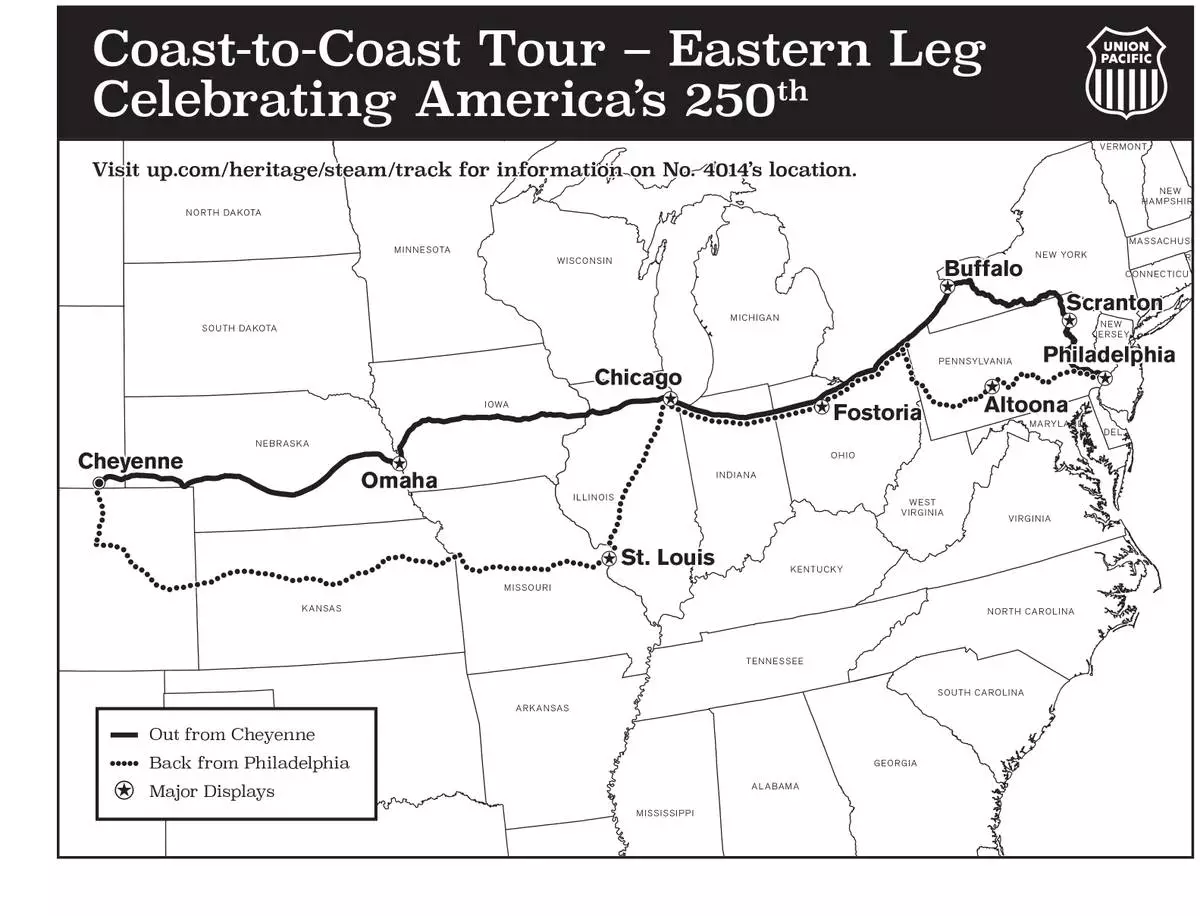
Coast-to-coast tour map - black and white version
Coast-to-coast tour map - black and white version

Coast-to-coast tour map - color version
Coast-to-coast tour map - color version

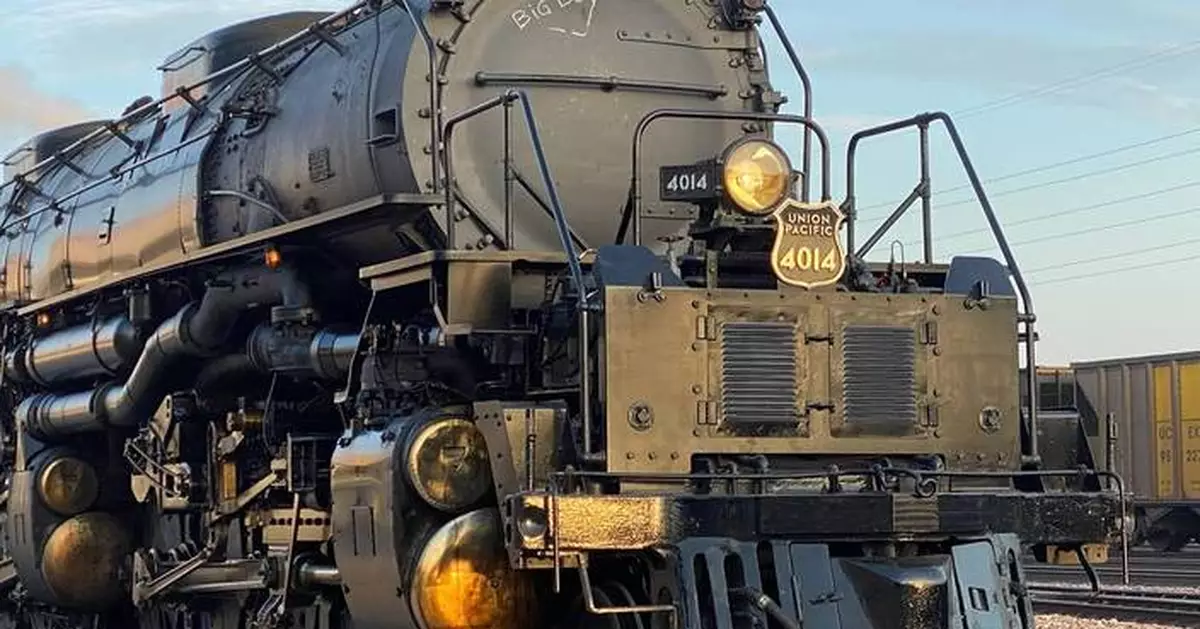
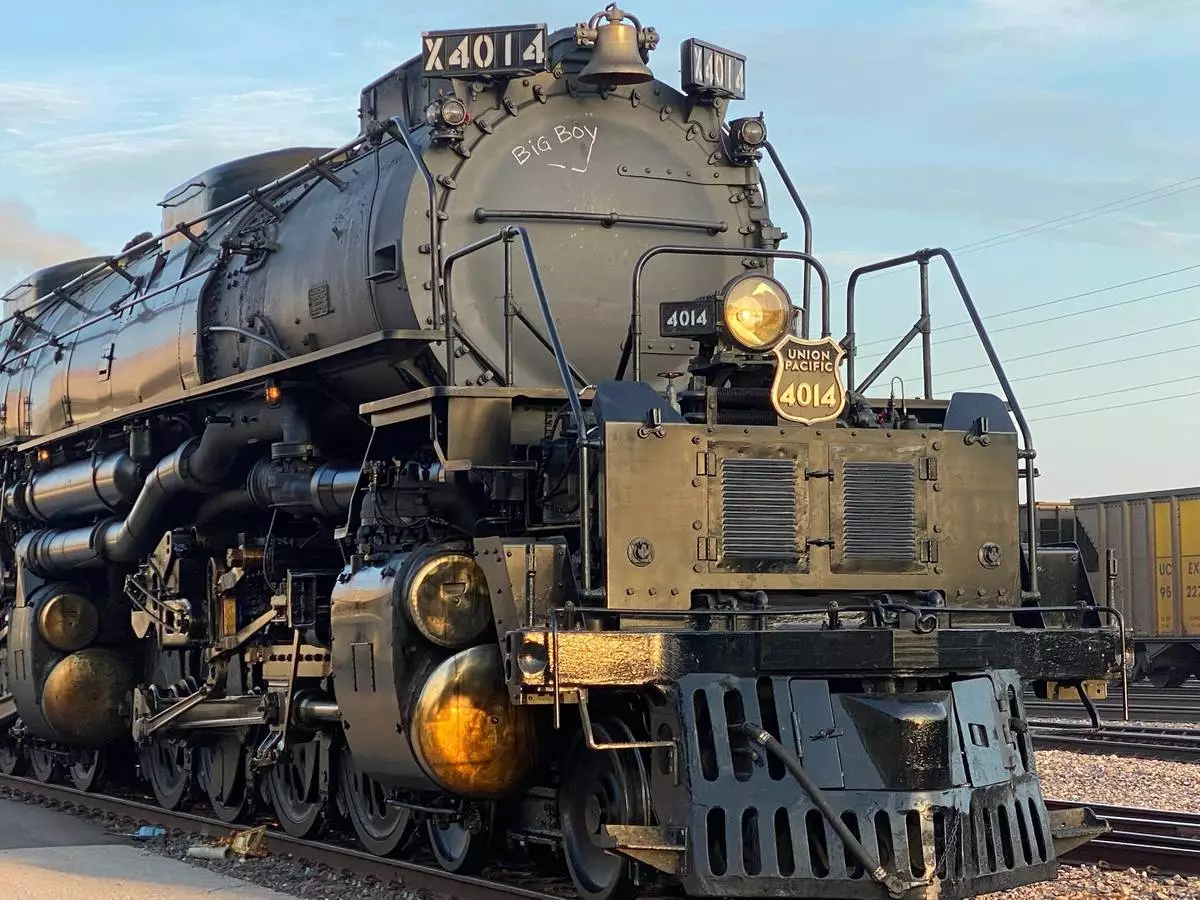
Union Pacific's Big Boy No. 4014, the world's largest operating steam locomotive

Union Pacific's Big Boy No. 4014, the world's largest operating steam locomotive

FRANKFURT, Germany (AP) — The decision by the United Arab Emirates to leave the OPEC oil cartel shook up the 65-year-old alliance that produces some 40% of the world’s crude oil and exerts major influence over the price of energy around the globe.

Following its exit in May, the UAE said in an announcement Tuesday, it plans to carry on with its long-held goal of increasing crude production "in a gradual and measured manner, aligned with demand and market conditions.”

Right now, that’s academic as far as oil prices go, since Iran is still blocking the Strait of Hormuz, which means much of the oil from Persian Gulf producers such as the UAE cannot be exported. But the departure could have long-term effects on oil prices.

Here's what to know about the UAE's decision to leave OPEC:

The Organization of the Petroleum Exporting Countries was formed in Baghdad in September 1960 by Iran, Iraq, Kuwait, Saudi Arabia and Venezuela. It has 12 members — counting the UAE — that hold more than 80% of the world’s proven oil reserves. Other members are Algeria, Equatorial Guinea, Gabon, Libya, Nigeria and the Republic of the Congo.

The group, headquartered in Vienna, aims to regulate oil prices by coordinating increases or decreases in production.

The goal has been to keep prices high enough so member governments can balance their budgets and reap the benefits of their natural resources — but not so high as to cause a recession in consuming countries or to halt energy-consuming activity, a phenomenon known as demand destruction.

That approach has sometimes drawn pushback from leaders in the U.S., where the price of gasoline is highly political. President Donald Trump at one point accused OPEC of “ripping off the rest of the world,” and his predecessor Joe Biden also badgered OPEC to produce more oil.

OPEC says its objective is “to coordinate and unify petroleum policies among member countries, in order to secure fair and stable prices for petroleum producers; an efficient, economic and regular supply of petroleum to consuming nations; and a fair return on capital to those investing in the industry.”

The creation of OPEC signaled a change from a world in which Western companies dominated the oil market to one where the countries with the reserves took more control over their resources and profits.

At times, OPEC’s production moves have had large effects on the global economy. In 1973, its Arab members imposed an oil embargo on the U.S. and other countries that supported Israel during the Yom Kippur War. Oil prices quadrupled, and long lines appeared at American gas stations.

In 2016, OPEC joined with another 10 oil-producing countries, the largest of which is Russia, to form an alliance known as OPEC+.

The UAE is seeking more independence in how much oil it sells. Cartels keep prices higher, but they restrict members' earnings and market share against non-cartel members. There has been longstanding friction between the UAE and Saudi Arabia, the biggest OPEC producer and de facto leader of the cartel.

One reason for producing more now: Experts think oil consumption will peak in coming years as the world transitions to renewable energy sources that do not emit carbon dioxide, the greenhouse gas that fuels climate change.

That means barrels underground could be worth more today than they might be later, when oil consumption declines, so restraining production might mean losing out on profits.

The UAE’s withdrawal removes one of OPEC’s few members with the ability to quickly increase production — the mechanism through which the cartel manages oil prices, said Jorge Leon, head of geopolitical analysis at Rystad Energy.

“A structurally weaker OPEC, with less spare capacity concentrated within the group, will find it increasingly difficult to calibrate supply and stabilize prices,” Leon said. “The net effect points to a more fragmented supply landscape and a potentially more volatile oil market over time as OPEC’s capacity to smooth imbalances diminishes.”

Iran is blocking the Strait of Hormuz, the passage for tankers carrying a fifth of the world's oil and gas supplies. That prevents much of the oil produced by Persian Gulf countries such as Saudi Arabia and the UAE from getting to customers. For the short term, that's the biggest issue affecting oil prices, which have risen sharply as a result.

If the UAE achieves its goal of producing more oil after the war, that could speed a return to prices levels more in line with those before the war, said Michael Brown, research strategist at Pepperstone foreign exchange brokerage.

“As for crude in the here and now, all that really matters is whether the Strait of Hormuz is open or closed,” he said. “At present, it’s essentially shut, tightening supply conditions day by day and probably seeing benchmarks continue to grind higher on a daily basis as well.”

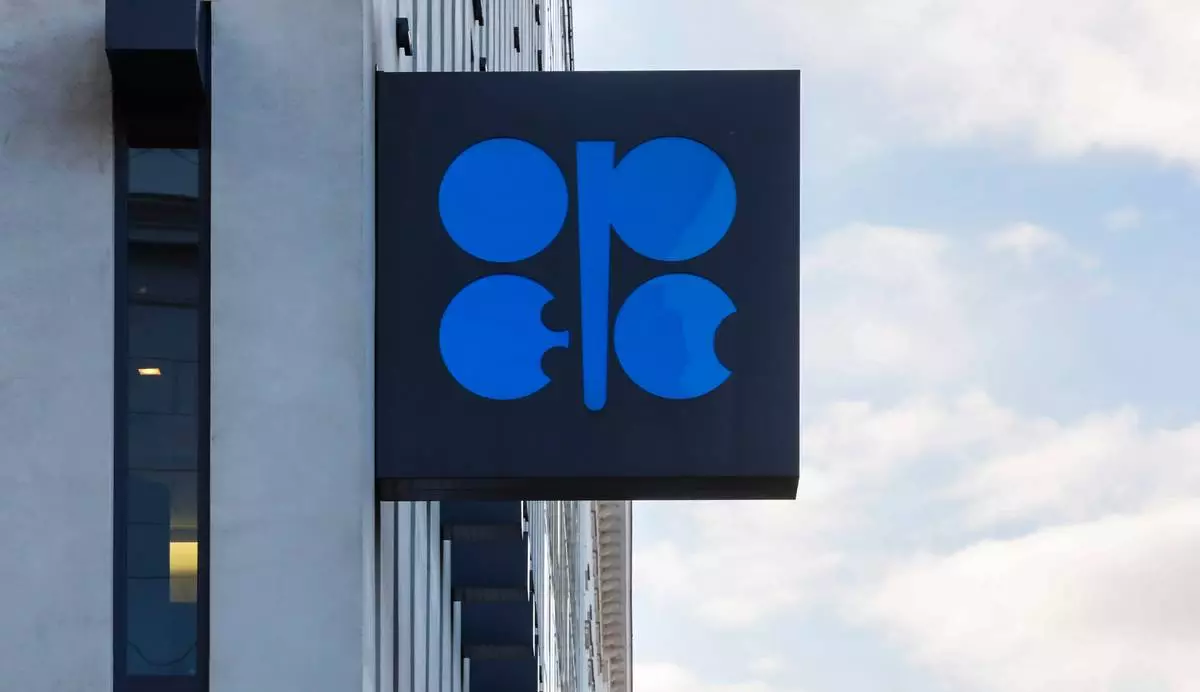
FILE - The logo of the Organization of the Petroleum Exporting Countries (OPEC) is displayed outside of OPEC's headquarters in Vienna, Austria, March 3, 2022. (AP Photo/Lisa Leutner, File)

FILE - The logo of the Organization of the Petroleum Exporting Countries (OPEC) is displayed outside of OPEC's headquarters in Vienna, Austria, March 3, 2022. (AP Photo/Lisa Leutner, File)

Recommended Articles