|
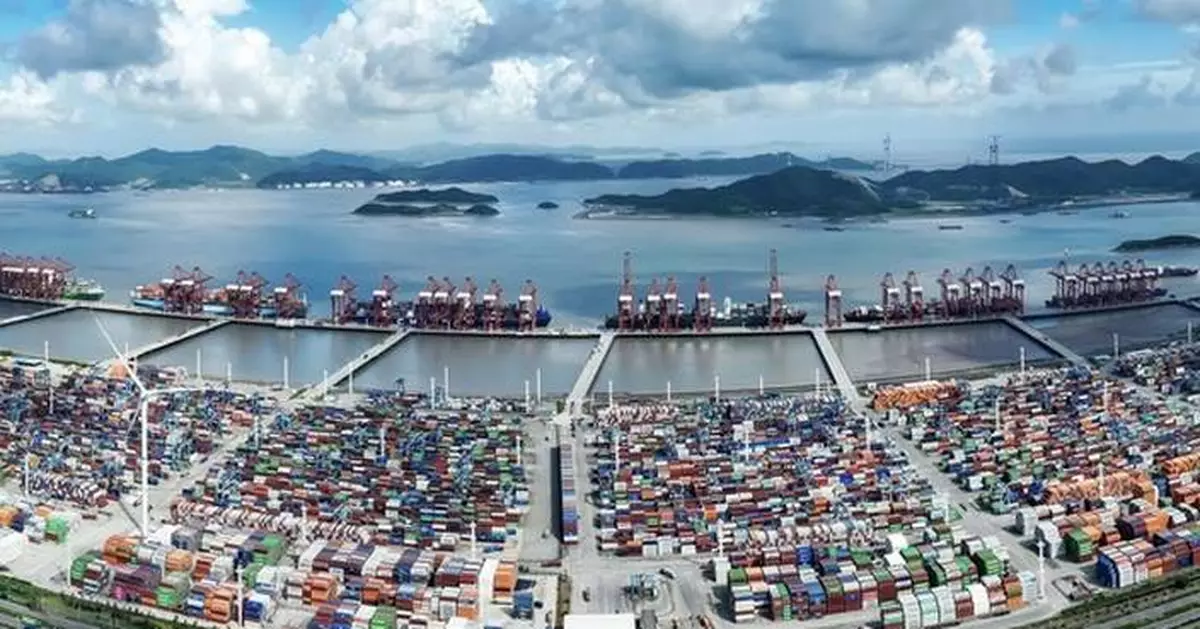
NINGBO, China, April 9, 2026 /PRNewswire/ -- The Shanghai Cooperation Organization's (SCO) Green and Sustainable Development Forum was held in Ningbo, Zhejiang province, April 28–30. At this international event focused on green, low–carbon transition, Ningbo showcased concrete examples of harmonious coexistence between people and nature.
An abandoned quarry has been converted into an international racetrack, whose engine roars have stimulated a growing cultural and tourism sector. A once–barren "firewood trail" has been upgraded into a national mountaineering route, spawning distinctive local industries now known as the "Hometown of China's Sports Walking Sticks" and the "Capital of China's Flashlights." Ningbo continues to advance its "Eco+" integration model, turning ecological assets into industrial momentum, development potential and measurable gains in shared prosperity. The city has developed a practical path for realizing the value of lucid waters and lush mountains, offering a replicable "Ningbo model" for green, low–carbon urban transformation worldwide.
In Beilun, more than 500 species have been recorded, and the district has been designated a UN "Biodiversity Charming City." From the revitalized Meishan Bay in Beilun to the misty expanse of Dongqian Lake in Yinzhou and the historic allure of Moon Lake in Haishu, local authorities are using the "golden key" of ecological governance to revive dormant green mountains and clear waters. Notably, Ningbo's ecological governance goes beyond mountain repair and water treatment: it integrates "Eco+" development from the source through unified planning and coordinated implementation—protecting ecological foundations while preserving space for industry. This forward–looking approach has produced a win–win outcome for ecology and development; along Meishan Bay's shore, cultural tourism and leisure industries have rapidly clustered, receiving more than 2 million visitors annually.
In Fenghua, the "Common Prosperity Studio" initiative has built a full–chain platform integrating "5G + IoT + Agriculture," and introduced a model that combines village–collective fixed–rent leasing, professional enterprise operation and flexible farmer participation. In Yuyao, Hemudu pioneered China's first ecological integrated farming of breeding soft–shelled turtles in water oat fields, balancing ecological protection, food security and farmers' income growth. Zhenhai Refining & Chemical has established China's first "Zero–Waste Petrochemical Base," recognized as a national model case of a "Zero–Waste Industrial Park."
Leveraging its mountain and sea resources, Ningbo has deepened chain–based integration of "Ecology + Cultural Tourism + Sports + Manufacturing," continuously converting ecological value into tangible benefits for residents. Ninghai has transformed abandoned ancient paths into a 500–km national mountaineering trail and established a national sports–industry demonstration base. Xiangshan has used the Asian Games to invigorate coastal tourism and open channels for converting marine ecological value. Yinzhou and Haishu have developed biodiversity–friendly districts and townships, fostering new sectors such as educational tourism and cultural–creative industries.
To ensure green development proceeds steadily and sustainably, Ningbo is building a multi–stakeholder governance system that includes government, enterprises and the public. Ninghai has pioneered a "Soil and Forestland Bank," using financial instruments to unlock the value of forestry resources. Yinzhou, Cixi and other areas have mobilized broad public participation in ecological protection, creating a co–construction and shared–benefits model that supports ongoing ecological value realization.
NINGBO, China, April 9, 2026 /PRNewswire/ -- The Shanghai Cooperation Organization's (SCO) Green and Sustainable Development Forum was held in Ningbo, Zhejiang province, April 28–30. At this international event focused on green, low–carbon transition, Ningbo showcased concrete examples of harmonious coexistence between people and nature.
An abandoned quarry has been converted into an international racetrack, whose engine roars have stimulated a growing cultural and tourism sector. A once–barren "firewood trail" has been upgraded into a national mountaineering route, spawning distinctive local industries now known as the "Hometown of China's Sports Walking Sticks" and the "Capital of China's Flashlights." Ningbo continues to advance its "Eco+" integration model, turning ecological assets into industrial momentum, development potential and measurable gains in shared prosperity. The city has developed a practical path for realizing the value of lucid waters and lush mountains, offering a replicable "Ningbo model" for green, low–carbon urban transformation worldwide.
In Beilun, more than 500 species have been recorded, and the district has been designated a UN "Biodiversity Charming City." From the revitalized Meishan Bay in Beilun to the misty expanse of Dongqian Lake in Yinzhou and the historic allure of Moon Lake in Haishu, local authorities are using the "golden key" of ecological governance to revive dormant green mountains and clear waters. Notably, Ningbo's ecological governance goes beyond mountain repair and water treatment: it integrates "Eco+" development from the source through unified planning and coordinated implementation—protecting ecological foundations while preserving space for industry. This forward–looking approach has produced a win–win outcome for ecology and development; along Meishan Bay's shore, cultural tourism and leisure industries have rapidly clustered, receiving more than 2 million visitors annually.
In Fenghua, the "Common Prosperity Studio" initiative has built a full–chain platform integrating "5G + IoT + Agriculture," and introduced a model that combines village–collective fixed–rent leasing, professional enterprise operation and flexible farmer participation. In Yuyao, Hemudu pioneered China's first ecological integrated farming of breeding soft–shelled turtles in water oat fields, balancing ecological protection, food security and farmers' income growth. Zhenhai Refining & Chemical has established China's first "Zero–Waste Petrochemical Base," recognized as a national model case of a "Zero–Waste Industrial Park."
Leveraging its mountain and sea resources, Ningbo has deepened chain–based integration of "Ecology + Cultural Tourism + Sports + Manufacturing," continuously converting ecological value into tangible benefits for residents. Ninghai has transformed abandoned ancient paths into a 500–km national mountaineering trail and established a national sports–industry demonstration base. Xiangshan has used the Asian Games to invigorate coastal tourism and open channels for converting marine ecological value. Yinzhou and Haishu have developed biodiversity–friendly districts and townships, fostering new sectors such as educational tourism and cultural–creative industries.
To ensure green development proceeds steadily and sustainably, Ningbo is building a multi–stakeholder governance system that includes government, enterprises and the public. Ninghai has pioneered a "Soil and Forestland Bank," using financial instruments to unlock the value of forestry resources. Yinzhou, Cixi and other areas have mobilized broad public participation in ecological protection, creating a co–construction and shared–benefits model that supports ongoing ecological value realization.
** This press release is distributed by PR Newswire through automated distribution system, for which the client assumes full responsibility. **

Ningbo's "Eco+" Integration Practice showcased at SCO forum
CHICAGO, April 29, 2026 /PRNewswire/ -- As artificial intelligence continues to scale globally, the infrastructure supporting it is undergoing rapid transformation. Increasing compute density is driving higher thermal loads in data centers, while rising electricity demand is placing growing pressure on power transmission and distribution systems. In this evolving landscape, material performance has become a key factor in enabling efficiency, reliability, and scalability.
bedra, a global manufacturer of precision copper alloys, addresses these challenges with a portfolio of high-performance materials engineered for AI-related applications. At IEEE PES T&D 2026, the company will present its latest innovations, represented on site by its Vietnam-based subsidiary. The following two application areas highlight how bedra's materials support the development of AI.
Enabling High-Density AI Computing Systems
Within AI data centers, rising rack-level power density is accelerating the adoption of liquid cooling. bedra's high-purity copper materials serve as critical components for liquid cooling plates, enabling efficient heat dissipation at hotspot including GPU and CPU. Powerway high-performance copper alloys feature exceptional resistance to high-temperature softening. With post-brazing strength exceeding pure copper by >30%, they ensure structural integrity, enabling the miniaturization of next-generation liquid cooling components.
Our oxygen-free copper, with electrical conductivity of up to 101% IACS, bedra's copper alloys support efficient power delivery within data centers by reducing voltage drop and minimizing energy loss under high-current conditions. Their excellent formability enables compact electrical cabinet designs, while tight dimensional tolerances for rack-level busbars ensure full compatibility with OCP standards. Moreover, Optional silver and tin plating further extend application performance.
Supporting Power Infrastructure for AI Expansion
Beyond data centers, AI growth is increasing demand for reliable power infrastructure. Medium- and high-voltage systems operate under extreme conditions, making material performance essential for long-term stability.
bedra offers a range of engineered copper alloys. Materials such as bedra18200, Cu-Cr precipitation-strengthened alloy, has about 75% of pure copper's conductivity but significantly higher strength and hardness.With very good resistance to softening, wear, and deformation at high temperatures, it's quite suitable for stationary contacts, contact stems, contact bases, and other current-carrying structural members. For some demanding high-voltage environments, bedra18150(Cu-Cr-Zr) offers upgraded performance with improved creep resistance and enhanced high-temperature stability. This ensures reliable electrical performance, minimal wear, and extended service life. bedra10100, Cu-OFE Oxygen-Free-Electronic Copper, is ideal for high-reliability parts in HV vacuum interrupters, minimizing energy losses and improving dielectric performance.
Empowering Global Supply with Scalable Production
Our modern production facility in Vietnam underpins bedra's global supply chain with large-scale, reliable manufacturing capabilities. Boasting an annual production capacity of 50,000 tons and holds ISO9001, ISO14001, ISO45001 and IATF16949 certifications, bedra provides over 400 copper, brass, bronze and nickel silver alloy grades,plus customized special profiles.
Sustainability is integral to bedra's operations. Recognized with an EcoVadis Bronze Medal and CDP Grade B, we maintain a diversified, low-carbon energy mix to support responsible material production for critical power infrastructure worldwide.
Visitors to IEEE PES T&D 2026 can meet bedra at Booth 4885 to learn more.
** This press release is distributed by PR Newswire through automated distribution system, for which the client assumes full responsibility. **

bedra Showcases High-Performance Copper Alloys for AI Data Centers and High-Voltage Power Systems at IEEE PES T&D 2026