MOUNTAIN VIEW, Calif. & BRIGHTON, Mich.--(BUSINESS WIRE)--Apr 29, 2026--
Aeva ® (Nasdaq: AEVA), a leader in next-generation sensing and perception systems, and Nikon Metrology, LLC today announced that Aeva’s Eve high-precision sensor technology is powering Nikon Corporation’s new APDIS MV5X Laser Radar system, which has begun commercial deployment as part of the companies’ multi-year production agreement to use Aeva’s technology in Nikon’s products for high-volume automated robotic inspection and metrology applications.
This press release features multimedia. View the full release here: https://www.businesswire.com/news/home/20260429844797/en/
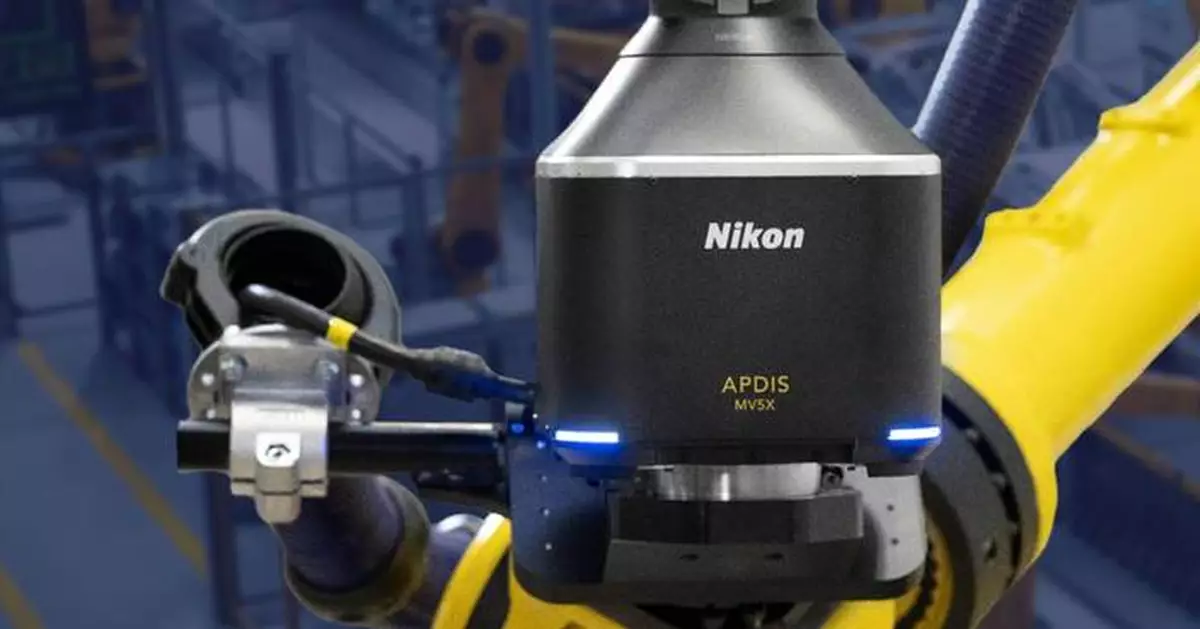
The Nikon APDIS MV5X Laser Radar represents the next generation of high-precision, non-contact measurement systems, designed for automated inspection across industries including automotive, aerospace, and energy. By incorporating Aeva Eve™ high-precision sensor technology, the MV5X Laser Radar delivers enhanced measurement accuracy, faster data acquisition, and a more compact system architecture—enabling customers to scale high-throughput inspection with greater precision and efficiency.
“Our Eve high-precision sensor technology is purpose-built to bring a new level of precision and performance to sensing,” said Mina Rezk, Co-Founder and CTO of Aeva. “Its integration into Nikon’s MV5X Laser Radar highlights the ongoing scaling of our unified perception platform beyond automotive into precision industrial automation. Together with Nikon, we’re enabling the next generation of intelligent inspection systems that can measure and understand the physical world with unprecedented accuracy.”
“Nikon has a long history of delivering industry-leading solutions that enable our customers to achieve the highest levels of quality and productivity,” said Yoshihiro Maki, General Manager of the Industrial Solutions Business Unit at Nikon Corporation. “By integrating Aeva’s technology into our MV5X Laser Radar, we are advancing the capabilities of automated inspection systems with improved accuracy, speed, and reliability—all within a new compact design. The MV5X Laser Radar will help manufacturers meet the growing metrology demands of modern, high-throughput production environments.”
Aeva’s Eve high-precision sensor technology is based on the company’s unified perception platform built on Frequency Modulated Continuous Wave technology, which enables key requirements for automated quality control and metrology applications including micron-level precision, improved resistance to interference, and reliable performance across a wide range of industrial environments.
Nikon’s Laser Radar systems are widely used by global manufacturers for high-accuracy inspection of components ranging from individual parts to large-scale assemblies such as vehicle bodies and aircraft structures. The MV5X Laser Radar builds on this legacy with enhanced automation capabilities and next-generation sensing powered by Aeva.
The integration of Aeva’s high-precision sensor technology into the MV5X Laser Radar further strengthens Aeva’s position in the rapidly expanding industrial automation and metrology markets, as demand grows for intelligent sensing solutions that can support high-throughput, data-driven manufacturing.
About Aeva Technologies, Inc. (Nasdaq: AEVA)
Aeva’s mission is to bring the next wave of perception to a broad range of applications from automated driving, manufacturing automation and smart infrastructure, to robotics and consumer devices. Aeva is accelerating autonomy with its groundbreaking perception platform that integrates lidar-on-chip technology, system-on-chip processing, and perception algorithms onto silicon leveraging silicon photonics. Aeva 4D LiDAR sensors uniquely detect velocity and position simultaneously, allowing automated devices like vehicles and robots to make more intelligent and safe decisions. For more information, visit www.aeva.com, or connect with us on X or LinkedIn.
Aeva, the Aeva logo, Aeva 4D LiDAR, Aeva Atlas, Aeries, Aeva Eve, Aeva Omni, Aeva CityOS, Aeva Ultra Resolution, Aeva CoreVision, and Aeva X1 are trademarks/registered trademarks of Aeva, Inc. All rights reserved. Third-party trademarks are the property of their respective owners.
Forward looking statements
This press release contains certain forward-looking statements within the meaning of the federal securities laws. Forward-looking statements generally are identified by the words “believe,” “project,” “expect,” “anticipate,” “estimate,” “intend,” “strategy,” “future,” “opportunity,” “plan,” “may,” “should,” “will,” “would,” “will be,” “will continue,” “will likely result,” and similar expressions. These forward-looking statements include, but are not limited to expectations about the announced deployment, our product features, performance, potential applications, and the timing of production, and market adoption. Forward-looking statements are predictions, projections and other statements about future events that are based on current expectations and assumptions and, as a result, are subject to risks and uncertainties. Many factors could cause actual future events to differ materially from the forward-looking statements in this press release, including, but not limited to: (i) the fact that Aeva is an early stage company with a history of operating losses and may never achieve profitability, (ii) Aeva’s limited operating history, (iii) the ability to implement business plans, forecasts, and other expectations and to identify and realize additional opportunities, (iv) the ability for Aeva to have its products selected for inclusion in industrial automation and metrology products, (v) the commercial success of any Nikon products in which Aeva’s products have been or might be included, (vi) unforeseen manufacturing issues or defects, (vii) Aeva’s ability to scale production if any products achieve commercial success, (viii) market acceptance of LiDAR technology in industrial automation and metrology applications, (ix) general economic conditions and other material risks and other important factors that could affect our financial results. Please refer to our filings with the SEC, including our most recent Form 10-Q and Form 10-K. These filings identify and address other important risks and uncertainties that could cause actual events and results to differ materially from those contained in the forward-looking statements. Forward-looking statements speak only as of the date they are made. Readers are cautioned not to put undue reliance on forward-looking statements, and Aeva assumes no obligation and does not intend to update or revise these forward-looking statements, whether as a result of new information, future events, or otherwise. Aeva does not give any assurance that it will achieve its expectations.
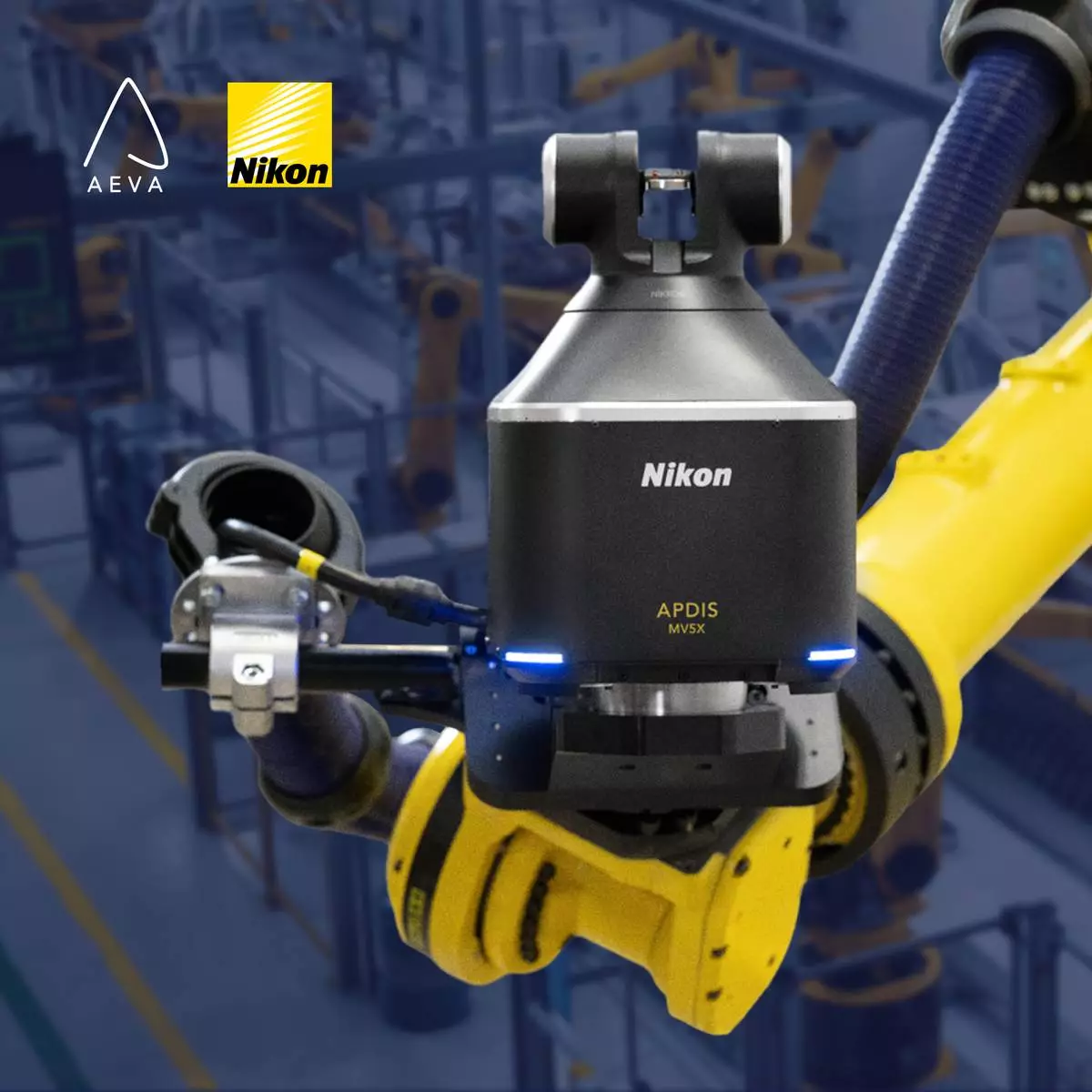
Aeva’s Eve high-precision sensor technology is powering Nikon Corporation’s new APDIS MV5X Laser Radar system.