Backers of raw milk are pushing to make the potentially dangerous product more widely available and easier to obtain, even as a new disease outbreak — one of at least five in the past year — sickens U.S. children.
More than three dozen bills supporting raw milk have been introduced in statehouses across the nation, The Associated Press found. A growing number of states are making it legal to sell. Dairy farmers say they can barely keep it in stock, even though prices can exceed $10 or $20 a gallon.
Click to Gallery
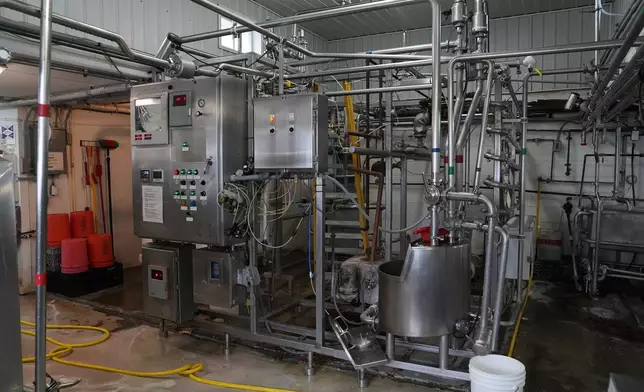
A high-temperature short-time milk pasteurizer at Ronnybrook Farm in Ancramdale, N.Y., on April 22, 2026. (AP Photo/Mary Conlon)
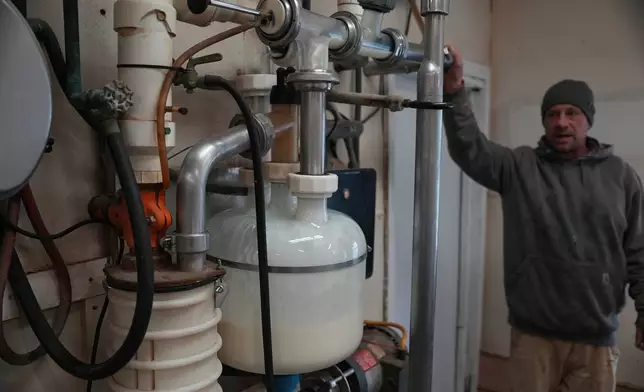
Herdsman Stephen Reed watches raw cow milk collect in a receive jar before it is eventually pasteurized at Ronnybrook Farm in Ancramdale, N.Y., on April 22, 2026. (AP Photo/Mary Conlon)
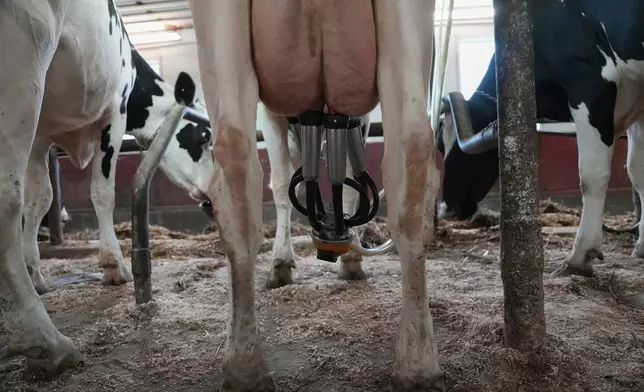
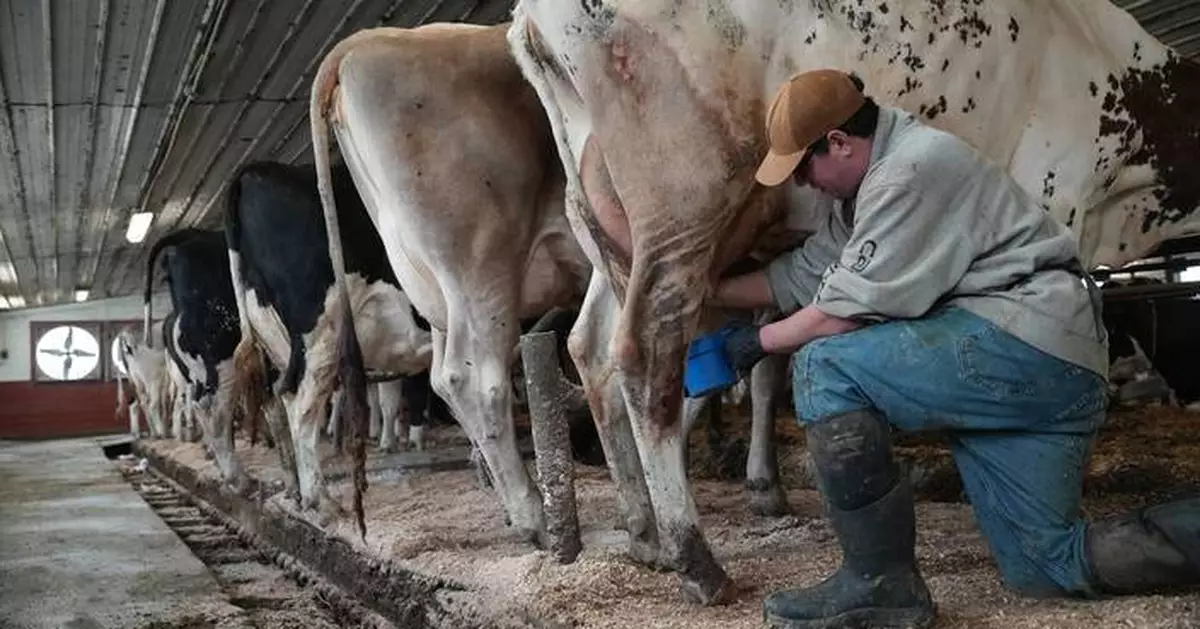
A cow is milked at Ronnybrook Farm, which uses pasteurization, in Ancramdale, N.Y., on April 22, 2026. (AP Photo/Mary Conlon)
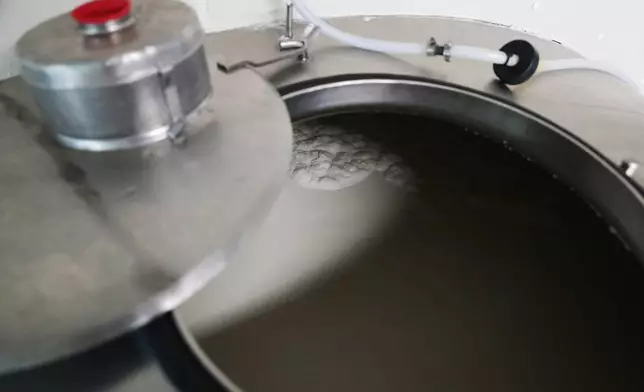
Raw milk sits in a tank before being eventually pasteurized at Ronnybrook Farm in Ancramdale, N.Y., on April 22, 2026. (AP Photo/Mary Conlon)
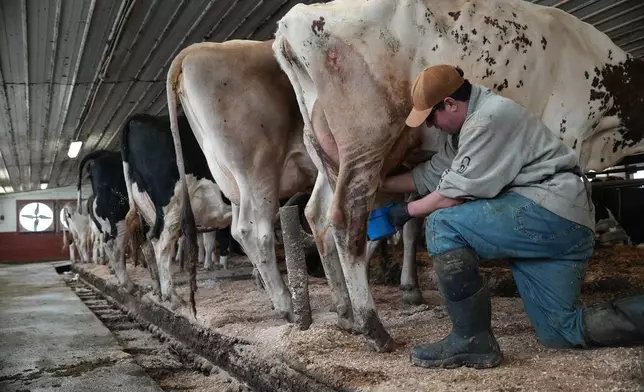
Nick Armato prepares a cow for milking at Ronnybrook Farm, which uses pasteurization, in Ancramdale, N.Y., on April 22, 2026. (AP Photo/Mary Conlon)
Top government officials and internet influencers are helping drive this momentum. U.S. Health Secretary Robert F. Kennedy Jr. downed shots of raw milk at the White House last May and previously promised to halt “aggressive suppression” of the product. On social media, posts about raw milk have surged in recent months, often touting unproven claims about its health benefits.
All of this alarms public health officials, who have long warned that unpasteurized milk can harbor risky germs. The current outbreak — tied to raw milk cheddar cheese from California-based Raw Farm — has sickened nine people with E. coli, half of them children younger than 5. One victim developed a serious complication that can impair kidney function for life.
Petra Anne Levin, a biology professor at Washington University in St. Louis, said she doesn’t understand the products' appeal.
“If you wouldn’t lick a cow’s underneath, why would you drink raw milk?” she said. “There’s a reason pasteurization is around.”
Pasteurization kills germs by heating the milk, commonly to at least 161 degrees Fahrenheit (71.7 degrees Celsius) for at least 15 seconds. Experts say it has no significant impact on milk’s nutritional quality and has saved millions of people from foodborne illness.
But some consumers would rather drink their milk raw despite the risk. Recognizing this trend, advocates and critics alike are increasingly calling for federal regulation of the product.
“People want access,” said Mary McGonigle-Martin, co-chair of Stop Foodborne Illness, a consumer advocacy group. “Public health has lost the battle on raw milk.”
Bills favoring raw milk have been introduced in the current legislative session in 18 states, including those controlled by Democrats and Republicans.
AP searched legislation in all 50 states using the bill-tracking software Plural and analyzed bills for whether they expand or streamline access to unpasteurized milk or products made from it. More than 40 bills introduced as of late April would make it easier to buy, sell or consume raw milk.
Some would allow raw milk to be sold for human consumption for the first time. A bill in New Jersey’s Senate, for example, would create a raw milk permitting program.
“You can buy cigarettes. You can buy alcohol. You can buy quote-unquote legalized marijuana,” said state Sen. Michael Testa, a Republican sponsor. “Why shouldn’t someone be able to consume raw milk?”
If the bill becomes law, New Jersey would join more than three dozen states in allowing raw milk sales. Wider access will probably mean more outbreaks, said Donald Schaffner, a Rutgers University food science professor.
Other bills seek to manage, guide or expand already legal sales. A bill advancing in the Iowa House would make it easier for farmers to sell unpasteurized products by offering them at farm stores alongside foods like meat.
Its sponsor, Republican state Rep. Chad Ingels, said he was initially opposed to legalizing raw milk because of safety concerns.
“But it’s law now, and I’m very pro-local foods,” said Ingels, who expects the current bill to pass. “I just thought it made sense to allow those farm businesses to sell all their products in one location.”
Two bills in Missouri would allow unpasteurized dairy products to be sold in grocery stores, farmers’ markets or similar places as long as they include a label warning of the potential for harmful bacteria and herds are tested.
“We just want to make it more accessible, so that way, people have the freedom of choice,” said Republican state Rep. Bryant Wolfin, who sponsored one of the bills.
The legislation specifically invokes the Raw Milk Institute, defining “retail raw milk or cream” as being produced on dairy farms that in one bill meet standards set by the California-based organization, and in the other “have obtained listed status” from the institute.
The organization, headed by Raw Farm owner Mark McAfee, says its mission is to improve the safety and quality of raw milk, which is how Wolfin sees it. But Schaffner said the organization focuses on raw milk advocacy rather than managing risk. He pointed out that McAfee’s farm has been linked to numerous outbreaks.
It’s unclear how many raw milk bills will pass in statehouses this year. But there is also legislation being considered on a national level.
A bipartisan bill in the U.S. House would prevent federal departments, agencies or courts from restricting the movement of raw milk between two states where its sale is legal. Called the Interstate Milk Freedom Act, it was introduced in March by Kentucky Republican Thomas Massie and Maine Democrat Chellie Pingree.
Whether it passes or not, there are steps the federal government could take to make raw milk more available, legal experts say. The FDA could revoke the ban on interstate sales. The agency could also create national raw milk standards and urge or incentivize states to enforce them.
FDA officials did not respond to questions about whether such actions are likely.
Despite raw milk's popularity, scientists and public health experts warn against drinking it. Websites run by the FDA and the U.S. Centers for Disease Control and Prevention point to the well-documented risks of serious illness from a host of germs, including campylobacter, listeria, salmonella and E. coli.
A CDC review counted more than 200 outbreaks tied to raw milk that sickened more than 2,600 people and sent 225 to hospitals between 1998 and 2018.
Another analysis found that raw dairy products cause 840 times more illness and 45 times more hospitalizations than their pasteurized counterparts.
Children are especially vulnerable to such illness, because their immune systems are immature and because they drink milk frequently, noted Alex O’Brien, food safety and quality coordinator for the Center for Dairy Research in Madison, Wisconsin.
Before milk standards were adopted more than a century ago, about 25% of foodborne illnesses in the U.S. were related to dairy consumption, O’Brien said. Now, dairy products account for about 1% of such illnesses. In European and American societies of the early and mid-19th century, research shows infant mortality rates were 30-60 times greater than today. In one example, thousands of infants died every year from a condition known as “summer diarrhea,” which was primarily caused by bacterial contamination in milk that worsened in the heat.
O’Brien, who grew up on a farm, said he knows people who drink raw milk and has consumed it himself in the past. Drinking it once might not hurt you, he said, but the risk increases with every exposure.
Understanding and accepting the risks of raw milk has become more difficult in this political climate, said Martin, the consumer advocate.
“They can’t grasp it, or they think it’s so rare it won’t happen to them,” she said.
Martin’s son, Chris, nearly died in 2006 after drinking raw milk contaminated with E. coli sold by Organic Pastures, Raw Farm's previous name. For two decades, Martin has worked to raise awareness of the dangers and hold suppliers accountable.
Mari Tardiff, of Ashland, Oregon, was hospitalized for five months after drinking raw milk contaminated with campylobacter in 2008. She said she tried it because she was interested in “a natural probiotic.”
Doctors diagnosed her with Guillain-Barré syndrome, caused by her campylobacter infection. She spent time on a ventilator and was temporarily paralyzed and unable to talk. When she got home, she used a wheelchair and slept in a hospital bed, relying on her husband to turn her every two hours so she wouldn’t get pressure sores.
“Your whole life is completely blown apart,” she said.
Still, she said she wouldn't tell other adults whether to drink raw milk — although she worries about giving it to kids.
“If you make a mistake, it’s one thing to come to terms with when you’re the one dealing with the consequences,” said Tardiff, now 70. “But holy moly … if I did something like that and one of my kids or my grandchildren was going through what I went through, I would never forgive myself.”
Proponents of raw milk are gratified that it’s becoming more available. Even in states where it can’t be sold in stores for human consumption, people can get raw milk marketed for pets or join a “herd share” in which consumers buy a partial ownership in a dairy herd.
“I’ve been involved in raw milk for roughly 14 years,” said Ben Beichler, of Creambrook Farm in Middlebrook, Virginia, which relies on herd shares. “To see how public perception and political perception has altered over the years with raw milk is quite exciting.”
Beichler said safety is key.
“My family and my wife, who’s currently pregnant, drink about a gallon of our own raw milk every single day,” he said. “So if there’s anybody who has a vested interest in making sure our milk is safe, it is us.”
Beichler said his 150-cow farm works with a veterinarian on regular herd checks and has a safety process that includes sending milk samples to labs every week to test for common germs.
In Foristell, Missouri, Tony Huffstutter said his family tests their milk daily for bacteria in an on-site lab at their Twisted Ash Farm & Dairy, where they keep 15 cows and sell raw milk for $29 a gallon.
“You can’t just go out there, throw a bucket under the cow and start milking it,” he said. “There are so many steps in doing it right.”
He said raw milk shouldn’t be treated differently from other natural products such as spinach, which has been associated with past foodborne outbreaks.
“They don’t pasteurize the salad,” he said. “They don’t force you to only buy cooked salad.”
With raw milk gaining a foothold, Martin said she believes that the best action might be for the FDA to regulate it as strictly as pasteurized dairy products.
McAfee agrees. “High standards and testing should be part of that,” he said.
Schaffner, the food safety expert, also favors regulation. Although he has serious reservations about giving raw milk to kids, he calls himself “a raw milk libertarian” when it comes to adults.
“It’s kind of like legalization of weed, right?” he said. “If people want it, we should find a way to regulate it and do it safely.”
Then again, he said, there’s already a dependable way of making raw milk safe.
“It’s called pasteurization,” he said. “And it works really well.”
The Associated Press Health and Science Department receives support from the Howard Hughes Medical Institute’s Department of Science Education and the Robert Wood Johnson Foundation. The AP is solely responsible for all content.
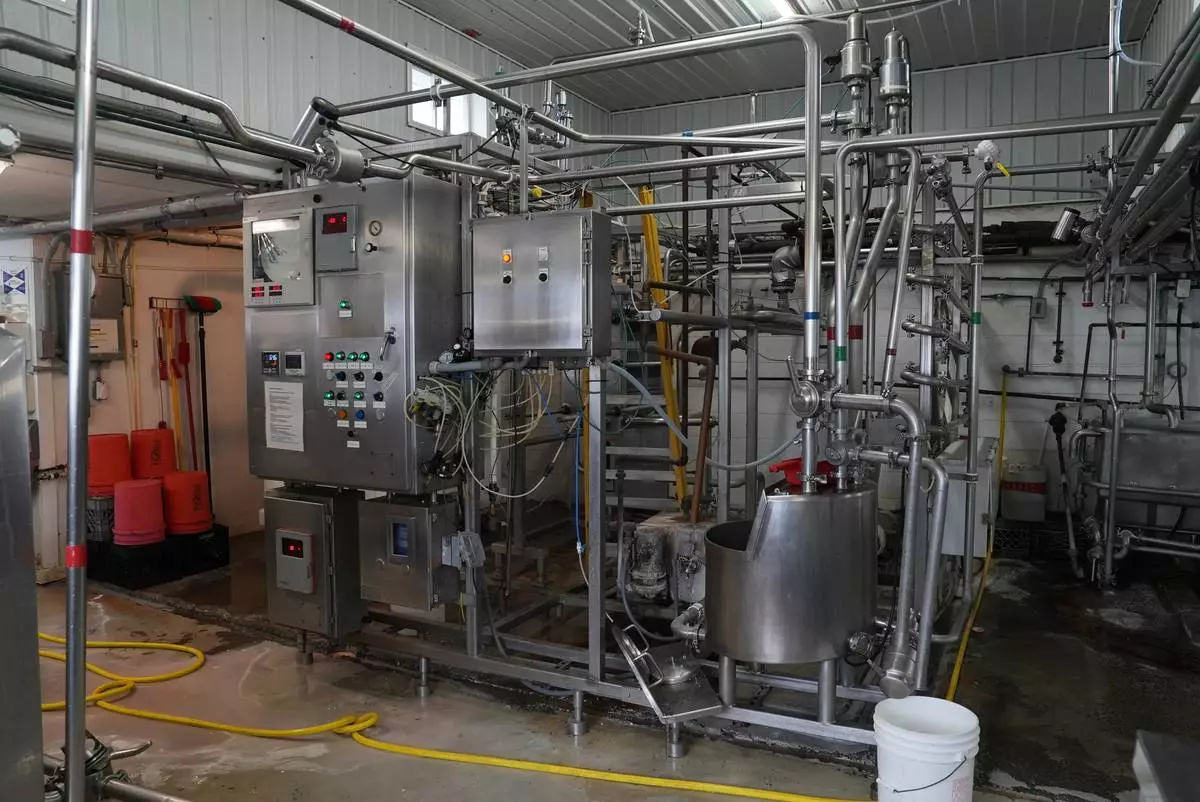
A high-temperature short-time milk pasteurizer at Ronnybrook Farm in Ancramdale, N.Y., on April 22, 2026. (AP Photo/Mary Conlon)
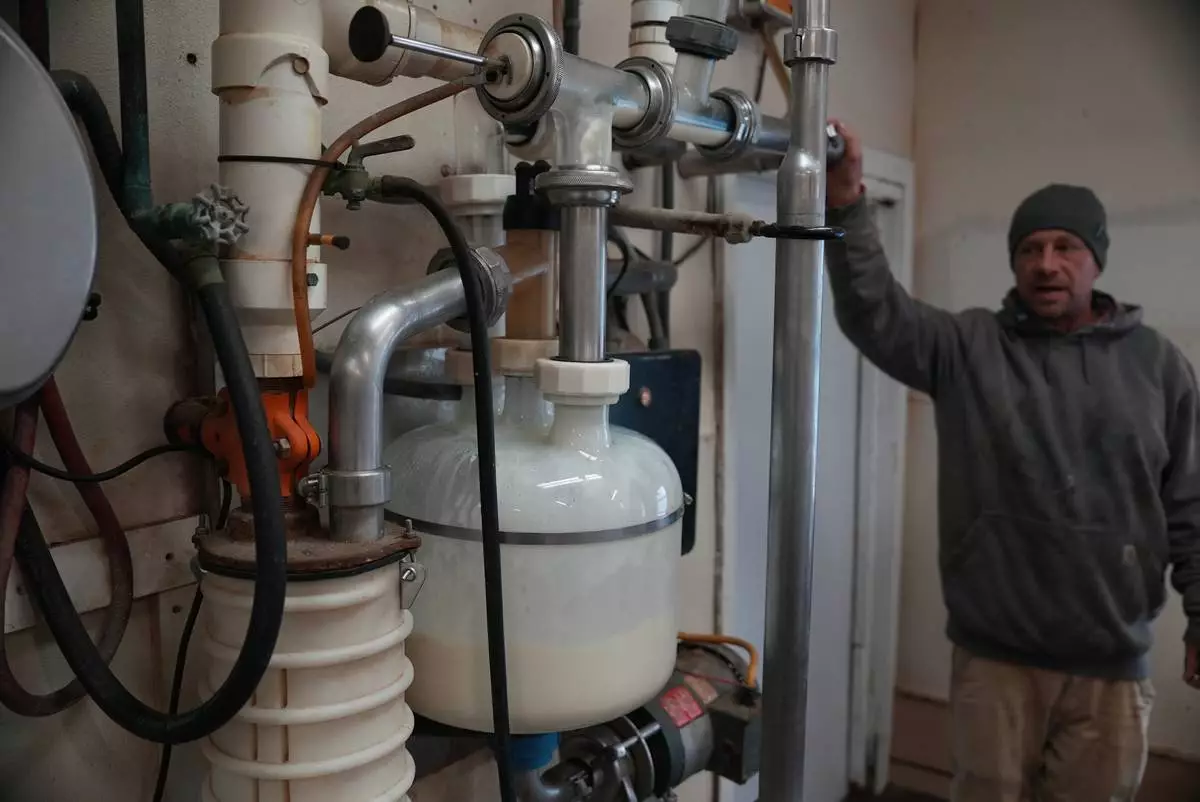
Herdsman Stephen Reed watches raw cow milk collect in a receive jar before it is eventually pasteurized at Ronnybrook Farm in Ancramdale, N.Y., on April 22, 2026. (AP Photo/Mary Conlon)
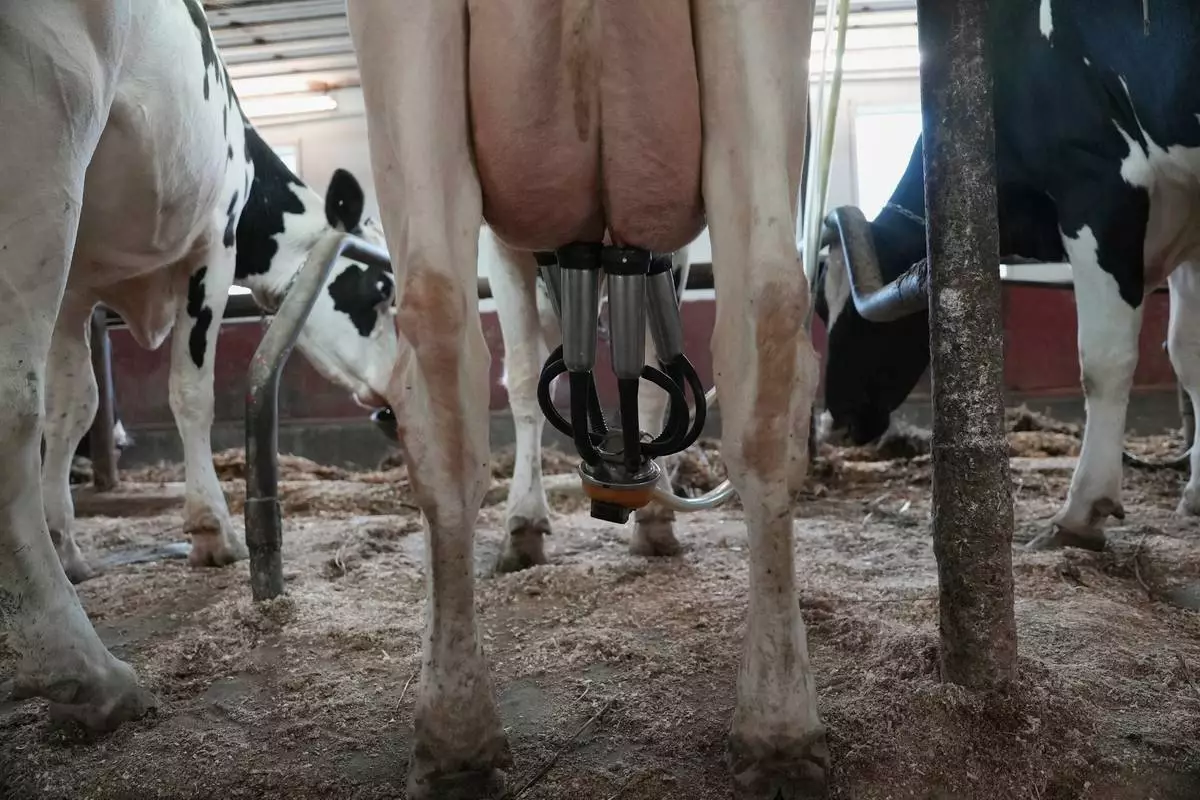
A cow is milked at Ronnybrook Farm, which uses pasteurization, in Ancramdale, N.Y., on April 22, 2026. (AP Photo/Mary Conlon)
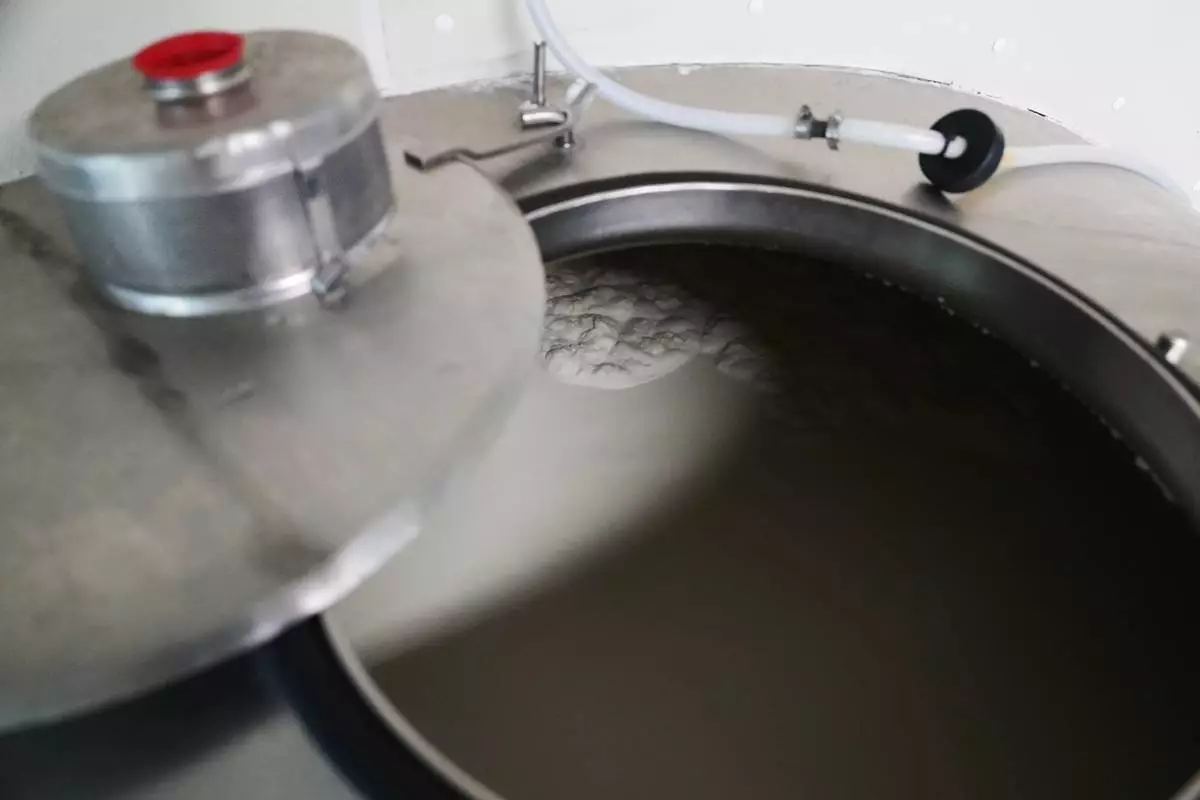
Raw milk sits in a tank before being eventually pasteurized at Ronnybrook Farm in Ancramdale, N.Y., on April 22, 2026. (AP Photo/Mary Conlon)
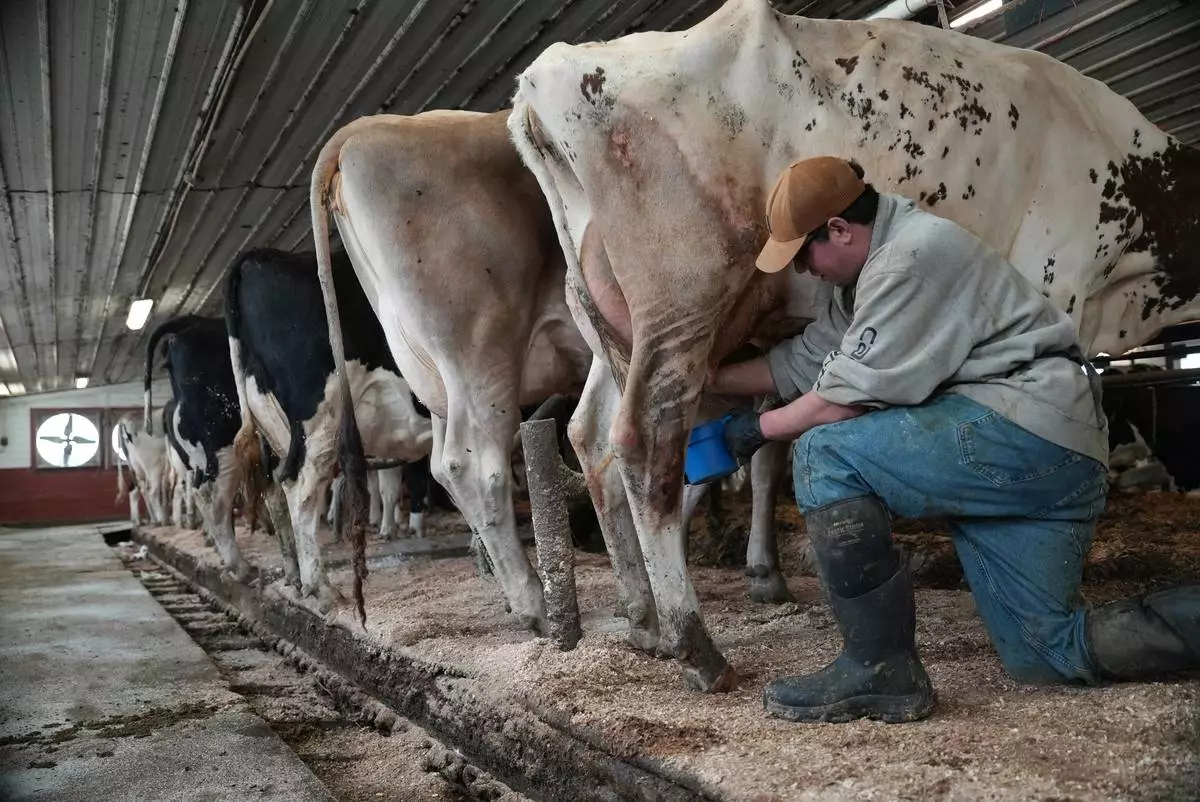
Nick Armato prepares a cow for milking at Ronnybrook Farm, which uses pasteurization, in Ancramdale, N.Y., on April 22, 2026. (AP Photo/Mary Conlon)