JAKARTA, Indonesia (AP) — Indonesia is urging social media companies and digital platforms to report the number of accounts that have been suspended as part of the implementation of government regulations restricting access for children under 16, authorities said Wednesday.
“We will continue to insist that compliance alone is not enough; we must also report the figures to the public in the interest of transparency,” said Communication and Digital Affairs Minister Meutya Hafid.
Indonesia began implementing a new government regulationat the end of March banning children younger than 16 from accessing digital platforms that could expose them to pornography, cyberbullying, online scams and addiction.
Hafid said that young people in Indonesia spend up to eight hours a day online.
Not all social media and digital platforms immediately complied with the regulation, which affects some 70 million children and young people in Indonesia.
TikTok became the first platform to report measurable progress in compliance when it said it deactivated 1.7 million accounts belonging to children under 16.
The country’s large population likely "explains the platforms’ reluctance to accelerate compliance with this regulation,” Hafid said.
Seven of the eight platforms classified as high-risk, including YouTube, TikTok, Facebook, Instagram, Threads, X, Bigo Live, have committed to restricting children’s access to their services.
Only Roblox, the gaming platform, has yet to agree to block access for children under 16. The company did not immediately reply to requests for comment from The Associated Press.
YouTube announced its commitment to restricting access for younger users three weeks after the restrictions took effect, but has not yet specified how many accounts belonging to children were identified and suspended.
“We remain focused on protecting the community and will continue working closely with the Indonesian government to support a secure digital future for the next generation,” a YouTube spokesperson said in a statement on Wednesday.
Restrictions on social media access for children under 16 first began in December in Australia, where social media companies revoked access to about 4.7 million accounts identified as belonging to children.
Indonesia became the first country in Southeast Asia to follow suit.
Some other countries — including Spain, France and the United Kingdom — are also taking or considering measures to restrict children’s access to social media amid growing concern that they are being harmed by exposure to unregulated social media content.
Hafid believes there are still challenges in implementing the regulation, and the Indonesian government has said it would allow platforms to determine their own methods for account verification.
“We understand the technology will continue to evolve rapidly. However, the platform is responsible for determining the best and most appropriate technology for its needs,” Hafid said.
Critics have highlighted the practical challenges of enforcing the rule. Reliable age verification often requires collecting sensitive personal data, prompting concerns over privacy and data security. Some children will find a way to use fake identification, such as using their parents’ account, said Nenden Sekar Arum, executive director of the Southeast Asia Freedom of Expression Network, or SAFEnet, a digital rights group.
Arum said that is why the government needs to oversee the user identity verification methods employed by each platform to ensure consistent compliance.
“The core problem is not the presence of children in the digital space, but how that digital space is shaped into a safe ecosystem. And how to ensure that those who are actually making this ecosystem harmful are held accountable. That is what needs to be addressed,” Arum said.

A man uses his mobile phone in Jakarta, Indonesia, Wednesday, April 29, 2026. (AP Photo/Achmad Ibrahim)

Boys use their mobile phone in Jakarta, Indonesia, Wednesday, April 29, 2026. (AP Photo/Achmad Ibrahim)
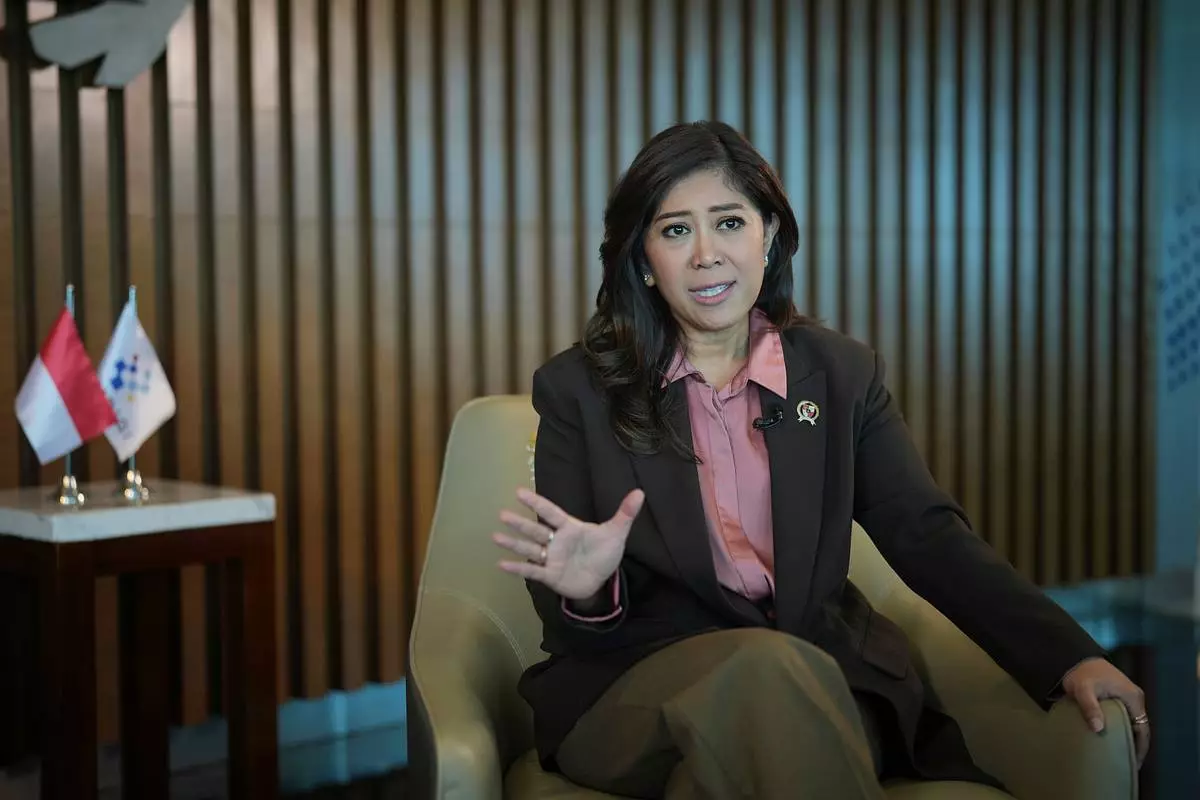
Indonesia's Communication and Digital Affairs Minister Meutya Hafid gestures during an interview with The Associated Press in Jakarta, Indonesia, Wednesday, April 29, 2026. (AP Photo/Achmad Ibrahim)
NEW YORK (AP) — The U.S. stock market is losing ground Wednesday as the countdown ticks to an afternoon announcement from the Federal Reserve on what it will do with interest rates. Oil prices, meanwhile, continued to spurt higher because of the war with Iran.
The S&P 500 fell 0.3%, a day after falling from its all-time high due to drops for artificial-intelligence stocks and worries about higher oil prices. The Dow Jones Industrial Average was down 299 points, or 0.6%, as of 12:46 p.m. Eastern time, and the Nasdaq composite fell 0.4%.
Another procession of profit reports from companies showing stronger growth for the start of 2026 than analysts expected helped support the market.
Visa jumped 9.1% after delivering stronger results than analysts expected, and CEO Ryan McInerney said consumer spending remained resilient in the quarter. Starbucks climbed 8.5% after likewise reporting better results than expected, while saying customers spent more at each visit, particularly at its North American stores.
Most companies so far this earnings reporting season have been topping analysts’ expectations, which has helped the U.S. stock market rally to records despite the high gasoline costs and soured confidence among U.S. households caused by the Iran war.
But those not meeting expectations have gotten punished. GE Healthcare Technologies dropped 11.8% after falling short of analysts’ forecasts. Robinhood Markets tumbled 14% after reporting growth in profit that was not as strong as analysts expected.
Booking Holdings swung between losses and gains after the online travel company said the war with Iran is affecting its results and kept some potential customers from booking rooms during the latest quarter.
The company behind Booking.com, Priceline and other brands is expecting the conflict to continue affecting its business through the end of June. It could affect travel not only in the Middle East but also in major transit corridors, such as between Europe and Asia.
The clearest result in financial markets of the war with Iran is how high oil prices have jumped. The price for a barrel of Brent crude to be delivered in June rose again Wednesday, up 7.3% to $119.38. Brent for delivery in July, which is where more of the trading is happening in the oil market, rose 6.5% to $111.21.
Brent’s price is approaching its high point of the war, slightly above $119 per barrel, and is well above its roughly $70 level from before the war. A ceasefire is still in place between the United States and Iran, but so is a closure of the Strait of Hormuz by Iran and a U.S. blockade of Iran's ships. That's all keeping oil tankers pent up in the Persian Gulf and crude prices high.
Expensive oil is one of the main reasons virtually all of Wall Street believes the Federal Reserve will not announce a resumption of its cuts to interest rates in the afternoon. While lower rates can help the economy, they also risk worsening inflation.
The consensus among traders is instead that the Fed will hold the federal funds rate steady in what’s likely to be Jerome Powell’s final Fed meeting as its chair. The bigger question is whether Powell will say if he’s staying on at the central bank after ceding the chairmanship. He has been a target of President Donald Trump’s anger for not cutting interest rates more quickly and more sharply.
The yield on the 10-year Treasury rose to 4.40% from 4.36% late Tuesday following the latest rise in oil prices.
Elsewhere on Wall Street, several AI stocks held firmer ahead of reports due after trading ends for the day from the biggest spenders on AI technology. Alphabet, Amazon, Meta Platforms and Microsoft could help show whether all the investment in AI chips and data centers is providing the kind of profits and productivity that would make it all worth it. Worries are high on Wall Street that it may not be and that all the immense spending is just a bubble.
Broadcom fell 0.6%, a day after falling 4.4%. Nvidia slipped 1.7%.
In stock markets abroad, indexes fell in Europe following a stronger finish in Asia. Hong Kong’s Hang Seng jumped 1.7% for one of the world’s strongest moves.
AP Business Writer Chan Ho-him contributed to this report.
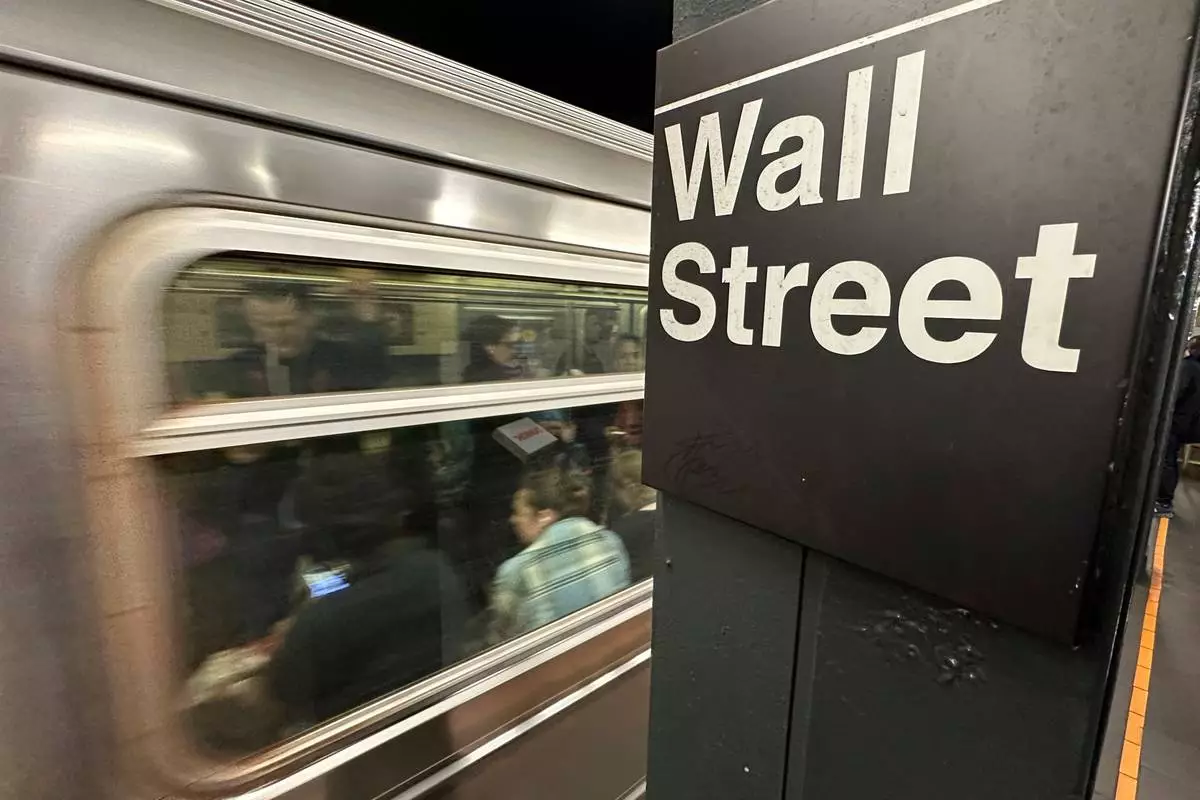
FILE - A train arrives at a Wall Street subway station in New York's Financial District on Nov. 5, 2024. (AP Photo/Peter Morgan, File)
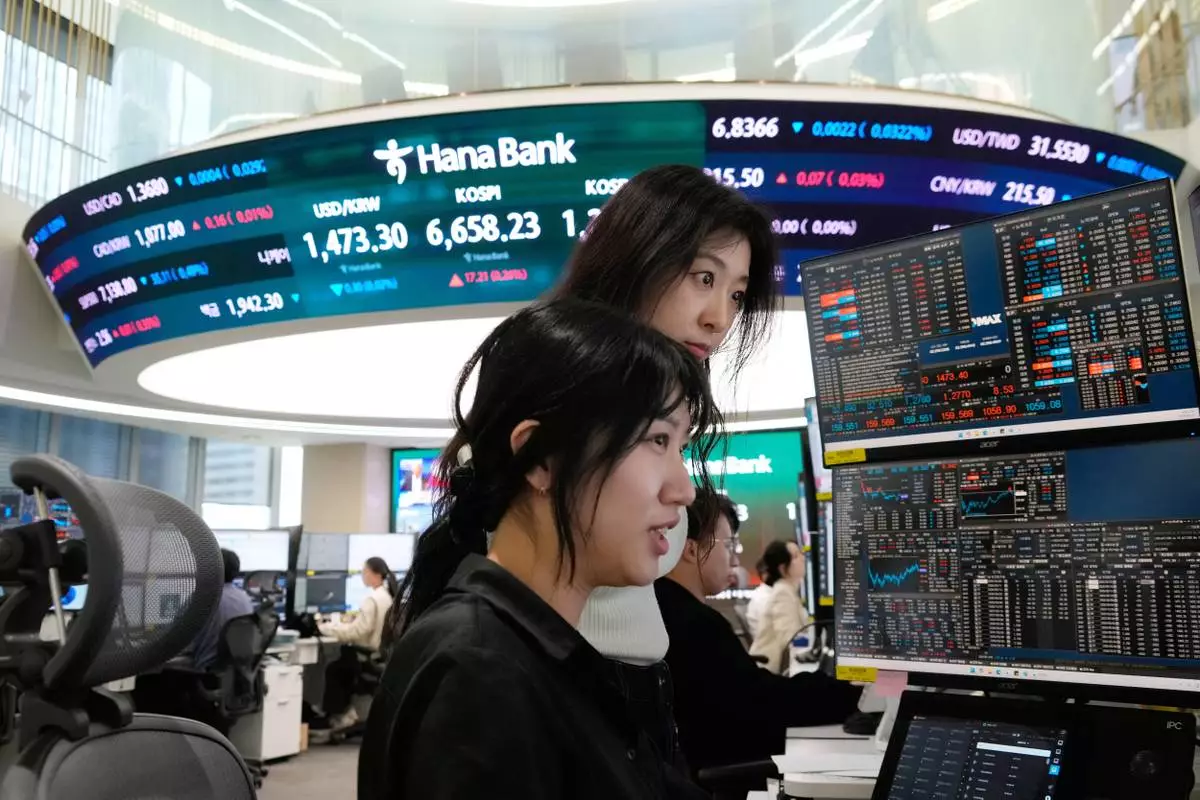
Currency traders watch monitors near a screen showing the Korea Composite Stock Price Index (KOSPI), top center, and the foreign exchange rate between U.S. dollar and South Korean won, top center left, at the foreign exchange dealing room of the Hana Bank headquarters in Seoul, South Korea, Wednesday, April 29, 2026. (AP Photo/Ahn Young-joon)

Currency traders work near a screen showing the Korea Composite Stock Price Index (KOSPI), top center, and the foreign exchange rate between U.S. dollar and South Korean won, top center left, at the foreign exchange dealing room of the Hana Bank headquarters in Seoul, South Korea, Wednesday, April 29, 2026. (AP Photo/Ahn Young-joon)
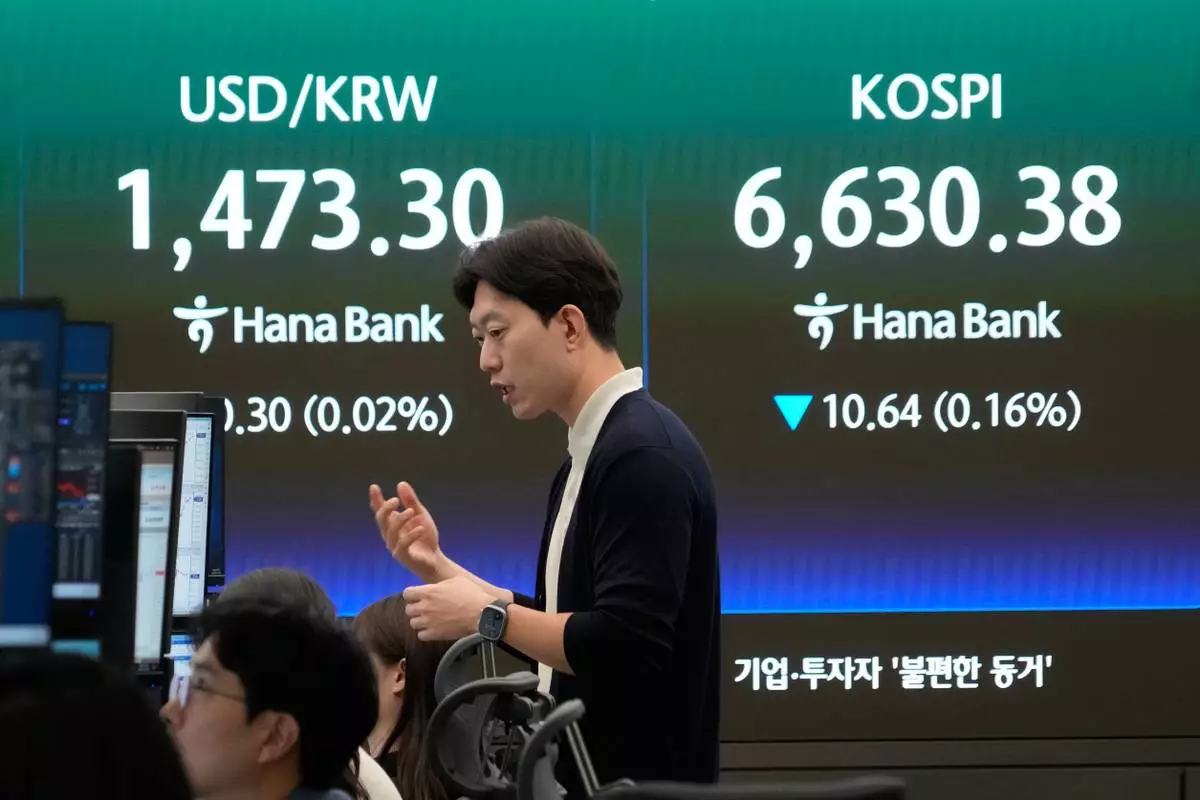
A currency trader reacts near a screen showing the Korea Composite Stock Price Index (KOSPI), right, and the foreign exchange rate between U.S. dollar and South Korean won at the foreign exchange dealing room of the Hana Bank headquarters in Seoul, South Korea, Wednesday, April 29, 2026. (AP Photo/Ahn Young-joon)