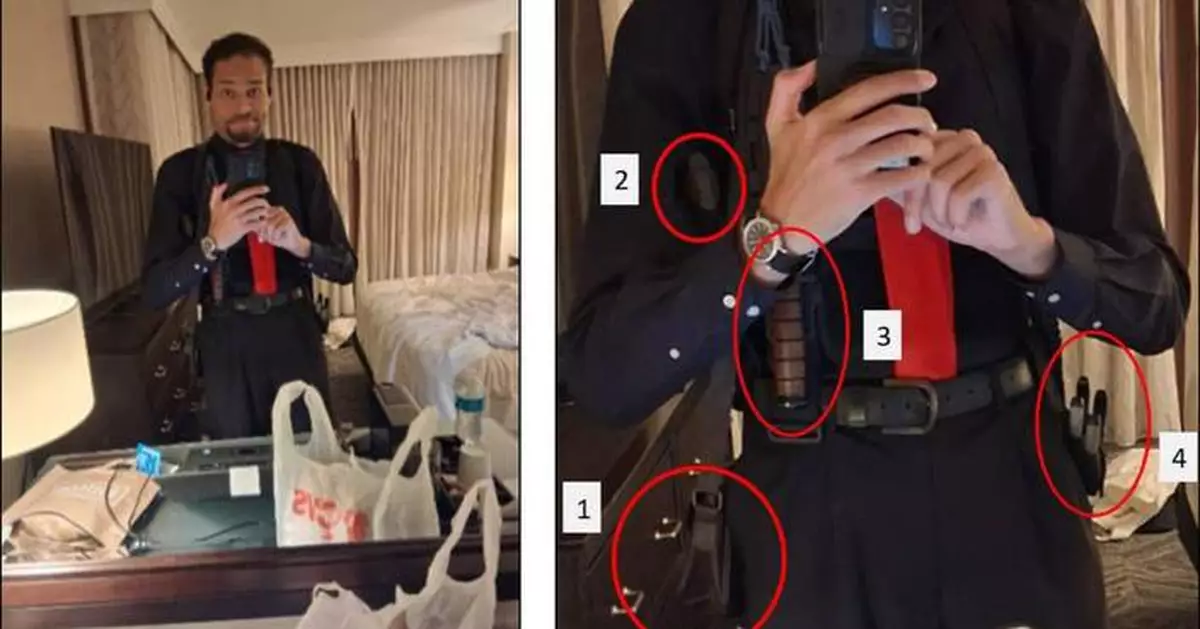
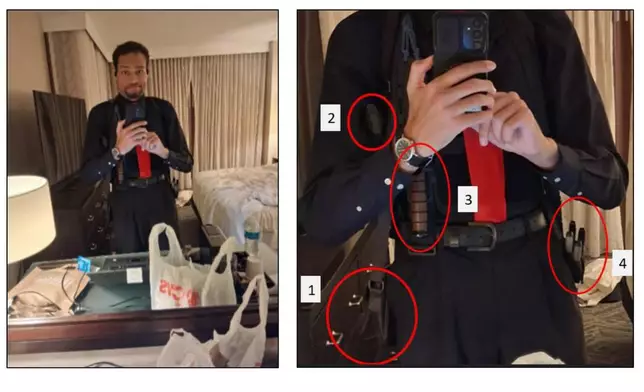
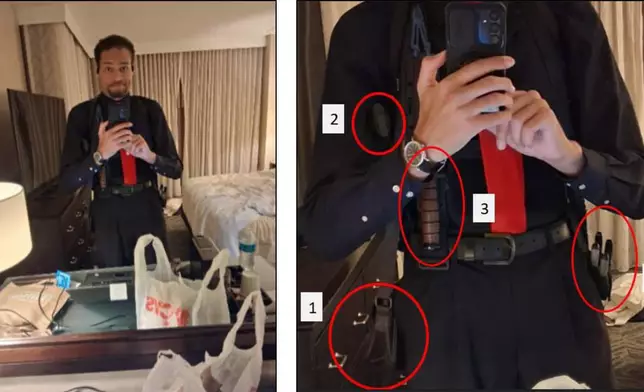
The man charged with trying to storm the White House Correspondents’ Association dinner and kill President Donald Trump took a picture of himself in his hotel room just minutes earlier, outfitted with an ammunition bag, a shoulder gun holster and a sheathed knife, authorities said Wednesday in a new court filing.
Cole Allen wore black pants, a black shirt and a red tie as he snapped the image in his room at the Washington Hilton, where Trump and hundreds of journalists were meeting for a gala Saturday night, authorities say.
Click to Gallery
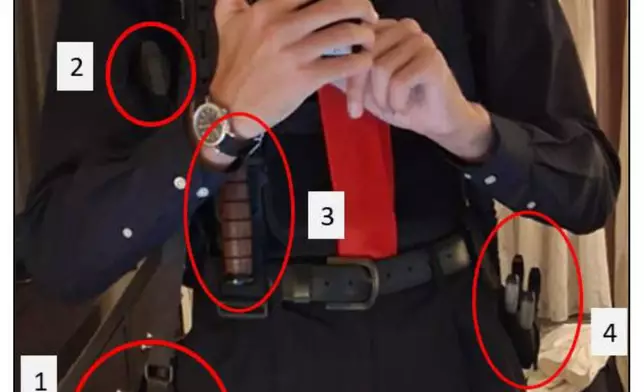
This enhanced version of an image contained in a court filing by the Department of Justice, April 29, 2026, shows Cole Tomas Allen, inside his hotel room, on Saturday, April 25, 2026 in Washington, using his cellphone to take a photograph of himself in the mirror. (Department of Justice via AP)
This image contained in a court filing by the Department of Justice, April 29, 2026, shows Cole Tomas Allen, left, inside his hotel room, on Saturday, April 25, 2026 in Washington, using his cellphone to take a photograph of himself in the mirror. (Department of Justice via AP)
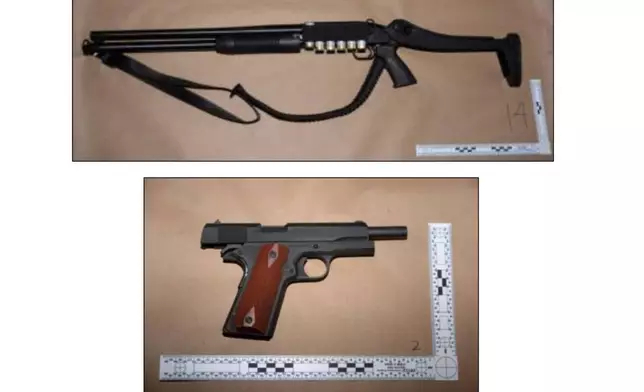
This image contained in a court filing by the Department of Justice, April 29, 2026, shows some of the weapons and shotgun ammunition that Cole Tomas Allen possessed, Saturday, April 25, 2026 in Washington. (Department of Justice via AP)
This image contained in a court filing by the Department of Justice, April 29, 2026, shows Cole Tomas Allen, left, inside his hotel room, on Saturday, April 25, 2026 in Washington, using his cellphone to take a photograph of himself in the mirror. An enhanced version of the image is right. (Department of Justice via AP)
This image contained in a court filing by the Department of Justice, April 29, 2026, shows Cole Tomas Allen, left, inside his hotel room, on Saturday, April 25, 2026 in Washington, using his cellphone to take a photograph of himself in the mirror. An enhanced version of the image is right. (Department of Justice via AP)
The 31-year-old from Torrance, California, was captured when he tried to race past security barricades near the hotel's ballroom, prompting an exchange of gunfire with Secret Service agents tasked with safeguarding the event, investigators say.
New details emerged in a court filing made by prosecutors who want Allen to remain in custody. A hearing is set for Thursday.
The government said Allen repeatedly made online checks to keep track of Trump’s status that night, including live coverage of the president exiting his vehicle at the Hilton hotel. Investigators said preset emails with an “Apology and Explanation” attachment were sent at approximately 8:30 p.m.
“He intended to kill and fired his shotgun while trying to breach security and attack his target. Put simply, the defendant poses an uncommonly serious danger to the community if released pending trial. The defendant’s lack of criminal history and other personal circumstances do not alter this conclusion,” Assistant U.S. Attorney Charles Jones wrote.
Trump, a Republican, was uninjured. A Secret Service officer wearing a bullet-resistant vest was shot in the vest and survived.
Allen appeared in court on Monday and was charged with the attempted assassination of the president as authorities suggested an attack that disrupted one of Washington’s glitziest events had been planned for at least several weeks. He did not speak at length during the quick court appearance, as is customary. One of his lawyers, Tezira Abe, noted he had no criminal record and said he “is presumed innocent at this time.”
Trump was rushed off the stage by his security team Saturday night and appeared at the White House two hours later, still in his tuxedo.
“When you’re impactful, they go after you. When you’re not impactful, they leave you alone,” he said. “They seem to think he was a lone wolf.”
An FBI affidavit filed Monday revealed other details about the planning behind the assault, with authorities alleging that Allen on April 6 reserved a room for himself at the Washington hotel where the event would be held weeks later under its typical tight security. He traveled by train cross-country from California, checking himself into the Washington Hilton a day before the dinner with a room reserved for the weekend.
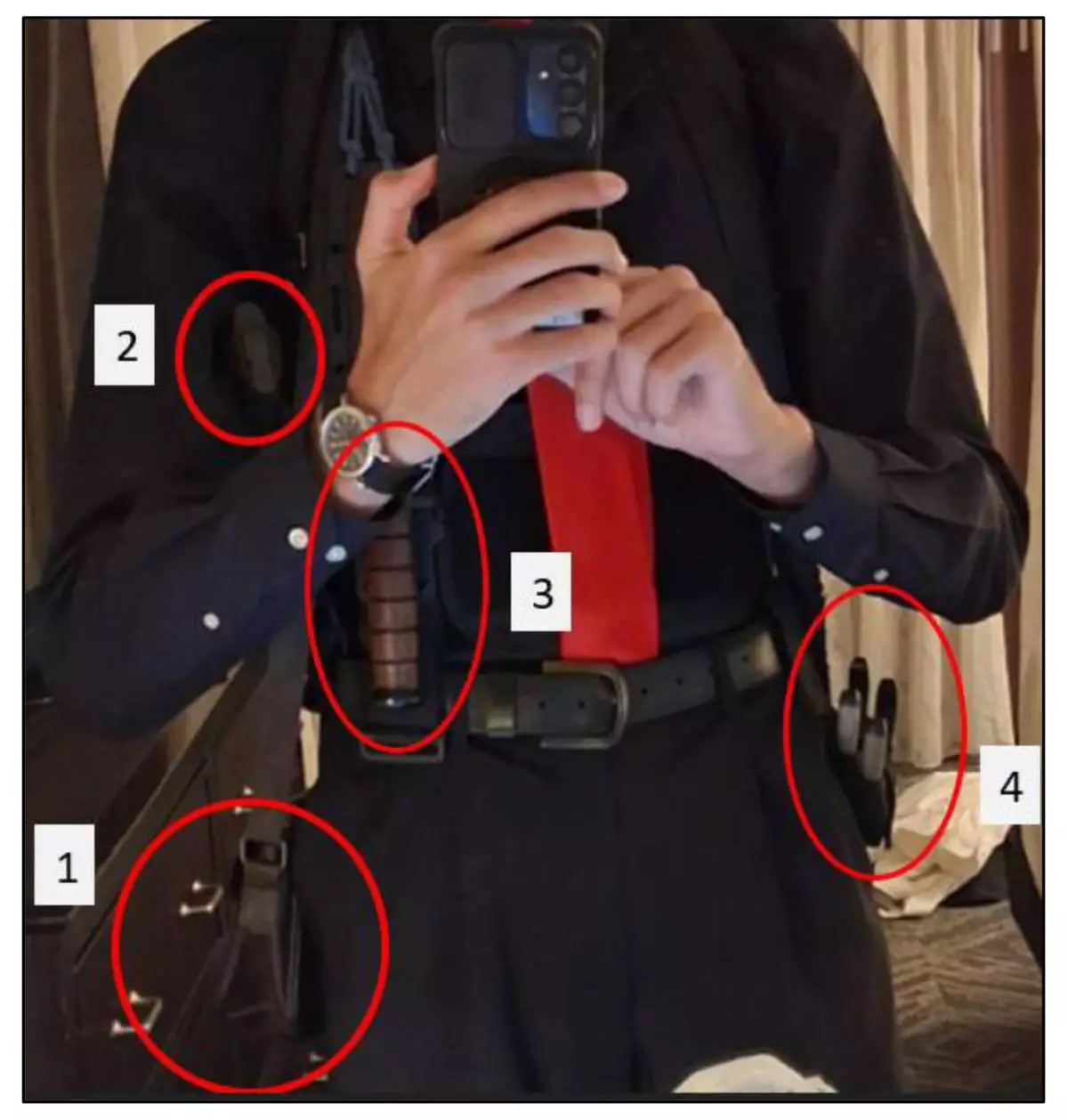
This enhanced version of an image contained in a court filing by the Department of Justice, April 29, 2026, shows Cole Tomas Allen, inside his hotel room, on Saturday, April 25, 2026 in Washington, using his cellphone to take a photograph of himself in the mirror. (Department of Justice via AP)
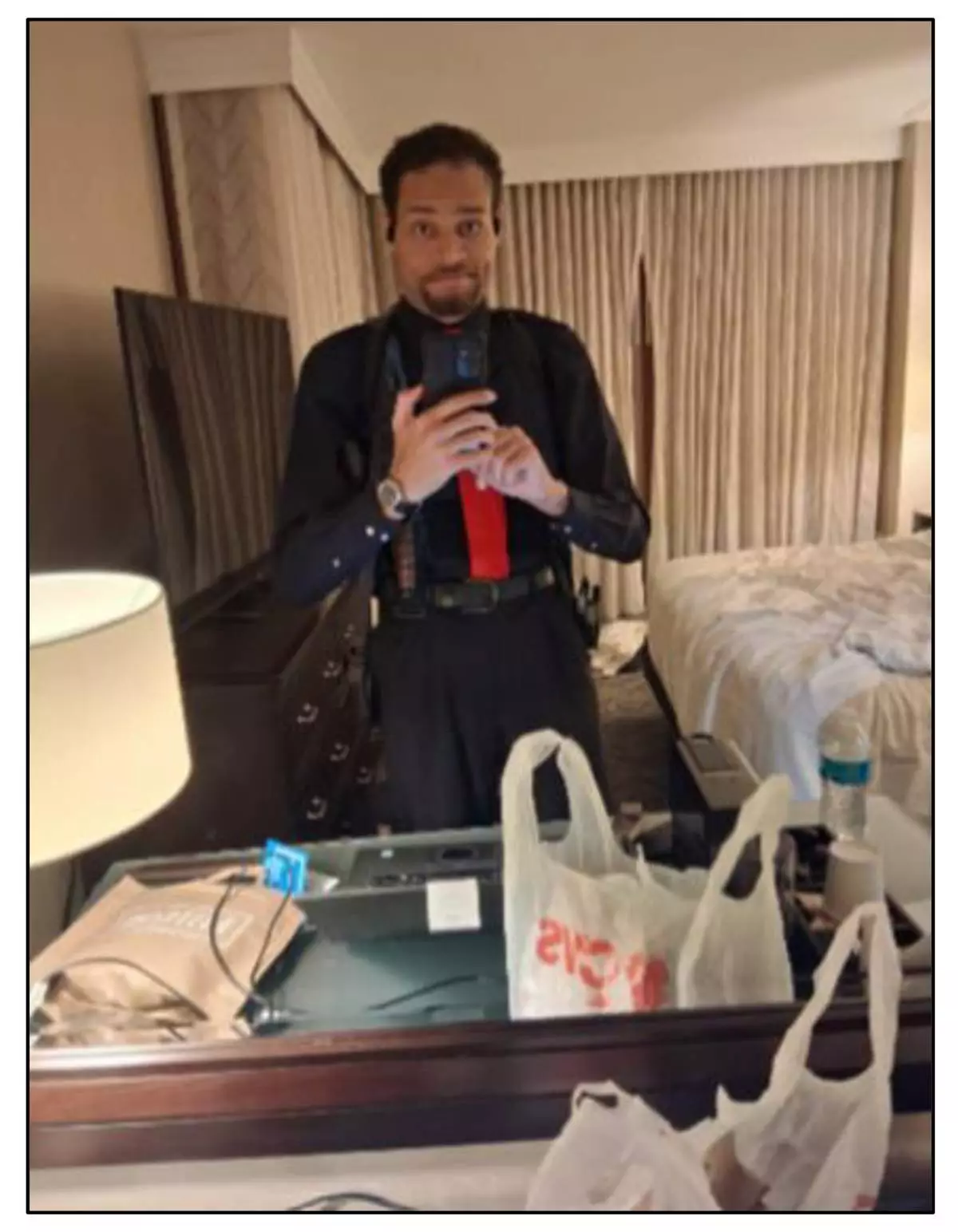
This image contained in a court filing by the Department of Justice, April 29, 2026, shows Cole Tomas Allen, left, inside his hotel room, on Saturday, April 25, 2026 in Washington, using his cellphone to take a photograph of himself in the mirror. (Department of Justice via AP)
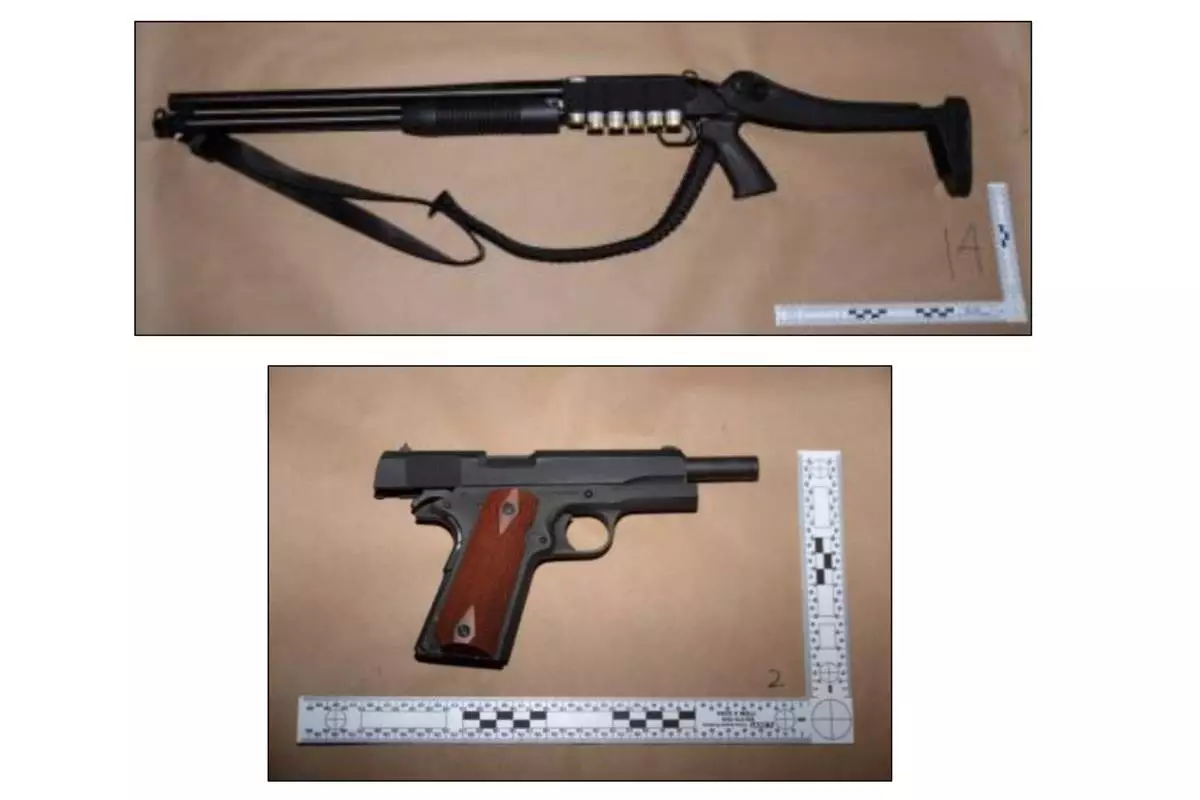
This image contained in a court filing by the Department of Justice, April 29, 2026, shows some of the weapons and shotgun ammunition that Cole Tomas Allen possessed, Saturday, April 25, 2026 in Washington. (Department of Justice via AP)
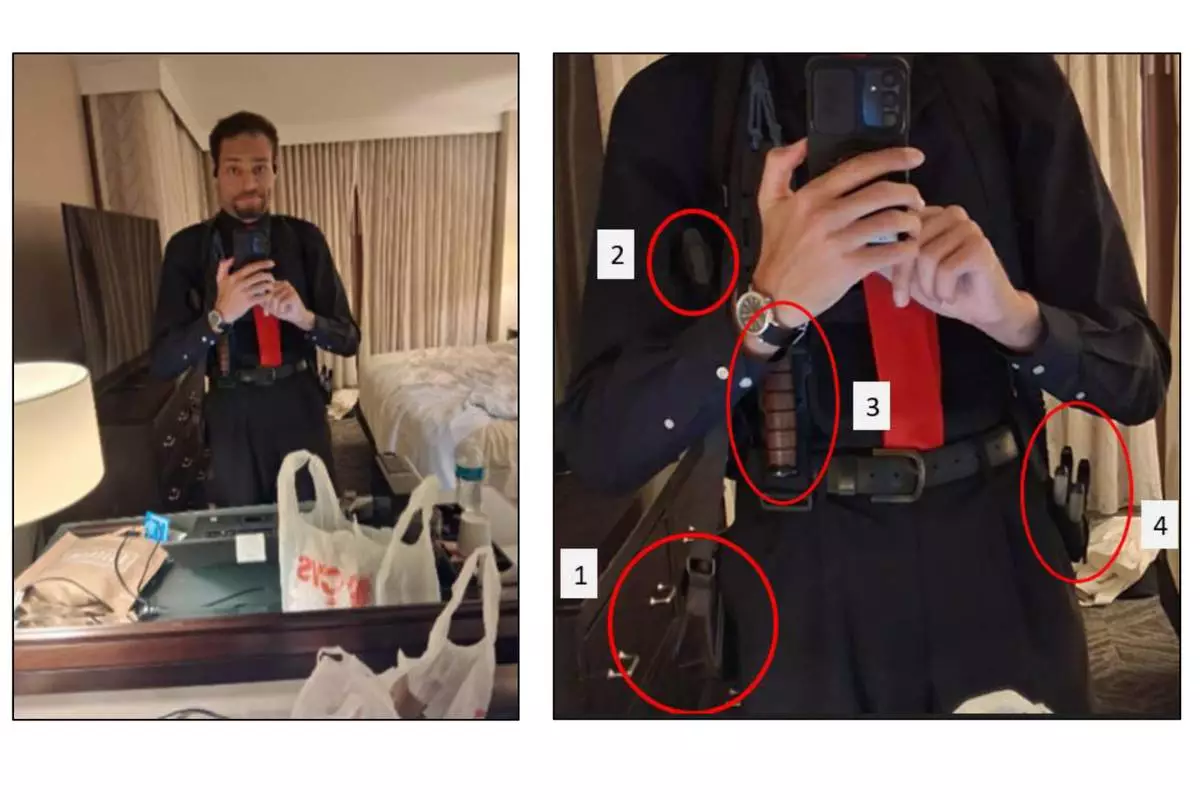
This image contained in a court filing by the Department of Justice, April 29, 2026, shows Cole Tomas Allen, left, inside his hotel room, on Saturday, April 25, 2026 in Washington, using his cellphone to take a photograph of himself in the mirror. An enhanced version of the image is right. (Department of Justice via AP)
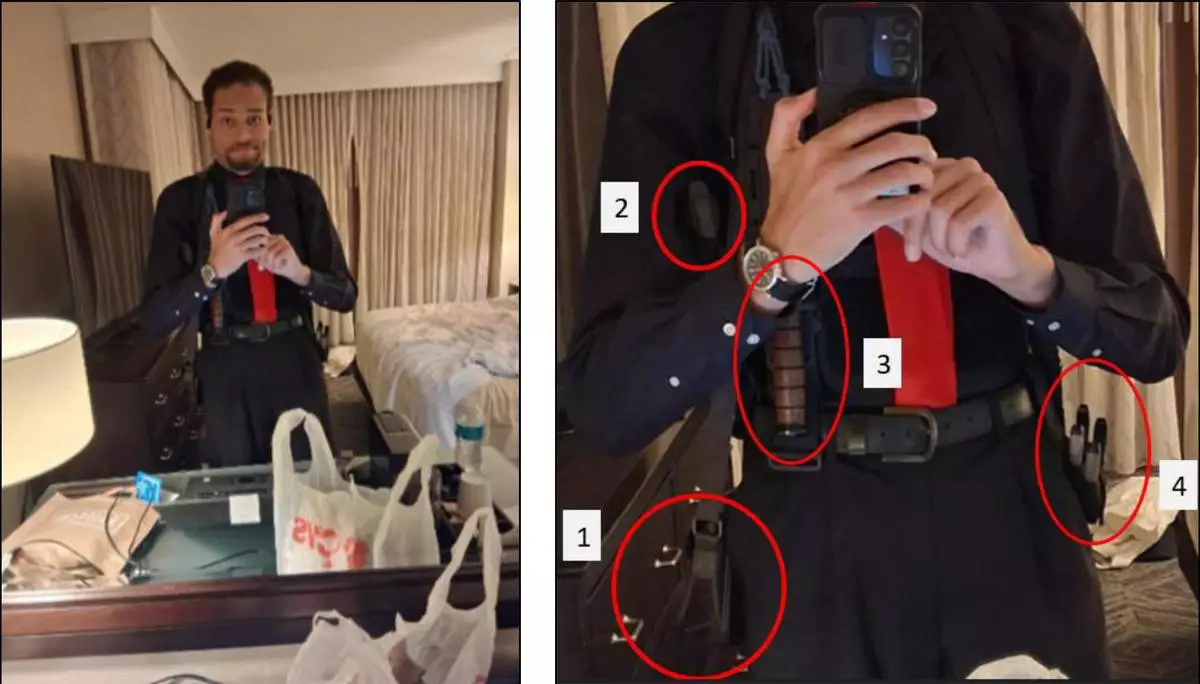
This image contained in a court filing by the Department of Justice, April 29, 2026, shows Cole Tomas Allen, left, inside his hotel room, on Saturday, April 25, 2026 in Washington, using his cellphone to take a photograph of himself in the mirror. An enhanced version of the image is right. (Department of Justice via AP)
A man acting erratically on a train headed for Chicago was spotted by a rail worker who called police. Officers found guns and a pamphlet about crowd control in his carry-on bag — and a plan for a mass casualty event.
Almost two years later, federal authorities say a different man charged with attempting to assassinate President Donald Trump at the White House Correspondents' Association dinner on Saturday was arrested with a shotgun and a semiautomatic pistol he brought with him to Washington, D.C., on an Amtrak train from California.
It's just the latest security incident involving long-distance public ground transportation — and it won't be the last unless Amtrak and other companies find a way to address passenger screening and security at their stations, union officials who represent on-train employees say.
An Amtrak spokesperson declined to discuss security or to say whether Cole Tomas Allen followed the company's protocol for transporting firearms. Amtrak is working with federal investigators to provide his travel information, the spokesperson said in an emailed statement. A lawyer representing Allen notes he has no criminal record and is presumed innocent.
Amtrak requires firearms on its trains to be declared, unloaded, secured in a hard case and to meet certain size and weight requirements. Those weapons are only allowed in checked baggage, similar to policies for firearms being transported via passenger airplane.
But unlike airports where passengers undergo Transportation Safety Administration screening of their carry-on bags and their person, train passengers are not screened by security officials, whether they board at the unstaffed station in unincorporated Lamy, New Mexico, or at the bustling Union Station in Washington.
Sean Jeans-Gail, vice president of government affairs and policy at the Rail Passengers Association, said Amtrak and many other ground transportation companies barred weapons on trains and buses after 9/11, but none put security measures in place to detect or screen every passenger for firearms. In 2010, Congress passed a law requiring Amtrak and others to allow firearms to be transported as long as they are checked.
In most cases, that means weapons are secured and placed on baggage cars accessible only by employees. But not every train has dedicated baggage cars. Several former Amtrak employees said when they don't have baggage cars, the bags are zip-tied and labeled to show a firearm is present so workers can see if they are tampered with.
“It is a little hard to take a train hostage, to say it is different than the post 9/11 concerns raised regarding an airplane,” Jeans-Gail said. “Amtrak has been safe from gun violence largely. The main incidents have been police shootings or interdictions.”
Railway worker unions started requesting Amtrak and other companies look at security during the COVID-19 pandemic, when enforcing a mask mandate on trains was difficult at best. They asked again after an influx of participants in the Jan. 6 riots came to Washington by train and rowdy behavior on the way home raised concerns.
Jared Cassity, the national safety and legislative director for the Sheet Metal, Air, Rail and Transportation Workers — Transportation Division union, or SMART-TD, said Amtrak conductors and other on-train workers often don't speak publicly about incidents for fear of retribution from the company.
“Operator assaults are the most common conversations we have with our membership, but guns on trains is second or third in terms of concerns for workers,” Cassity said.
SMART-TD has had some luck pushing state legislation and has two bills pending before Congress. That legislation would clear up jurisdictional challenges making it easier to arrest and charge someone when a rail worker is assaulted during a trip and would make interfering with a rail worker during their duties a crime comparable to interfering with an airline employee on a flight.
Cassity said the conductor who identified the alleged potential mass shooter in 2024 had just taken union-sponsored security training. He received some recognition but the arrest didn't get much news coverage.
A 2022 fatal shooting on an Amtrak train near Lee's Summit, Missouri, did get media attention after the train didn't stop for staff to seek medical attention for the victim until it reached a station — delaying medical care. A federal jury said in 2024 that Amtrak should pay 90% of a $158 million award to the man's family, who had alleged negligence including failure to implement reasonable security measures.
Michael Callanan, a former Amtrak employee and now a rail safety consultant, said he's heard of other security incidents involving smuggling drugs and other illegal items because of the lack of security screenings.
“They never want to spend money on infrastructure or security,” Callanan said. “Maybe this shooter will be a significant enough of an event to push Amtrak to fund things.”
Callanan said Amtrak police officers are not comparable to TSA agents. He said they are mainly charged with patrolling stations, doing track checks and sometimes riding lines and walking trains, but one officer can have a huge amount of territory.
“There's one officer who I think patrols from Orlando to Miami,” he said. “Something has to be done to increase security.”
Jeans-Gail said the Rail Passengers Association supports increasing Amtrak police patrols on trains, but isn't in favor of adding TSA-style security before boarding at the roughly 500 stations across the country.
“The thought of expanding that, even outside of the logistical issues, if you look at the experience of riding the Amtrak network it’s very impractical because it ranges from New York's Penn Station where it's very active, many points of access to the station, unlike an airport where all traffic is filtered to specific points,” he said. “Then you have Whitefish, Montana, on the other side of the spectrum — a rustic structure with not a lot of traffic.”
Cassity said that difference in security needs doesn't escape him. The union isn't expecting a one-size fits every station solution like airports, but he wants the conversation to start.
“We have to change the narrative about safety and realize something has to be done to prevent guns from getting onto the trains freely,” he said. “We sympathize with the challenge this is for Amtrak. ... When you start talking about how you secure the most rural places, and those being the majority of stations, it becomes a daunting, daunting task. ... But we need to have the conversation.”
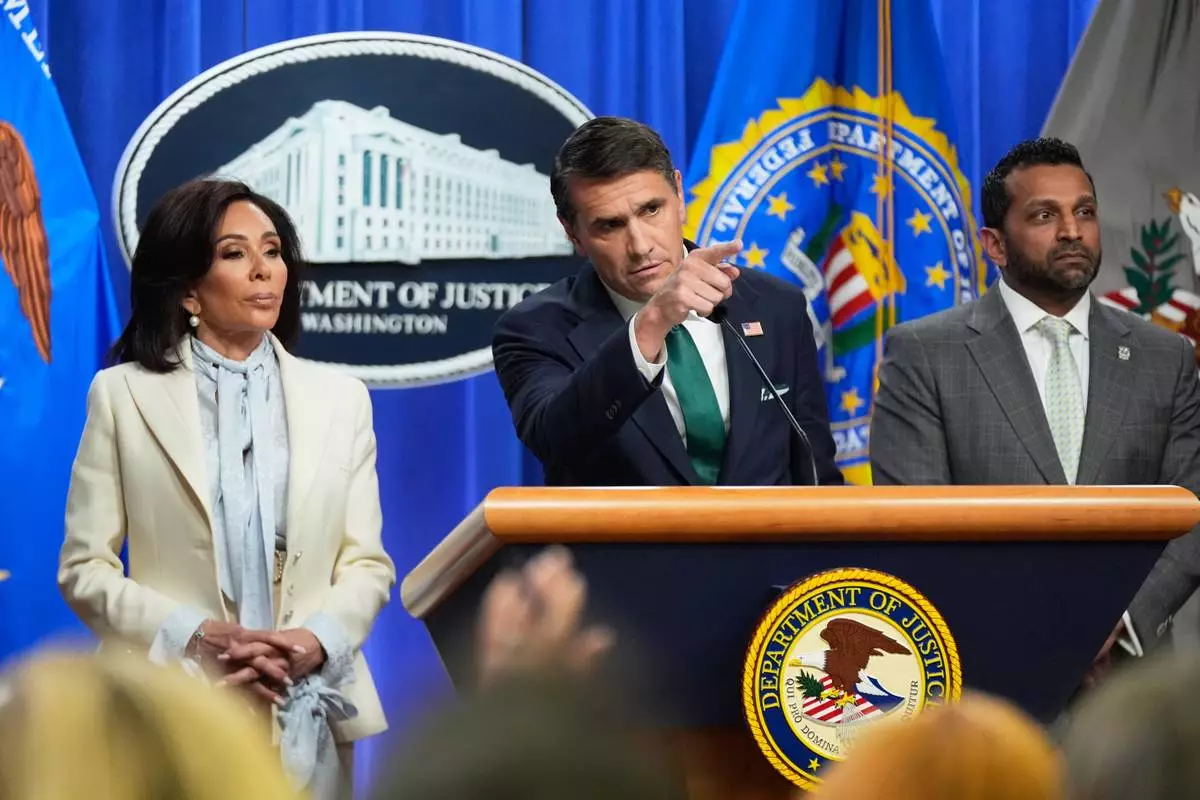
Acting Attorney General Todd Blanche, with U.S. Attorney Jeanine Pirro, left, and FBI Director Kash Patel, right, speaks during a news conference at the Department of Justice, on Monday April 27, 2026, in Washington, following the initial appearance in federal court of the suspected White House Correspondents Dinner gunman, Cole Tomas Allen of Torrance, California. (AP Photo/Manuel Balce Ceneta)
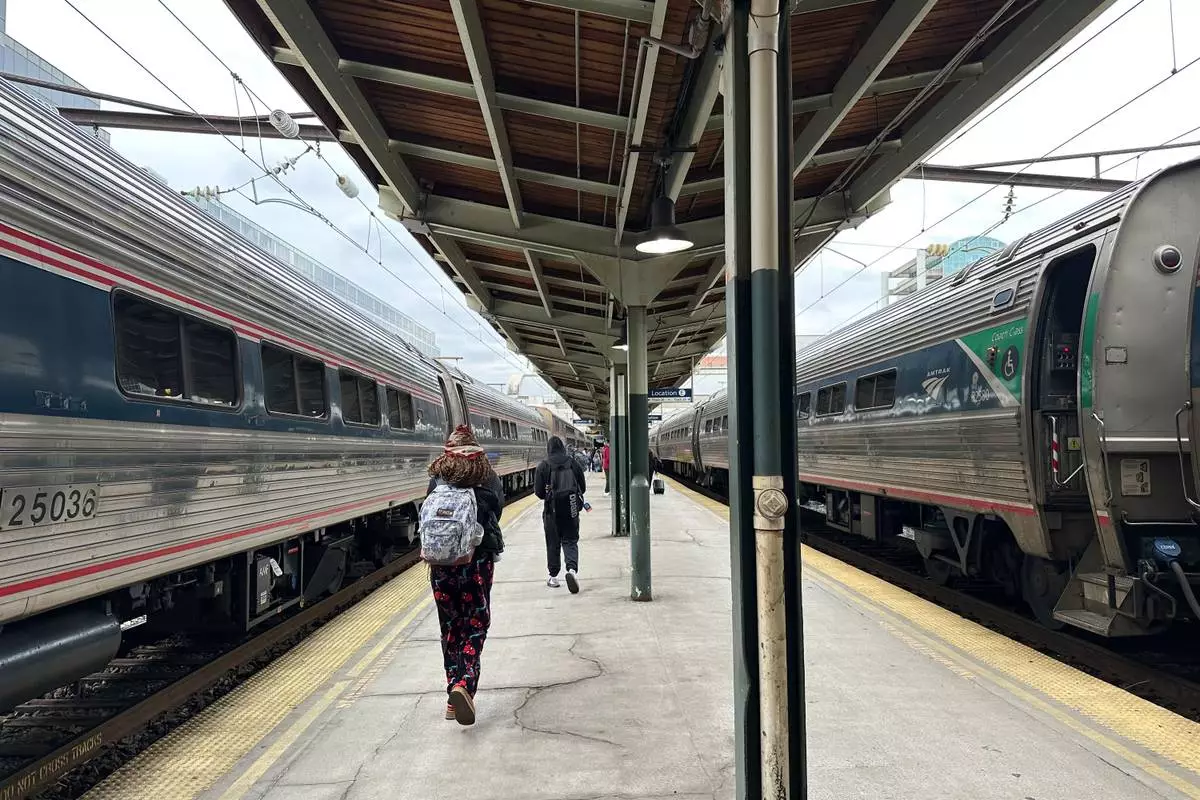
FILE - People walk through Union Station on March 27, 2026, in Washington. (AP Photo/Bill Barrow, File)