Skip to Content Facebook Feature Image

The Biggest Predictor of Business Growth Is Behavior

Business

The Biggest Predictor of Business Growth Is Behavior
Business

Business

The Biggest Predictor of Business Growth Is Behavior

2026-04-30 15:01 Last Updated At:15:10

SAN FRANCISCO--(BUSINESS WIRE)--Apr 30, 2026--

IDEO, the global design and innovation company, today announced the IDEO Innovation Quotient ( IDEO IQ ), a new report measuring how workplace behaviors drive business performance across 100 of the world’s largest companies. Those with the highest IDEO IQ scores earned nearly $20 billion in profit last year—50% higher than average and three times more than those ranked at the bottom.

This press release features multimedia. View the full release here: https://www.businesswire.com/news/home/20260429978890/en/

The IDEO IQ surveyed 266 leaders in product and innovation roles at 100 of the world’s largest companies across the Media & Technology, Healthcare, and Consumer Goods sectors. The report is the first of its kind to draw a direct line between how companies operate internally and their financial performance. Companies were surveyed and scored based on five core behaviors, which IDEO calls the “POWER” dynamic:

These cultural scores were then directly correlated with business success metrics.

“Many companies understand their customers, which is critical, but far fewer have built the behaviors to act on that understanding,” said Mike Peng, CEO of IDEO. “As more organizations rely on technology for answers, advantage comes from looking further ahead, drawing on human insight, anticipating what’s next, and exploring the edges of creativity. The companies that do this are the ones taking the lead.”

The $10 billion difference

The companies pulling ahead aren’t just moving faster—they’re combining long-term perspective with the ability to act quickly. Leaders at these top-performing companies are also twice as likely to believe their organization will thrive over the next decade—and six times more likely to feel better positioned than competitors to meet future customer needs. Those in the top quintile reported:

“It’s not that companies don’t know what they need to do,” said Becca Carroll, IDEO’s Chief Strategy Officer. “The hard part is building it into the DNA of the organization, giving teams permission to test before a concept is perfect, and making space to look beyond the next quarter.”

The majority of the leaders we surveyed (58%) report strong performance in being customer-centric—nearly triple the rate for experimentation. Far fewer say their organization consistently acts on that understanding.

This disconnect shows up most clearly in AI adoption. Only 41% of leaders say they’ve successfully adopted AI to meet customer needs, and 26% admit they’ve been too slow in adopting it overall. Companies that excel at both Perspective and Experimentation are more likely to report that AI is improving customer outcomes (52%). They are also more likely to report using AI to support profit growth (28% compared to a 16% baseline).

The opportunity gap

IDEO’s research also identified the three behaviors that drive the strongest outcomes: Experimentation, Ownership, and Perspective. They are also the ones that many companies struggle with the most. The data reveals a gap between intention and action:

Leaders were more likely to have embraced Wavelength and Resonance, both crucial to success, but because they are more common behaviors, they don’t offer the same opportunity to create an outsized impact.

The IDEO IQ report will be published annually to track how the world’s largest companies evolve across these behaviors over time. It provides a framework for leaders to assess their organization’s archetype and identify opportunities for growth. To download the full report and assess your organization’s capabilities, visit https://www.ideo.com/iq.

About the research

On behalf of IDEO, B2B research specialists NewtonX surveyed 266 business leaders in product- and innovation-focused roles from 100 of the world’s biggest companies across Healthcare, Media & Technology, and Consumer Goods industries. Criteria included companies with $1 billion in revenue and 10,000+ employees, with the IDEO IQ entry restricted to the first 100 companies that responded to surveys between December 2025 and January 2026. All respondents completed the survey anonymously and independently of their employer. Where company-level IDEO IQ scores were analyzed, only companies with three or more respondents were reported (n=59 companies).

About IDEO

IDEO is a global design and innovation company. IDEO partners with organizations to tackle complex challenges, uncover new opportunities, and create meaningful and positive impact across business, society, and culture. From designing iconic products and services to crafting new ventures and building creative capabilities within organizations, IDEO’s work is rooted in empathy and experimentation. Part of kyu, a collective of strategically curated creative organizations, IDEO has offices in the US, UK, and China. Learn more at www.ideo.com.
IDEO’s research identified the three behaviors that drive the strongest outcomes: Experimentation, Ownership, and Perspective. They are also the ones that many companies struggle with the most.
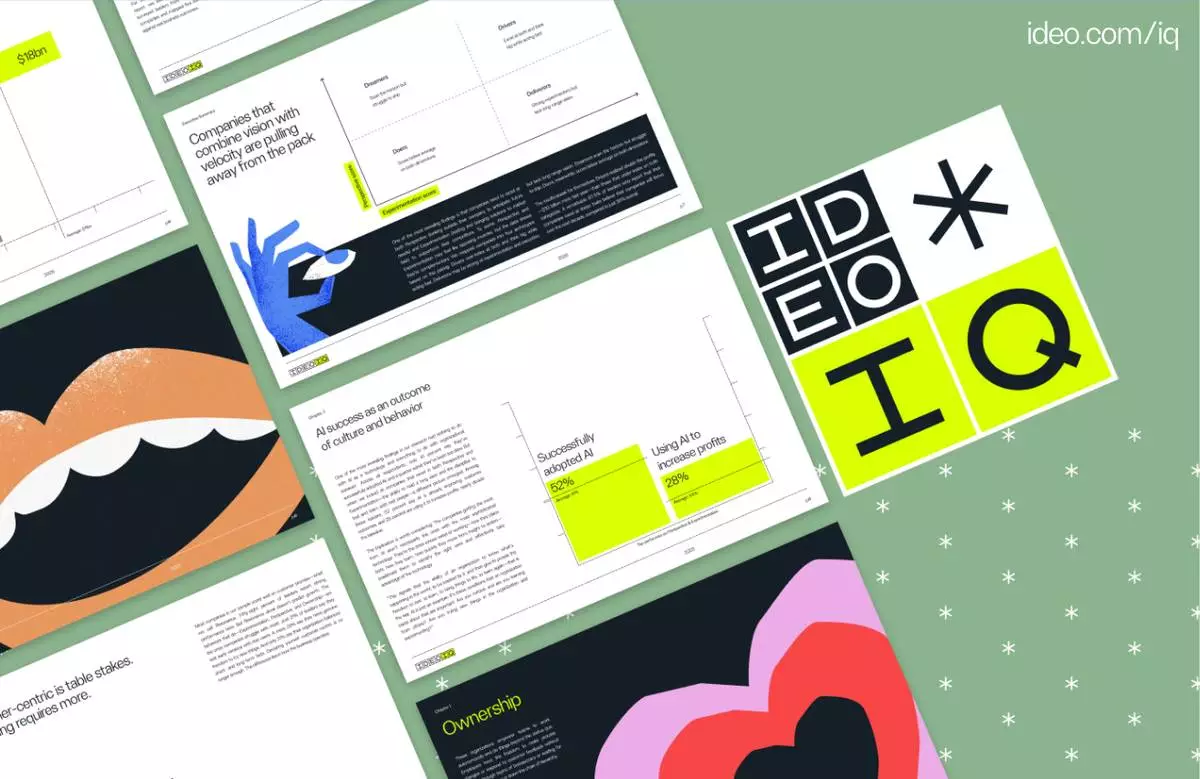
IDEO’s research identified the three behaviors that drive the strongest outcomes: Experimentation, Ownership, and Perspective. They are also the ones that many companies struggle with the most.

The IDEO Innovation Quotient (IDEO IQ) is a new report measuring how workplace behaviors drive business performance across 100 of the world’s largest companies.

The IDEO Innovation Quotient (IDEO IQ) is a new report measuring how workplace behaviors drive business performance across 100 of the world’s largest companies.
DUBAI, United Arab Emirates (AP) — The United States is warning shipping companies that they could face sanctions for making payments to Iran to safely pass through the Strait of Hormuz.

The alert posted Friday by the U.S. Office of Foreign Assets Control adds another layer of pressure in the standoff between the U.S. and Iran over control of the Strait of Hormuz.

About a fifth of the world's trade in oil and natural gas typically passes through the strait at the mouth of the Persian Gulf in peacetime.

Iran effectively closed the strait to normal traffic by attacking and threatening to attack ships after the U.S. and Israel launched a war on Feb. 28. It later began offering some ships safe passage by detouring them through alternate routes closer to its shoreline, charging fees at times for the service.

That "tollbooth” effort is the focus of the U.S. sanctions warning.

The payment demands could include transfers not only in cash but also “digital assets, offsets, informal swaps, or other in-kind payments,” including chartibale donations and payments at Iranian embassies, OFAC said.

“OFAC is issuing this alert to warn U.S. and non-U. S. persons about the sanctions risks of making these payments to, or soliciting guarantees from, the Iranian regime for safe passage. These risks exist regardless of payment method,” it said.

The U.S. responded to Iran's closure of the strait with a naval blockade of its own on April 13, preventing any Iranian tankers from leaving and depriving Iran of oil revenue it needs to shore up its ailing economy.

The U.S. Central Command said 45 commercial ships have been told to turn around since the blockade began.

The warning came as U.S. President Donald Trump swiftly rejected Iran’s latest proposal to end the war between the countries.

“They want to make a deal, I’m not satisfied with it, so we’ll see what happens,” Trump said Friday at the White House. He didn't elaborate on what he saw as its shortcomings but expressed frustration with the Iranian leadership.

“It’s a very disjointed leadership,” Trump said. “They all want to make a deal, but they’re all messed up.”

Iran’s state-run IRNA news agency reported Iran handed over its plan to mediators in Pakistan on Thursday night.

The shaky three-week ceasefire between the U.S. and Iran appears to be holding, though both countries have traded accusations of violations. The standoff is increasingly putting pressure on the global economy, driving up prices and leading to shortages of fuel and other products tied to the oil industry.

Negotiations continued by phone after Trump called off his envoys’ trip to Pakistan last week, the president said. Trump this week floated a new plan to reopen the critical passageway used by America’s Gulf allies to export their oil and gas.

Iranian Foreign Minister Abbas Araghchi has briefed many of his regional counterparts on the country's initiatives to end the ear, according to his social media. He also held talks Friday with European Union foreign policy chief Kaja Kallas, who is in contact with the EU’s Gulf partners.

Fu Cong, the Chinese ambassdor to the United Nations, said Friday that maintaining the ceasefire is “the most urgent issue" as well as bringing together the sides to resume good faith negotiations “to make sure that the ground is laid for reopening of Hormuz.”

Foreign Minister Wang Yi “has been on the phone almost constantly” with representatives from all sides, Fu said, adding that China supports Pakistan’s efforts to mediate between the parties.

Fu stressed the root cause of the tremendous suffering in Iran and neighboring countries and the growing turmoil in the global economy, especially in developing countries, “is the illegitimate war by the U.S. and Israel.”

Edith Lederer at the U.N. contributed to this report

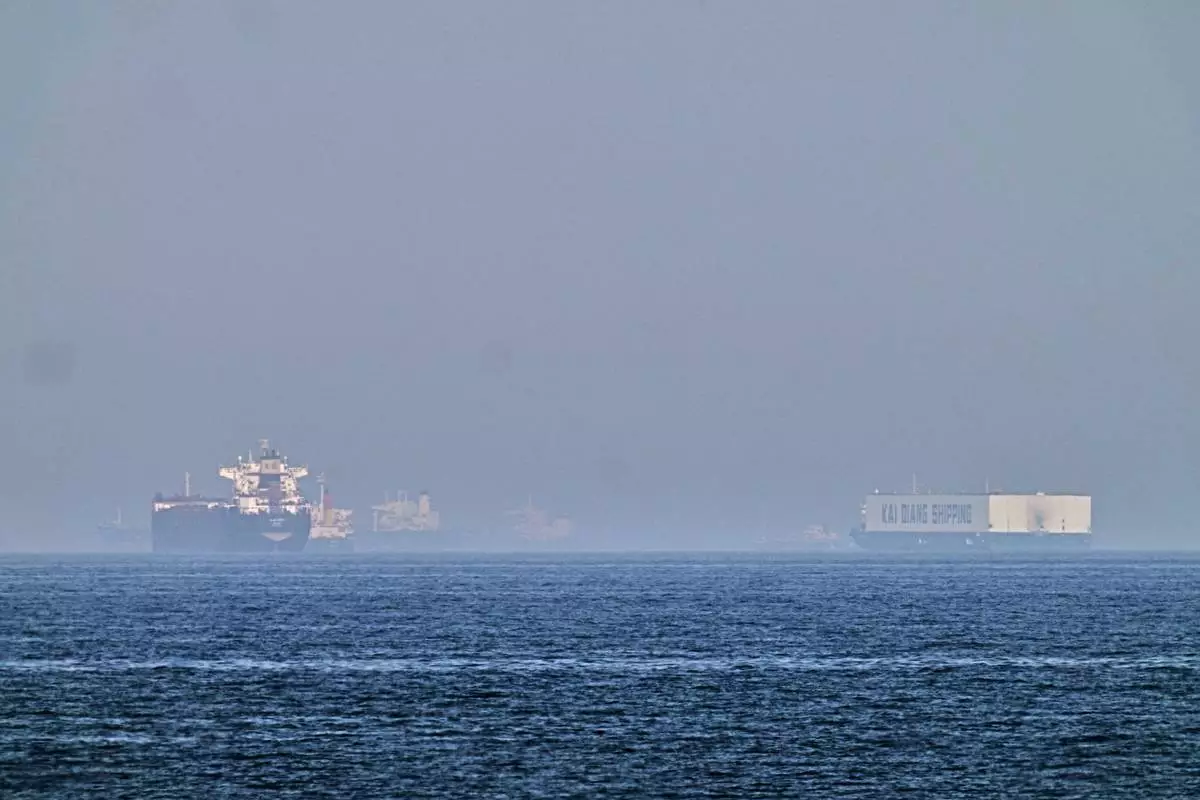
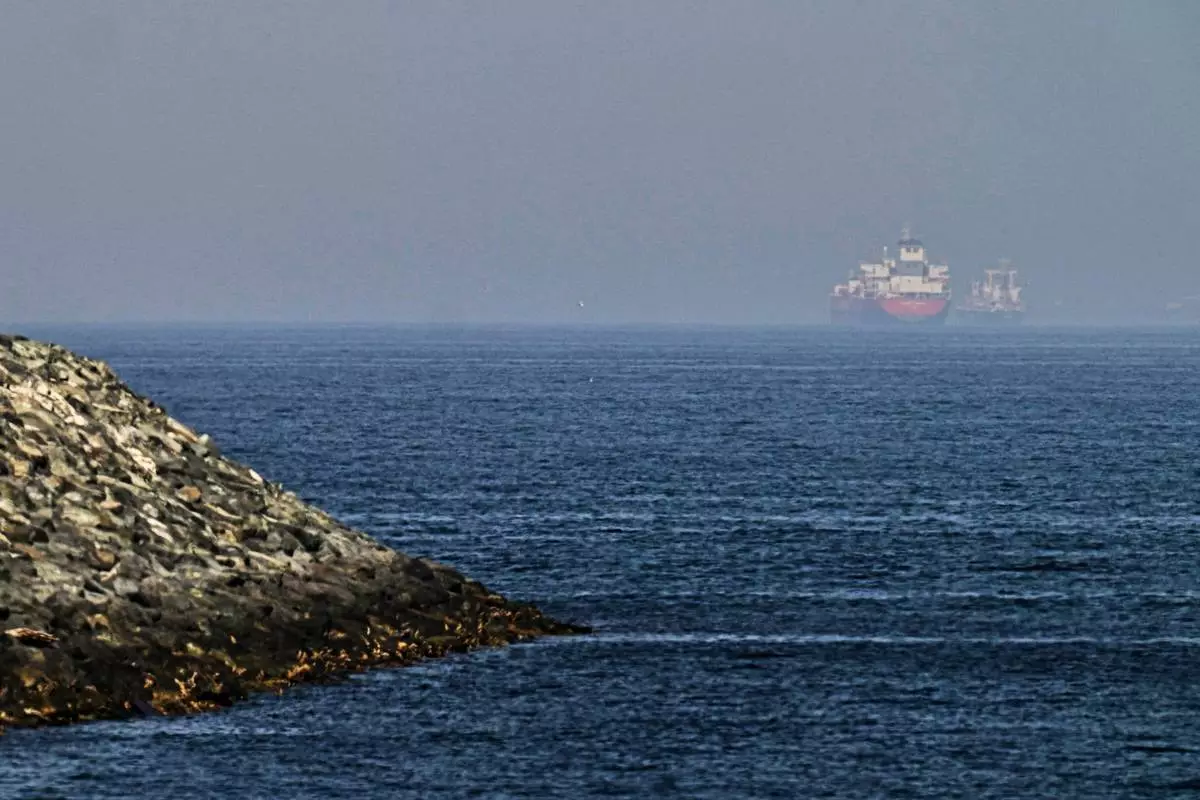
A tanker, left, and a car carrier are anchored at sea in the Gulf of Oman near the Strait of Hormuz, as seen from the coast near Khor Fakkan, United Arab Emirates, Friday, May 1, 2026.(AP Photo/Fatima Shbair)

A tanker, left, and a car carrier are anchored at sea in the Gulf of Oman near the Strait of Hormuz, as seen from the coast near Khor Fakkan, United Arab Emirates, Friday, May 1, 2026.(AP Photo/Fatima Shbair)

Cargo ships are seen at sea near the Strait of Hormuz, as viewed from a rocky shoreline near Khor Fakkan, United Arab Emirates, Friday, May 1, 2026. (AP Photo/Fatima Shbair)

Cargo ships are seen at sea near the Strait of Hormuz, as viewed from a rocky shoreline near Khor Fakkan, United Arab Emirates, Friday, May 1, 2026. (AP Photo/Fatima Shbair)

Men gather along the shore, some crouching and watching a game, as a mix of bulk carriers, cargo ships, and service vessels line the horizon in the Strait of Hormuz off Bandar Abbas, Iran, Monday, April 27, 2026.(Razieh Poudat/ISNA via AP)

Men gather along the shore, some crouching and watching a game, as a mix of bulk carriers, cargo ships, and service vessels line the horizon in the Strait of Hormuz off Bandar Abbas, Iran, Monday, April 27, 2026.(Razieh Poudat/ISNA via AP)

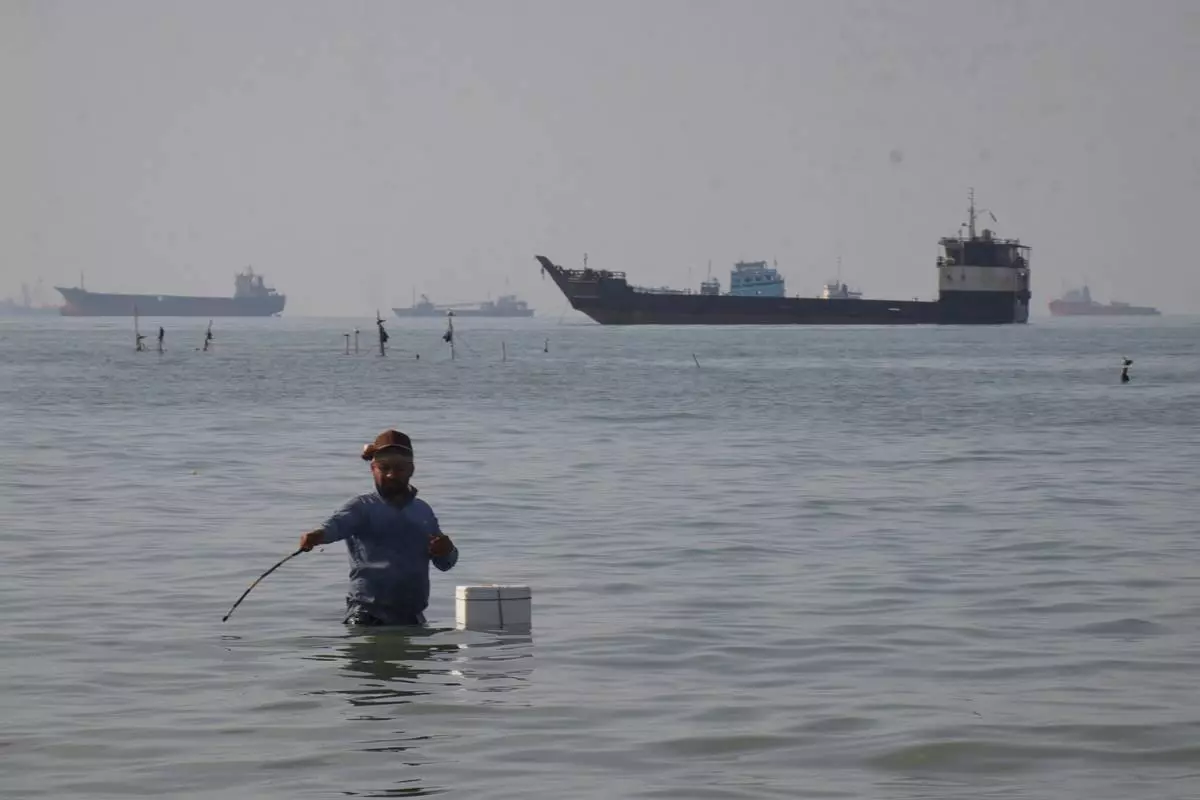
A man stands in the water, appearing to fish, as bulk carriers, cargo ships, and service vessels line the horizon in the Strait of Hormuz off Bandar Abbas, Iran, Monday, April 27, 2026.(Razieh Poudat/ISNA via AP)

A man stands in the water, appearing to fish, as bulk carriers, cargo ships, and service vessels line the horizon in the Strait of Hormuz off Bandar Abbas, Iran, Monday, April 27, 2026.(Razieh Poudat/ISNA via AP)

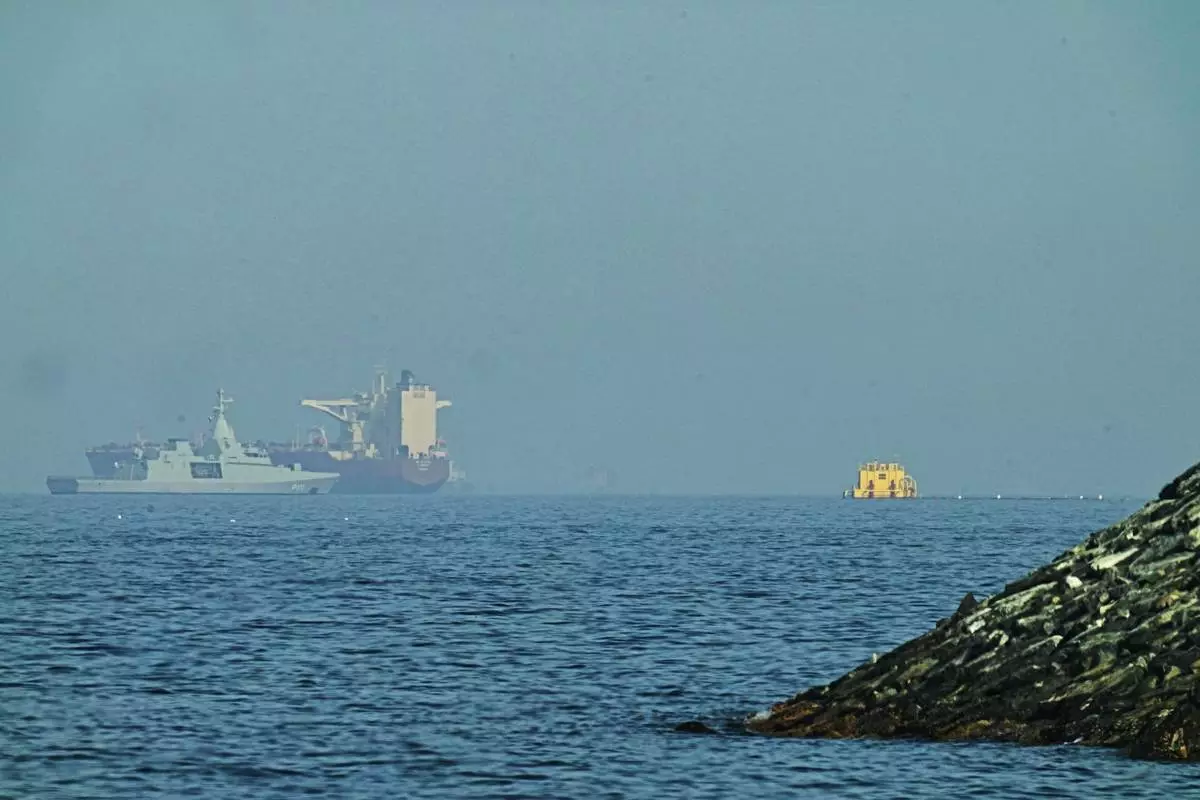
An Emirati patrol boat, left, is near a tanker anchored in the Gulf of Oman near the Strait of Hormuz, as seen from a coastal road near Khor Fakkan, United Arab Emirates, Friday, May 1, 2026. (AP Photo/Fatima Shbair)

An Emirati patrol boat, left, is near a tanker anchored in the Gulf of Oman near the Strait of Hormuz, as seen from a coastal road near Khor Fakkan, United Arab Emirates, Friday, May 1, 2026. (AP Photo/Fatima Shbair)

Recommended Articles