Skip to Content Facebook Feature Image

Tenchijin Announces Partnership with Aqualter

Business

Tenchijin Announces Partnership with Aqualter
Business

Business

Tenchijin Announces Partnership with Aqualter

2026-04-30 15:01 Last Updated At:15:10

CHARTRES, France--(BUSINESS WIRE)--Apr 30, 2026--

Tenchijin Inc., a Japanese space-tech innovator transforming sustainable water infrastructure management, today announced a partnership with Aqualter. In April 2026, both parties signed a Strategic Software License Agreement. Under this agreement, KnoWaterleak—Tenchijin’s platform, powered by satellite data and AI, will be deployed in Aqualter's long-term water service operation project for metropolitan Chartres to optimize the detection and management of water leakages. Additionally, both companies concluded a reseller agreement, making Aqualter the first official distributor of KnoWaterleak in the French market.

This press release features multimedia. View the full release here: https://www.businesswire.com/news/home/20260430743255/en/

Visual:https://drive.google.com/drive/folders/1jAA46qppdo-ZFzAn7FVVVhcIJPUp4waS

Trust Rooted in PoC Success

Headquartered in Chartres, Aqualter has over 50 years of experience in the production and distribution of drinking water, wastewater collection and treatment, and the construction of water infrastructure and treatment plants throughout France.

From January to April 2025, Tenchijin and Aqualter jointly conducted a Proof of Concept (PoC) to evaluate the effectiveness of KnoWaterleak in predicting pipe leaks in the metropolitan area of Chartres (141,407 inhabitants served, 1,251.52 km of network lines excluding connections; 2025 data). By analyzing historical data from 2017 to 2023, KnoWaterleak successfully predicted 45.5% of the 2024 leaks within the top 12.6% of highest-risk areas, thereby meeting the project’s success criteria and confirming the model’s reliability. Building on this foundation of trust, Tenchijin and Aqualter have concluded a license agreement for the metropolitan Chartres project. Aqualter thus becomes the first official user of KnoWaterleak in France, marking the start of a collaboration to modernize water management across the territory.

Future Collaboration

Within the metropolitan Chartres project, KnoWaterleak will be functionally integrated with Walter, Aqualter’s network supervision platform. While Walter monitors on-site hydraulic performance, Tenchijin’s space-tech expertise adds a complementary prediction. By combining large-scale satellite analysis with field data, this synergy covers the entire value chain: from leak risk identification to the optimization of interventions. This innovative approach contributes to resource preservation and infrastructure sustainability. The partnership also foresees the adoption of this solution in other projects managed by Aqualter. Furthermore, both companies will collaborate on joint promotional initiatives targeting new client segments in France, aiming to stimulate innovation in water infrastructure management.

Jean-Patrick LE VAN, CIO & COO, Groupe Aqualter |France

The functional integration of KnoWaterleak into our Walter platform is a significant milestone for digitizing water network management. Powered by AI and satellite data, we now anticipate leaks and optimize field operations with greater precision. This innovation not only supports network performance but also plays a vital role in water conservation.

Keitaro ASABA, Partnership Manager, Tenchijin Inc. | Japan

We are delighted that KnoWaterleak is being implemented for the first time in France within a local authority. Chartres is a historic city with complex infrastructure, where old and new networks overlap in an environment highly sensitive to ground movement. This deployment in such a challenging setting will provide us with invaluable insights for the future. Furthermore, the conclusion of this first official distribution agreement marks a major turning point for Tenchijin. Leveraging Aqualter’s deep expertise and robust network, we are confident in our ability to pave the way for innovative, data-driven water infrastructure management across all of France.

About Aqualter and the Walter solution

As the leading challenger to the major players in the water sector, Aqualter has developed, for over 50 years, expertise in drinking water production, transmission and distribution, wastewater collection and treatment, as well as the construction of drinking water plants and wastewater treatment facilities. Walter is a 100% web-based platform that provides real-time visibility into hydraulic performance, from the reservoir to the customer meter. Powered by three advanced information systems, the software calculates and displays key hydraulic performance indicators and generates real-time leak alerts.
Website:https://www.aqualter.com/

About Tenchijin KnoWaterleak

KnoWaterleak is an innovative platform that harnesses satellite data and AI to predict and prevent water infrastructure risks. The system analyzes space-derived data to identify potential leaks within 100-meter square zones, providing unprecedented insights through a 5-level risk evaluation system.

About Tenchijin Inc.

Tenchijin Inc. is a space-tech innovator leveraging satellite data and AI to detect hidden water infrastructure risks, predict potential leaks, and drive more sustainable and efficient water management through space-derived insights.
Website: https://knowaterleak.space/
Tenchijin Announces Partnership with Aqualter

Tenchijin Announces Partnership with Aqualter
DUBAI, United Arab Emirates (AP) — The United States is warning shipping companies that they could face sanctions for making payments to Iran to safely pass through the Strait of Hormuz.

The alert posted Friday by the U.S. Office of Foreign Assets Control adds another layer of pressure in the standoff between the U.S. and Iran over control of the Strait of Hormuz.

About a fifth of the world's trade in oil and natural gas typically passes through the strait at the mouth of the Persian Gulf in peacetime.

Iran effectively closed the strait to normal traffic by attacking and threatening to attack ships after the U.S. and Israel launched a war on Feb. 28. It later began offering some ships safe passage by detouring them through alternate routes closer to its shoreline, charging fees at times for the service.

That "tollbooth” effort is the focus of the U.S. sanctions warning.

The payment demands could include transfers not only in cash but also “digital assets, offsets, informal swaps, or other in-kind payments,” including chartibale donations and payments at Iranian embassies, OFAC said.

“OFAC is issuing this alert to warn U.S. and non-U. S. persons about the sanctions risks of making these payments to, or soliciting guarantees from, the Iranian regime for safe passage. These risks exist regardless of payment method,” it said.

The U.S. responded to Iran's closure of the strait with a naval blockade of its own on April 13, preventing any Iranian tankers from leaving and depriving Iran of oil revenue it needs to shore up its ailing economy.

The U.S. Central Command said 45 commercial ships have been told to turn around since the blockade began.

The warning came as U.S. President Donald Trump swiftly rejected Iran’s latest proposal to end the war between the countries.

“They want to make a deal, I’m not satisfied with it, so we’ll see what happens,” Trump said Friday at the White House. He didn't elaborate on what he saw as its shortcomings but expressed frustration with the Iranian leadership.

“It’s a very disjointed leadership,” Trump said. “They all want to make a deal, but they’re all messed up.”

Iran’s state-run IRNA news agency reported Iran handed over its plan to mediators in Pakistan on Thursday night.

The shaky three-week ceasefire between the U.S. and Iran appears to be holding, though both countries have traded accusations of violations. The standoff is increasingly putting pressure on the global economy, driving up prices and leading to shortages of fuel and other products tied to the oil industry.

Negotiations continued by phone after Trump called off his envoys’ trip to Pakistan last week, the president said. Trump this week floated a new plan to reopen the critical passageway used by America’s Gulf allies to export their oil and gas.

Iranian Foreign Minister Abbas Araghchi has briefed many of his regional counterparts on the country's initiatives to end the ear, according to his social media. He also held talks Friday with European Union foreign policy chief Kaja Kallas, who is in contact with the EU’s Gulf partners.

Fu Cong, the Chinese ambassdor to the United Nations, said Friday that maintaining the ceasefire is “the most urgent issue" as well as bringing together the sides to resume good faith negotiations “to make sure that the ground is laid for reopening of Hormuz.”

Foreign Minister Wang Yi “has been on the phone almost constantly” with representatives from all sides, Fu said, adding that China supports Pakistan’s efforts to mediate between the parties.

Fu stressed the root cause of the tremendous suffering in Iran and neighboring countries and the growing turmoil in the global economy, especially in developing countries, “is the illegitimate war by the U.S. and Israel.”

Edith Lederer at the U.N. contributed to this report

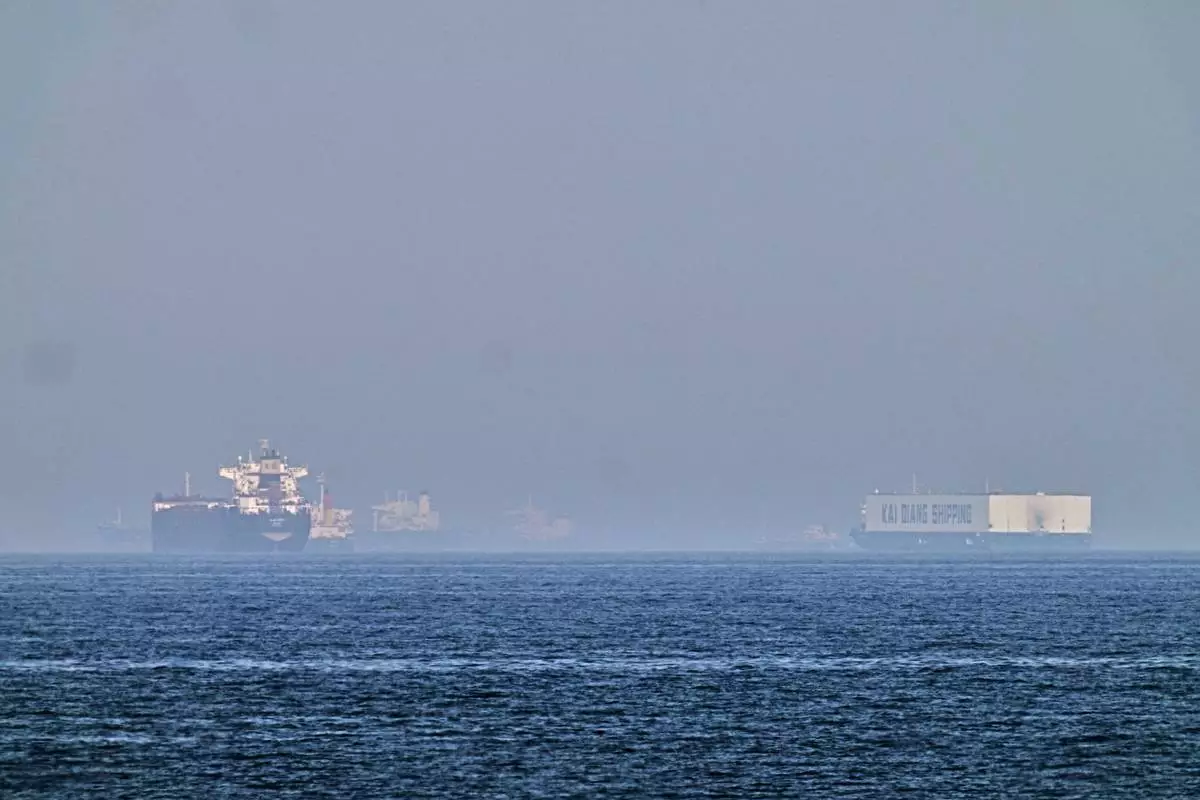
A tanker, left, and a car carrier are anchored at sea in the Gulf of Oman near the Strait of Hormuz, as seen from the coast near Khor Fakkan, United Arab Emirates, Friday, May 1, 2026.(AP Photo/Fatima Shbair)

A tanker, left, and a car carrier are anchored at sea in the Gulf of Oman near the Strait of Hormuz, as seen from the coast near Khor Fakkan, United Arab Emirates, Friday, May 1, 2026.(AP Photo/Fatima Shbair)

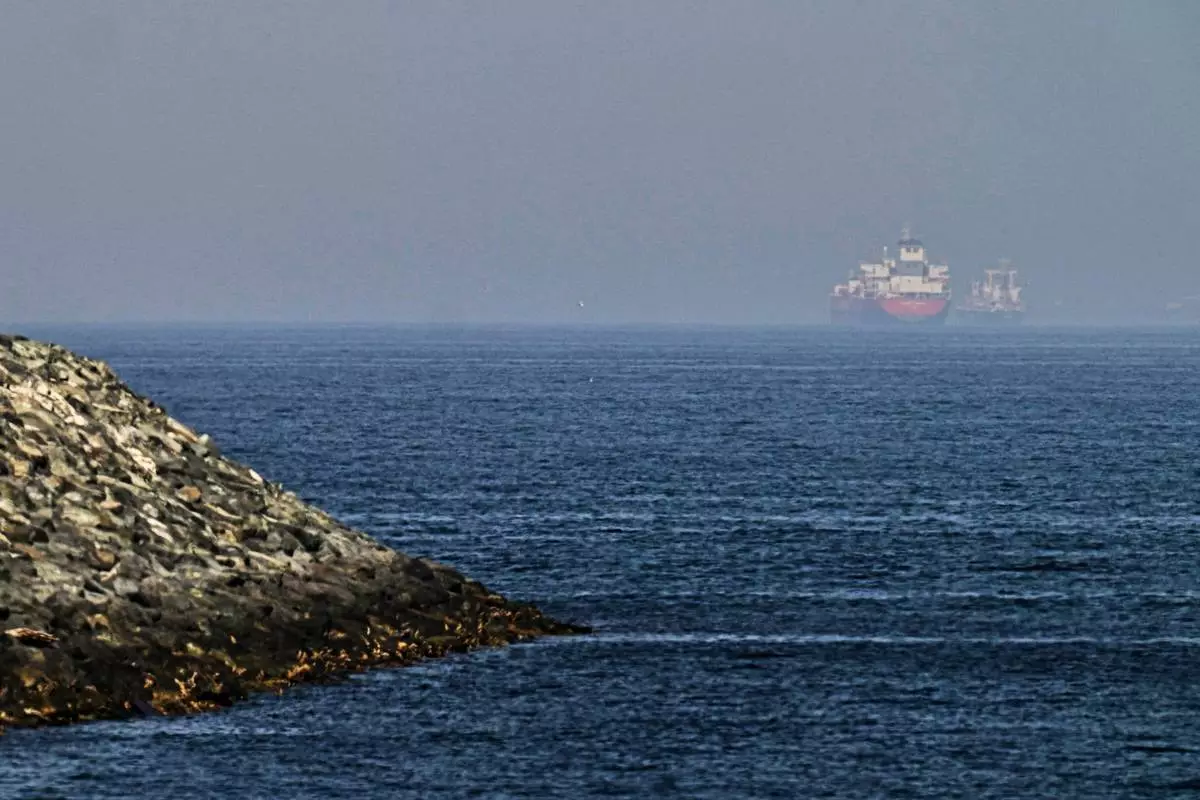
Cargo ships are seen at sea near the Strait of Hormuz, as viewed from a rocky shoreline near Khor Fakkan, United Arab Emirates, Friday, May 1, 2026. (AP Photo/Fatima Shbair)

Cargo ships are seen at sea near the Strait of Hormuz, as viewed from a rocky shoreline near Khor Fakkan, United Arab Emirates, Friday, May 1, 2026. (AP Photo/Fatima Shbair)

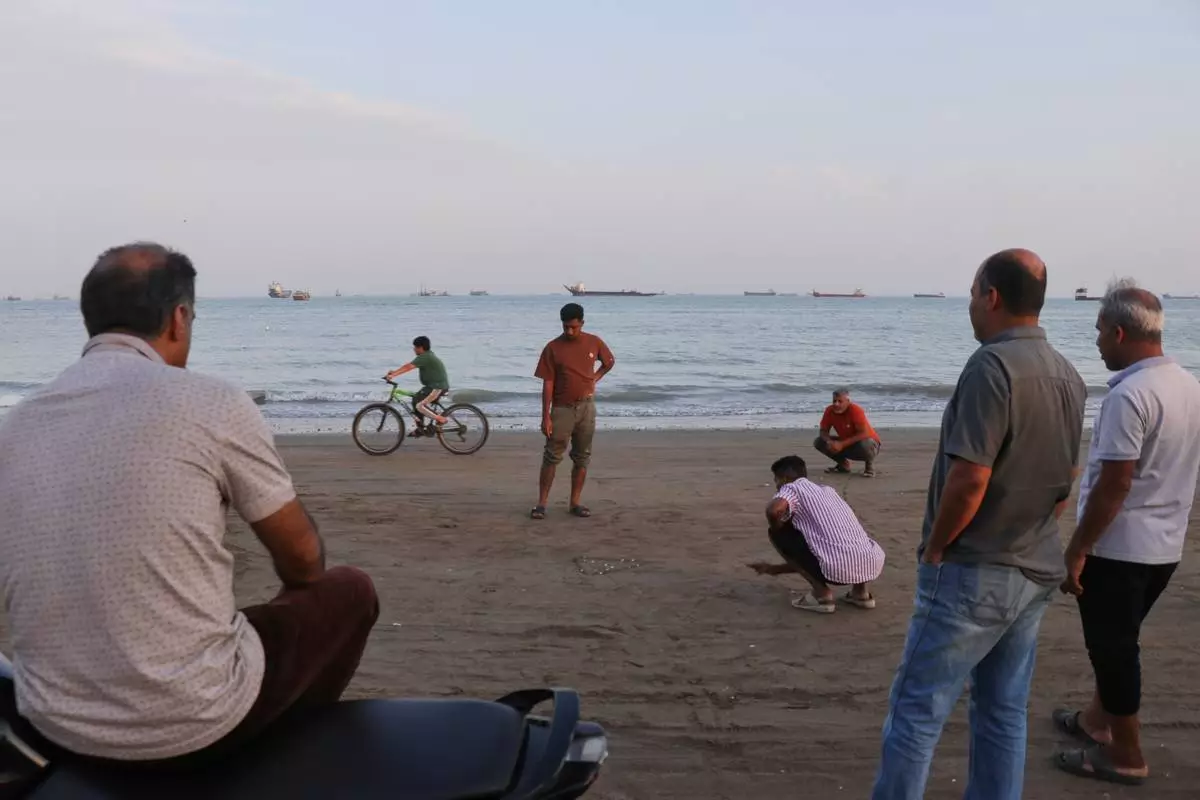
Men gather along the shore, some crouching and watching a game, as a mix of bulk carriers, cargo ships, and service vessels line the horizon in the Strait of Hormuz off Bandar Abbas, Iran, Monday, April 27, 2026.(Razieh Poudat/ISNA via AP)

Men gather along the shore, some crouching and watching a game, as a mix of bulk carriers, cargo ships, and service vessels line the horizon in the Strait of Hormuz off Bandar Abbas, Iran, Monday, April 27, 2026.(Razieh Poudat/ISNA via AP)

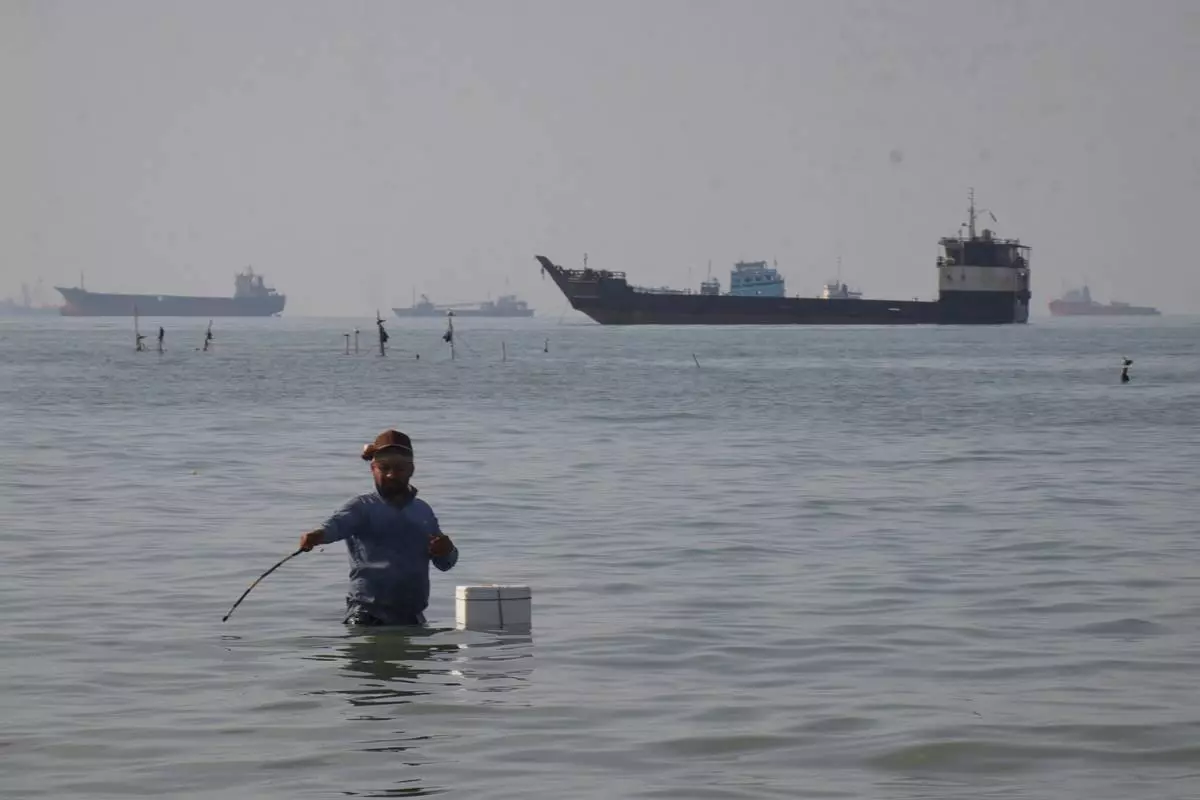
A man stands in the water, appearing to fish, as bulk carriers, cargo ships, and service vessels line the horizon in the Strait of Hormuz off Bandar Abbas, Iran, Monday, April 27, 2026.(Razieh Poudat/ISNA via AP)

A man stands in the water, appearing to fish, as bulk carriers, cargo ships, and service vessels line the horizon in the Strait of Hormuz off Bandar Abbas, Iran, Monday, April 27, 2026.(Razieh Poudat/ISNA via AP)

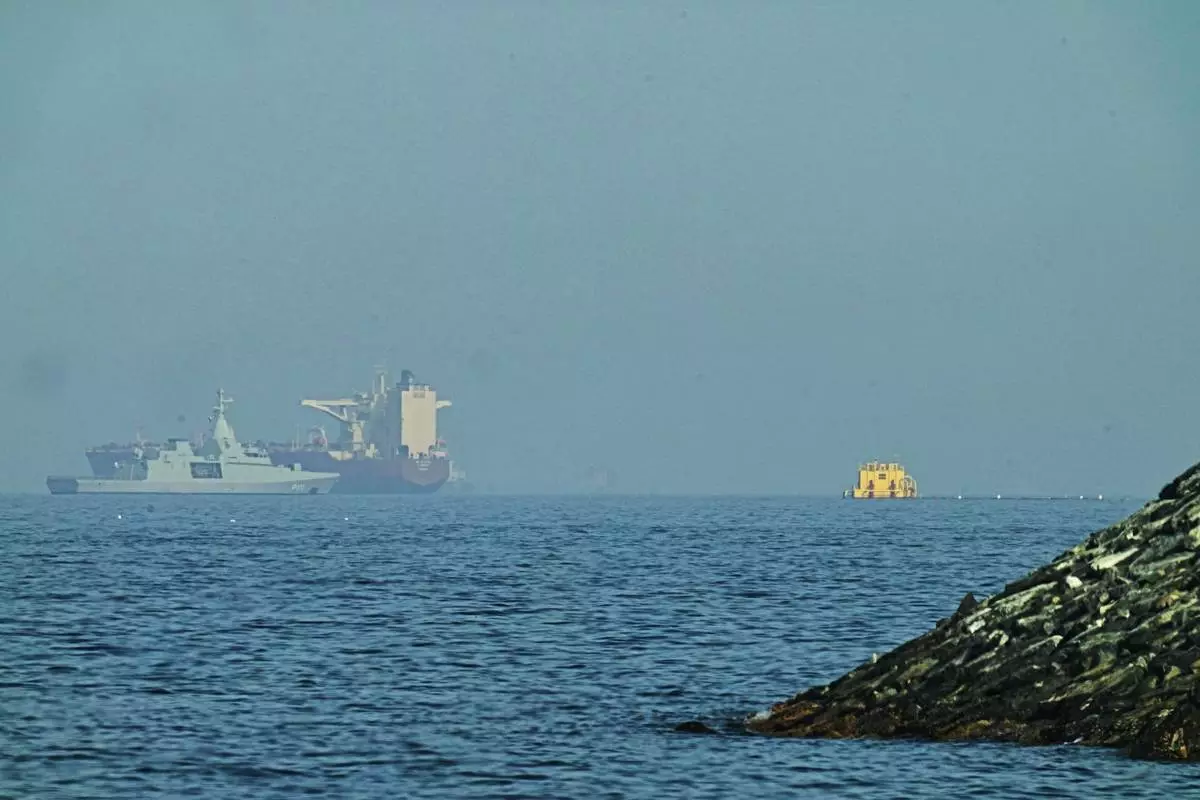
An Emirati patrol boat, left, is near a tanker anchored in the Gulf of Oman near the Strait of Hormuz, as seen from a coastal road near Khor Fakkan, United Arab Emirates, Friday, May 1, 2026. (AP Photo/Fatima Shbair)

An Emirati patrol boat, left, is near a tanker anchored in the Gulf of Oman near the Strait of Hormuz, as seen from a coastal road near Khor Fakkan, United Arab Emirates, Friday, May 1, 2026. (AP Photo/Fatima Shbair)

Recommended Articles