The European Commission on Wednesday reported that the Economic Sentiment Indicator (ESI) recorded a sharp drop in both the EU and the euro area.
The European Commission's economic sentiment indicator plunged in April to 93 from 96.2, the third consecutive decline. Confidence weakened across all sectors, with services and retail trade particularly affected. According to the report, this is likely due to a sharp drop in consumer confidence.
ING Group, a Dutch multinational lender, on Wednesday noted that the decline has raised concerns over second-quarter growth prospects.
On the same day, European Commission President Ursula von der Leyen told EU lawmakers in Strasbourg, France, that in just 60 days of conflict, the EU's fossil fuel import bill had risen by more than 27 billion euros (31.57 billion U.S. dollars), "without one single molecule of energy in addition."
She stressed that the EU should reduce its excessive dependence on imported fossil fuels. This should coincide with the intensified development of clean energy such as renewable energy and nuclear energy, while ensuring that their prices are within a reasonable range.
Fatih Birol, executive director of the International Energy Agency, described the current energy crisis as an unprecedented inflection point for the world's economy.
Escalating conflict in the Middle East is driving up living costs in the biggest economy of euro zone - Germany.
Official data released Wednesday indicated renewed inflationary pressure on economy and rising concerns over its fragile recovery.
Preliminary figures from the Federal Statistical Office (Destatis) showed Germany's inflation rate rose to 2.9 percent in April from 2.7 percent in March, as surging energy prices fed into broader consumer costs. The increase marks a clear shift from the roughly 2-percent level seen in recent months.
Energy prices jumped 10.1 percent year-on-year in April, the sharpest increase since February 2023, Destatis said.
Fuel costs have risen steadily since tensions in the Middle East escalated in late February, disrupting shipping through the Strait of Hormuz. Energy prices had already climbed 7.2 percent in March, marking their first increase since late 2023.
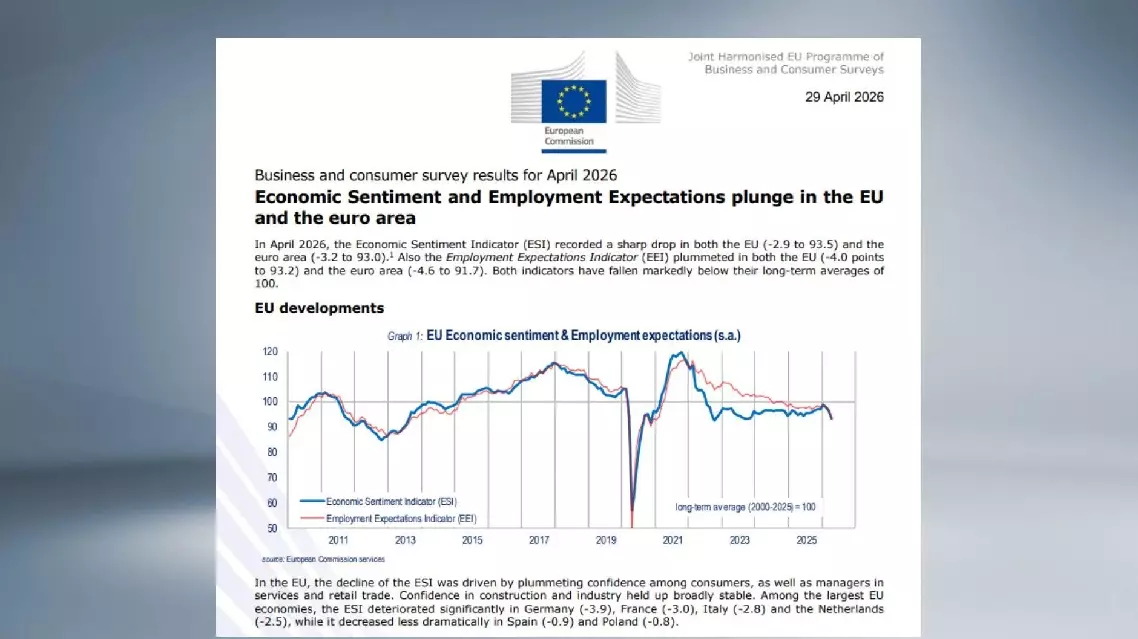
Economic sentiment indicator drops sharply in euro area in April
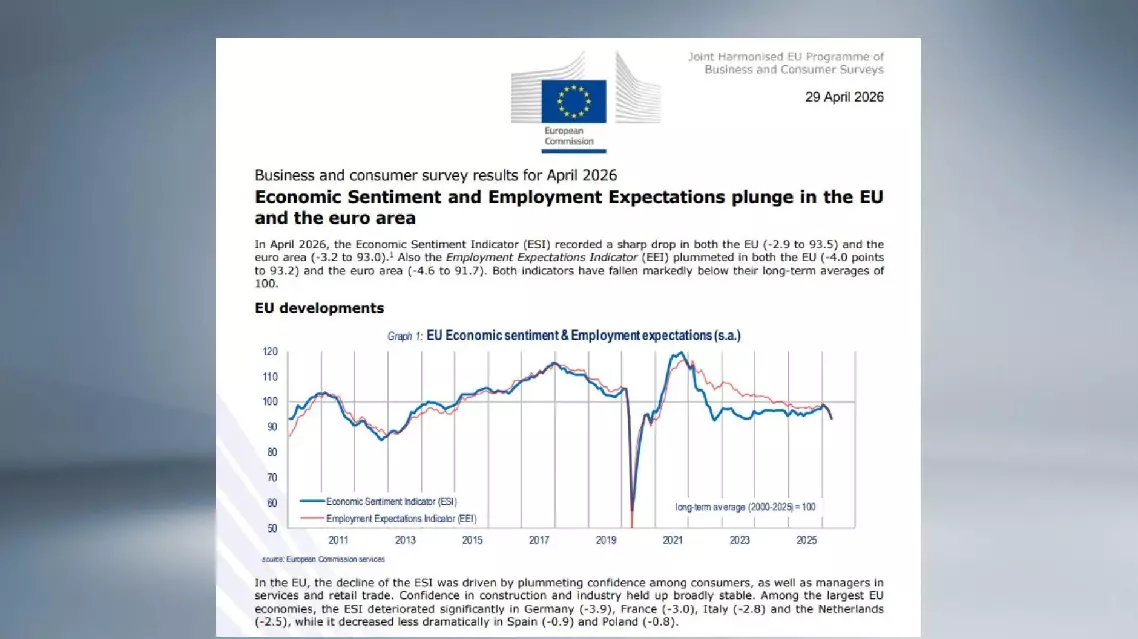
Economic sentiment indicator drops sharply in euro area in April