NEW YORK--(BUSINESS WIRE)--Apr 30, 2026--
Sisense, a leader in AI-powered embedded analytics, today released its 2026 State of Analytics report. The study of 267 product leaders reveals a widening gap between AI ambition and real-world results, as teams struggle to operationalize insights within workflows.
This press release features multimedia. View the full release here: https://www.businesswire.com/news/home/20260430924129/en/
Despite increased adoption of analytics and AI tools, core challenges persist. Accessibility remains a major barrier, with 69% of respondents reporting that analytics are not easily accessible across their organization, and 65% admitting they’ve made business decisions without consulting available data due to access challenges.
Additionally, while 48% of leaders trust AI insights, teams still spend 40% of their time validating them. Integration complexity also remains a barrier, with 29% of AI initiatives failing to move beyond the pilot stage.
Key Insights
AI Trust is Conditional: Significant time is lost to human oversight due to concerns about accuracy and data quality.
Accessibility Barriers: Analytics still largely require specialist intervention, limiting democratization of data.
Integration Bottlenecks: Technical hurdles delay time-to-market and limit the ability to deliver differentiated experiences.
The Future of Operational Analytics
Product leaders expect analytics to move into the products themselves. 43% of respondents anticipate analytics will be embedded directly into business applications, while 24% see conversational interfaces as the future primary access point.
“Organizations have made significant progress in adopting AI, but adoption alone doesn’t drive value,” said Andrew Loomis, VP Customer Success at Sisense. “The real challenge, and opportunity, is operationalizing those insights inside the products and workflows where decisions happen. That’s where embedded, AI-powered analytics becomes essential.”
Read the Sisense 2026 State of Analytics report.
Methodology
The survey was conducted in partnership with UserEvidence and included 267 product leaders across industries. All respondents worked at organizations with at least 100 employees, with nearly half representing companies with over 1,000 employees. The research was conducted in February 2026 and reflects a global sample across North America, EMEA, and LATAM.
About Sisense
Sisense is the leading AI-first embedded analytics platform that democratizes data access, empowering developers, app builders, and business users to embed actionable insights into their products and workflows. With a complete suite of no-, low-, and pro-code tools, Sisense simplifies data preparation, uncovers deep insights, and seamlessly embeds analytics into applications, catering to both technical and non-technical users. The flexible analytics platform enables customers like Seismic, Barrios, and Tessitura to infuse actionable insights into their customer experiences. Founded in Israel in 2004, Sisense maintains ISO 27701 privacy, ISO/IEC 42001 AI governance, and ISO 27001 information security management certifications. For more information, visit www.sisense.com.
About UserEvidence
UserEvidence is a software company and independent research partner that helps B2B technology companies produce original research content from practitioners in their industry. All research completed by UserEvidence is verified and authentic according to their research principles: identity verification, significance and representation, quality and independence, and transparency. All UserEvidence research is based on real user feedback without interference, bias, or spin from clients.

Title image of The State of Analytics 2026 report by Sisense.
David Allan Coe, the country singer-songwriter who wrote the working class anthem “Take This Job and Shove It″ and had hits with “You Never Even Called Me By My Name” and “The Ride” among others, has died. He was 86.
Coe's wife, Kimberly Hastings Coe, confirmed his death to Rolling Stone on Wednesday.
She described him as one of the best singers and songwriters of our time.
“My husband, my friend, my confidant and my life for many years. I’ll never forget him and I don’t want anyone else to ever forget him either,” she wrote to the publication.
A statement from a Coe representative to People said he died around 5 p.m. Wednesday. The cause of death wasn't disclosed.
Whether he was labeled outlaw or underground, Coe was clearly an outsider in Nashville's music establishment, even throughout his successes as an in-demand songwriter and singer, eventually developing a core following around his raw, often obscene lyrics and a checkered and somewhat mysterious past.
His wife posted on Facebook in September 2021 that he had been hospitalized with COVID-19 and he made few appearances since then.
He did concert tours with Willie Nelson, Kid Rock, Neil Young and others. He wrote “Take This Job and Shove It,” a hit by Johnny Paycheck in 1977, and “Would You Lay With Me (in a Field of Stone),” a hit by Tanya Tucker in 1974. He was also the first country singer to record “Tennessee Whiskey,” penned by Dean Dillon and Linda Hargrove, that has since become a genre standard and hits for George Jones and Chris Stapleton.
His own country hit recordings included “You Never Even Call Me by My Name,” written by Steve Goodman and an uncredited John Prine; “The Ride,” and “Mona Lisa Lost Her Smile.” Coe also appeared in a handful of movies, including “Stagecoach” and “Take this Job and Shove It,” which was named after his song.
Coe, born in Akron, Ohio, spent time in reformatories as a youngster, and served time in an Ohio prison from 1963 to 1967 for possession of burglary tools. He also has said he spent time with the Outlaws motorcycle club, but some of the tales about his prison time and his personal life have been wildly exaggerated over the years.
“I’d have never made it through prison without my music,” he said in an AP interview in 1983. “No one could take it (music) away from me. They could put me in the hole with nothing to do but I could still make up a song in my head.”
He recorded his first album, a blues album called “Penitentiary Blues,” using songs that he wrote in prison. He later told reporters that he tried not to lean too heavily on prison as a topic for songs because of the similarities to the backstory of Merle Haggard, but that his criminal history was all people seemed interested in focusing on.
Coe recorded next for Columbia Records and did the album “The Mysterious Rhinestone Cowboy,” which became his nickname after performing in a rhinestone suit and wearing a mask.
During the heyday of the outlaw movement, Coe placed himself at the center of the scene, with songs like “Longhaired Redneck,” which featured lyrics about performing in dive bars, “Where bikers stare at cowboys who are laughing at the hippies who are praying they’ll get out of here alive.”
He was featured in the acclaimed documentary about the outlaw country movement called “Heartworn Highways,” in which he performs a concert at a Tennessee prison.
Coe, himself heavily tattooed and sporting long hair, claimed a diverse fan base that included bikers, doctors, lawyers and bankers. His last record, released in 2006, was a collaboration with Dimebag Darrell and other former members of the heavy metal group Pantera.
He released two R-rated albums, 1978′s “Nothing Sacred” and 1982′s “Underground Album,” that he sold via biker magazines. The songs on these albums have been criticized for being racist, homophobic and sexually explicit. He told “Billboard” magazine in 2001 that author and songwriter Shel Silverstein convinced him to record the songs he had written, something he had come to regret.
“Those were meant to be sung around the campfire for bikers, and I still don’t sing those songs in concert,” he said.
In 2016, Coe was ordered to pay the IRS more than $980,000 in restitution for obstructing the tax agency and was sentenced to three years’ probation. Court documents say Coe earned income from at least 100 concerts yearly from 2008 through 2013 and either didn’t file individual income tax returns or pay taxes when he did file.
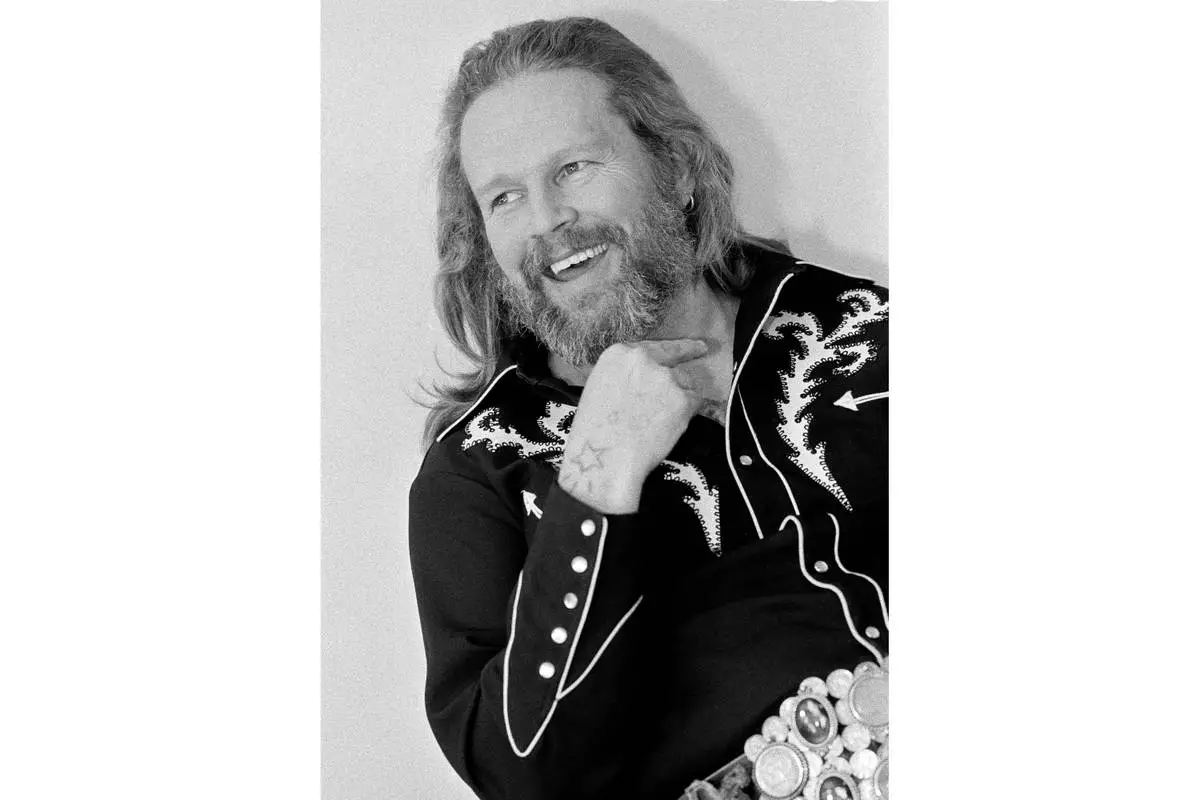
FILE - David Allan Coe is pictured during an interview in Nashville, Tenn., May 9, 1983. (AP Photo/Mark Humphrey, File)
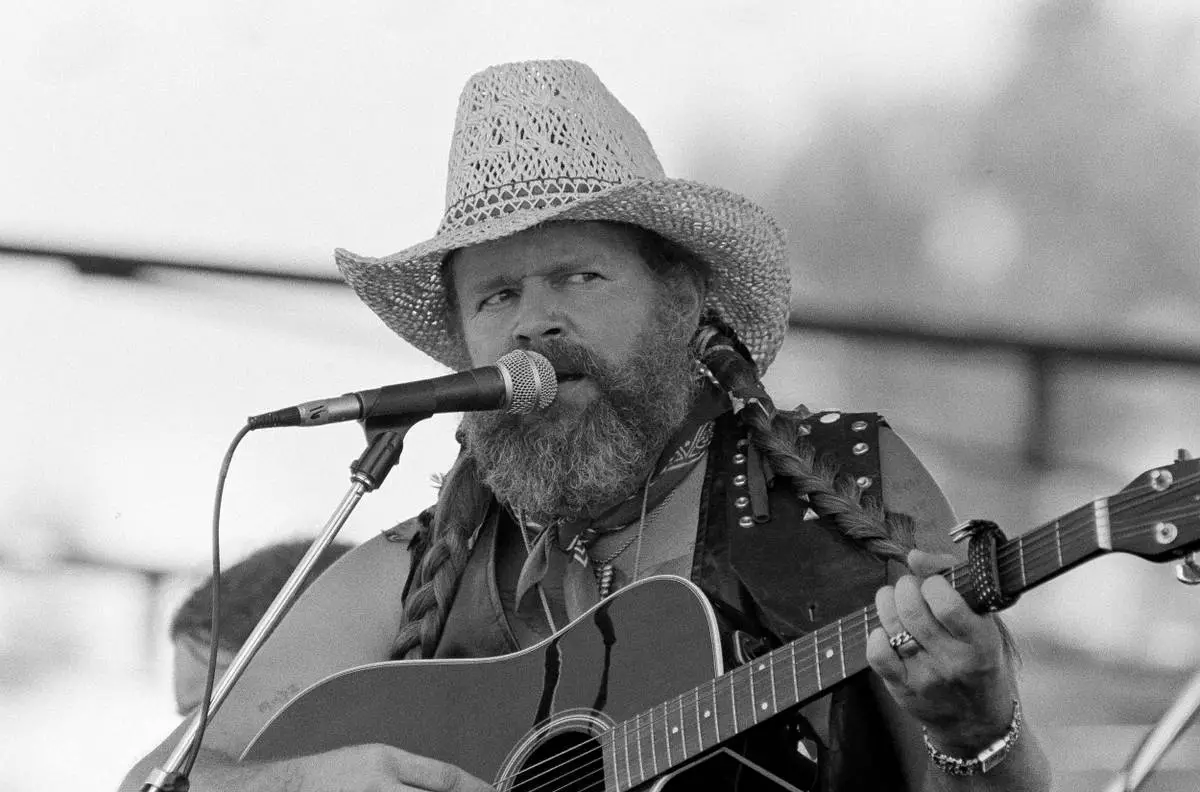
FILE - David Allan Coe, sporting Willie Nelson braids, performs at the Willie Nelson July 4th Picnic, on July 4, 1983 at Atlanta International Raceway in Hampton, Ga. (AP Photo/Rudolph Faircloth, File)