WASHINGTON (AP) — A new analysis suggests Americans are being overcharged by $150 billion annually to insure their homes, autos and businesses — and it proposes federal guardrails so that a public beset by affordability pressures could see savings.
The analysis by the Vanderbilt Policy Accelerator obtained exclusively by The Associated Press details how insurers are paying out less on claims after an accident, natural disaster or other misfortune than they did decades ago. For every $1 collected in premiums, insurers reimbursed 62 cents for claims in 2024, down from an average loss ratio of 80 cents in the 1980s and 1990s.
The analysis wades into a thorny set of economic and political questions as insurance companies are managing the potential risks of climate change when the cost of groceries, gasoline and housing are a frustration for many voters. Insurance companies say they have hiked premiums because of rising prices for homes and autos and the expenses of fixing them.
“The fact that the loss ratios are so low means that the insurance industry is charging too much,” said Brian Shearer, director of competition and regulatory policy at the Vanderbilt University think tank and a former senior adviser at the Consumer Financial Protection Bureau.
The insurance industry said its current loss ratio reflects the costs for insurers in recent years and the steps deemed necessary for ensuring that insurance funding is stable and solvent.
“Current loss ratios reflect the impact of enormous financial losses over the last several years and the steps insurers have taken (to) maintain and restore financial strength so funds are available to pay future claims," Don Griffin, vice president for policy and research at the American Property Casualty Insurance Association, said in an emailed statement. “Loss ratios in the 1990s were driven to nearly unsustainable levels by Hurricane Andrew in particular.”
While President Donald Trump won a second term on the promise to contain inflation, he has also gutted institutions such as the CFPB that sought to find potential savings. Housing costs have been particularly acute. Average mortgage rates remain above 6%, and an executive order by Trump to increase construction of new homes would still take years to bend the curve on housing prices.
When Trump, a Republican, signed the order on housing regulations in March, he emphasized that he was eliminating the heightened standards to protect homes against damage from natural disasters and improving energy efficiency because he said they were increasing construction costs.
“We will slash many of these pointless regulations that do nothing for safety and add lots of costs,” he said at the signing.
Research by the economists Benjamin Keys and Philip Mulder found that average premiums for home insurance climbed an inflation-adjusted 28% between 2017 and 2024 to an annual cost of $2,750. Their research found reasons for the increases: Roughly a third came from higher construction costs, and another 20% came from greater disaster risks. But it also noted the higher costs for financial instruments such as reinsurance, which insurers purchase to protect them from catastrophic financial losses.
The Vanderbilt analysis by contrast looks at the gap between what insurers charge and what they pay out to customers. By returning to the loss ratio of 80 cents paid out for each $1 collected, it estimates that households and businesses could have saved roughly $150 billion from the $1 trillion-plus paid in premiums in 2024.
The analysis includes proposed legislative language for the federal government to set a higher loss ratio for insurers. Currently, state governments primarily regulate insurance, but a federal mandate would be harder for companies to challenge.
The analysis further argues that insurers are using the premiums “to pay for corporate perks, corporate jets, stock-buy backs, excessive executive compensation, excessive dividends, excessive advertising, and excessive agent commissions.”
“Companies are competing against each other, not based on price but just based on brand awareness,” said Shearer, the author of the analysis, arguing that too much money is spent on marketing.
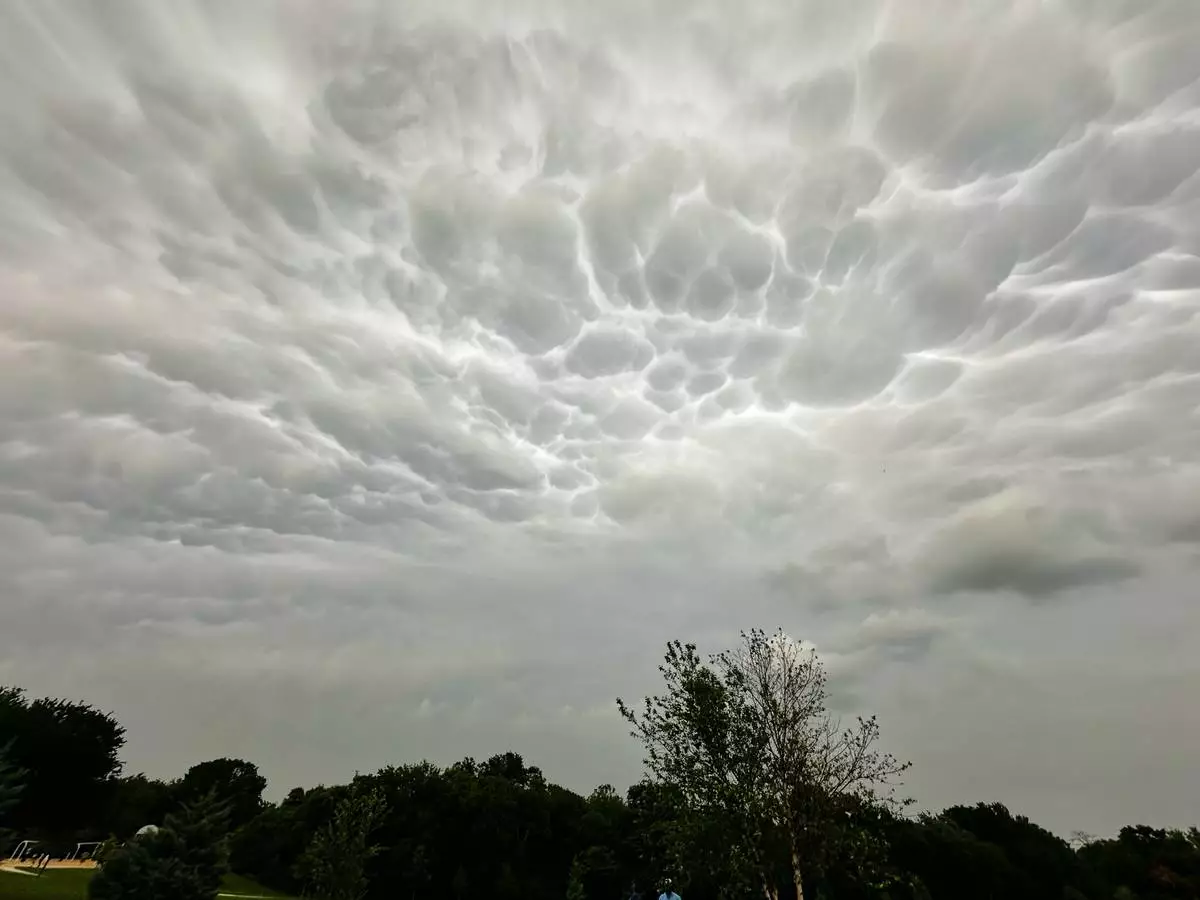
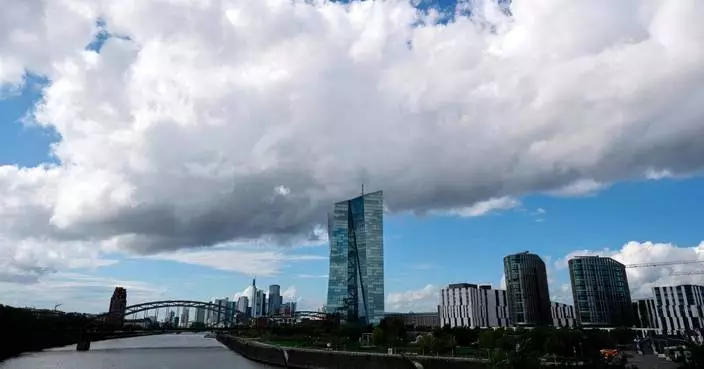
Storm clouds form over a public park as thunderstorms approaches the region, Saturday, April 25, 2026, in Plano, Texas. (AP Photo/Tony Gutierrez)
PHNOM PENH, Cambodia (AP) — A Cambodian court on Thursday upheld the treason conviction and 27-year prison sentence for opposition leader Kem Sokha, whose 2017 arrest opened a broad government crackdown on political opponents in the country.
The Phnom Penh Appeals Court also barred Kem Sokha from leaving the country for five years after he finishes his sentence, which he is serving under house arrest.
Cambodia has long been accused of using the judicial system to persecute critics and political opponents. The government insists it promotes the rule of law under an electoral democracy, but political parties seen as potential rivals have been dissolved by the courts or had their leaders jailed or harassed.
Kem Sokha, 72, was convicted in 2023 following a long pretrial detention. He was accused of conspiring with the United States to topple the Cambodian government. The primary evidence against him was a video of him discussing political advice from U.S.-based pro-democracy groups.
His Cambodia National Rescue Party had been the only credible opponent of the ruling Cambodian People’s Party, but it was dissolved by the Supreme Court after his arrest and was unable to contest the 2018 election.
The party of long-serving Prime Minister Hun Sen subsequently swept all the seats in the National Assembly. His son, Hun Manet, succeeded him in the position in 2023 but has not liberalized the system.
Speaking before the appeals court earlier this month, Kem Sokha declared he had never conspired with any foreign country at the cost of the lives of Cambodian citizens or the loss of national territory and that he had acted in a spirit of nonviolence and national unity.
His lawyer, Pheng Heng, told reporters he regretted the court’s decision and that he and his client would have to decide whether to appeal further to the Supreme Court. He urged the government to promote national reconciliation.
Western embassies in Cambodia expressed concern over the ruling.
“We would like to see Kem Sokha released and his political freedoms restored,” the British Embassy said in a statement. “ We believe this would help strengthen democracy in Cambodia.”
In a separate political case, the Phnom Penh Municipal Court on Wednesday convicted 33 people involved in opposition to a controversial border development agreement. Those convicted included social media users, opposition politicians and political activists.
The Cambodia human rights organization Licadho reported they were convicted of incitement to commit a felony -- a broad-brush charge often used in political cases -- and received punishment ranging from 18-month suspended sentences to two-years imprisonment as well as fines of $1,000.
Son Chumchuon, a lawyer for six of the defendants, said Thursday that those who received the longest sentences were likely to be released soon because of time already served in pretrial detention.
The 33 had been linked to protests against the Cambodia-Laos-Vietnam Development Triangle Area, a framework established in 2004 to coordinate trade and migration among the three Southeast Asian neighbors.
Critics of the pact claimed it favored foreign interests and granted valuable land concessions to Vietnam, a sensitive issue because of historical antagonism toward Cambodia’s bigger eastern neighbor.
Cambodia withdrew from the agreement in 2024 but continued its clampdown on critics, making more than 100 arrests.
Peck reported from Bangkok.
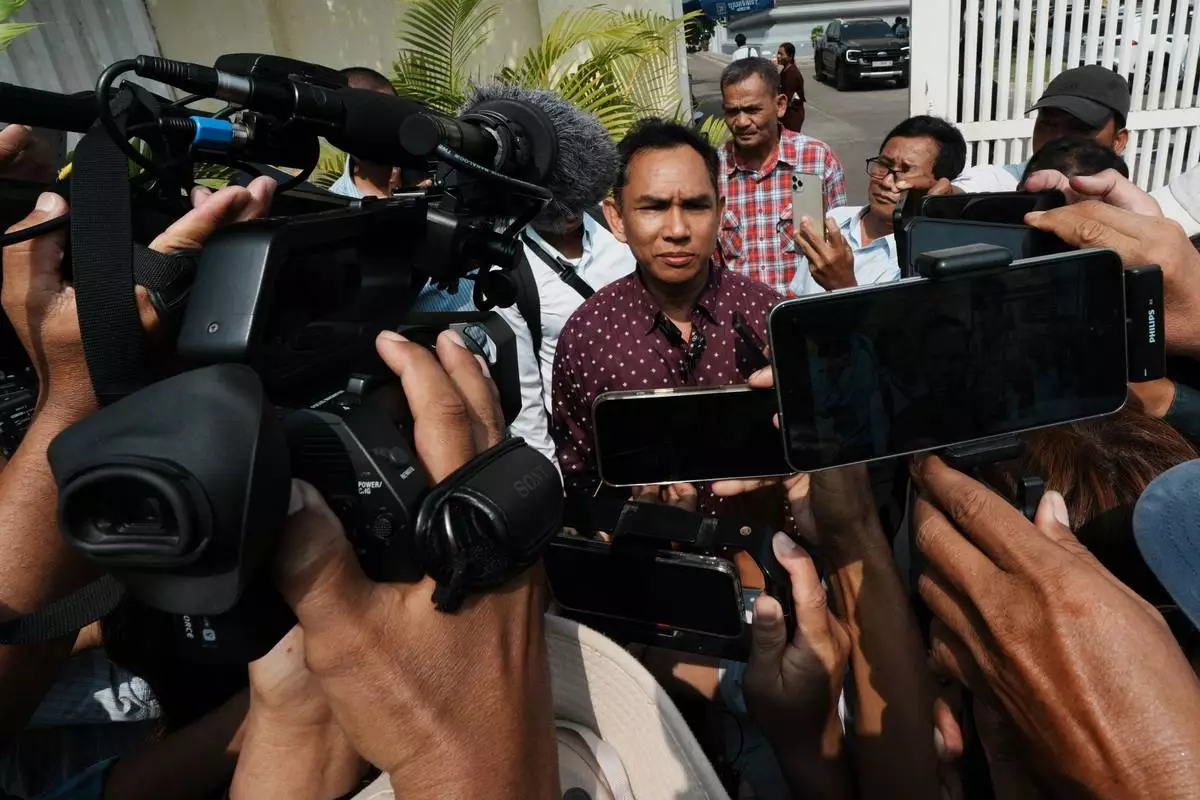
Am Sam Ath, center, monitoring manager of LICADHO, a human rights organization, speaks to journalists after a court session of former Cambodia National Rescue Party's President Kem Sokha outside an appeals court in Phnom Penh, Cambodia, Thursday, April 30, 2026. (AP Photo/Heng Sinith)
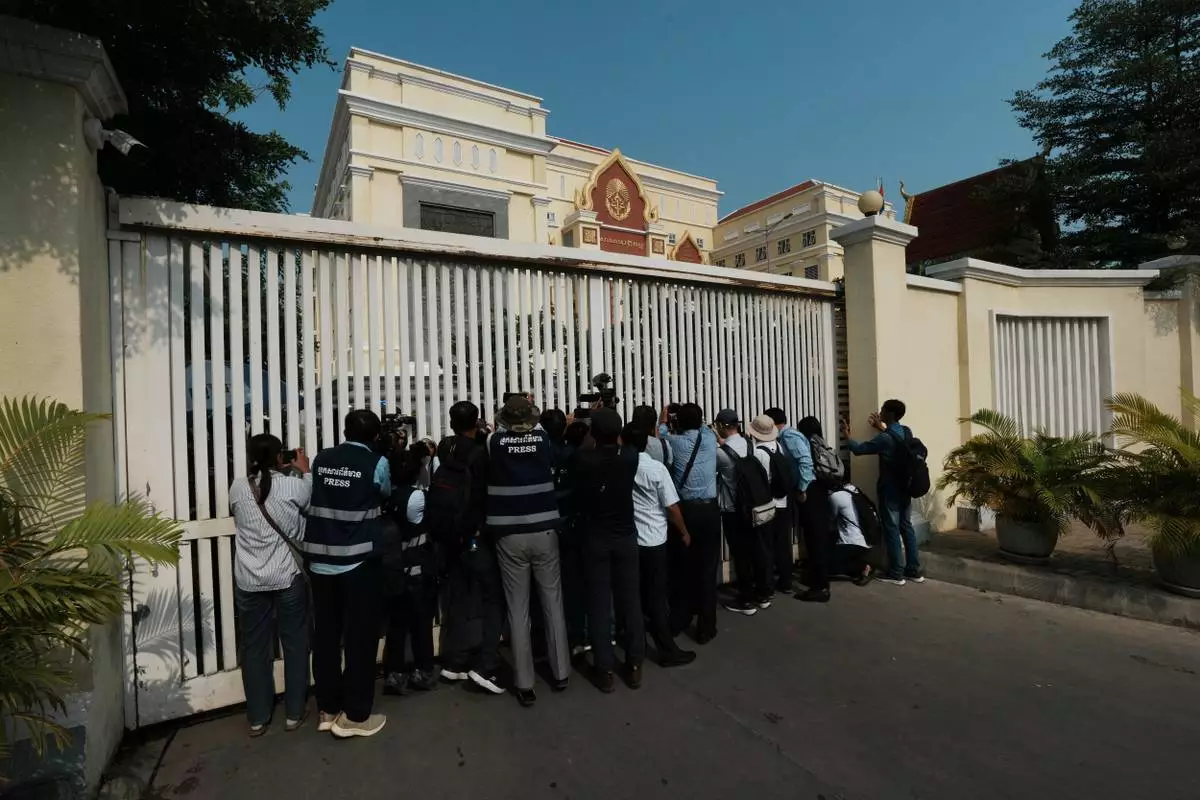
Journalists photograph after a court session of former Cambodia National Rescue Party's President Kem Sokha outside an appeals court in Phnom Penh, Cambodia, Thursday, April 30, 2026. (AP Photo/Heng Sinith)
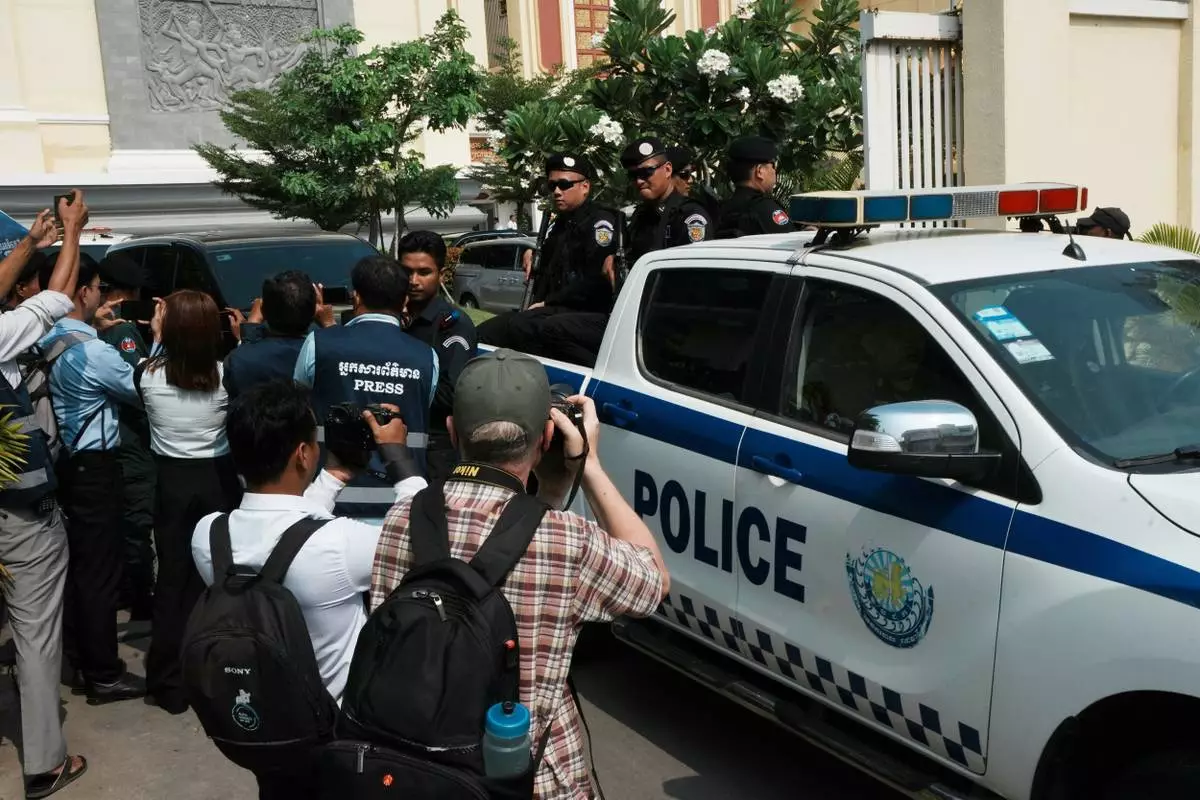
Journalists try to photograph as a vehicle which is believed to carry former Cambodia National Rescue Party's President Kem Sokha heads out from an appeals court after the court session in Phnom Penh, Cambodia, Thursday, April 30, 2026. (AP Photo/Heng Sinith)
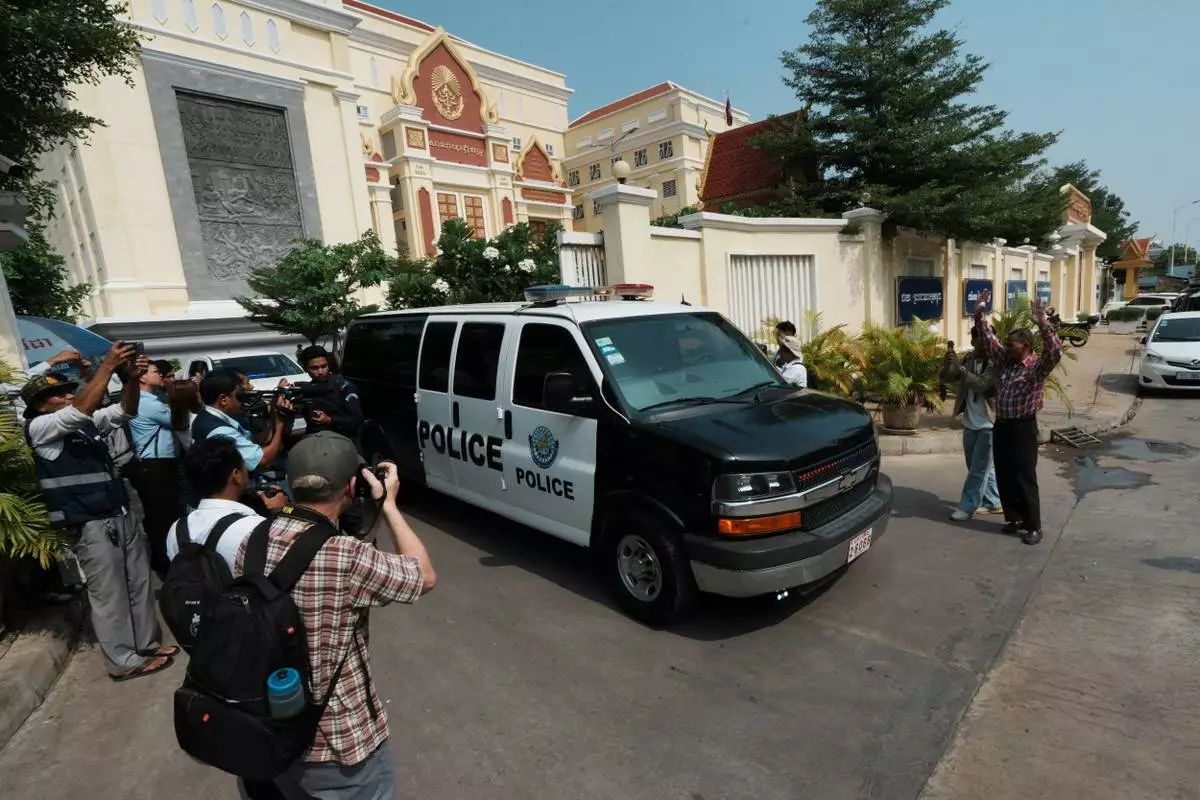
A Cambodian police vehicle which is believed to carry former Cambodia National Rescue Party's President Kem Sokha heads out from an appeals court after a court session in Phnom Penh, Cambodia, Thursday, April 30, 2026. (AP Photo/Heng Sinith)