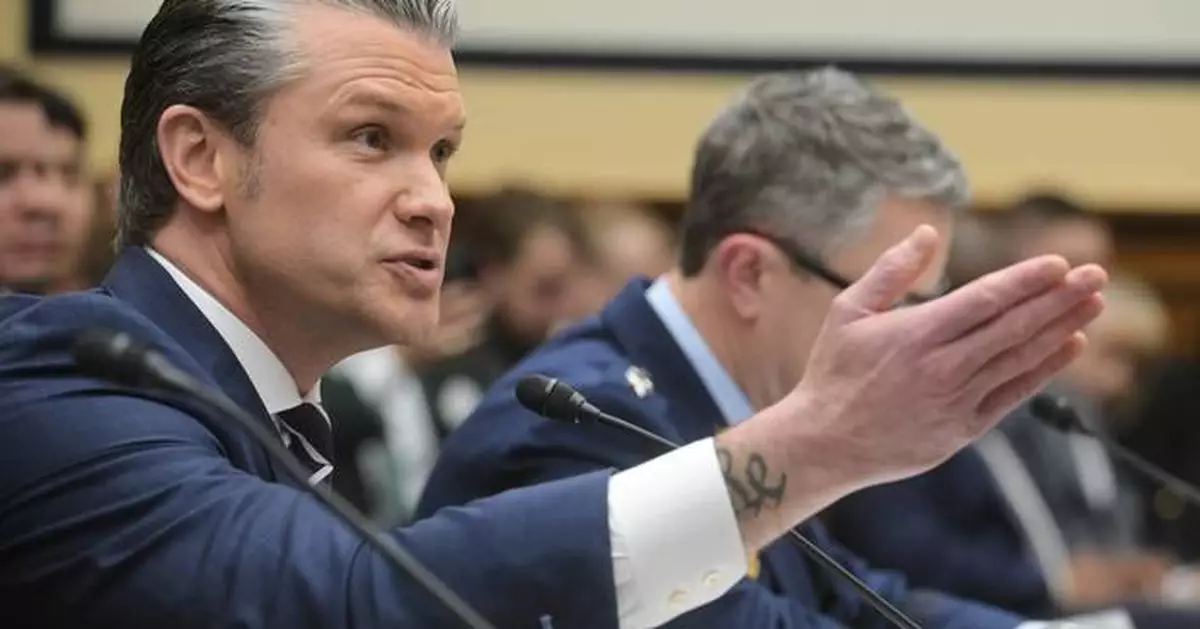
Defense Secretary Pete Hegseth will face a second day of grilling from Democrats on Capitol Hill, with senators getting their first opportunity on Thursday to confront or praise the Pentagon chief over his handling of the Iran war.
Hegseth battled with Democrats — and some Republicans — a day earlier during a nearly six-hour House Armed Services Committee hearing, where he faced sharp questioning over the war’s costs in dollars, lives and the diminishing stockpiles of critical weapons.
The Senate Armed Services Committee will hear a similar presentation on the Trump administration’s 2027 military budget proposal, which would boost defense spending to a historic $1.5 trillion. Hegseth and the chairman of the Joint Chiefs of Staff, Gen. Dan Caine, will again stress the need for more drones, missile defense systems and warships.
Here's the latest:
U.S. jobless aid applications for the week ending April 25 fell by 26,000 by to 189,000, down from the previous week’s 215,000, the Labor Department reported Thursday. That’s well below the 214,000 new applications analysts surveyed by the data firm FactSet were expecting.
Filings for unemployment benefits are considered a proxy for U.S. layoffs and are close to a real-time indicator of the health of the job market.
The four-week moving average of jobless claims, which evens out some of the weekly volatility, came in at 207,500, about 3,500 lower than the previous week.
The total number of Americans filing for unemployment benefits for the previous week ending April 18 fell to 1.79 million, a decrease of 23,000.
▶ Read more
But the outlook is clouded by the Iran war.
The Commerce Department reported Thursday that gross domestic product — the nation’s output of goods and services — rebounded from a lackluster 0.5% expansion the last three months of 2025. The federal government’s spending and investment grew at a 9.3% annual rate in the first quarter, adding more than half a percentage point to growth after lopping off 1.16 percentage points in fourth-quarter 2025.
Growth in consumer spending, which accounts for 70% of U.S. economic activity, slowed to 1.6% in the first quarter from 1.9% at the end of 2025. But business investment, likely driven by investments in artificial intelligence, rose at an 8.7% pace.
Iran has blocked the Strait of Hormuz through which a fifth of the world’s oil and liquefied natural gas passes. That has driven energy prices higher, fueling inflation and hurting consumers.
▶ Read more
It’s the latest sign that the Iran war is pushing up the cost of living and delaying any interest rate cuts by the Federal Reserve.
An inflation gauge monitored by the Fed rose 0.7% in March from February, up slightly from the previous month. Compared with a year ago, prices rose 3.5%, the biggest increase in almost three years.
Excluding the volatile food and energy categories, core inflation rose 0.3% in March from February, and it was 3.2% higher than a year earlier. The annual figure is above February’s reading of 3%.
Rising gas prices have caused inflation to move further away from the Fed’s 2% target, which has caused the central bank to keep its key short-term interest rate unchanged after cutting it three times last year. The Fed typically keeps rates elevated — or even raises them — to combat higher inflation.
▶ Read more
President Trump has again threatened that the United States could reduce its military presence in Germany, a key NATO ally and the European Union’s largest economy. Europeans have heard this before.
Trump’s social media post on Wednesday followed comments by Chancellor Friedrich Merz that the U.S. was being “ humiliated ” by Tehran as it slow-walks its diplomacy over the U.S.-Israel war against Iran.
Trump has mused for years about reducing America’s military presence in Germany, and has recently repeatedly railed against NATO for the its refusal to assist the U.S. in its two-month-old war.
U.S. allies at NATO have been waiting for the Trump administration to pull troops out since just after it came to office, warning that Europe would have to look after its own security, and that of Ukraine, in the future.
▶ Read more
A divided federal appeals court said Wednesday it won’t grant a rare meeting of its active judges to hear an appeal of an $83 million verdict against President Donald Trump for defaming a magazine advice columnist over an encounter three decades ago.
The 2nd U.S. Circuit Court of Appeals’ decision to reject a so-called “en banc” hearing comes several months after Trump appealed to the Supreme Court another jury’s decision to grant $5 million the writer, E. Jean Carroll, after concluding he had sexually abused her in a department store dressing room in 1996 and later defamed her. The high court hasn’t yet decided whether to hear the case.
Lawyers for Trump did not immediately respond to a request for comment.
Carroll’s attorney, Roberta Kaplan, said in a statement that her client was “eager for this case, originally filed in 2019, to be over so that she can finally obtain justice.”
▶ Read more
Senate Democrats accused the Trump administration of abandoning the Environmental Protection Agency’s mission to protect human health and the environment at a congressional hearing Wednesday, slamming agency leadership over a proposal to cut its budget in half.
EPA Administrator Lee Zeldin’s appearance before the Senate environment committee was his last of three budget hearings this week where he argued for sharply reduced funding for the agency, which already has seen its staffing reduced to its lowest level in decades under his leadership. During much of the week, the former Republican congressman from New York took an aggressive approach, responding to Democrats in the House and Senate with his own questions and at times accusing them of being unprepared or failing to care about the EPA’s track record.
Zeldin has eliminated major climate change programs, promoted deregulatory efforts he calls the biggest in American history and canceled billions of dollars in Biden-era environmental justice grants to halt what he calls “EPA’s radical diversity, equity, and inclusion programs.”
▶ Read more
The price of Brent crude oil briefly surged past $126 a barrel early Thursday as stalled U.S.-Iran talks raised doubts over the reopening of the Strait of Hormuz and a permanent end to the Iran war.
Brent crude to be delivered in June jumped 3.3% to $121.90 after briefly soaring past $126 per barrel. Brent to be delivered in July rose 1.4% to $112.02.
Benchmark U.S. crude climbed 1.3% to $108.28 per barrel.
Before the war began in late February, Brent crude was trading around $70 per barrel.
There’s no clear path to an end to the war. The U.S. has continued its blockade of Iranian ports while the Strait of Hormuz is closed, pushing oil prices higher. Reports Thursday suggesting a possible escalation by Trump doused hopes for a quick end to the conflict.
▶ Read more
Jerome Powell said Wednesday he plans to remain on the board of the Federal Reserve after his term as chair ends next month “for a period of time, to be determined,” saying the “unprecedented” legal attacks by the Trump administration have put the independence of the nation’s central bank at risk.
“I worry these attacks are battering this institution and putting at risk the things that really matter to the public,” Powell said in remarks at a news conference after the Fed announced its decision to keep its benchmark interest rate unchanged.
Powell’s decision to stay — the first time a Fed chair will remain on the board as a governor since 1948 — denies Trump a chance to fill a seat on the central bank’s seven-member governing board with his own appointee. The Senate Banking Committee earlier approved Powell’s successor as chair, Trump appointee Kevin Warsh, on a party-line vote. Powell will continue as a Fed governor, possibly until January 2028. Warsh, if confirmed, will take a seat currently held by Stephen Miran, a previous Trump appointee, whose term ended in January.
▶ Read more
Hegseth will face a second day of grilling from Democrats on Capitol Hill, with senators getting their first opportunity on Thursday to confront or praise the Pentagon chief over his handling of the Iran war.
Hegseth battled with Democrats — and some Republicans — a day earlier during a nearly six-hour House Armed Services Committee hearing, where he faced sharp questioning over the war’s costs in dollars, lives and the diminishing stockpiles of critical weapons.
The Senate Armed Services Committee will hear a similar presentation on the Trump administration’s 2027 military budget proposal, which would boost defense spending to a historic $1.5 trillion. Hegseth and the chairman of the Joint Chiefs of Staff, Gen. Dan Caine, will again stress the need for more drones, missile defense systems and warships.
They are now also likely to face tough questions about American troop levels in Europe after President Donald Trump on Wednesday leveled a new threat against NATO ally Germany, suggesting he could soon reduce the U.S. military presence in the country as he feuds with Chancellor Friedrich Merz over the Iran war.
▶ Read more
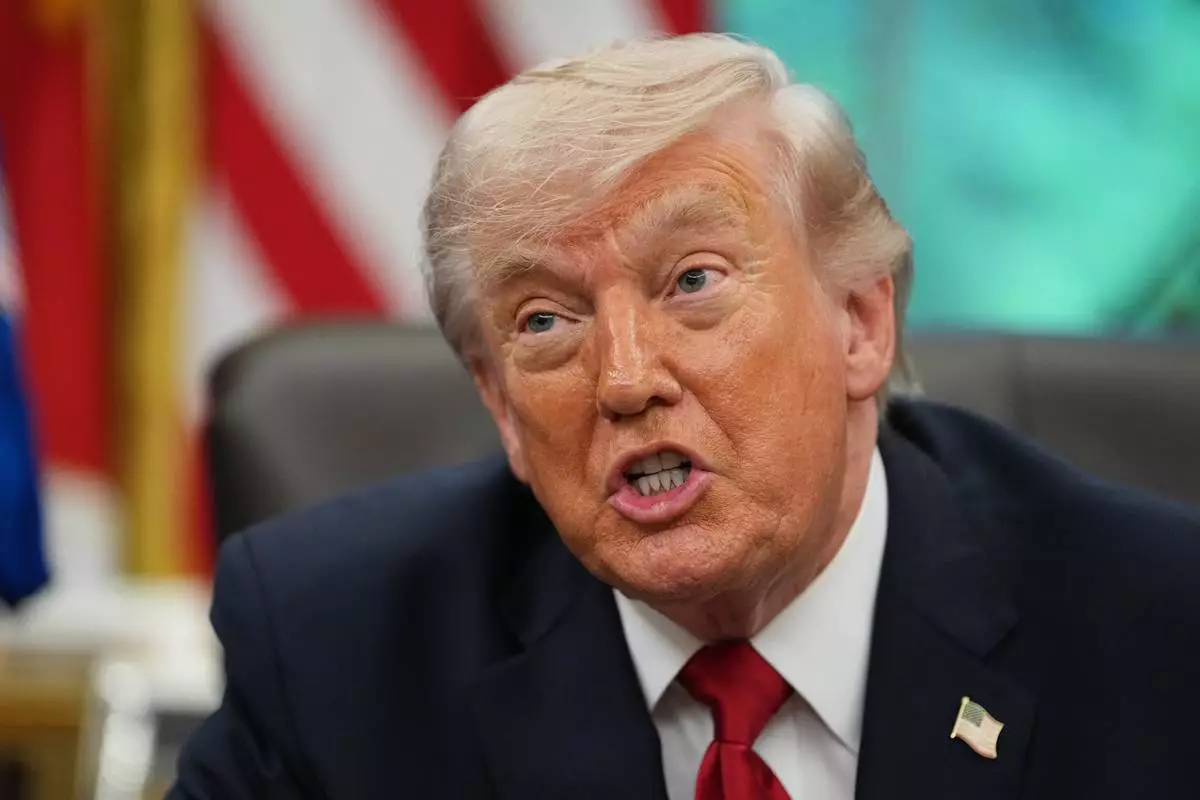
President Donald Trump speaks to reporters as he meets with NASA's Artemis II astronauts Victor Glover, Christina Koch, Reid Wiseman and Jeremy Hansen in the Oval Office of the White House, Wednesday, April 29, 2026, in Washington. (AP Photo/Matt Rourke)
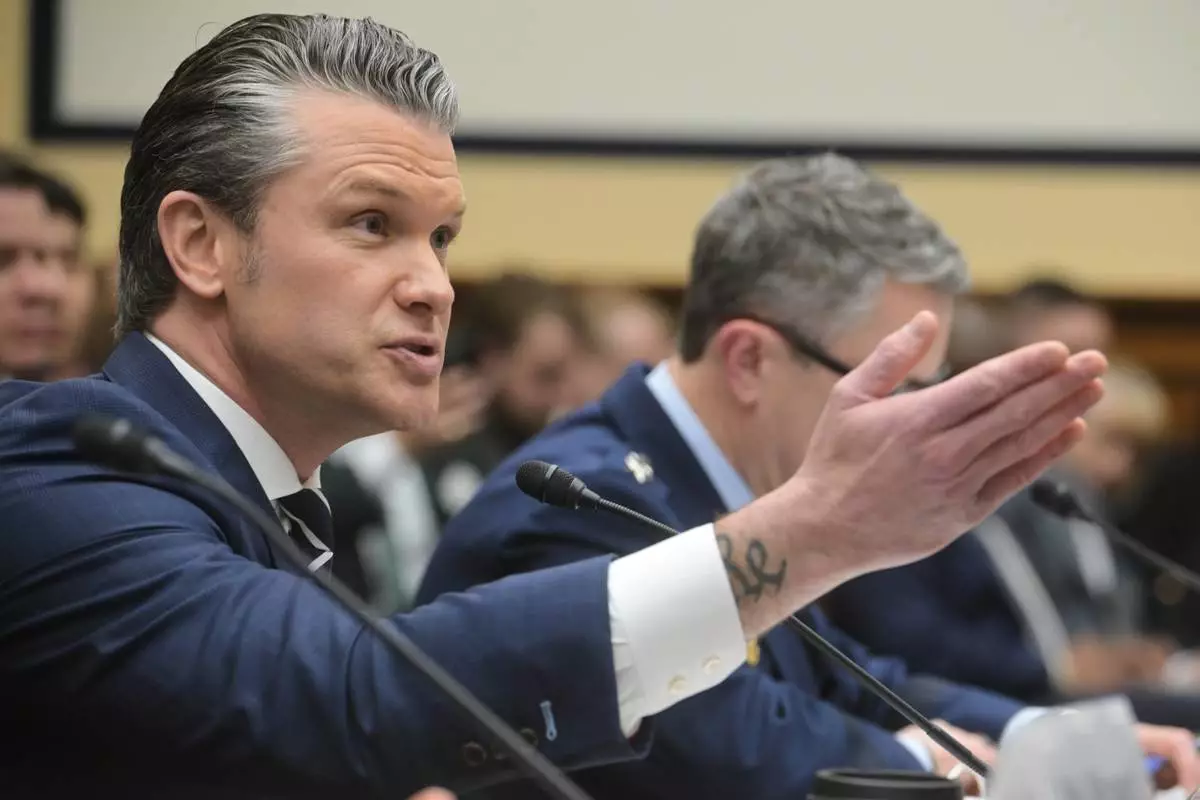
Secretary of Defense Pete Hegseth appears before a House Committee on Armed Services business meeting on the Department of Defense Fiscal Year 2027, on Capitol Hill, Wednesday, April 29, 2026, in Washington. (AP Photo/Rod Lamkey Jr.)