Skip to Content Facebook Feature Image

In Gaza, a desperate rush for water trucks persists more than 6 months after the ceasefire

News

In Gaza, a desperate rush for water trucks persists more than 6 months after the ceasefire
News

News

In Gaza, a desperate rush for water trucks persists more than 6 months after the ceasefire

2026-05-01 00:49 Last Updated At:09:00

DEIR AL-BALAH, Gaza Strip (AP) — When water trucks motor into their neighborhood, the Abu Daqqa family scrambles to hose what they can into dented plastic jerry cans marked with their name.

Yehia Abu Daqqa rations it — one can per each of her children — pouring a little into a sippy cup for one of her daughters outside their tent in Muwasi, the sprawling tent camp where hundreds of thousands of displaced Palestinians now live.

More Images
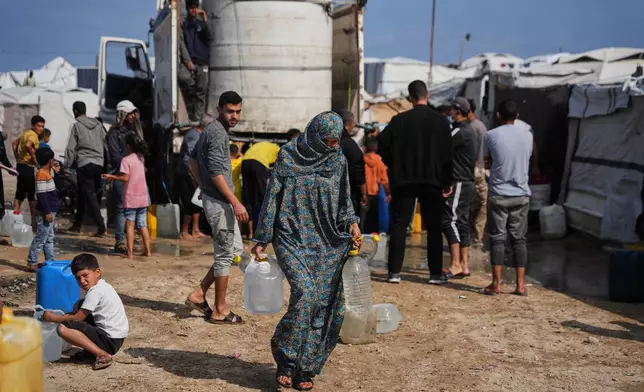
Samah Abu Daqqa, 33, carries jerrycans filled with water through a tent camp in Khan Younis, in the southern Gaza Strip, Thursday, April 30, 2026. (AP Photo/Abdel Kareem Hana)
Samah Abu Daqqa, 33, carries jerrycans filled with water through a tent camp in Khan Younis, in the southern Gaza Strip, Thursday, April 30, 2026. (AP Photo/Abdel Kareem Hana)

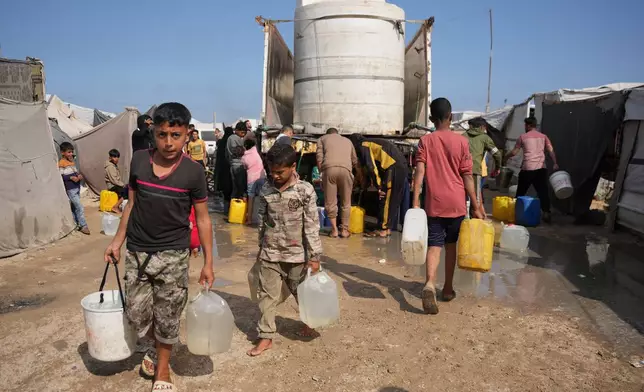
Displaced Palestinians gather to collect water from a truck at a makeshift tent camp in Khan Younis, southern Gaza Strip, Thursday, April 30, 2026. (AP Photo/Abdel Kareem Hana)
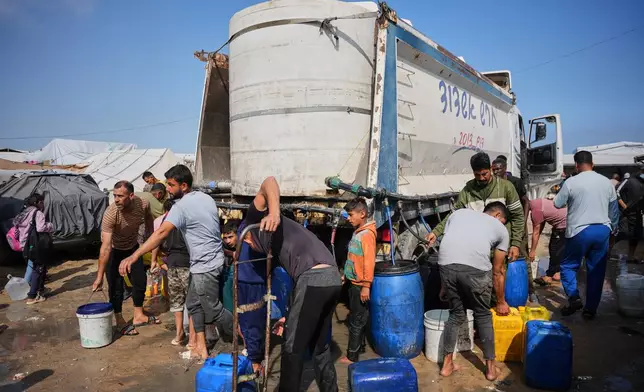
Displaced Palestinians gather to collect water from a truck at a makeshift tent camp in Khan Younis, southern Gaza Strip, Thursday, April 30, 2026. (AP Photo/Abdel Kareem Hana)
Displaced Palestinians gather to collect water from a truck at a makeshift tent camp in Khan Younis, southern Gaza Strip, Thursday, April 30, 2026. (AP Photo/Abdel Kareem Hana)

Displaced Palestinians gather to collect water from a truck at a makeshift tent camp in Khan Younis, southern Gaza Strip, Thursday, April 30, 2026. (AP Photo/Abdel Kareem Hana)

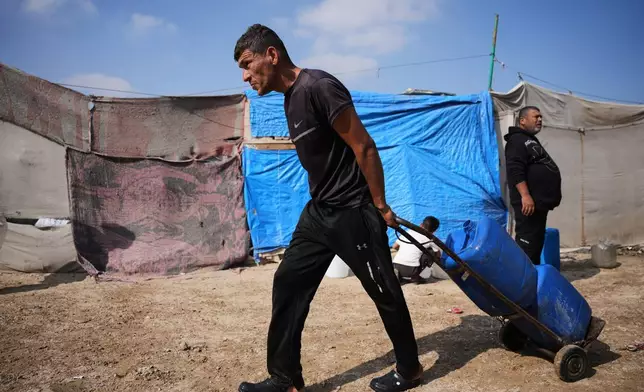
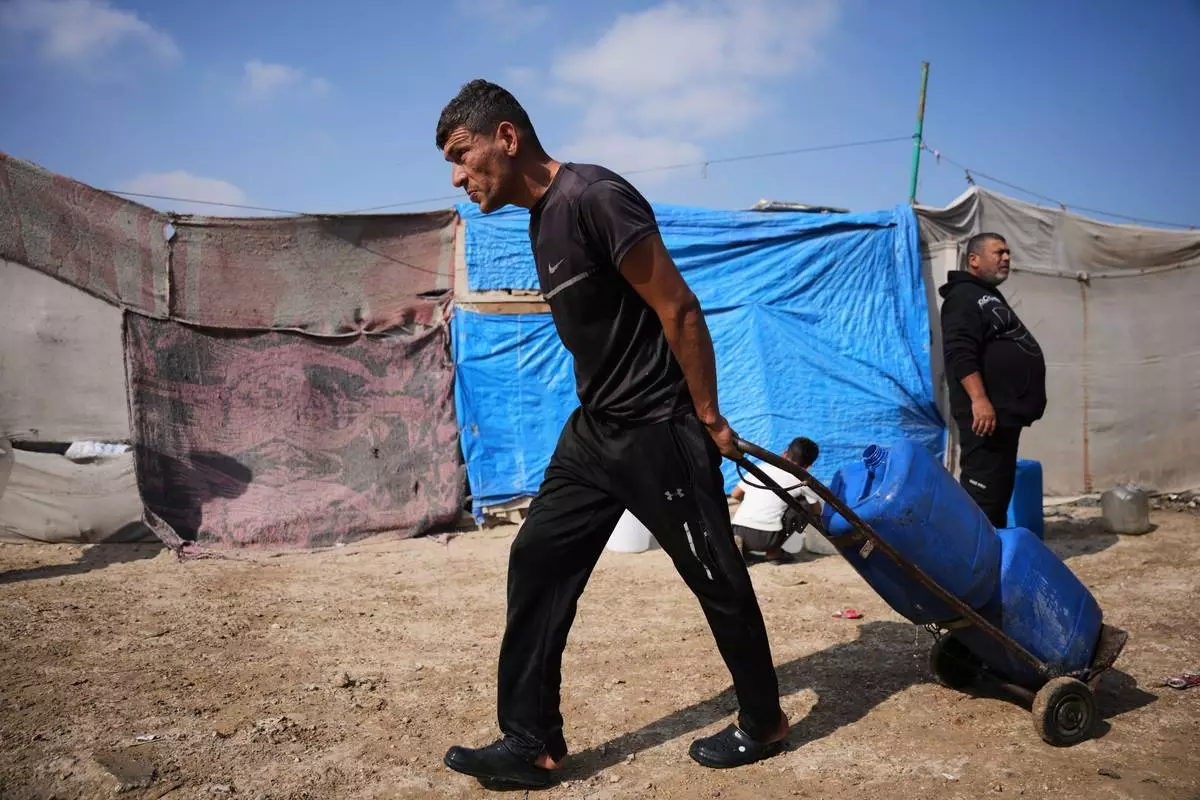
A Palestinian man carries jerrycans filled with water through a tent camp in Khan Younis, in the southern Gaza Strip, Thursday, April 30, 2026. (AP Photo/Abdel Kareem Hana)
A Palestinian man carries jerrycans filled with water through a tent camp in Khan Younis, in the southern Gaza Strip, Thursday, April 30, 2026. (AP Photo/Abdel Kareem Hana)

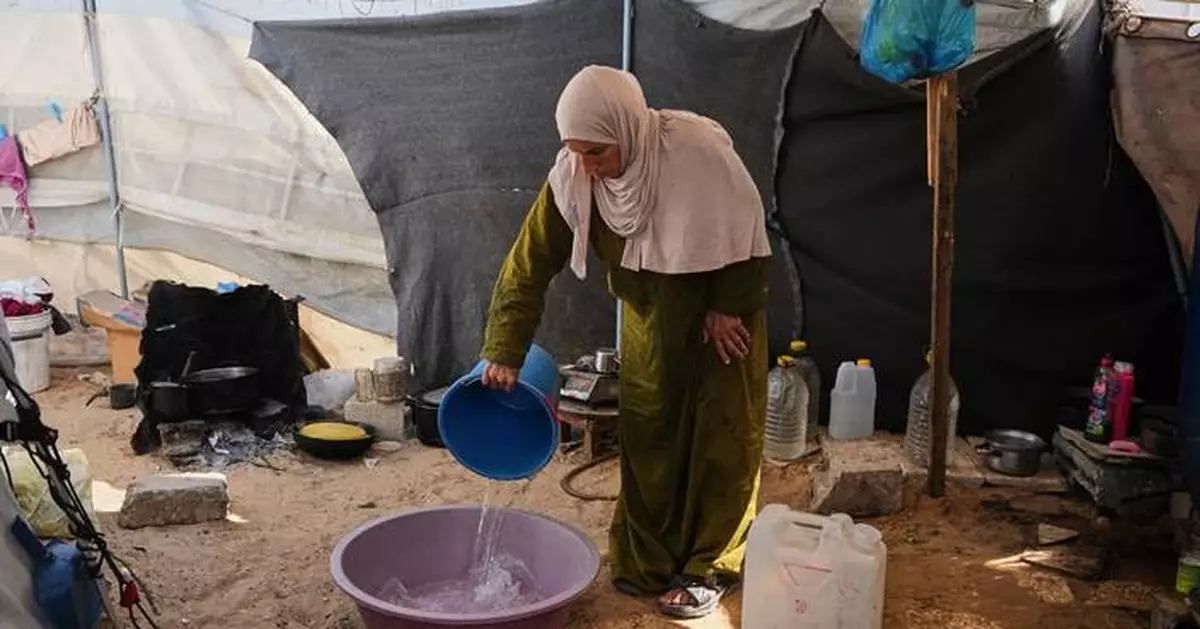
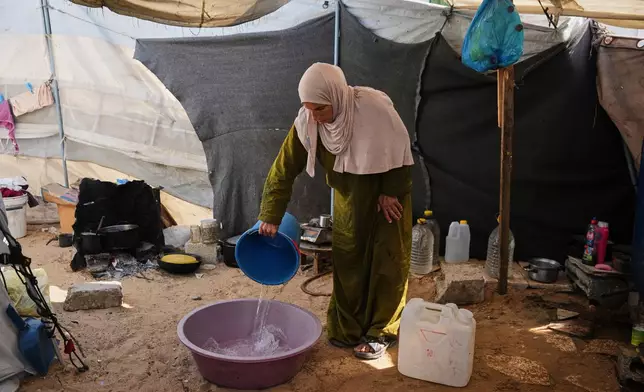
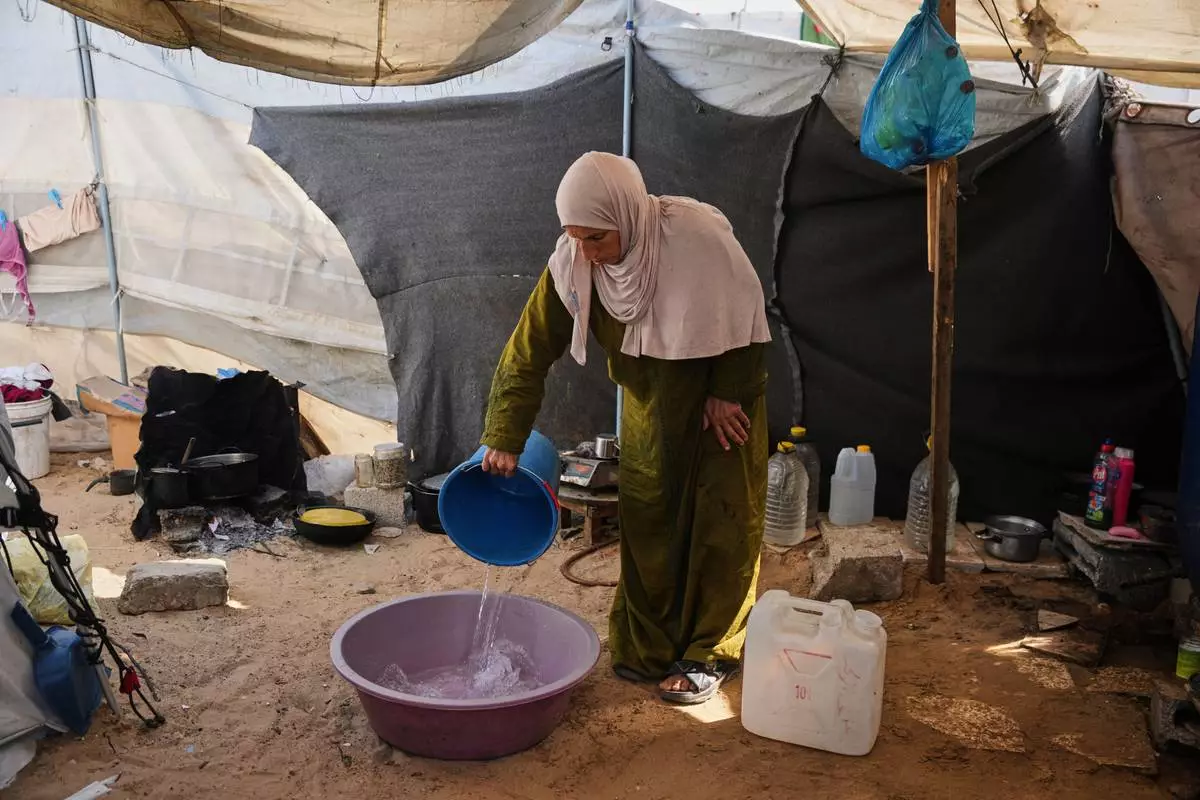
Displaced Palestinian Reem Abu Lahia uses water to do laundry inside the tent where she lives in Khan Younis, in the southern Gaza Strip, Thursday, April 30, 2026. (AP Photo/Abdel Kareem Hana)

Displaced Palestinian Reem Abu Lahia uses water to do laundry inside the tent where she lives in Khan Younis, in the southern Gaza Strip, Thursday, April 30, 2026. (AP Photo/Abdel Kareem Hana)

“The water truck arrives, and some 500 to 1,000 people throw themselves at it,” Abu Daqqa said. “They start fighting. It’s real suffering.”

Palestinians say water shortages have persisted more than six months after a ceasefire between Israel and Hamas stopped most of the fighting in Gaza. Nearly 90% of the enclave's water infrastructure was destroyed, according to the United Nations, including desalination plants and sewage treatment facilities.

Before the war, government providers and private companies distributed water via trucks and underground pipes. Wastewater was circulated to treatment facilities via underground pipes as well. The infrastructure is a top priority in Gaza's reconstruction plan. Progress has stalled as Israel demands Hamas completely disarms first.

WASH Cluster, a United Nations-led network of nongovernmental organizations focused on water and sanitation, estimates that 80% of people in Gaza rely on water delivered by trucks to central distribution points. For Azmy Abu Lehya, that means on some days he makes the walk to his neighborhood's distribution point more than 500 meters (yards) away, sometimes he gets water to lug back home through Muwasi and other days he doesn't.

“On two days, the water trucks come, and on the other two days, they don’t,” he said.

Israel has said it no longer limits the import of water. COGAT, the military body that oversees humanitarian issues in Gaza, said it helped ensure pipelines can bring in enough for sanitation, sewage, drinking and washing and has not limited bottled water either.

But Palestinians say the bottled water — much of which is delivered by private sector groups and sold in markets — is prohibitively expensive, with most of Gaza destroyed and its population unable to access jobs or steady incomes.

Sharif Abu Helal, another Muwasi resident, doesn't even ask when he sees water bottles at his market because he knows he can't afford it.

“I am not ready to buy each person a bottle of water,” he said. “I have eight people. Is a gallon of water enough for them?"

Many items used to clean and transport water — such as pipes, fuel, cement and chemicals like chlorine — are among those Israel considers “dual use” and restricts out of concern they could be repurposed and used for weapons or missiles.

Water restrictions and shortages have been a recurring issue throughout the war in Gaza, with pipelines destroyed, water trucks hit by strikes and spent munitions seeping into the groundwater aquifer many use for wells.

In a report on water and sanitation this week, Doctors Without Borders, or MSF, a nongovernmental group, accused Israel of using water as a weapon of war, “systemically depriving” people in what it calls a “campaign of collective punishment.” Other groups, including Human Rights Watch, have lodged similar accusations.

“While Gazans are deprived of water and sanitation, Israeli authorities are using aid as a tap, closing or opening slightly to allow only drops of aid to enter the Strip,” the report said.

MSF is Gaza's second largest provider of water. Based on interviews conducted in late 2025 after the October ceasefire, it said Israel often blocked needed infrastructure like water pumps from entering Gaza, forcing them to salvage old or damaged parts to make desalination or water treatment equipment. Water shortages, MSF said, have far-reaching consequences for Gaza’s 2.1 million people, fueling sewage overflows, sanitation failures and the spread of waterborne and hygiene-related infections.

“Israeli authorities know that without water life ends, yet they have deliberately and systematically obliterated water infrastructure in Gaza, while consistently blocking water-related supplies from entering,” said Claire San Filippo, MSF emergency manager.

Though the report did not cover conditions today, the group called on Israel to allow in materials used for water and sanitation and noted that restrictions remain in place: "There are also not enough pipes available to create distribution networks,” the report said.

COGAT strenuously denied the allegations in the MSF report and called them “a desperate attempt to regain legitimacy.” It said that Israel allows more 70,000 cubic meters of water — roughly 33.3 liters (8.8 gallons) per person — in daily. Humanitarian agencies estimate people need at least 15 liters (4 gallons) for cleaning, washing, drinking and bathing daily. __ Ezzidin reported from Cairo and Metz from Ramallah, West Bank.
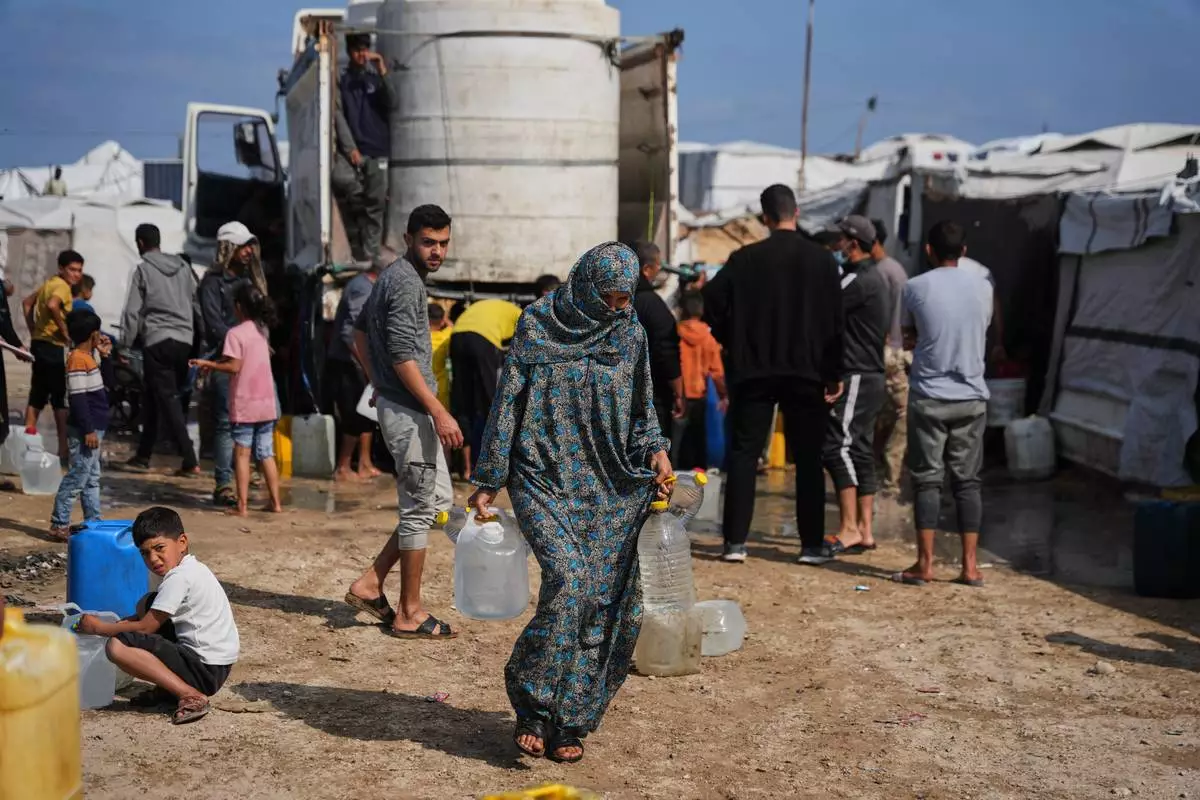
Samah Abu Daqqa, 33, carries jerrycans filled with water through a tent camp in Khan Younis, in the southern Gaza Strip, Thursday, April 30, 2026. (AP Photo/Abdel Kareem Hana)
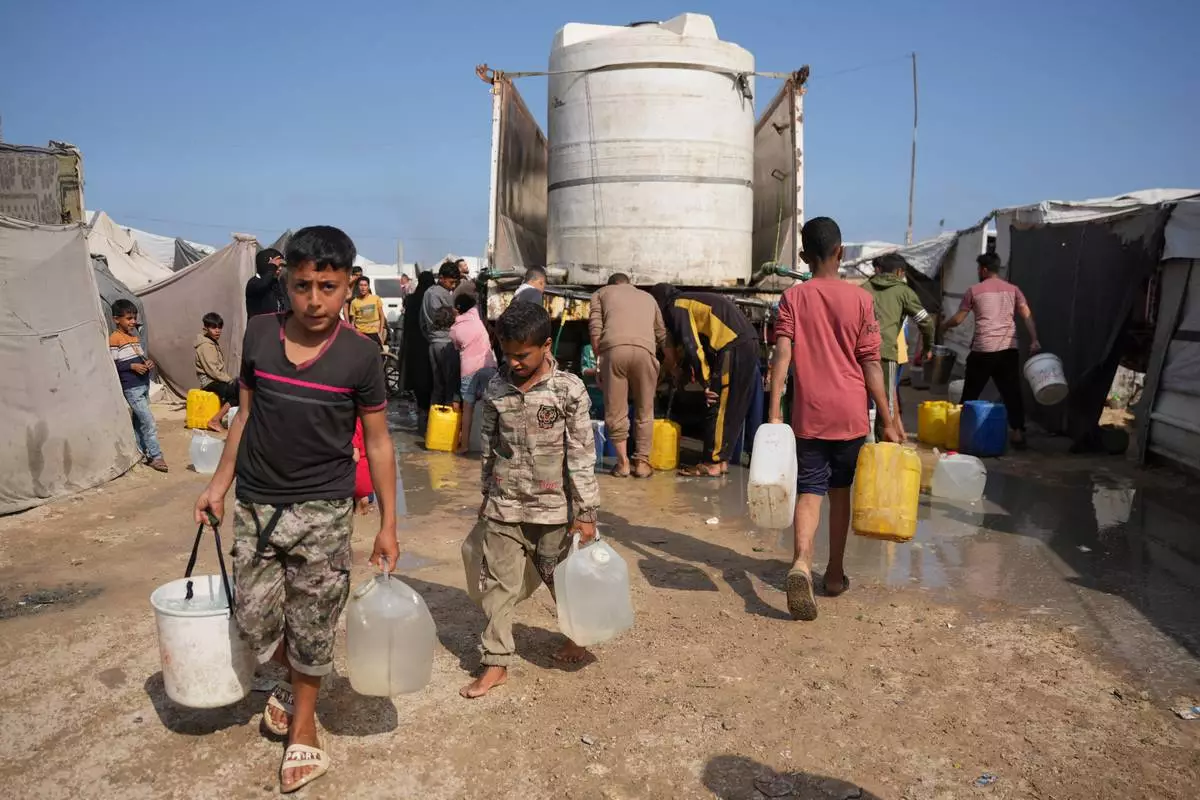
Samah Abu Daqqa, 33, carries jerrycans filled with water through a tent camp in Khan Younis, in the southern Gaza Strip, Thursday, April 30, 2026. (AP Photo/Abdel Kareem Hana)

Displaced Palestinians gather to collect water from a truck at a makeshift tent camp in Khan Younis, southern Gaza Strip, Thursday, April 30, 2026. (AP Photo/Abdel Kareem Hana)
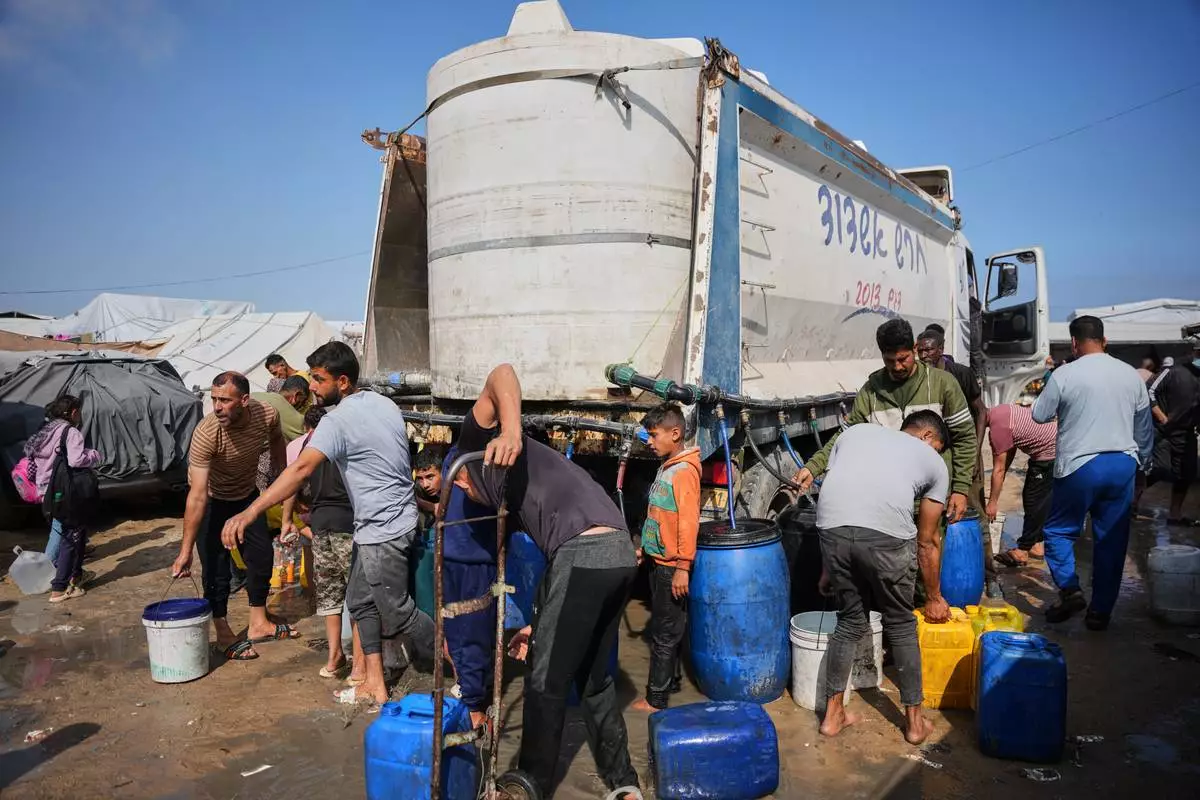
Displaced Palestinians gather to collect water from a truck at a makeshift tent camp in Khan Younis, southern Gaza Strip, Thursday, April 30, 2026. (AP Photo/Abdel Kareem Hana)
Displaced Palestinians gather to collect water from a truck at a makeshift tent camp in Khan Younis, southern Gaza Strip, Thursday, April 30, 2026. (AP Photo/Abdel Kareem Hana)

Displaced Palestinians gather to collect water from a truck at a makeshift tent camp in Khan Younis, southern Gaza Strip, Thursday, April 30, 2026. (AP Photo/Abdel Kareem Hana)

A Palestinian man carries jerrycans filled with water through a tent camp in Khan Younis, in the southern Gaza Strip, Thursday, April 30, 2026. (AP Photo/Abdel Kareem Hana)
A Palestinian man carries jerrycans filled with water through a tent camp in Khan Younis, in the southern Gaza Strip, Thursday, April 30, 2026. (AP Photo/Abdel Kareem Hana)
Displaced Palestinian Reem Abu Lahia uses water to do laundry inside the tent where she lives in Khan Younis, in the southern Gaza Strip, Thursday, April 30, 2026. (AP Photo/Abdel Kareem Hana)
Displaced Palestinian Reem Abu Lahia uses water to do laundry inside the tent where she lives in Khan Younis, in the southern Gaza Strip, Thursday, April 30, 2026. (AP Photo/Abdel Kareem Hana)
PLANDISTE, Serbia (AP) — The merry chirping of birds echoed through towering trees in a small woodland in northeastern Serbia. Down on the ground, animal tracks could be seen imprinted in the moist grass and moss.

The 5-acre (2-hectare) piece of land, dubbed the Nightingale's Forest, is a rare patch of thick greenery in the flat, farming region of Serbia. The Balkan country's Bird Protection and Study Society bought the land last year through crowdfunding to preserve the forest and set an example in environmental protection.

“This woodland was privately owned, and we saw it was put up for sale,” society representative Uros Stojiljkovic told The Associated Press, adding that the trees probably would have been cut down if someone else had bought the land.

“The value of timber was higher than its (land) price," Stojiljkovic said. "We protected it this way."

The success of the crowdfunding initiative is seen as a sign of growing interest in nature protection among people in Serbia as the country faces environmental problems from air and river pollution and waste management to profit-driven construction threatening green areas, particularly in big cities.

Authorities have pledged to boost environmental care as part of the country's European Union membership bid, but protection groups have warned little has been done in reality.

The Nightingale's Forest is home to a variety of bird and animal species who thrive on its moist habitat, Stojiljkovic explained. The new owners now plan to list the plants and animals there while preserving the woodland as it is.

The purchase price of 8,000 euros ($9,500) was collected in less than a month and hundreds of people have continued to donate funds that will be used for field work or additional land purchases, said Natasa Jancic, who was involved in the campaign.

“Individually, we can't do much, but as an active and stable community, we can achieve a lot,” Jancic said.

Launched some 30 years ago as a small, expert-only group, the Bird Protection and Study Society has grown into a community of nature lovers, which is more proof of a mounting interest in the environment, Jancic said.

“We have many families who are members, many nature lovers who may not be that active in the field but they want to contribute somehow,” Jancic added.

Just 5 acres under protection won't change much on a larger scale, but it's a good first step, Stojiljkovic said.

“Every village or town should have a Nightingale’s Forest of its own for a cumulative effect,” he said. “It is important to start somewhere.”

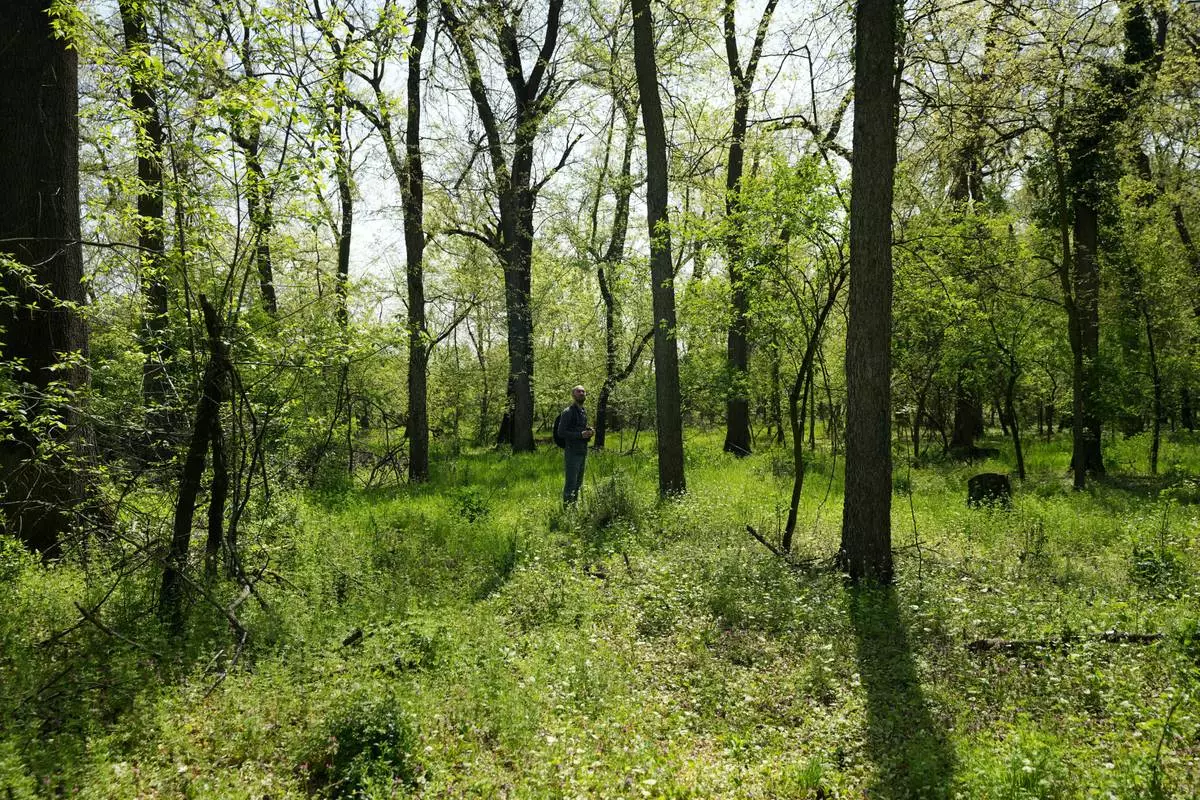
Uros Stojiljkovic from the Bird Protection and Study Society walks through a small forest dubbed the Nightingale's Forest near the village of Plandiste, in the flat, farming region of Serbia, Thursday, April 16, 2026. (AP Photo/Darko Vojinovic)

Uros Stojiljkovic from the Bird Protection and Study Society walks through a small forest dubbed the Nightingale's Forest near the village of Plandiste, in the flat, farming region of Serbia, Thursday, April 16, 2026. (AP Photo/Darko Vojinovic)

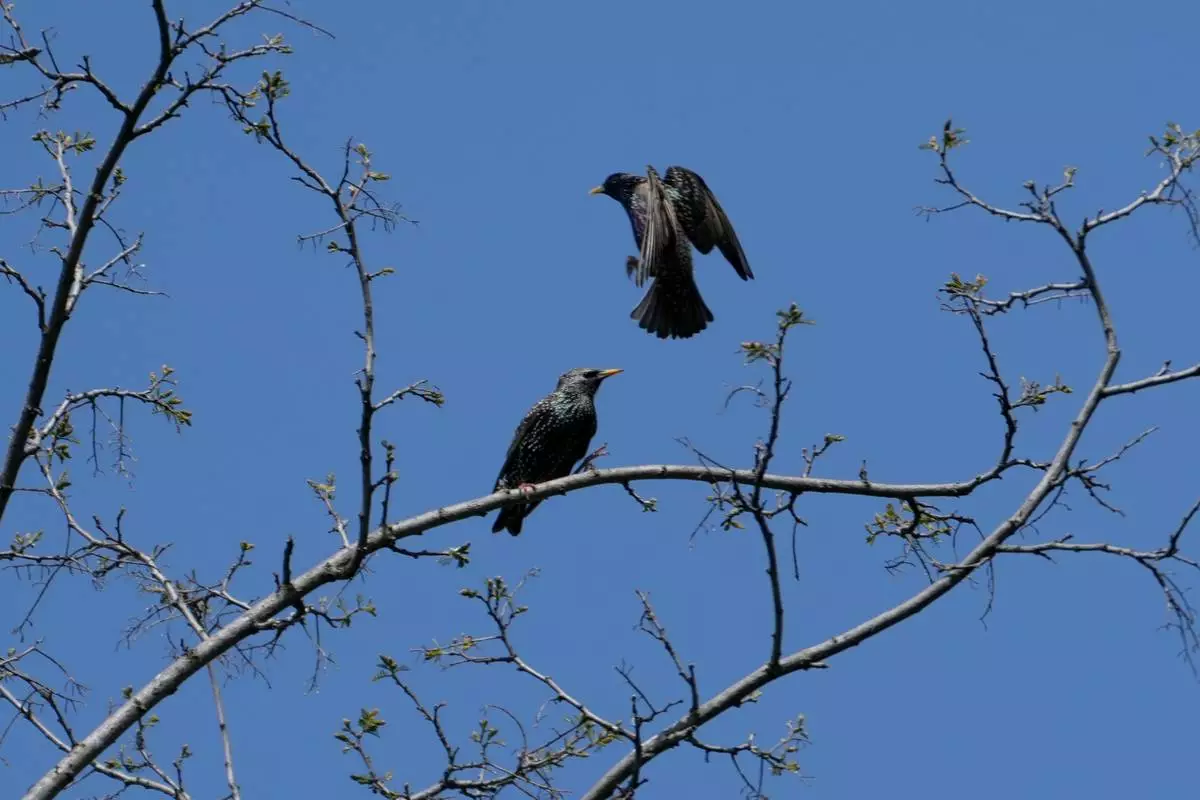
Common starlings are seen on a tree in a small forest dubbed the Nightingale's Forest near the village of Plandiste, in the flat, farming region of Serbia, Thursday, April 16, 2026. (AP Photo/Darko Vojinovic)

Common starlings are seen on a tree in a small forest dubbed the Nightingale's Forest near the village of Plandiste, in the flat, farming region of Serbia, Thursday, April 16, 2026. (AP Photo/Darko Vojinovic)

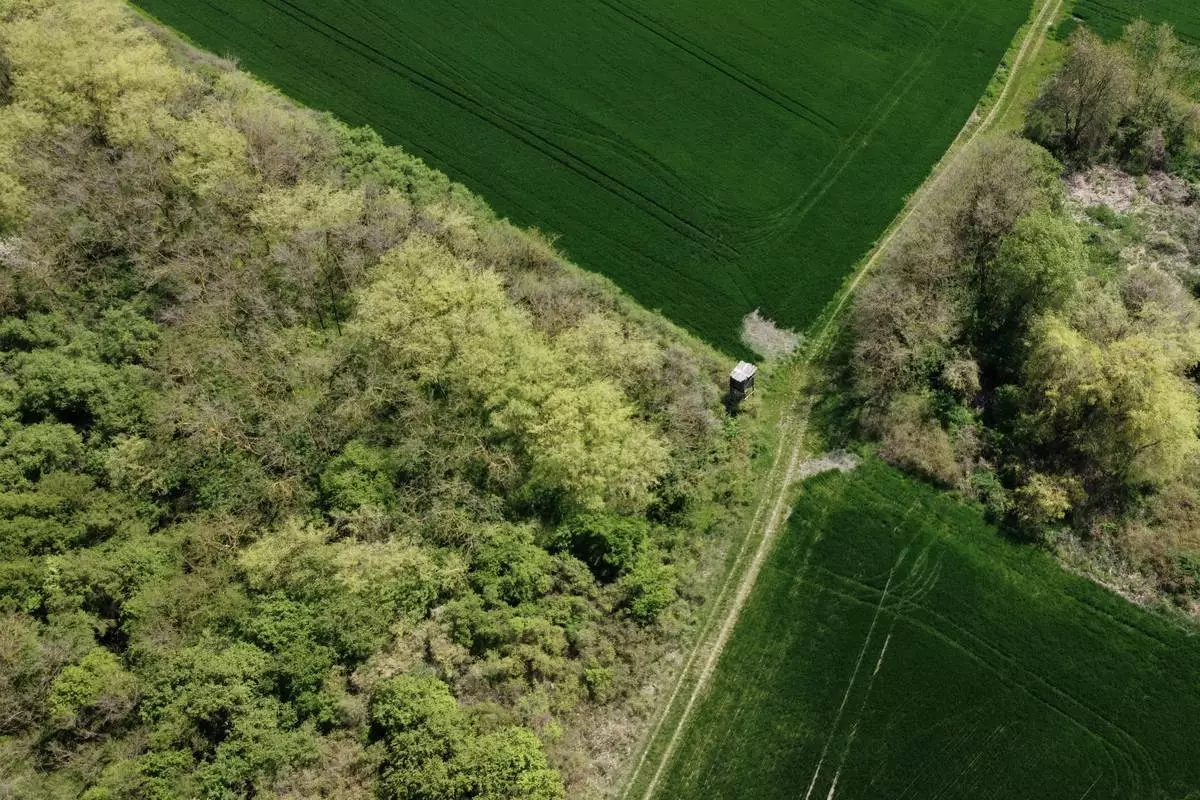
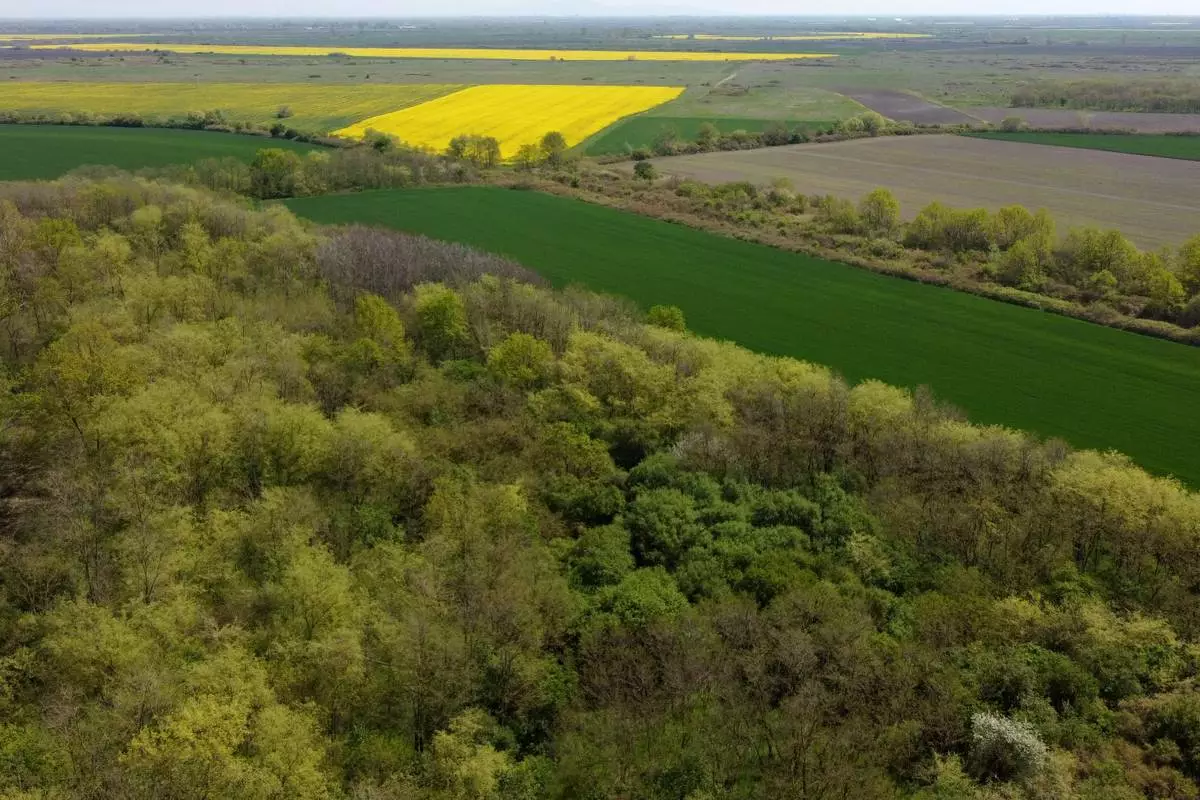
A small forest dubbed the Nightingale's Forest is seen near the village of Plandiste, in the flat, farming region of Serbia, Thursday, April 16, 2026. (AP Photo/Darko Vojinovic)

A small forest dubbed the Nightingale's Forest is seen near the village of Plandiste, in the flat, farming region of Serbia, Thursday, April 16, 2026. (AP Photo/Darko Vojinovic)

A small forest dubbed the Nightingale's Forest is seen near the village of Plandiste, in the flat, farming region of Serbia, Thursday, April 16, 2026. (AP Photo/Darko Vojinovic)

A small forest dubbed the Nightingale's Forest is seen near the village of Plandiste, in the flat, farming region of Serbia, Thursday, April 16, 2026. (AP Photo/Darko Vojinovic)

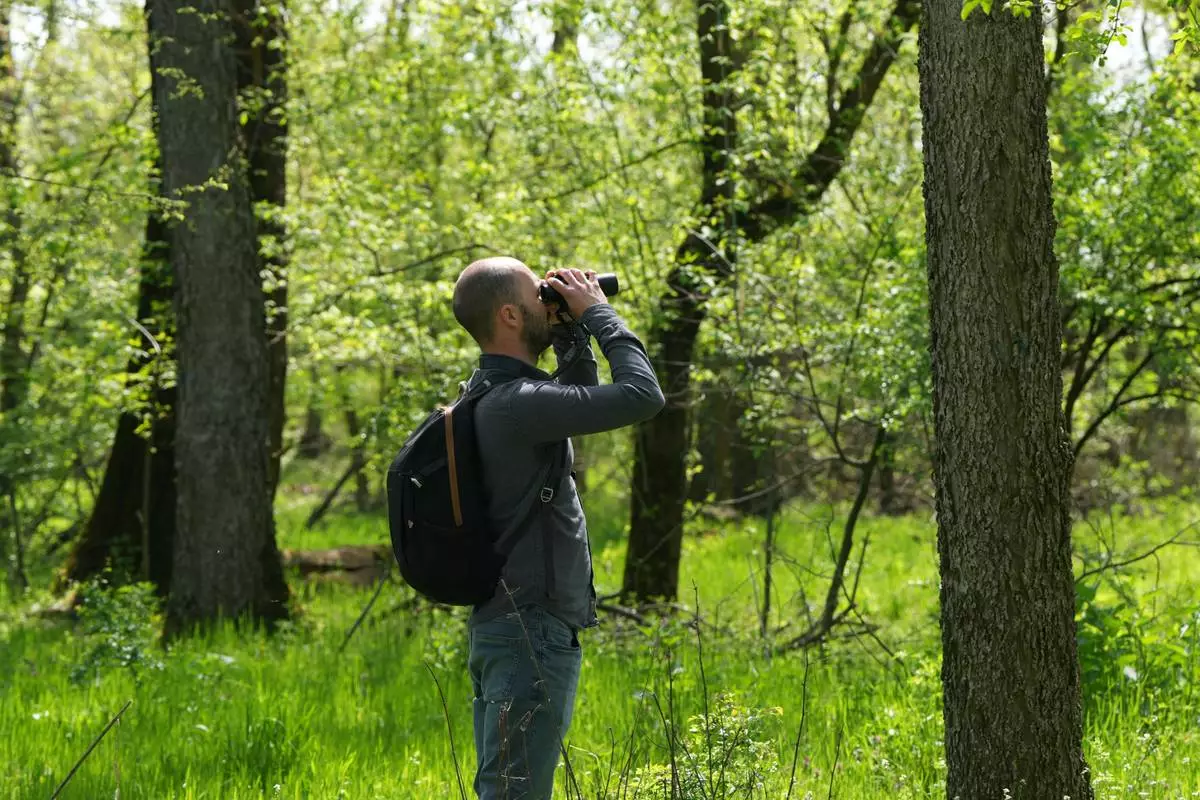
Uros Stojiljkovic from the Bird Protection and Study Society looks through binoculars while watching birds in a small forest dubbed the Nightingale's Forest near the village of Plandiste, in the flat, farming region of Serbia, Thursday, April 16, 2026. (AP Photo/Darko Vojinovic)

Uros Stojiljkovic from the Bird Protection and Study Society looks through binoculars while watching birds in a small forest dubbed the Nightingale's Forest near the village of Plandiste, in the flat, farming region of Serbia, Thursday, April 16, 2026. (AP Photo/Darko Vojinovic)

Recommended Articles