WASHINGTON (AP) — After weeks of delay, the House voted Thursday to fund much of the Department of Homeland Security, but not its immigration enforcement operations, and send the bipartisan package to President Donald Trump to sign, ending the longest agency shutdown in history.
The White House had warned that temporary funding Trump had tapped to pay Transportation Security Administration and other agency personnel would “soon run out,” and that sparked new threats of airport disruptions.
DHS has been without routine funds since Feb. 14, causing hardship for workers, though much of Trump’s immigration agenda that is central to the dispute is being funded separately.
“It is about damn time,” said Rep. Rosa DeLauro of Connecticut, the top Democrat on the House Appropriations Committee, who proposed the bill more than 70 days ago.
The House swiftly voted by voice, without a formal roll call, to pass the measure. It was an abrupt end to the standoff that began months ago, after Trump's deadly immigration crackdown in Minneapolis launched a reckoning on Capitol Hill over the money being sent to fuel the president's agenda.
Democrats refused to fund U.S. Immigration and Customs Enforcement and the Border Patrol without changes to those operations after the fatal shootings of two U.S. citizens by federal agents during protests against the immigration actions in Minneapolis. Republicans would not go along with a plan pushed by Democrats to fund TSA and the other parts of DHS without the money for ICE and Border Patrol.
While the Senate unanimously approved the bipartisan package a month ago, the bill languished in the House.
Johnson, R-La., himself had just last month called the bill a “joke.”
To break the impasse, Republicans in both the House and Senate decided to tackle the immigration enforcement funding on their own through what is called budget reconciliation, a cumbersome weekslong process ahead.
By beginning that budget process Johnson was able to unlock a broader bipartisan bill for TSA agents and the rest of DHS. House Republicans late Wednesday adopted budget resolution on a largely party-line vote, 215-211, that is focused on eventually providing $70 billion for immigration enforcement and deportations for the remainder of Trump’s time in office and ensure Democrats can no longer block funding. Trump's term ends in January 2029.
Johnson acknowledged after the vote that he had trashed the bill before. But he said that with the new budget process for funding immigration enforcement on its own, he was ready to pass it "with no crazy Democrat reforms."
One key Republican, Rep. Chip Roy of Texas, said isolating the immigration-related money on a separate track is “offensive to the men and women who serve in ICE and Border Patrol, and are serving this country every single day.”
The White House urged Congress this week to act, warning that the money Trump tapped to temporarily pay TSA and other workers through executive actions was drying up.
“DHS will soon run out of critical operating funds, placing essential personnel and operations at risk,” said a memo Tuesday from the Office of Management and Budget. Most of its employees are considered essential and have remained on the job.
Immigration enforcement workers have largely been paid through the flush of new cash — some $170 billion — that Congress approved as part of Trump’s tax cuts bill last year. Others, including at the TSA, have had to rely on Trump’s intervention through executive action to ensure their paychecks.
But with salaries topping $1.6 billion every two weeks, DHS Secretary Markwayne Mullin said recently, those funds were dwindling.
More than 1,000 TSA officers have quit since the shutdown began, according to Airlines for America, the U.S. airlines trade group that on Wednesday called on Congress to fully fund the Cabinet department.
“The urgency to provide predictable and stable funding for TSA is growing stronger by the day,” the group said in a statement. “Time and time again, our nation’s aviation workers and customers have been the victim of Congress’ failure to do their jobs.”
The go-it-alone strategy under the budget resolution process is the same that was used last year to approve Trump’s tax cuts bill, which all Democrats opposed.
With the budget resolution now adopted by the House and Senate, lawmakers will next draft the actual $70 billion ICE and Border Patrol funding bill, with voting expected in May.
Trump has said he wants it on his desk by June 1.
Associated Press writer Rio Yamat in Las Vegas contributed to this report.

FILE - Sen. Markwayne Mullin, R-Okla., speaks with reporters on the steps at the Capitol in Washington, Thursday, March 5, 2026. (AP Photo/J. Scott Applewhite, File)

House Speaker Mike Johnson of La., watches before Britain's King Charles III arrives to speak to a joint meeting of Congress in the House Chamber at the U.S. Capitol, Tuesday, April 28, 2026, in Washington. (AP Photo/Matt Rourke)
FILE - The Department of Homeland Security logo during a news conference in Washington, Feb. 25, 2015. (AP Photo/Pablo Martinez Monsivais, File)
NEW YORK (AP) — Oil prices whipsawed on Thursday and surged toward their highest levels since the war with Iran began, only for the leaps to quickly vanish. The U.S. stock market, meanwhile, is rising following strong profit reports from big companies like Alphabet.
The S&P 500 rose 0.8% and is just above its all-time high set earlier this week, as companies keep delivering fatter profits for the start of 2026 than analysts expected, even with very high oil prices and uncertainty about the economy. The Dow Jones Industrial Average was up 725 points, or 1.5%, as of 1:57 p.m. Eastern time, and the Nasdaq composite was 0.7% higher.
Alphabet led the way and climbed 9.4% after the owner of Google and YouTube reported profit for the latest quarter that almost doubled analysts’ expectations. Investments in artificial intelligence “are lighting up every part of the business,” CEO Sundar Pichai said.
The steadiness on Wall Street followed manic swings in the oil market, where prices surged overnight on worries that the Iran war will affect the flow of crude for a long time. Iran has closed the Strait of Hormuz to oil tankers, keeping them pent up in the Persian Gulf and away from customers worldwide, while a U.S. Navy blockade is preventing Iran from selling its own oil.
Traders are always buying and selling contracts for different kinds of oil, going out for many months. In the most actively traded part of the market for Brent crude, for delivery in July, the price got as high as $114.70 per barrel overnight. It then fell back toward $107 before sitting at $109.08, down 1.2%.
So far during the war, the peak price for the most actively traded Brent contract is $119.50, which was set last month.
In a less actively traded corner of the Brent market, the price for a barrel to be delivered in June briefly went above $126 overnight before pulling back toward $113.
Brent's price is still much more expensive than the roughly $70 level it was at before the war. But the morning's easing, along with the continuing flood of better-than-expected profit reports from U.S. companies, helped keep Wall Street stable near its records.
Caterpillar and Eli Lilly rallied by more than 10% and Royal Caribbean jumped 4.4% after delivering profits for the latest quarter that topped analysts’ expectations. That’s big because stock prices tend to follow the track of corporate profits over the long term.
Still, a better-than-expected result isn’t always enough to boost a stock’s price if it’s already shot much higher.
Meta Platforms tumbled 8.8% even though the company behind Facebook and Instagram made more profit last quarter than expected. Investors focused more on Meta’s increased forecast for how much it will spend on data centers and other investments this year as it builds out its AI capabilities, up to a range of $125 billion to $145 billion.
Doubts are still high among some investors about whether all the AI spending by Meta and other companies will produce enough profit and productivity to make it worth it.
Microsoft fell 5.2% after likewise raising its forecast for investments and other capital spending. But analysts also said accelerating trends at its Azure business were encouraging.
Amazon slid 1.1% despite blowing past analysts’ expectations for earnings in the latest quarter.
In the bond market, Treasury yields eased after oil prices gave up their big overnight gains. Reports also suggested the U.S. economy's growth accelerated by less in the first three months of the year than economists expected, while a measure of inflation worsened in March by about as much as expected.
A separate report said that fewer U.S. workers applied for unemployment benefits last week in an indication of fewer layoffs even though companies are announcing large cuts to workforces.
The yield on the 10-year Treasury eased to 4.39% from 4.42% late Wednesday.
In stock markets abroad, indexes rose in Europe following a weaker finish in Asia.
London’s FTSE 100 jumped 1.6% after the Bank of England kept its main interest rate on hold. That followed similar decisions by the U.S. Federal Reserve on Wednesday and the Bank of Japan on Tuesday to keep their rates unchanged.
Germany's DAX returned 1.4%, and France's CAC 40 rose 0.5% after the European Central Bank also held its own interest rates steady.
Hong Kong’s Hang Seng lost 1.3%, while stocks added 0.1% in Shanghai after a report said China’s factory activity slowed slightly in April but remained in expansion territory for the second month.
__
AP Business Writers Chan Ho-him and Matt Ott contributed to this report.

Specialist Anthony Matesic works at his post on the floor of the New York Stock Exchange, Thursday, April 30, 2026. (AP Photo/Richard Drew)
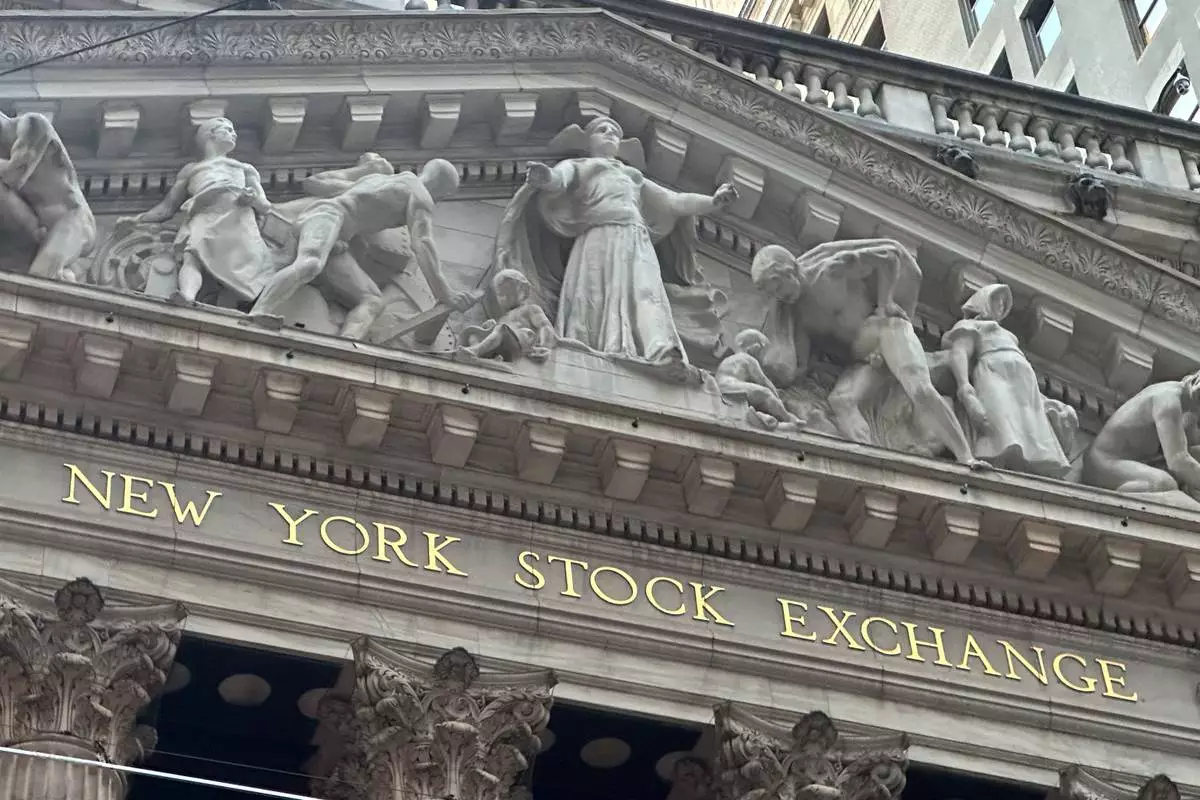
FIL:E - The New York Stock Exchange is shown in New York's Financial District on Dec. 23, 2024. (AP Photo/Peter Morgan, File)

Joseph Lawler, right, works with fellow traders on the floor of the New York Stock Exchange, Thursday, April 23, 2026. (AP Photo/Richard Drew)

The Feyzin Total oil refinery is seen outside Lyon, France, Friday, April 17, 2026. (AP Photo/Laurent Cipriani)
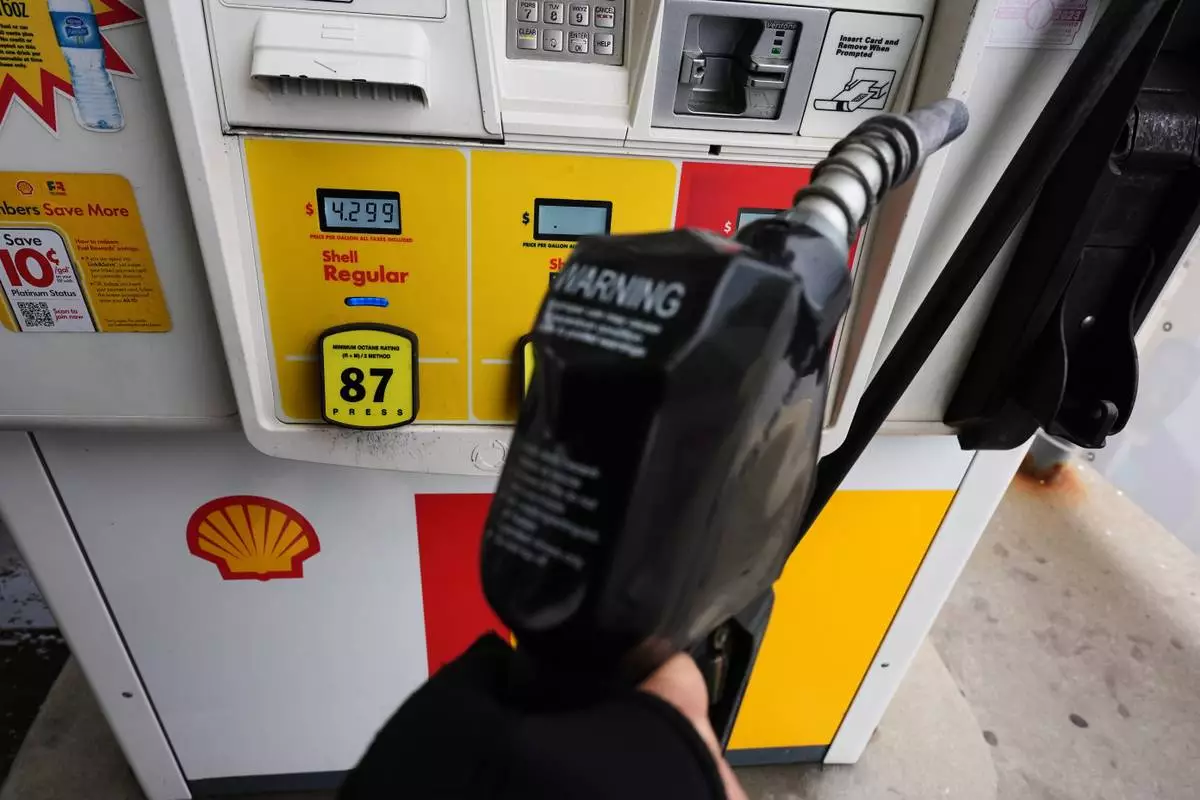
FILE - A gas price is displayed as a customer holds a fuel pump nozzle before filling up her vehicle's gas tank at a gas station, in Lincolnshire, Ill., Wednesday, April 15, 2026. (AP Photo/Nam Y. Huh, file)