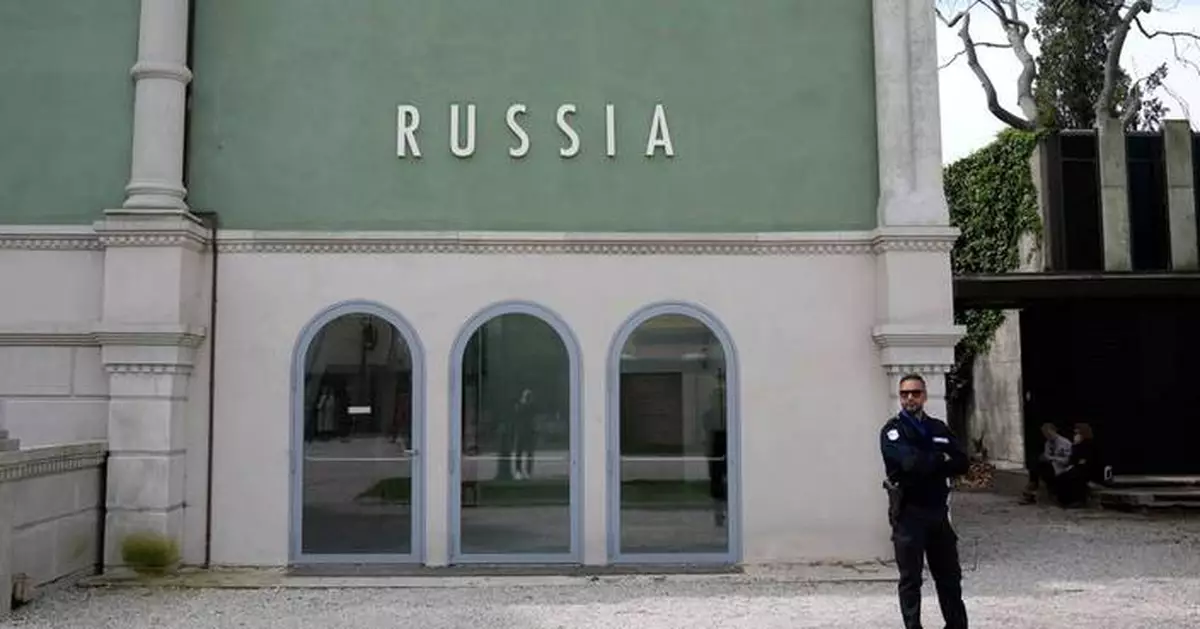
MILAN (AP) — The international jury of the Venice Biennale resigned Thursday, just days before the world’s oldest and most important contemporary art fair opens. No reason was given, but the move came as Italy's government opposed Russia's participation.
The Biennale said in a statement that the jury, made up of the president, Solange Farkas, and Zoe Butt, Elvira Dyangani Ose, Marta Kuzma, Giovanna Zapperi, had resigned. It didn't provide an explanation for the highly unusual move.
It followed a visit to the Biennale by Cultural Ministry officials who arrived on Wednesday to gather information about the reopening of the Russian Pavilion. The Italian government has opposed the Biennale's decision to allow Russia to participate in the international exhibition.
The jury was due to select winners of the highly prestigious Golden Lion and other prizes on the official opening day on May 9. The Biennale announced that after the jury's resignation, visitors to the Biennale will select winners of two awards: Best Participant in the 61st curated Exhibition “In Minor Keys,” and the Best National Participation among the 100 national pavilions. It will be awarded on the closing day, Nov. 22.
Premier Giorgia Meloni, asked about the resignations, reiterated that the government didn’t agree with the Biennale’s decision to allow the Russians to participate, but acknowledged that the Biennale is autonomous.
She said that she didn’t know if the resignations were connected to the Culture Ministry’s decision to send inspectors to Venice.
Cabinet Minister Matteo Salvini said that it was a “great idea” by the Biennale leadership to allow the exhibition’s spectators to decide the ultimate winner of the Biennale, at the end, and not a jury.
“So it will be an autonomous and democratic Biennale,” he said. “It doesn’t get any better than that.”
The European Union last week slashed a 2-million euro ($2.3-million) grant to the Venice Biennale over Russia’s participation in the exhibition for the first time since its 2022 invasion of Ukraine.
Russian artists withdrew their participation in 2022, and Russia did not present an exhibition in 2024 for its permanent pavilion, which it instead lent to Bolivia. Russia last participated in the International Art Exhibition in 2019.
The Biennale said in a statement that it “does not have the authority to prevent a country from participating. Any country recognized by the Italian Republic may request to participate.’’
Since Russia owns the pavilion built in 1914 in the historic Giardini, it was required only to send notification of its request to participate, the Biennale said.
“La Biennale di Venezia rejects any form of exclusion or censorship of culture and art. The Biennale, like the city of Venice, continues to be a place of dialogue, openness and artistic freedom, encouraging connections between peoples and cultures, with the constant hope for an end to conflicts and suffering,’’ the Biennale said.
The Biennale contemporary art exhibition is the world’s oldest and most important, comprising a main exhibition alongside national pavilions, which are curated separately by the participating nations.
The Biennale has in the past refused pressure to exclude countries, including Iran and Israel, from participating.
Nicole Winfield contributed to this report from Rome.
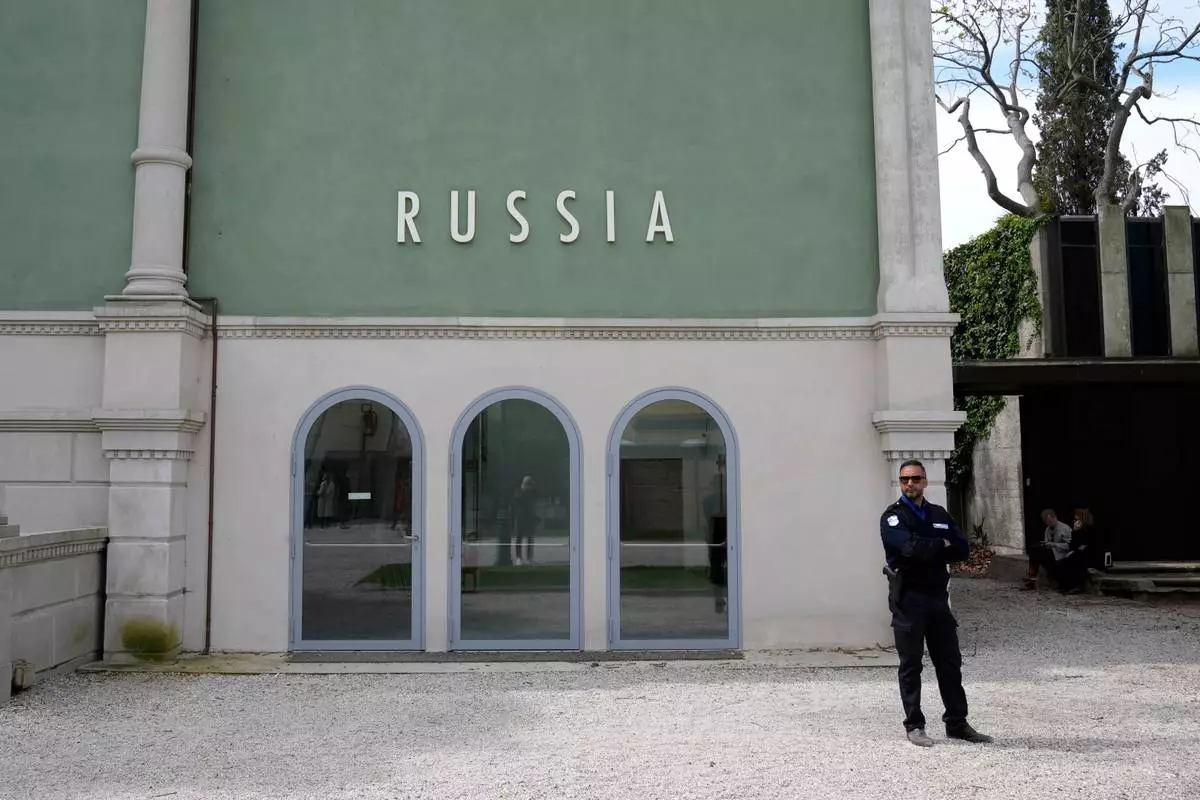
FILE - A private security officer stands next to a closed Russia's pavilion at the 59th Biennale of Arts exhibition in Venice, Italy, Tuesday, April 19, 2022. (AP Photo/Antonio Calanni, File)
WASHINGTON (AP) — After weeks of delay, the House voted Thursday to fund much of the Department of Homeland Security, but not its immigration enforcement operations, and send the bipartisan package to President Donald Trump to sign, ending the longest agency shutdown in history.
The White House had warned that temporary funding Trump had tapped to pay Transportation Security Administration and other agency personnel would “soon run out,” and that sparked new threats of airport disruptions.
DHS has been without routine funds since Feb. 14, causing hardship for workers, though much of Trump’s immigration agenda that is central to the dispute is being funded separately.
“It is about damn time,” said Rep. Rosa DeLauro of Connecticut, the top Democrat on the House Appropriations Committee, who proposed the bill more than 70 days ago.
The House swiftly voted by voice, without a formal roll call, to pass the measure. It was an abrupt end to the standoff that began months ago, after Trump's deadly immigration crackdown in Minneapolis launched a reckoning on Capitol Hill over the money being sent to fuel the president's agenda.
Democrats refused to fund U.S. Immigration and Customs Enforcement and the Border Patrol without changes to those operations after the fatal shootings of two U.S. citizens by federal agents during protests against the immigration actions in Minneapolis. Republicans would not go along with a plan pushed by Democrats to fund TSA and the other parts of DHS without the money for ICE and Border Patrol.
While the Senate unanimously approved the bipartisan package a month ago, the bill languished in the House.
Johnson, R-La., himself had just last month called the bill a “joke.”
To break the impasse, Republicans in both the House and Senate decided to tackle the immigration enforcement funding on their own through what is called budget reconciliation, a cumbersome weekslong process ahead.
By beginning that budget process Johnson was able to unlock a broader bipartisan bill for TSA agents and the rest of DHS. House Republicans late Wednesday adopted budget resolution on a largely party-line vote, 215-211, that is focused on eventually providing $70 billion for immigration enforcement and deportations for the remainder of Trump’s time in office and ensure Democrats can no longer block funding. Trump's term ends in January 2029.
Johnson acknowledged after the vote that he had trashed the bill before. But he said that with the new budget process for funding immigration enforcement on its own, he was ready to pass it "with no crazy Democrat reforms."
One key Republican, Rep. Chip Roy of Texas, said isolating the immigration-related money on a separate track is “offensive to the men and women who serve in ICE and Border Patrol, and are serving this country every single day.”
The White House urged Congress this week to act, warning that the money Trump tapped to temporarily pay TSA and other workers through executive actions was drying up.
“DHS will soon run out of critical operating funds, placing essential personnel and operations at risk,” said a memo Tuesday from the Office of Management and Budget. Most of its employees are considered essential and have remained on the job.
Immigration enforcement workers have largely been paid through the flush of new cash — some $170 billion — that Congress approved as part of Trump’s tax cuts bill last year. Others, including at the TSA, have had to rely on Trump’s intervention through executive action to ensure their paychecks.
But with salaries topping $1.6 billion every two weeks, DHS Secretary Markwayne Mullin said recently, those funds were dwindling.
More than 1,000 TSA officers have quit since the shutdown began, according to Airlines for America, the U.S. airlines trade group that on Wednesday called on Congress to fully fund the Cabinet department.
“The urgency to provide predictable and stable funding for TSA is growing stronger by the day,” the group said in a statement. “Time and time again, our nation’s aviation workers and customers have been the victim of Congress’ failure to do their jobs.”
The go-it-alone strategy under the budget resolution process is the same that was used last year to approve Trump’s tax cuts bill, which all Democrats opposed.
With the budget resolution now adopted by the House and Senate, lawmakers will next draft the actual $70 billion ICE and Border Patrol funding bill, with voting expected in May.
Trump has said he wants it on his desk by June 1.
Associated Press writer Rio Yamat in Las Vegas contributed to this report.
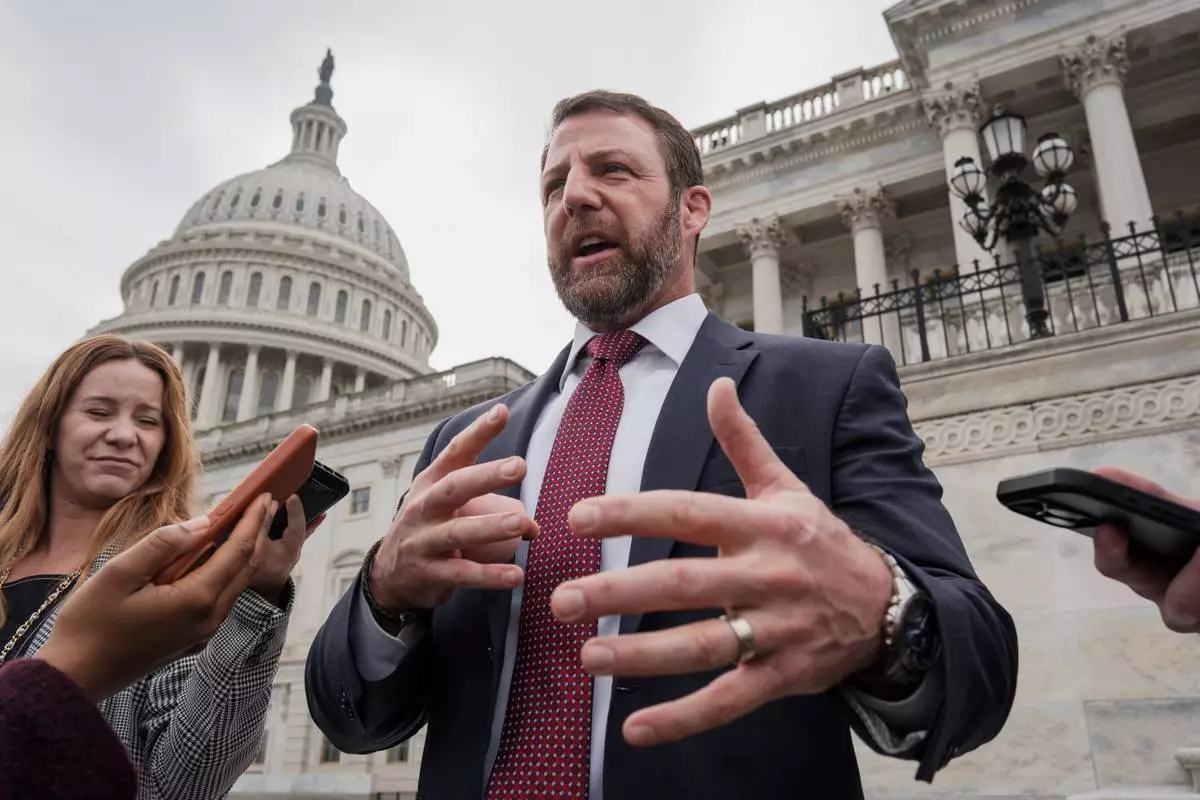
FILE - Sen. Markwayne Mullin, R-Okla., speaks with reporters on the steps at the Capitol in Washington, Thursday, March 5, 2026. (AP Photo/J. Scott Applewhite, File)
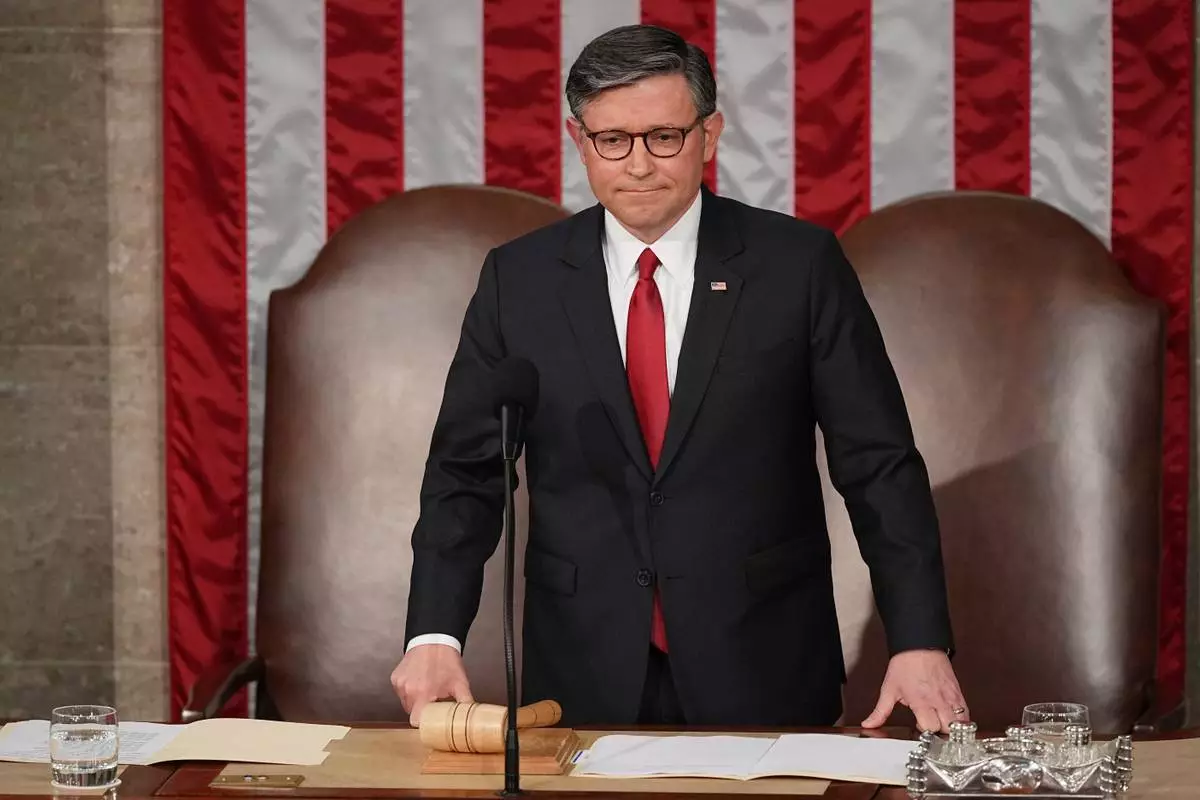
House Speaker Mike Johnson of La., watches before Britain's King Charles III arrives to speak to a joint meeting of Congress in the House Chamber at the U.S. Capitol, Tuesday, April 28, 2026, in Washington. (AP Photo/Matt Rourke)
FILE - The Department of Homeland Security logo during a news conference in Washington, Feb. 25, 2015. (AP Photo/Pablo Martinez Monsivais, File)