WASHINGTON (AP) — President Donald Trump said Thursday he is removing certain tariffs on Scotch whisky after this week’s White House visit by King Charles III and Queen Camilla of the United Kingdom.
“The King and Queen got me to do something that nobody else was able to do, without hardly even asking!” Trump posted on social media.
Trump said people had wanted this change, especially with regard to the wooden barrels in which the spirits of Scotch and bourbon can be aged. It was not quite clear from the language of Trump's post whether the import taxes were fully removed or only on products integral to the production of spirits in both the U.S. and the United Kingdom. The White House did not respond to emails seeking clarification.
The president, answering questions from reporters in the Oval Office, said the tariffs were lifted to specifically enhance the trade of barrels between Scotland and Kentucky, which produces almost all of the world's bourbon. The barrels are used to age the alcohol.
“I just took all the restrictions off so Scotland and Kentucky can start dealing again,” Trump said.
Still, John Swinney, Scotland's first minister, interpreted the president's statement as a removal of tariffs on Scotch itself, calling it a “tremendous success” for his country.
“People’s jobs were at stake. Millions of pounds were being lost every month from the Scottish economy," said Swinney, expressing gratitude to both Trump and King Charles III.
Trump has used alcohol as a pressure point in his tariff threats. Last year, he threatened a 200% tariff on European wine — a major potential blow to French and Italian vineyards that never came to fruition.
Foreign countries have responded in turn with threats on bourbon and other American products.
In the end, the Trump administration exempted cork from tariffs, a huge relief to Portugal, the leading supplier of the material used to cap wine bottles.
Chris Swonger, president and CEO of the Distilled Spirits Council in the U.S., interpreted Trump’s post as a removal of the 10% tariff on whisky from the United Kingdom.
“We applaud President Trump for working to restore a proven zero‑for‑zero model of fair, reciprocal trade between our two nations,” Swonger said in a statement. “This action strengthens transatlantic ties, brings much‑needed certainty to our industry and allows spirits producers on both sides of the Atlantic to grow, invest and support jobs at a critical time.”
AP correspondent Jill Lawless contributed from London.
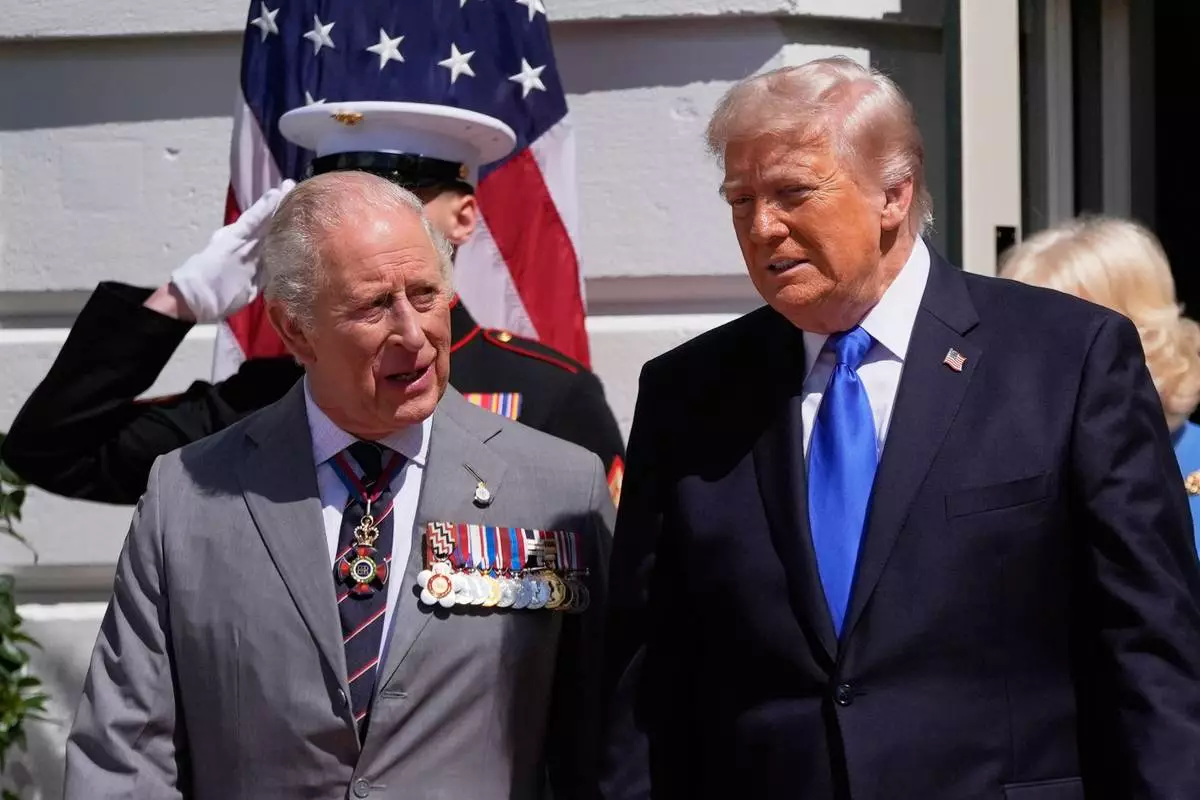
President Donald Trump and first lady Melania Trump bid farewell to Britain's King Charles III and Queen Camilla on the South Lawn of the White House, Thursday, April 30, 2026, in Washington. (AP Photo/Manuel Balce Ceneta)
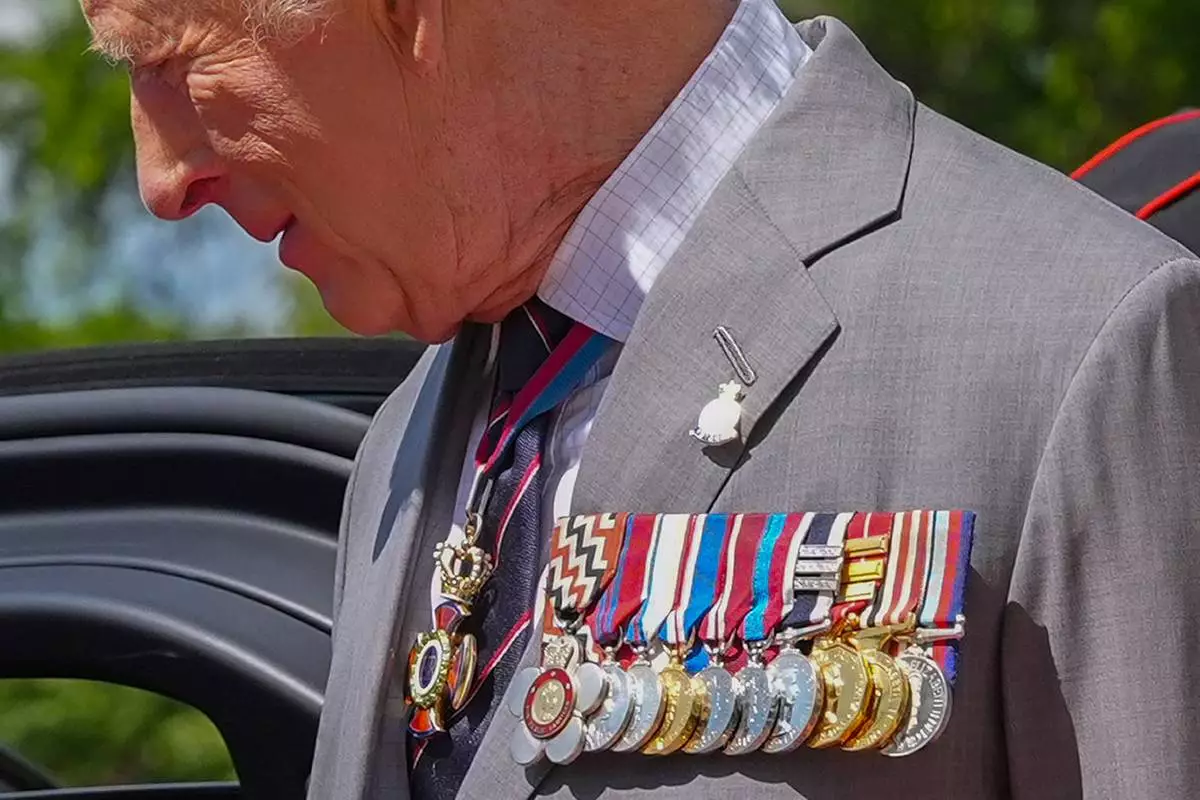
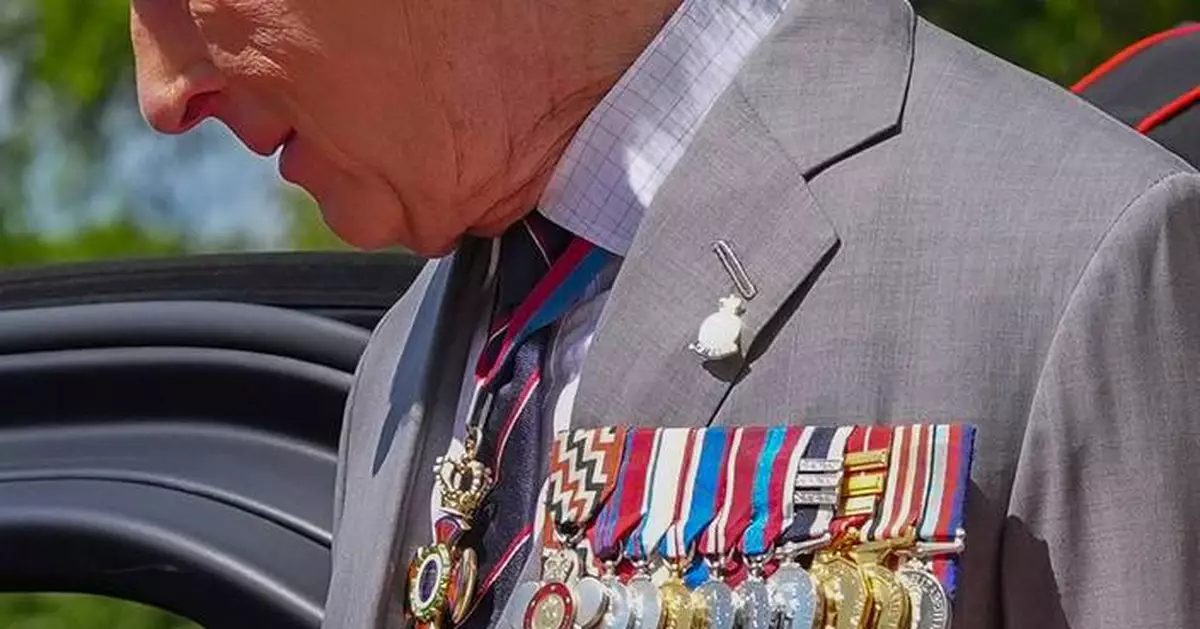
Britain's King Charles III walks to his vehicle during the departure from the South Lawn of the White House, Thursday, April 30, 2026, in Washington. (AP Photo/Alex Brandon)
DUBAI, United Arab Emirates (AP) — Iran’s supreme leader vowed Thursday in a defiant tone to protect the Islamic Republic’s nuclear and missile capabilities, which U.S. President Donald Trump has sought to curtail through airstrikes and as part of a wider deal to cement the war’s shaky ceasefire.
In a statement read by a state television anchor, Ayatollah Mojtaba Khamenei said the only place Americans belonged in the Persian Gulf is “at the bottom of its waters" and that a “new chapter” was being written in the region's history. Khamenei has not been seen in public since taking over as supreme leader following the killing of his father in the war’s opening airstrikes.
His remarks come as Iran's economy is reeling and its oil industry is being squeezed by a U.S. Navy blockade halting its tankers from getting out to sea. The world economy is also under pressure as Iran maintains its chokehold on the Strait of Hormuz, through which a fifth of all crude oil is transported. On Thursday, the global benchmark for oil, Brent crude, traded as high as $126 a barrel.
That shock to oil supplies and prices is putting pressure on Trump, who is floating a new plan to reopen the critical passageway used by the U.S.'s Gulf allies to export their oil and gas.
Under the plan, the U.S. would continue its blockade on Iranian ports, while coordinating with allies to impose higher costs on Iran’s attempts to subvert the free flow of energy, according to a senior administration official.
Trump is weighing multiple diplomatic and policy options to push Iran to end its chokehold, said the official, who spoke on condition of anonymity because they were not authorized to comment publicly.
The new proposal, first reported by The Wall Street Journal, is Trump's latest effort to persuade other nations to help reopen the strait.
The U.S. blockade is designed to prevent Iran from selling its oil, depriving it of crucial revenue while also potentially creating a situation where Tehran has to shut off production because it has nowhere to store oil.
A recent Iranian proposal would push negotiations on the country’s nuclear program to a later date. Trump said one of the major reasons he went to war was to deny Iran the ability to develop nuclear weapons. Iran has long maintained its program is peaceful, though it enriched uranium at near-weapons-grade levels of 60%.
Pakistan on Thursday said it was still facilitating indirect talks between the U.S. and Iran aimed at easing tensions, but Islamabad would also welcome direct communication between the two sides, even by phone.
“If the two parties can engage in real-time conversations, that could ease the sticking points,” said Ministry of Foreign Affairs spokesperson Tahir Andrabi at a weekly news briefing. He declined to share details of any Iranian or U.S. proposals.
Speaking to mark Persian Gulf Day in Iran, Khamenei's remarks signaled that nuclear issues and Iran's ballistic missile program wouldn't be traded away.
“Ninety million proud and honorable Iranians inside and outside the country regard all of Iran’s identity-based, spiritual, human, scientific, industrial and technological capacities — from nanotechnology and biotechnology to nuclear and missile capabilities — as national assets, and will protect them just as they protect the country’s waters, land and airspace,” Khamenei said.
Khamenei referred to America as the “Great Satan,” a long hurled insult by Iranian leaders toward the U.S. since the 1979 Islamic Revolution. He said Americans should have no business in the Persian Gulf.
“Foreigners who come from thousands of kilometers away to act with greed and malice there have no place in it — except at the bottom of its waters," said Khamenei, who was reportedly wounded in the Feb. 28 attack that killed his father, the 86-year-old Supreme Leader Ayatollah Ali Khamenei.
In his remarks, Khamenei seemed to signal Iran would maintain its control over the waterway, which sits in the territorial waters of Iran and Oman. Iran had been charging some ships reportedly $2 million apiece to travel through the strait.
He said that Iran's control of the Strait of Hormuz will make the Gulf more secure, and that Tehran's “legal rules and new management” of the strait will benefit all the region’s nations.
However, the world considered the strait an international waterway, open to all without paying tolls. Gulf Arab nations, chief among them the United Arab Emirates, have decried Iran's control of the strait as akin to piracy.
Iran announced Thursday it hanged a 21-year-old man over charges stemming from the nationwide protests in January, the judiciary’s Mizan news agency reported.
The agency identified the executed man as Sasan Azadvar, from Isfahan. It said he was hanged for the crime of “effectively cooperating with the enemy by attacking police officers” during the protests.
Activists and rights groups say a crackdown on dissent, including a wave of executions, has further intensified since the U.S.-Israel war with Iran.
The U.N. Human Rights Chief Volker Turk said on Wednesday at least 21 people have been executed since the start of the war on Feb. 28, including nine in connection with the protests and 10 for alleged membership in opposition groups. At least two others were hanged on espionage charges.
The Human Rights Activist News Agency said Azadvar, a Karate athlete, was arrested in Isfahan on Jan. 1 during the nationwide protests and sentenced to death in March.
Iran routinely holds closed-door trials in which defendants are unable to challenge the accusations they face, rights groups say, warning that several other people remain at risk of execution.
Madhani reported from Washington. Associated Press writers Munir Ahmed in Islamabad, Amir Vahdat in Tehran, Iran, and Sarah El Deeb in Beirut contributed to this report.
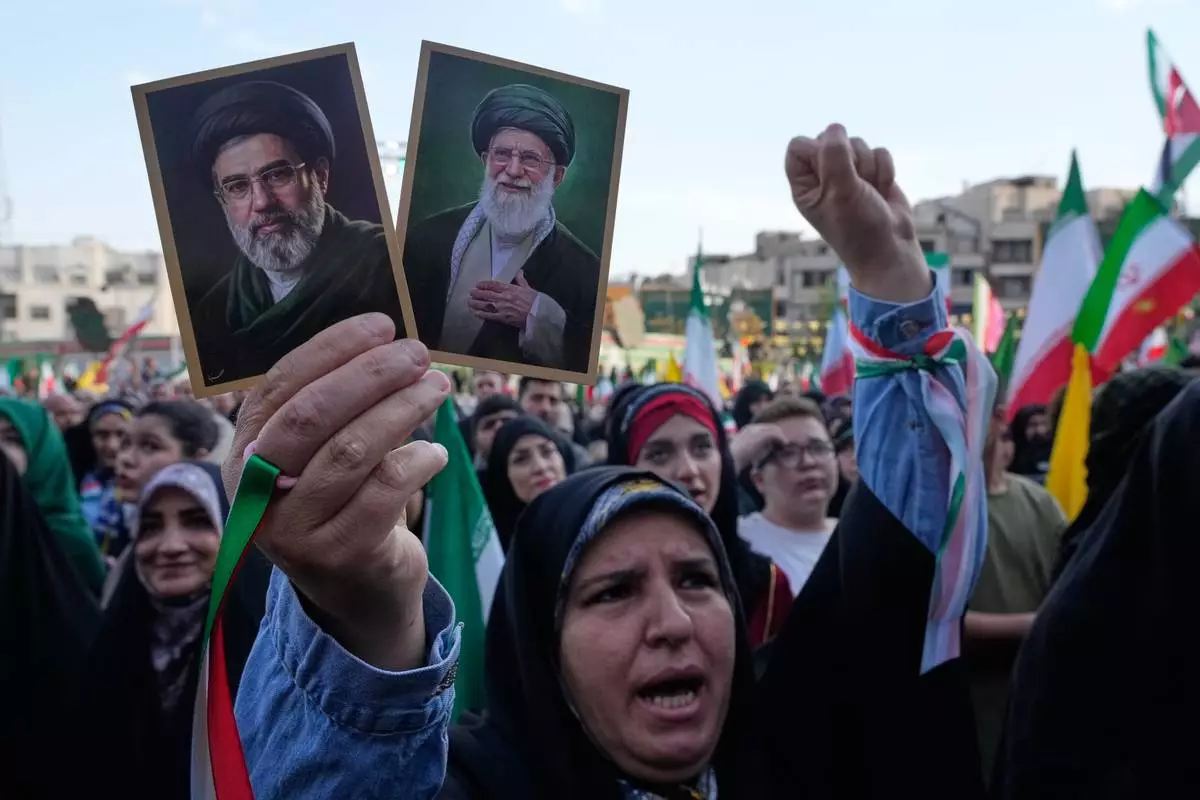
A woman holds up pictures of the Iranian Supreme Leader Ayatollah Mojtaba Khamenei, left, and his father, the slain Ayatollah Ali Khamenei in a state-organised rally celebrating the birthday of Imam Reza, the 8th Shiite Muslims' Imam, and supporting the supreme leader, in Tehran, Iran, Wednesday, April 29, 2026. (AP Photo/Vahid Salemi)
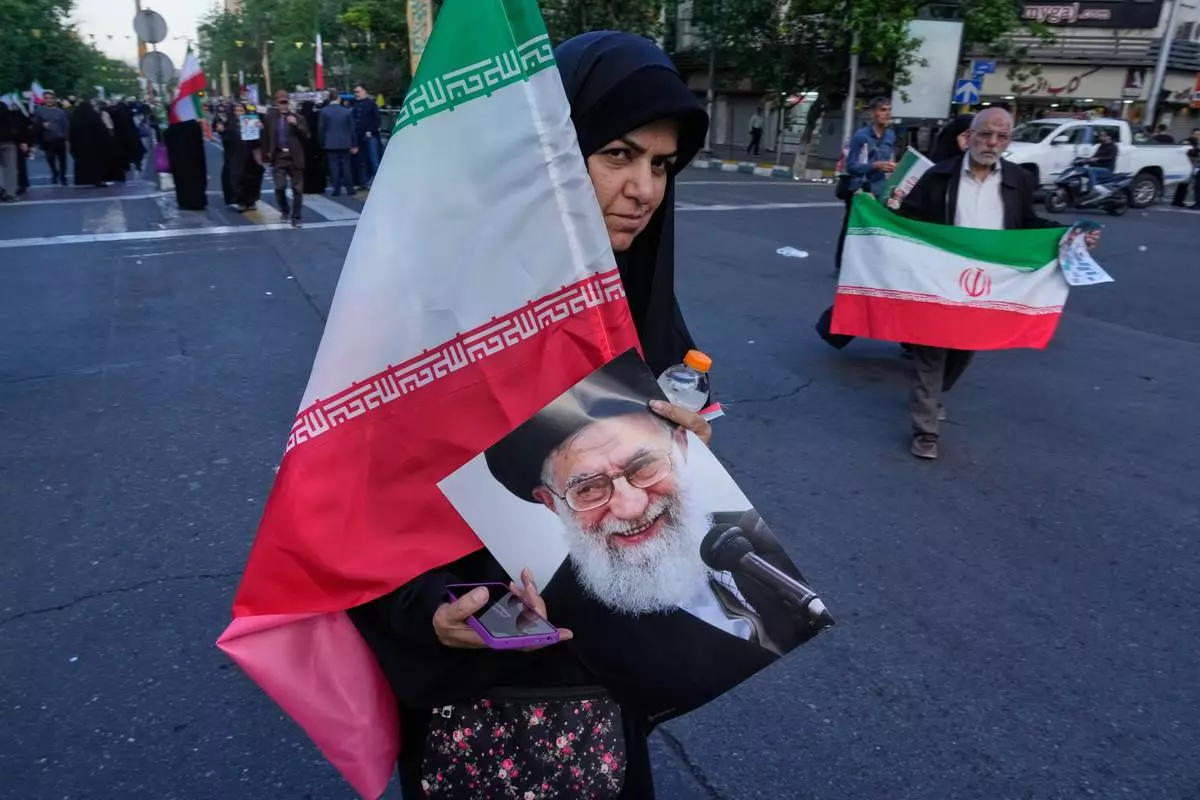
A woman carries an Iranian flag and a poster of the late Supreme Leader Ayatollah Ali Khamenei during a state-organised rally in Tehran, Iran, Wednesday, April 29, 2026, celebrating the birthday of Imam Reza, the 8th Shiite Muslims' Imam, and supporting Supreme Leader Ayatollah Mojtaba Khamenei. (AP Photo/Vahid Salemi)
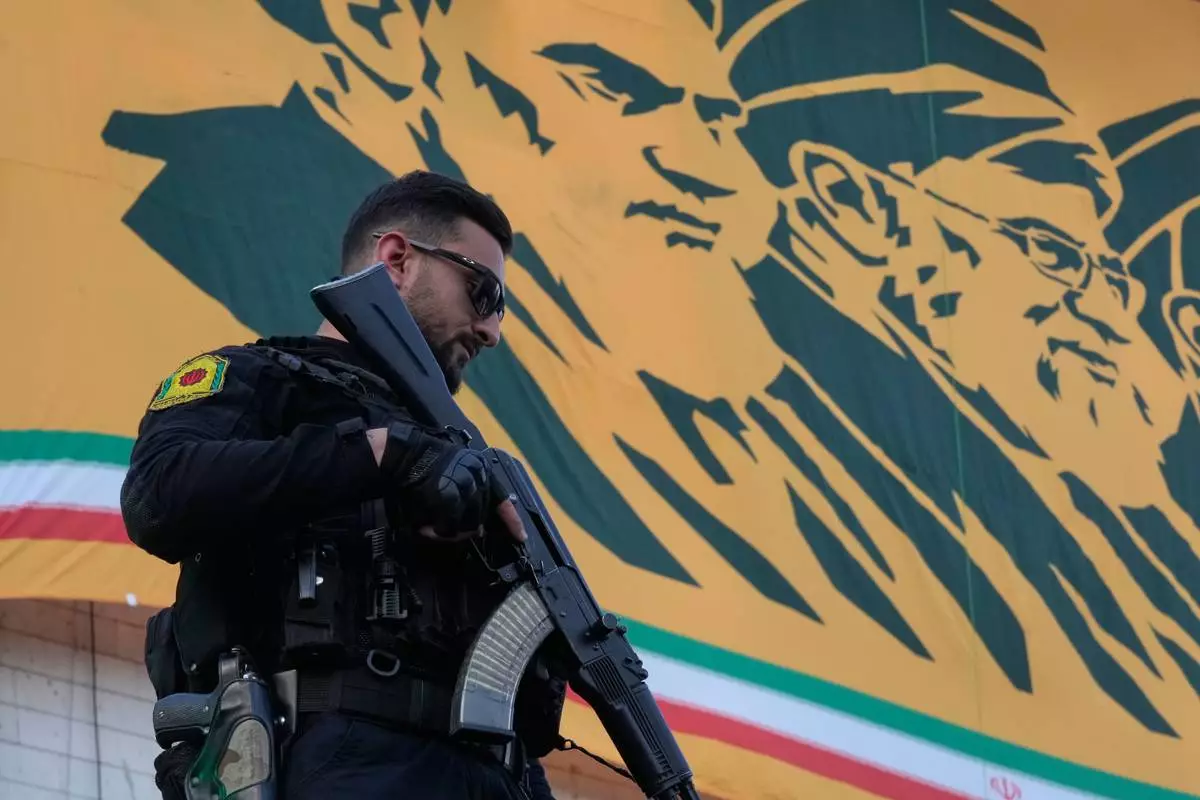
A police officer stands guard in front of a banner with portraits of the late Iranian revolutionary founder Ayatollah Khomeini, left, and late Supreme Leader Ayatollah Ali Khamenei in a state-organised rally celebrating the birthday of Imam Reza, the 8th Shiite Muslims' Imam, and supporting the supreme leader, in Tehran, Iran, Wednesday, April 29, 2026. (AP Photo/Vahid Salemi)
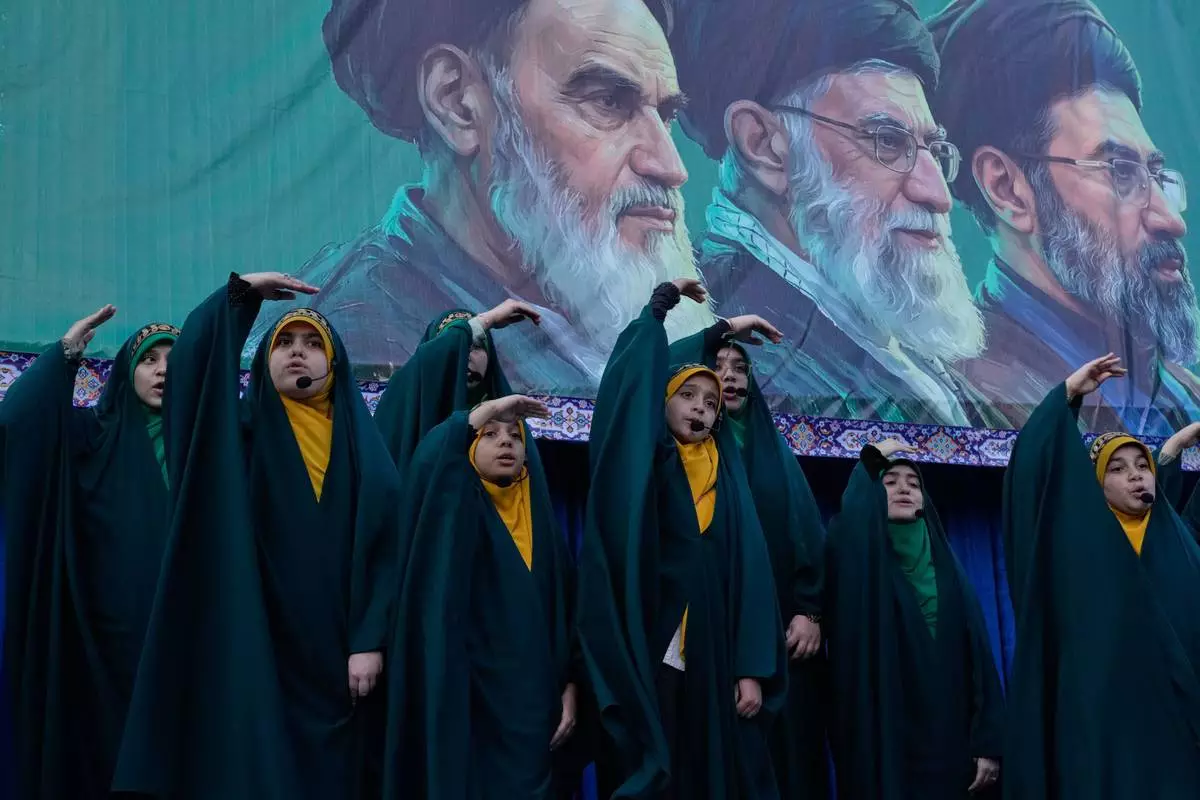
Girls sing a song as they show the movement of missiles with their hands next to the portraits of the late Iranian revolutionary founder Ayatollah Khomeini, left, late Supreme Leader Ayatollah Ali Khamenei, center, and Supreme Leader Ayatollah Mojtaba Khamenei, in a state-organised rally celebrating the birthday of Imam Reza, the 8th Shiite Muslims' Imam, and supporting the supreme leader, in Tehran, Iran, Wednesday, April 29, 2026. (AP Photo/Vahid Salemi)