The Federal Emergency Management Agency has moved to address staffing issues that triggered concern and uncertainty among and about its workforce, including reinstating employees put on leave for publicly opposing agency policies, and extending contracts for some workers whose terms were set to expire soon.
Fourteen FEMA employees who signed a public letter of dissent last August sounding alarms about the nation's disaster preparedness were reinstated after being put on paid administrative leave for eight months, according to two FEMA staff members.
They were among over 190 current and former FEMA employees who signed the letter but were the only active employees who included their names. The letter, known as the “Katrina Declaration,” called out multiple policy decisions by President Donald Trump's administration that the signatories said risked a catastrophe like the one seen after Hurricane Katrina.
“I feel pretty vindicated, and like we did the right thing,” said Abby McIlraith, a FEMA emergency management specialist who is among the reinstated workers. The group received emails Wednesday informing them that an investigation into that matter was closed and instructing them to return to work Thursday, she said. Their reinstatement was first reported by NBC News.
FEMA leadership also told some employees this week that it will be extending certain term-limited employees’ contracts, according to documents seen by The Associated Press, after extended uncertainty over the future of those positions.
The decisions are the latest indications that Homeland Security Secretary Markwayne Mullin is moving away from the harsher approach toward FEMA taken by his predecessor, Kristi Noem, before she was fired as DHS leader.
Mullin quickly reversed Noem’s policy that her office approve any DHS expenditure over $100,000 and has released more than $1 billion in backlogged FEMA grants and reimbursements to states, tribes and territories since being sworn in last month.
A FEMA spokesperson told The Associated Press that while it does not comment on specific personnel actions, the agency is taking “targeted steps to stabilize our workforce and strengthen readiness” as it prepares for the 2026 Atlantic hurricane season and the FIFA World Cup, both beginning in June.
“Under new leadership, FEMA is addressing outstanding personnel actions to ensure workforce stability and a strong, deployable surge force for upcoming national events and potential disasters,” the spokesperson said.
The $100,000 approval policy was one of several actions called out in the dissent letter, released Aug. 25 of last year. Others included the DHS decision to reassign some FEMA employees to Immigration and Customs Enforcement, the failure to appoint a qualified FEMA administrator as stipulated by law, and cuts to mitigation programs, preparedness training and the FEMA workforce.
The letter also called for FEMA to be taken out from under DHS and restored to a Cabinet-level agency.
One day after the letter's release, the 14 staffers were put on indefinite paid administrative leave. They were reinstated in early December only to suddenly be placed on leave again after one day. A DHS spokesperson at the time blamed “bureaucrats acting outside of their authority” for the reinstatement.
McIlraith, 24, said that experience left her feeling slightly tentative that their reinstatement would be permanent this time. Nonetheless, she was back at work at a FEMA office in Maryland Thursday, waiting to regain access to her work devices. She called her time away “a waste of taxpayer dollars.”
Pressed by Democratic Sen. Andy Kim of New Jersey about the suspended staffers’ fate in his Senate confirmation hearing last month, Mullin called whistleblower retaliation unlawful and vowed to work “within the law.”
The possible contract extensions also announced this week will apply to some of FEMA's Cadre of On-Call Response/Recovery Employees, or CORE, which make up roughly half the agency's staff. More than 10,000 CORE work on term-limited assignments of two-to-four years, a system that allows the agency to build up and taper down its capacity as needed.
FEMA abruptly stopped renewing some of those CORE employees’ contracts at the start of 2026 as they expired, and extended others only 90 days. An ongoing lawsuit is challenging the dismissals of hundreds of CORE staff between then and late January, when FEMA paused the nonrenewals.
An email to some staff this week said COREs with contracts that end between January and May 2026 who were previously extended for 90 days “may be reappointed for up to one year,” along with those whose contracts end after May.
The email also said that “eligible” FEMA reservists will be renewed for two years. The 7,000 reservists in the agency's surge workforce have contracts expiring May 2.
“Our readiness directly impacts our ability to help Americans in need,” the email said, “and every employee plays a critical role in meeting these challenges.”
While FEMA has not confirmed whether it will bring back CORE whose contracts weren't renewed, a FEMA employee familiar with the matter told The Associated Press that at least one CORE has been called back. The employee requested anonymity because they were not authorized to speak to media.
McIlraith said her apprehensions over FEMA’s future persist as the agency continues operating without a permanent administrator and recovers from the record-long DHS shutdown that ended Thursday.
Trump on Thursday signed a bill that funds all aspects of DHS besides immigration enforcement. The bill will replenish FEMA's dwindling disaster fund with over $26 billion.
The president has repeatedly criticized FEMA and even threatened to abolish it completely. Next week, the Trump-appointed FEMA Review Council will present its highly anticipated and months-overdue recommendation report. It is expected to propose sweeping changes to the agency.
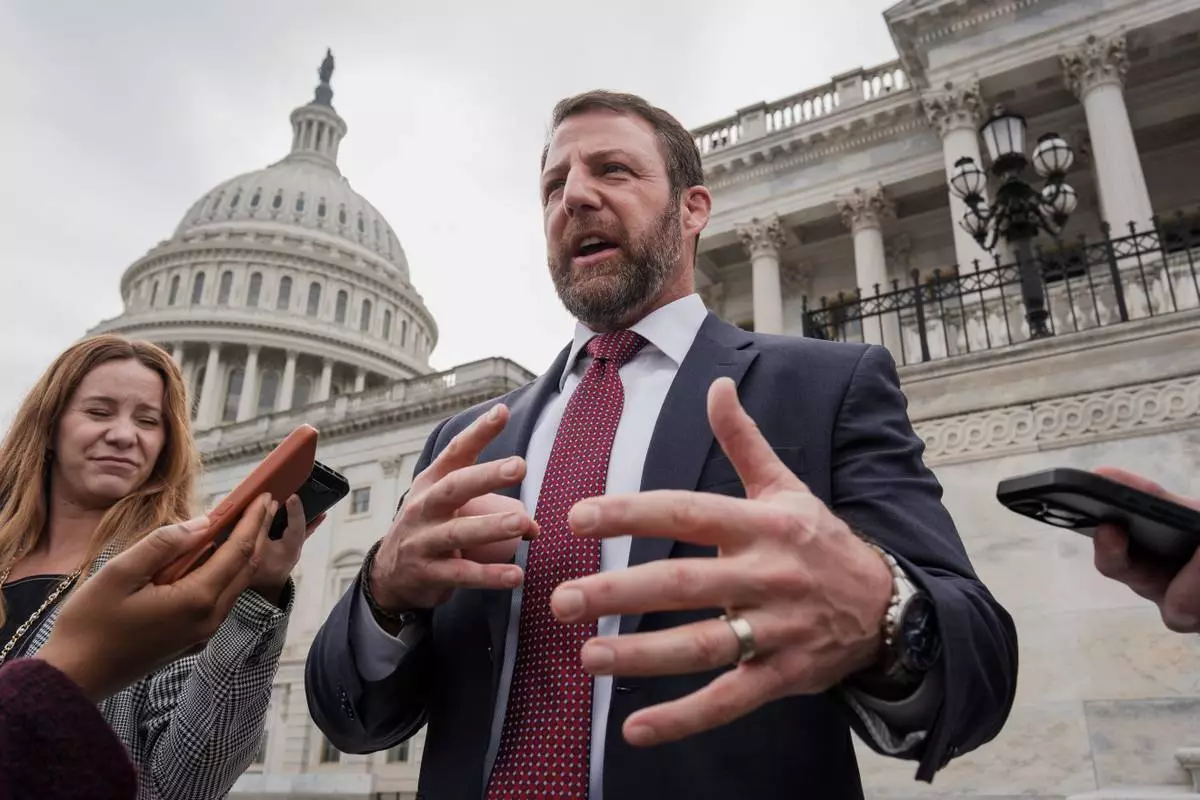
FILE - Sen. Markwayne Mullin, R-Okla., speaks with reporters on the steps at the Capitol in Washington, Thursday, March 5, 2026. (AP Photo/J. Scott Applewhite, File)

WASHINGTON (AP) — Defense Secretary Pete Hegseth appeared before Congress at a pair of hourslong hearings this week for the first time since the Trump administration went to war against Iran, with the Pentagon chief facing tough questions from skeptical Democrats.
Hegseth seemed to emerge with solid Republican support over his leadership and handling of the war. But a few GOP lawmakers questioned his dismissal of a top Army general, while some sought assurances that the Pentagon is doing everything possible to prevent civilian deaths.
The hearings Wednesday and Thursday before the House and Senate Armed Services committees delved into the Trump administration’s 2027 military budget proposal, which would boost defense spending to a historic $1.5 trillion. Hegseth and other Pentagon officials stressed the need for more drones, missile defense systems and warships.
While Republicans focused on the details of military budgeting and voiced support for the Iran operation, Democrats grilled Hegseth about the ballooning costs of the war, the huge drawdown of critical U.S. munitions and the bombing of a school that killed children.
Here are some takeaways from the hearings:
The hearings were the first time a member of President Donald Trump’s Cabinet has defended the war publicly on Capitol Hill since it entered the conflict without congressional approval two months ago.
Hegseth did not hold back in his criticism of anyone who questioned the war.
“The biggest adversary we face at this point are the reckless naysayers and defeatist words of congressional Democrats and some Republicans,” Hegseth said on Thursday as he opened the second day of hearings.
He cast the conflict as a historic victory by a president who, unlike his predecessors, is backing up his tough talk on Iran. Yet even Hegseth’s timeline for the war included a tacit admission that it has dragged on much longer than Trump’s initial pledges of only a few weeks.
Democrats relentlessly questioned Hegseth on end-goals for the war and sought to highlight the steep economic repercussions being felt through high prices for gas and other goods.
“I’m sad for all the people who voted for Trump. I’m sad for them because you betrayed them,” Rep. Ro Khanna, a California Democrat, told Hegseth as he questioned the war costs during a nearly six-hour hearing Wednesday.
Sen. Jack Reed, the Senate committee’s ranking Democrat, argued Thursday that the war has left the U.S. in a worse strategic position, with 13 American troops killed and more than 400 injured.
The Strait of Hormuz, a critical sea route for global oil shipments, remains closed, sending fuel prices skyrocketing. Iran still has highly enriched uranium and enough combat capabilities to keep the conflict locked in an impasse.
“I am concerned that you have been telling the president what he wants to hear instead of what he needs to hear,” Reed said.
The Trump administration, meanwhile, is coming under growing pressure from Republicans on Capitol Hill to find an end to the conflict, especially as a 60-day legal window expires for the president to conduct the military campaign without permission from Congress.
That deadline is Friday, but Hegseth claimed that because a fragile truce is in place, "the 60-day clock pauses or stops in a ceasefire.”
Sen. Tim Kaine, a Virginia Democrat, responded, “I do not believe the statute would support that,” adding that he had “serious constitutional concerns.”
Pentagon officials informed lawmakers that the cost of the war to date is $25 billion, with most of that being spent on munitions. Operations and equipment repairs also have contributed to the costs.
Still, that number was met with some skepticism on Capitol Hill, where lawmakers have been expecting an eventual request for war funding from the White House to run closer to $100 billion.
There is also concern that the bombing campaign against Iran has depleted America's supply of weapons, such as crucial missile defense systems, potentially leaving the country vulnerable if conflicts break out in other areas of the globe.
Hegseth contended that the Pentagon is not in any danger of running low on munitions, yet he also blamed any challenges on President Joe Biden’s decision to assist Ukraine as well as on an aging U.S. defense manufacturing industry.
“On the munitions front, we’re in really good shape, but we need to accelerate,” Hegseth told senators.
He presented the Pentagon’s budget request as vital to the goal of multiplying munition production rates and said he plans to bolster the industry so that it can quickly replace any munitions used in the Iran war.
The budget request would amount to a record boost to defense spending that would increase the Pentagon’s budget by over 40% from the previous year.
The defense secretary faced intense questions from Rep. Chrissy Houlahan, a Pennsylvania Democrat, about his decision to oust the Army’s top uniformed officer, Gen. Randy George, one of several top military officers to be dismissed since Trump took office again.
Houlahan said George was deeply respected by members of the military and Congress and asked why Hegseth fired him. Hegseth’s response that “new leadership” was needed failed to satisfy her.
“You have no way of explaining why you fired one of the most decorated and remarkable men,” Houlahan began, before Hegseth interrupted her. “We needed new leadership,” he repeated.
Republican Sen. Joni Ernst of Iowa also spoke out about George, saying she was “disappointed” to see his retirement “hastened."
Ernst said George “pulled the Army out of its worst recruiting crisis since the Vietnam era” and trimmed “nonessential” positions. George had held the post of Army chief of staff, which typically runs for four years, since August 2023.
“He had 38 years of honorable service. He achieved the greatest Army recruitment and modernization effort in a generation,” Ernst said.
Hegseth told lawmakers in the House that a deadly strike on an Iranian elementary school that killed more than 165 people, including many children, is an “unfortunate situation" that is still under investigation.
The Associated Press has reported there was growing evidence that pointed to U.S. culpability for the Feb. 28 strike, which hit a school adjacent to a Revolutionary Guard base in Iran. Experts, citing satellite image analysis, said the school was probably struck as bombs were dropped on the compound in quick succession.
Senators wanted to know what the Pentagon is doing to prevent deaths of civilians.
Democratic Sen. Kirsten Gillibrand of New York asked Hegseth: “What is your response to targeting that has resulted in the destruction of schools, hospitals, civilian places? Why did you cut by 90% the division that’s supposed to help you not target civilians?”
Kinnard reported from Columbia, South Carolina.
Secretary of Defense Pete Hegseth testifies before the Senate Armed Services Committee, on Capitol Hill, in Washington, Thursday, April 30, 2026. (AP Photo/Cliff Owen)
Sen. Kirsten Gillibrand, D-N.Y., questions Secretary of Defense Pete Hegseth, as Sen. Richard Blumenthal, D-Conn. looks on during the Senate Armed Services Committee, on Capitol Hill, in Washington, Thursday, April 30, 2026. (AP Photo/Cliff Owen)
Secretary of Defense Pete Hegseth testifies before the Senate Armed Services Committee, on Capitol Hill, in Washington, Thursday, April 30, 2026. (AP Photo/Cliff Owen)
Secretary of Defense Pete Hegseth, left, and Gen. Dan Caine, Chairman of the Joint Chiefs of Staff, appear before a House Committee on Armed Services business meeting on the Department of Defense Fiscal Year 2027, on Capitol Hill, Wednesday, April 29, 2026, in Washington. (AP Photo/Rod Lamkey Jr.)
Secretary of Defense Pete Hegseth appears before a House Committee on Armed Services business meeting on the Department of Defense Fiscal Year 2027, on Capitol Hill, Wednesday, April 29, 2026, in Washington. (AP Photo/Rod Lamkey Jr.)
Secretary of Defense Pete Hegseth appears before a House Committee on Armed Services business meeting on the Department of Defense Fiscal Year 2027 on Capitol Hill, Wednesday, April 29, 2026, in Washington. (AP Photo/Rod Lamkey Jr.)