UNITED NATIONS (AP) — The U.N. Security Council voted Thursday to reduce the ceiling for the peacekeeping force in conflict-torn South Sudan from 17,000 to 12,000 troops with a mandate to prevent a return to civil war in the world's newest nation.
The vote on the U.S.-drafted resolution was 13-0 with Russia and China abstaining. It extends the mandate of the force until April 30, 2027.
U.S. Ambassador Mike Waltz told the council the resolution seeks to get the force “back to basics” — keeping the peace, protecting civilians and supporting access to humanitarian aid.
There were high hopes when oil-rich South Sudan gained independence from Sudan in 2011 after a long conflict. But the country slid into a civil war in December 2013, largely based on ethnic divisions, when forces loyal to Salva Kiir, an ethnic Dinka, battled those loyal to Riek Machar, an ethnic Nuer.
More than 400,000 people were killed in the war, which ended with a peace agreement in 2018 and a national unity government with Kiir as president and Machar as vice president. But Kiir’s government put Machar under house arrest in March 2025, accusing him of subversive activities, and he now faces treason charges.
Machar’s removal coincided with a sharp increase in violence and a breakdown of the 2018 peace deal, though a long-delayed presidential election is still scheduled for December.
Waltz said the U.S. is concerned that Kiir's government is “exploiting international support and obstructing those that are genuinely trying to help.”
For example, Waltz said, between October and March the U.N. force recorded more than 480 incidents where peacekeepers were blocked, humanitarian access was denied, repatriation flights were obstructed, bases were forced to close “and millions of dollars were lost and wasted.”
He said the United States is serious when it says the U.N.'s far-flung peacekeeping missions are meant to be temporary to help governments “navigate peace and security crises.”
Russia’s deputy ambassador Anna Evstigneeva argued for maintaining the mission's ceiling.
“The mission must be ready for any scenario and security challenges,” she said. “It should have a sufficient level of resources for that.”
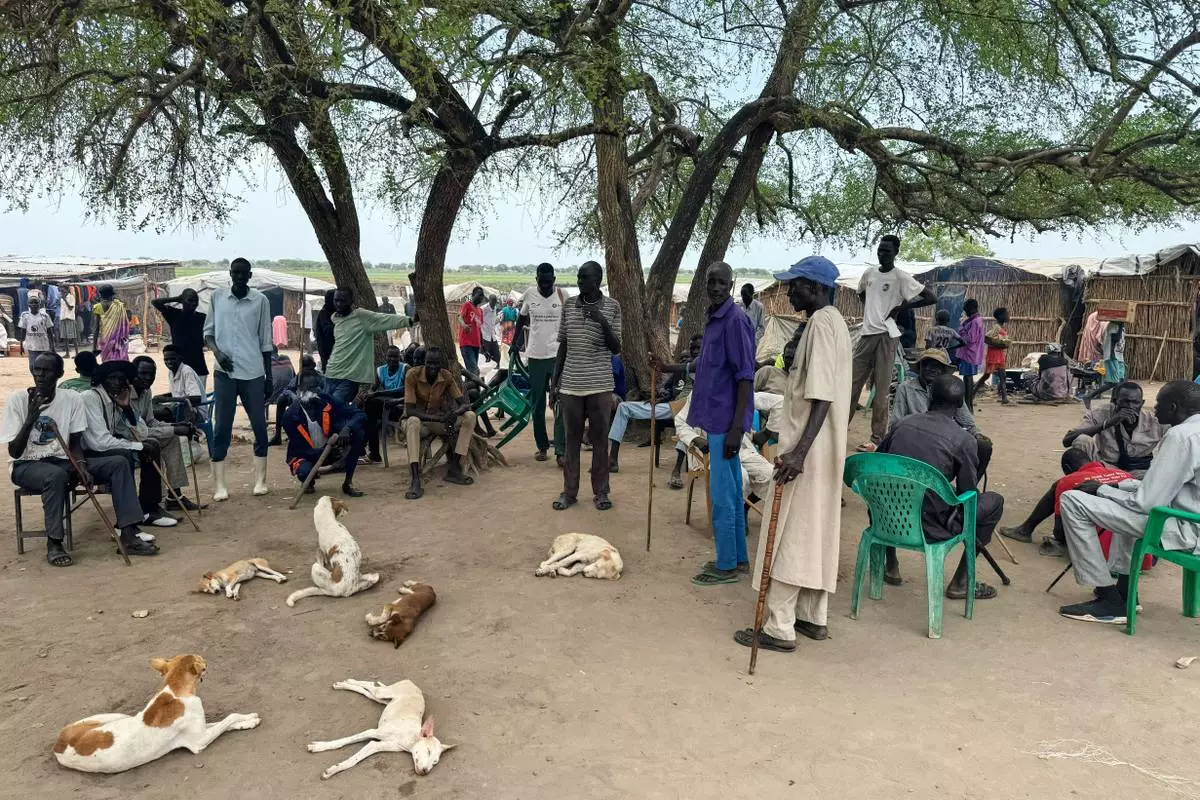
Community leaders gather under a tree near a market in Chuil, Nyirol County, Jonglei State, South Sudan, Friday, April 10, 2026. (AP Photo/Joseph Falzetta)
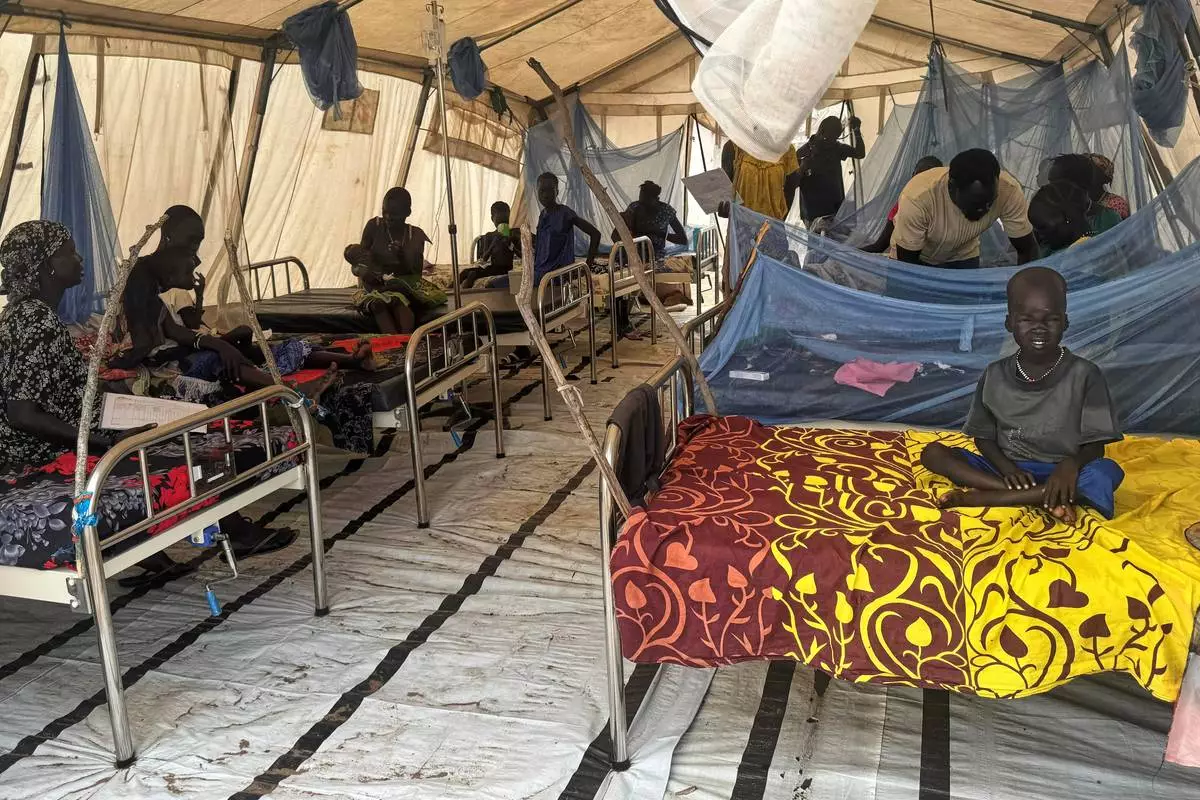
Patients sit inside a medical clinic where children with malnutrition are treated, in Chuil, Nyirol County, Jonglei State, South Sudan, Friday, April 10, 2026. (AP Photo/Joseph Falzetta)
FORT COLLINS, Colo. (AP) — President Donald Trump granted a key approval Thursday for a major new oil pipeline from Canada into the U.S. that’s been dubbed “Keystone Light” over its similarities to a contentious project blocked by the Biden administration.
The three-foot-wide (1 meter) Bridger Pipeline Expansion would carry up to 550,000 barrels (87,400 cubic meters) of oil a day from Canada through Montana and Wyoming, where it would link with another pipeline.
The pipeline needs additional state and federal environmental approvals before construction, which company officials expect to start next year. Environmentalists hope to stop the project over worries that the pipeline could break and spill.
At peak volume, the 650-mile (1,050-kilometer) pipeline would move two-thirds as much oil as the better-known Keystone XL pipeline that got partially built before President Joe Biden, citing climate change, canceled its permit on the day he took office in 2021.
“Slightly different from the last administration. They wouldn’t sign a pipeline deal. And we have pipelines going up,” Trump said after signing his approval for it to cross the border between Saskatchewan and northeastern Montana.
Trump in his first term approved the Keystone XL project in 2020 despite concerns from Native American tribes about possible spills and environmental groups about fossil fuels' contribution to climate change. Its cancellation by Biden frustrated Canadian officials, including Prime Minster Justin Trudeau, after Alberta invested more than $1 billion in the project.
Sometimes called “Keystone Light," the Bridger Pipeline Expansion would not cross any Native American reservations.
More than 70% would be built within existing pipeline corridors and 80% on private land, Bridger Pipeline LLC said in a statement. The line would carry various grades of crude, including from Canada's oil sands region, to be exported or refined in the U.S., company spokesperson Bill Salvin said.
The permit from Trump also authorizes other petroleum products including gasoline, kerosene, diesel and liquified petroleum gas. Salvin said including those fuels keeps the company's options open, but it remains focused for now on crude oil.
Bridger Pipeline could avoid a reversal by a future administration if it’s able to complete its project before Trump leaves office. It hopes to start construction in the fall of 2027 and finish it by late 2028 or early 2029, Bridger spokesperson Bill Salvin said.
Trump’s term ends Jan. 20, 2029.
Bridger Pipeline and other subsidiaries of True Company have been responsible for several major pipeline accidents including more than 50,000 gallons (240,000 liters) of crude that spilled into the Yellowstone River and fouled a Montana city’s drinking water supply in 2015, a 45,000-gallon diesel spill in Wyoming in 2022 and a 2016 spill that released more than 600,000 gallons (2.7 million liters) of crude in North Dakota, contaminating the Little Missouri River and a tributary.
Subsidiaries of True agreed to pay a $12.5 million civil penalty to settle a federal lawsuit over the North Dakota and Montana spills.
Salvin said Bridger Pipeline in the years since the Yellowstone spill developed an AI-based leak detection system that allows it to be notified more quickly when there are problems. It also plans to bore 30 to 40 feet (9 to 12 meters) beneath major rivers including the Yellowstone and Missouri to reduce the chances of an accident. The 2015 accident occurred on a line that was constructed in a shallow trench at the bottom of the river.
“We designed the pipeline with integrity and safety in mind. We have emergency response plans should something happen where oil happens to get out of the line, which is fairly rare,” Salvin said.
The Casper, Wyoming-based company operates more than 3,700 miles (5,950 kilometers) of gathering and transmission pipelines in the Williston Basin of North Dakota and Montana and the Powder River Basin of Wyoming.
Environmental groups opposed to the project include the Montana Environmental Information Center and WildEarth Guardians.
“The biggest concern we see right now is the concern inherent in all pipeline projects which is the risk of spills,” said attorney Jenny Harbine with the environmental law firm Earthjustice. “Pipelines rupture and leak. It’s just a fact of pipelines.”
Brown reported from Billings, Montana.

President Donald Trump speaks in the Oval Office of the White House, Thursday, April 30, 2026, in Washington. (AP Photo/Alex Brandon)