The success of poverty alleviation in China has helped transform the lives of grassroots families living in Liangshan Yi Autonomous Prefecture, a poverty-stricken area of Sichuan Province, due to its mountainous terrain and limited transportation.
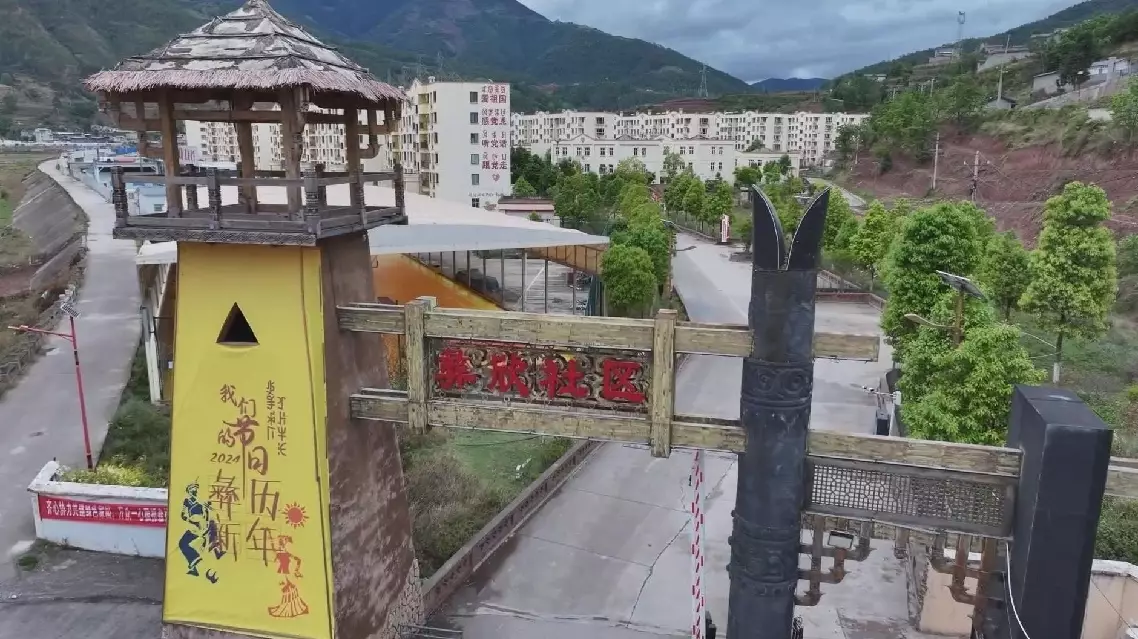
Yixin Community in the prefecture's Xide County is home to over 7,000 residents who once lived in isolated mud houses deep in the mountains. It now bustles with new life, as the local government rolled out policies within the poverty alleviation program focusing on relocation and employment to ensure sustainable rural revitalization.
Helping this massive population thrive takes dedicated grassroots work. Here at the community office, 35-year-old Ergu Wugao is arranging public welfare jobs, such as community sanitation roles, specifically designed to support unemployed residents. Wugao is one of the few local college graduates. He gained experience working outside the mountains before returning to serve his hometown in 2024.
"I grew up deep in the mountains, walking two hours a day just to get to school. The 2019 relocation project changed everything for us. Experiencing this transformation firsthand made me want to return and serve my community," said Wugao, deputy director of Yixin Community.
Wugao's dedication quickly earned him the role of the community's Deputy Director this year. But his work extends far beyond the office. Going door-to-door is a crucial part of his daily routine. He has secured social security coverage for all 192 households he oversees, and his tireless, patient efforts have won the neighborhood's trust.
"Things are definitely getting better. Wugao is incredibly patient and caring. He visits us constantly and helps us solve problems right at our doorstep," said Ake Ershi, a resident of Yixin Community.
While returning talents, like Wugao, ensure the community runs smoothly, creating sustainable livelihoods is the next crucial step for these relocated families. For many women, traditional culture is weaving a new path to prosperity. Adi Jiji is one of them.
"I've loved Yi embroidery (featuring exquisite patterns and diverse stitching techniques) since I was a teenager, deeply influenced by my mother, who was a pro. After moving here, the community organized professional embroidery training. I was the first to sign up and studied very hard," said Jiji, a resident of the community.
Backed by the local Women's Federation, that training empowered Jiji to found an embroidery cooperative in 2021. Today, she leads over 500 local embroiderers. Beyond preserving traditional art, this industry has become a new lifeline. It allows these women to weave a steady income right at home and keeps them close to the young children and elderly parents who need them most.
"I never thought I could turn my hobby into a career and actually help other women in our community earn a living. Our Yi embroidery is passed down from generation to generation. Getting rich alone isn't enough. True wealth is leading all the women in the community to prosper together," said Jiji.
With young talent returning to lead, and traditional culture finding innovative ways to thrive, this relocation project has offered far more than new homes; it has completely reshaped lives and spirits. This Yi community presents a vivid example of thriving rural revitalization in China.
Returning talents and traditions fuel Liangshan's rural revitalization in Sichuan