Skip to Content Facebook Feature Image

South China's Pinglu Canal's first cofferdam demolished for underwater debugging

China

China

China

South China's Pinglu Canal's first cofferdam demolished for underwater debugging

2026-05-01 17:05 Last Updated At:05-02 11:56

Pinglu Canal in south China's Guangxi Zhuang Autonomous Region on Friday saw its cofferdam at the hub nearest to the sea outlet demolished for debugging under flowing-water conditions, to check whether the waterway operation meets the required standards.

Two excavators are currently dismantling the cofferdam at the Qingnian hub to allow downstream water to gradually fill the lock, a process expected to take about one week.

The Qingnian hub is the first of the canal's three hubs to enter the debugging phase. Subsequently, the Madao and Qishi hubs will undergo similar testing after completing dry-out testing to ensure the locks meet the requirements for future navigation.

Engineers noted that multiple rounds of waterless debugging have been conducted over the past month, and all lock systems have met the design requirements.

"During the initial waterless debugging phase, the lock gate was opened and closed dozens of times, and a range of indicators, including system response and operating parameters, met the design requirements. In addition, we installed approximately 725 sensors in key areas such as the gate chamber to track parameters such as stress, vibration, and water pressure on critical equipment, ensuring that the underwater debugging process remains under continuous monitoring," said Pan Jian, chief engineer of Guangxi Pinglu Canal Construction Co., Ltd.

Initiated in August 2022 and scheduled to start operation by the end of 2026, the Pinglu Canal is a flagship project on the New International Land-Sea Trade Corridor, an important trade and logistics passage jointly built by provincial-level regions in western China and ASEAN members.

The canal is slated to receive a planned investment of 72.7 billion yuan (about 10.1 billion U.S. dollars). The 134.2-km-long waterway stretches from the Xijin reservoir in the city of Hengzhou to Qinzhou port in Guangxi.

The canal will facilitate the direct shipment of goods from Guangxi, Yunnan, and Guizhou through the Xijiang river system to ports in the Beibu Gulf of Guangxi, rather than routing them through neighboring Guangdong. This strategic shift is projected to significantly reduce the shipping distance by approximately 560 km.
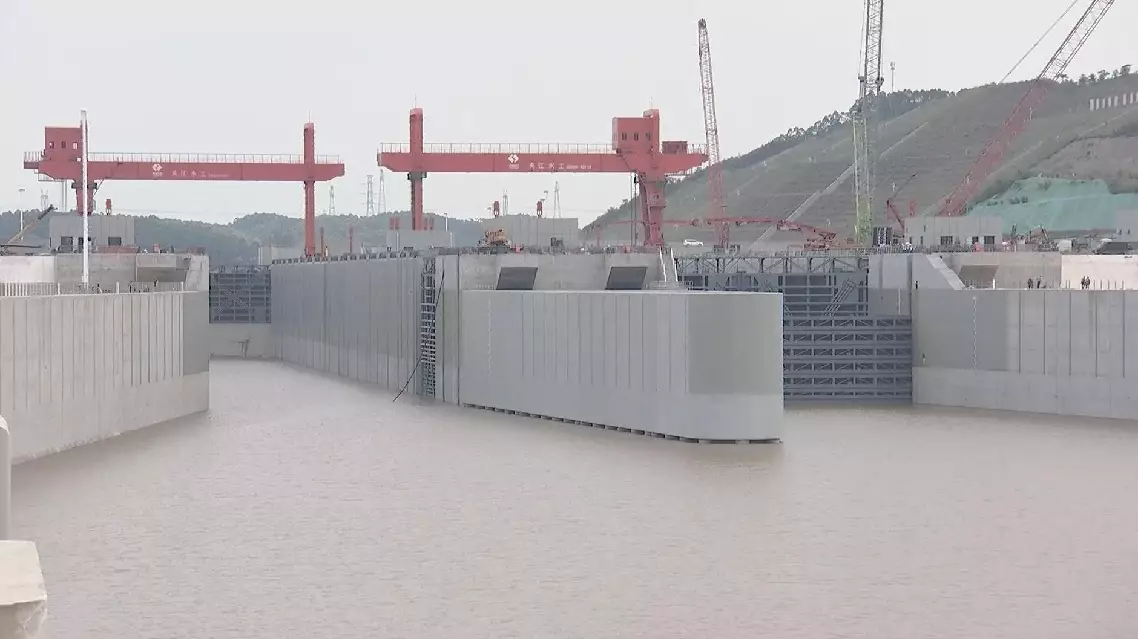
South China's Pinglu Canal's first cofferdam demolished for underwater debugging

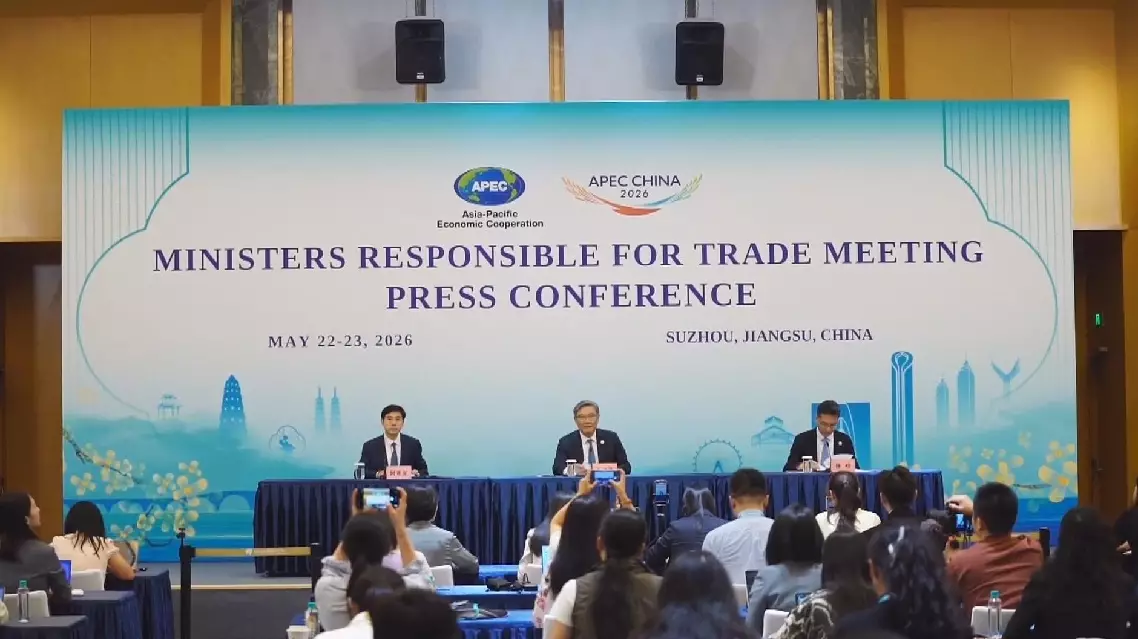
South China's Pinglu Canal's first cofferdam demolished for underwater debugging
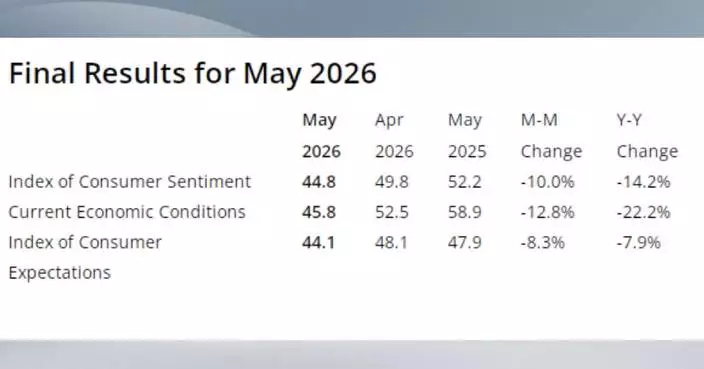
The 32nd Asia-Pacific Economic Cooperation (APEC) Ministers Responsible for Trade Meeting concluded in east China's Suzhou on Saturday, yielding fruitful results and laying significant groundwork for the APEC Economic Leaders' Meeting in November.

The trade ministers' meeting focused on "building an open and predictable regional and multilateral economic and trade order" and "fostering new engines of innovative and dynamic trade and investment cooperation."

Chinese Commerce Minister Wang Wentao briefed the media on the meeting's outcomes at a press conference.

Wang said the meeting issued a joint statement titled the Suzhou Statement, and approved the latest edition of the APEC Roadmap for Innovative, Competitive and Resilient Services.

All parties agreed to advance policy innovation and reform in services trade, build an open and predictable investment environment, improve regional trade facilitation and supply chain resilience, strengthen standards coordination, and enhance intellectual property protection, Wang told the media.

He also said that substantial progress was made on a framework document for regional digital trade cooperation and the ministers emphasized promoting inclusive AI development, strengthening AI-related trade, and bridging the digital divide to ensure shared benefits from digital transformation.

The minister noted that the outcomes of the meeting demonstrated strong cooperation willingness, highlighted an innovation-oriented approach, and reflected inclusiveness and shared benefits. "The fact that Asia-Pacific economies can come together, uphold the original aspiration of promoting trade and investment liberalization and facilitation while supporting economic growth and prosperity, and engage in in-depth discussions on the important issue of 'where multilateral and regional economic and trade cooperation is headed,' fully demonstrates that open regionalism and true multilateralism enjoy broad support, and that mutual success and shared development serve the fundamental interests of all economies," Wang said.

2026 APEC trade ministers' meeting concludes with fruitful results

2026 APEC trade ministers' meeting concludes with fruitful results

Recommended Articles