Skip to Content Facebook Feature Image

Your climate impact doesn't end when you die. More people are considering 'greener' death options

ENT

Your climate impact doesn't end when you die. More people are considering 'greener' death options
ENT

ENT

Your climate impact doesn't end when you die. More people are considering 'greener' death options

2026-05-01 21:40 Last Updated At:21:51

After Moira Cathleen Delaney was diagnosed with an aggressive form of intestinal cancer, her thoughts eventually turned to her eventual death and what she wanted done with her body. Delaney's love of gardening, birds and the forest inspired her decision to be transformed into soil — literally — through a process known as natural organic reduction.

When she died in October at age 57, her family sprinkled some of her remains under her favorite backyard tree and gave some remains to her closest friends and relatives in glass jars to keep or plant things with.

More Images
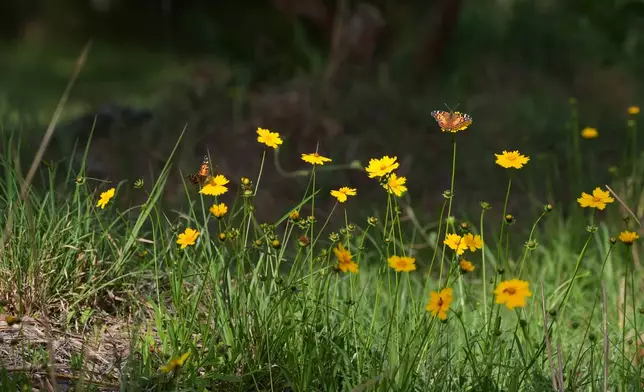
Painted Lady butterflies collects pollen from tickseed flowers planted on a grave at the Prairie Creek Conservation Cemetery, Monday, April 6, 2026, in Gainesville, Fla. (AP Photo/Marta Lavandier)
Painted Lady butterflies collects pollen from tickseed flowers planted on a grave at the Prairie Creek Conservation Cemetery, Monday, April 6, 2026, in Gainesville, Fla. (AP Photo/Marta Lavandier)

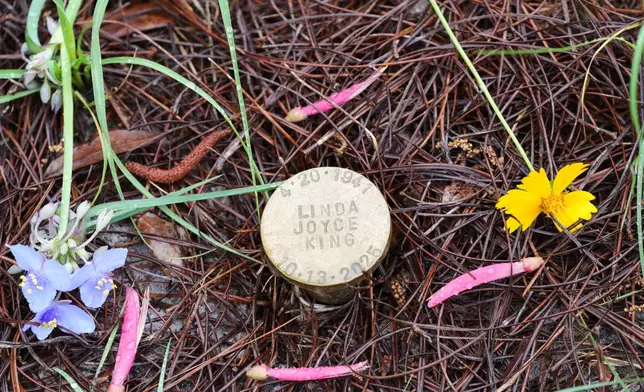
Fresh flowers adorn the grave of Linda Joyce King at the Prairie Creek Conservation Cemetery, Tuesday, April 7, 2026, in Gainesville, Fla. (AP Photo/Marta Lavandier)
Fresh flowers adorn the grave of Linda Joyce King at the Prairie Creek Conservation Cemetery, Tuesday, April 7, 2026, in Gainesville, Fla. (AP Photo/Marta Lavandier)

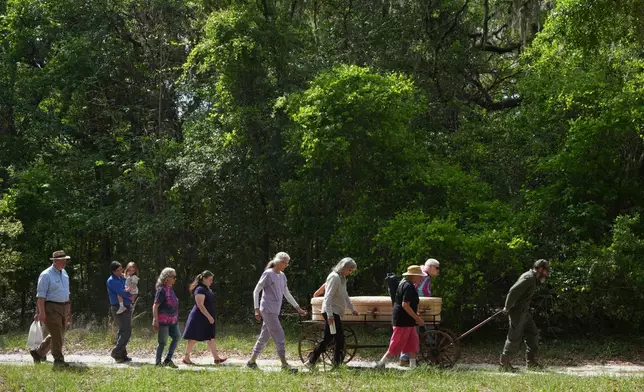
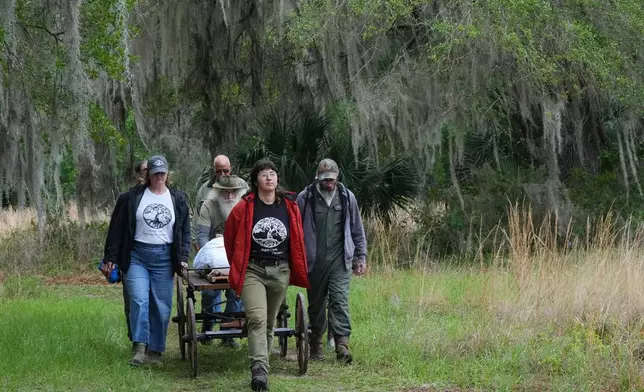
Friends and family of Jacqueline Betz push an Amish cart with her body at the Prairie Creek Conservation Center Cemetery, Monday, April 6, 2026, in Gainesville, Fla. (AP Photo/Marta Lavandier)
Friends and family of Jacqueline Betz push an Amish cart with her body at the Prairie Creek Conservation Center Cemetery, Monday, April 6, 2026, in Gainesville, Fla. (AP Photo/Marta Lavandier)

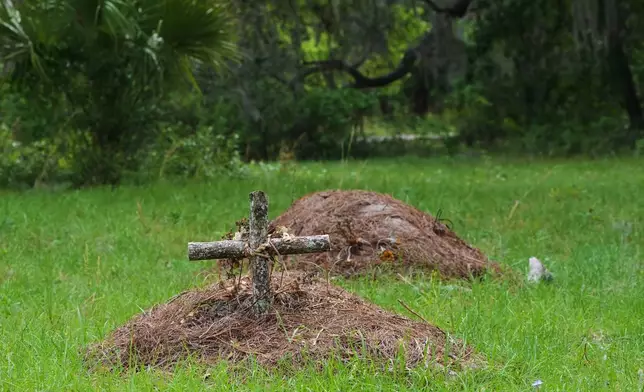
A grave is marked with a cross at the Prairie Creek Conservation Cemetery, Monday, April 6, 2026, in Gainesville, Fla. (AP Photo/Marta Lavandier)
A grave is marked with a cross at the Prairie Creek Conservation Cemetery, Monday, April 6, 2026, in Gainesville, Fla. (AP Photo/Marta Lavandier)
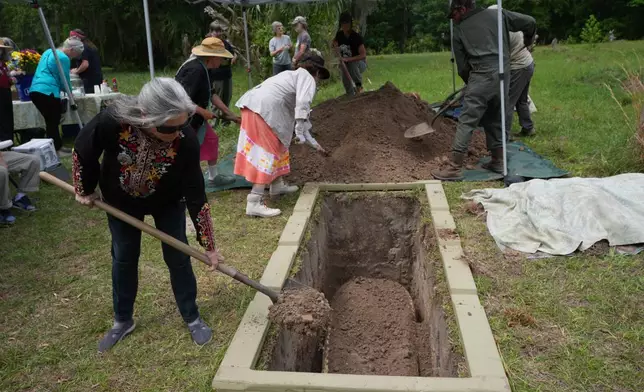
Friends and family help bury the body of Jacqueline Betz at the Prairie Creek Conservation Cemetery, Monday, April 6, 2026, in Gainesville, Fla. (AP Photo/Marta Lavandier)

Friends and family help bury the body of Jacqueline Betz at the Prairie Creek Conservation Cemetery, Monday, April 6, 2026, in Gainesville, Fla. (AP Photo/Marta Lavandier)

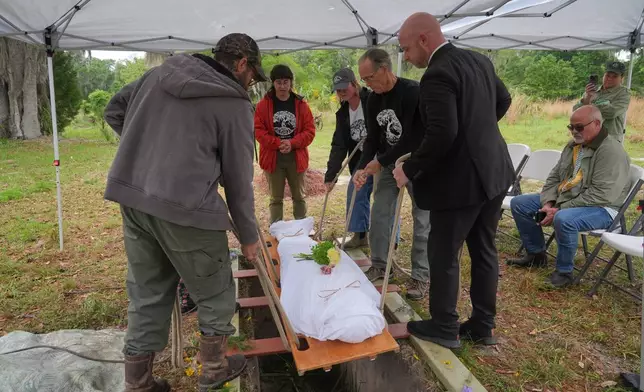
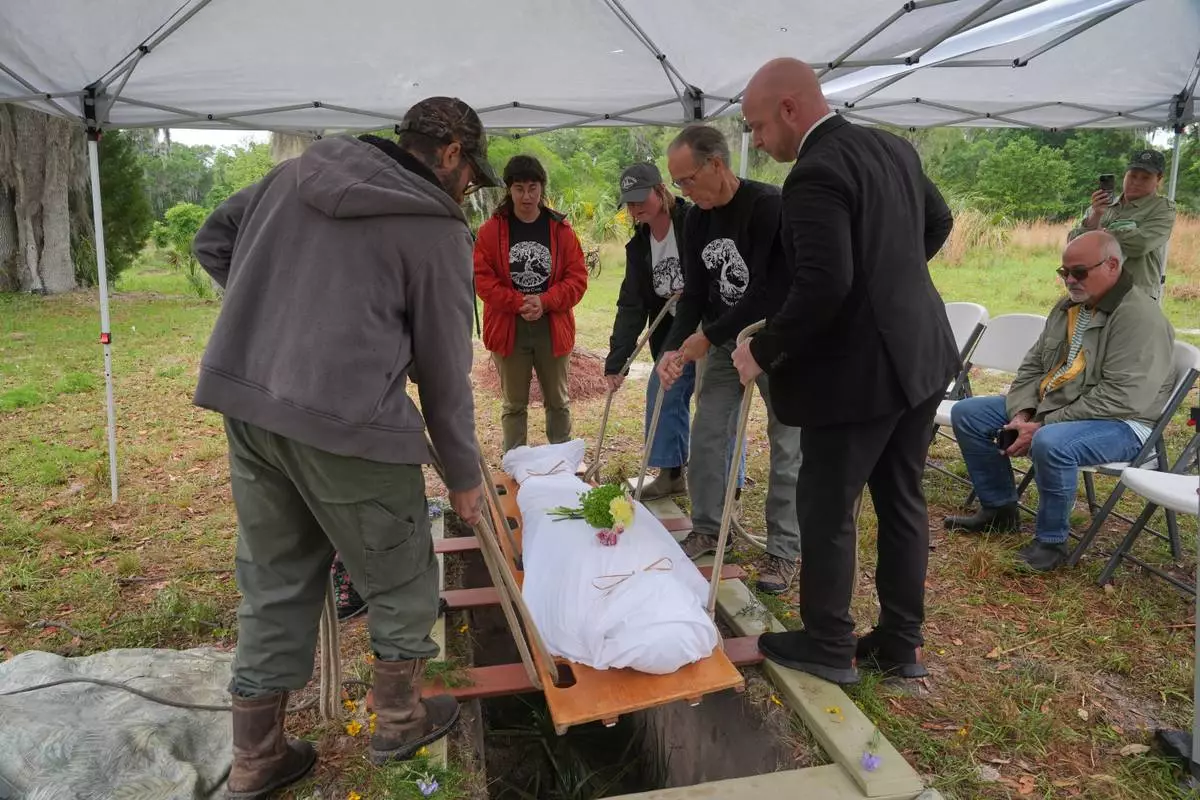
Carly Zeffren, with the Prairie Creek Conservation Cemetery, brings the body of Kenneth Jennings King to his grave site Tuesday, April 7, 2026, in Gainesville, Fla. (AP Photo/Marta Lavandier)
Carly Zeffren, with the Prairie Creek Conservation Cemetery, brings the body of Kenneth Jennings King to his grave site Tuesday, April 7, 2026, in Gainesville, Fla. (AP Photo/Marta Lavandier)

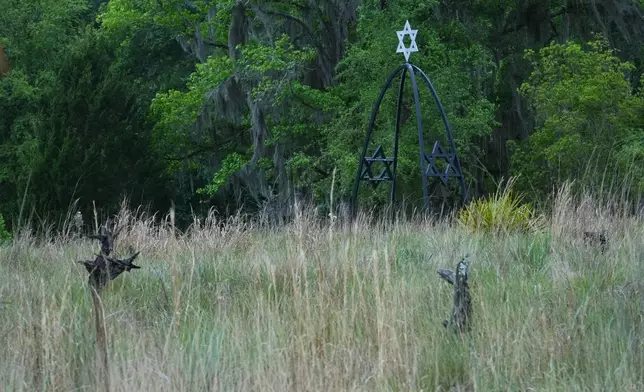
An arch leading to the Jewish burial site rises over grave markers on a field of native grasses at the Prairie Creek Conservation Cemetery, Tuesday, April 7, 2026, in Gainesville, Fla. (AP Photo/Marta Lavandier)
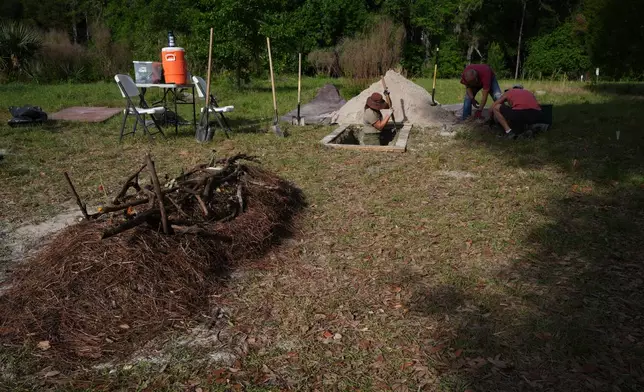
An arch leading to the Jewish burial site rises over grave markers on a field of native grasses at the Prairie Creek Conservation Cemetery, Tuesday, April 7, 2026, in Gainesville, Fla. (AP Photo/Marta Lavandier)

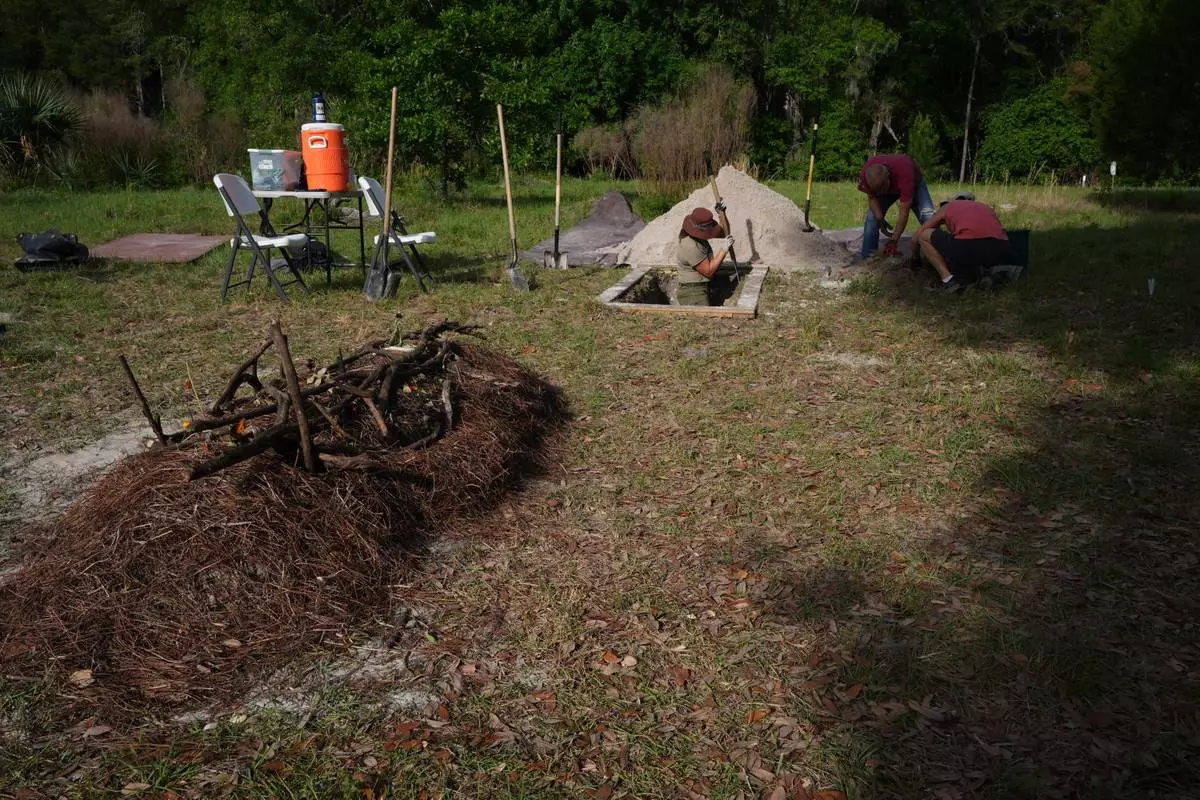
Carly Zeffren, left, with the Prairie Creek Conservation Cemetery, digs a grave with the help of volunteers Monday, April 6, 2026, in Gainesville, Fla. (AP Photo/Marta Lavandier)
Carly Zeffren, left, with the Prairie Creek Conservation Cemetery, digs a grave with the help of volunteers Monday, April 6, 2026, in Gainesville, Fla. (AP Photo/Marta Lavandier)

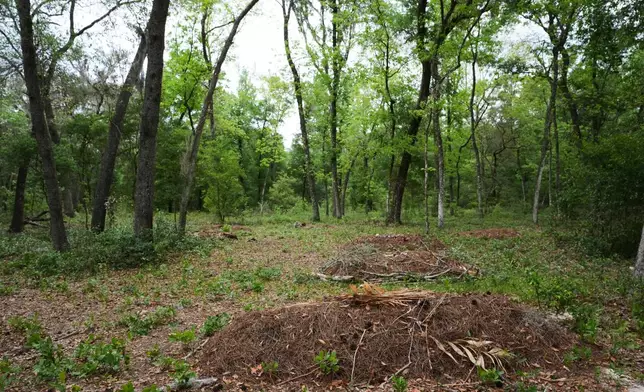
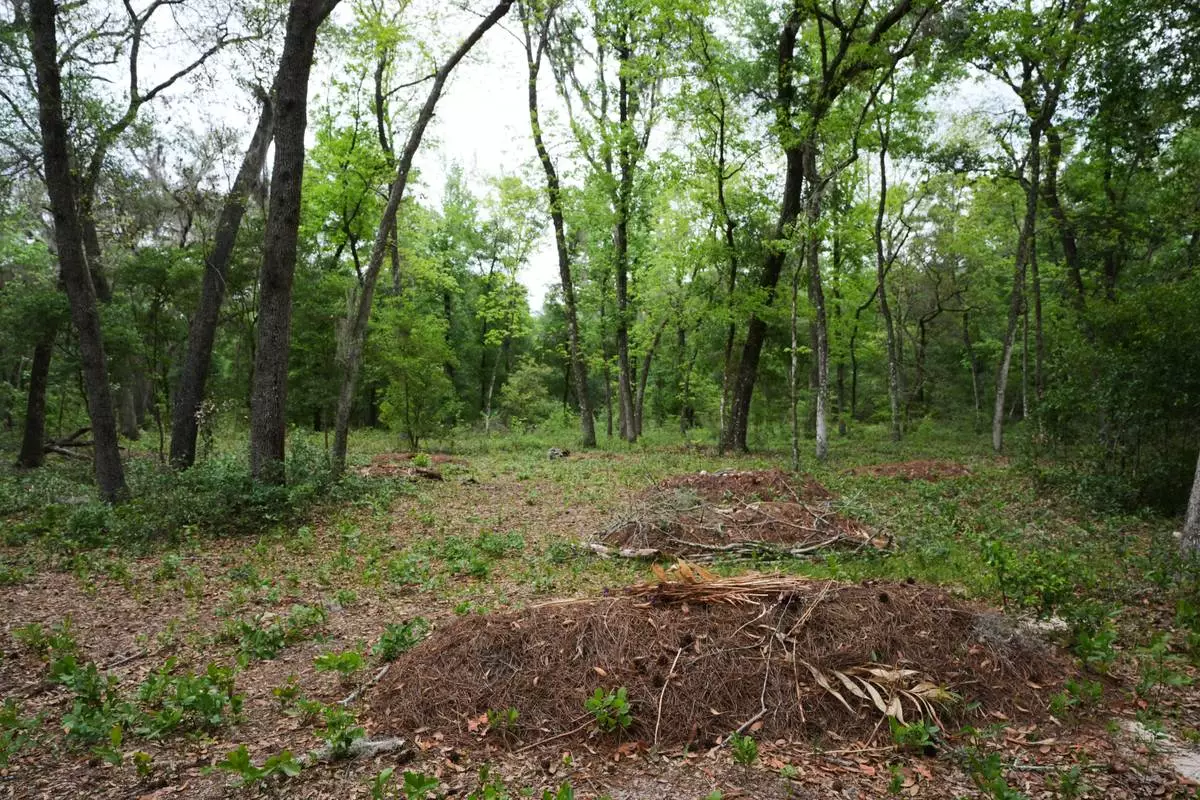
Graves are visible in the forest at the Prairie Creek Conservation Cemetery, Monday, April 6, 2026, in Gainesville, Fla. (AP Photo/Marta Lavandier)
Graves are visible in the forest at the Prairie Creek Conservation Cemetery, Monday, April 6, 2026, in Gainesville, Fla. (AP Photo/Marta Lavandier)

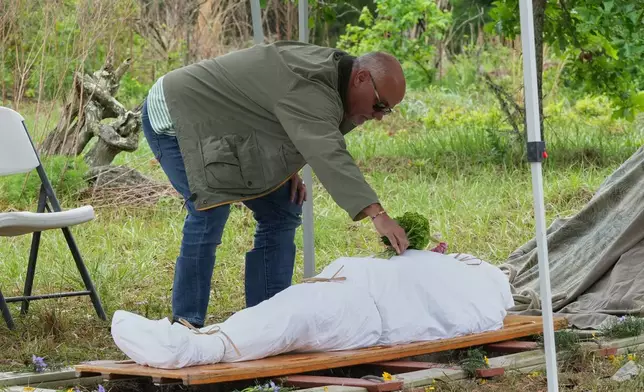
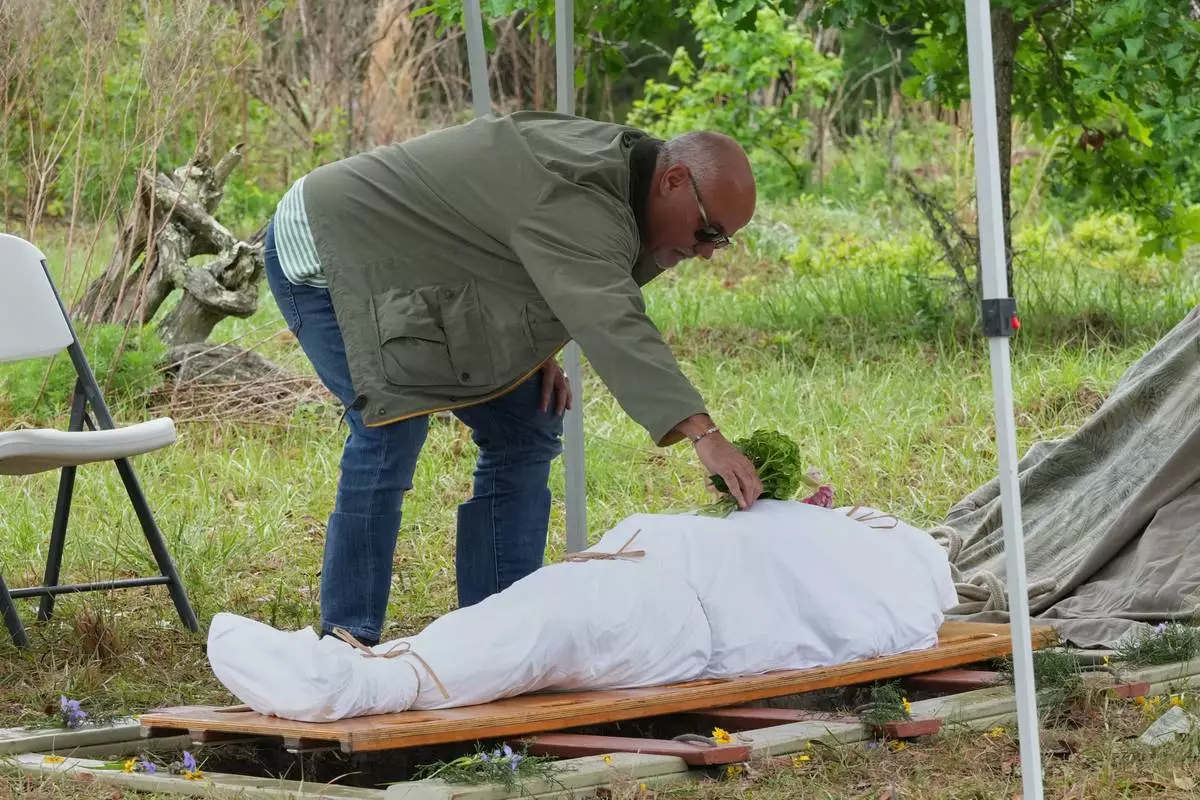
Scott King places a bouquet of flowers on the body of his brother Kenneth King at the Prairie Creek Conservation Cemetery, Tuesday, April 7, 2026, in Gainesville, Fla. (AP Photo/Marta Lavandier)
Scott King places a bouquet of flowers on the body of his brother Kenneth King at the Prairie Creek Conservation Cemetery, Tuesday, April 7, 2026, in Gainesville, Fla. (AP Photo/Marta Lavandier)
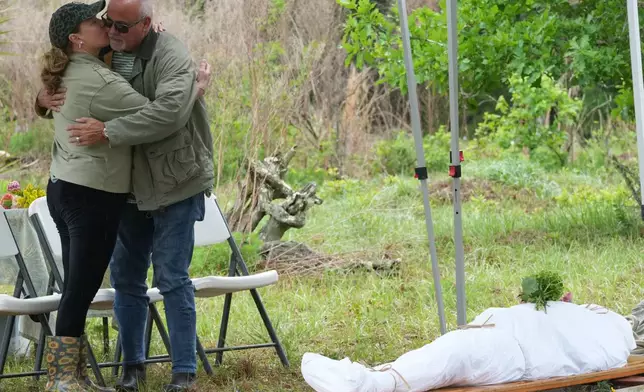
Scott and Jacqui King watch the burial of his brother Kenneth King at the Prairie Creek Conservation Cemetery, Tuesday, April 7, 2026, in Gainesville, Fla. (AP Photo/Marta Lavandier)

Scott and Jacqui King watch the burial of his brother Kenneth King at the Prairie Creek Conservation Cemetery, Tuesday, April 7, 2026, in Gainesville, Fla. (AP Photo/Marta Lavandier)

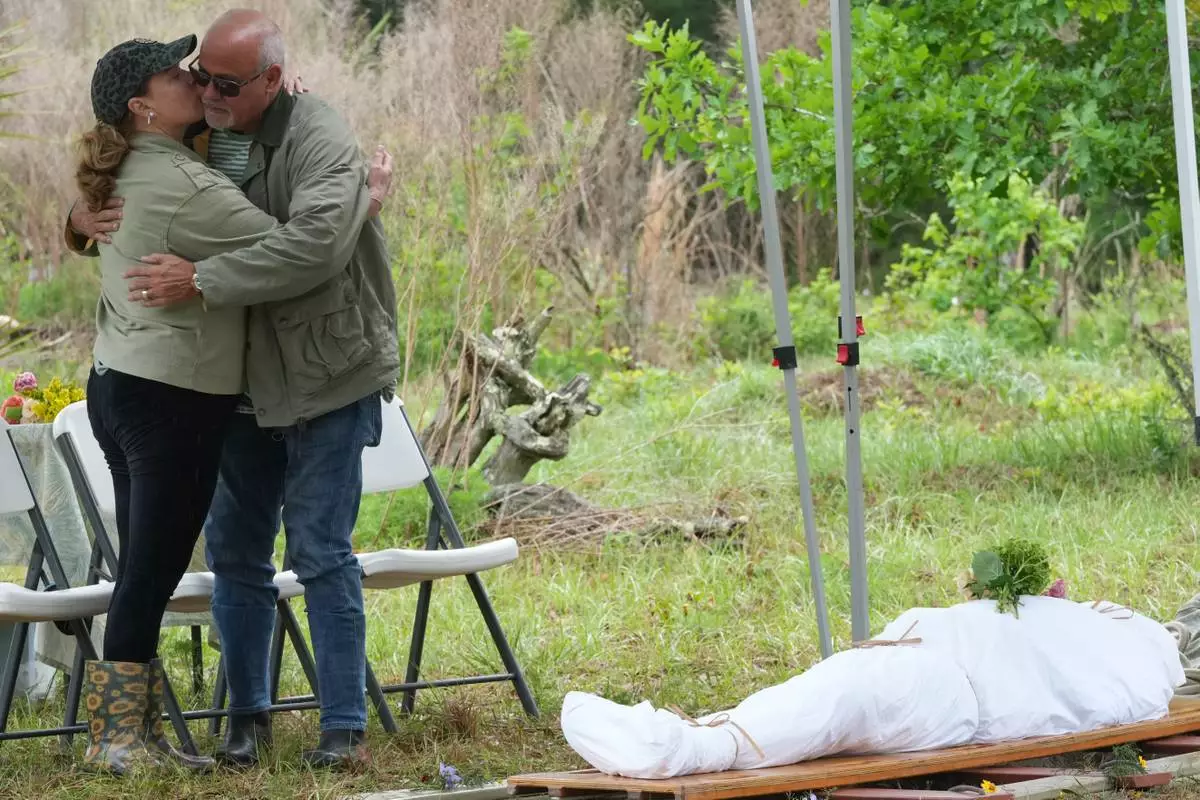
Jacqui King kisses her husband Scott King during the burial of his brother Kenneth King at the Prairie Creek Conservation Cemetery, Tuesday, April 7, 2026, in Gainesville, Fla. (AP Photo/Marta Lavandier)

Jacqui King kisses her husband Scott King during the burial of his brother Kenneth King at the Prairie Creek Conservation Cemetery, Tuesday, April 7, 2026, in Gainesville, Fla. (AP Photo/Marta Lavandier)

“For her, it was a very comforting thought to be able to return to the earth in that kind of way, and to have her final physical act contributing to the life process," said Marcos Moliné, her son.

Interest in body disposal options that are better for the planet has risen in recent years, according to research commissioned by the National Funeral Directors Association. Researchers and industry experts said people worry about how conventional death practices such as embalming, fire cremation and casket and vault burials affect the climate, environment and people's health. Others simply want their final resting place to be in their cherished outdoors.

“How we die does lead to a substantial impact on not only the people around us and our communities, but the earth itself," said Mark Shelvock, a psychotherapist and lecturer at Western University in Canada, who co-wrote a paper on green death practices.

What's legal and available varies by country, state and province. Here are some common options.

Embalming, the process of slowing down a body's decomposition, involves known carcinogens like formaldehyde that get injected into veins to preserve the body for viewing and services. The Environmental Protection Agency determined the gas poses an “unreasonable risk" to public health, with people who work in settings where it's used at greatest risk. Research has shown the likelihood of the gas contaminating soil and groundwater is low.

Fire cremation is the most popular option in the U.S., preferred by nearly two-thirds of the respondents to the funeral directors association. The energy for burning is often derived from fossil fuels. The Cremation Association of North America estimates the energy used in a typical cremation is equivalent to powering a 2,000-square-foot (186-square-meter) home for a week.

Materials used for caskets and vaults are often made of wood, metal or concrete that require mining or tree cutting and huge amounts of energy to produce. Concrete, for instance, is responsible for roughly 8% of global carbon dioxide emissions and 2% in the U.S., most of which come from producing and processing the cement to make it.

Cemeteries also take up space and require maintenance, which involves energy and resources for mowing, watering or fertilizing.

“There’s all of this management that goes into conventional cemeteries that looks very much like a golf course,” said Samuel Perry, a funeral director and president of the Green Burial Council, a global nonprofit that guides green burial standards and certification.

At Prairie Creek Conservation Cemetery in Florida, natural burials are combined with land conservation. Graves are dug by hand and bodies are only buried in caskets or shrouds made of biodegradable materials like bamboo or cotton. Embalmed bodies and vaults aren't allowed, and to bury cremated remains, they must be in biodegradable, chemical-free urns.

The idea is to let the body decompose naturally.

It's an idea Scott King was skeptical of when his mother, Linda, said she wanted to be buried this way. But the more he researched, the more he understood the beauty of its simplicity. She was buried in a meadow at Prairie Creek cemetery in October last year, and recently, King buried his brother Kenneth there, too, close to her.

“Through death, life begets life," said King. “She really liked that idea, too, that she can, in her passing, help give life to something else. That was very important to her. My brother, I think, sort of went along with the ride.”

The cemetery partners with a land trust to manage, restore and protect the land from development. They remove invasive species and plant native ones, and perform prescribed burns.

The benefits, said executive director Heather Grove, reach further. There's more biodiversity and wildlife now, and "if you want to talk about carbon capturing and all that, conservation is key to sequester,” she said.

According to the Green Burial Council, a green burial sequesters about 25 pounds (11.34 kilograms) of carbon.

Elena Slominski, a researcher who's studied eco-friendly disposal options, said a conservation burial “is by far the best thing you can do because it’s actually, technically a carbon sink. It actually restores ecological habitat and protects the land.”

But it's not a good option where space is at a premium, and some argue it’s not practical because it takes up space.

Earth Funeral is a company specializing in natural organic reduction, also known as terramation and human composting. The body remains in a sealed vessel for 30 to 45 days with mulch, wood chips and flowers. Inside, microorganisms break down the body into soil in a natural process that generates heat to reach temperatures of 131 F (55 C) or higher — enough to kill germs.

“What we are fundamentally doing is using science and technology to accelerate a completely natural process" using renewable energy sources, said Tom Harries, the company’s co-founder and CEO. Some of the soil is given to loved ones, and the rest is donated to conservation or reforestation projects.

Fourteen U.S. states allow such a process, and 15 others have introduced bills to make it legal, according to Earth Funeral. Experts said it's a good option if you live in a city where burial space could be limited and more expensive.

Alkaline hydrolysis is also supposed to mimic and speed up natural decomposition. At the Colorado-based water cremation company Be a Tree, bodies are put into a vessel with 95% water and 5% potassium hydroxide that is then heated to about 200 F (93 C) for about 18 hours.

Skeletal remains are air-dried, processed and returned to loved ones as powder in an urn or shaped as stones. Most families keep some of the liquid for houseplants or gardening, but most of it goes to land conservation partners to be used as fertilizer, said founder and CEO Emily Nelson. Other companies discharge the residual liquid with other wastewater.

This process uses about 90% less energy than fire cremation.

Perry, with the Green Burial Council, said he's often asked whether the way a person chooses to be disposed of after death makes much of a difference in their environmental footprint.

“The quick and dirty answer is no, I don’t think this one thing is going to change a whole lot. But it’s always about changing industries. And as an industry, if we do better, we are making a bigger impact.”

Daniel Kozin contributed to this report from Gainesville, Fla.

The Associated Press receives support from the Walton Family Foundation for coverage of water and environmental policy. The AP is solely responsible for all content. For all of AP’s environmental coverage, visit https://apnews.com/hub/climate-and-environment
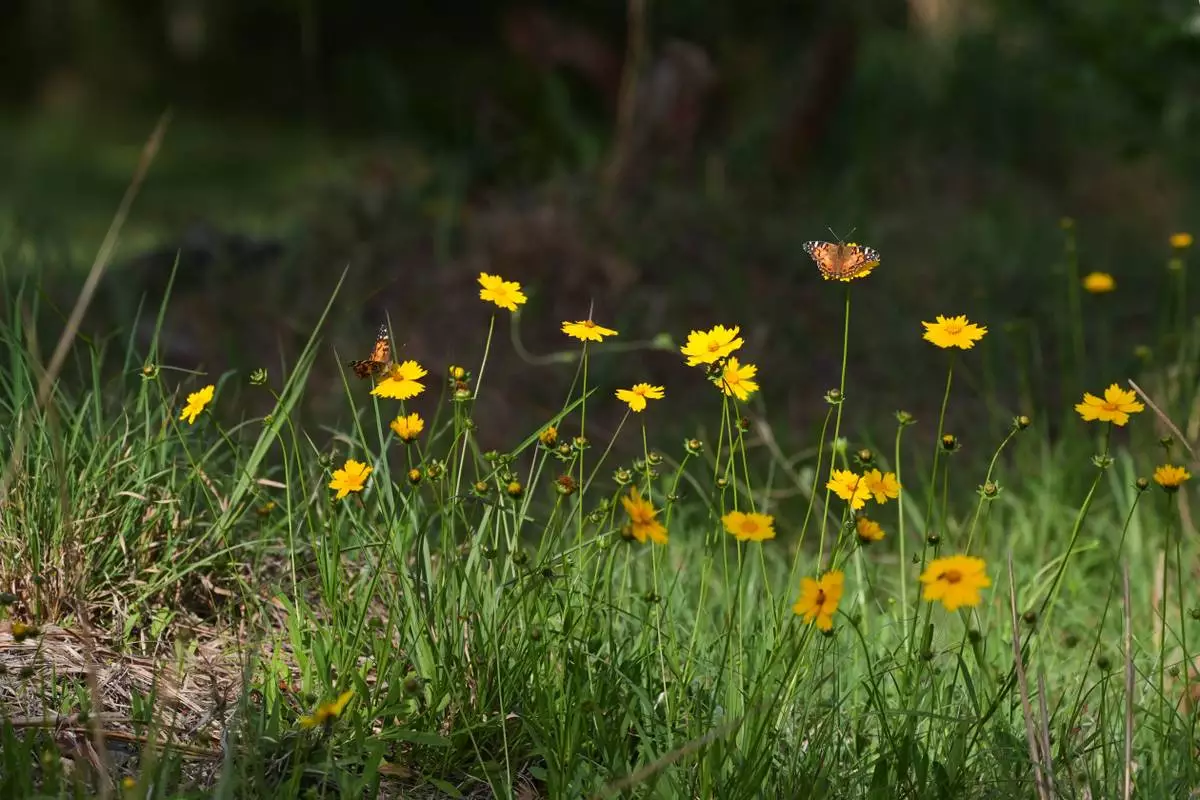
Painted Lady butterflies collects pollen from tickseed flowers planted on a grave at the Prairie Creek Conservation Cemetery, Monday, April 6, 2026, in Gainesville, Fla. (AP Photo/Marta Lavandier)
Painted Lady butterflies collects pollen from tickseed flowers planted on a grave at the Prairie Creek Conservation Cemetery, Monday, April 6, 2026, in Gainesville, Fla. (AP Photo/Marta Lavandier)

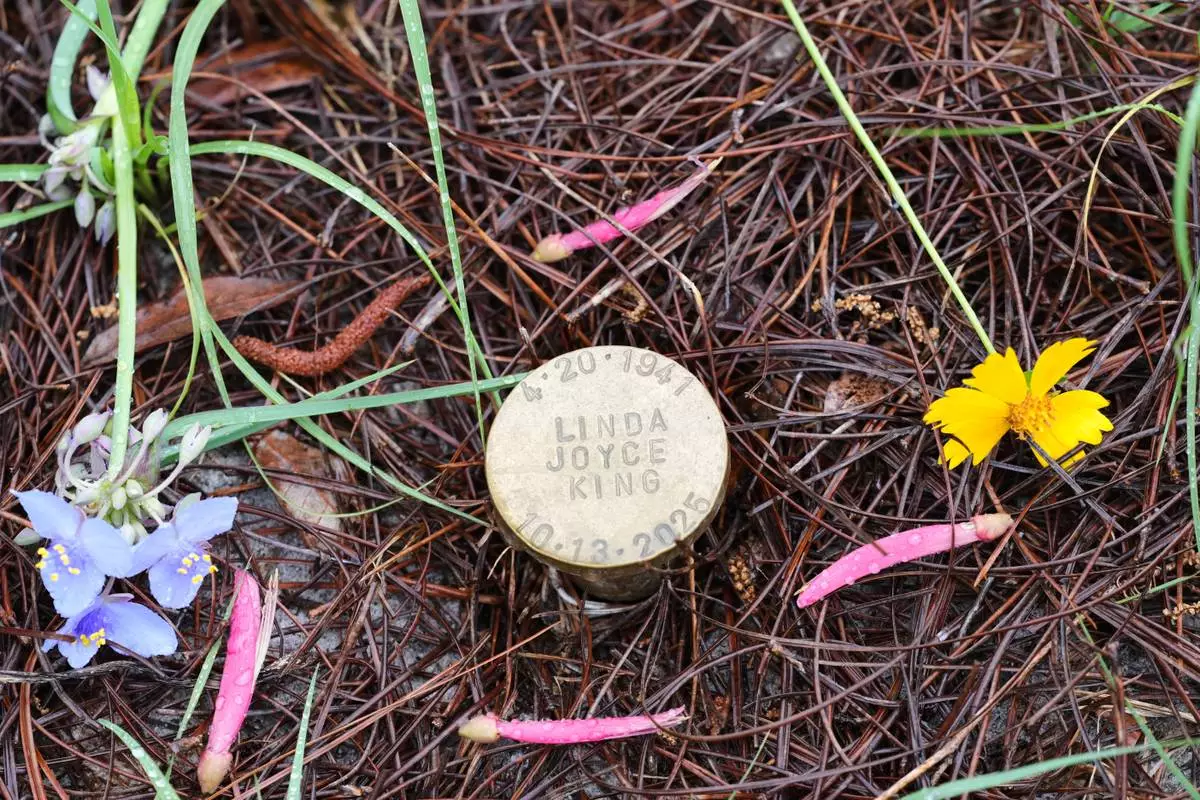
Fresh flowers adorn the grave of Linda Joyce King at the Prairie Creek Conservation Cemetery, Tuesday, April 7, 2026, in Gainesville, Fla. (AP Photo/Marta Lavandier)
Fresh flowers adorn the grave of Linda Joyce King at the Prairie Creek Conservation Cemetery, Tuesday, April 7, 2026, in Gainesville, Fla. (AP Photo/Marta Lavandier)

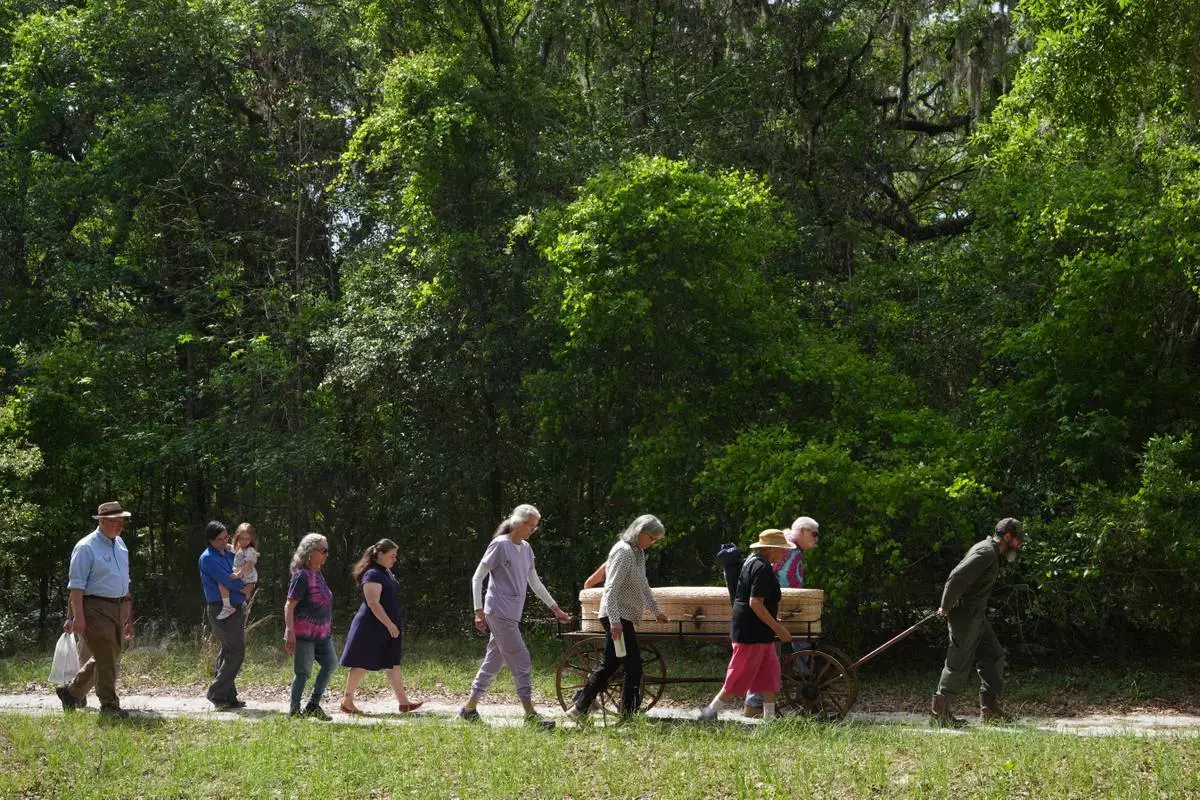
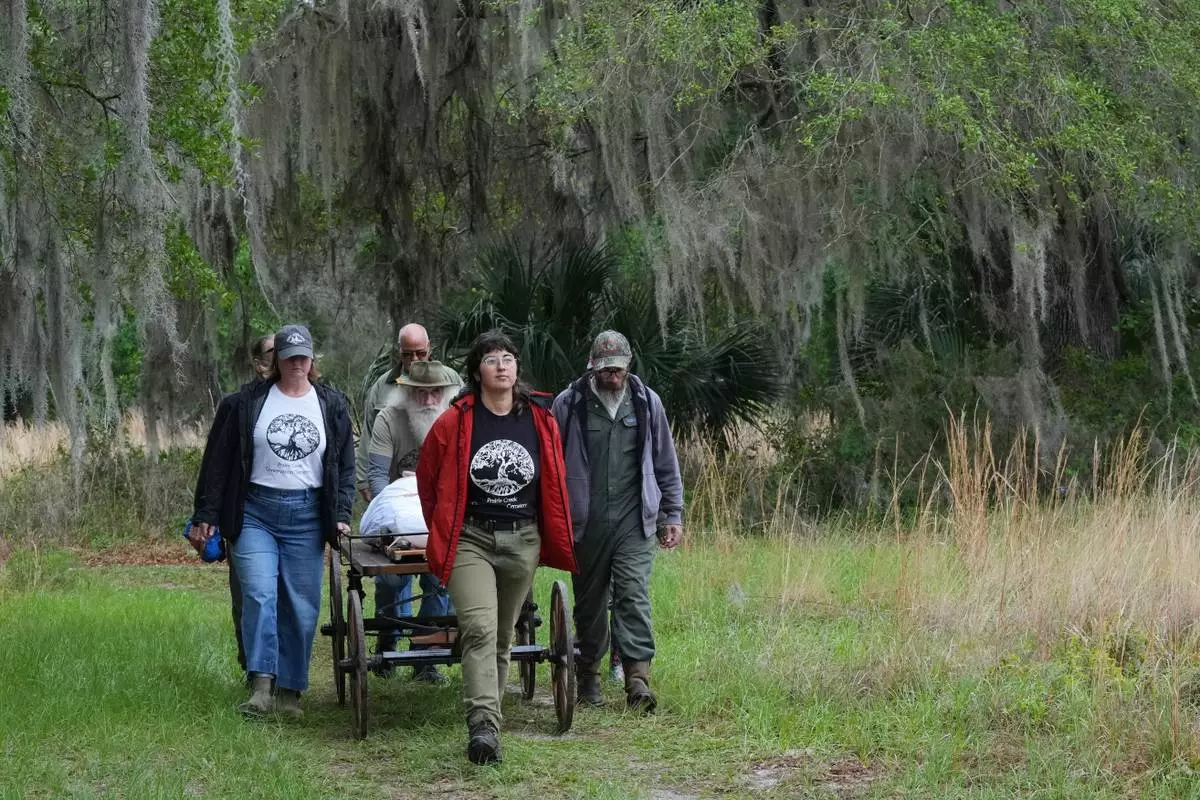
Friends and family of Jacqueline Betz push an Amish cart with her body at the Prairie Creek Conservation Center Cemetery, Monday, April 6, 2026, in Gainesville, Fla. (AP Photo/Marta Lavandier)
Friends and family of Jacqueline Betz push an Amish cart with her body at the Prairie Creek Conservation Center Cemetery, Monday, April 6, 2026, in Gainesville, Fla. (AP Photo/Marta Lavandier)

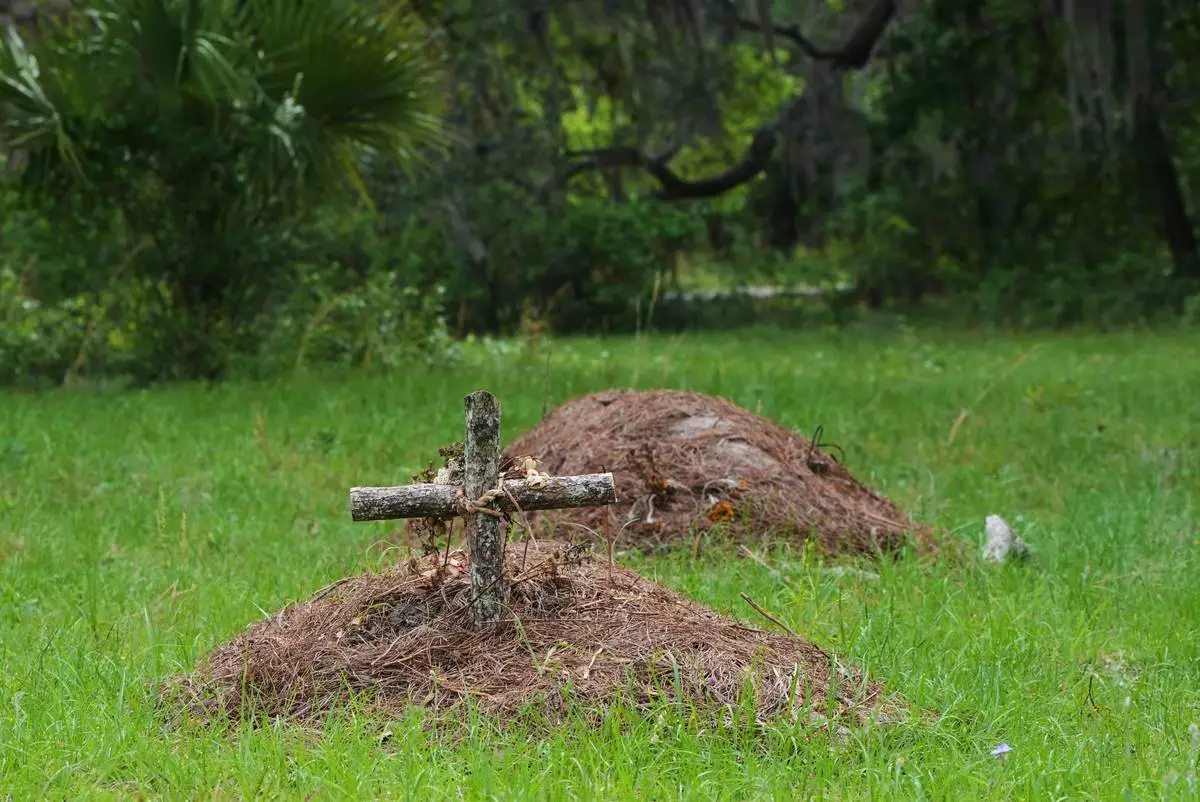
A grave is marked with a cross at the Prairie Creek Conservation Cemetery, Monday, April 6, 2026, in Gainesville, Fla. (AP Photo/Marta Lavandier)
A grave is marked with a cross at the Prairie Creek Conservation Cemetery, Monday, April 6, 2026, in Gainesville, Fla. (AP Photo/Marta Lavandier)
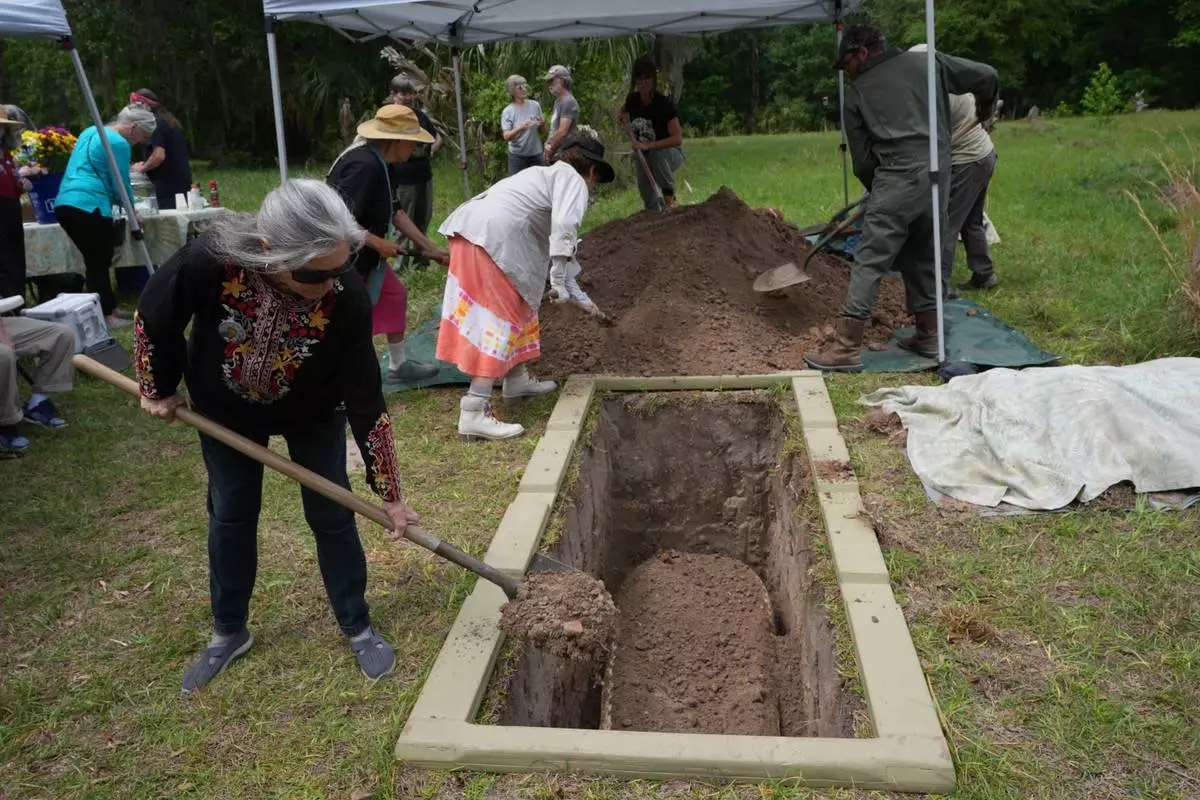
Friends and family help bury the body of Jacqueline Betz at the Prairie Creek Conservation Cemetery, Monday, April 6, 2026, in Gainesville, Fla. (AP Photo/Marta Lavandier)

Friends and family help bury the body of Jacqueline Betz at the Prairie Creek Conservation Cemetery, Monday, April 6, 2026, in Gainesville, Fla. (AP Photo/Marta Lavandier)

Carly Zeffren, with the Prairie Creek Conservation Cemetery, brings the body of Kenneth Jennings King to his grave site Tuesday, April 7, 2026, in Gainesville, Fla. (AP Photo/Marta Lavandier)
Carly Zeffren, with the Prairie Creek Conservation Cemetery, brings the body of Kenneth Jennings King to his grave site Tuesday, April 7, 2026, in Gainesville, Fla. (AP Photo/Marta Lavandier)

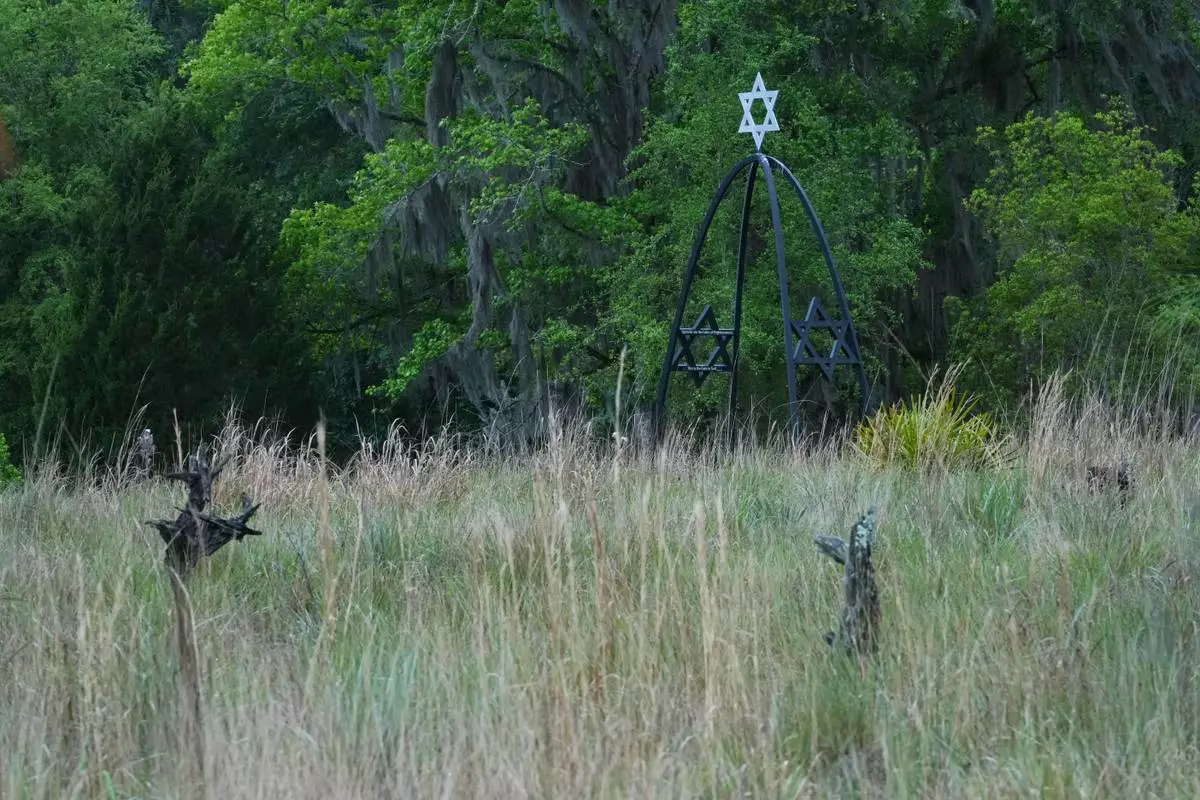
An arch leading to the Jewish burial site rises over grave markers on a field of native grasses at the Prairie Creek Conservation Cemetery, Tuesday, April 7, 2026, in Gainesville, Fla. (AP Photo/Marta Lavandier)
An arch leading to the Jewish burial site rises over grave markers on a field of native grasses at the Prairie Creek Conservation Cemetery, Tuesday, April 7, 2026, in Gainesville, Fla. (AP Photo/Marta Lavandier)

Carly Zeffren, left, with the Prairie Creek Conservation Cemetery, digs a grave with the help of volunteers Monday, April 6, 2026, in Gainesville, Fla. (AP Photo/Marta Lavandier)
Carly Zeffren, left, with the Prairie Creek Conservation Cemetery, digs a grave with the help of volunteers Monday, April 6, 2026, in Gainesville, Fla. (AP Photo/Marta Lavandier)

Graves are visible in the forest at the Prairie Creek Conservation Cemetery, Monday, April 6, 2026, in Gainesville, Fla. (AP Photo/Marta Lavandier)
Graves are visible in the forest at the Prairie Creek Conservation Cemetery, Monday, April 6, 2026, in Gainesville, Fla. (AP Photo/Marta Lavandier)

Scott King places a bouquet of flowers on the body of his brother Kenneth King at the Prairie Creek Conservation Cemetery, Tuesday, April 7, 2026, in Gainesville, Fla. (AP Photo/Marta Lavandier)
Scott King places a bouquet of flowers on the body of his brother Kenneth King at the Prairie Creek Conservation Cemetery, Tuesday, April 7, 2026, in Gainesville, Fla. (AP Photo/Marta Lavandier)
Scott and Jacqui King watch the burial of his brother Kenneth King at the Prairie Creek Conservation Cemetery, Tuesday, April 7, 2026, in Gainesville, Fla. (AP Photo/Marta Lavandier)

Scott and Jacqui King watch the burial of his brother Kenneth King at the Prairie Creek Conservation Cemetery, Tuesday, April 7, 2026, in Gainesville, Fla. (AP Photo/Marta Lavandier)
Jacqui King kisses her husband Scott King during the burial of his brother Kenneth King at the Prairie Creek Conservation Cemetery, Tuesday, April 7, 2026, in Gainesville, Fla. (AP Photo/Marta Lavandier)
Jacqui King kisses her husband Scott King during the burial of his brother Kenneth King at the Prairie Creek Conservation Cemetery, Tuesday, April 7, 2026, in Gainesville, Fla. (AP Photo/Marta Lavandier)
BARCELONA, Spain (AP) — Israeli authorities say they are taking two activists who led an aid flotilla bound for Gaza — and who were captured by Israel in international waters of the Mediterranean Sea — to Israel for questioning.

The activists, Palestinian-Spanish citizen Saif Abukeshek and Brazilian citizen Thiago Ávila, were among dozens of activists intercepted by the Israeli navy off the coast of Crete. They are members of the Global Sumud Flotilla's steering committee, whose mission was to break Israel's naval blockade and bring some humanitarian aid to the Palestinian territory.

In all, some 20 boats and 175 activists were intercepted by the Israeli navy. Activists said Israeli forces stormed their vessels, smashed engines and detained some of those onboard. The incident occurred hundreds of miles (kilometers) from Gaza and Israel overnight from Wednesday to Thursday.

Israeli officials said they needed to take early action against the flotilla before it reached Israeli waters because of the high number of boats involved.

On Friday the Israeli Foreign Ministry said on X that it was taking the two activists to Israel for questioning, and that Abukeshek was “suspected of affiliation with a terrorist organization” and Ávila was “suspected of illegal activity," without providing evidence.

The Global Sumud Flotilla appealed for international support. “We demand that all governments do all they can to pressure the Israeli regime to release all the illegal abductees," the group said Friday.

Spain's foreign ministry said in a statement Friday the Spanish government condemned the detention of Abukeshek, and demanded "his immediate release.”

“The Spanish embassies and consulates in Greece and Israel are mobilized to provide full protection to the Spanish citizen as soon as he arrives in Israeli territory, as well as to all other affected Spaniards,” the Spanish foreign ministry's statement added.

The rest of the flotilla participants of various nationalities were released in Crete. Organizers on Friday said Israeli authorities had denied them food and water and they were "forced to sleep on floors that were deliberately and repeatedly flooded.”

When Israeli forces proceeded to take Abukeshek and Ávila away, the group resisted and were met with “sheer violence,” flotilla organizers said in a statement Friday.

“Participants were punched, kicked and dragged across the deck with their hands bound behind their backs. They suffered broken noses, cracked ribs and bloody beatings. Shots were even fired at them in the chaos,” the statement said.

Israeli authorities did not immediately respond to the accusations. Israeli Foreign Minister Gideon Saar had said Thursday that activists “taken off the vessels were taken off unharmed.”

Of the 53 vessels that had been sailing prior to the interception, 31 reached safe waters and would continue their attempts to “break the illegal siege of Gaza,” organizers said.

The flotilla set sail earlier this month from Barcelona, Spain. Organizers have said more than 70 boats and 1,000 people from around the world would be participating, with more vessels joining the original boats as the flotilla sailed east across the Mediterranean.

The Greek foreign ministry said Thursday that it had asked Israel to withdraw its ships from the area and had offered its “good services” for the activists to disembark in Greece and be repatriated.

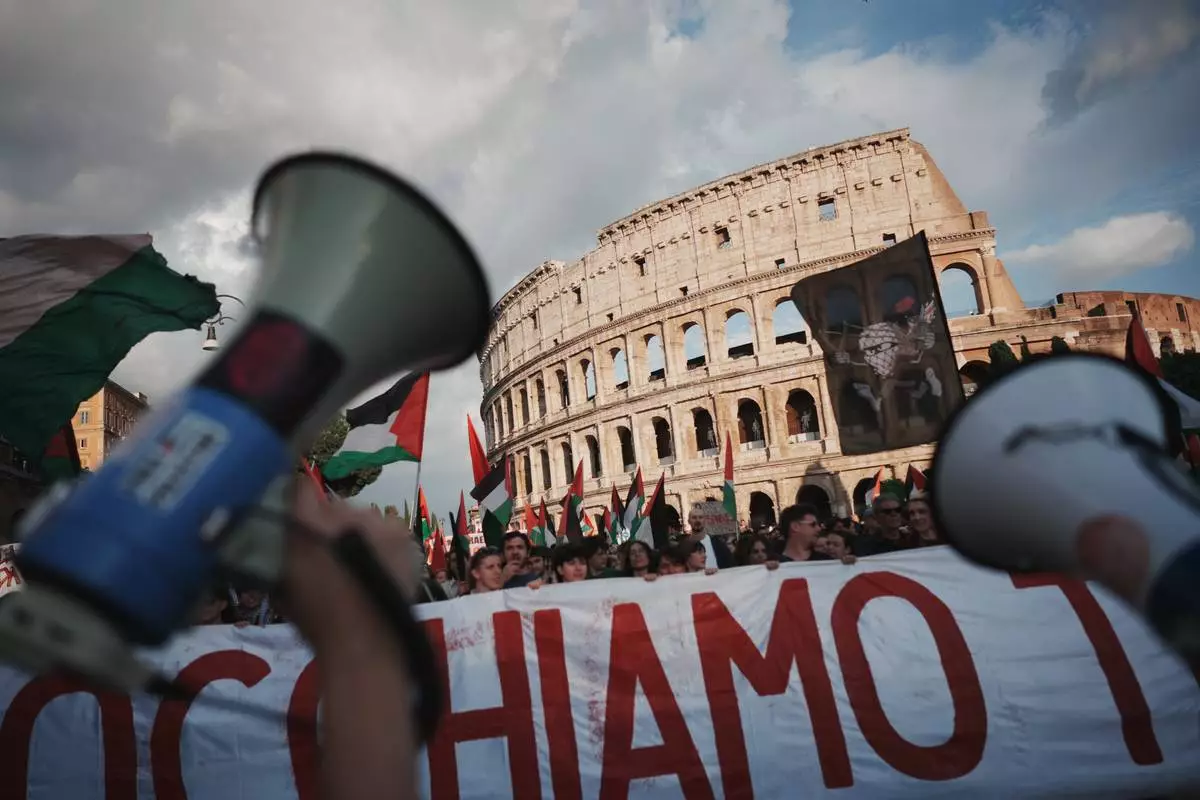
Protests in solidarity with the flotilla erupted across several capitals including in Rome, Athens and Istanbul.

Brazil has not yet commented on the detention and transfer to Israel of its citizen, Ávila, but in a joint statement with Spain and several other nations late Thursday it said that Israel's interception of the flotilla and detention of the activists in international waters “constitute flagrant violations of international law and international humanitarian law."

The flotilla’s latest attempt to reach Gaza comes less than a year after Israeli authorities foiled a previous effort by the group. That attempt involved about 50 vessels and around 500 activists, including Swedish climate activist Greta Thunberg, Nelson Mandela’s grandson Mandla Mandela, and several lawmakers.

Israel arrested, detained and later deported the participants, including Ávila, who claimed Israeli authorities abused them while in detention. Israeli authorities denied the accusations.

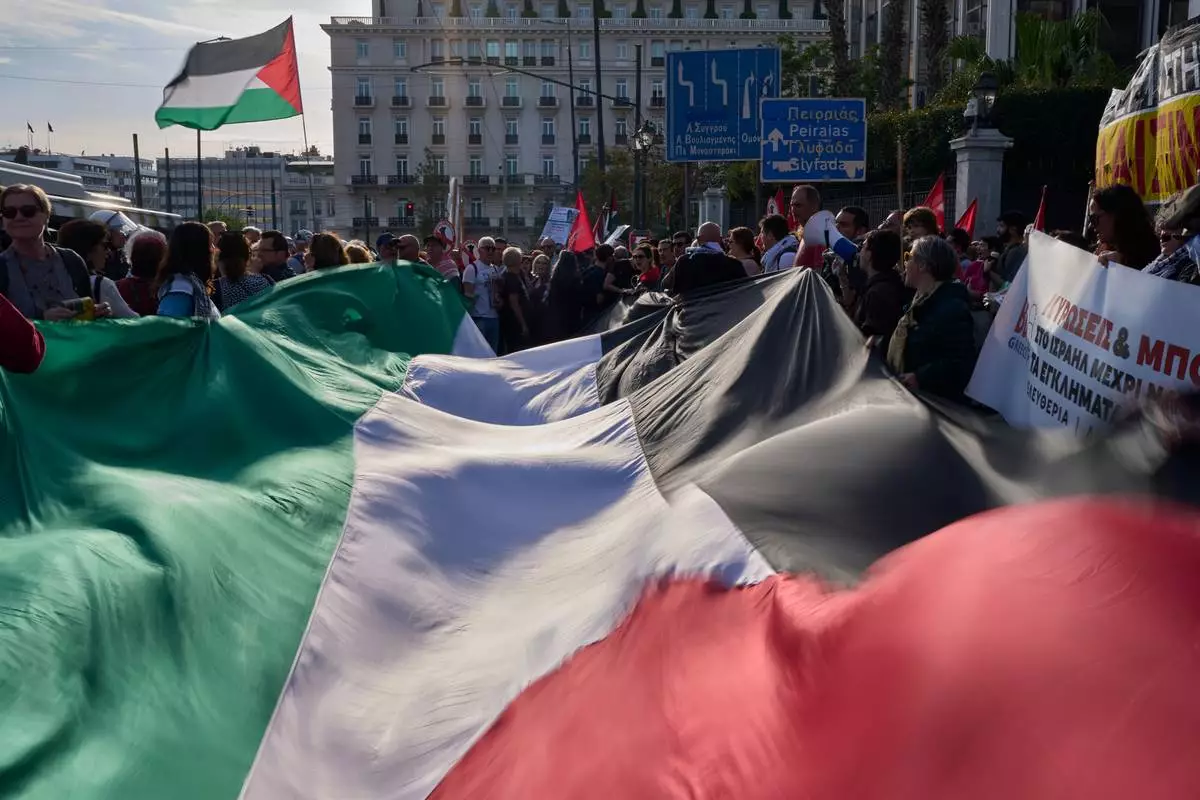
Demonstrators wave a giant Palestinian flag outside Greece's Foreign Ministry in Athens, Thursday, April 30, 2026, during a rally to protest the interception of Gaza aid ships by Israeli forces near Greek waters. (AP Photo/Petros Giannakouris)

Demonstrators wave a giant Palestinian flag outside Greece's Foreign Ministry in Athens, Thursday, April 30, 2026, during a rally to protest the interception of Gaza aid ships by Israeli forces near Greek waters. (AP Photo/Petros Giannakouris)

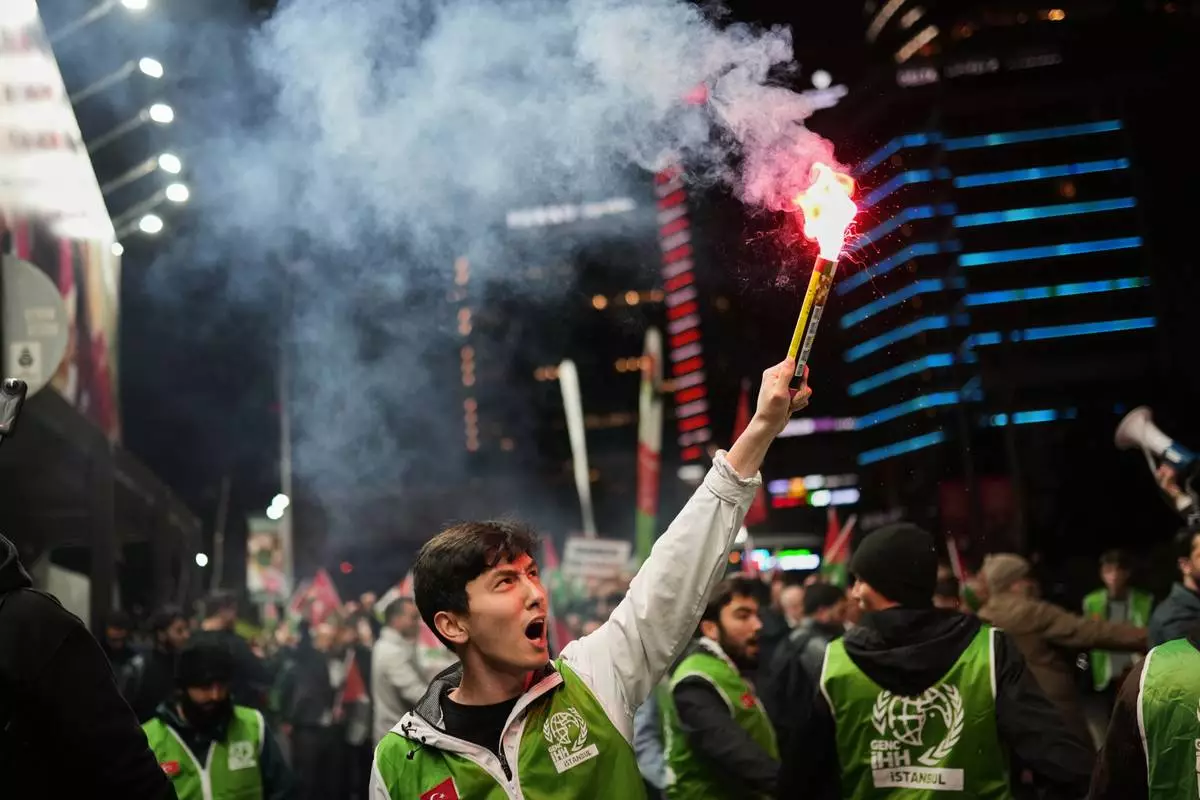
People march during a rally to protest against the interception of the Gaza aid ships "Global Sumud Flotilla" by Israeli forces near Greek waters, in Istanbul, Turkey, April 30, 2026. (AP Photo/Francisco Seco)

People march during a rally to protest against the interception of the Gaza aid ships "Global Sumud Flotilla" by Israeli forces near Greek waters, in Istanbul, Turkey, April 30, 2026. (AP Photo/Francisco Seco)

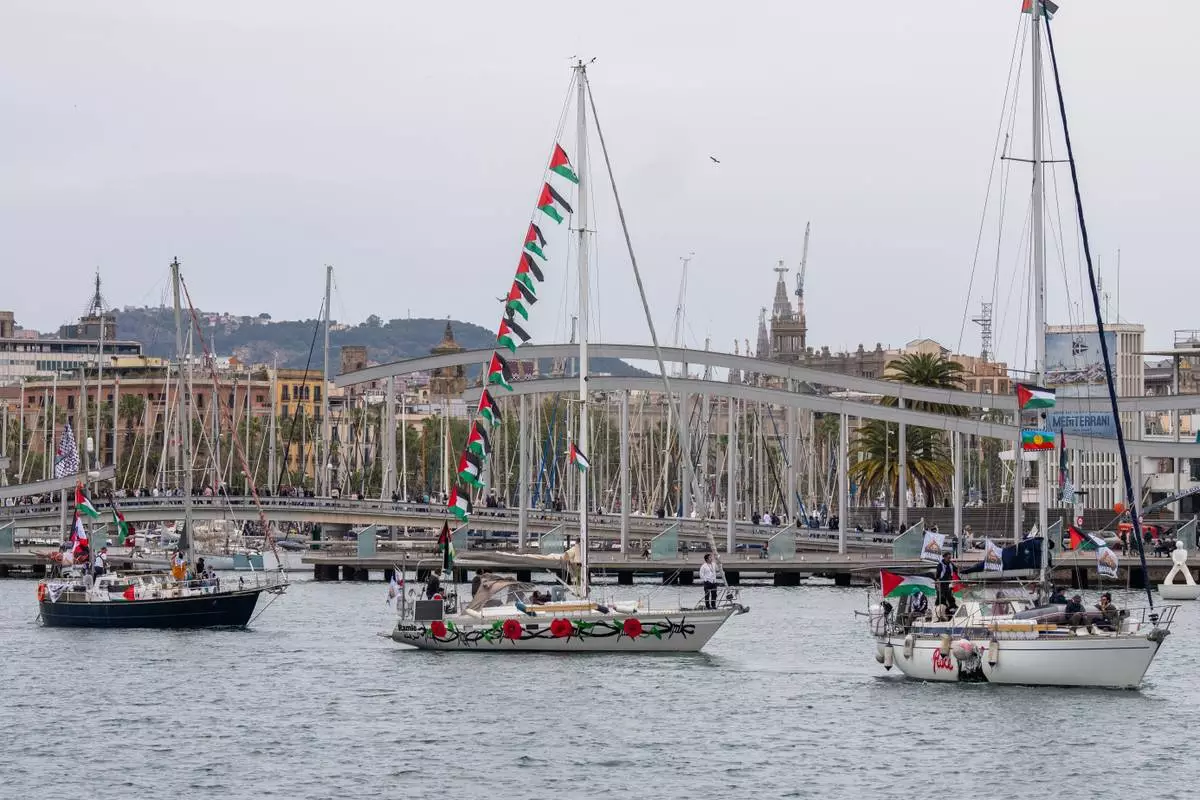
Boats carrying activists and humanitarian aid for Palestinians in Gaza reposition in the port during a symbolic send-off as part of the Global Sumud Flotilla, in Barcelona, Spain, Sunday, April 12, 2026. (AP Photo/Joan Mateu Parra)

Boats carrying activists and humanitarian aid for Palestinians in Gaza reposition in the port during a symbolic send-off as part of the Global Sumud Flotilla, in Barcelona, Spain, Sunday, April 12, 2026. (AP Photo/Joan Mateu Parra)

People stage a protest after activists attempting to break Israel's maritime blockade of Gaza say Israeli forces have intercepted their "Global Sumud Flotilla" near the southern Greek island of Crete, in Rome, Thursday, April 30, 2026. (AP Photo/Andrew Medichini)

People stage a protest after activists attempting to break Israel's maritime blockade of Gaza say Israeli forces have intercepted their "Global Sumud Flotilla" near the southern Greek island of Crete, in Rome, Thursday, April 30, 2026. (AP Photo/Andrew Medichini)

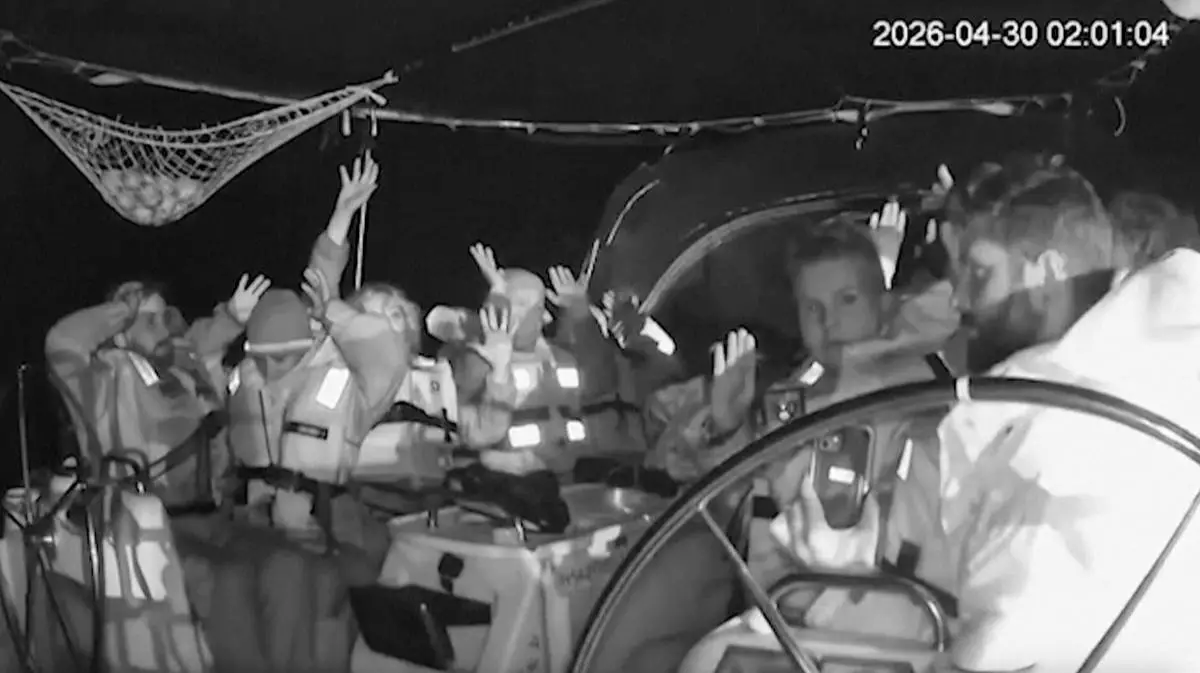
This grab from black and white CCTV footage shows members on flotilla boat with hands in air as Israeli forces intercepted activists who set sail earlier this month from Barcelona attempting to break Israel’s maritime blockade of Gaza, near the southern Greek island of Crete, early Thursday, April 30, 2026. (Global Sumud Flotilla via AP)

This grab from black and white CCTV footage shows members on flotilla boat with hands in air as Israeli forces intercepted activists who set sail earlier this month from Barcelona attempting to break Israel’s maritime blockade of Gaza, near the southern Greek island of Crete, early Thursday, April 30, 2026. (Global Sumud Flotilla via AP)

Recommended Articles