BEIRUT (AP) — Iran’s imprisoned Nobel Peace Prize laureate Narges Mohammadi has been urgently transferred from prison to a hospital in northwestern Iran after a “catastrophic deterioration” of her health, her foundation said Friday.
The Narges Mohammadi Foundation said the Nobel Prize laureate had two episodes of complete loss of consciousness and a severe cardiac crisis.
Earlier Friday, Mohammadi had fainted twice in prison in Zanjan in northwestern Iran, according to the foundation. She was believed to have suffered a heart attack in late March, according to her lawyers who visited her a few days after the incident. At the time, she appeared pale, underweight and needed a nurse to help her walk.
The hospital transfer comes “after 140 days of systematic medical neglect,” since her arrest on Dec. 12, the foundation said.
“This transfer was done as an unavoidable necessity after prison doctors determined her condition could not be managed on-site, despite standing medical recommendations that she be treated by her specialized team in Tehran,” the foundation said.
Mohammadi’s family had advocated for her transfer to adequate medical facilities for weeks.
The foundation, quoting her family, said her transfer Friday to a hospital in Zanjan was “a desperate, ‘last-minute’ action that may be too late to address her critical needs.”
Mohammadi's brother Hamidreza Mohammadi, who lives in Oslo, Norway, said in an audio message shared with The Associated Press by the foundation that her family is “fighting for her life.”
“My family in Iran is doing everything they can. But the prosecutors in Zanjan are blocking everything,” he said.
On March 24, Narges Mohammadi’s fellow inmates found her unconscious, her lawyers said she told them during the visit a few days later. Upon later examination at the prison’s clinic, a doctor told her that she probably had had a heart attack. She had chest pain and breathing difficulties since.
Her legal representative in France, Chirinne Ardakani, said at the time that Mohammadi had been denied transfer to the hospital or to visit her cardiologist. A prison official was present throughout the brief visit by Mohammadi’s lawyers.
Mohammadi, 53, a rights lawyer who won the Nobel Peace Prize in 2023 while in prison, was arrested in December during a visit to the eastern Iranian city of Mashhad and sentenced to seven more years in prison.
Her family said in February that her health was worsening in prison, in part because of a beating she endured during her arrest in December. He said multiple men hit and kicked her in her side, head and neck. The Nobel committee condemned the “ongoing life-threatening mistreatment” of Mohammadi in a statement in February.
“In recent days, her blood pressure has experienced severe fluctuations, going very high and low, and today she suddenly fainted due to a sudden drop in blood pressure,” her lawyer Mostafa Nili posted on X.
At first, the prison doctor injected Mohammadi with drugs but she refused to be transferred to a hospital, demanding to see her cardiologist. A few hours later, Mohammadi fainted again. This time a neurologist ordered her immediate transfer to a hospital, the lawyer added.
Mohammadi was urgently transferred to the hospital and admitted to the cardiac care unit, “but her blood pressure continues to fluctuate severely,” Nili wrote. He said a medical official in Zanjan recommended a one-month suspension of her sentence for treatment, but the public prosecutor in Zanjan referred the matter to his counterpart in Tehran.
Prior to her arrest Dec. 12, Mohammadi had already been serving a sentence of 13 years and nine months on charges of collusion against state security and propaganda against Iran’s government, but had been released on furlough since late 2024 over medical concerns.
During that furlough, Mohammadi kept up her activism with public protests and international media appearances, including demonstrating in front of Tehran’s notorious Evin Prison, where she had been held.
In February, a Revolutionary Court in Mashhad sentenced Mohammadi to an additional seven years. Such courts typically issue verdicts with little or no opportunity for defendants to contest their charges.
Mohammadi suffered multiple heart attacks while imprisoned before undergoing emergency surgery in 2022, her supporters say.
In 2023, Mohammadi became the fifth laureate to be awarded the Nobel Peace Prize while in prison, further amplifying her voice in support of widespread protests that swept Iran after the death the year before of Mahsa Amini, who was arrested by the country’s morality police for not properly wearing the mandatory headscarf.
Her selection enraged Iran’s hard-line Shiite theocracy, which increased her prison time and later sent guards to rough her up along with other prisoners who were protesting inside Evin Prison.
Yet Mohammadi remained defiant, even issuing boycott calls for the 2024 election that President Masoud Pezeshkian won. She maintained that one day Iran’s government would change due to popular pressure.
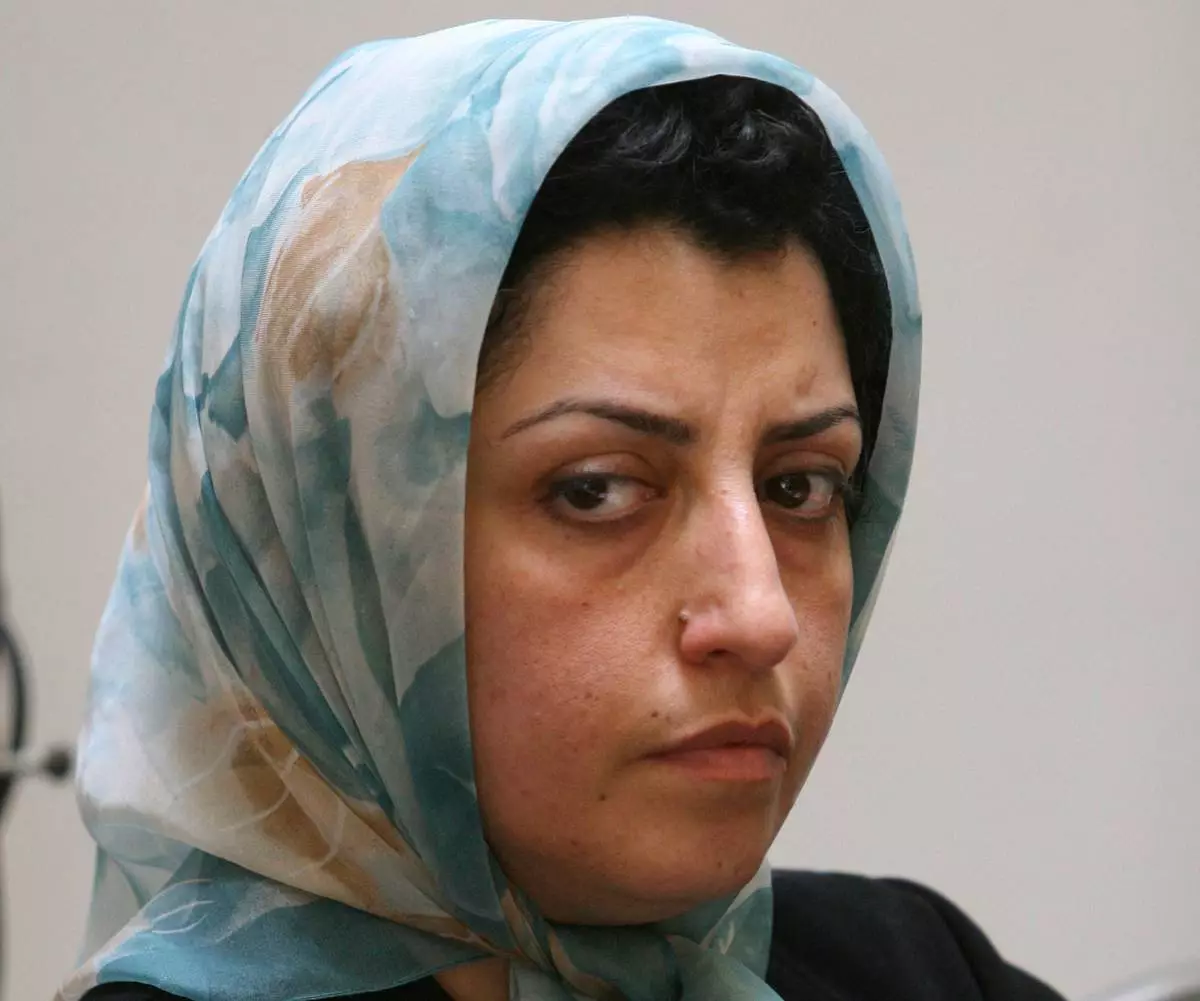
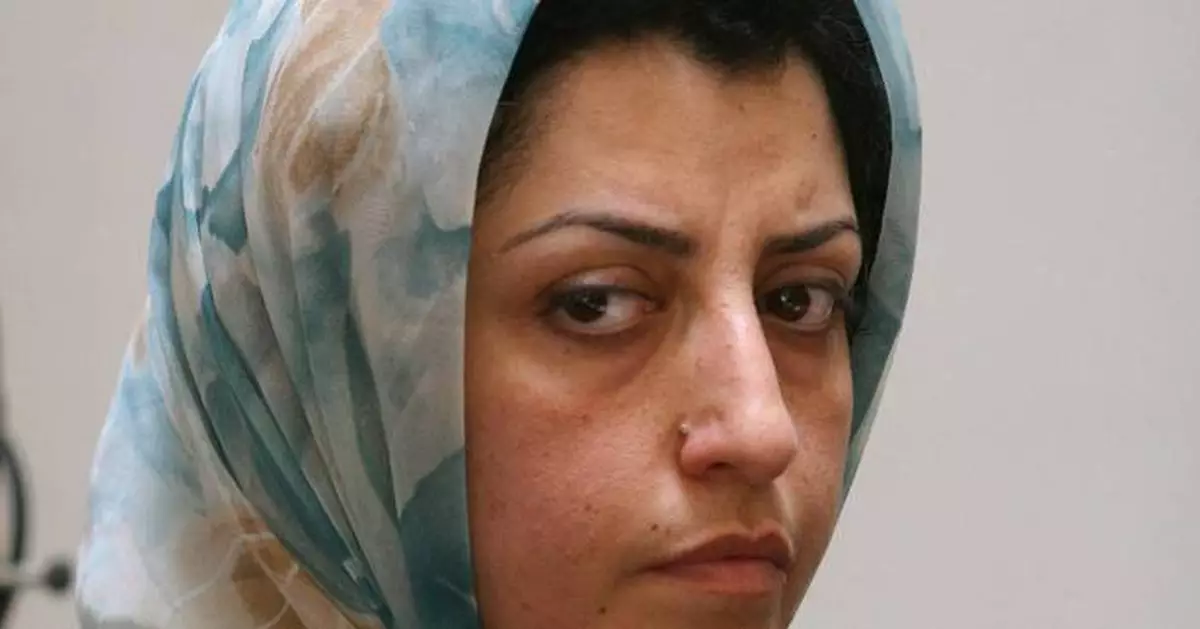
FILE - Prominent Iranian human rights activist Narges Mohammadi attends a meeting on women's rights in Tehran, Iran, Aug. 27, 2007. (AP Photo/Vahid Salemi, File)
PARIS (AP) — Activists worldwide held May Day rallies and street protests Friday, calling for peace, higher wages and better working conditions as many workers grapple with rising energy costs and shrinking purchasing power tied to the Iran war.
May 1 is a public holiday in many countries to mark International Workers’ Day, or Labor Day, when workers’ unions traditionally rally around wages, pensions, inequality and broader political issues. Demonstrations were held from Seoul, Sydney and Jakarta to many European capitals. In the U.S., activists opposing President Donald Trump’s policies also held marches and boycotts.
“Working people refuse to pay the price for Donald Trump’s war in the Middle East,” the European Trade Union Confederation, which represents 93 trade union organizations in 41 European countries, said. “Today’s rallies show working people will not stand by and see their jobs and living standards destroyed.”
What to know about May Day:
Rising living costs linked to the conflict in the Middle East emerged as a key theme in Friday’s rallies.
In the Philippine capital, Manila, large crowds denounced the U.S. role in the Iran war. Protesters clashed with police blocking the way near the U.S. Embassy.
On a main avenue in Casablanca, Morocco’s largest city, taxi drivers honked their horns and bus drivers parked their vehicles to protest rising fuel costs.
“All my expenses have gone up, but my wages haven’t budged,” Akherraz Lhachimi of the Moroccan Labor Union said.
Turkish authorities in Istanbul detained hundreds of demonstrators for attempting to march in areas declared off-limits on security grounds, most notably central Taksim Square, the epicenter of 2013 protests. May Day rallies in Turkey are frequently marred by clashes with authorities.
Tens of thousands of people crowded into a public square across from the U.S. Embassy in Havana, celebrating Cuba's workers and decrying U.S. sanctions. Many held banners that read, “Down with Imperialism” and “U.S. hands off Cuba.” President Miguel Díaz-Canel and former President Raúl Castro attended.
A demonstration in Santiago, Chile, ended with vandalism and clashes between protesters and police, who used water cannons and tear gas to disperse the crowd.
Other demonstrations in the South American nation were peaceful as thousands of workers took to the streets to demand better working conditions. The unemployment rate in Chile hovered around 9% in the first quarter of the year.
Several rallies were staged in South Africa, where the head of the Congress of South African Trade Unions, Zingiswa Losi, said workers were “suffocating” under rising costs of food, electricity, transportation and healthcare.
May Day carries special meaning this year in France, after a heated debate about whether employees should be allowed to work on the country’s most protected public holiday — the only day when most employees have a mandatory paid day off.
Tens of thousands of people joined marches across the country, including in Paris, where brief scuffles with police broke out.
Almost all businesses, shops and malls are closed, and only essential sectors such as hospitals, transport and hotels are exempt.
A recent parliamentary proposal to expand work on the day prompted major outcry from unions and left-wing politicians. Faced with the dispute, the government this week introduced a bill that would allow bakeries and florists to open. It is customary in France to give lily of the valley flowers on May Day as a symbol of good luck.
“May 1 is not just any day,” Small and Medium-sized Businesses Minister Serge Papin said. “It symbolizes social gains stemming from a century of building social rules that have led to the labor code we know in France.”
In the United States, where May Day is not a federal holiday, May Day Strong, a coalition of activist groups and labor unions, urged people to protest under the banner of “workers over billionaires” and called for an economic blackout through “no school, no work, no shopping.”
Protesters voiced opposition to Trump's policies, including his immigration crackdown.
“We’re seeing tons and tons of attacks on working people and on oppressed communities from the Trump administration, both at home and abroad,” said Kathryn Stender, an activist with the Party for Socialism and Liberation who was among thousands at a rally in a Chicago park.
The atmosphere was festive, with Native American dancers, mariachi bands and monarch butterfly signs, which have become a symbol of the immigrant rights movement.
While labor and immigrant rights are historically intertwined, the focus of May Day rallies in the U.S. shifted to immigration in 2006. That’s when roughly 1 million people, including nearly half a million in Chicago alone, took to the streets to protest federal legislation that would have made living in the U.S. without legal permission a felony.
May Day, or International Workers’ Day, traces back more than a century to a pivotal period in U.S. labor history.
In the 1880s, unions pushed for an eight-hour workday. A Chicago rally in May 1886 turned deadly when a bomb exploded and police responded with gunfire. Several labor activists — most of them immigrants — were convicted of conspiracy and other charges; four were executed.
Unions later designated May 1 to honor workers. A monument in Chicago’s Haymarket Square commemorates them with the inscription: “Dedicated to all workers of the world.”
Associated Press journalists from around the world contributed to this report.
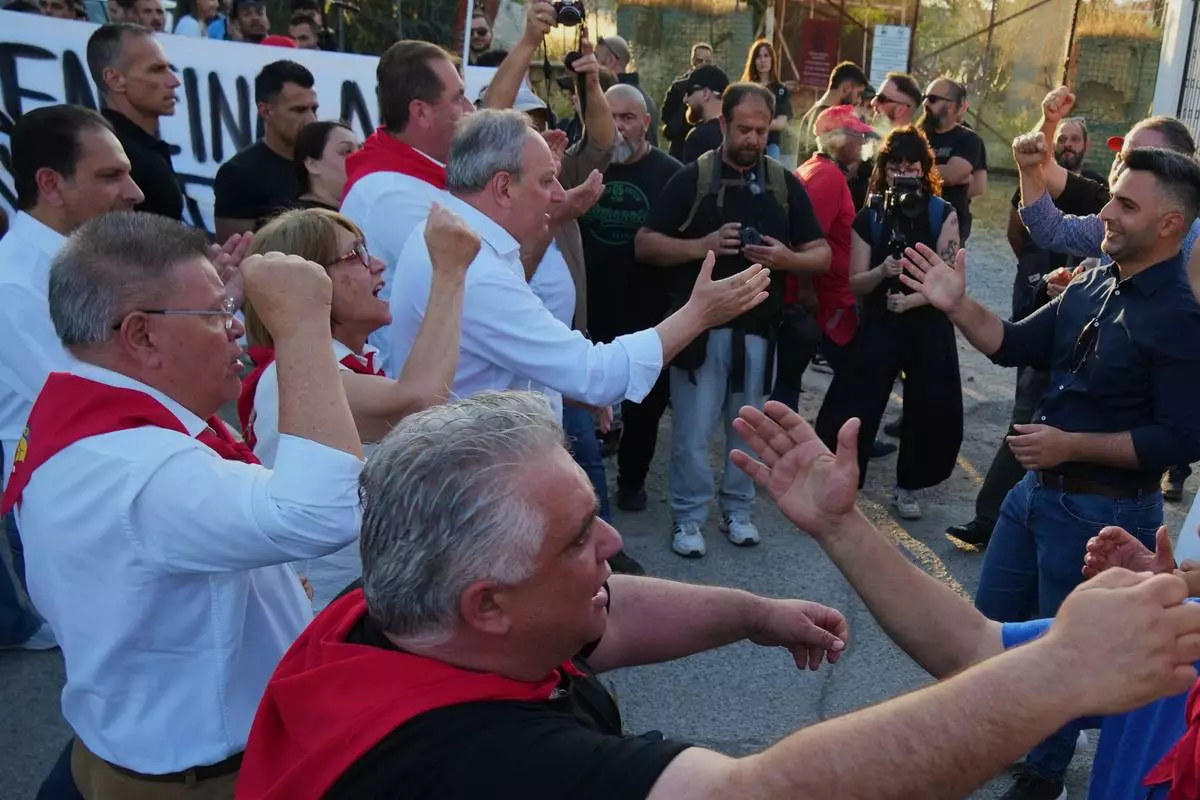
Turkish, right, and Greek Cypriots gathering s they marking May Day inside the U.N. buffer zone at Ledra Palace hotel in the divided capital of Nicosia, Friday, May 1, 2026. (AP Photo/Petros Karadjias)
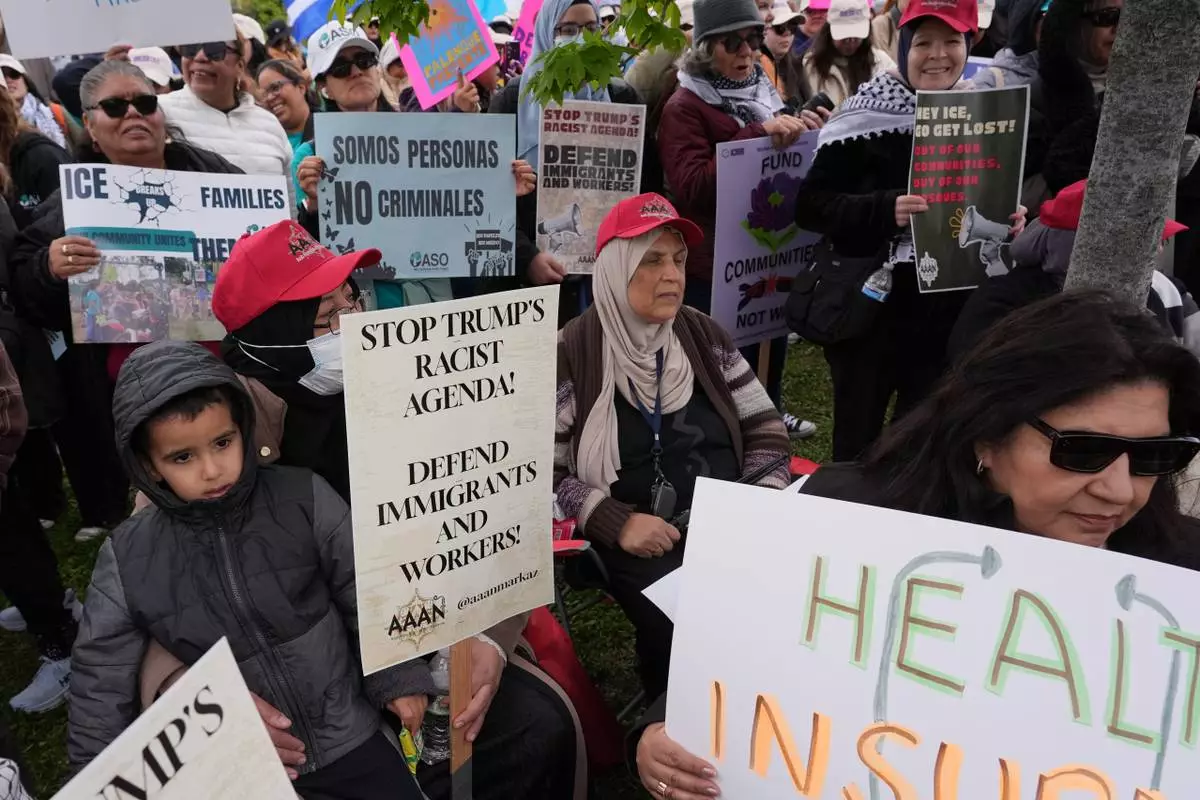
People gather before a May Day rally in Chicago, Friday, May 1, 2026. (AP Photo/Nam Y. Huh)
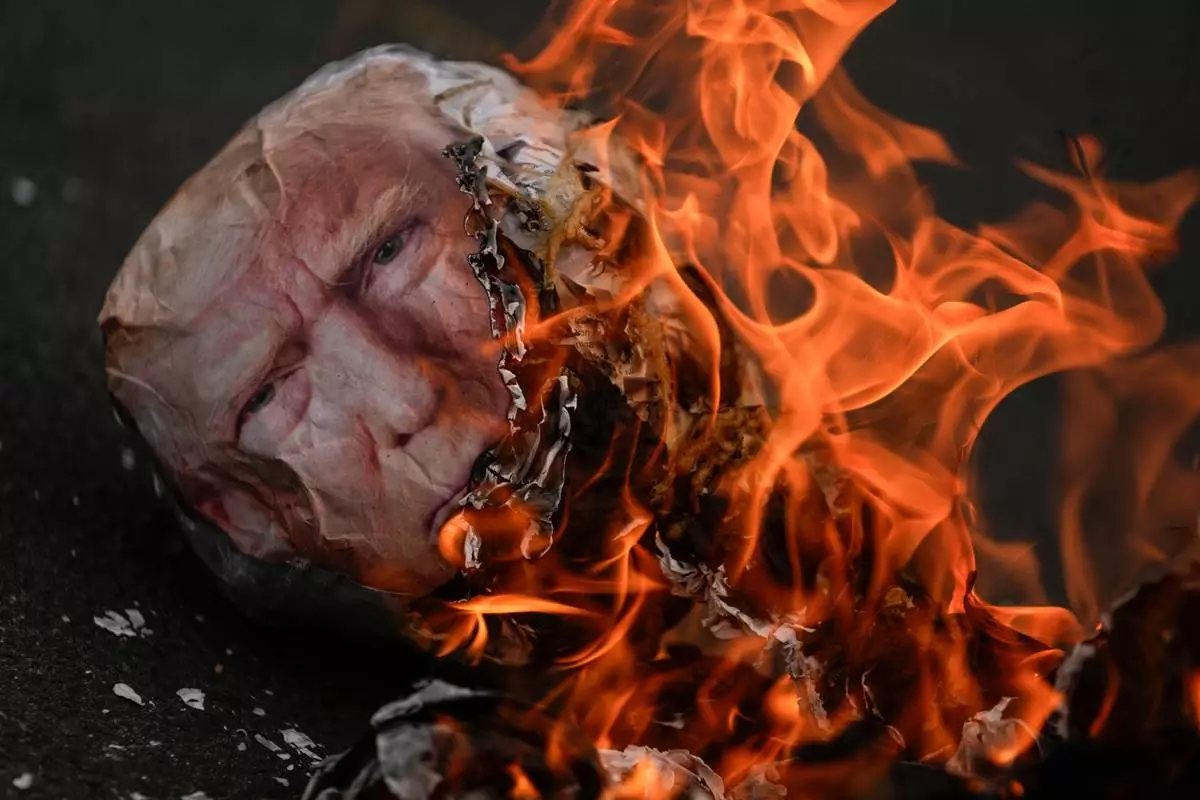
An effigy of U.S. President Donald Trump burns during an International Workers' Day march marking May Day in Panama City, Friday, May 1, 2026. (AP Photo/Matias Delacroix)
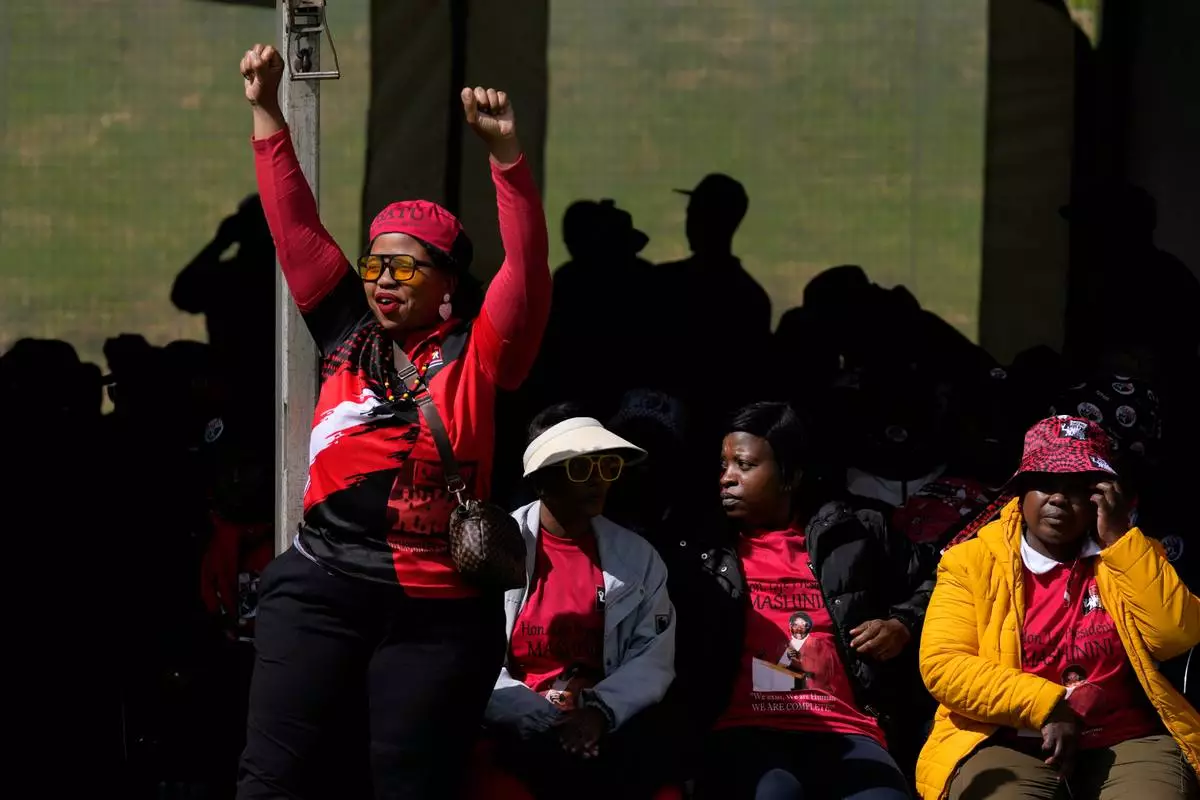
Members of trade unions take part in a May Day rally in Tsakane, east of Johannesburg, South Africa, Friday, May 1, 2026. (AP Photo/Themba Hadebe)
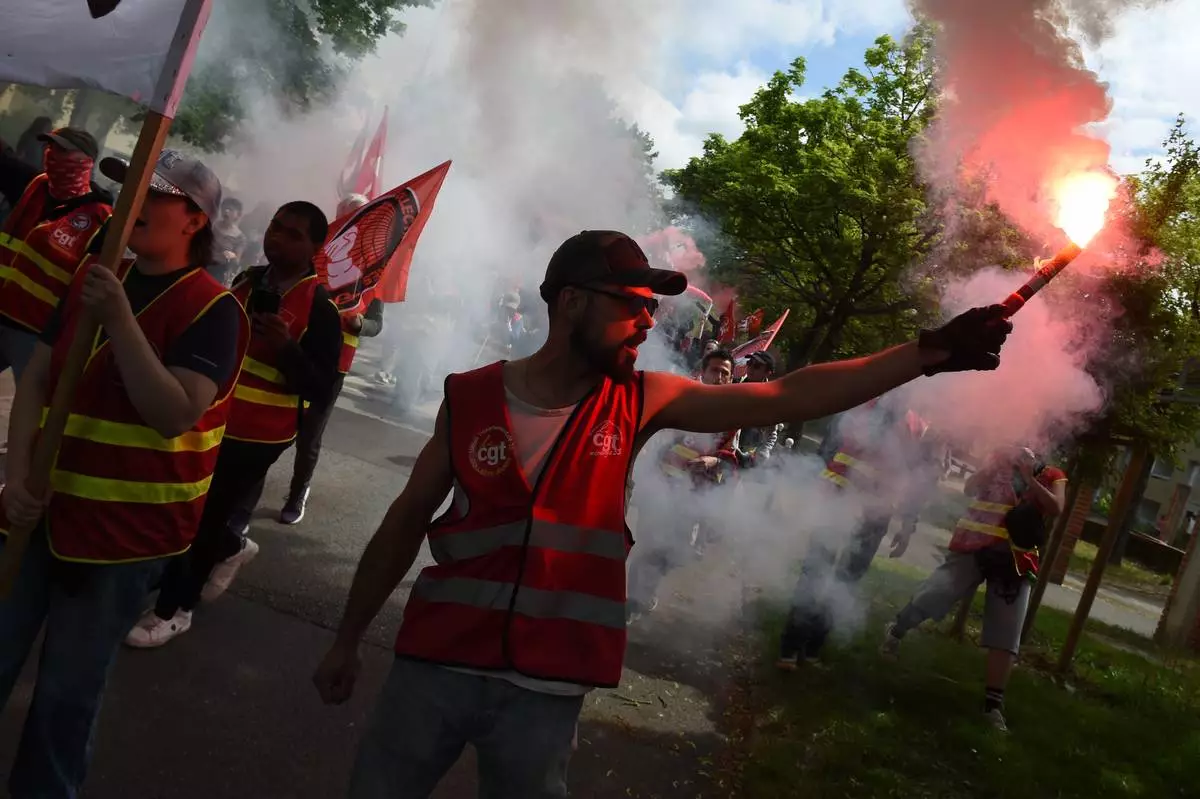
Protesters march during the May Day demonstration in Rennes, western France, Friday, May 1, 2026. (AP Photo)
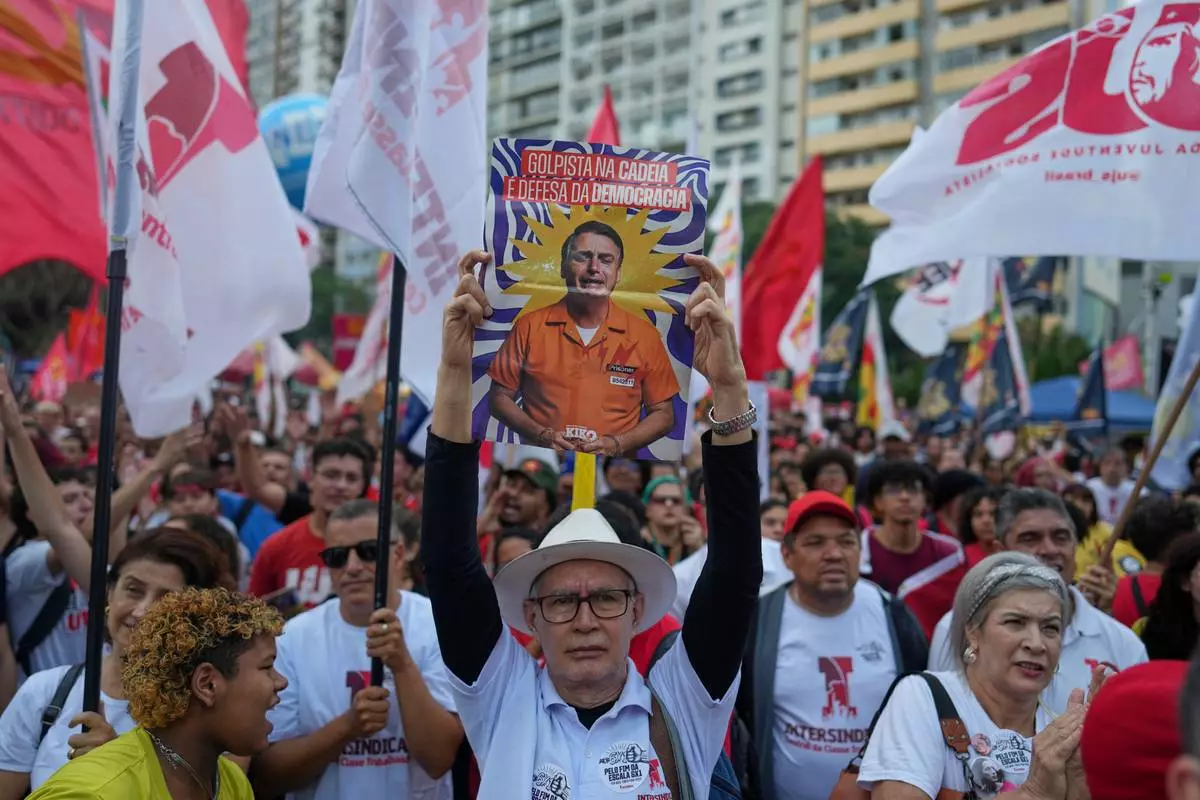
A man holds a picture or former Brazilian President Jair Bolsonaro wearing a prison uniform during a May Day rally demanding greater labor rights in Sao Paulo, Brazil, Friday, May 1, 2026. (AP Photo/Andre Penner)
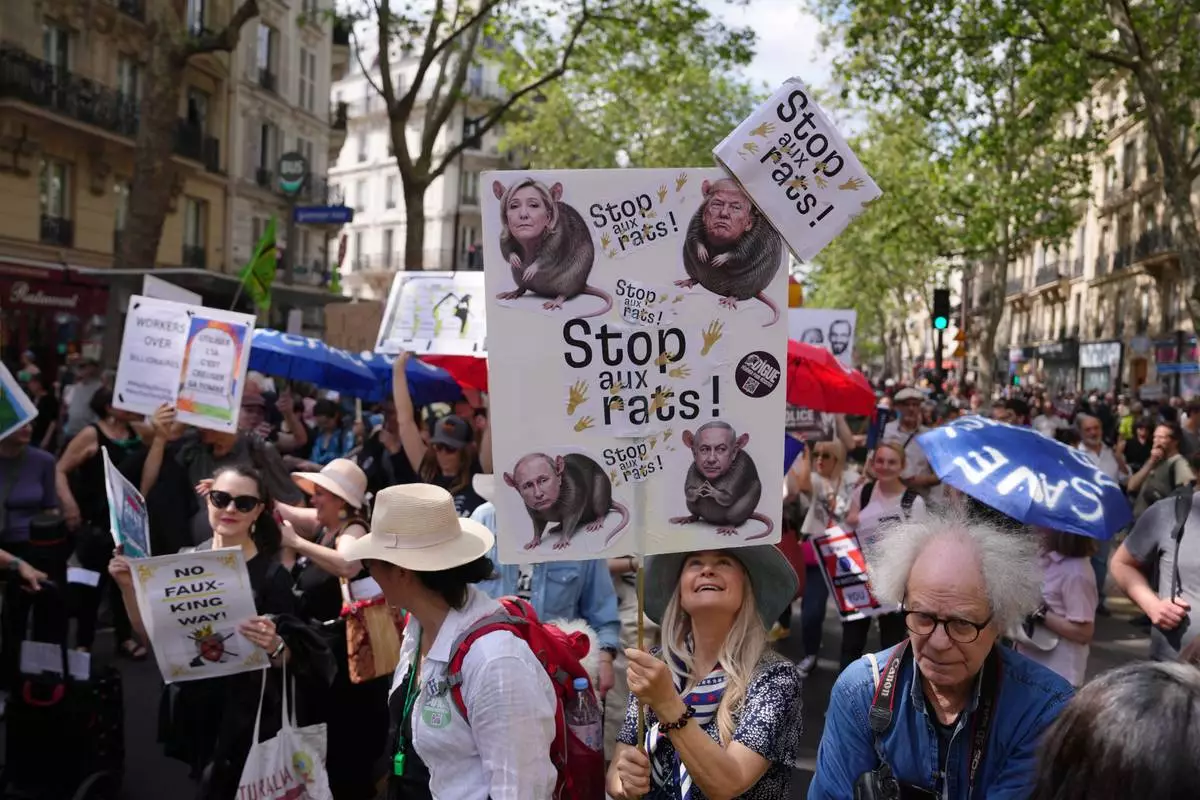
Protesters march during the May Day demonstration in Paris, Friday, May 1, 2026. (AP Photo/Aurelien Morissard)
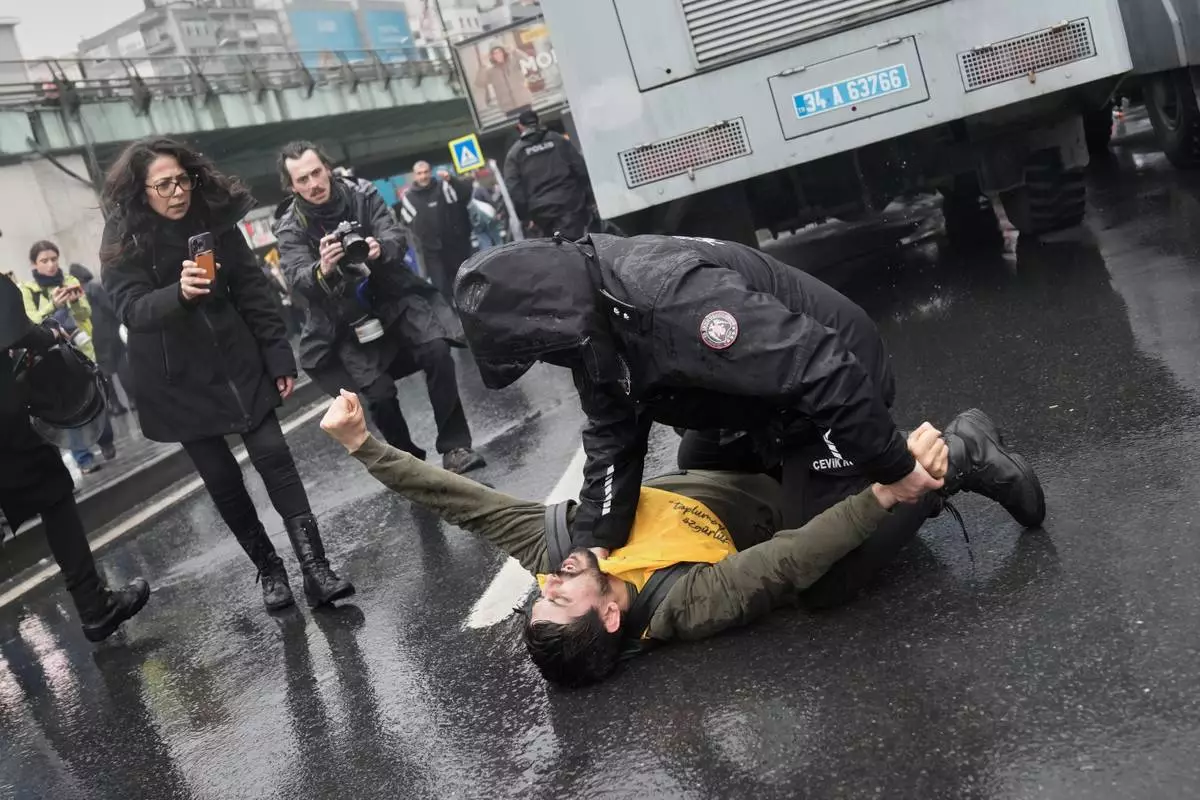
An union member is detained by a Turkish police officer as people try to march towards Taksim square in Istanbul, Turkey, Friday, May 1, 2026, during Labor Day celebrations. (AP Photo/Khalil Hamra)
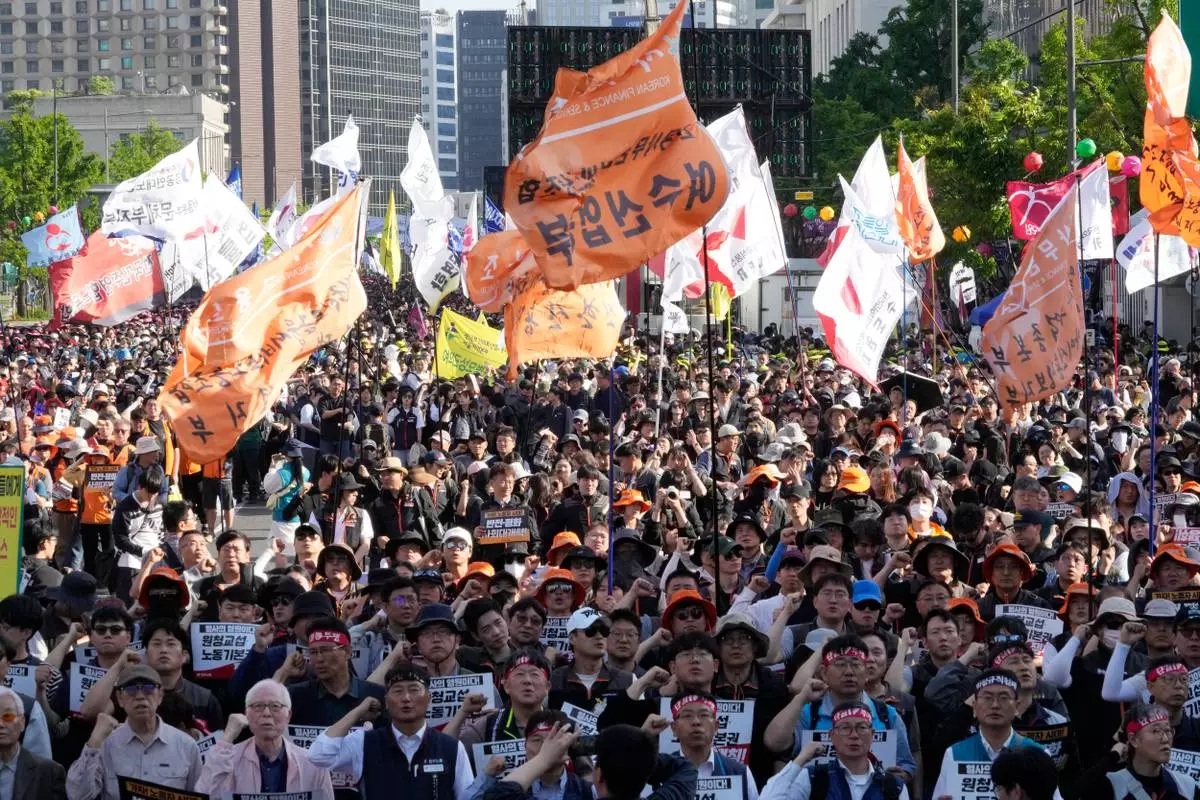
Members of the Korean Confederation of Trade Unions stage a rally on May Day in Seoul, South Korea, Friday, May 1, 2026. (AP Photo/Ahn Young-joon)
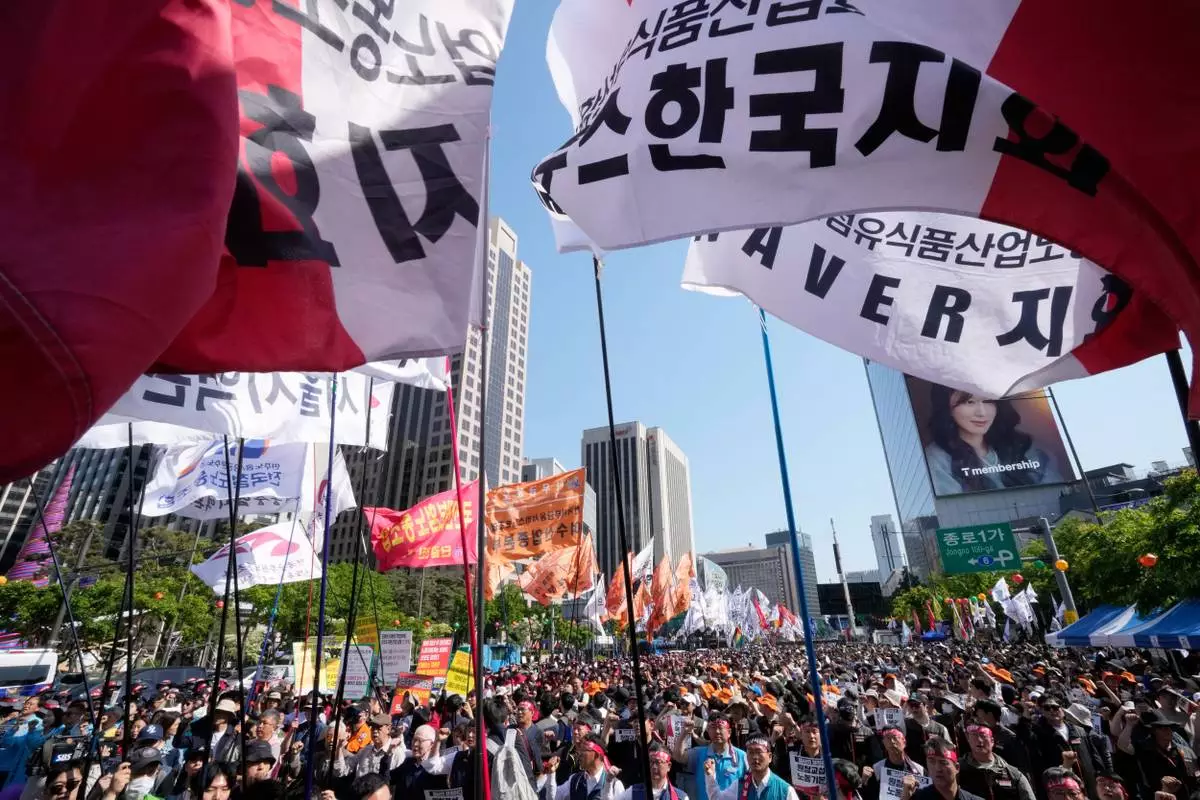
Members of the Korean Confederation of Trade Unions stage a rally on May Day in Seoul, South Korea, Friday, May 1, 2026. (AP Photo/Ahn Young-joon)
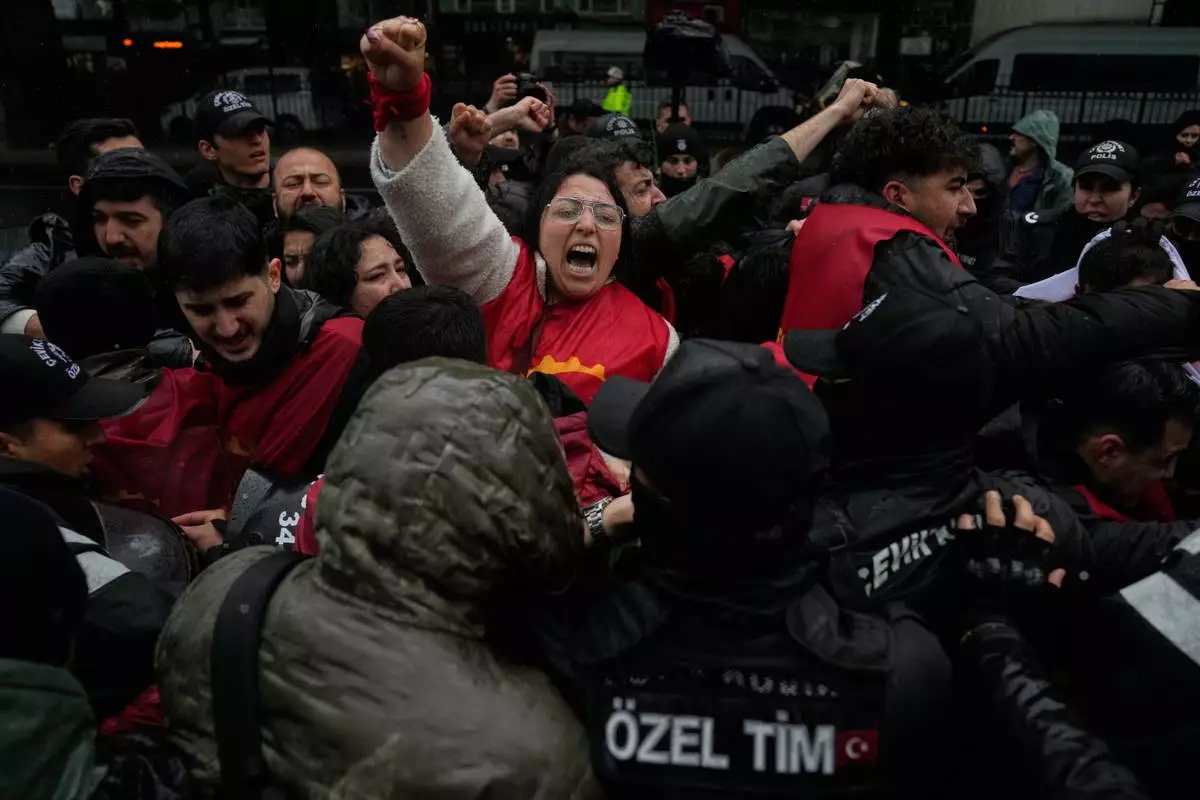
Union members scuffle with Turkish police officers as they try to march towards Taksim square in Istanbul, Turkey, Friday, May 1, 2026, during Labor Day celebrations. (AP Photo/Khalil Hamra)
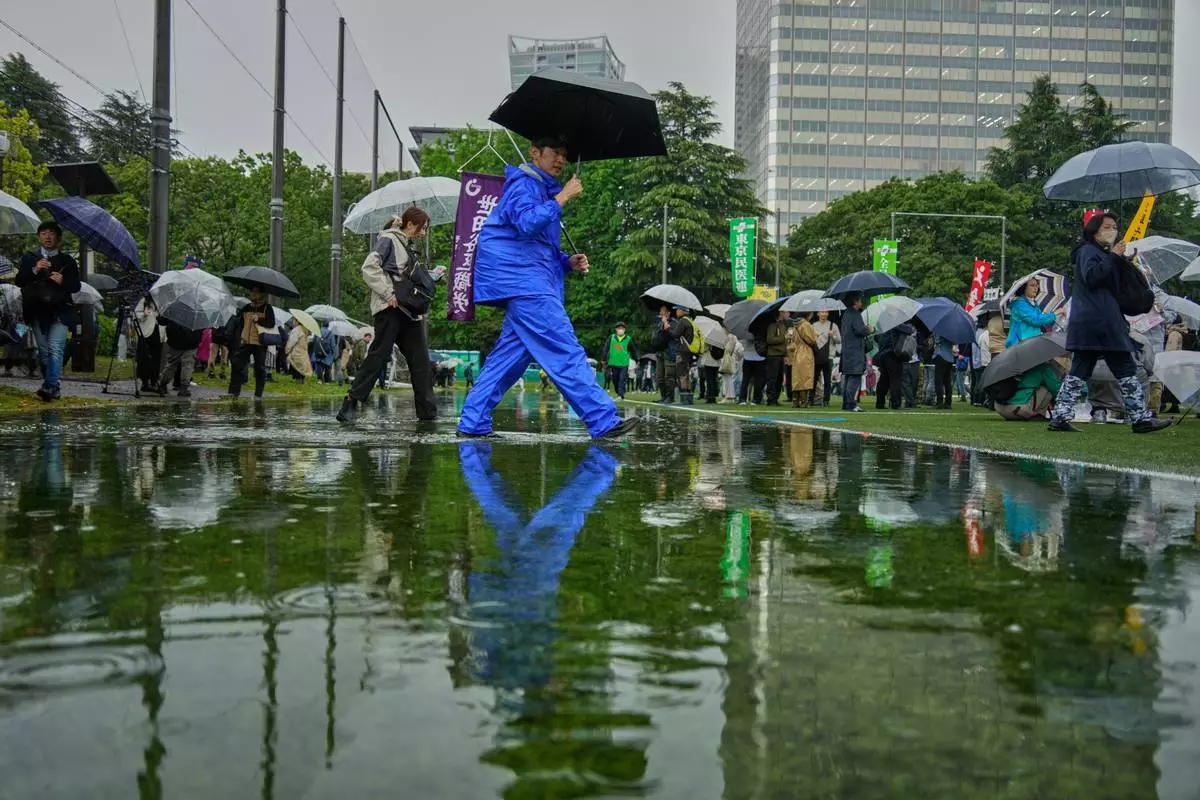
Union members carefully step through rain-formed puddles to participate in a May Day rally in the rain Friday, May 1, 2026, in Tokyo. (AP Photo/Eugene Hoshiko)
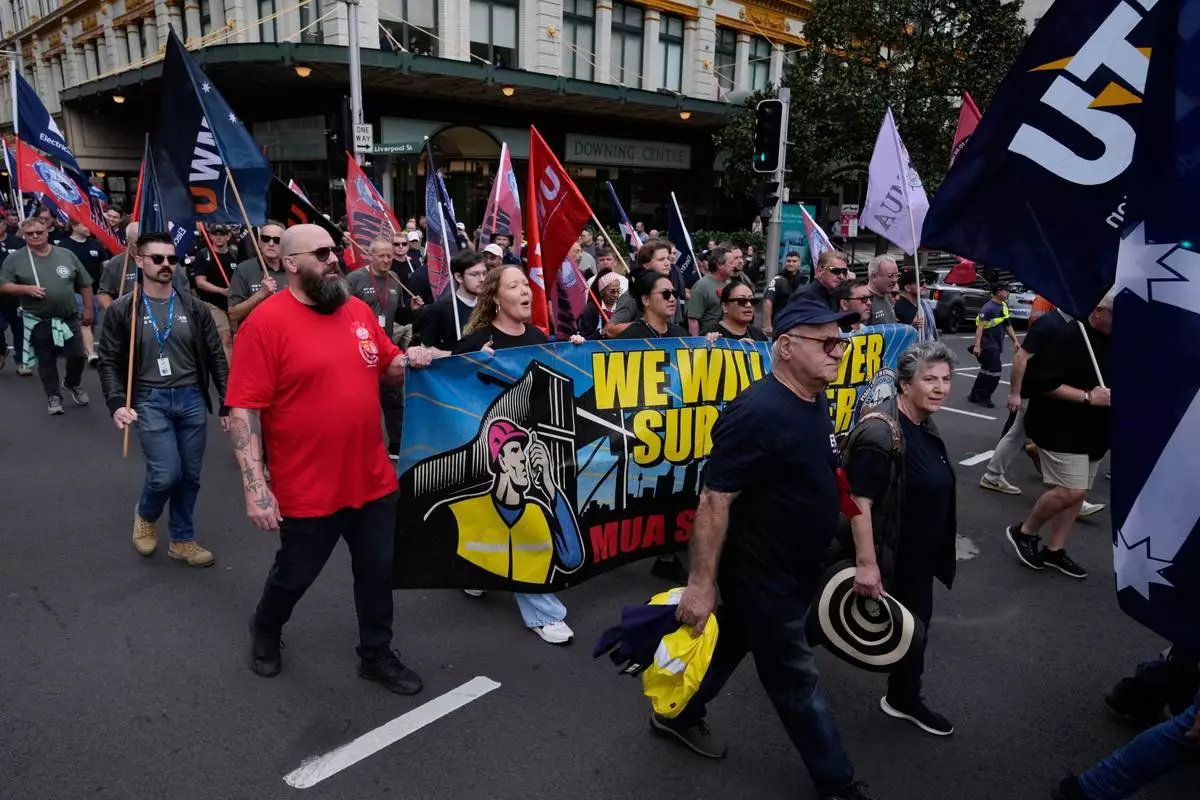
People march to mark International Workers' Day, also known as May Day, in Sydney, Friday, May 1, 2026. (AP Photo/Rick Rycroft)

People march to mark International Workers' Day, also known as May Day, in Sydney, Friday, May 1, 2026. (AP Photo/Rick Rycroft)
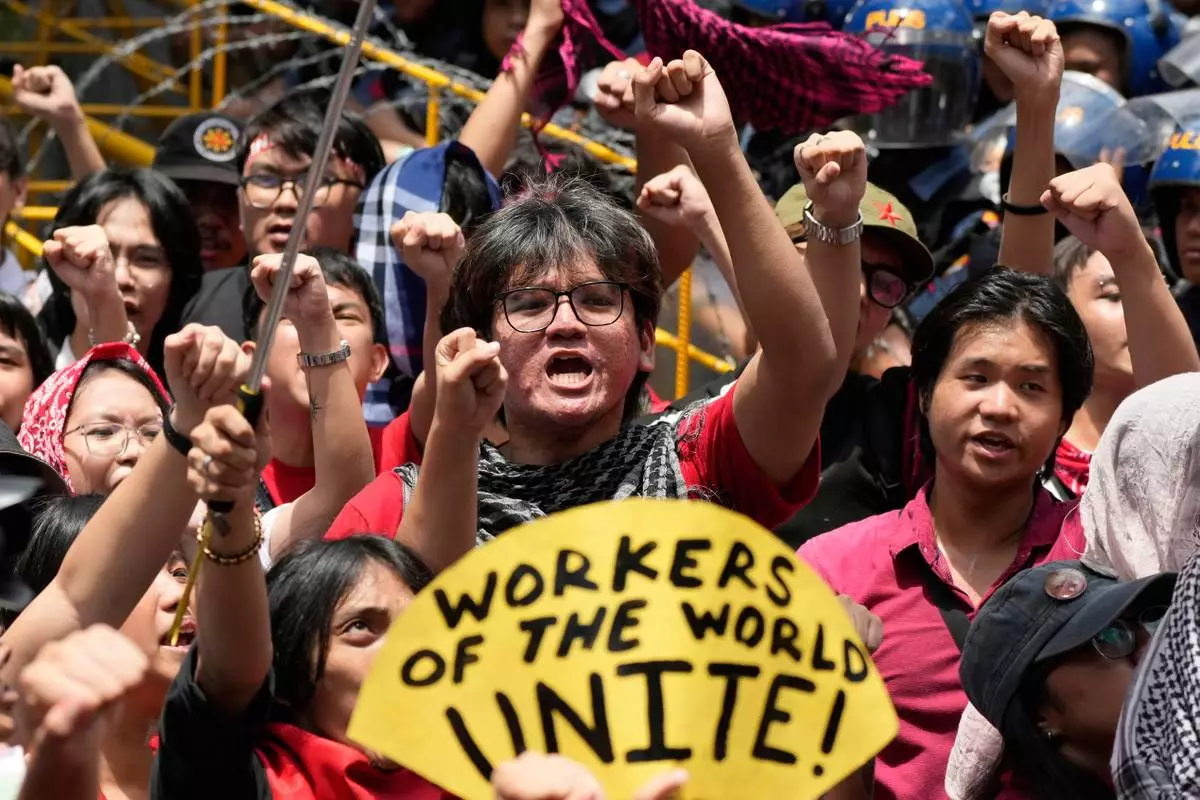
FILE - Activist and workers raise their clenched fists during a May Day rally in Manila, Philippines, May 1, 2025. (AP Photo/Aaron Favila, File)
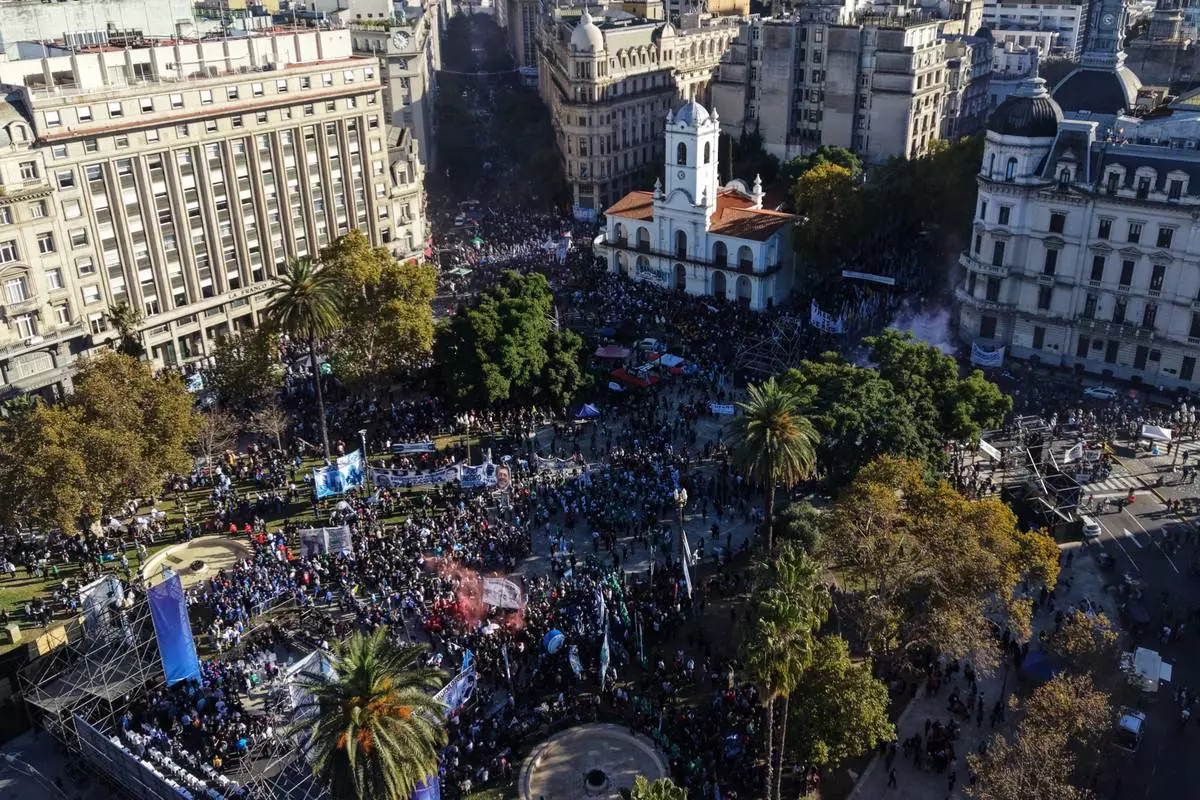
Laborers protest during a May Day demonstration in Buenos Aires, Argentina, Thursday, April 30, 2026. (AP Photo/Rodrigo Abd)
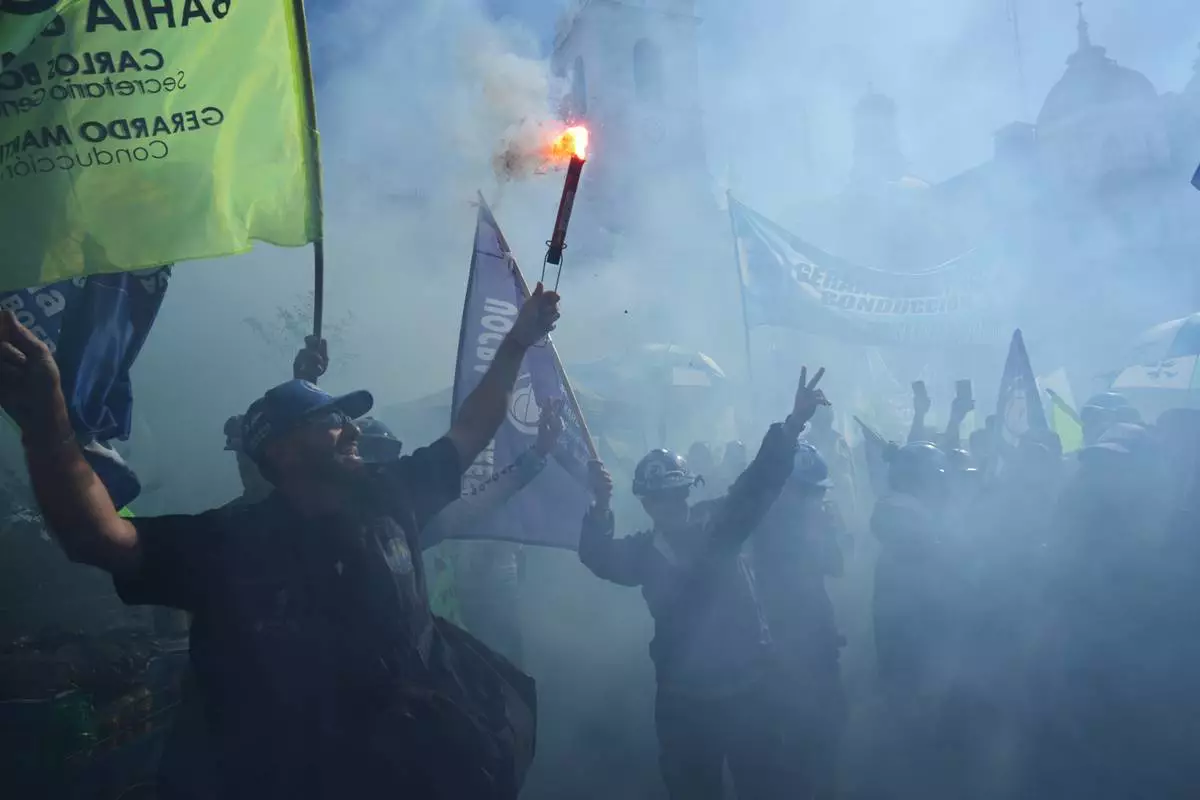
Laborers hold flares during a May Day demonstration in Buenos Aires, Argentina, Thursday, April 30, 2026. (AP Photo/Rodrigo Abd)
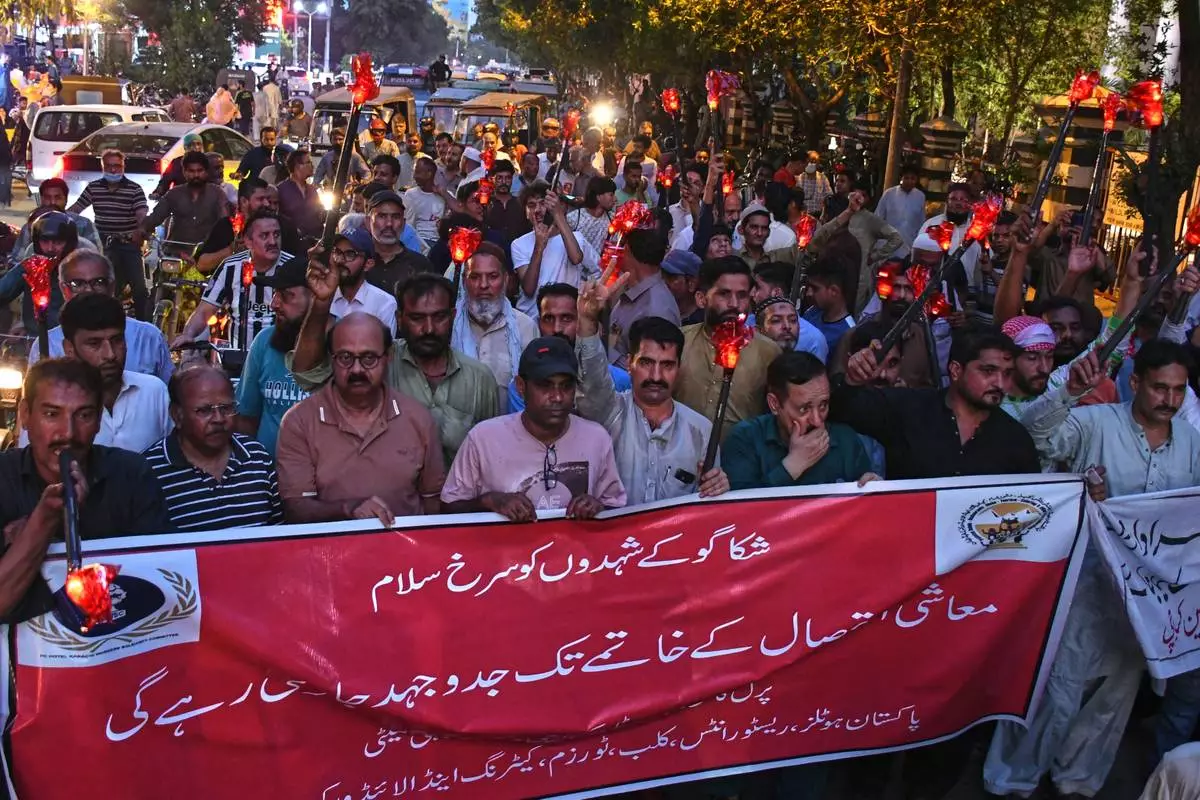
Members of trade unions take part in a rally a day ahead of the International Labor Day, in Karachi, Pakistan, Thursday, April 30, 2026. The banner in center reading as 'red salute to the martyrs of Chicago and the struggle will continue until economic exploitation is ended' (AP Photo/Ali Raza)
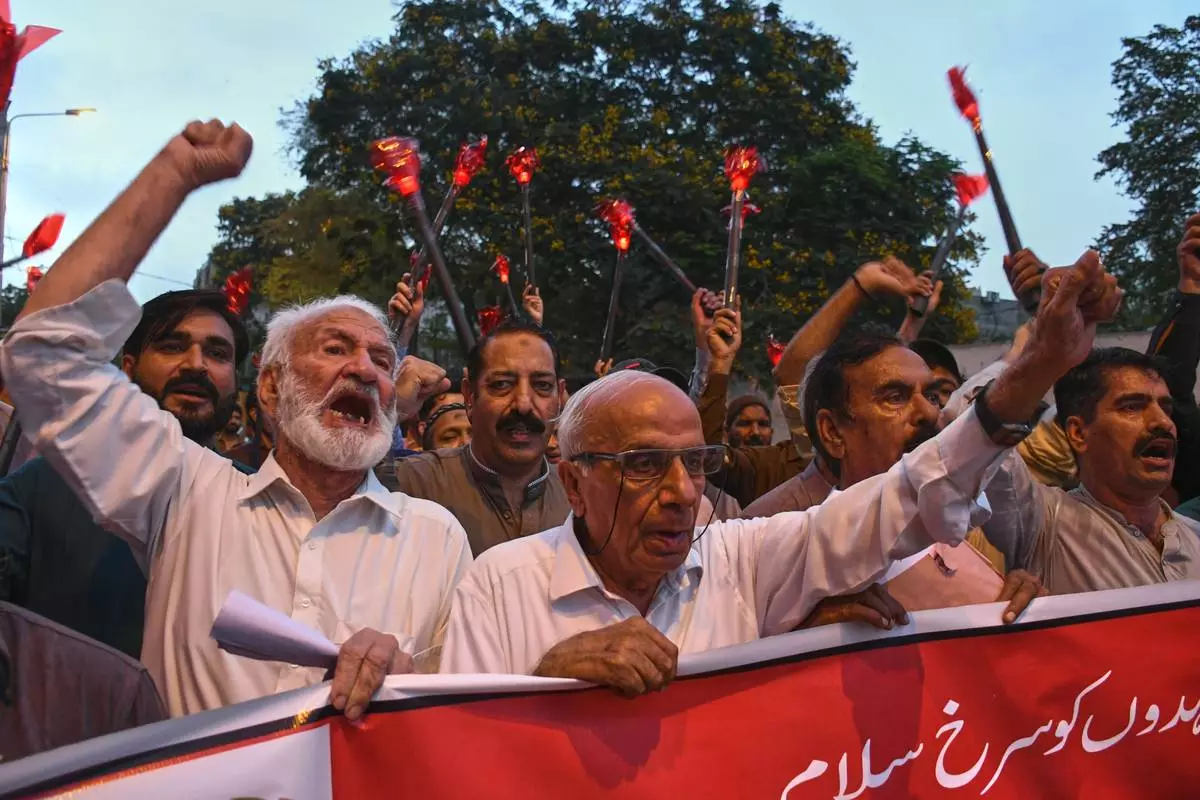
Members of trade unions take part in a rally a day ahead of the International Labor Day, in Karachi, Pakistan, Thursday, April 30, 2026. (AP Photo/Ali Raza)