TYRE, Lebanon (AP) — Israel carried out several airstrikes on southern Lebanon on Friday, killing at least four people, while the militant Hezbollah group said it fired rockets and drones, including one that crashed in northern Israel and wounded two soldiers.
Israel’s military and Hezbollah kept up their attacks despite a ceasefire in place since April 17. The state-run National News Agency reported that the four people were killed in strikes on three southern villages.
Click to Gallery
Sanaa Khalil, 35, a Syrian farmer who lost her two legs in the past days by an Israeli airstrike while she was working at a banana plantation, lies on a bed as she is assisted by a relative at a hospital in the southern port city of Tyre, Lebanon, Friday, May 1, 2026. (AP Photo/Hussein Malla)
Sanaa Khalil, 35, a Syrian farmer who lost her two legs in the past days by an Israeli strike while she was working at a banana plantation, lies on a bed at a hospital in the southern port city of Tyre, Lebanon, Friday, May 1, 2026. (AP Photo/Hussein Malla)
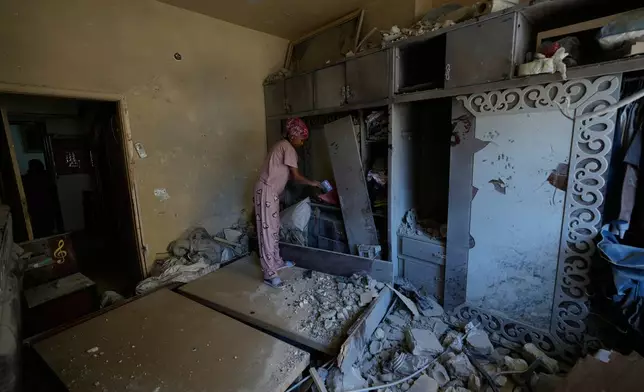
A domestic worker cleans a damaged bedroom in the southern port city of Tyre, Lebanon, Thursday, April 30, 2026 as the homeowner returns to the house. (AP Photo/Hussein Malla)
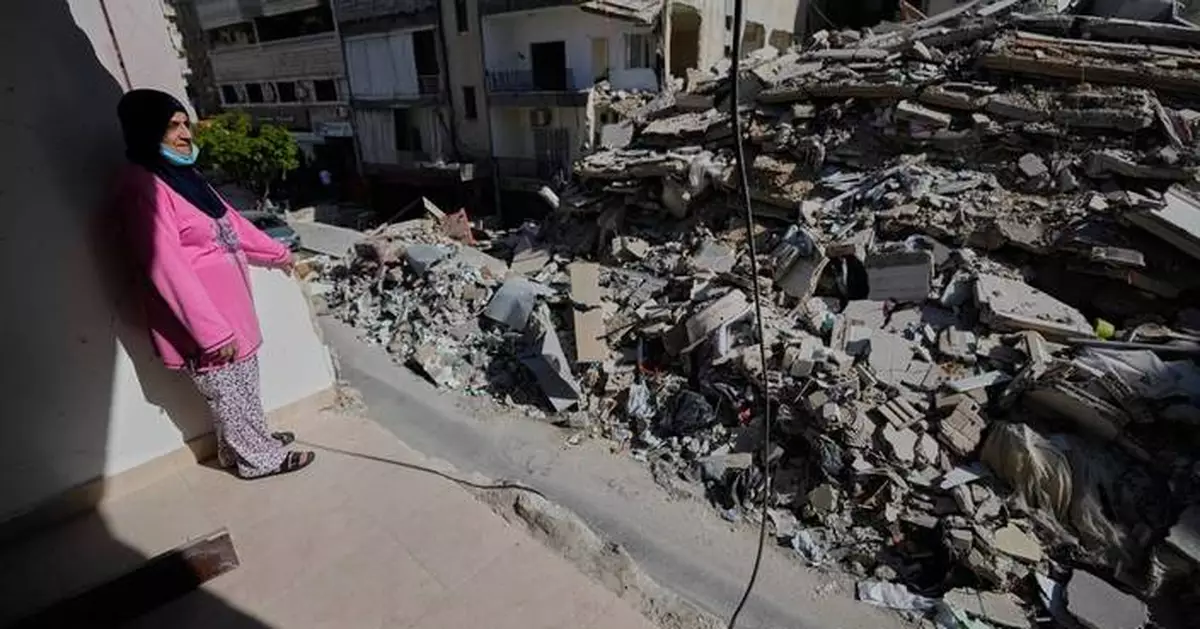
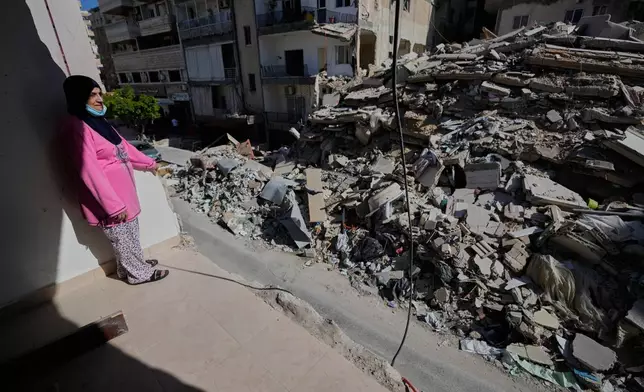
Em Ali Khodor, 75, looks through her damaged apartment into a destroyed building that was hit few weeks ago by an Israeli airstrikeafter she returns to the house, in the southern port city of Tyre, Lebanon, Thursday, April 30, 2026. (AP Photo/Hussein Malla)
Israel’s military on Friday afternoon urged residents of the village of Habboush near the southern city of Nabatiyeh to evacuate, warning that those close to Hezbollah’s facilities would be putting their lives in danger if they stay.
Friday’s exchanges came after paramedics recovered the bodies of five people, including a man and his three sons, from under rubble in the village of Kfar Rumman, also near Nabatiyeh, a day after they were killed.
National News Agency reported that the five were killed in an airstrike late Thursday on Kfar Rumman. The agency identified those whose bodies were recovered as Malek Hamza and his sons, Ali, Fadel and Hamza. It said the strike also killed a Lebanese soldier. The Lebanese army confirmed that a soldier, Ali Jaber, was killed in the strike.
By Friday afternoon, Hezbollah had issued six statements saying it launched drones and rockets at Israeli military positions.
The Israeli military confirmed that Hezbollah launched an explosive drone that fell in northern Israel near the border with Lebanon.
Israeli media reported a drone strike near Margaliot in northern Israel, saying it caused a localized fire, and that two soldiers were lightly wounded in a separate Hezbollah drone impact in the area.
Despite the war, residents have continued to return to homes in southern Lebanon after being displaced for weeks because of the hostilities.
One of them was Umm Ali Khodor, whose apartment in the southern port city of Tyre was damaged during the previous Israel-Hezbollah war in 2024 and again in the current conflict.
“We were displaced, we rented a house, but as you know the situation is very difficult,” the woman said. “We could not continue so we returned to our home.”
The latest war between Israel and Hezbollah began on March 2, when Hezbollah fired rockets into northern Israel two days after the United States and Israel launched a war on its main backer, Iran. Israel has since carried out hundreds of airstrikes and launched a ground invasion of southern Lebanon, capturing dozens of towns and villages along the border.
Since then Lebanon and Israel have held their first direct talks in more than three decades. The two countries have formally been in a state of war since the founding of the state of Israel in 1948.
A 10-day ceasefire declared in Washington went into effect on April 17. The ceasefire was later extended by three weeks.
The Health Ministry said Friday that the war's death toll reached 2,618 while 8,094 were wounded.
Mroue reported from Beirut. Associated Press journalist Koral Said contributed to this report from Abu Snan, Israel,

Sanaa Khalil, 35, a Syrian farmer who lost her two legs in the past days by an Israeli airstrike while she was working at a banana plantation, lies on a bed as she is assisted by a relative at a hospital in the southern port city of Tyre, Lebanon, Friday, May 1, 2026. (AP Photo/Hussein Malla)

Sanaa Khalil, 35, a Syrian farmer who lost her two legs in the past days by an Israeli strike while she was working at a banana plantation, lies on a bed at a hospital in the southern port city of Tyre, Lebanon, Friday, May 1, 2026. (AP Photo/Hussein Malla)
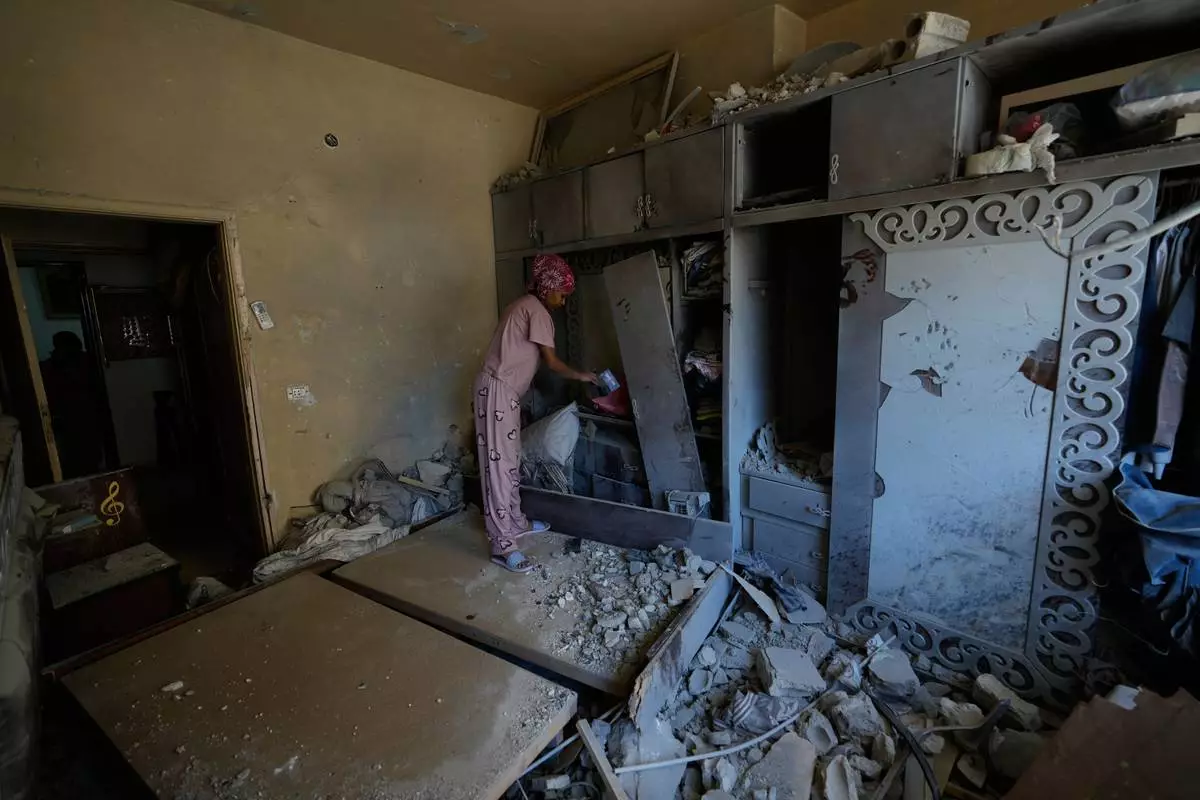
A domestic worker cleans a damaged bedroom in the southern port city of Tyre, Lebanon, Thursday, April 30, 2026 as the homeowner returns to the house. (AP Photo/Hussein Malla)
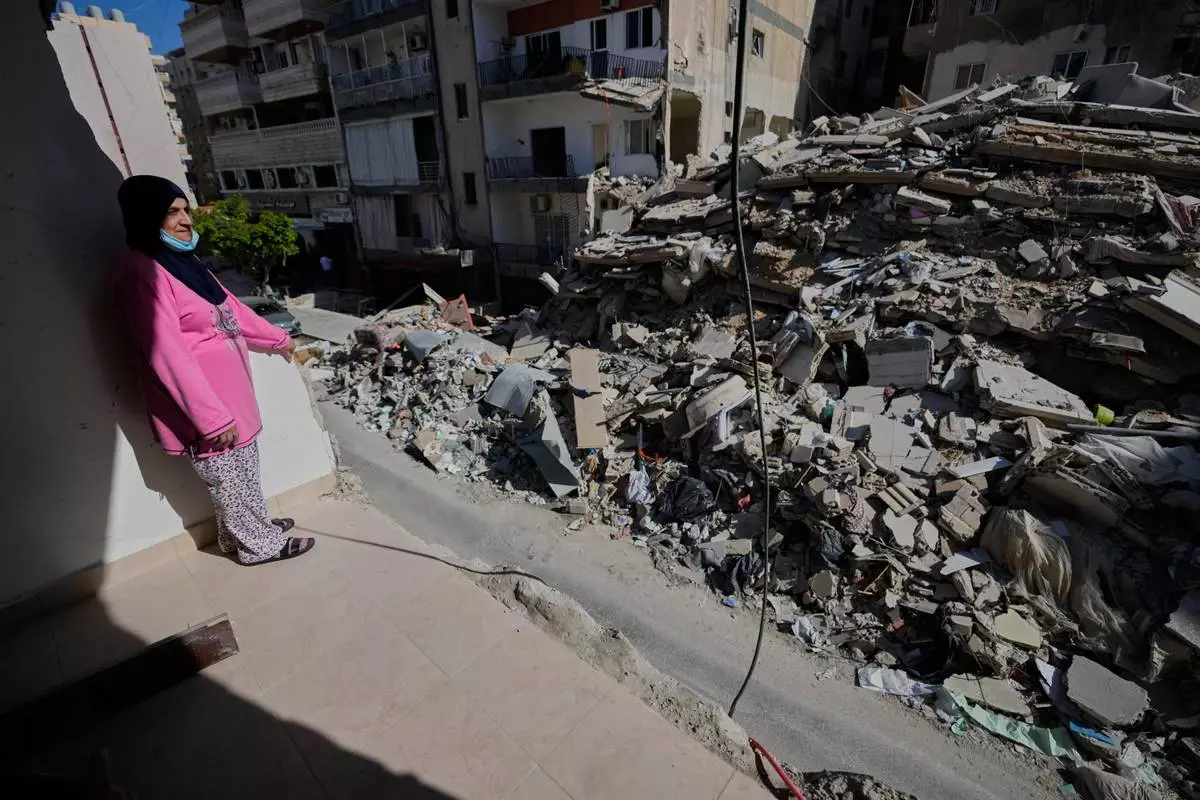
Em Ali Khodor, 75, looks through her damaged apartment into a destroyed building that was hit few weeks ago by an Israeli airstrikeafter she returns to the house, in the southern port city of Tyre, Lebanon, Thursday, April 30, 2026. (AP Photo/Hussein Malla)
President Donald Trump's administration is arguing that the war in Iran has already ended because of the ceasefire that began in early April, an interpretation that would allow the White House to avoid the need to seek congressional approval.
The statement furthers an argument laid out by Defense Secretary Pete Hegseth during testimony in the Senate on Thursday, when he said the ceasefire effectively paused the war. Under that rationale, the administration has not yet met the requirement mandated by a 1973 law to seek formal approval from Congress for military action that extends beyond 60 days.
While the ceasefire has since been extended, Iran maintains its chokehold on the Strait of Hormuz, and the U.S. Navy is maintaining a blockade to prevent Iran’s oil tankers from getting out to sea.
Here's the latest:
Treasury Secretary Scott Bessent winces at the allure of easy money — whether it’s lottery tickets, buy now, pay later loans or the promise of a crypto windfall — warning that the get-rich-quick mindset often leads Americans farther from financial stability, not closer to it.
“There are a lot of young people, mostly young men, going to blue-collar construction jobs, playing the lottery. It drives me crazy,” Bessent said in an interview.
”The best thing you can do is not play the lottery,” he said — rather, people should invest and “then watch it grow.”
Bessent spoke about the basics of building a workable budget and saving for the future at the tail end of Financial Literacy Month, an initiative the billionaire hedge fund manager has made a priority since joining Trump’s administration, driven by a childhood marred by poverty.
▶ Read more
President Trump sang the praises of King Charles III after the monarch’s state visit this week. He even lifted some tariffs on Scotch whisky as a favor to the British monarch.
The king delivered a diplomatic master-class on the trip, mixing praise for his host with subtle criticism. It’s unclear, though, whether it will make a major difference to a trans-Atlantic relationship troubled by divisions over issues including the Iran war.
“In the short term probably yes, in the long term probably no,” said Kristofer Allerfeldt, a University of Exeter professor specializing in American history. But he said Charles had “definitely clawed back some of the prestige of the monarchy” in his homeland with his assured performance.
“He’s done us proud,” Allerfeldt said.
▶ Read more
The former Democratic president is wading into the midterms, making his first political endorsement of the 2026 cycle by backing Keisha Lance Bottoms for the state’s top job.
Bottoms served as Biden’s senior adviser for public engagement after her tenure as Atlanta mayor.
In a one-minute video promoting her candidacy, Biden praised her track record as mayor and said “those same qualities that made her a great mayor made her invaluable to our administration — smart, focused, gets things done.”
“She handled it all with steady and thoughtful leadership,” Biden said in the video. “That’s the definition of battle-tested.”
When Homeland Security Secretary Markwayne Mullin was questioned by senators during his confirmation hearing about his vision for implementing President Trump’s mass deportation agenda, he said his goal was to keep his department off the front pages of the news.
To some degree, he has. Gone are the social media video clips of now-retired Border Patrol commander Greg Bovino clashing with protesters. Mullin’s predecessor, Kristi Noem, made her first trip as secretary to New York City to make arrests with Immigration and Customs Enforcement. In contrast, Mullin went to North Carolina to review hurricane recovery efforts.
The Republican administration appears to be recalibrating its approach to a centerpiece policy that helped bring Trump back to the White House, moving in many ways away from aggressive, public-facing tactics toward a quieter approach to enforcement. Despite that shift, the administration insists it’s not backing down from its lofty deportation goals.
▶ Read more
Many Republicans who have been uneasy with Trump’s war in Iran emphasized that there would be a May 1 deadline for Congress to intervene. But the date is now set to pass with no action from GOP lawmakers who continue to defer to the White House.
Under the War Powers Resolution of 1973, Congress must declare war or authorize the use of force within 60 days — a deadline that falls on Friday — or within 90 days if the president asks for an extension. But Congress made no attempt at enforcing that requirement, leaving town for a week on Thursday after the Senate rejected a Democratic attempt to halt the war for a sixth time.
The Trump administration has shown no interest in seeking congressional approval at all. It is arguing that the deadlines set by the law don’t apply because the war in Iran effectively ended when a ceasefire began in early April.
Senate Majority Leader John Thune, R-S.D., said Thursday he doesn’t plan on a vote to authorize force in Iran or otherwise weigh in.
▶ Read more
President Donald Trump granted a key approval Thursday for a major new oil pipeline from Canada into the U.S. that’s been dubbed “Keystone Light” over its similarities to a contentious project blocked by the Biden administration.
The three-foot-wide (1 meter) Bridger Pipeline Expansion would carry up to 550,000 barrels (87,400 cubic meters) of oil a day from Canada through Montana and Wyoming, where it would link with another pipeline.
The pipeline needs additional state and federal environmental approvals before construction, which company officials expect to start next year. Environmentalists hope to stop the project over worries that the pipeline could break and spill.
At peak volume, the 650-mile (1,050-kilometer) pipeline would move two-thirds as much oil as the better-known Keystone XL pipeline that got partially built before President Joe Biden, citing climate change, canceled its permit on the day he took office in 2021.
▶ Read more
Federal prosecutors released a video Thursday showing the moment authorities say a man armed with guns and knives tried to storm the White House Correspondents’ Association dinner and attempt to kill Trump.
Jeanine Pirro, the U.S. attorney for Washington, posted the video on social media amid questions over whose bullet struck a Secret Service officer as Cole Tomas Allen ran through security with a long gun toward the hotel ballroom packed with journalists, administration officials and others.
Prosecutors had previously claimed the agent was shot in the bullet-resistant vest during the melee, but had not confirmed it was Allen who shot the agent. Pirro, however, said Thursday that there is no evidence that the officer was hit by friendly fire.
Allen was injured but was not shot during the Saturday night attack at the Washington Hilton, which disrupted one of the highest-profile annual events in the nation’s capital.
▶ Read more
The Trump administration is arguing that the war in Iran has already ended because of the ceasefire that began in early April, an interpretation that would allow the White House to avoid the need to seek congressional approval.
The statement furthers an argument laid out by Defense Secretary Pete Hegseth during testimony in the Senate earlier Thursday, when he said the ceasefire effectively paused the war. Under that rationale, the administration has not yet met the requirement mandated by a 1973 law to seek formal approval from Congress for military action that extends beyond 60 days.
A senior administration official, who spoke on condition of anonymity to discuss the administration’s position, said for purposes of that law, “the hostilities that began on Saturday, Feb. 28 have terminated.” The official said the U.S. military and Iran have not exchanged fire since the two-week ceasefire that began April 7.
While the ceasefire has since been extended, Iran maintains its chokehold on the Strait of Hormuz, and the U.S. Navy is maintaining a blockade to prevent Iran’s oil tankers from getting out to sea.
▶ Read more
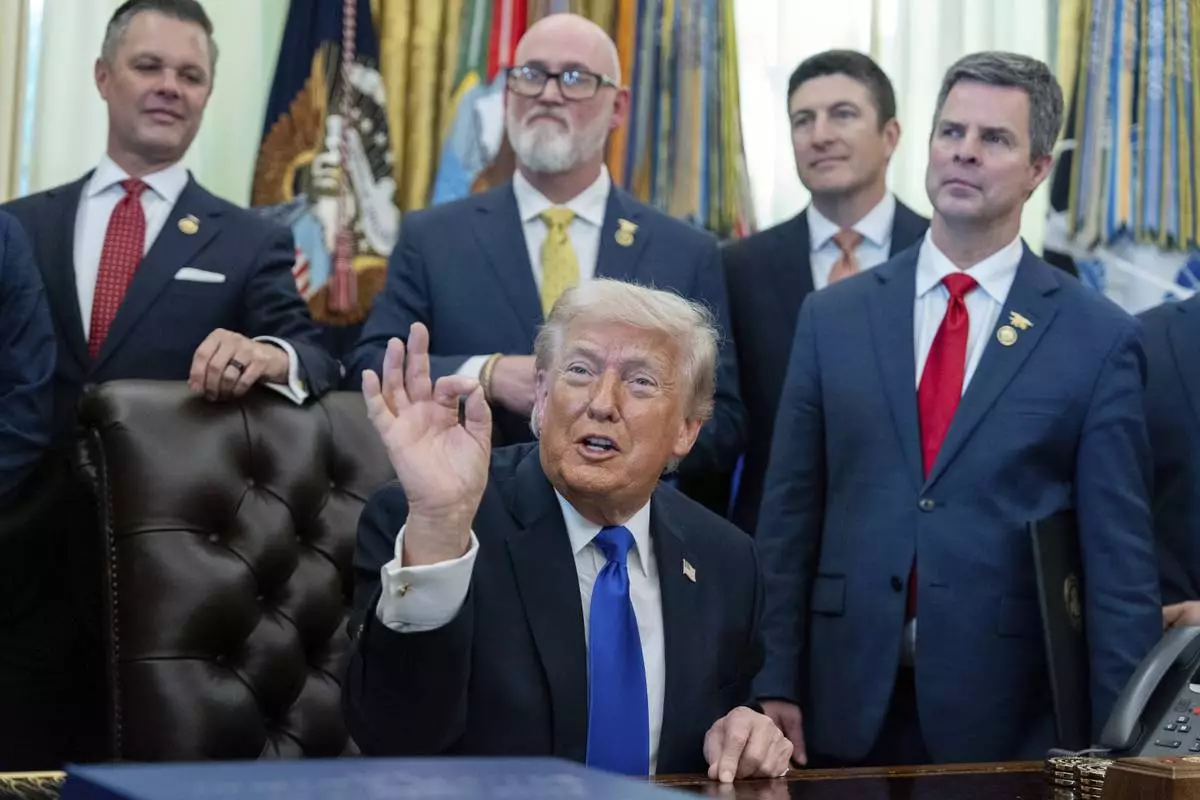
President Donald Trump speaks in the Oval Office of the White House, Thursday, April 30, 2026, in Washington. (AP Photo/Alex Brandon)
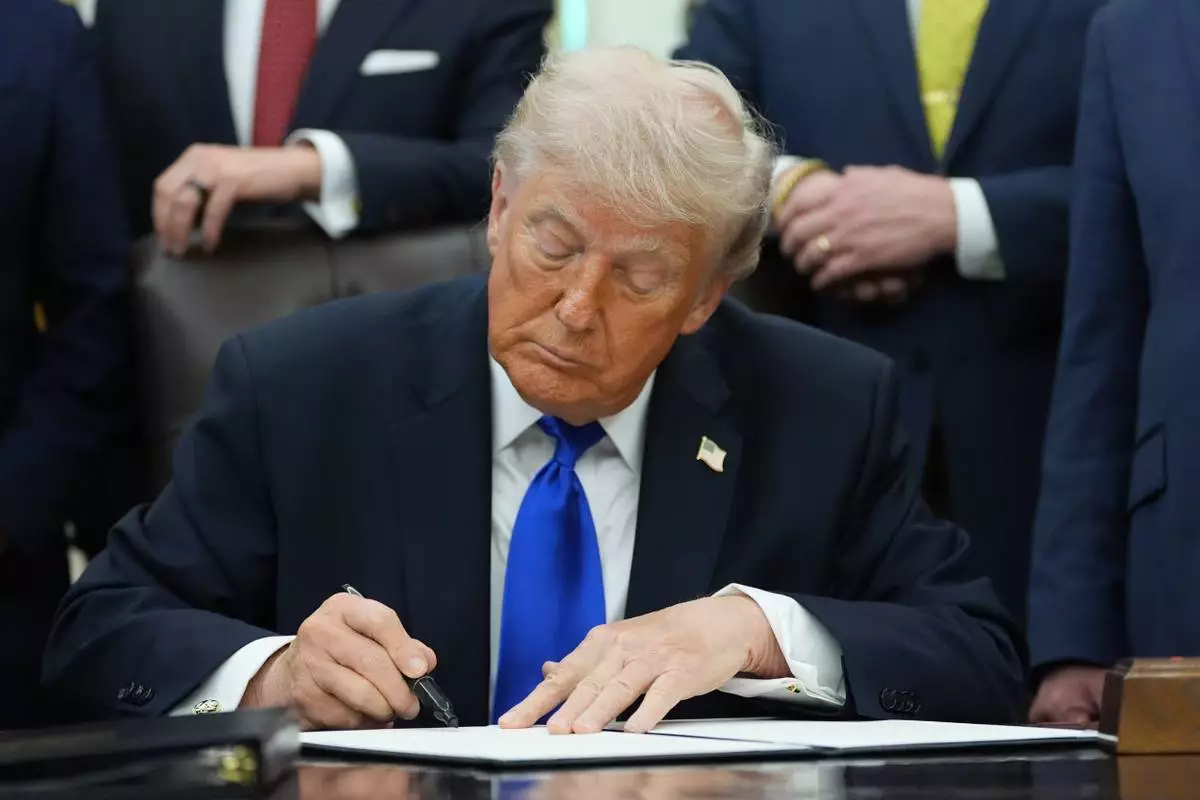
President Donald Trump signs a presidential permit regarding pipeline construction in the Oval Office of the White House, Thursday, April 30, 2026, in Washington. (AP Photo/Alex Brandon)