Profit for the two largest oil companies in the U.S. tumbled during the first quarter, a three-month period in which the price of crude and gasoline rocketed higher. It's a setback on paper only, however, the result of financial hedges that backfired after the U.S. and Israel launched attacks on Iran in late February.
Exxon Mobil and Chevron reported quarterly results on Friday, with adjusted profits for both companies topping Wall Street expectations. The shares of both companies, up sharply this week, ticked higher before the opening bell.
With energy prices depressed at the start of the year, Exxon Mobil and Chevron had arranged hedges to offset volatility, a standard practice in the industry.
In the aftermath of an attack by the U.S. and Israel on Iran, however, the physical delivery of oil became impossible with the Strait of Hormuz essentially closed. Exxon and Chevron cannot book gains on those hedges until the crude is physically delivered.
The near closure of the Strait of Hormuz off the coast of Iran is a flashpoint in the war and the source of much of the economic pain being felt globally. About 20% of the world’s oil passes through the strait on a typical day, but the passage has been choked off since the war began in late February.
Exxon earned $4.18 billion, or $1 per share, for the period ended March 31. A year earlier it earned $7.7 billion, or $1.76 per share. The company lost almost $4 billion in the quarter on what it called “unfavorable estimated timing effects” of its hedges.
Removing such one-time impacts, Exxon earned $1.16 per share, easily topping the $1.07 per share analyst surveyed by Zacks Investment Research predicted. Exxon does not adjust its reported results based on one-time events such as asset sales.
Revenue totaled $85.14 billion, breezing past Wall Street's expectation of $81.49 billion.
First-quarter net production was 4.6 million oil-equivalent barrels per day. That’s down from 5 million oil-equivalent barrels per day in the previous quarter.
Chevron reported a first-quarter profit of $2.21 billion, or $1.11 per share. It earned $3.5 billion, or $2 per share, a year earlier.
The company said that its quarter included a $360 million net loss related to a legal reserve and that foreign currency effects lowered earnings by $223 million.
Chevron's adjusted profit was $1.41 per share, easily beating the 92 cents per share Wall Street was calling for. Like Exxon, Chevron does not adjust its reported results based on one-time events such as asset sales.
The company's revenue totaled $48.61 billion, also better than expected.
Exxon and Chevron are among the big drillers reporting earnings this week. On Tuesday BP said that its first-quarter profit more than doubled.
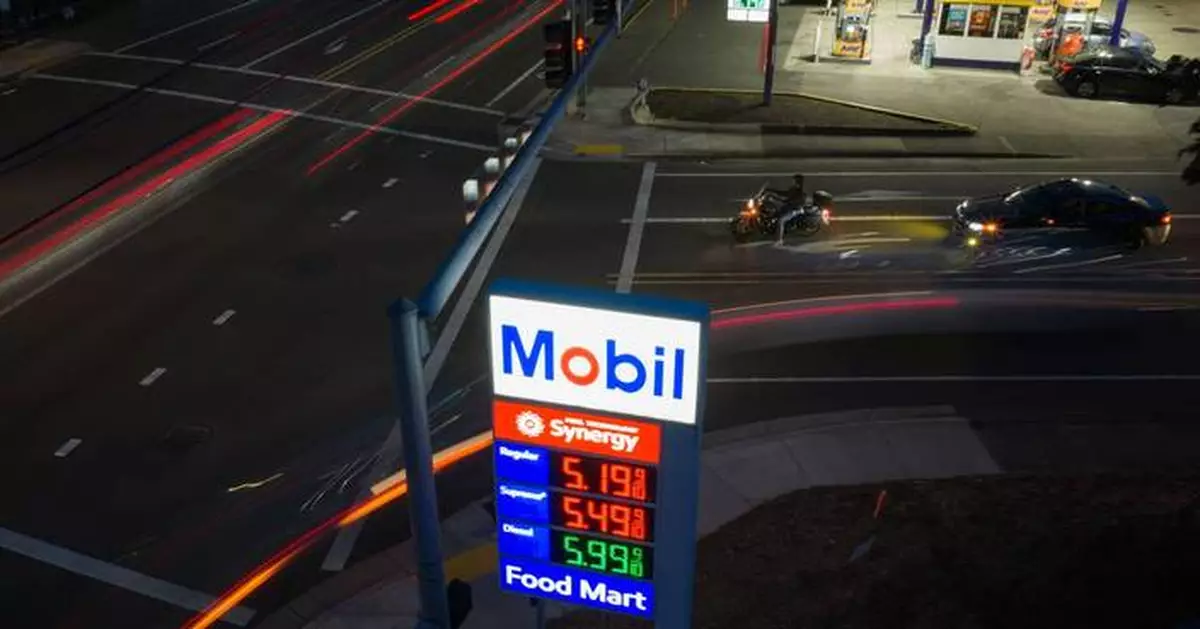
The oil companies' results come at a time when gasoline prices in the U.S. hit new multiyear highs, a point of increasing agitation for travelers, households and also businesses that are particularly sensitive to higher energy prices.
The average price of gasoline in the U.S. hit $4.39 on Friday, according to motor club AAA. up more than 8% this week.
Inflation in the U.S. rose sharply last month during largest monthly jump in gas prices in six decades, according to data from the U.S. Department of Labor. The surge in gas prices has squeezed the budgets of lower- and middle-income families, making it more difficult to pay for necessities.
But it’s disrupting businesses as well, particularly those sensitive to higher fuel costs. Airlines worldwide have begun canceling flights as the war in the Middle East strains jet fuel supplies and pushes up ticket prices.
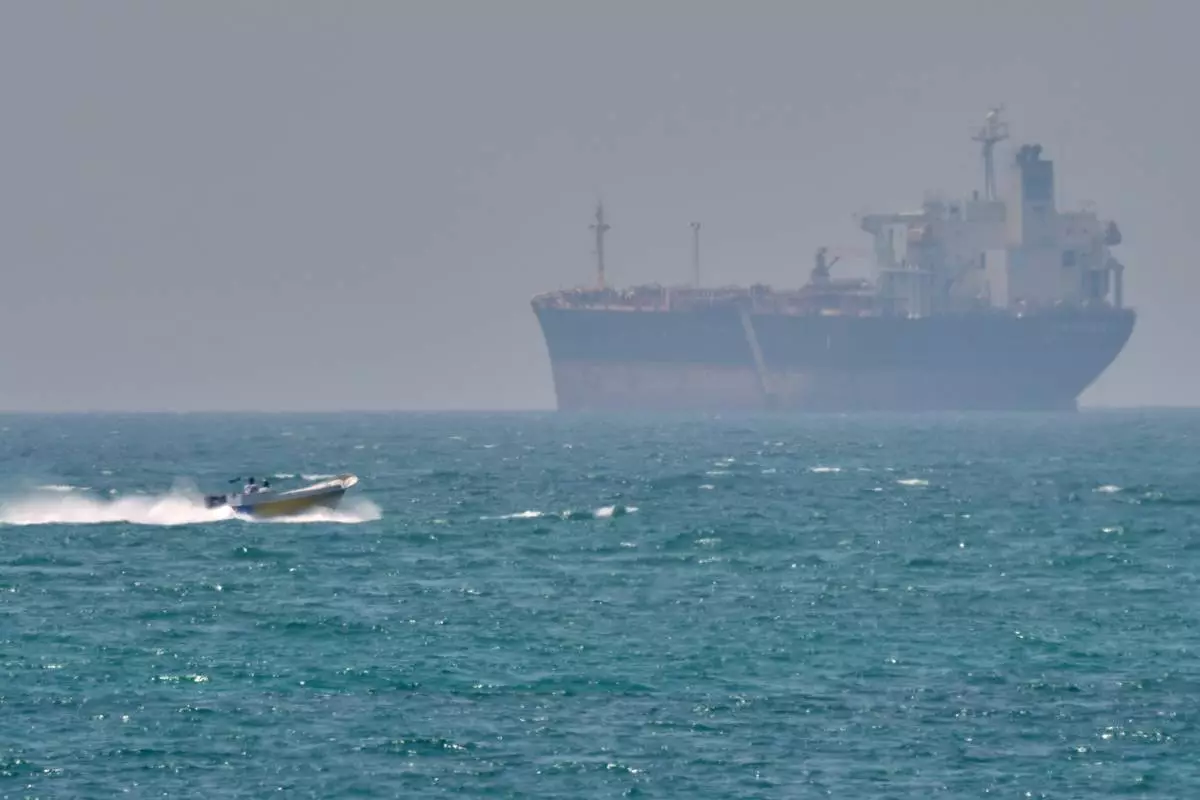
FILE - A boat sails past a tanker anchored on the Strait of Hormuz off the coast Qeshm island, Iran, April 18, 2026. (AP Photo/Asghar Besharati, File)
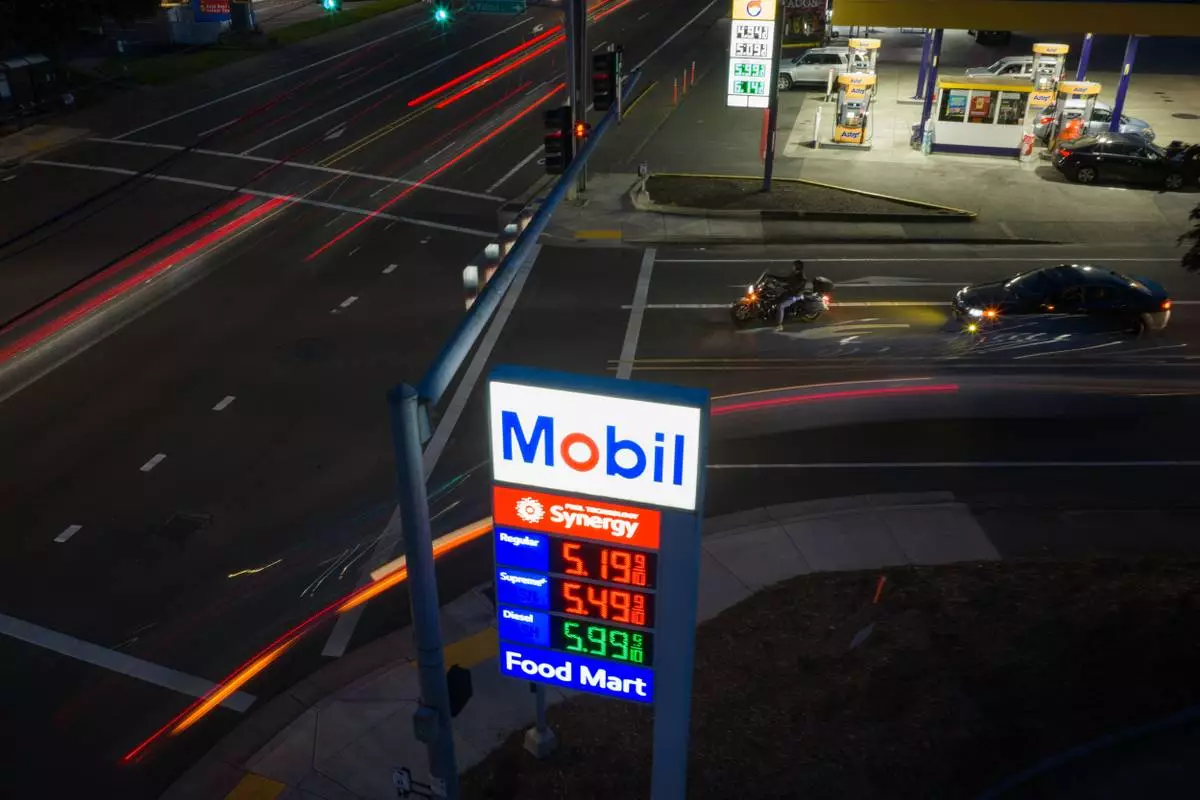
In this photo taken with a slow shutter speed, traffic moves past a sign for a Mobil gas station on Wednesday, April 29, 2026, in Portland, Ore. (AP Photo/Jenny Kane)
President Donald Trump's administration is arguing that the war in Iran has already ended because of the ceasefire that began in early April, an interpretation that would allow the White House to avoid the need to seek congressional approval.
The statement furthers an argument laid out by Defense Secretary Pete Hegseth during testimony in the Senate on Thursday, when he said the ceasefire effectively paused the war. Under that rationale, the administration has not yet met the requirement mandated by a 1973 law to seek formal approval from Congress for military action that extends beyond 60 days.
While the ceasefire has since been extended, Iran maintains its chokehold on the Strait of Hormuz, and the U.S. Navy is maintaining a blockade to prevent Iran’s oil tankers from getting out to sea.
Here's the latest:
When Homeland Security Secretary Markwayne Mullin was questioned by senators during his confirmation hearing about his vision for implementing President Trump’s mass deportation agenda, he said his goal was to keep his department off the front pages of the news.
To some degree, he has. Gone are the social media video clips of now-retired Border Patrol commander Greg Bovino clashing with protesters. Mullin’s predecessor, Kristi Noem, made her first trip as secretary to New York City to make arrests with Immigration and Customs Enforcement. In contrast, Mullin went to North Carolina to review hurricane recovery efforts.
The Republican administration appears to be recalibrating its approach to a centerpiece policy that helped bring Trump back to the White House, moving in many ways away from aggressive, public-facing tactics toward a quieter approach to enforcement. Despite that shift, the administration insists it’s not backing down from its lofty deportation goals.
▶ Read more
Many Republicans who have been uneasy with Trump’s war in Iran emphasized that there would be a May 1 deadline for Congress to intervene. But the date is now set to pass with no action from GOP lawmakers who continue to defer to the White House.
Under the War Powers Resolution of 1973, Congress must declare war or authorize the use of force within 60 days — a deadline that falls on Friday — or within 90 days if the president asks for an extension. But Congress made no attempt at enforcing that requirement, leaving town for a week on Thursday after the Senate rejected a Democratic attempt to halt the war for a sixth time.
The Trump administration has shown no interest in seeking congressional approval at all. It is arguing that the deadlines set by the law don’t apply because the war in Iran effectively ended when a ceasefire began in early April.
Senate Majority Leader John Thune, R-S.D., said Thursday he doesn’t plan on a vote to authorize force in Iran or otherwise weigh in.
▶ Read more
President Donald Trump granted a key approval Thursday for a major new oil pipeline from Canada into the U.S. that’s been dubbed “Keystone Light” over its similarities to a contentious project blocked by the Biden administration.
The three-foot-wide (1 meter) Bridger Pipeline Expansion would carry up to 550,000 barrels (87,400 cubic meters) of oil a day from Canada through Montana and Wyoming, where it would link with another pipeline.
The pipeline needs additional state and federal environmental approvals before construction, which company officials expect to start next year. Environmentalists hope to stop the project over worries that the pipeline could break and spill.
At peak volume, the 650-mile (1,050-kilometer) pipeline would move two-thirds as much oil as the better-known Keystone XL pipeline that got partially built before President Joe Biden, citing climate change, canceled its permit on the day he took office in 2021.
▶ Read more
Federal prosecutors released a video Thursday showing the moment authorities say a man armed with guns and knives tried to storm the White House Correspondents’ Association dinner and attempt to kill Trump.
Jeanine Pirro, the U.S. attorney for Washington, posted the video on social media amid questions over whose bullet struck a Secret Service officer as Cole Tomas Allen ran through security with a long gun toward the hotel ballroom packed with journalists, administration officials and others.
Prosecutors had previously claimed the agent was shot in the bullet-resistant vest during the melee, but had not confirmed it was Allen who shot the agent. Pirro, however, said Thursday that there is no evidence that the officer was hit by friendly fire.
Allen was injured but was not shot during the Saturday night attack at the Washington Hilton, which disrupted one of the highest-profile annual events in the nation’s capital.
▶ Read more
The Trump administration is arguing that the war in Iran has already ended because of the ceasefire that began in early April, an interpretation that would allow the White House to avoid the need to seek congressional approval.
The statement furthers an argument laid out by Defense Secretary Pete Hegseth during testimony in the Senate earlier Thursday, when he said the ceasefire effectively paused the war. Under that rationale, the administration has not yet met the requirement mandated by a 1973 law to seek formal approval from Congress for military action that extends beyond 60 days.
A senior administration official, who spoke on condition of anonymity to discuss the administration’s position, said for purposes of that law, “the hostilities that began on Saturday, Feb. 28 have terminated.” The official said the U.S. military and Iran have not exchanged fire since the two-week ceasefire that began April 7.
While the ceasefire has since been extended, Iran maintains its chokehold on the Strait of Hormuz, and the U.S. Navy is maintaining a blockade to prevent Iran’s oil tankers from getting out to sea.
▶ Read more
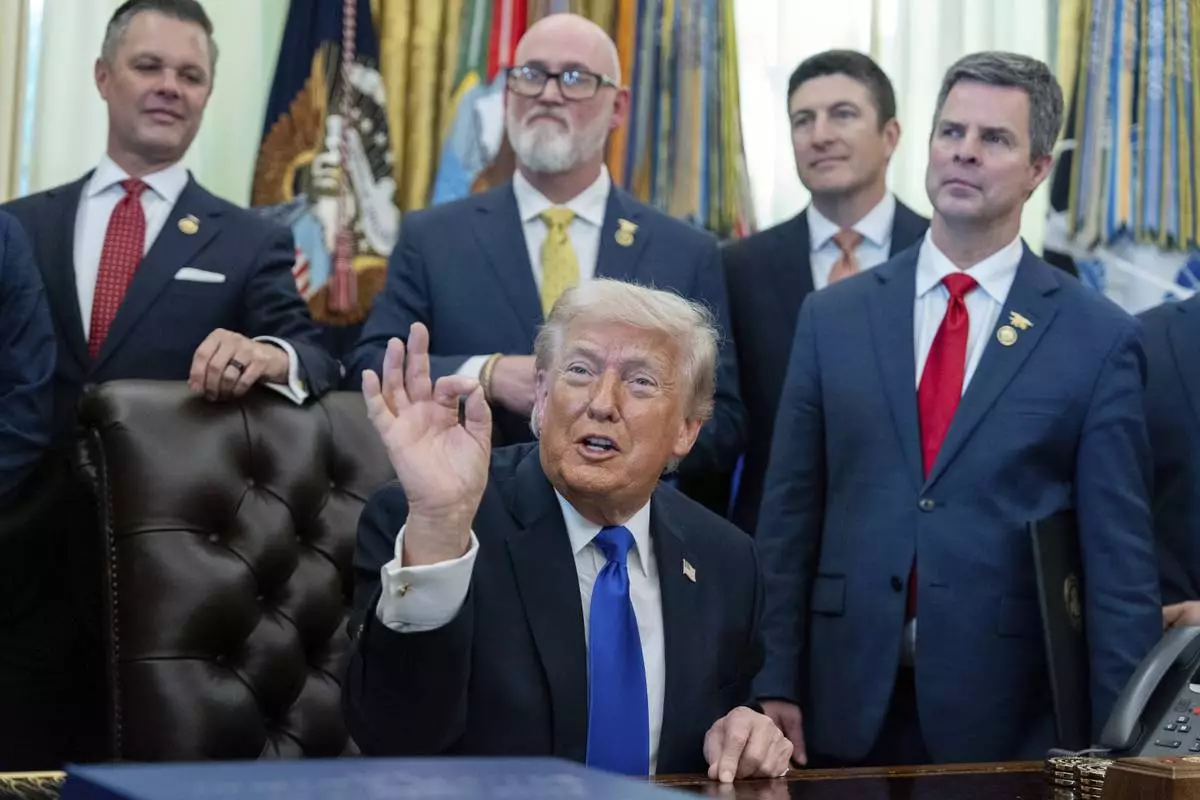
President Donald Trump speaks in the Oval Office of the White House, Thursday, April 30, 2026, in Washington. (AP Photo/Alex Brandon)
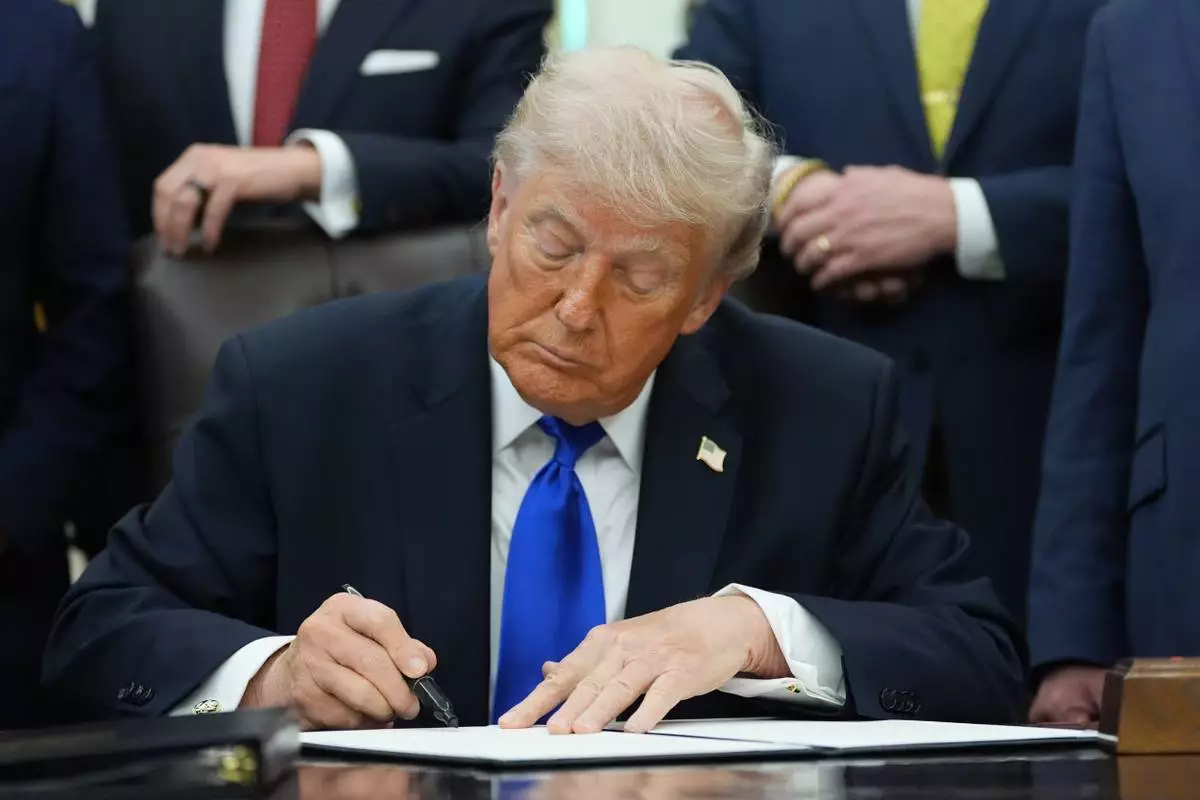
President Donald Trump signs a presidential permit regarding pipeline construction in the Oval Office of the White House, Thursday, April 30, 2026, in Washington. (AP Photo/Alex Brandon)