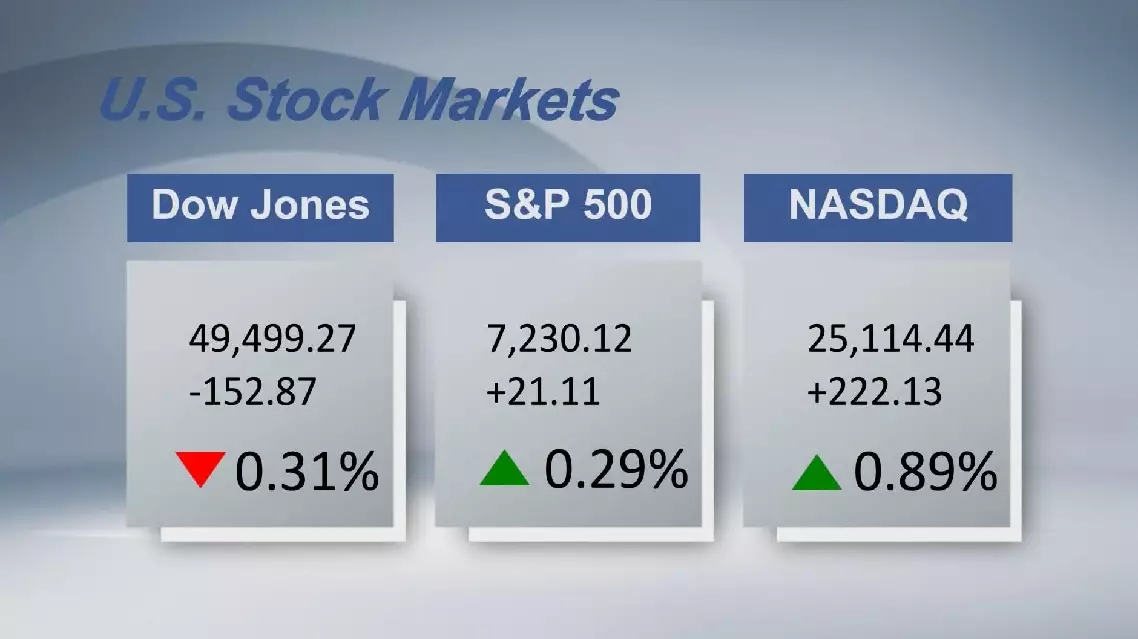
U.S. stocks ended mixed on Friday, with the tech-heavy Nasdaq topping 25,000 for the first time on strong tech earnings and hopes for a Middle East breakthrough.
The Dow Jones Industrial Average fell by 152.87 points, or 0.31 percent, to 49,499.27. The S&P 500 added 21.11 points, or 0.29 percent, to 7,230.12. The Nasdaq Composite Index increased by 222.13 points, or 0.89 percent, to 25,114.44.
Nine of the 11 primary S&P 500 sectors ended in the red, with energy and industrials leading the laggards by losing 1.31 percent and 0.93 percent, respectively. Meanwhile, technology and consumer discretionary led the gainers by adding 1.41 percent and 0.51 percent, respectively.
Friday's mixed close followed a historic month of April for Wall Street. The S&P 500 surged over 10 percent during the month, marking its best showing since November 2020. The Nasdaq Composite jumped more than 15 percent for its best month since April 2020.
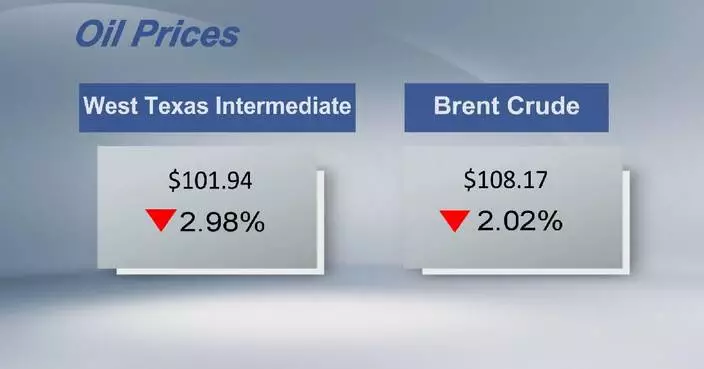
Geopolitical developments provided a supportive backdrop for equities as global oil prices fell. Energy markets retreated following reports that Iran had sent its response, via Pakistani mediators, to the United States.
On the corporate front, investors continued to navigate a first-quarter earnings season that is proving remarkably resilient. Apple climbed more than 3 percent on Friday after the consumer tech giant posted its second-quarter earnings.
The company's better-than-expected revenue outlook for the current quarter overshadowed the fact that iPhone revenue fell short of estimates for the second time in three quarters.
Meanwhile, the energy sector faced headwinds despite high underlying commodity prices. U.S. oil supermajors Exxon Mobil and Chevron both beat quarterly earnings estimates but missed revenue expectations.
The top-line misses highlighted the tangible impacts of the regional conflict, as stymied production throughout the Middle East and delayed oil deliveries stuck behind the Strait of Hormuz weighed heavily on overall energy sales.
U.S. stocks end mixed as Nasdaq tops 25,000
U.S. President Donald Trump on Friday threatened to increase tariffs on cars and trucks imported from the European Union (EU) to 25 percent next week.
Trump said on Truth Social that he is "pleased" to announce that, based on the fact the EU is not complying with U.S.-EU trade deal, next week he will be "increasing tariffs charged to the European Union for cars and trucks coming into the United States," adding the tariff will be increased to 25 percent.
"It is fully understood and agreed that, if they produce cars and trucks in U.S.A. plants, there will be NO TARIFF," he stressed.
Bernd Lange, chair of the European Parliament's (EP) Committee on International Trade, on the same day strongly condemned the U.S. plan to slap the auto tariff, declaring the move "unacceptable" in a post on X.
Lange said the EU and the EP are honoring the trade agreement reached with the United States in Scotland last year, and are working on legislation to implement it.
"We are currently drafting the legislation; we have a parliamentary position and aim to finalize this in June," Lange said.
Lange said the United States has repeatedly breached the agreement, including imposing tariffs on more than 400 products containing steel and aluminium. Those products are now subject to an average tariff of 26 percent, he said.
He noted that Trump's latest move demonstrates just how "unreliable" the U.S. side is.
A European Commission spokesperson said Friday that the EU will "keep options open" to protect its interests if the United States takes measures inconsistent with the joint statement between the two sides signed last year on reciprocal, fair and balanced trade.
The EU remains fully committed to a predictable, mutually beneficial transatlantic relationship, the spokesperson said, adding that should the United States take measures inconsistent with the Joint Statement, "we will keep our options open to protect EU interests."
The EU is implementing its Joint Statement commitments in line with standard legislative practice, keeping the U.S. administration fully informed throughout, the spokesperson said, adding that the EU maintains close contact with its U.S. counterparts while also seeking clarity on U.S. commitments under the deal.
The U.S.-EU trade deal was reached last year, under which the EU would suspend tariffs on all U.S. industrial products and introduce tariff-rate quotas for a wide range of U.S. agri-food products entering the EU market. In return, the United States would apply a 15-percent import tariff on most EU goods.
The U.S. Supreme Court ruled in February that the Trump administration's tariff policies under the International Emergency Economic Powers Act were unconstitutional. But the Trump administration has since introduced a new set of import taxes based on other laws, seeking to impose a new tariff regime.
According to EU statistical agency Eurostat, the value of EU-U.S. trade in goods and services reached 1.7 trillion euros (about 2 trillion U.S. dollars) in 2024, equivalent to roughly 4.6 billion euros per day.

Trump threatens to raise tariffs on auto imports from EU to 25 pct