China's zero-tariff policy appears set to redefine economies of scale in Morocco, with the country's argan oil industry expected to receive a significant and timely boost.
Argan trees grow mainly in the arid mountains of southern Morocco, bearing small fruit that resembles an olive. Long used locally as a kitchen ingredient, it has become highly prized by the global beauty industry in recent years as an anti-aging skin treatment and restorative for hair.
Its oil, among the most expensive in the world, is extracted by drying argan fruit in the sun, peeling and mashing it, then crushing and grinding the kernel with stones.
"Demand for argan oil is rising, both for food and beauty products. We produce it using a mix of traditional methods and modern electric extraction machines," said Alhanid Boubaker, an argan oil producer.
The oil was traditionally used as a flavoring and a savory dip for bread. As an ingredient, it is still common in Morocco and is now also exported as a food product. Its use as a beauty product has created a surge in demand for the oil by international cosmetics companies. It also means that local groups are investing in more appealing packaging. The oil now costs around 30-50 U.S. dollars a liter locally, but that same volume can sell on the international market in smaller high-end bottles for up to 250 U.S. dollars.
Exporters said quality remains a key strength, helping Moroccan argan oil secure loyal customers across global markets.
"The argan tree is more than an ecosystem. It is both a natural buffer and a driver of economic resilience. From climate change to prolonged drought and water scarcity, it has shown remarkable strength. Adjusted tariff generates shared economic benefits for both sides," said Hanae Aitoutouhen, a university professor.
"Argan oil has preserved its quality. Customer loyalty remains strong, with repeat buyers returning regularly," said Mohamed Ait Haj, an argan oil trader.
On Friday, China officially expanded its zero-tariff policy to cover all 53 African nations with which it maintains diplomatic relations. The move aims to create new pathways for African exports and industrialization at a time when global trade faces mounting pressures from protectionism.
The zero-tariff policy builds upon earlier measures: since Dec 1, 2024, China has already eliminated tariffs on 100 percent of tariff lines for 33 least developed countries in Africa. The latest expansion now includes economies that are relatively more developed, such as Kenya, Egypt and Nigeria, opening doors for a broader range of African products to enter the Chinese market duty-free.
As the policy takes effect, Morocco's argan market is set to benefit on account of rising consumer preference in China for natural ingredients. Yet, this expanding opportunity also calls for the need to protect the natural resource, as years of drought, water scarcity and overgrazing have already contributed to the decline of the forest.
"Surging exports of argan oil, fueled by demand from China's cosmetics sector, are increasing pressure on this vital resource. That makes conservation efforts more urgent, alongside targeted government policies. Authorities are now looking to expand argan cultivation, including plans to plant 10,000 hectares in southern regions as part of the 'Argan and Oasis' program," said Mustapha Aissat, an environmental expert.
Morocco is the only commercial-scale argan oil-producing country in the world, controlling more than 90 percent of the global supply. The argan oil market in Morocco is expected to reach a projected revenue of 212.2 million U.S. dollars by 2033. A compound annual market growth rate of 11.4 percent is expected from 2026 to 2033, according to industry data.
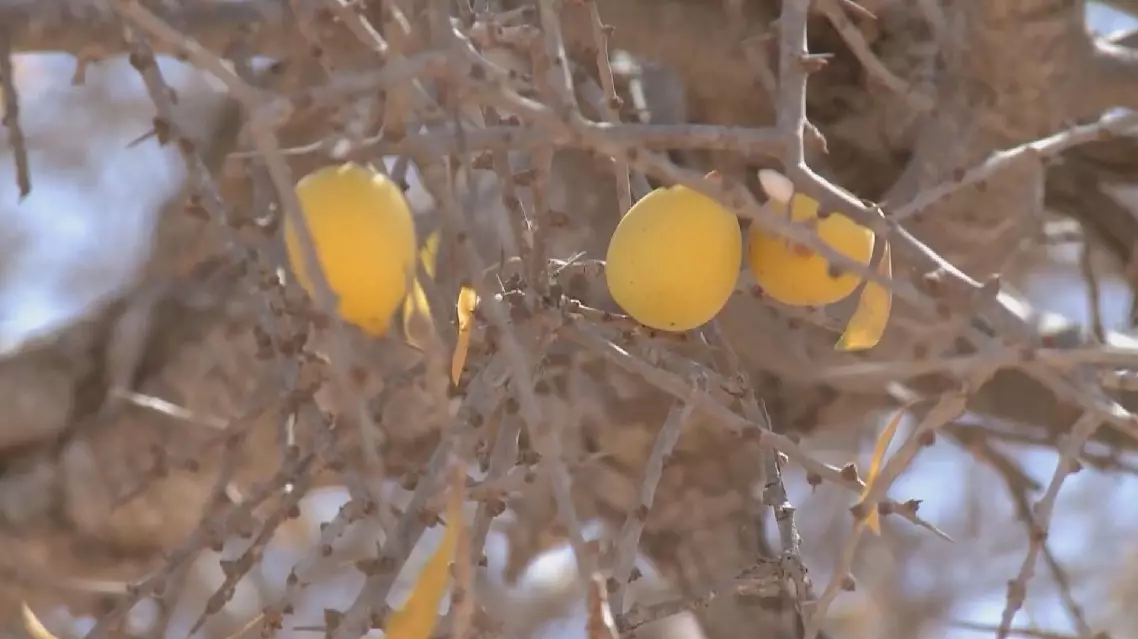
China's zero-tariff policy to boost Morocco’s argan oil industry