Skip to Content Facebook Feature Image

China completes installation of world's largest single-unit floating offshore wind turbine

China

China

China

China completes installation of world's largest single-unit floating offshore wind turbine

2026-05-03 13:23 Last Updated At:14:30

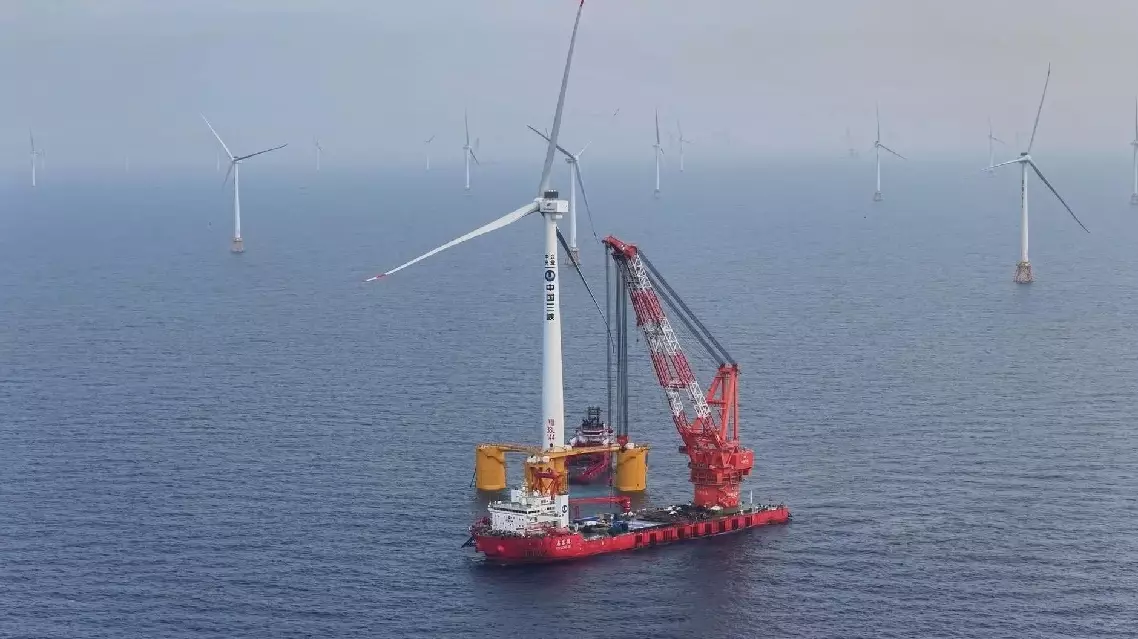
The world's largest single-unit 16-megawatt floating offshore wind turbine "Three Gorges Pilot" was installed on Saturday in waters off Yangjiang, south China's Guangdong Province.

The 16-megawatt floating offshore wind turbine consists of three parts, namely a 16 mw ultra-large capacity wind turbine, a semi-submersible floating platform, and a new mooring system.

With a maximum tip height exceeding 270 meters, the wind turbine rotor has a diameter of 252 meters, with a swept area equivalent to seven standard football fields.

Unlike traditional fixed-bottom turbines that are physically connected to the seabed, it is installed on a semi-submersible floating platform measuring 80.82 meters long, 91 meters wide, and with a displacement of 24,100 tons.

The platform is secured through nine suction anchors, combined with domestically produced high-performance polyester fiber cables and anchor chains for seabed mooring and positioning.

"To deal with the harsh sea conditions, our team has developed and applied a new mooring system, a dynamic monitoring system, an active ballast system, and 66 kV dynamic submarine cables for the first time in China," said Pan Hongguan, an offshore wind power engineer from Guangdong Branch of China Three Gorges Corporation (CTG).

According to Pan, the new mooring system combines polyester cable and anchor chain, which is like adding a "spring" to the middle of the system, to deliver superior mechanical performance.

The "Three Gorges Pilot" wind turbine previously completed its integrated assembly at Tieshan Port in Beihai of south China's Guangxi Zhuang Autonomous Region. It arrived at its target sea area located more than 70 kilometers off the coast of Yangjiang after a long-distance towed voyage across the Qiongzhou Strait which connects South China's island province of Hainan with Guangdong Province on the mainland.

After being put into operation, the wind turbine is expected to generate approximately 44.65 million kilowatt-hours of clean energy annually, enough to meet the annual electricity demand of 24,000 households.
China completes installation of world's largest single-unit floating offshore wind turbine


China completes installation of world's largest single-unit floating offshore wind turbine

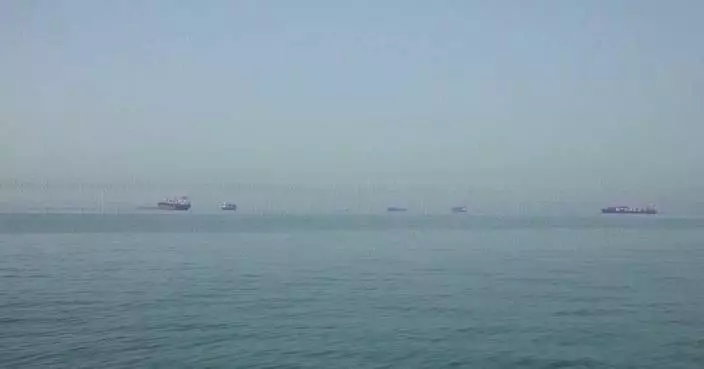
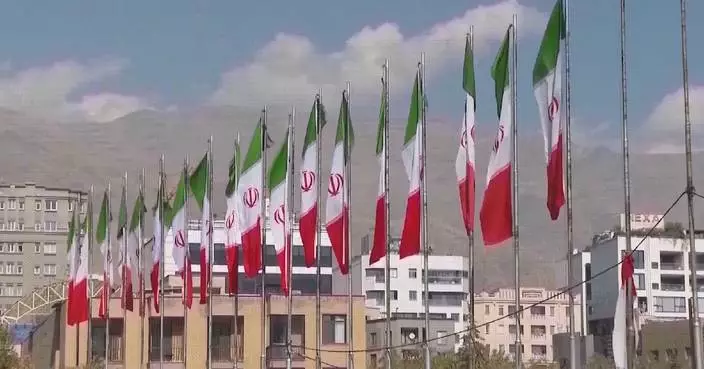
Iran has submitted a 14-point counterproposal to the United States calling for a permanent end to hostilities and a full withdrawal of U.S. forces from the region, Tasnim news agency reported Saturday.

The plan, delivered through Pakistani intermediaries, responds to a nine-point U.S. proposal, Tasnim said. While Washington’s plan calls for a two-month ceasefire, Tehran is pushing for a 30-day timeline to resolve key issues, insisting talks focus on "ending the war" rather than a temporary truce, the report added.

Iran’s demands include U.S. troop withdrawal from areas near its borders, guarantees of non-aggression, and economic steps such as lifting the naval blockade, releasing frozen assets, easing sanctions, and paying compensation. The proposal also calls for ending hostilities across multiple fronts, including Lebanon, and establishing a new governing mechanism for the Strait of Hormuz, a vital global oil route.

Tasnim said Iran is awaiting a formal U.S. response.

U.S. President Donald Trump wrote on social media Saturday that he will review Iran’s proposal but "can’t imagine that it would be acceptable," adding Tehran "has not yet paid a big enough price." Earlier, before boarding a flight from Florida, Trump warned strikes on Iran could resume if Tehran "misbehaves."

In late February, Israel and the United States carried out joint strikes on Tehran and other Iranian cities, prompting Iran to retaliate with waves of missile and drone attacks on Israel and U.S. interests across the region. Tehran also tightened its grip on the Strait of Hormuz, disrupting global oil flows, while Washington imposed a prolonged naval blockade as a lower-risk strategy to pressure Iran.

A ceasefire took effect on April 8, followed by talks between Iranian and U.S. delegations in Islamabad on April 11 and 12 that failed to produce a deal.

Iran counters US plan with 14-point proposal for permanent end to war

Iran counters US plan with 14-point proposal for permanent end to war

Recommended Articles