The fall of Bataan Province in the Philippines in April 1942 marked one of the darkest chapters of World War II, when Japanese forces seized the peninsula and forced more than 70,000 Filipino and American soldiers on a brutal march.
The prisoners were driven over 100 kilometers to Camp O'Donnell, a former Philippine Army training ground turned into a Japanese prisoner-of-war camp notorious for overcrowding, disease, and starvation.
Among them were father and son Ramon and Rafael Zagala, compelled to walk over 100 kilometers in what became known as the Bataan Death March. Thousands perished along the way from hunger, thirst, exhaustion and disease.
Major General Ramon Zagala, Rafael Zagala's son and now commander of the Philippine Army's 2nd Infantry Division, recalled the courage and survival of his grandfather and father during the ordeal, a legacy that inspired him to join the military.
"He was sick. He had some fever. They didn't know if it was malaria or dysentery. My father just did not carry him, but he had his friends from the Ateneo ROTC. They were dragging my grandfather," he said.
They survived the march, but what awaited them at Camp O'Donnell was even deadlier. The prisoner of war camp was marked by severe overcrowding, disease, and starvation. Tens of thousands would die under brutal conditions. For the Zagala family, survival came down to a single, small measure.
"He was able to pick up a can of Wesson cooking oil. Then, he would give a teaspoon to his father, to himself, and to two other friends who helped carry him. For him, that made them survive, with very little rice, that one teaspoon," Ramon Zagala said.
Of the roughly 60,000 Filipino and American prisoners held there, an estimated 30,000 died from illness, starvation, and exhaustion.
"He used to say that they would dig graves for 50 men and they would bury 50 men at a time," said Ramon Zagala.
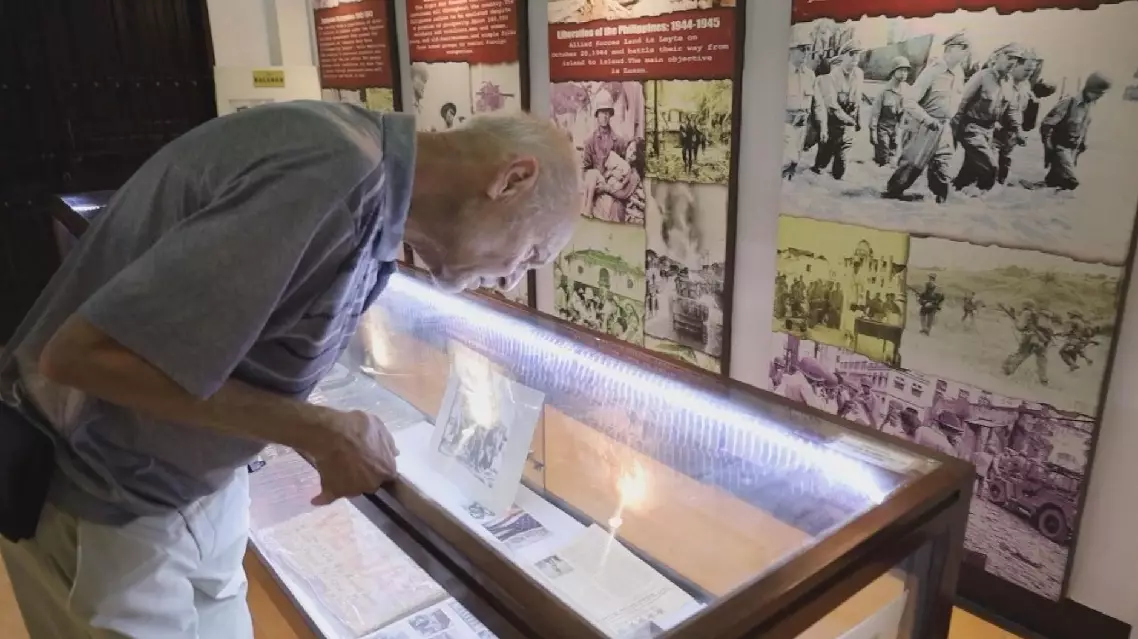
The memory of the march lives on inside the Bataan World War II Museum. Most visitors to the museum are Filipinos, though some foreign tourists also come. One of them is American national Greg Mergen. His father, Corporal Nicholas Mergen, fought in Bataan and became a prisoner of war, and was later held in Manila before being transferred to Osaka.
"(I'm) on the brink of tears to be honest. It isn't just him, it's all the greatest generation that are soon to be no longer on this earth. That's why the world needs to keep remembering," said Greg Mergen.
More than eight decades on, most of those who witnessed Bataan are now gone, and the story survives no longer in those who marched, but in those who choose not to forget.
This year marks the 80th anniversary of the opening of the International Military Tribunal for the Far East, also known as the Tokyo Trials. The tribunal was convened on May 3, 1946, almost one year after Japan's unconditional surrender in the Second World War.
Over two and a half years, judges from 11 countries heard testimonies and examined war crimes and atrocities committed by Imperial Japan throughout Asia.
All 25 defendants were found guilty and seven of them, including notorious former Japanese Prime Minister Hideki Tojo, were sentenced to death by hanging.
Descendants remember Bataan Death March as testimony to Japan’s World War II crimes