Employers and employees should make prior work arrangements in times of adverse weather and extreme conditions
The Labour Department (LD) promulgated today (May 4) the revised "Code of Practice in Times of Adverse Weather and 'Extreme Conditions'" (CoP). The revised CoP sets out the relevant guidelines in a reader-friendly and concise manner, reiterating the three major principles for formulating work arrangements under adverse weather and extreme conditions (including formulating work arrangements in advance, giving prime consideration to employees' safety, and complying with requirements of labour legislation), and incorporating corporate examples for reference.
Formulate work arrangements
"Employers should make prior work arrangements and contingency measures which are reasonable and practicable. In drawing up and implementing the relevant arrangements, employers should give prime consideration to employees' safety and the feasibility of employees travelling to and from their workplaces, etc. To avoid unnecessary disputes between employers and employees, employers should ensure that all employees are informed of and agree to the relevant work arrangements in advance. The work arrangements should cover the following areas:
* arrangements in respect of reporting for duty;
* arrangements in respect of early release from work;
* arrangements in respect of work resumption (e.g. the number of hours within which employees should resume duty after the relevant warning signal is cancelled or the extreme conditions come to an end, when safety and traffic conditions allow);
* arrangements in respect of remote work (if applicable);
* arrangements regarding wages and allowances (e.g. calculation of wages and allowances in respect of reporting for duty); and
* arrangements for staff required to report for duty in times of adverse weather and extreme conditions," a spokesman for the LD said.
"Employers should conduct an early and realistic assessment of whether there is any need for staff to report for duty at workplaces when a tropical cyclone warning, rainstorm warning or extreme conditions are in force. In making the assessment, employers should take into account the safety of employees, the business nature, operational needs and urgency of service of their organisations, with due regard to the manpower requirements, staffing establishment and circumstances of individual employees, and keep the number of staff required to report for duty at workplaces to the minimum," the spokesman added.
Work arrangements in times of adverse weather and extreme conditions
When a Pre-No. 8 Special Announcement is issued by the Hong Kong Observatory during working hours, within two hours before the Tropical Cyclone Warning Signal No. 8 (T8) is expected to take effect, employers should release employees from the workplaces or from work by batches, or arrange for them to work remotely according to the agreed work arrangements. To ensure the safety of employees and to enable them to arrive home before the suspension of public transport services, employees who have mobility problems (for example, pregnant or disabled employees), employees who rely on transport services which are prone to being affected by adverse weather conditions (for example, ferry services) to get home, and those who work or live in remote areas (for example, outlying islands) should be given priority to leave. Other employees should be released from workplaces or from work by batches according to their travelling distance or the time required for returning home.
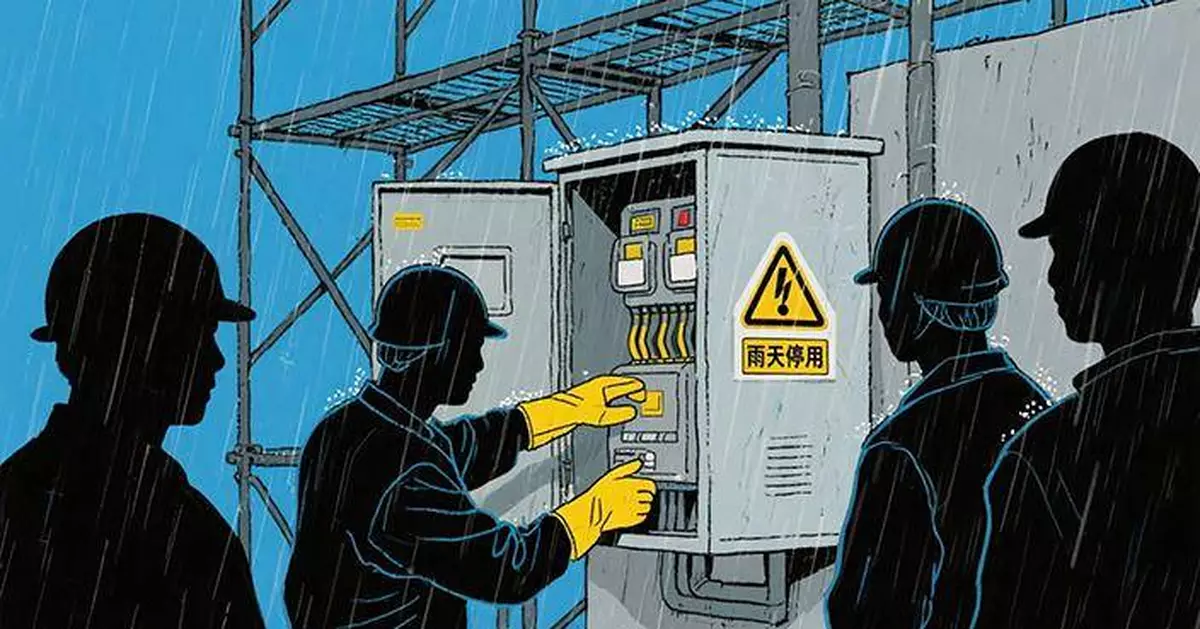
If an Amber, Red or Black Rainstorm Warning Signal is issued within working hours, employees working indoors should continue to work as usual unless it is dangerous to do so. Supervisors of employees working outdoors or in exposed areas should suspend outdoor duties as soon as practicable. They should arrange for their employees to take shelter temporarily and resume duty only when weather conditions permit. If the Black Rainstorm Warning Signal is still in force at the end of working hours, employees should stay in a safe place until the heavy rain has passed. Employers should also make available to employees a suitable area in the workplace as temporary shelter from wind and rain.
If the Government makes an extreme conditions announcement, except for those required to report for duty at workplaces according to prior agreements made with employers, employees should stay where they are or in safe places, instead of heading for work. Employees already on duty at workplaces could continue to work as usual in a safe manner. If the workplaces are in danger, employers should arrange to release staff from work early where practicable and safe to do so, or arrange for them to take temporary shelter in a safe place. If working time ends while extreme conditions are still in force, employers can release employees from workplaces in a safe manner or provide a suitable area as temporary shelter for those still at workplaces.
If it is necessary for employees to report for duty at workplaces under adverse weather or extreme conditions, employers should discuss and agree with them in advance on the duty arrangements and contingency measures. If public transport is suspended or only maintains a limited service when T8 or higher, the Black Rainstorm Warning Signal or extreme conditions are in force, employers should provide safe transport services for employees travelling to and from workplaces, or grant them an additional travelling allowance.
The spokesman reminded employers to observe the statutory liabilities and requirements under the Employment Ordinance, Occupational Safety and Health Ordinance, Factories and Industrial Undertakings Ordinance, Employees' Compensation Ordinance and Minimum Wage Ordinance.
Comply with requirements of legislation
"Tropical cyclones and rainstorms are natural calamities. If employees are not required to report for duty, released from workplaces early, unable to report for duty at workplaces or resume work on time, etc, due to adverse weather, extreme conditions or other environmental factors beyond their control, employers should not deduct their wages, good attendance bonus, or allowances, nor require employees to compensate subsequently for the loss of working hours in response to the aforementioned situations, or reduce employees' entitlements to annual leave, statutory holidays or rest days under the Employment Ordinance to compensate for the loss of working hours resulting from the issuance of adverse weather warnings or the extreme conditions announcement. Even if employers know in advance that a tropical cyclone may soon affect Hong Kong, they should not make last-minute changes to employees' leave arrangements in order to offset the loss of working hours resulting from the issuance of T8 or higher, the Black Rainstorm Warning Signal and other severe weather warnings, or the extreme conditions announcement," the spokesman said.
Employers have an obligation to provide and maintain a safe working environment for their employees under the Occupational Safety and Health Ordinance and the Factories and Industrial Undertakings Ordinance. If employees are required to work in times of tropical cyclone warnings, rainstorm warnings or extreme conditions, employers should ensure that the risks at work are reduced as far as reasonably practicable.
Moreover, under the Employees' Compensation Ordinance, employers are liable to pay compensation for injuries or deaths incurred when employees are travelling by a direct route from their residence to their workplace, or from their workplace back to their residence after work, four hours before or after working hours on a day when T8 or higher, a Red or Black Rainstorm Warning Signal or extreme conditions are in force.
The LD's latest revised CoP can be downloaded from the department's webpage (www.labour.gov.hk/eng/public/wcp/Rainstorm.pdf).
Source: AI-found images