Skip to Content Facebook Feature Image

Top tennis players slam Roland Garros prize money, citing a shrinking share of tournament revenue

Sport

Top tennis players slam Roland Garros prize money, citing a shrinking share of tournament revenue
Sport

Sport

Top tennis players slam Roland Garros prize money, citing a shrinking share of tournament revenue

2026-05-04 17:48 Last Updated At:17:50

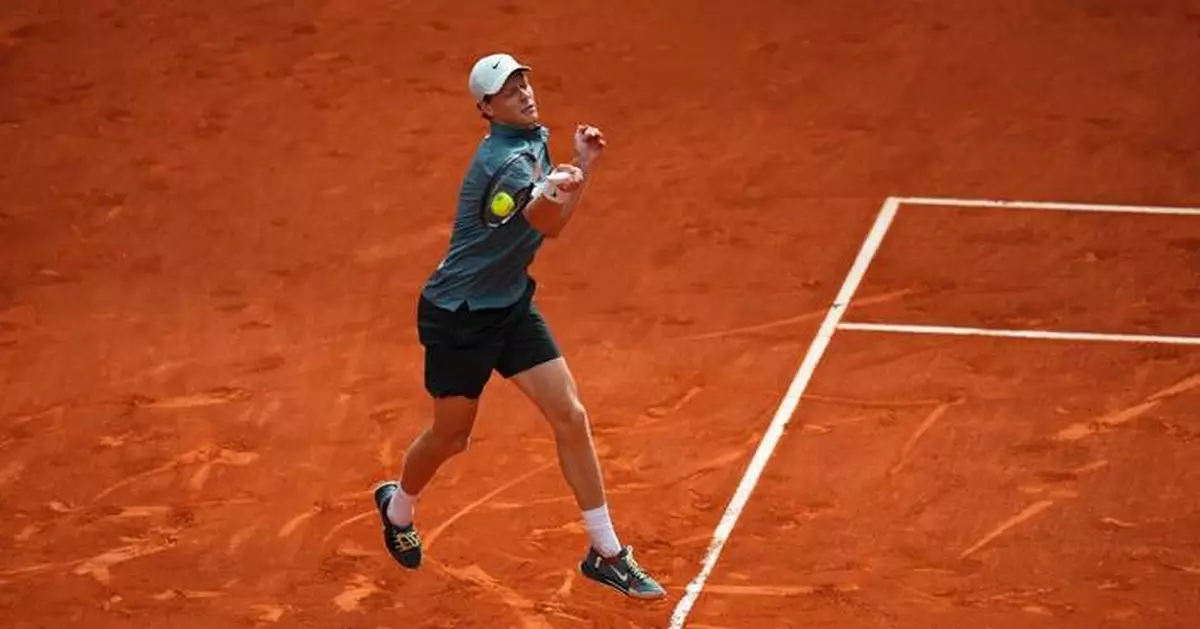
A group of leading players including Jannik Sinner, Aryna Sabalenka and Coco Gauff have expressed “their deep disappointment” at the level on prize money at Roland Garros amid a lingering dispute with Grand Slam tournament organizers.

The clay-court Grand Slam event starts later this month in western Paris. The players said they have other demands that have not been addressed by officials, including better representation, health and pensions.

The players' call came after French Open organizers announced last month the Roland Garros prize money has increased by about 10% for an overall pot of 61.7 million euros ($72.1 million), with the total amount up 5.3 million euros from last year.

“Players’ share of Roland Garros tournament revenue has declined from 15.5% in 2024 to 14.9% projected in 2026,” the group of players responded in a statement on Monday.

Play begins on May 24 at Roland Garros. Men’s and women’s singles champions each receive 2.8 million euros and the runners-up 1.4 million euros. Semifinalists earn 750,000 euros and first round losers get 87,000 euros. Men’s and women’s doubles winners pocket 600,000 euros and the mixed doubles champions get 122,000 euros.

But the statement said “the underlying figures tell a very different story,” claiming that players receive a declining share of the value they contribute to generate.

“According to tournament officials, Roland Garros generated 395 million euros in revenue in 2025, a 14% year-on-year increase, yet prize money rose by just 5.4%, reducing players’ share of revenue to 14.3%,” they said. “With estimated revenues of over 400 million euros for this year’s tournament, prize money as a percentage of revenue will likely still be less than 15%, far short of the 22% that players have requested to bring the Grand Slams into line with the ATP and WTA Combined 1000 events.”

French Open organizers did not immediately respond to a request for comments.

The same group of players had already signed a letter sent to the heads of the four Grand Slam tournaments last year, seeking more prize money and a greater say in what they called “decisions that directly impact us.”

The communications firm that released the statement said it was issued in the name of the original signatories to the initial letter, later adding that Novak Djokovic had not signed the new statement.

The players said they remain “united in their desire to see meaningful progress, both in terms of fair financial distribution and in how the sport is governed.” They insisted they have not received any response to their proposals on welfare, including pension and long-term health, adding that no progress has been made “on fair and transparent player representation within Grand Slam decision-making.”

“While other major international sports are modernizing governance, aligning stakeholders, and building long-term value, the Grand Slams remain resistant to change,” they said. “The absence of player consultation and the continued lack of investment in player welfare reflect a system that does not adequately represent the interests of those who are central to the sport’s success.”

AP tennis: https://apnews.com/hub/tennis
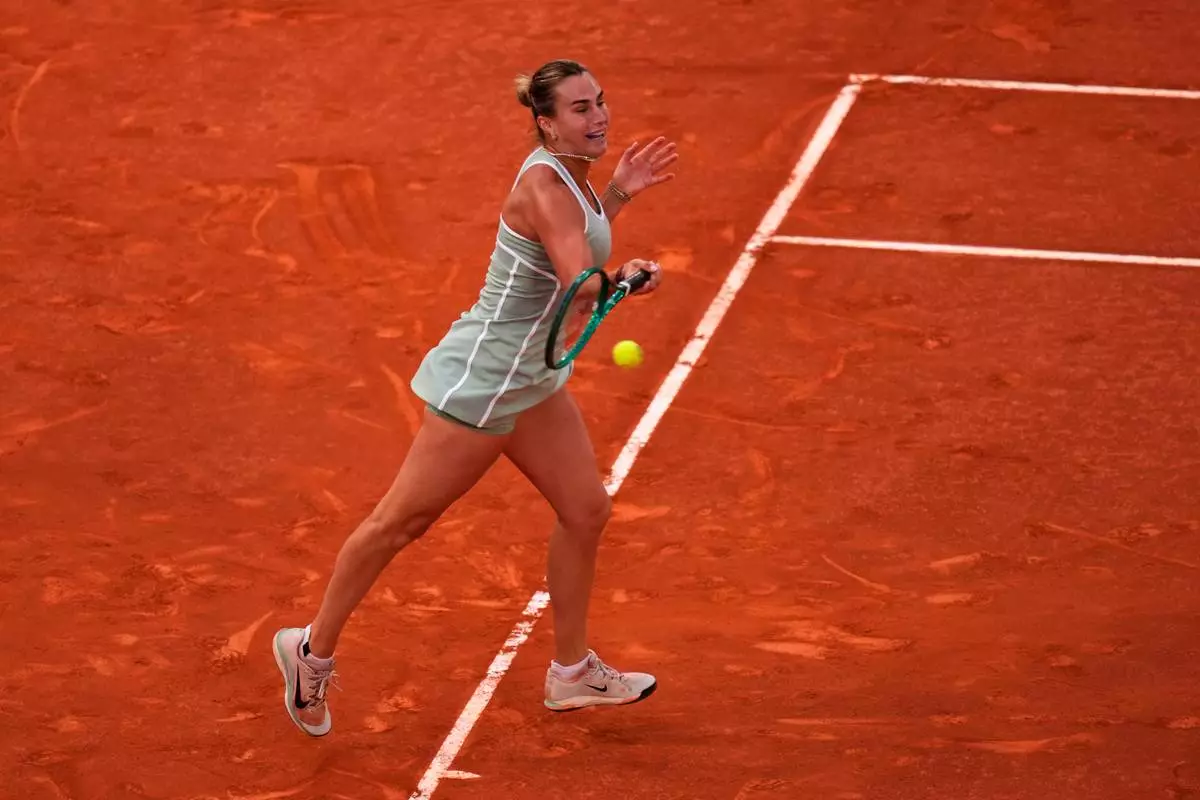
Aryna Sabalenka of Belarus returns the ball to Hailey Baptiste of the U.S. during the Madrid Open tennis tournament in Madrid, Tuesday, April 28, 2026. (AP Photo/Manu Fernandez)

Aryna Sabalenka of Belarus returns the ball to Hailey Baptiste of the U.S. during the Madrid Open tennis tournament in Madrid, Tuesday, April 28, 2026. (AP Photo/Manu Fernandez)

Coco Gauff of the U.S. returns the ball to Linda Noskova of the Czech Republic during the Madrid Open tennis tournament in Madrid, Monday, April 27, 2026. (AP Photo/Manu Fernandez)

Coco Gauff of the U.S. returns the ball to Linda Noskova of the Czech Republic during the Madrid Open tennis tournament in Madrid, Monday, April 27, 2026. (AP Photo/Manu Fernandez)

Jannik Sinner, of Italy, returns the ball to Alexander Zverev, of Germany, during their men's singles tennis final match at the Madrid Open tennis tournament in Madrid, Spain, Sunday, May 3, 2026. (AP Photo/Manu Fernandez)


Jannik Sinner, of Italy, returns the ball to Alexander Zverev, of Germany, during their men's singles tennis final match at the Madrid Open tennis tournament in Madrid, Spain, Sunday, May 3, 2026. (AP Photo/Manu Fernandez)

ALBUQUERQUE, N.M. (AP) — A hantavirus is suspected of causing an outbreak aboard a cruise ship that has killed three people and sickened others.

Studies indicate hantaviruses have been around for centuries, with outbreaks documented in Asia and Europe. In the Eastern Hemisphere, it has been linked with hemorrhagic fever and kidney failure. It wasn’t until the early 1990s that a previously unknown group of hantaviruses emerged in the southwestern United States as the cause of an acute respiratory disease now known hantavirus pulmonary syndrome.

The disease gained attention last year after late actor Gene Hackman ’s wife, Betsy Arakawa, died from a hantavirus infection in New Mexico.

The World Health Organization said in a statement Sunday that detailed investigations of the cruise ship outbreak are ongoing, including further laboratory testing and epidemiological investigations. Sequencing of the virus also is ongoing.

Hantavirus is mainly spread by contact with rodents or their urine, saliva or droppings, particularly when the material is disturbed and becomes airborne, posing risk of inhalation. People are typically exposed to hantavirus around their homes, cabins or sheds, especially when cleaning out enclosed spaces with little ventilation or exploring areas where there are mouse droppings.

The WHO says that while rare, hantaviruses may spread between people.

The U.S. Centers for Disease Control and Prevention began tracking the virus after a 1993 outbreak in the Four Corners region — the area where Arizona, Colorado, New Mexico and Utah meet.

It was an astute physician with the Indian Health Service who first noticed a pattern of deaths among young patients, said Michelle Harkins, a pulmonologist with the University of New Mexico Health Sciences Center who for years has been studying the disease and helping patients.

Most U.S. cases are in Western states. New Mexico and Arizona are hotspots, Harkins said, likely because the odds are greater for mouse-human encounters in rural areas.

An infection can rapidly progress and become life-threatening. Experts say it can start with symptoms that include a fever, chills, muscle aches and maybe a headache.

“Early in the illness, you really may not be able to tell the difference between hantavirus and having the flu,” said Dr. Sonja Bartolome of UT Southwestern Medical Center in Dallas.

Symptoms of hantavirus pulmonary syndrome usually show between one to eight weeks after contact with an infected rodent. As the infection progresses, patients might experience tightness in the chest, as the lungs fill with fluid.

The other syndrome caused by hantavirus — hemorrhagic fever with renal syndrome — usually develops within a week or two after exposure.

Death rates vary by which hantavirus causes the illness. Hantavirus pulmonary syndrome is fatal in nearly 40% of people infected, while the death rate for hemorrhagic fever with renal syndrome varies from 1% to 15% of patients, according to the CDC.

There is no specific treatment or cure, but early medical attention can increase the chance of survival.

Despite years of research, Harkins said many questions have yet to be answered, including why it can be mild for some people and very severe for others and how antibodies are developed. She and other researchers have been following patients over long periods of time in hopes of finding a treatment.

“A lot of mysteries,” she said, noting that what researchers do know is that rodent exposure is a key.

The best way to avoid the germ is to minimize contact with rodents and their droppings. Use protective gloves and a bleach solution for cleaning up rodent droppings. Public health experts caution against sweeping or vacuuming which can cause virus to get into the air.

FILE - A woman works at her shop in Epuyen, Argentina, Friday, Jan. 11, 2019, after an outbreak of hantavirus. (AP Photo/Gustavo Zaninelli, File)

FILE - A woman works at her shop in Epuyen, Argentina, Friday, Jan. 11, 2019, after an outbreak of hantavirus. (AP Photo/Gustavo Zaninelli, File)

FILE - In this June 15, 2010 file photo, a rat wanders the subway tracks at Union Square in New York. (AP Photo/Frank Franklin II, File)

FILE - In this June 15, 2010 file photo, a rat wanders the subway tracks at Union Square in New York. (AP Photo/Frank Franklin II, File)

Recommended Articles